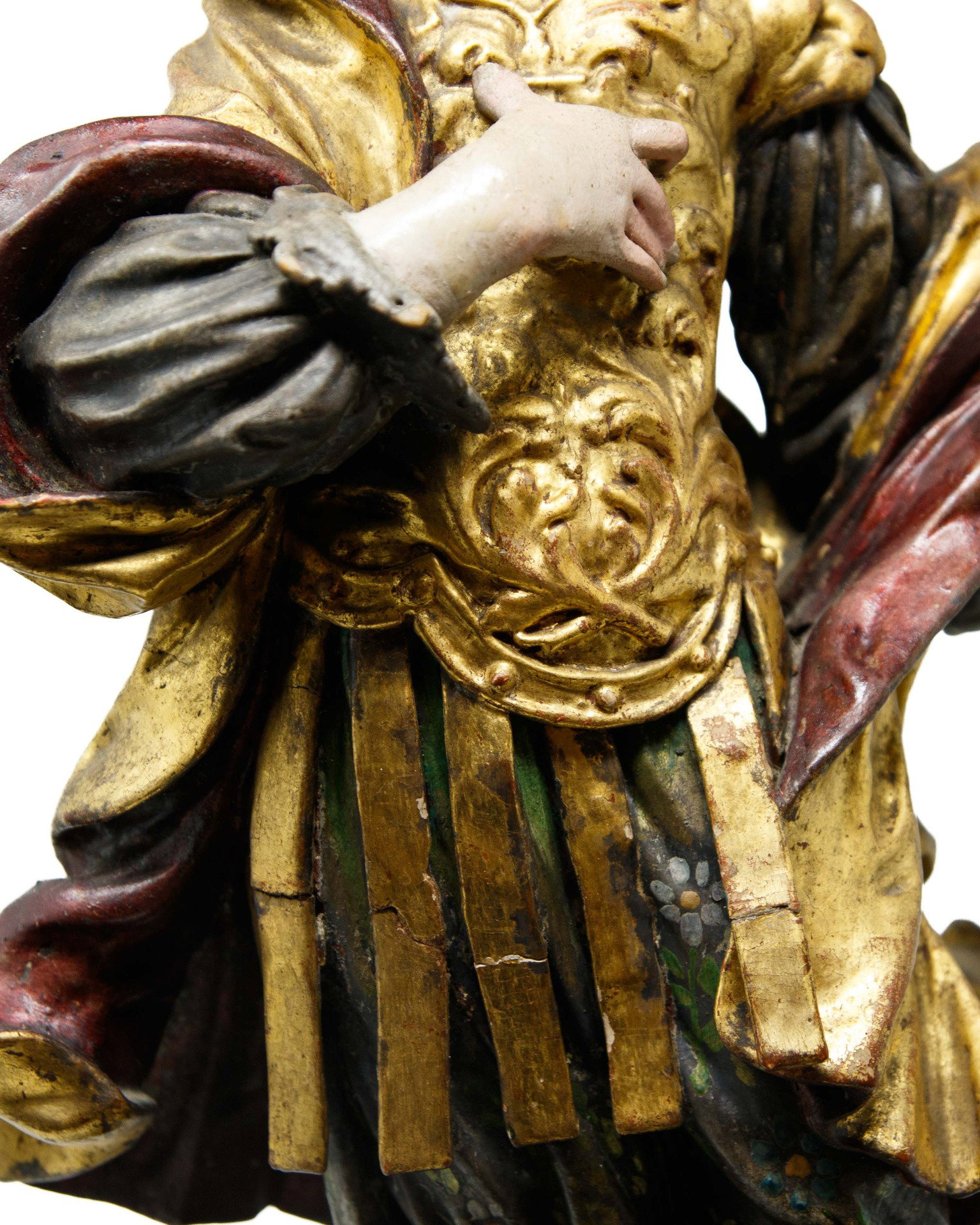
Germany, 18th century, Reliquary with Saint Catherine of Alexandria
Description:
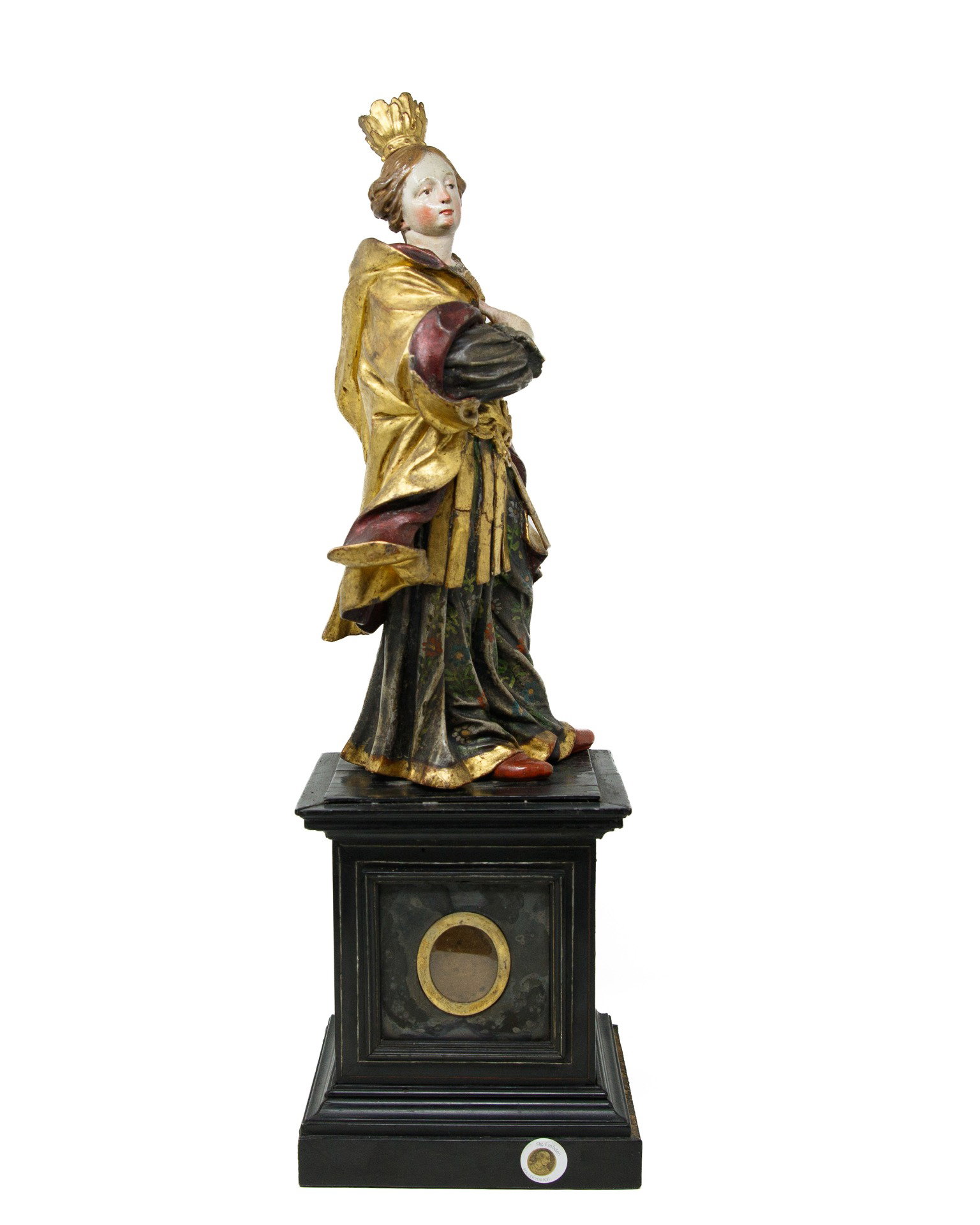
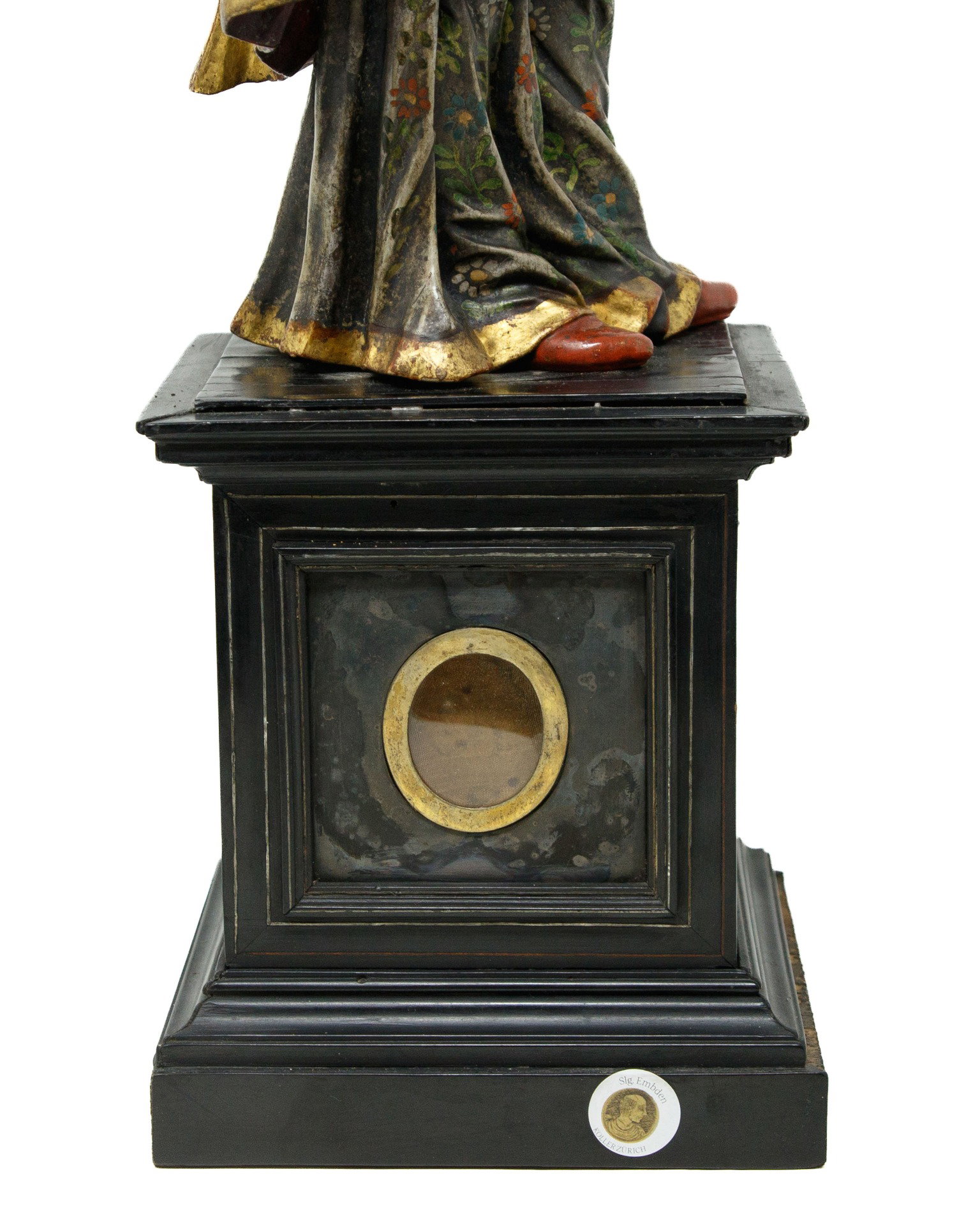
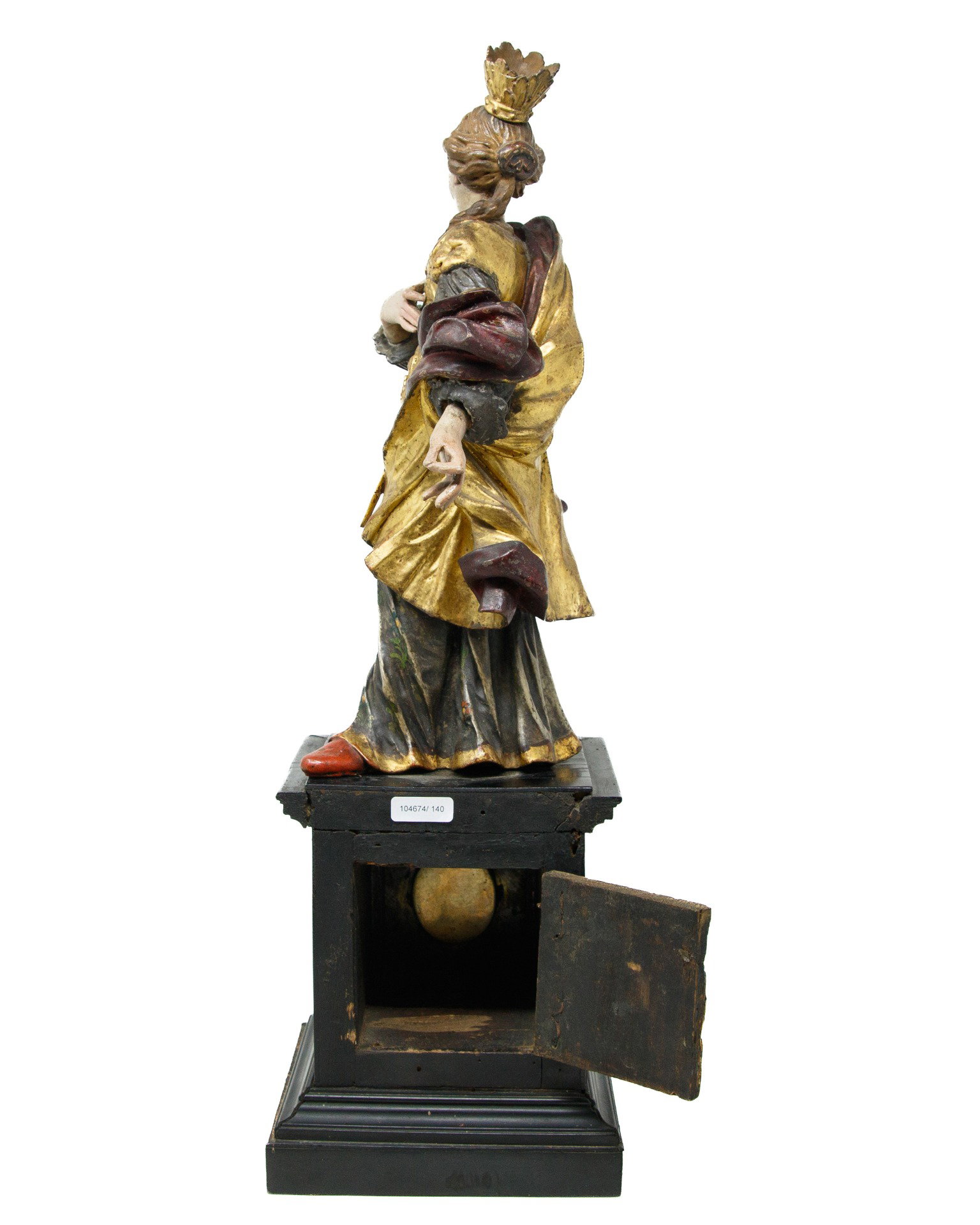
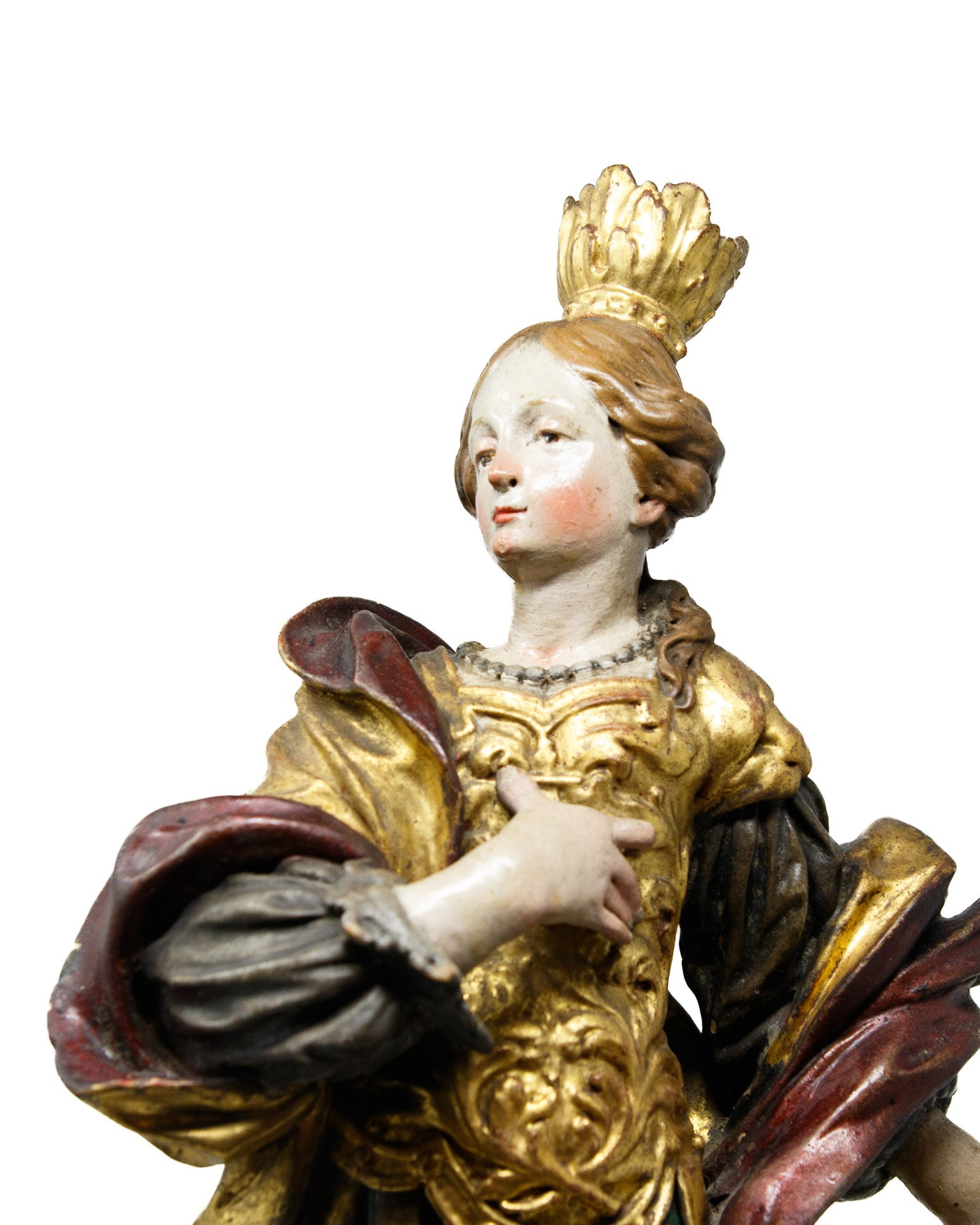
Germany, 18th century Reliquary with Saint Catherine of Alexandria Painted wood, 49 x 18.5 x 14.5 cm Polychrome and gilded wooden sculpture depicting Saint Catherine of Alexandria, placed on an ebonized wooden pedestal containing a relic, presumably made in Franconia in the 18th century. The female figure is presented in a contrapposto position, with typically baroque dynamism: the body rotates slightly, the gilded and polychrome garments open in ample, flowing drapery. She wears a dress decorated with painted floral motifs, a gilded overgarment, and a crimson red mantle that wraps around her shoulders. On her head, she wears a golden crown, an attribute that refers to her condition as a princess of Alexandria. The face is finely crafted, with a delicate complexion and rosy cheeks, in accordance with the tradition of German devotional sculpture. Red shoes complete the regal attire of the figure. The ebonized pedestal houses a reliquary case with an oval glass and a golden frame in its cavity, visible on the front. A small door at the back allows access to the interior. The production of figurative reliquaries in the German region, and particularly in Franconia, experienced a period of extraordinary flourishing in the 18th century, fueled by lively ecclesiastical patronage and popular devotion. Workshops in Würzburg and Franconia developed a sculptural language that blended the Baroque heritage with new Rococo sensibilities, producing works destined for churches, convents, and private chapels. The intense polychromy, the gilded gilding, and the refined carpentry of the pedestals are distinctive elements of this artisanal tradition, which transformed the relic into the focal point of a unified and devotional artistic composition.