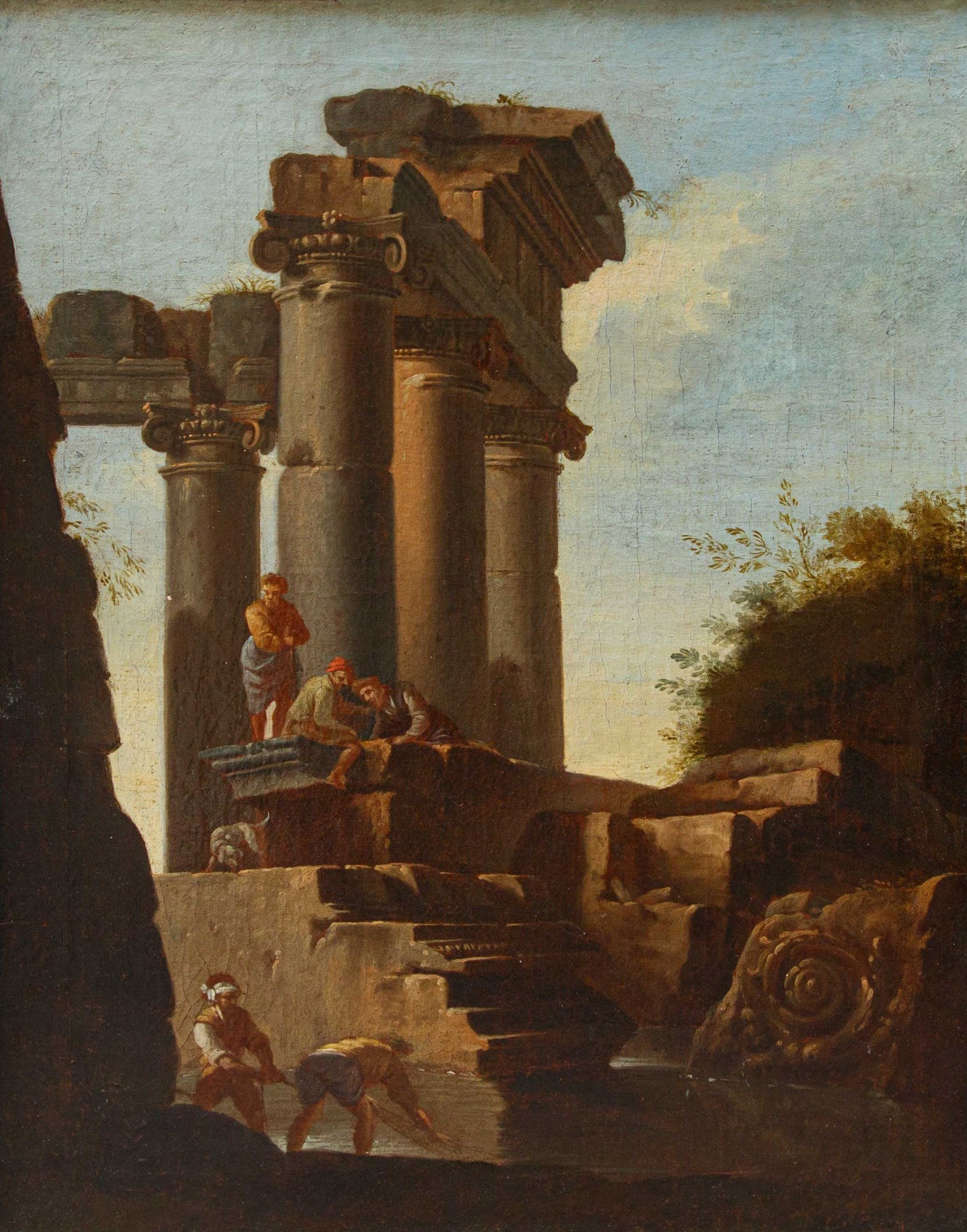
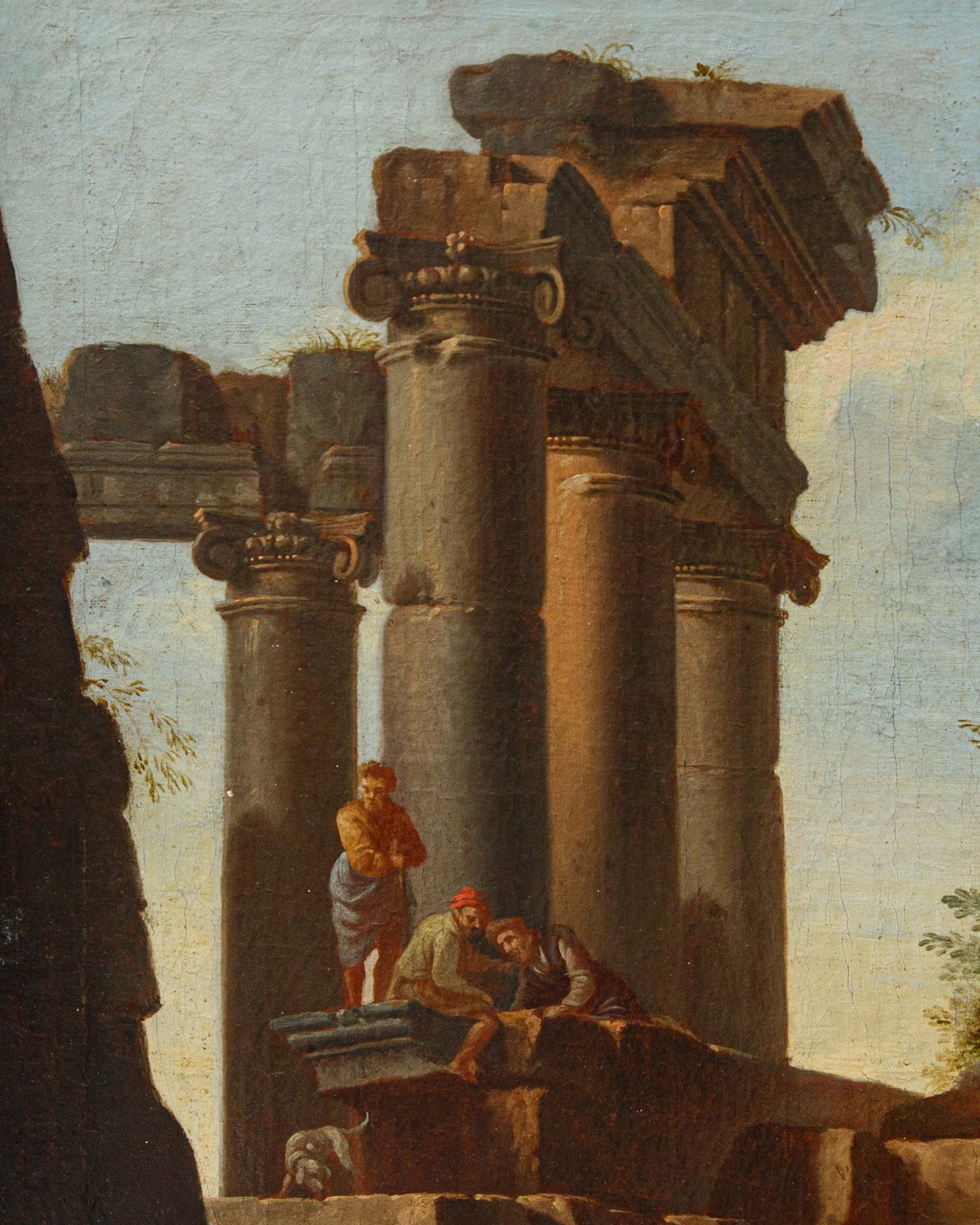
Giovanni Ghisolfi (Milan, 1623 – 1683), Landscape with architectural ruins and figures
Description:
Giovanni Ghisolfi (Milan, 1623 – 1683)
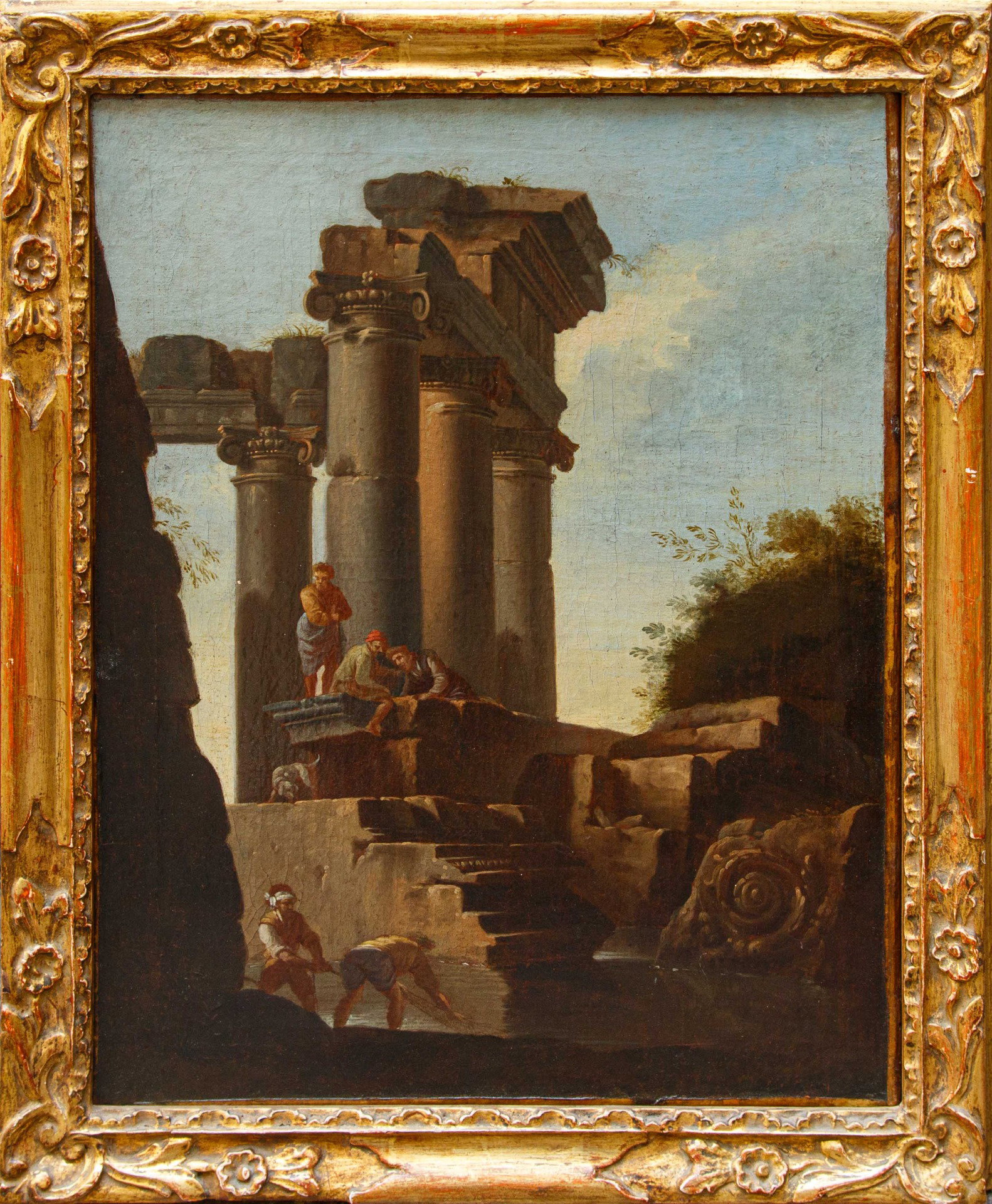
Landscape with architectural ruins and figures
Oil on canvas, 41 x 31 cm
With frame, 50 x 39 cm
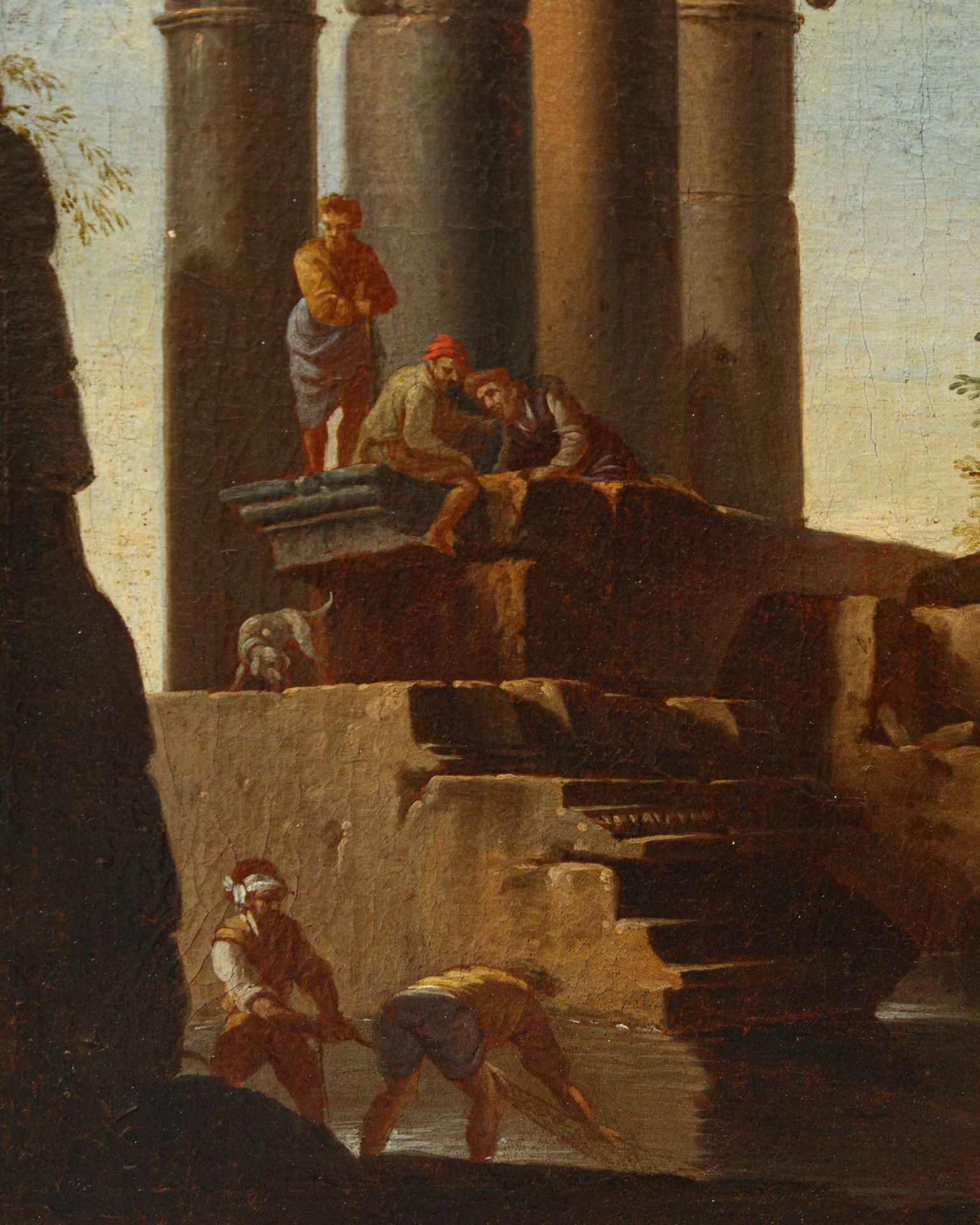
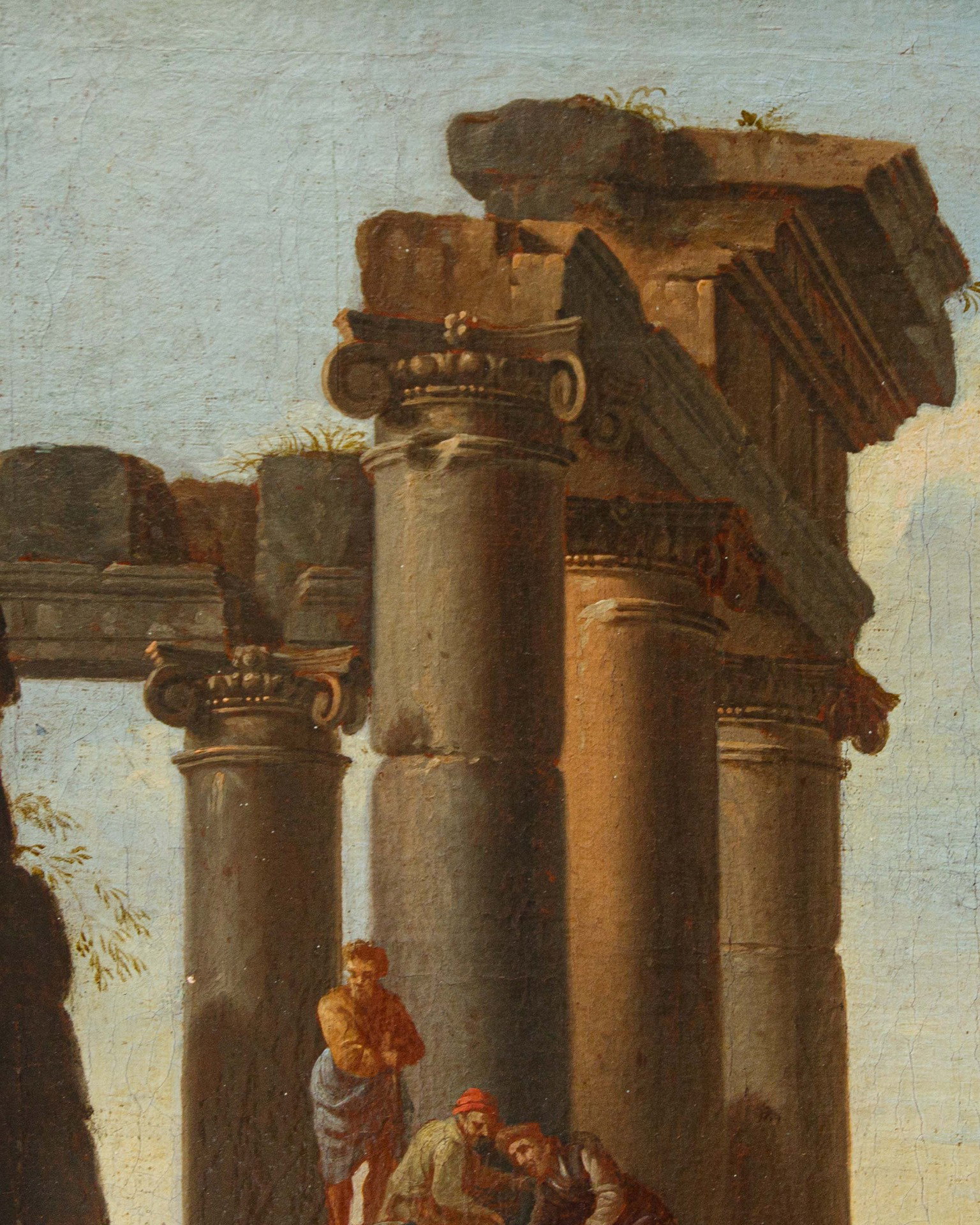
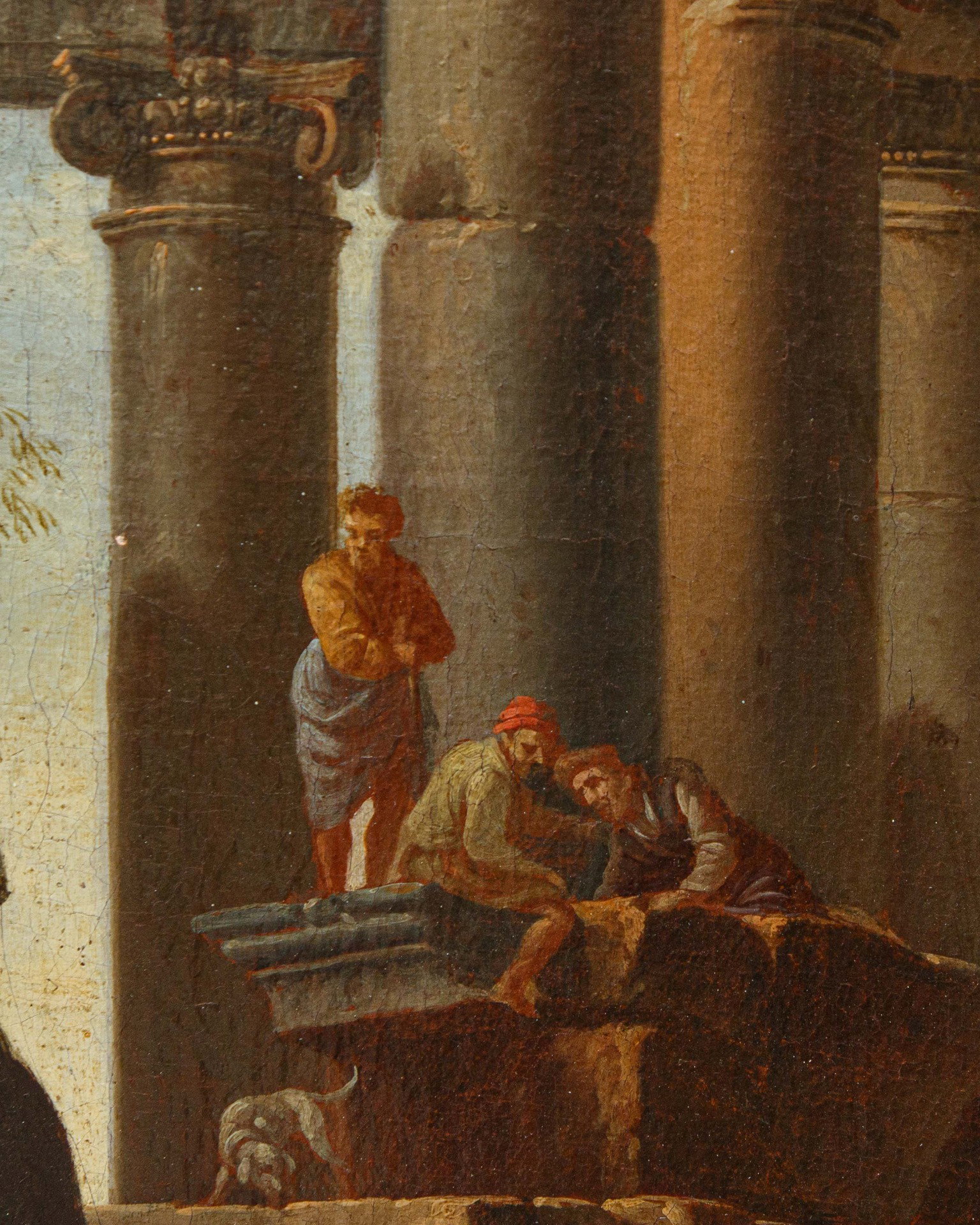
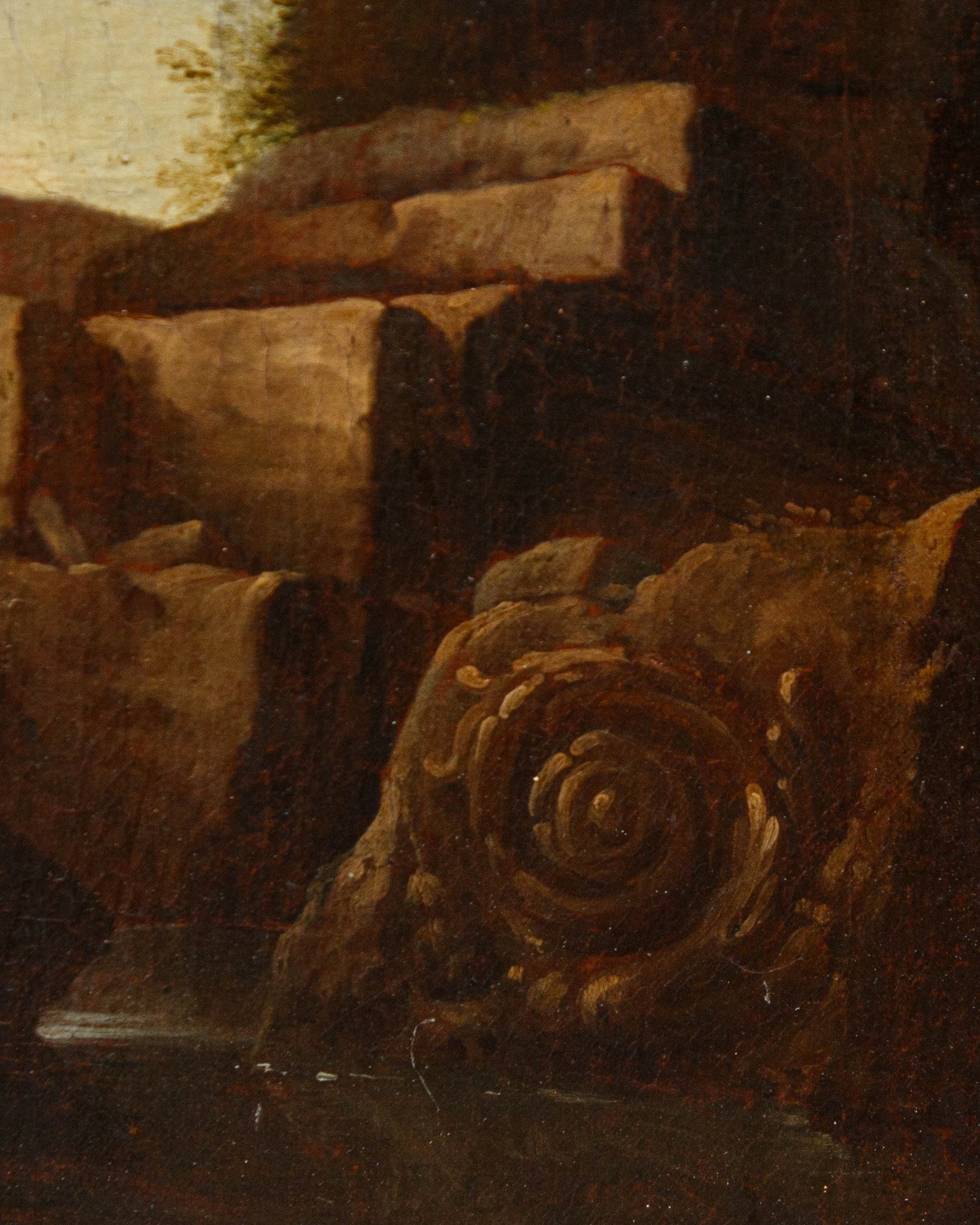
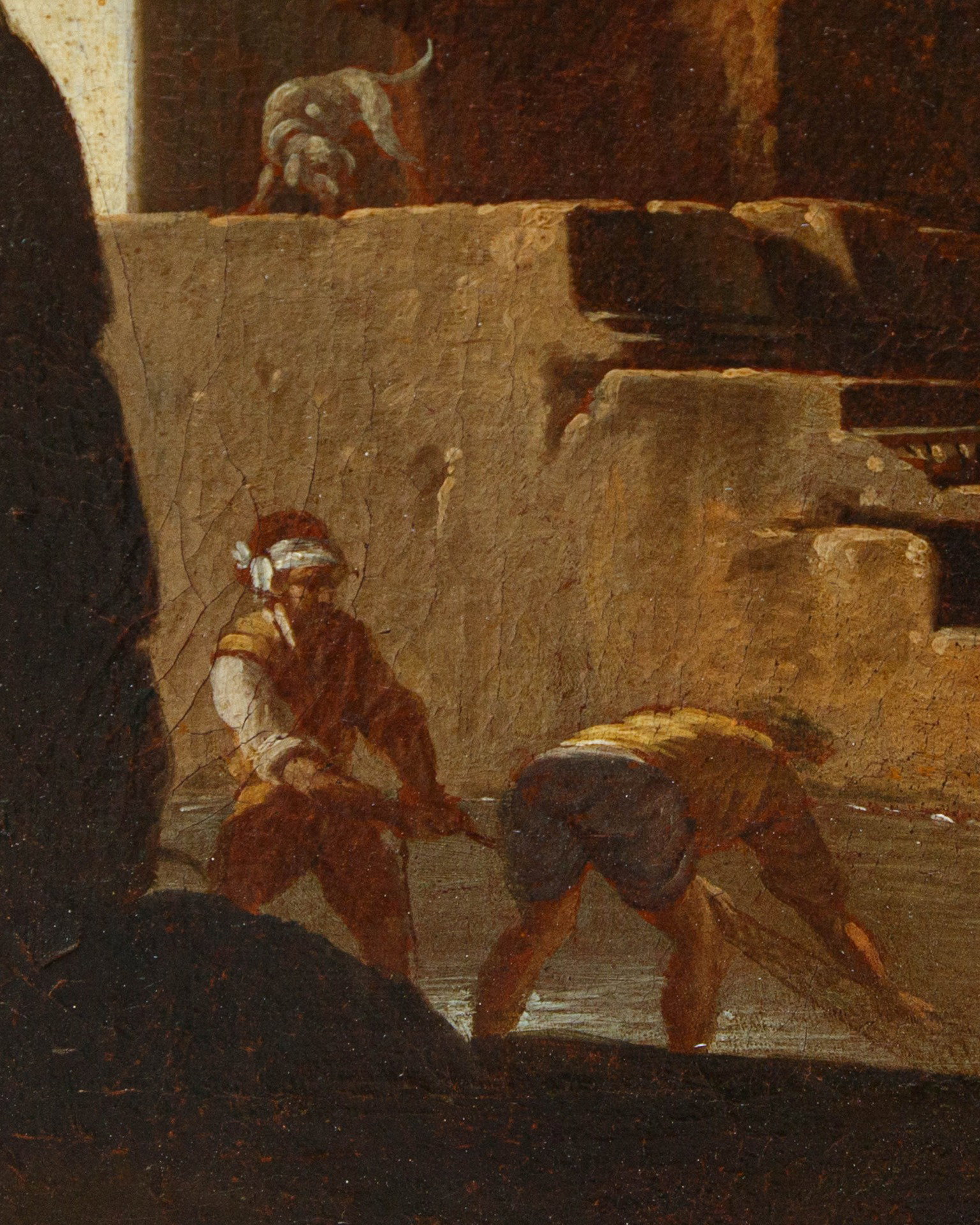
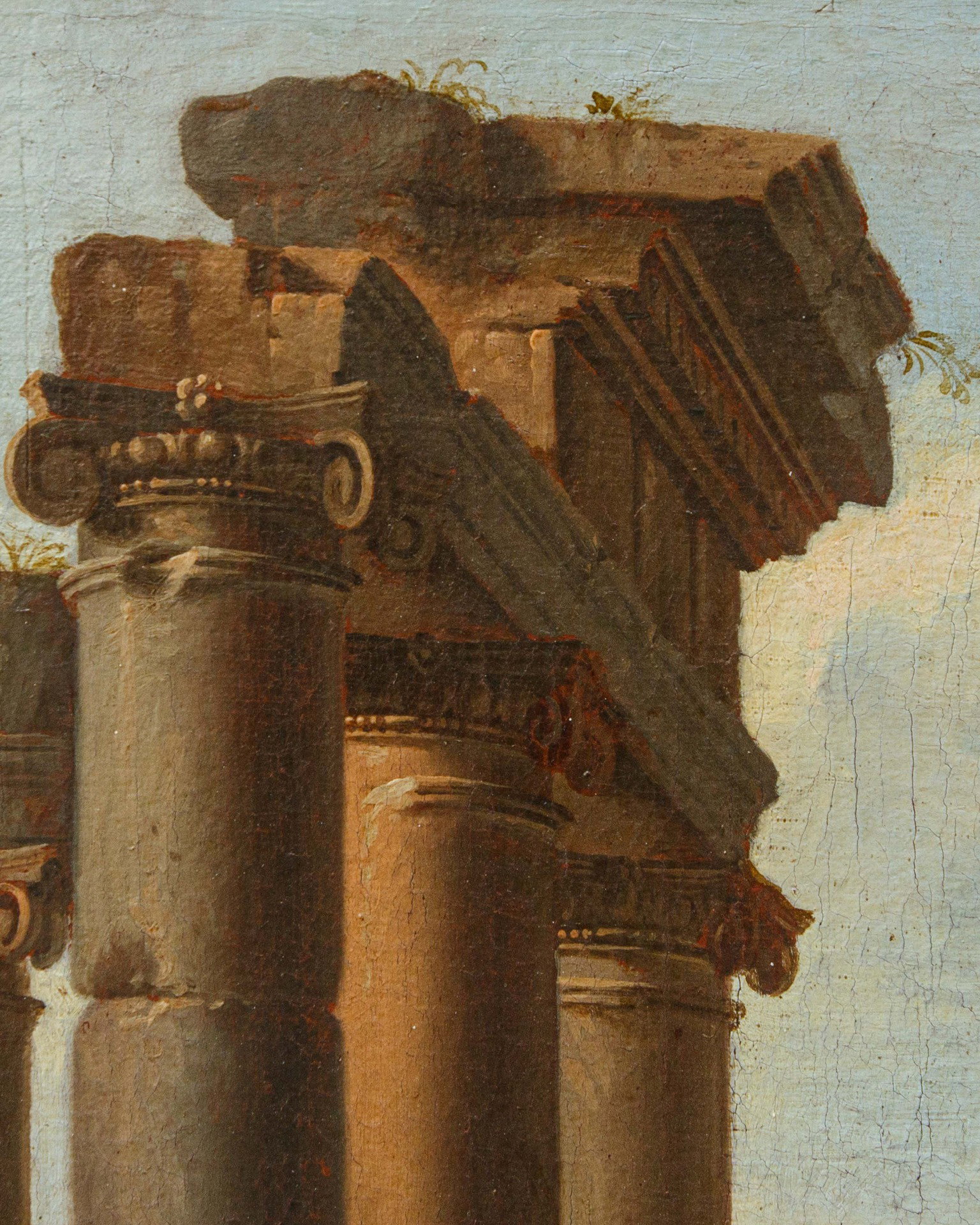
A landscape of classical ruins animates Giovanni Ghisolfi's canvas with that tension between the grandeur of the past and the fragility of the present that characterizes the entire production of the Milanese painter. The composition is organized around a core of imposing Ionic columns, still partially joined by a broken entablature that stands out against a bright sky. The columns, rendered with a brown and earthy palette, dominate the upper half of the canvas with a scenic presence, evoking the space of an ancient temple of which only the skeleton remains. At the base of these structures, collapsed steps and stone blocks form a sort of irregular stage on which human figures move, small compared to the monumentality of the surrounding architecture. In the middle register, three figures seem engaged in conversation, seated or leaning against the remains of the building. Below, two figures move among the stones, while schematic vegetation emerges here and there among the boulders. The light, diffused but directional, models the surfaces with precise touches and sharp contrasts between shadowed areas and illuminated planes, giving volumetric solidity to the architecture.
Giovanni Ghisolfi was born in Milan in 1623 and grew up in a family environment already oriented towards the arts. Still young, he entered the workshop of his uncle Antonio Volpino, where he learned the fundamentals of painting. In 1650, at the age of twenty-seven, he set off for Rome with his painter friend Antonio Busca, intending to study ancient architecture and the drawing of architectural fragments. In the papal city, Ghisolfi worked closely with Salvator Rosa: initially, according to sources, Rosa took care of the figures while Ghisolfi handled the architectural perspectives, although modern criticism tends to re-evaluate this relationship of dependence, recognizing full autonomy in the Milanese artist from the outset. It was in Rome that Ghisolfi matured his decisive training in iconography centered on ancient Roman remains, thanks to which he became the most established specialist, so much so that he is considered the precursor of the architectural capriccio typology, which would only achieve extraordinary illustrative success in the 18th century, consecrating it as an autonomous pictorial genre. In 1661, upon his return to Lombardy, he decorated a chapel in the Certosa di Pavia; in 1664 he was called to Vicenza for frescoes in the Trissino Baston and Giustiniani Baggio palaces. He also worked in Palazzo Arese Borromeo in Cesano Maderno and Villa Reati in Lissone, as well as at the Sacro Monte di Varese at the behest of Cardinal Luigi Alessandro Omodei.
The painting examined here fits perfectly into Ghisolfi's architectural capriccio tradition and finds precise correspondences in a series of works that confirm its stylistic and inventive consistency. The choice of extremely tall Ionic columns that dominate the scene and the warm, earthy color palette, modulated in browns, ochres, and grays illuminated by the blue sky, bring this painting noticeably closer to the Architectural Capriccio with preparations for a sacrifice preserved at the National Trust in London, which features the same vertical arrangement of architecture and the same handling of light that sculpts the stone surfaces. Equally relevant is the comparison with the painting Fantastic Arch with Bath of Venus, now in a private collection, where the palette of warm browns and blues is reproduced with similar effectiveness in the atmospheric rendering of the background. Typical of Ghisolfi's style is the way he constructs the perspectival sequences, treating the background with a clear and light palette while the architectural sections are delineated with accurate brushstrokes, strong contrasts, and touches of black in the plastic details: a method perfectly traceable in the canvas under examination. The architectural rendering finds further points of contact with the Architectural Capriccio with figures from the Piraneseum Collection in San. Even more fitting is the comparison with the painting Pythagoras Re-emerged from Hades from the Almagià Collection in Rome and with the Architectural Capriccio with sculpture of Marcus Aurelius from the public collections of Innsbruck, in which the same arrangement of fragmented architectural masses, animated by small figures. From these paintings emerges a sense of classicism rendered through linear compositions with dark colors and a solid architectural structure that make Ghisolfi a precursor of 18th-century vedutism, foreshadowing what Giovanni Paolo Pannini would later bring to full maturity in the following century.