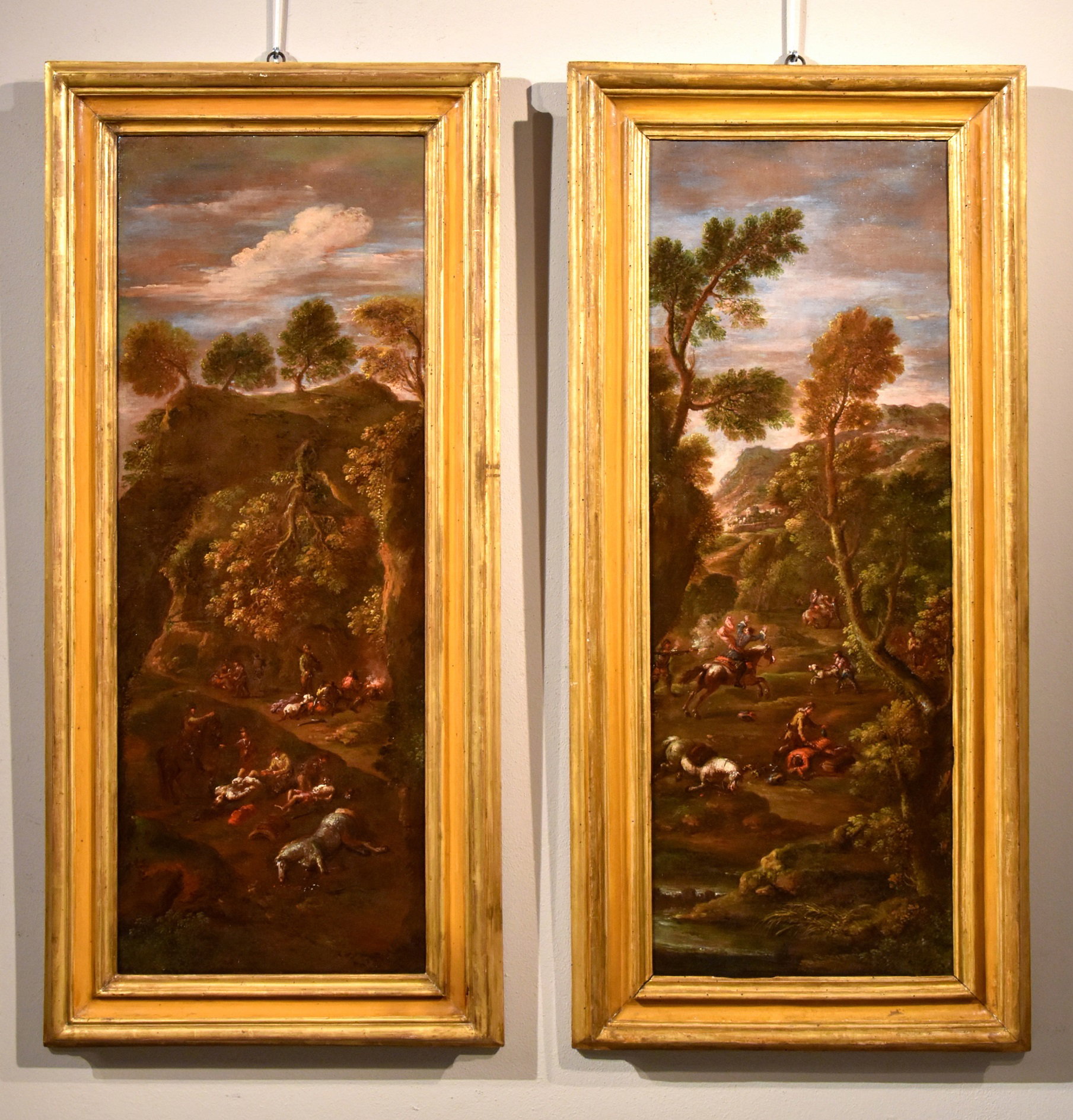
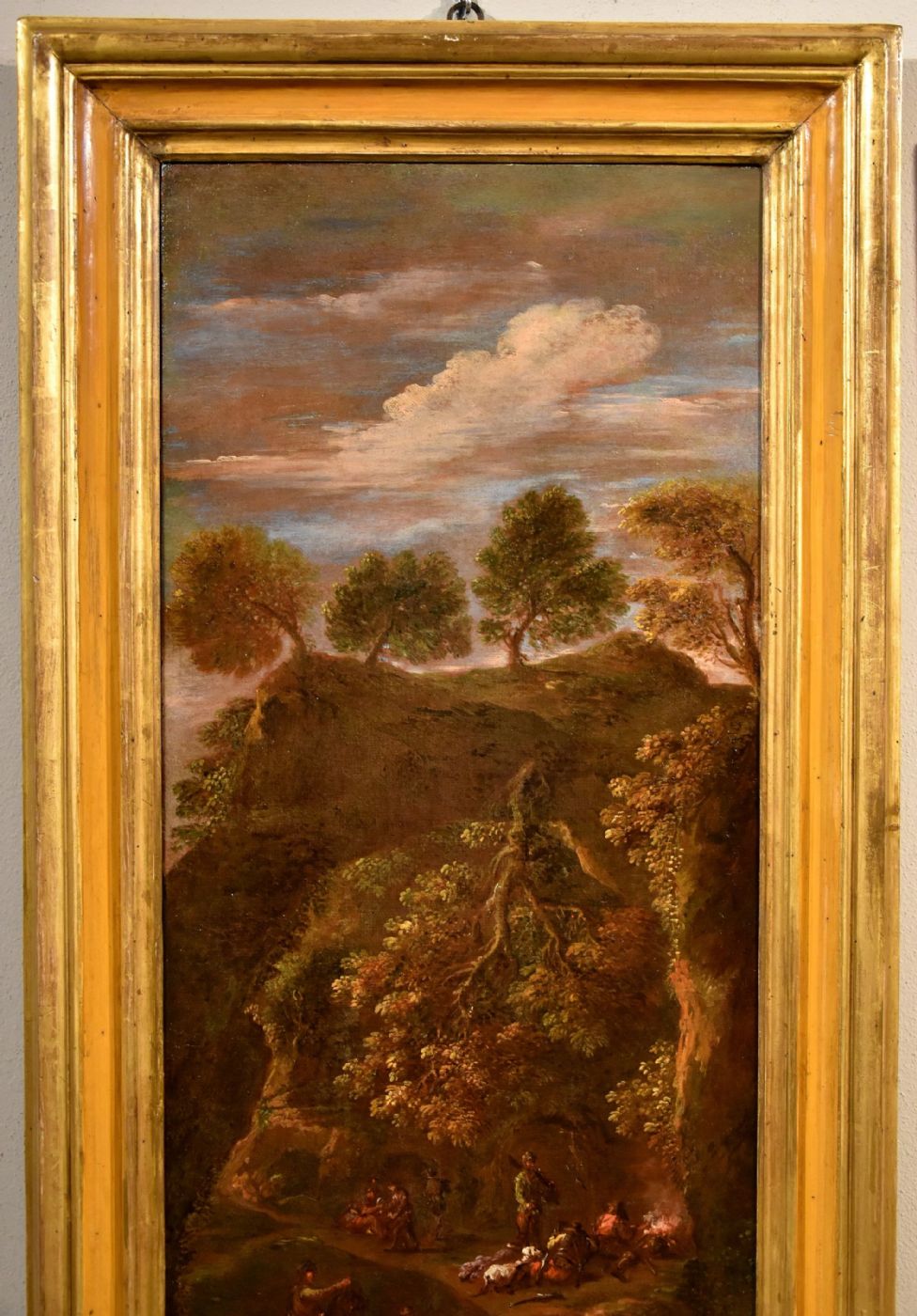
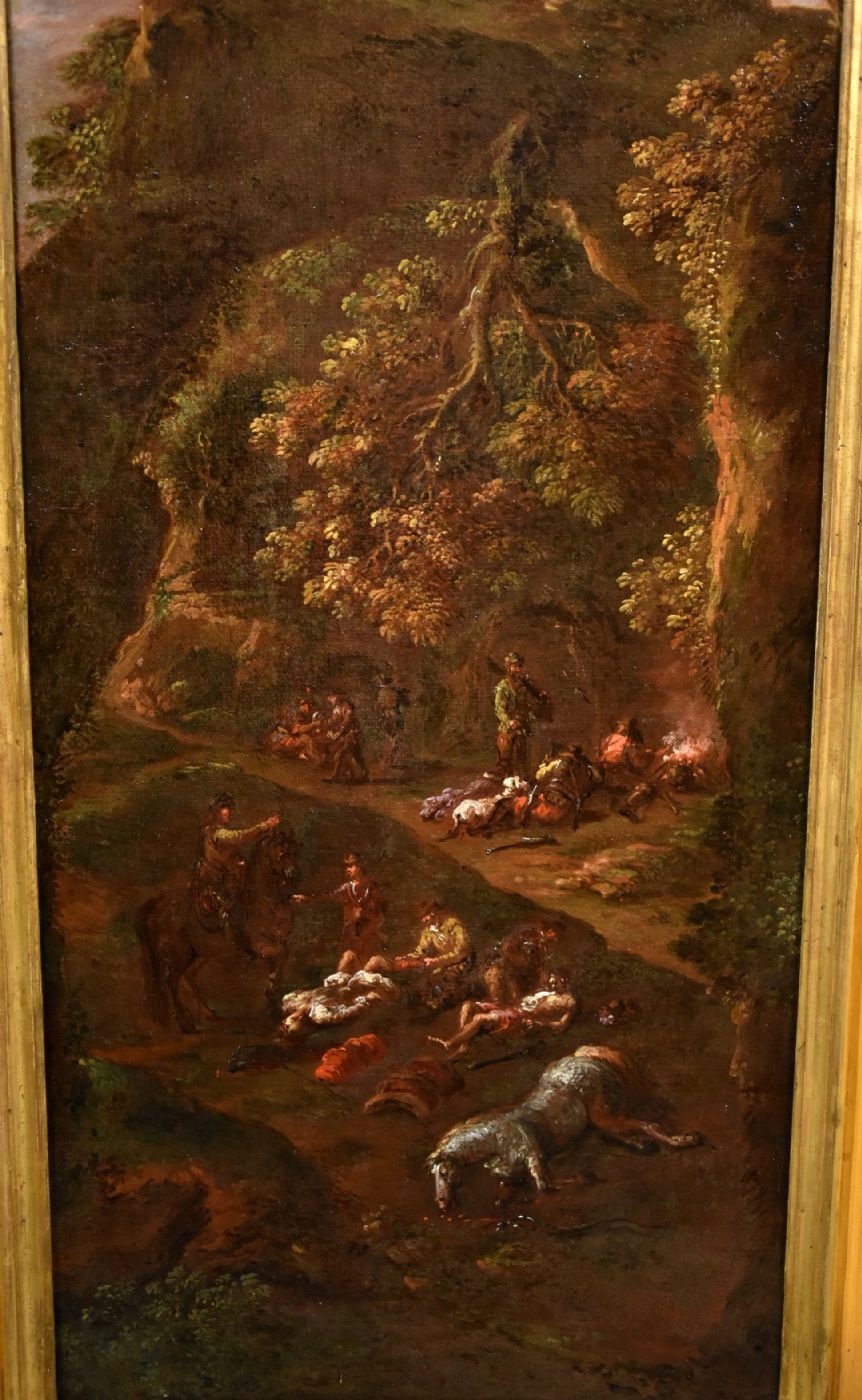
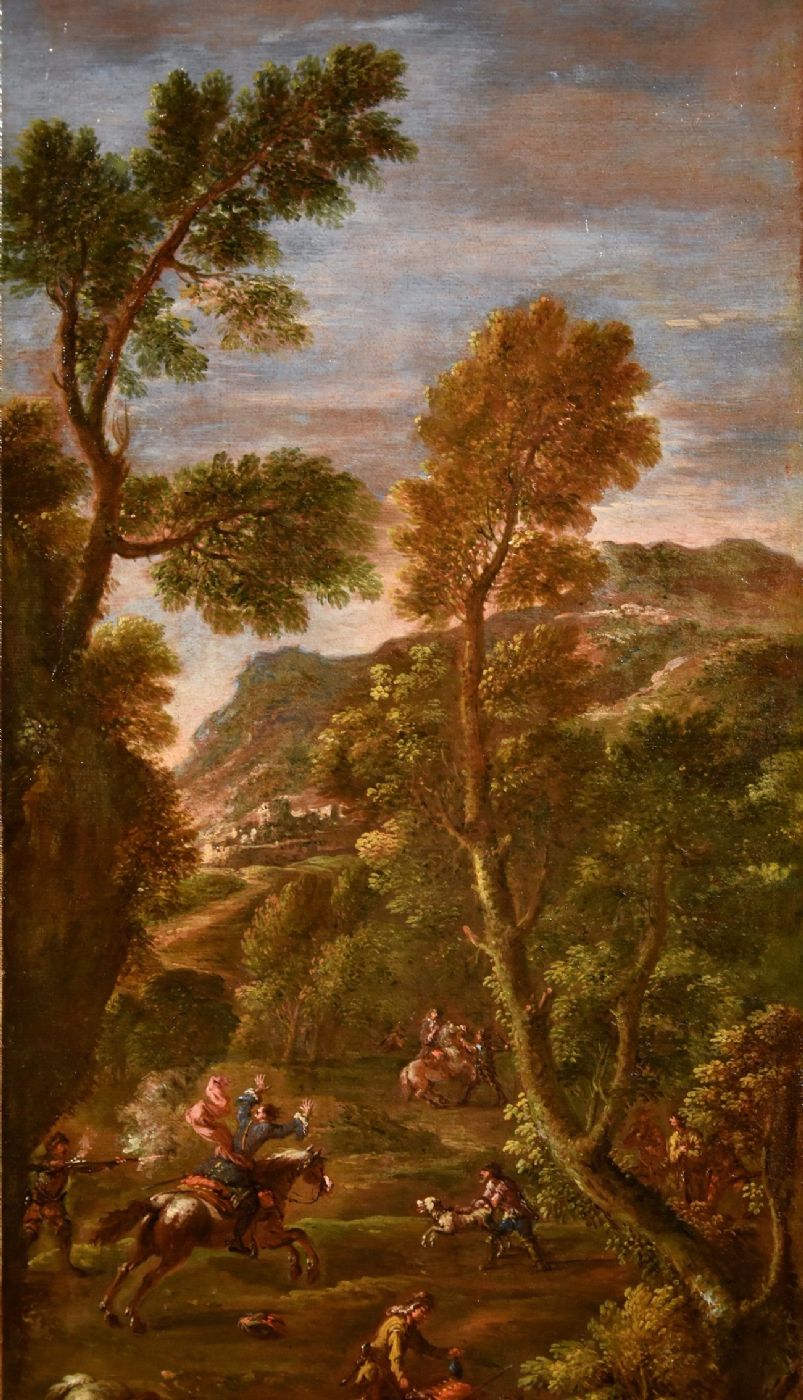
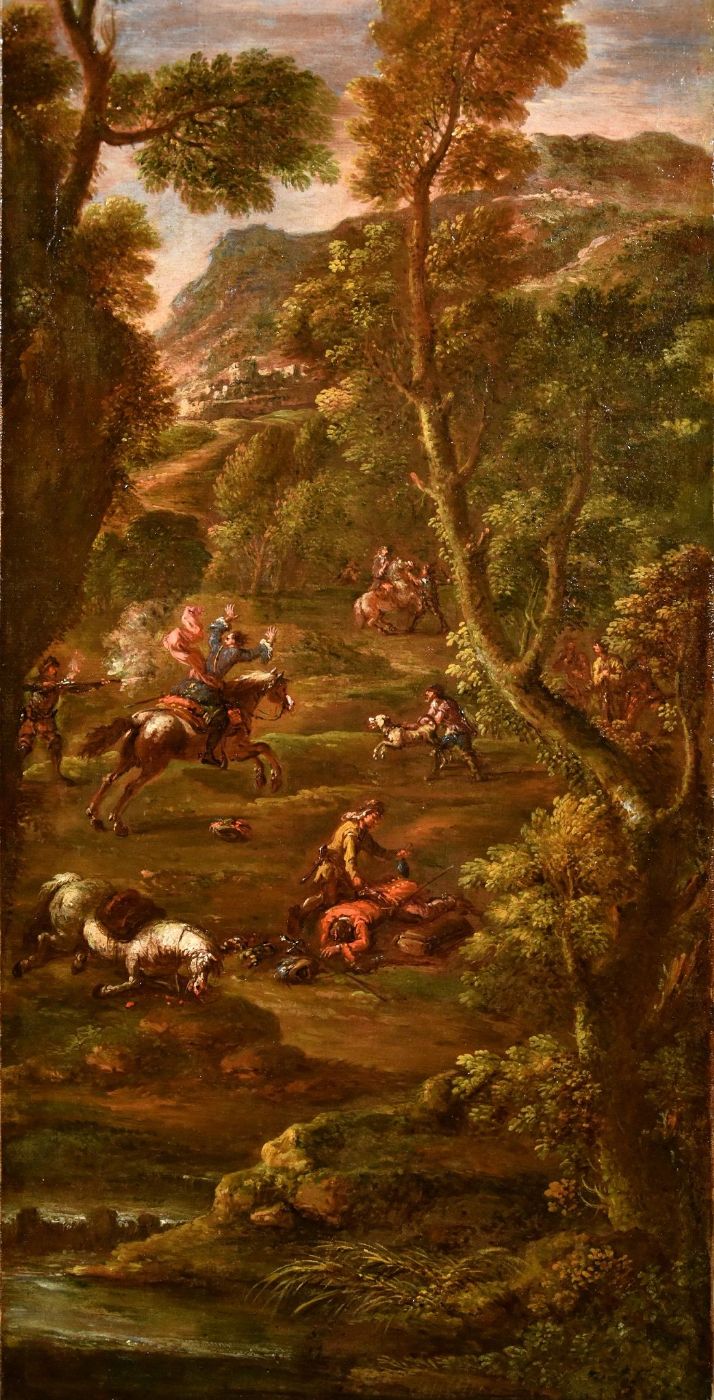
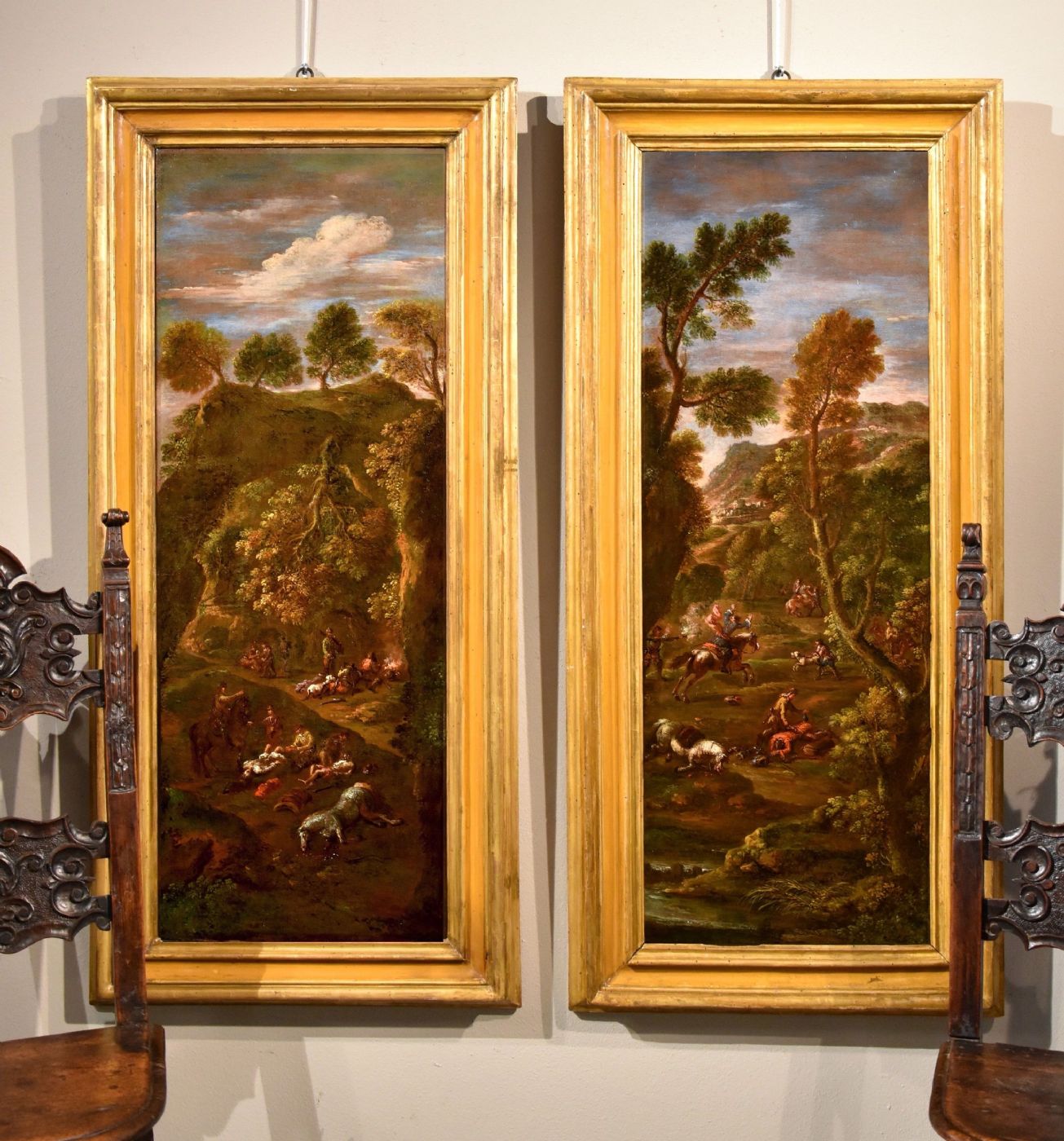
Pair of paintings 'The Brigands' Assault' 'After the Assault', Giuseppe Zais (Canale d’Agordo, Belluno 1709 - Treviso 1781)
Description:
Giuseppe Zais (Canale d’Agordo, Belluno 1709 - Treviso 1781)
Pendant pair of paintings
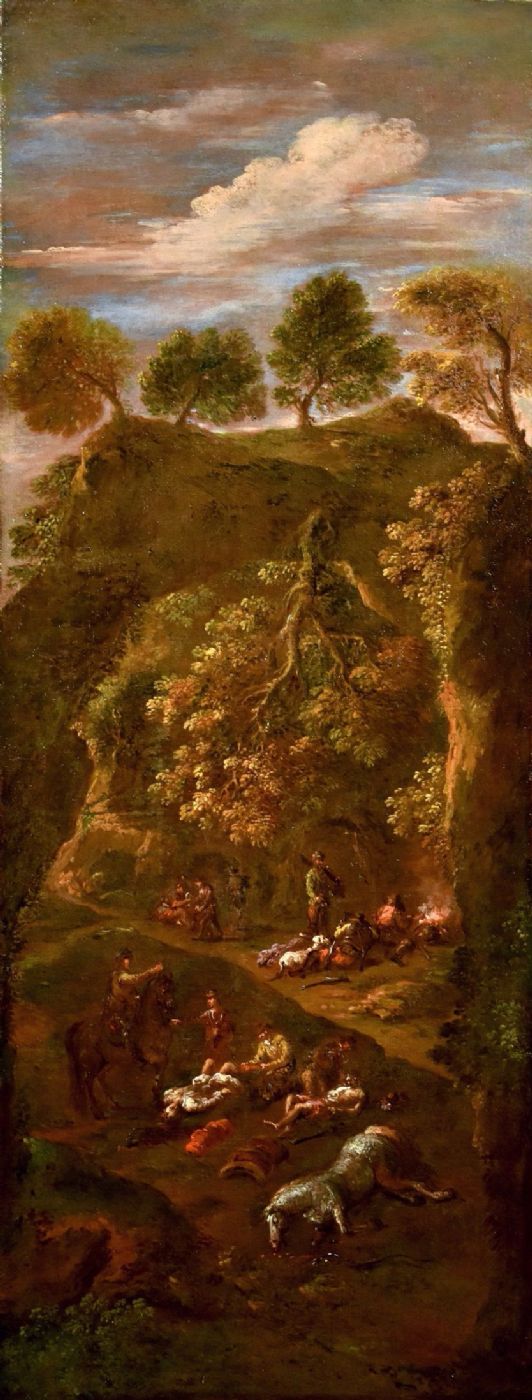
L'assalto dei briganti (The Brigands' Assault)
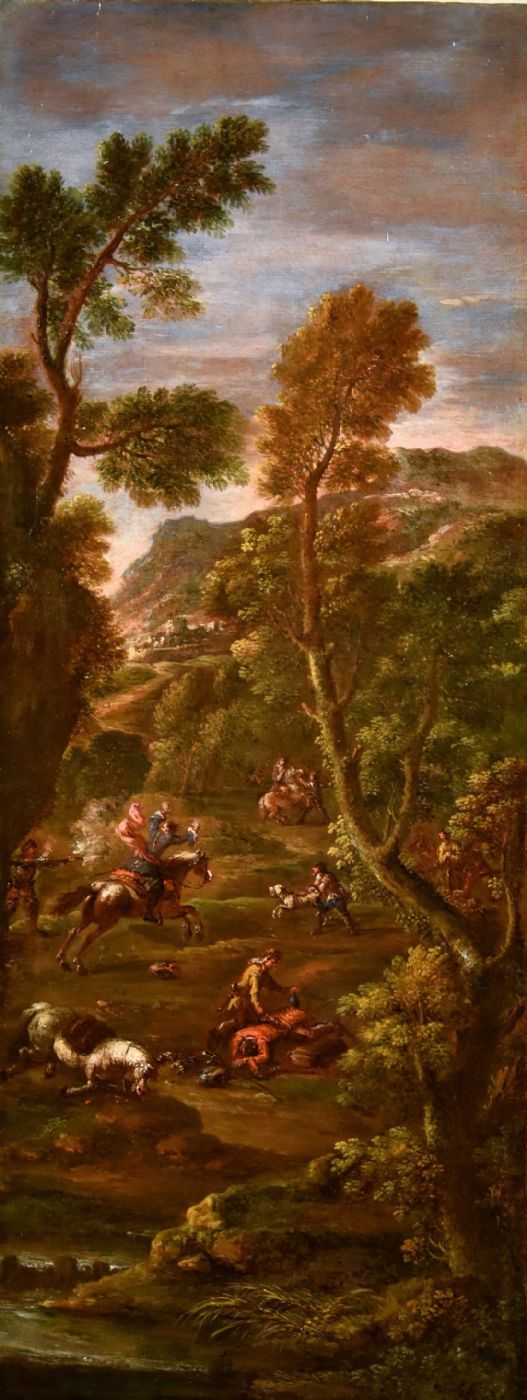
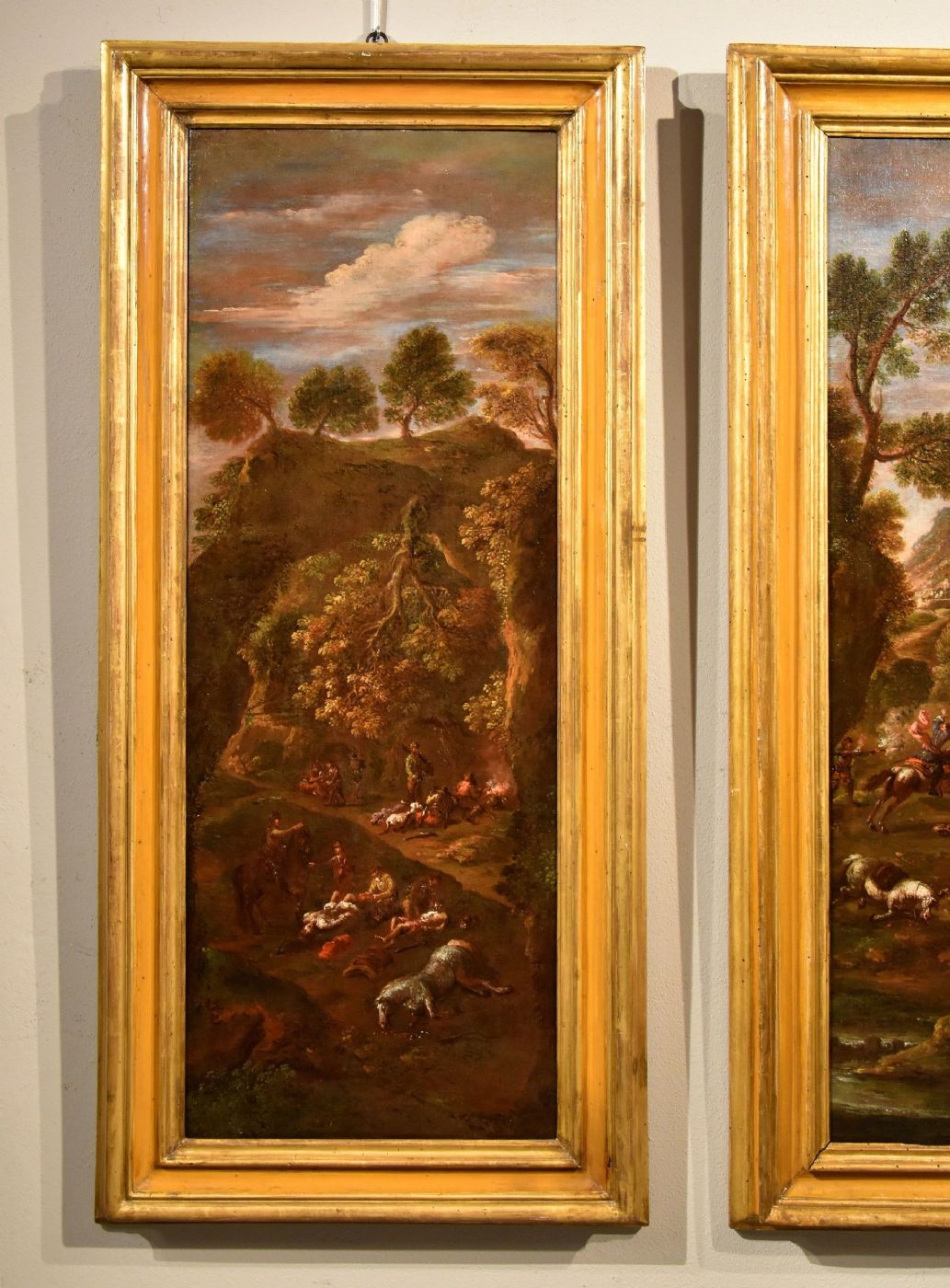
Dopo l'assalto (After the Assault)
Oil on canvas, 108 x 42 cm each
In frame 128 x 62 cm.
We thank Dr. Federica Spadotto for having studied and attributed the present pair of paintings to the catalogue of Giuseppe Zais. Below we offer the in-depth critical study.
Details: link https://www.antichitacastelbarco.it/it/prodotto/giuseppe-zais--pendant-di-dipinti
The Venetian landscape of the golden age has accustomed the public and scholars alike to extraordinary - as well as unexpected - genre contaminations, sealing an artistic stage very permeable to international influences. This is undoubtedly due to the "forest" origin linked to the rural repertoire, which records the fundamental contribution of Northern European references (Spadotto, 2014) regarding the inspiration and expressive alphabet of local artists.
Among the latter, the experience of Giuseppe Zais (Belluno 1709 - Treviso 1781) is fundamental, a painter who emigrated to the city of the lion, likely between the 1730s and 1740s, where he would have conducted his apprenticeship with the battle painter Francesco Simonini (Parma, 1686 - Venice or Florence, post 1755). Indeed, it was a common practice for any painter who aspired to an official role - i.e., registration with the Guild - to train alongside an established figure, such as the Parmesan master. More than a true apprenticeship, we must imagine the young painter working as a helper grappling with the military themes that had made Simonini famous in Venice, where commissions abounded, requiring part of the work to be entrusted to a capable assistant (namely, our Giuseppe).
Only recently, thanks to the pictorial essays made known by Egidio Martini, has a core of paintings executed by Giuseppe (fig.1) been identified, closely adhering to his master's repertoire and which for a long time had been believed to be genuine Simonini works.
The analysis of these examples highlights close formal and stylistic affinities with Francesco's counterparts, onto which Zais grafts some guiding characteristics that would become typical of his style, including the prominent round tower and the distinctive physiognomy of the faces.
As the years went by, our artist archived this experience in favor of sun-drenched landscapes of Zuccarelli inspiration, as well as collaborating with his son Gaetano (documented between 1765 and 1798) in his preferred genre. And it is precisely a landscape created by the latter and made known by the author (Spadotto, op.cit., 2014, fig. 284, plate XLV; fig. 2) that offers an important documentary piece to shed light on the artist's final creative period, which has been overlooked by sources and lacks autograph works.
In the Landscape devised with figures, statues, and animals at the drinking trough (fig. 2), Zais junior transmits a compendium of his father's production, expressed through a rather dense brushstroke and a chromatic grammar played on "earthy" tones, in line with the revival of Marco Ricci (Belluno, 1676 - Venice, 1730) which was very popular in the second half of the 18th century. Zuccarelli (Pitigliano, 1702 - Florence, 1788) himself had succumbed to the charm of the Bellunese artist, creating the Bull Hunt (fig. 3) now at the Gallerie dell'Accademia in Venice, a true example of the theme, where the same pictorial elements mentioned above emerge.
It is within this context that the notable pendant under examination is placed, which "unfolds" like a true testament to Giuseppe's long artistic journey, from his beginnings as a specialist in battles to his final synthesis at the end of the 18th century.
The soldiers of Simonini become knights at the mercy of an attack by brigands, who kill them and strip them of all belongings, as happens in "After the Assault," where the compositional layout of the post-battle encampment hosts the outcome of the fatal crime, perpetrated by figures in whom we recognize the clothing and physiognomy of the peasants immortalized by Giuseppe in his famous rural scenes.
The taste for detail, of clear Zuccarelli ancestry, merges with a rapid, immediate style that does not, however, betray the definition of the foliage in the typical, large trees that frame the scenes, where Ricci's inspiration merges with the Northern European "fashion" prevalent in Venetian figurative culture in the late 18th century.
Despite what public taste expressed for much of the Golden Age, electing languid Arcadian poetry as the realm of its aesthetic ideals, the decline of the Serenissima sees the re-emergence of the echoes of that "stepmother nature" frequented by the first generation of landscape painters, which returns, highly relevant, as a metaphor for a world destined to extinguish itself about a decade after his death.