Pair of gilded devotional panels with scenes from the life of the Virgin, Veneto, late 18th century
Description:
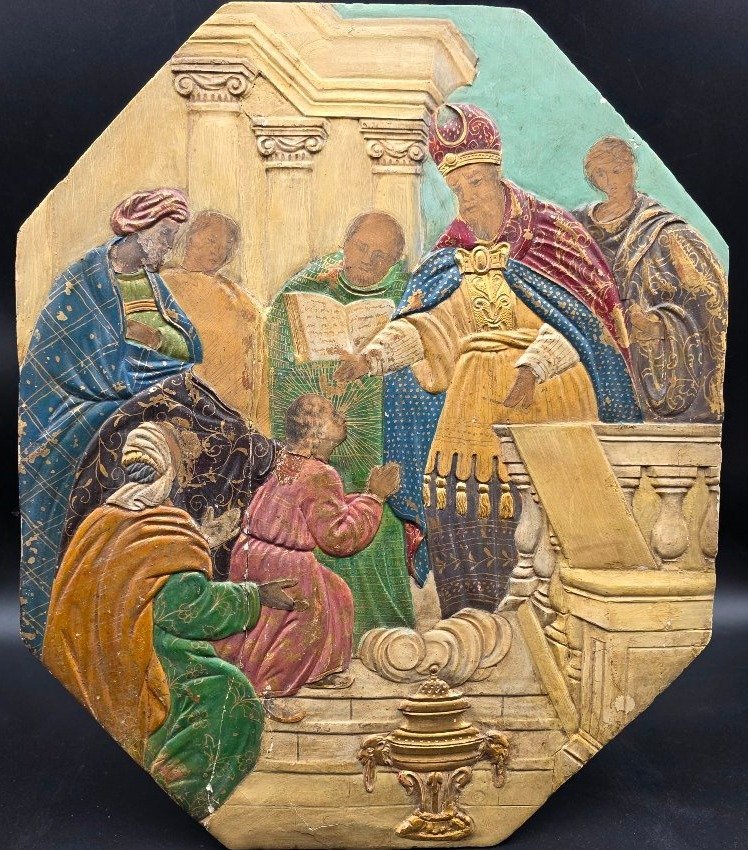
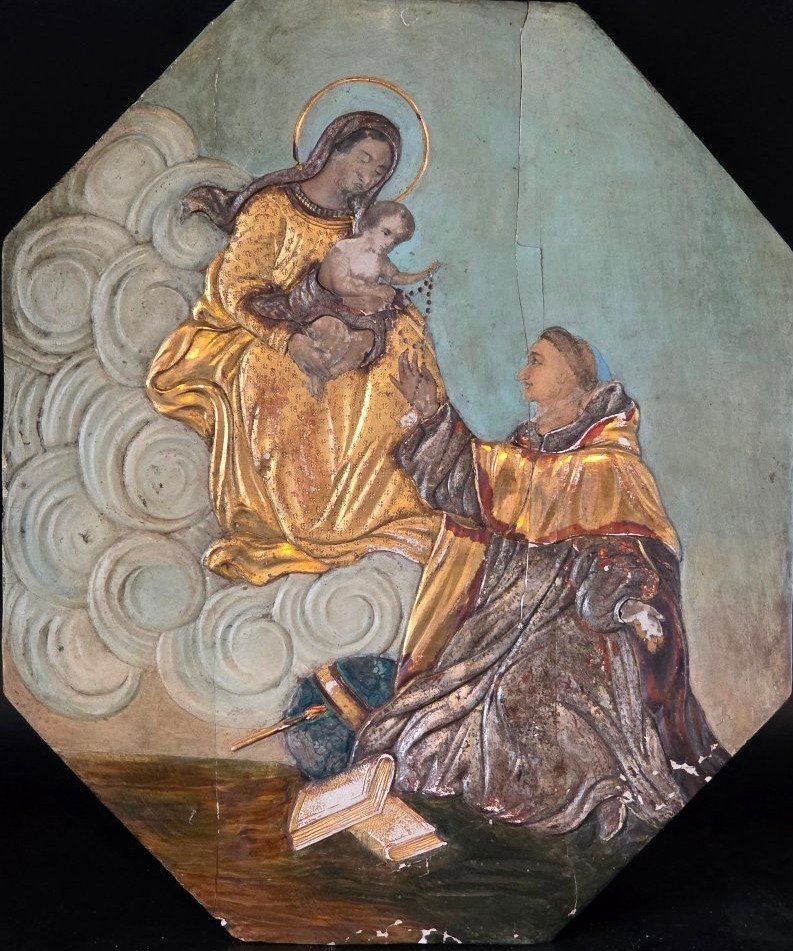
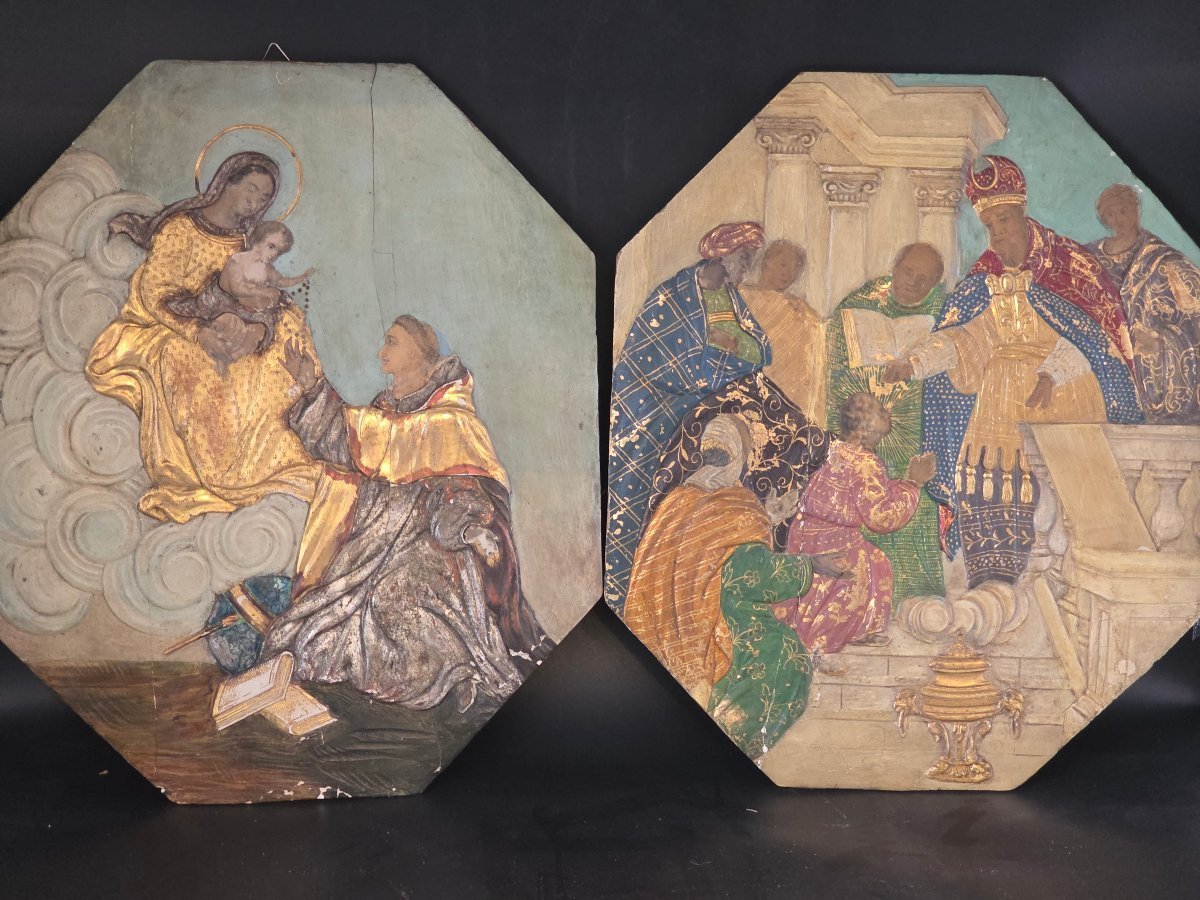
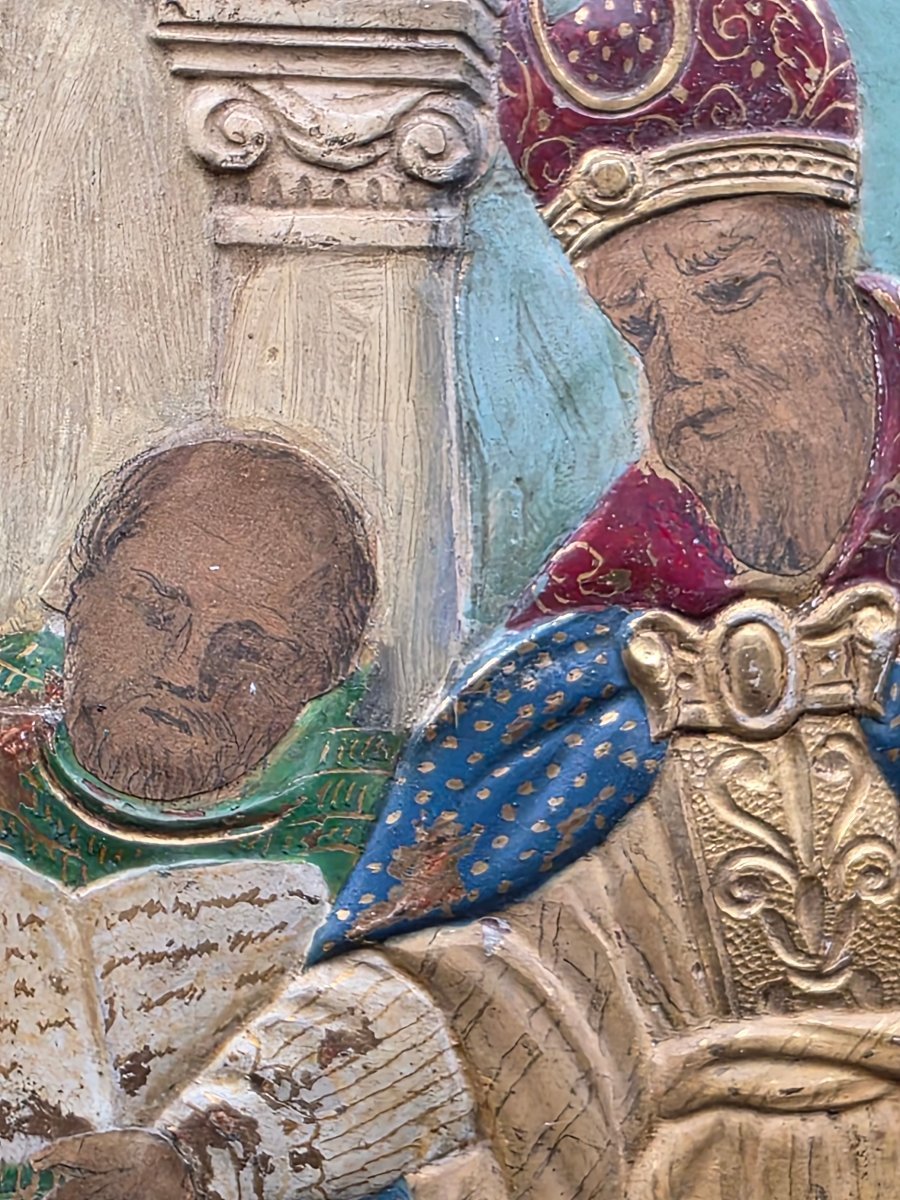
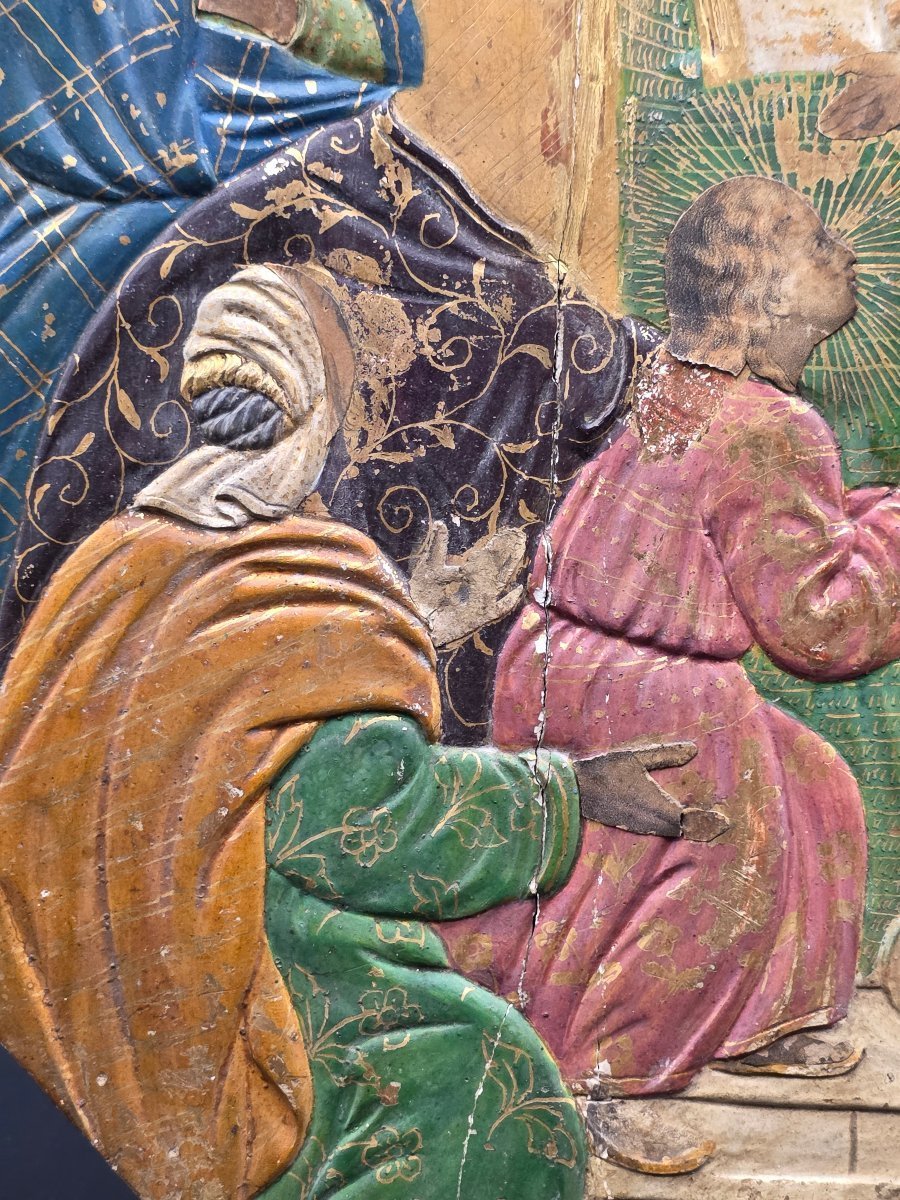
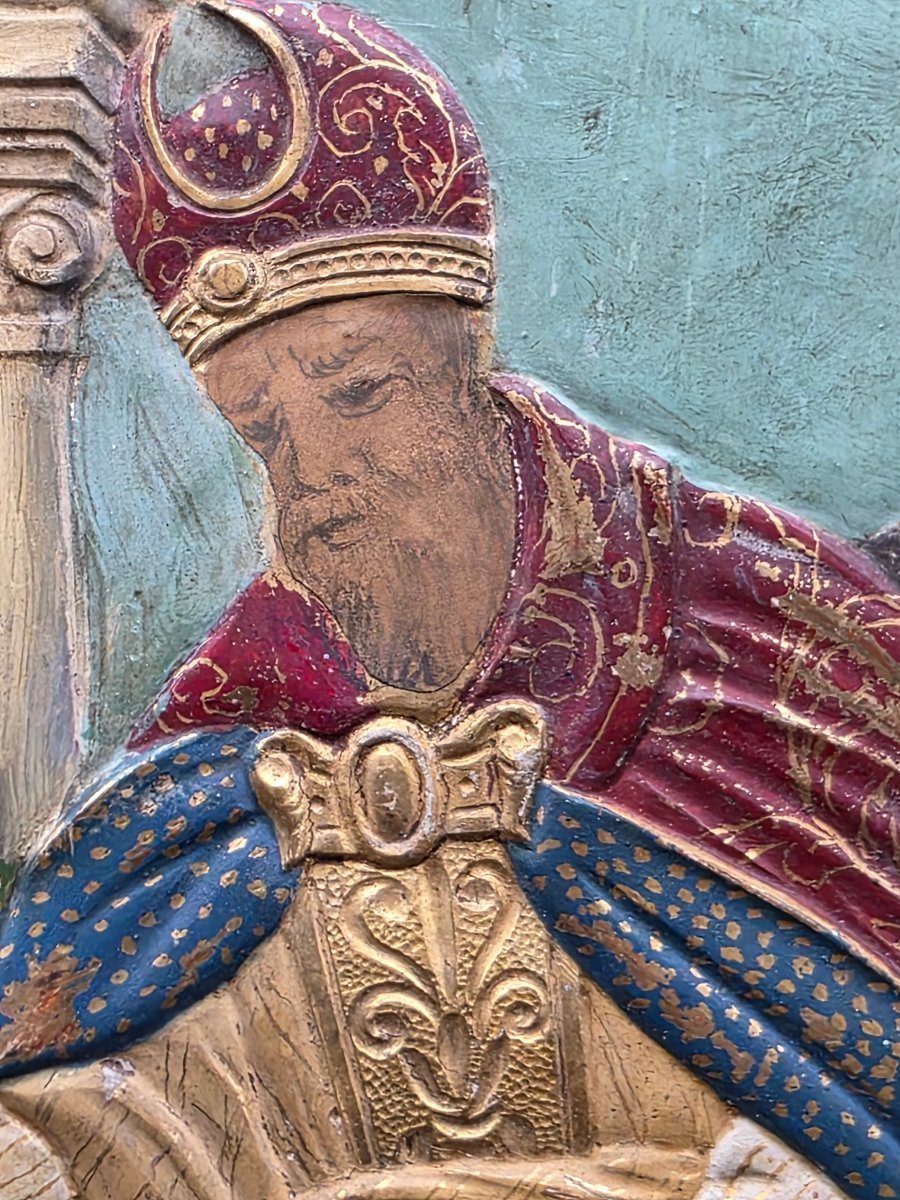
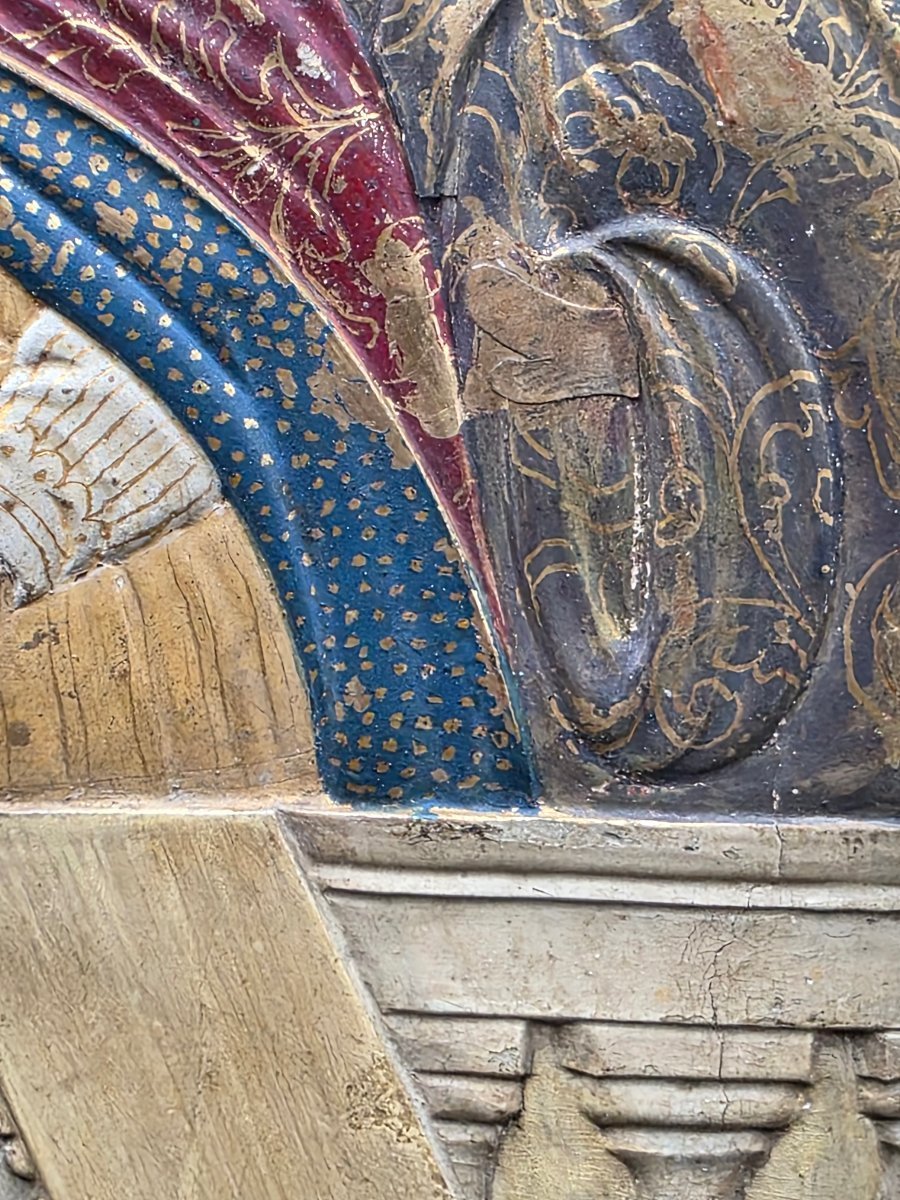
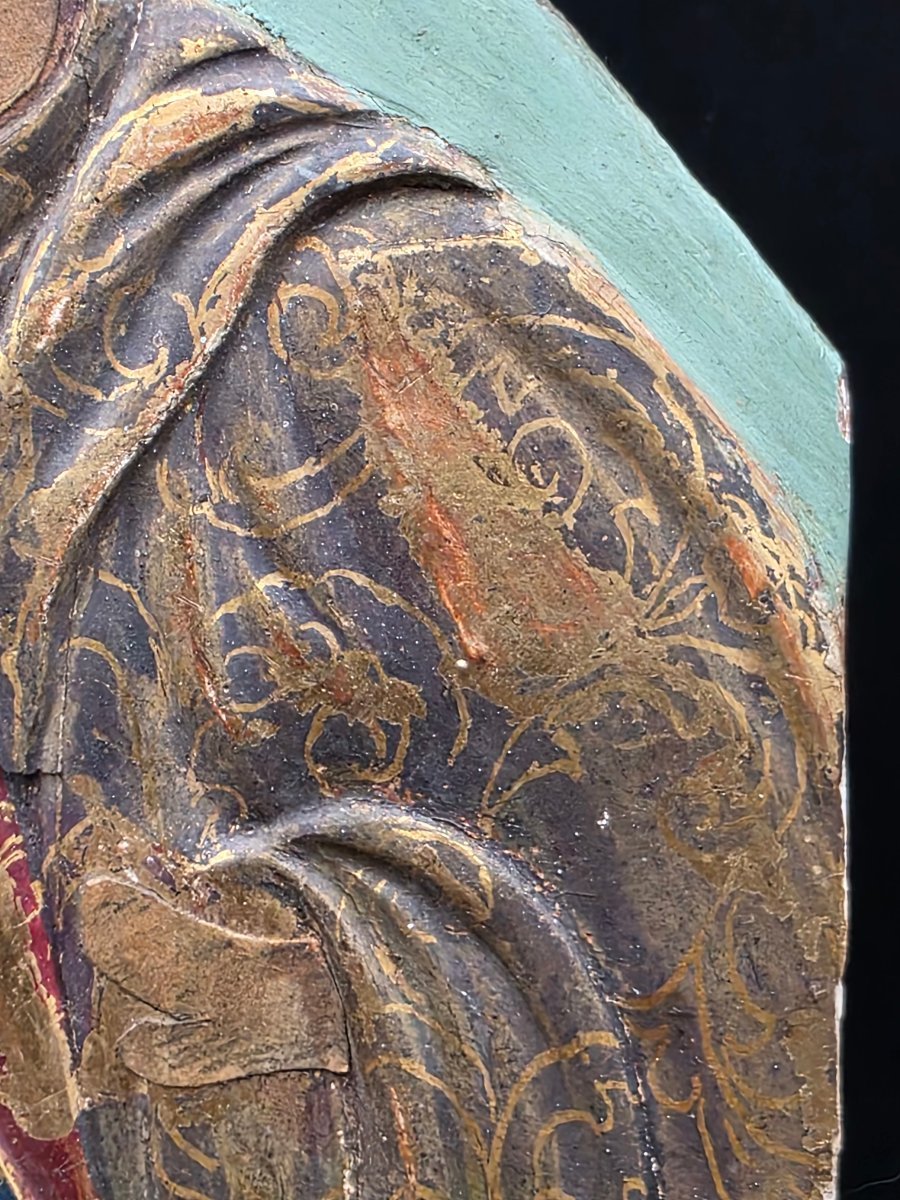
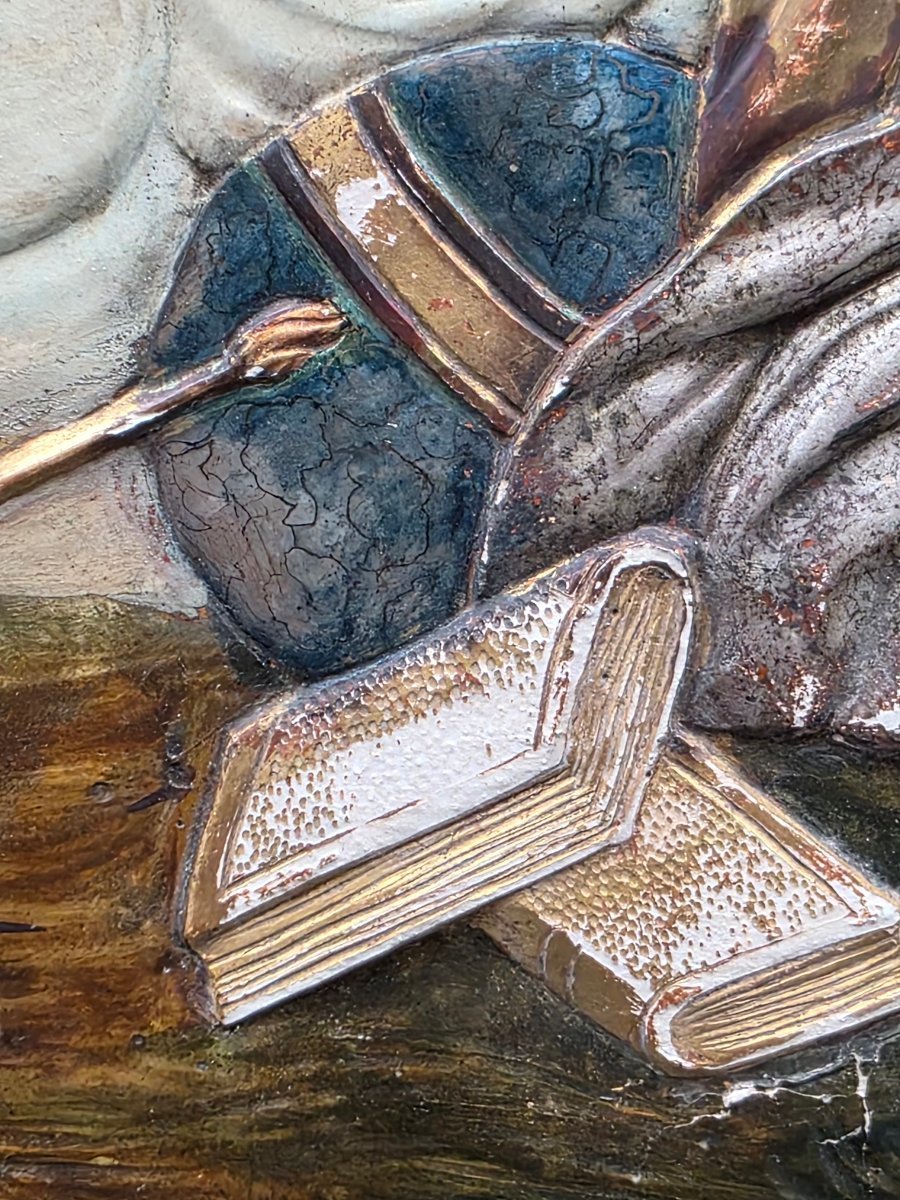
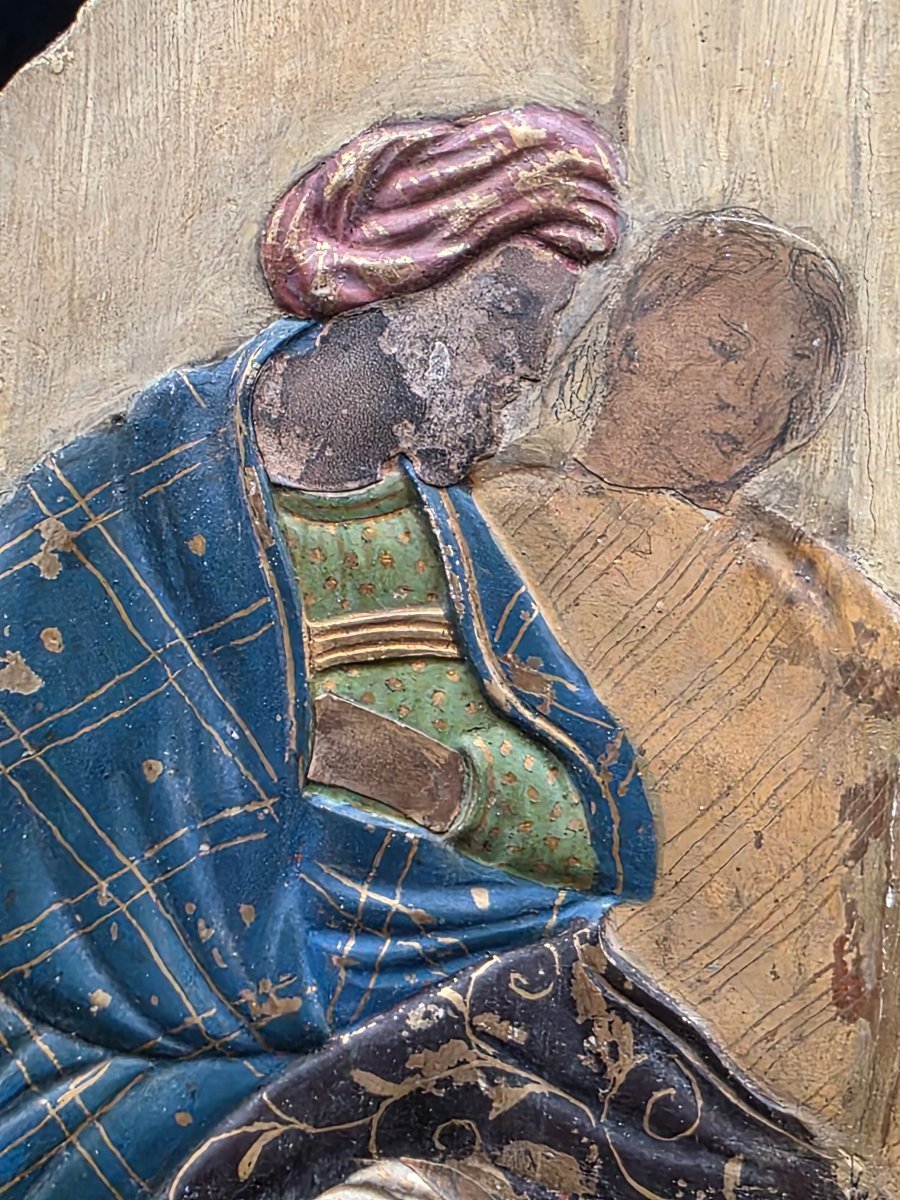
Interesting pair of shaped wooden devotional panels, decorated in relief, with polychromy, gilding, and silvering, depicting the Presentation of the Virgin at the Temple and the Madonna of the Rosary with Saint Dominic. The works likely belong to a larger Marian cycle and testify to a refined decorative technique widespread in northern Italy between the late 18th and early 19th centuries. The compositions are created through complex modeling in stucco and pastiglia applied to the wooden support, subsequently gilded, silvered, and polychromed, within which the figures of the sacred characters are placed. The execution technique adopted is particularly refined. The surfaces are enriched with gilding, silvering, and polychromies embellished with extensive sgraffito decorations, obtained by incising the superficial layers of paint to reveal the underlying metallic base. This process is particularly evident in the garments, draperies, and architectural elements, where the rich tapestry of ornamental motifs gives the compositions remarkable decorative liveliness. The surfaces also feature fine decorative punches and drills that further enhance the backgrounds and gilding, in execution methods attributable to the Venetian ornamental tradition of the late eighteenth and early nineteenth centuries. The presence of figures created by applied prints is also particularly interesting, limited mainly to faces and hands, prepared from the origin of the execution and perfectly integrated into the decorative structure. In terms of type, quality, and technical characteristics, these images appear attributable to the tradition of the famous devotional prints distributed by the Remondini manufactory in Bassano or closely related productions within the same cultural sphere. The panel with the Presentation of the Virgin at the Temple depicts the young Mary welcomed by the High Priest within a monumental classical architecture, while the second depicts Saint Dominic kneeling in the act of receiving the Rosary from the Virgin with Child, one of the most widespread iconographies in Dominican devotion between the 17th and 18th centuries. The shaped form of the supports, the technical homogeneity, and the close iconographic relationship between the scenes suggest a common origin and original belonging to a more complex devotional apparatus, probably dismantled over time. Condition: Generally good. The gilded and silvered surfaces are still particularly well-preserved and retain much of their original decorative quality. There are physiological movements of the wooden support, some cracks, and old consolidation interventions likely attributable to the removal of the panels from their original location. The applied figures show some slight abrasions, small losses, and limited pictorial retouching carried out over time, without compromising the overall legibility of the compositions. Rare and evocative examples of Venetian devotional production between the late 18th and early 19th centuries, characterized by the unusual combination of stucco and pastiglia modeling, gilding, silvering, polychromy, and applied prints.