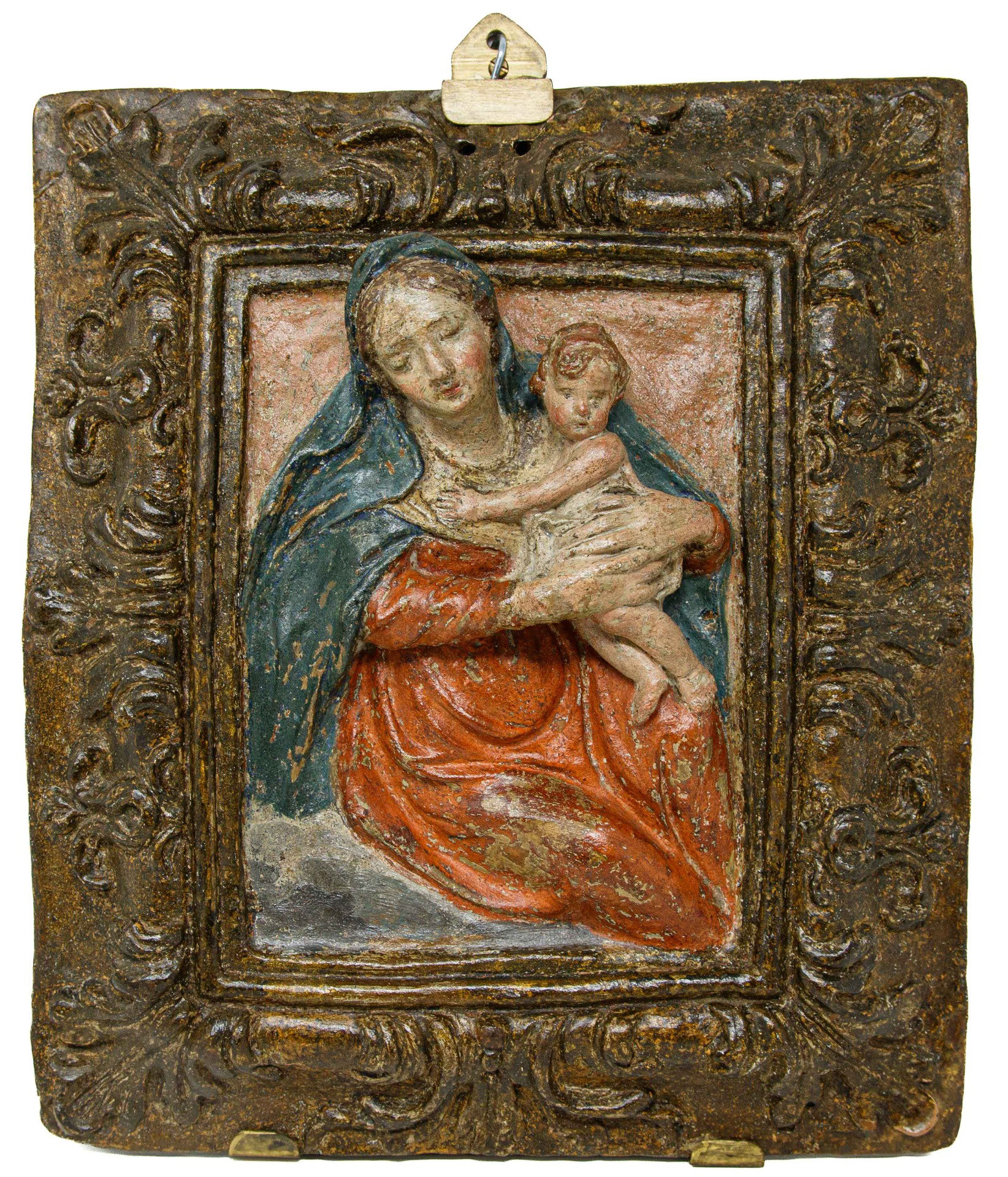
17th Century Bolognese School, Madonna and Child
Description:
17th Century Bolognese School
Madonna and Child
Terracotta, 31 x 36 cm
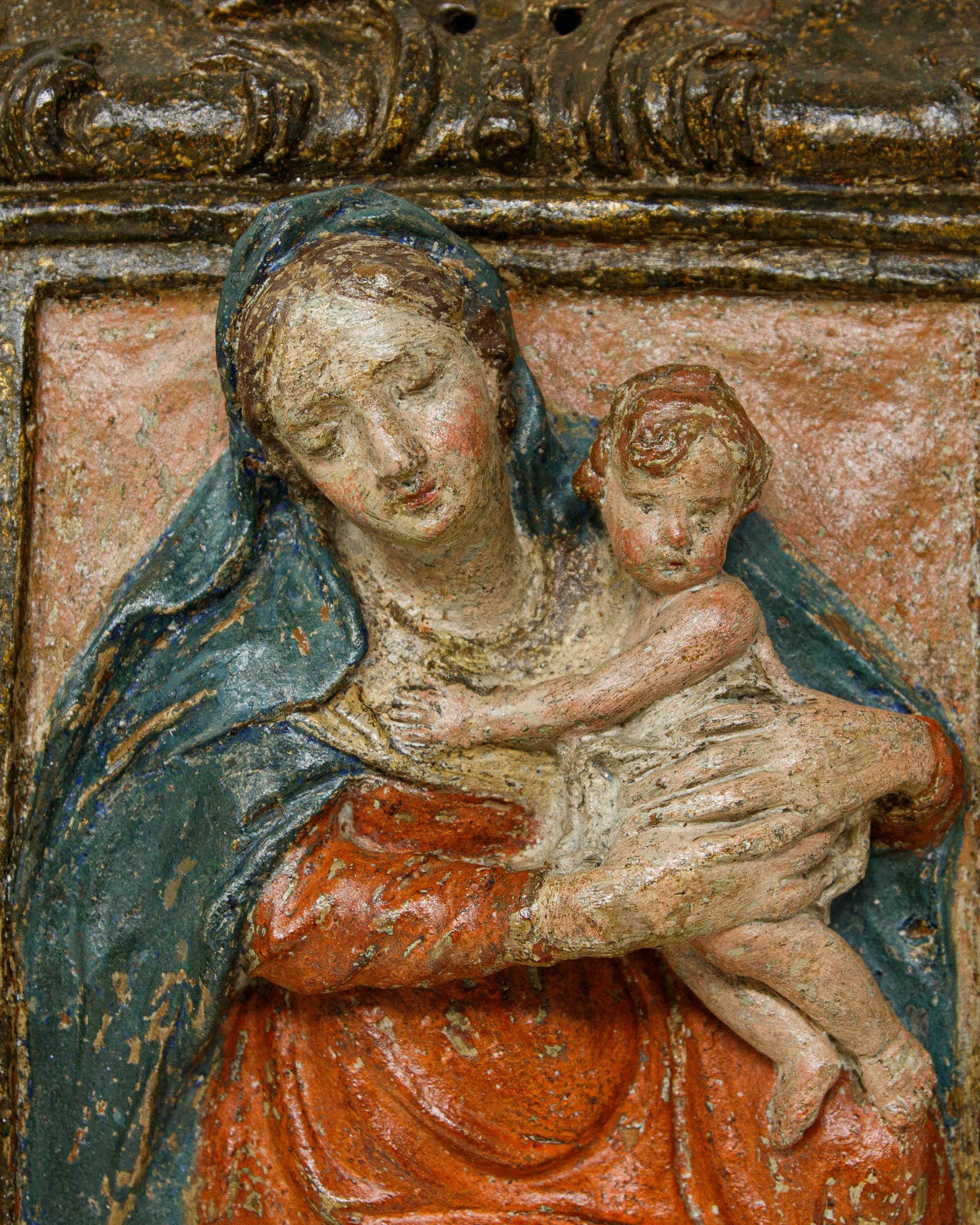
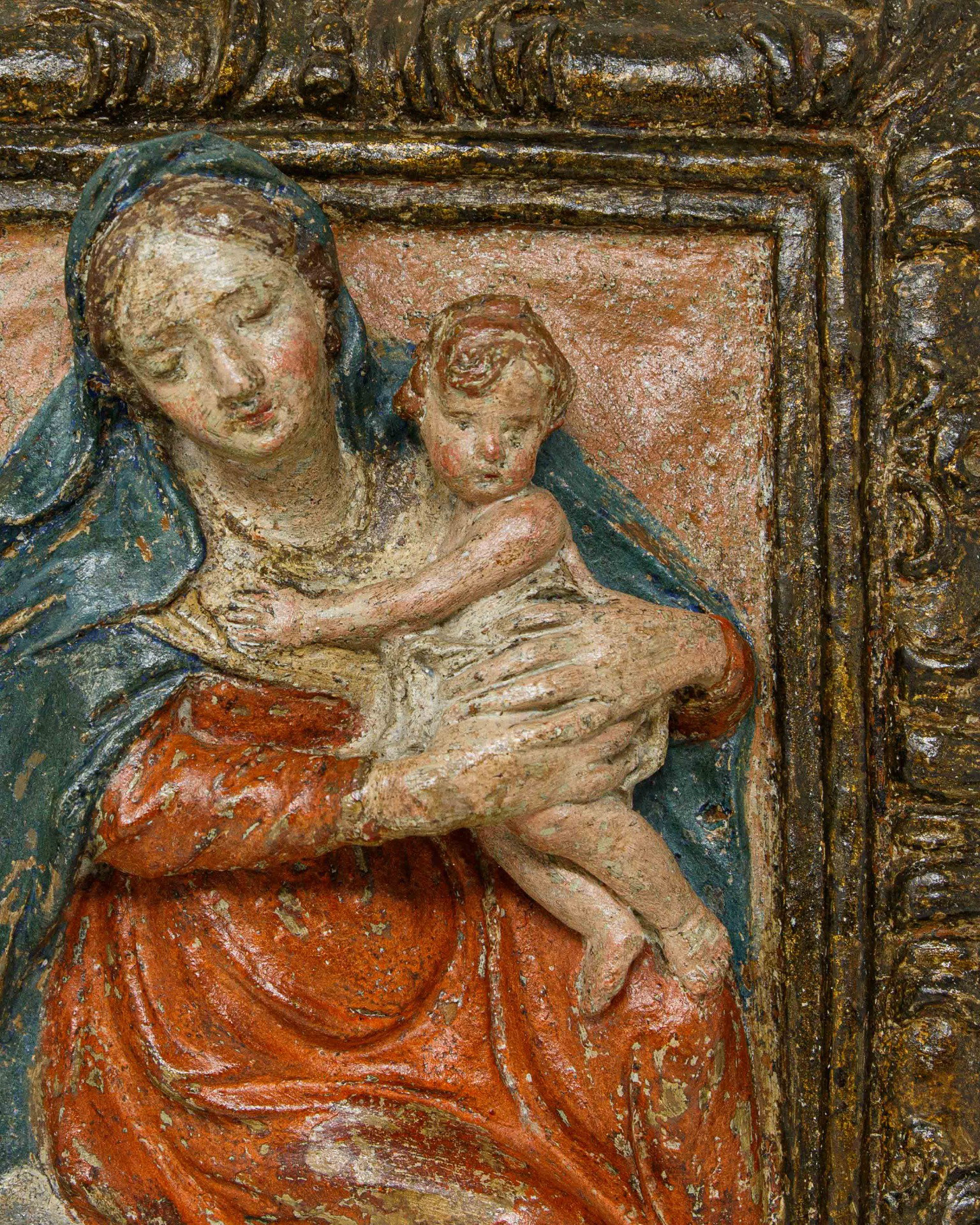
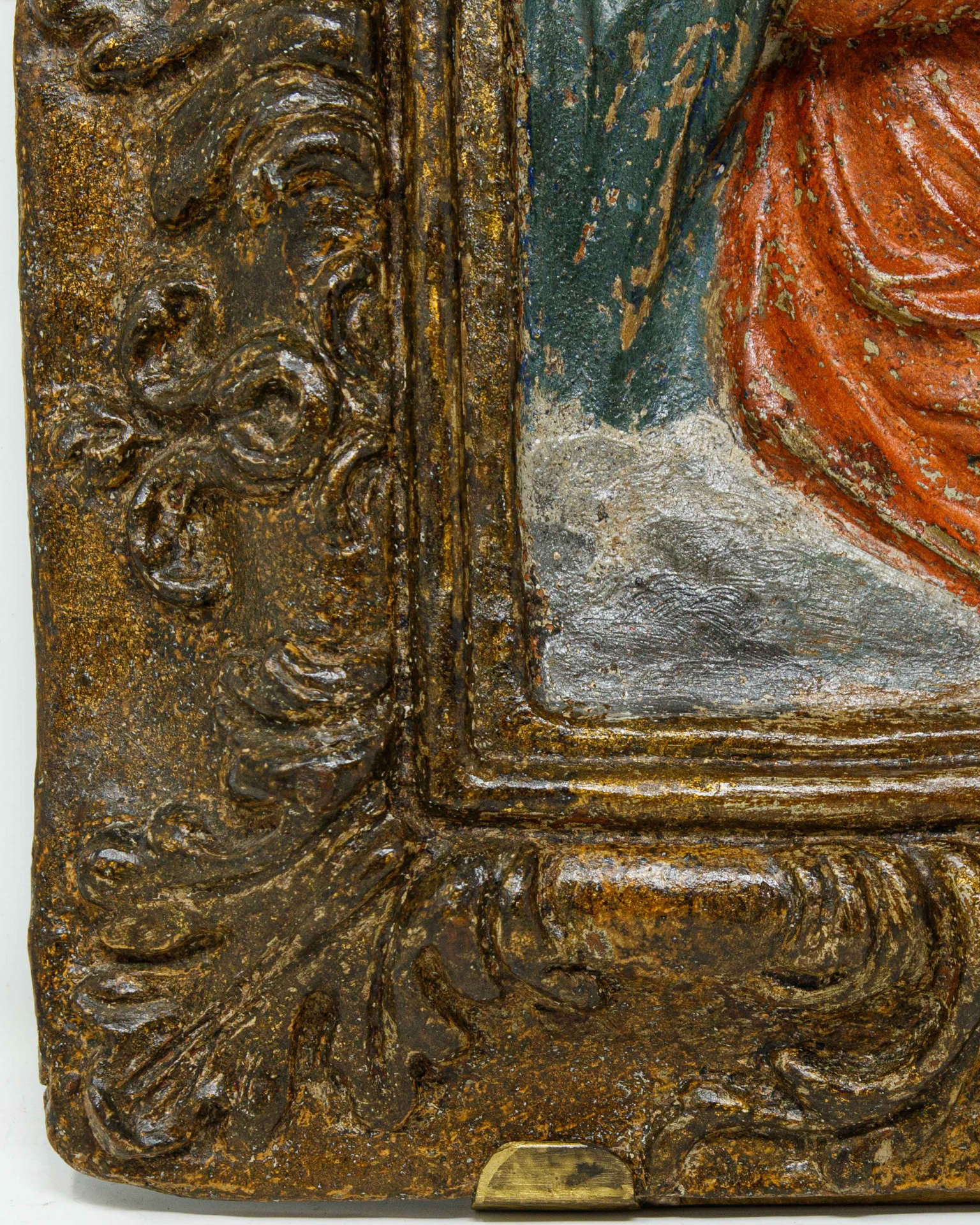
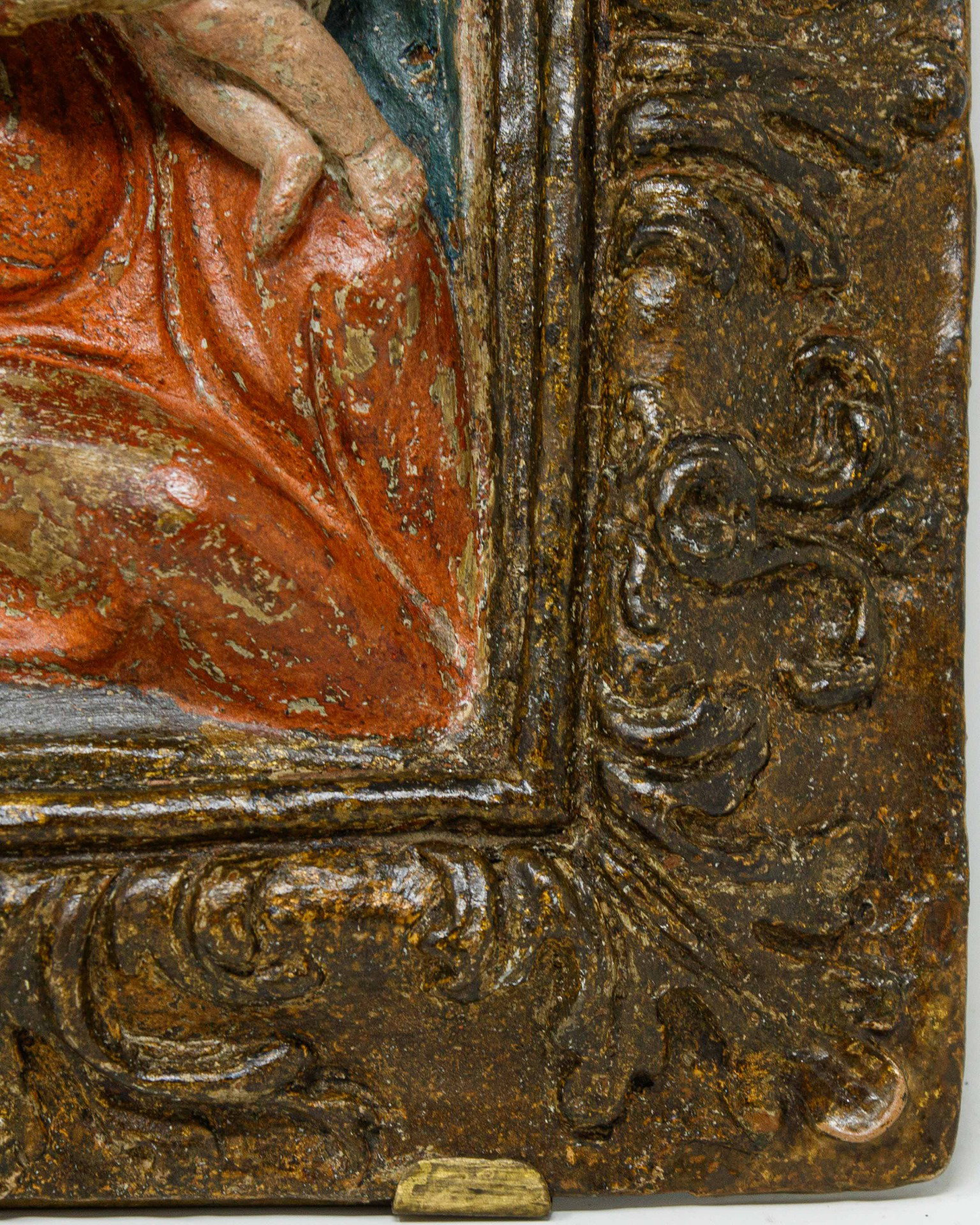
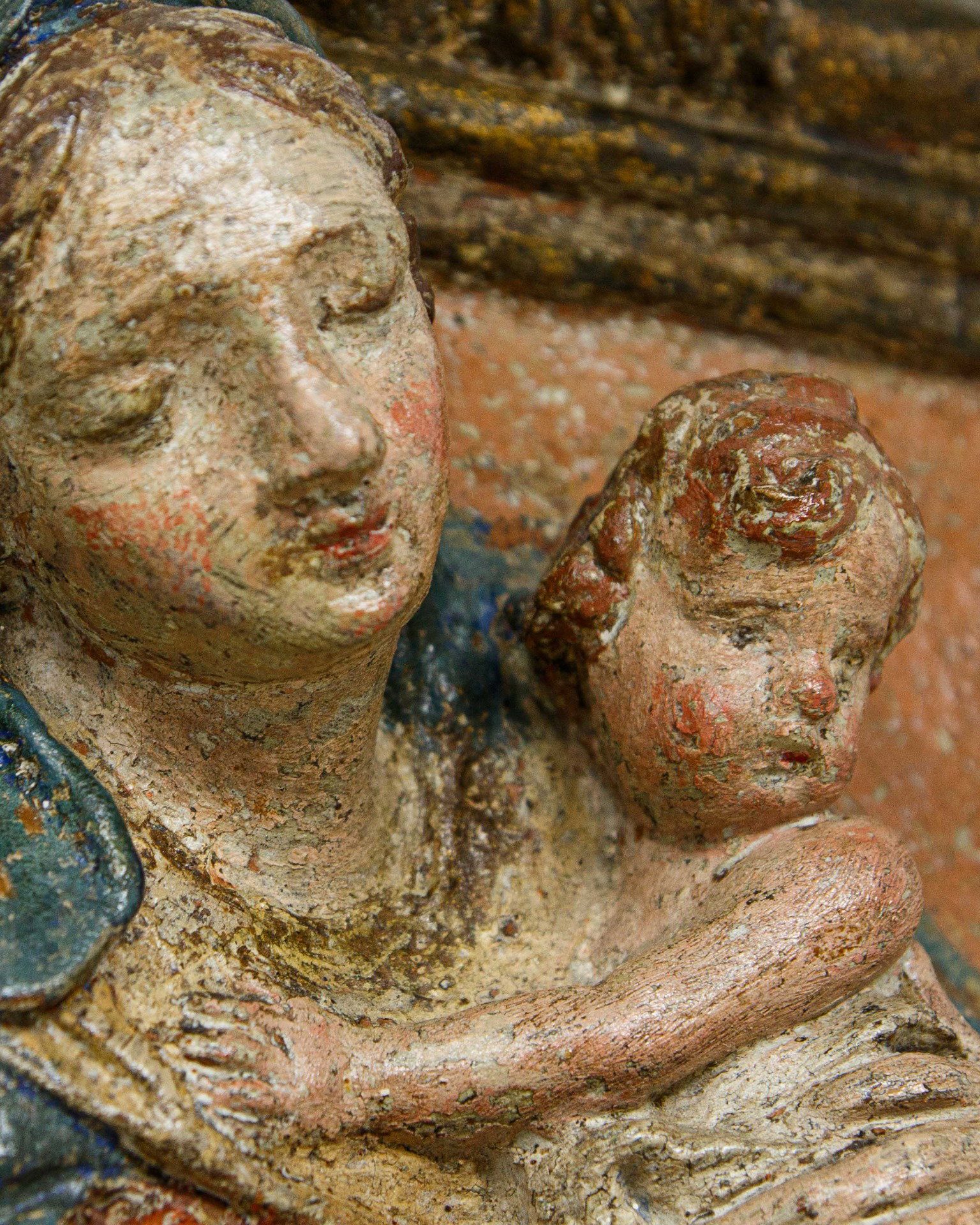
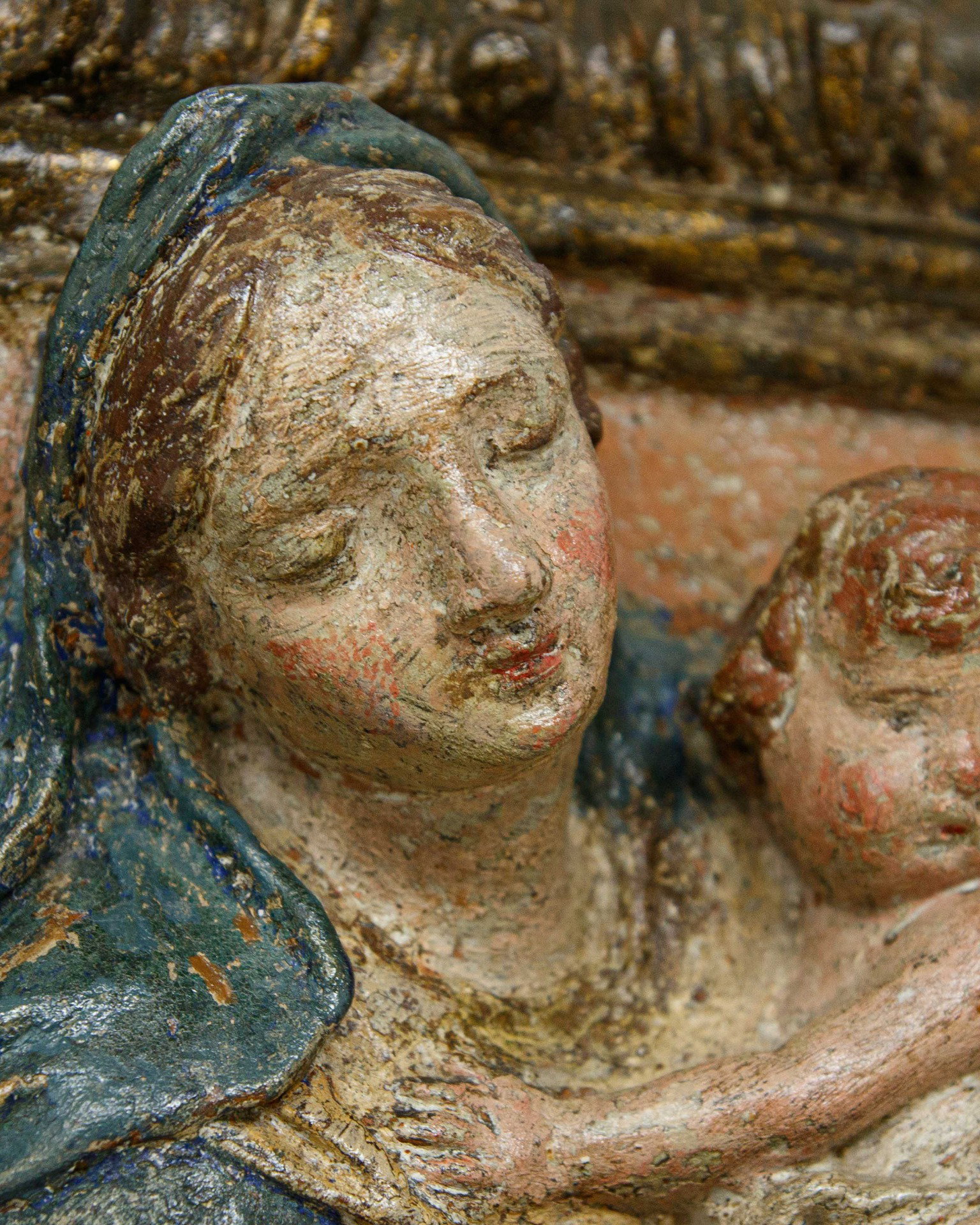
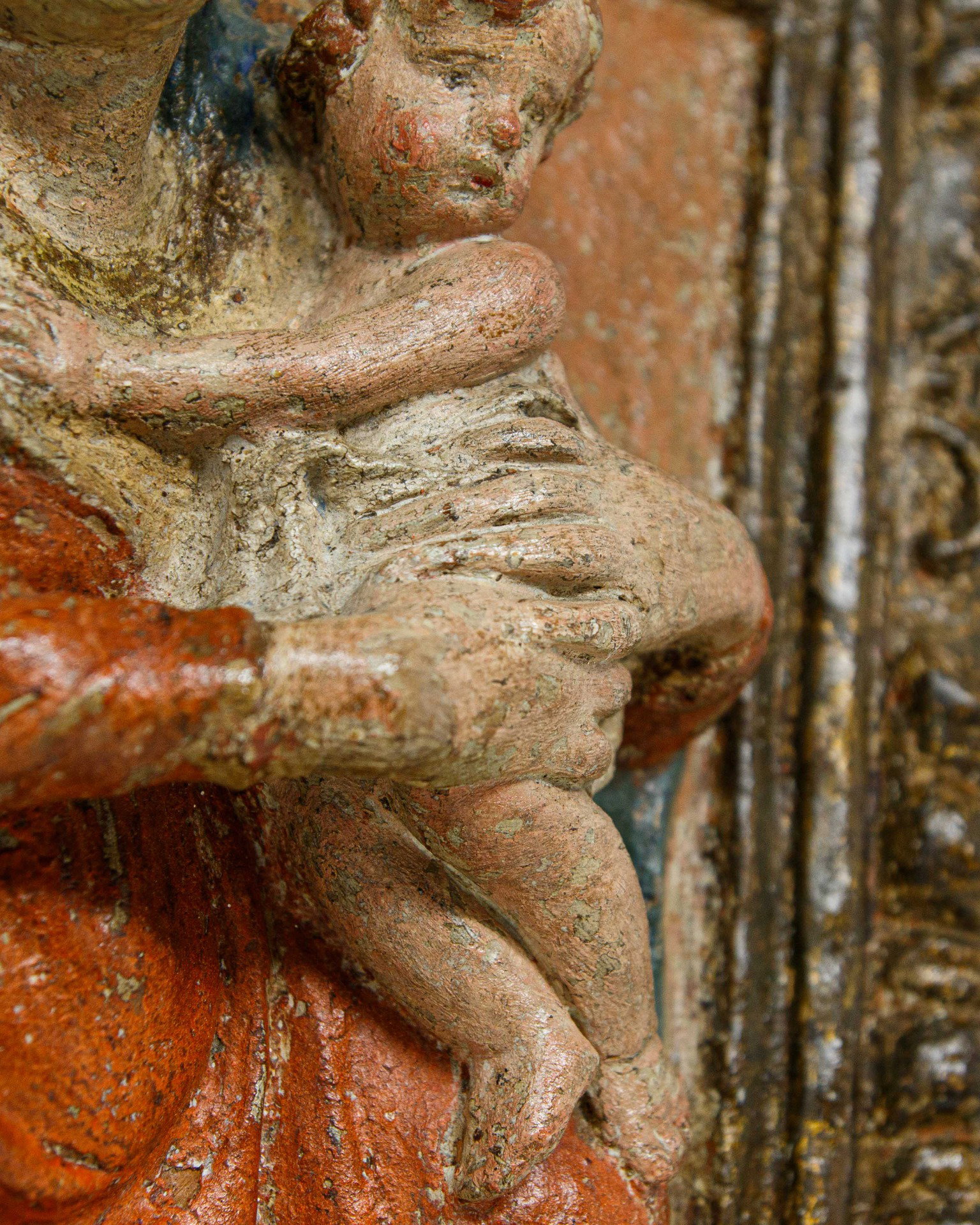
A devotional terracotta relief, polychrome, enclosed within an elaborate carved and gilded frame, decorated with leafy volutes and swirls that frame the sacred scene with typically Baroque plastic vigor. The Virgin, depicted bust-length, is shown in a gesture of intimate maternal affection rendered with expressive naturalism. The blue mantle that envelops her head and shoulders contrasts chromatically with her red robe, ample and draped with a skillful play of folds that give movement and depth to the figure. The Child, lively in his pose, reaches out to his mother in an attitude of confidence that animates the composition, while the sienna-colored background enhances the polychromy of the garments by contrast.
The work is part of the rich sculptural tradition of 17th-century Bologna, a city that in that century saw a flourishing production of devotional terracottas of the highest quality. This tradition was an inheritance from the great period of Properzia de' Rossi and especially Alfonso Lombardi in the previous century, and was renewed by the influence of the Carracci and contemporary Emilian painting. Bologna, a crossroads between Emilian and Roman culture, developed a school of sculptors capable of combining the pictorial softness derived from Carracci naturalism with an intense and direct religious sentiment, intended for private and domestic devotion. Terracotta Madonnas and Children, often enclosed in carved wooden frames like the one present here, were widespread cult objects in bourgeois and aristocratic circles, a testament to a post-Tridentine religiosity that favored images of strong emotional impact and immediate affective readability.