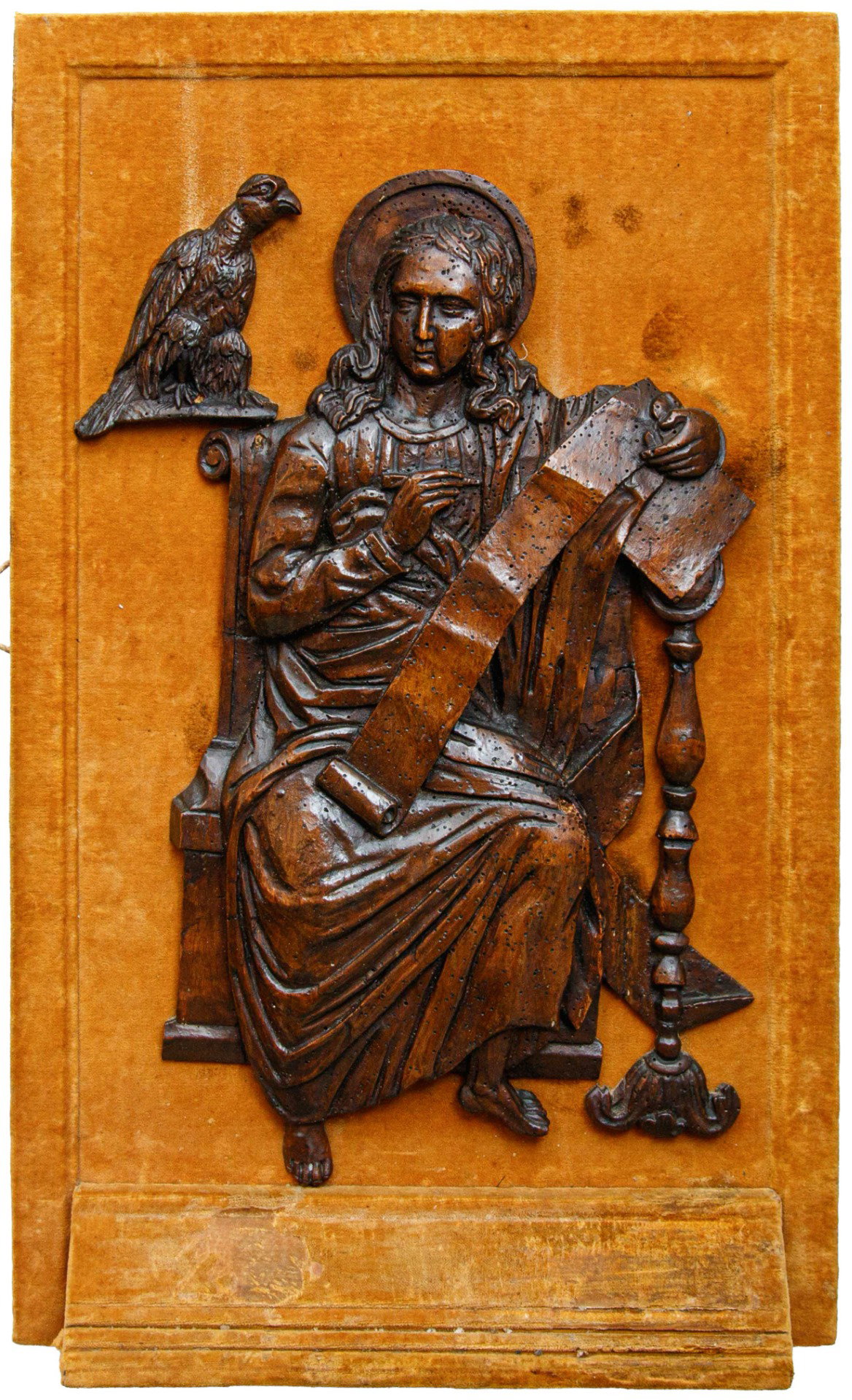
17th century, Panel with Saint John the Evangelist
Description:
17th century
Panel with Saint John the Evangelist
Walnut wood and velvet background, 65 x 40 cm
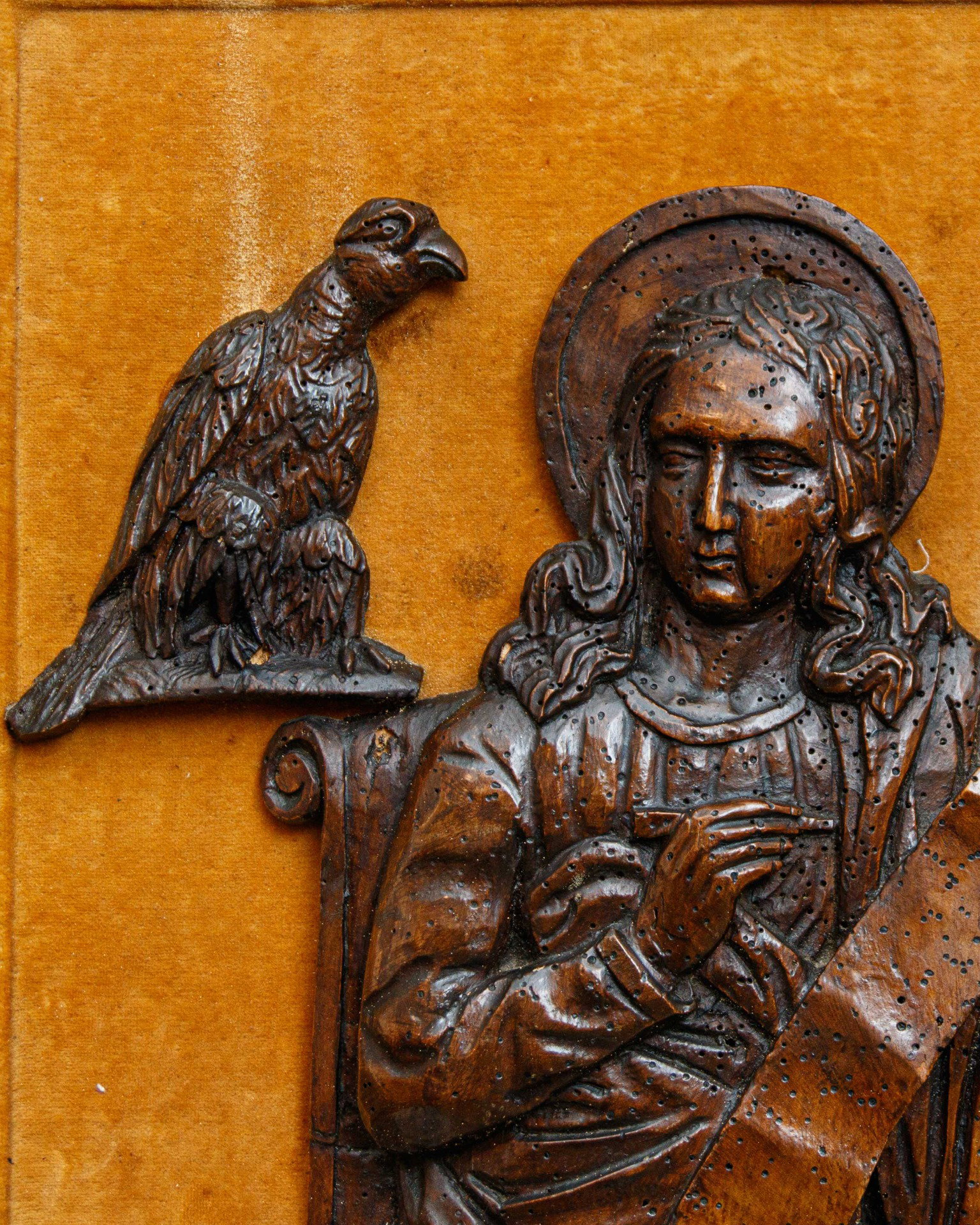
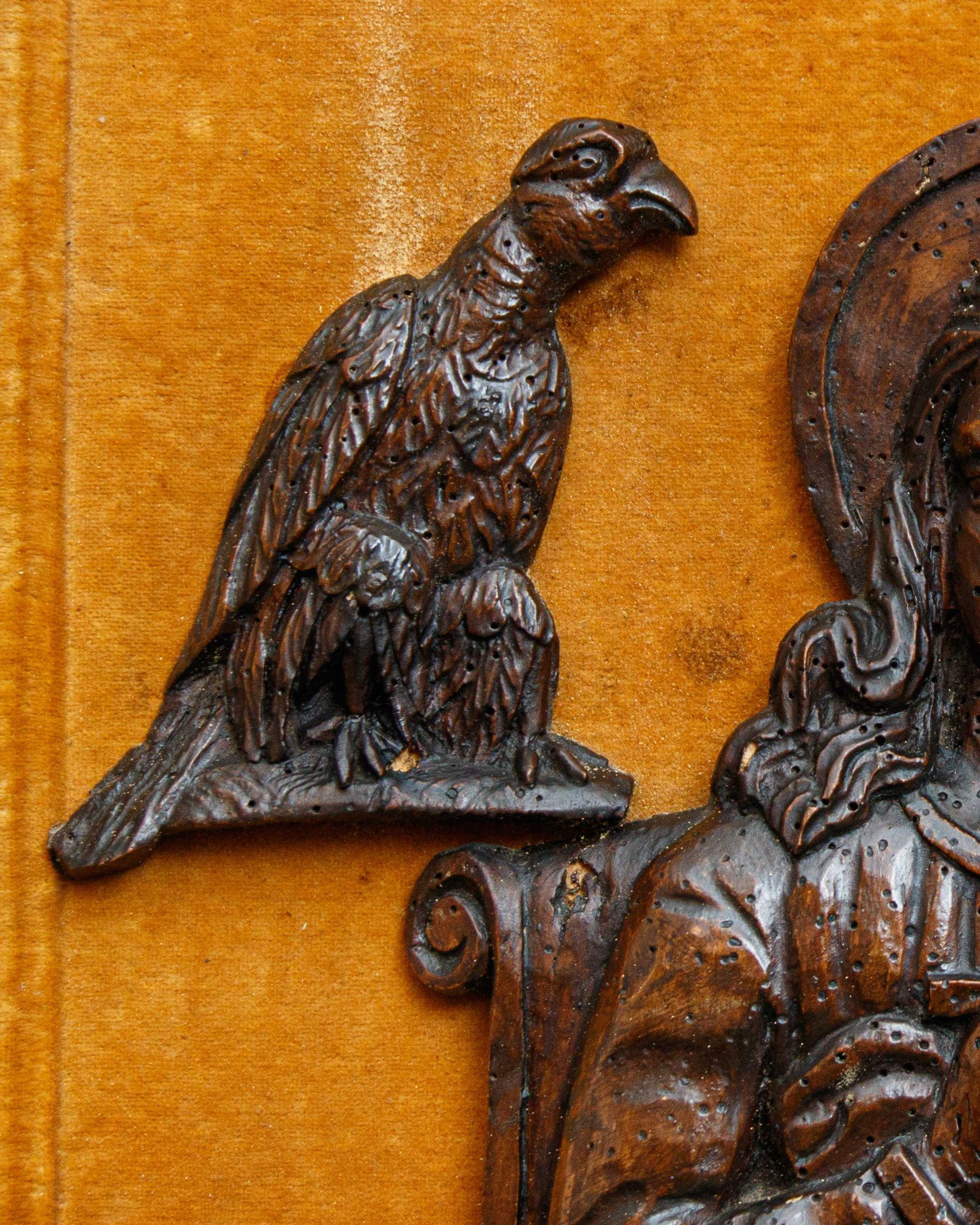
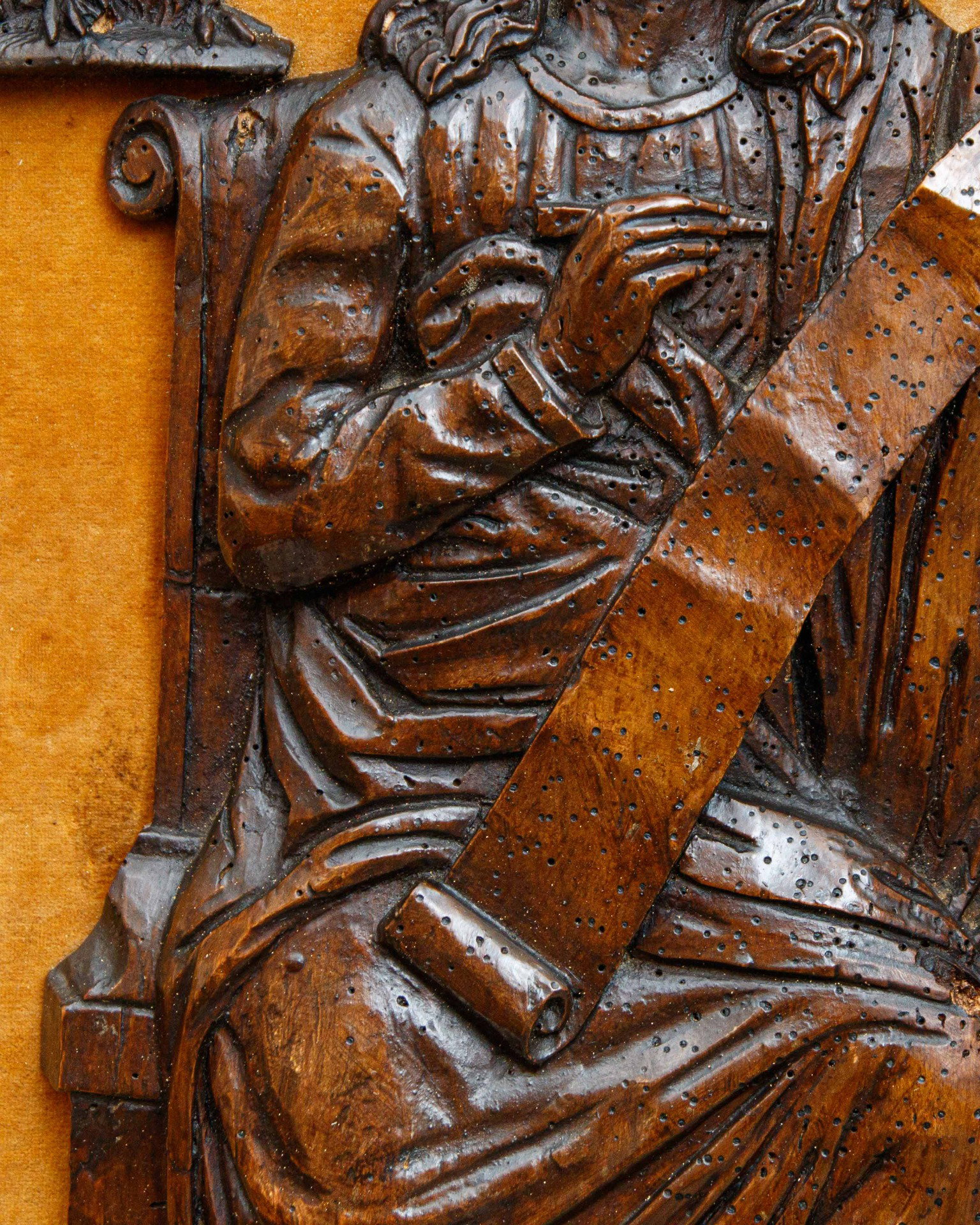
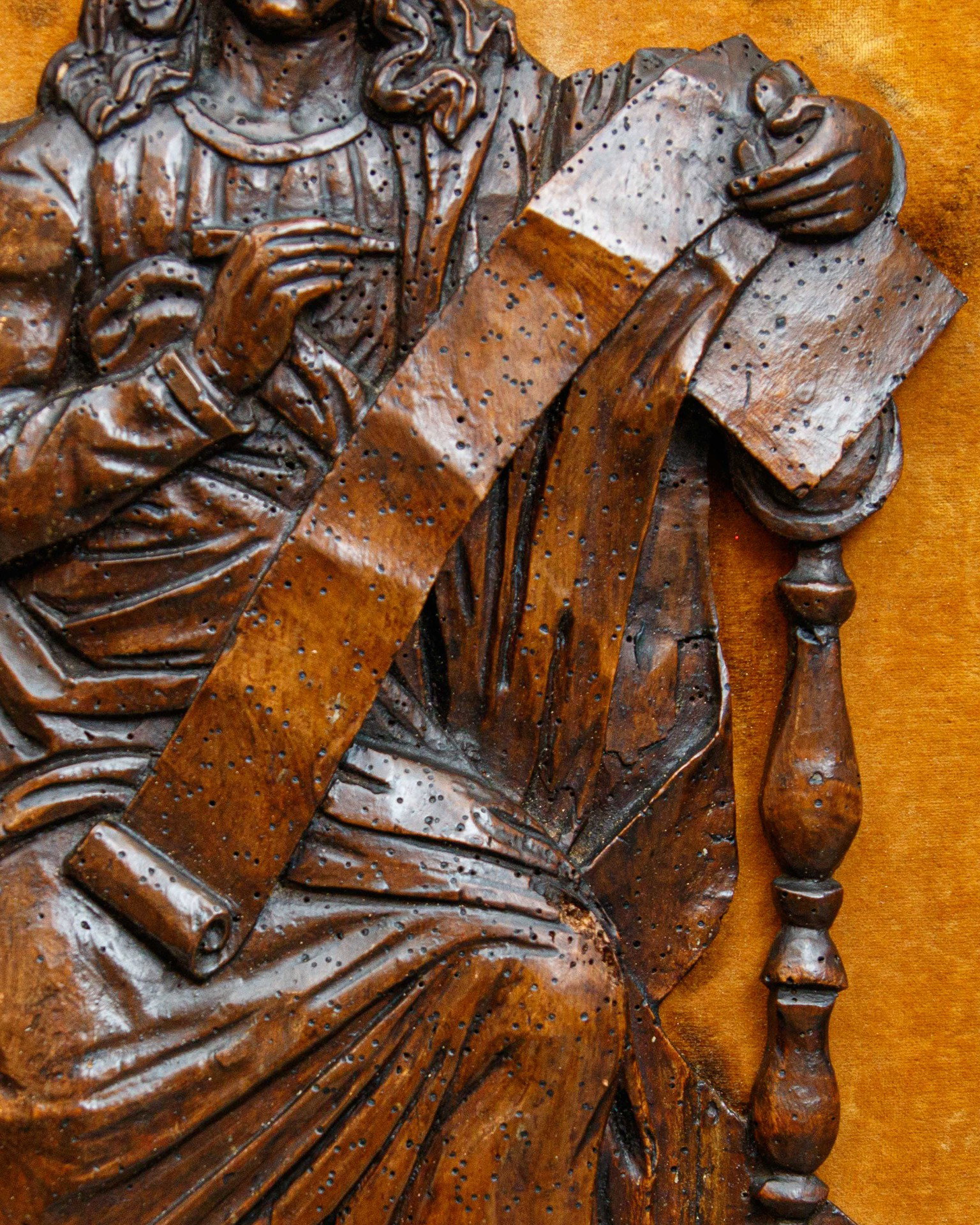
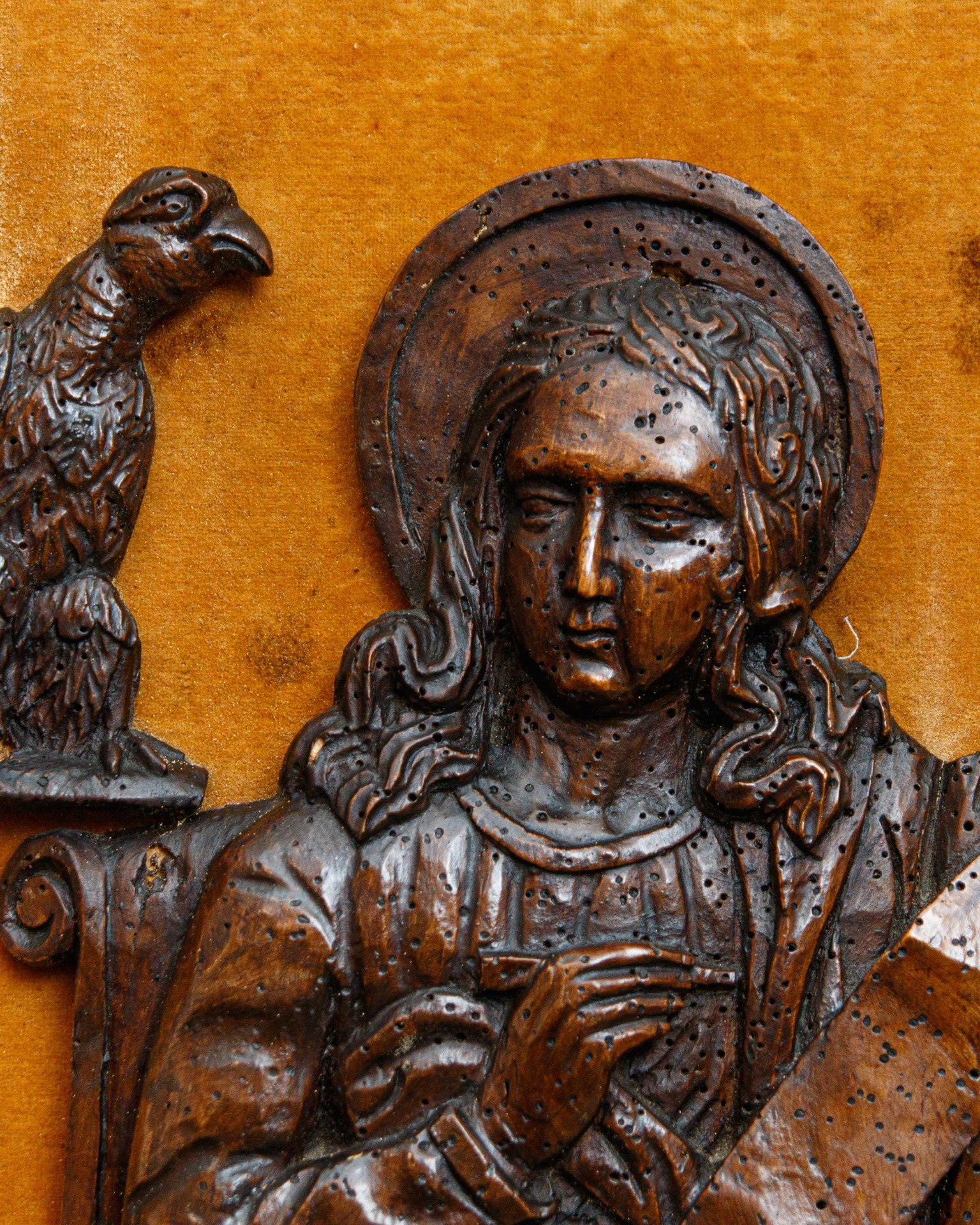
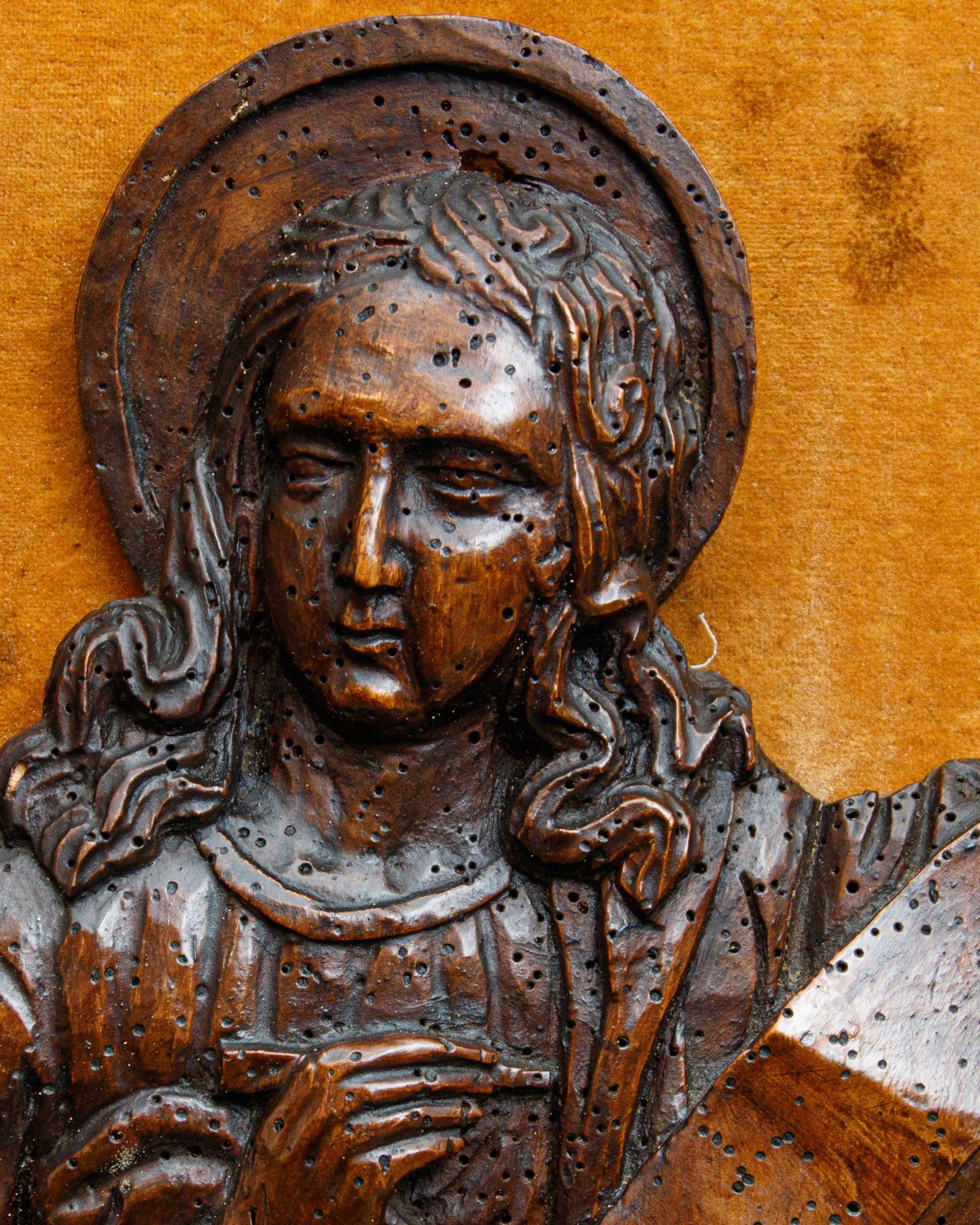
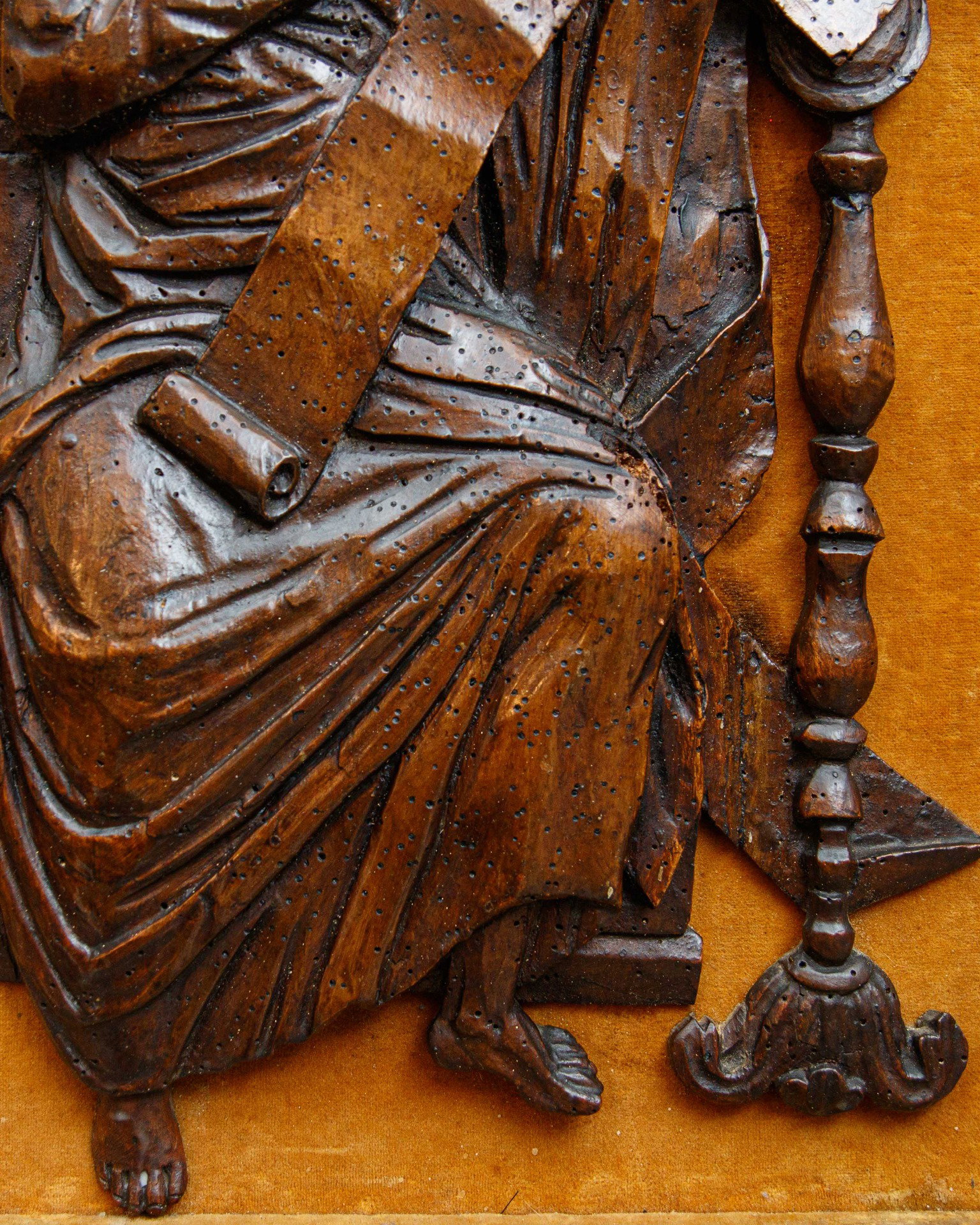
This refined high-relief sculpture, dating from the 17th century and masterfully carved from walnut wood, depicts Saint John the Evangelist, captured in a moment of solemn theological inspiration. The work, likely originally conceived as an integral part of more complex liturgical furnishings (a panel for a pulpit, a choir loft, or the door of a tabernacle), is presented today as an isolated piece mounted on an elegant ochre-yellow velvet panel. The chromatic contrast of the velvet enhances the warm, deep brown patina of the wood. The complex iconography of the Evangelist is rendered here according to the canons of the Counter-Reformation Baroque, merging mystical intimacy with vibrant plastic rendering. The Saint is depicted seated, his body positioned in a slight twist that lends dynamism to the composition. In his left hand, he holds and unfurls a long, unrolled scroll, a symbol of the Gospel and his apocalyptic visions, which slides diagonally across his torso to rest on an elaborate turned balustrade that serves as an ideal perspectival barrier. His right hand is raised in a gesture of argumentation or blessing, with fingers sensitively bent to emphasize the moment of divine revelation. From a formal perspective, the carver demonstrates remarkable technical skill, particularly evident in the rich drapery that envelops the figure. The garments gather in dense folds over his legs, alternating deep shadows with areas of grazing light that accentuate the three-dimensional volume of the body. The features of his face, framed by flowing, dynamic hair that falls onto his shoulders, express serene, youthful concentration, surmounted by a finely carved circular halo decorated with radiating geometric motifs. To the left, perched on a faux architectural element that serves as the back of his seat, appears the eagle, the traditional attribute of John's tetramorph, symbolizing the Saint's ability to elevate his thought to the highest peaks of divine contemplation. The work fits fully within the artistic production of the Central Italian or Po Valley regions, where expressive naturalism was skillfully combined with the devotional needs of the era.