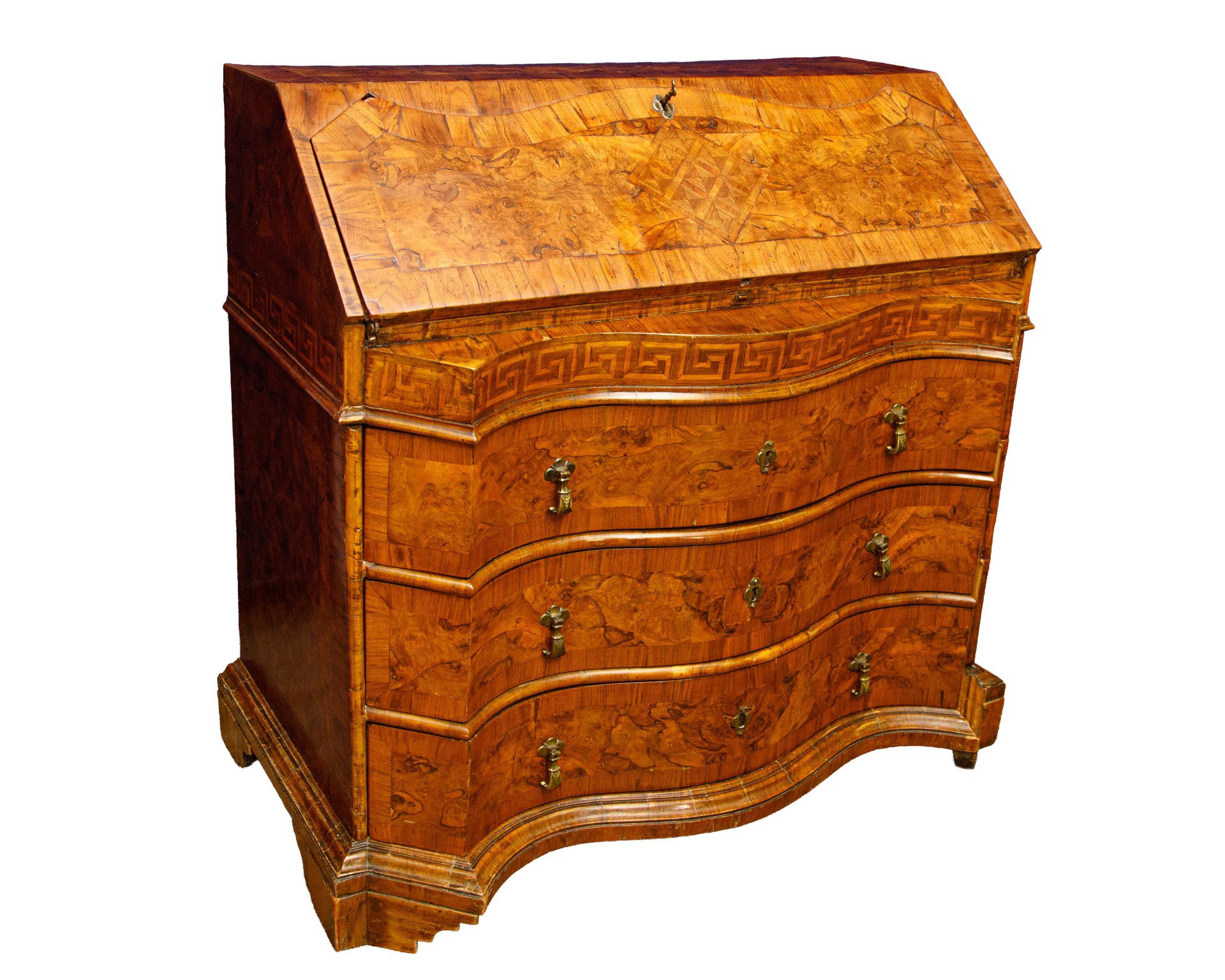
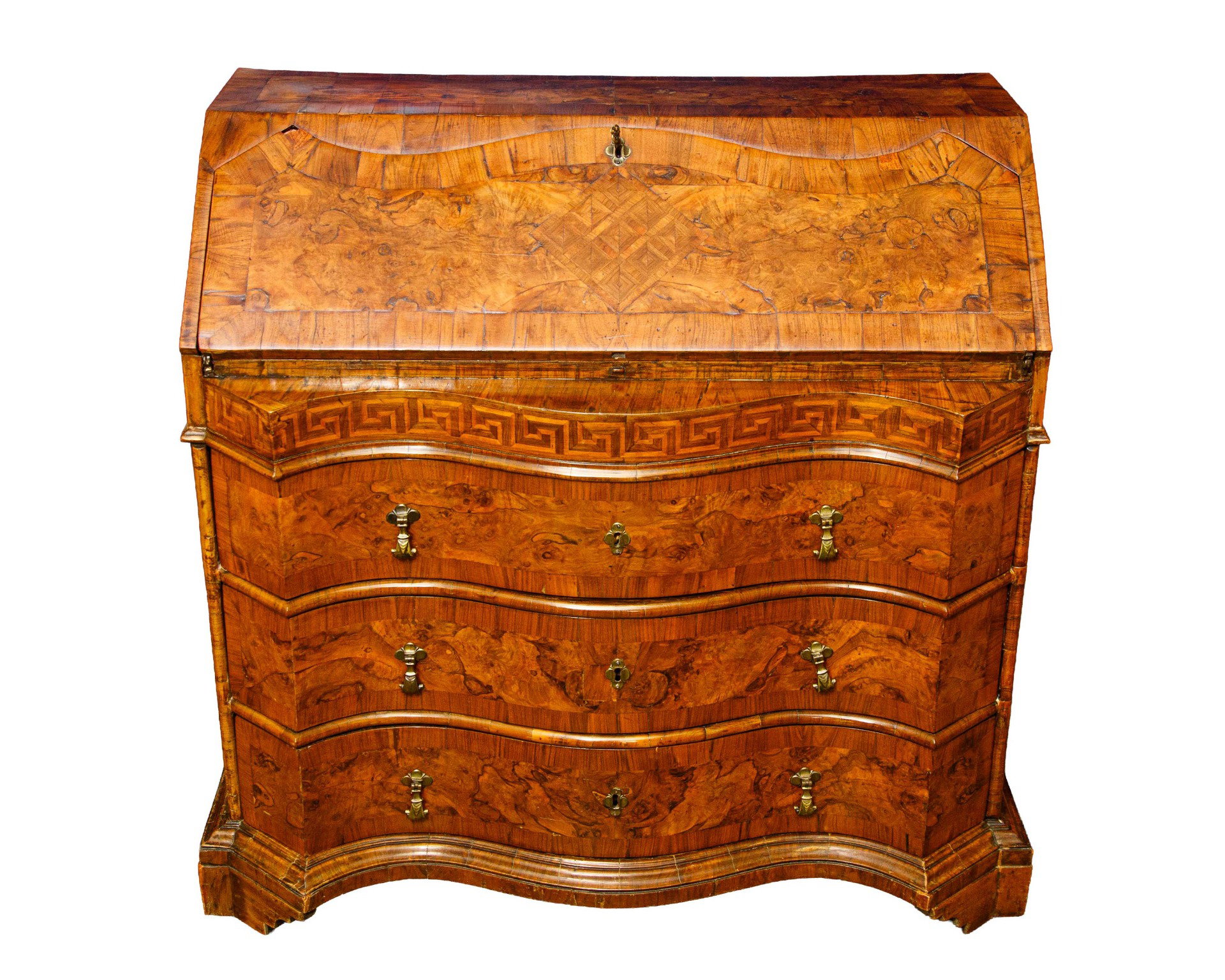
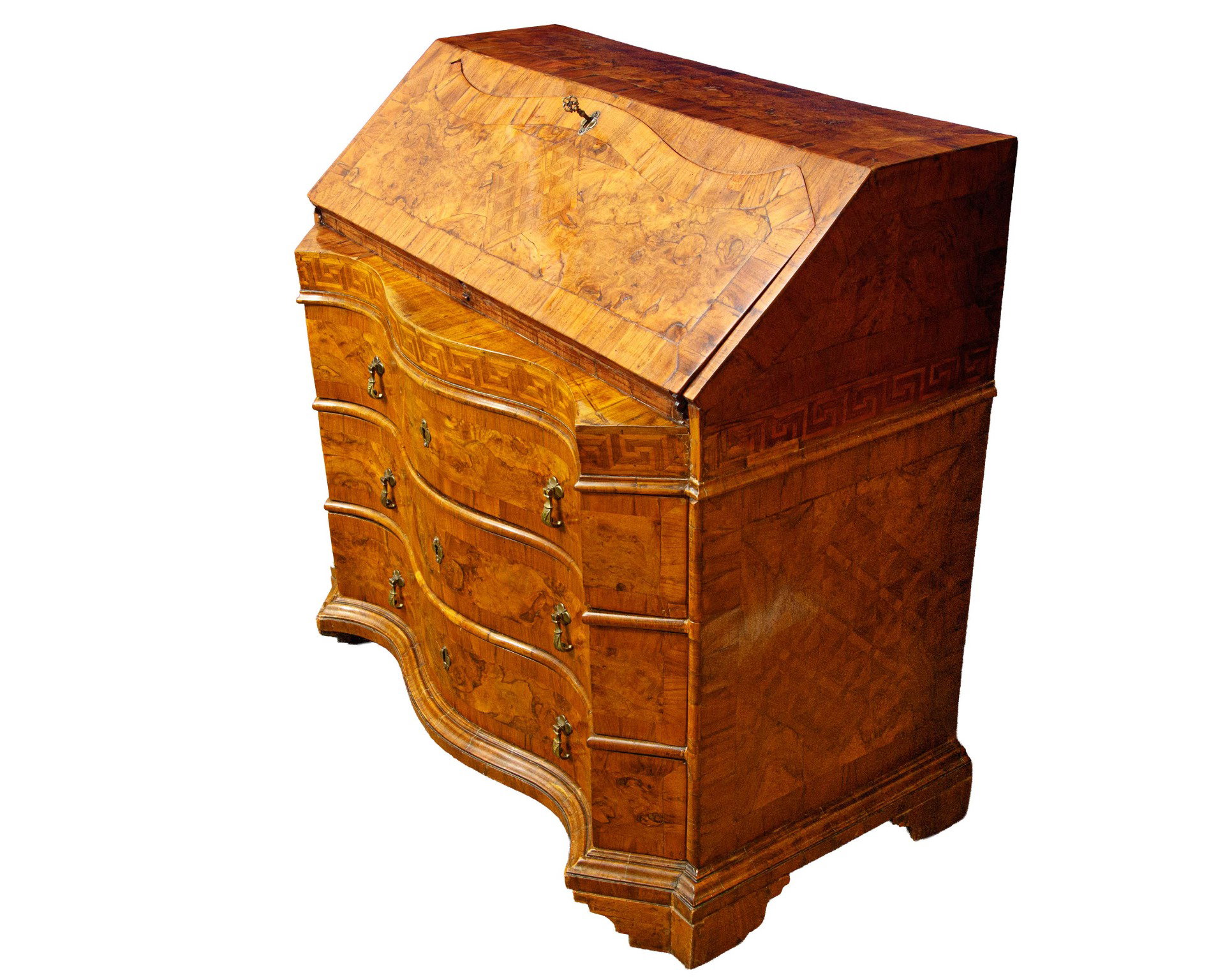
18th-century Paduan workshop, Drop-front desk
Description:
18th-century Paduan workshop
Drop-front desk
Walnut and burl walnut, 104 x 105 x 58 cm
The piece of furniture presented here is a three-drawer drop-front desk in the Venetian style, crafted in the 18th century by a workshop in the Padua area. The front, characterized by a sinuous design that repeats on the upper chest of drawers, the three drawers below, and the shaped base, is entirely veneered in walnut and walnut burl, laid out book-matched and enclosed in geometric panels that enhance its veined pattern. The drop-leaf top, decorated in the center with a diamond motif created with marquetry of different woods, opens to reveal the interior writing surface, while the frieze below features a fine Greek key decoration, executed with inlaid light and dark contrasting woods. The handles and escutcheons for the locks, in shaped gilded bronze with a leaf motif, complete the ornamental apparatus, along with the bracket feet that slightly elevate the furniture from the ground, lightening its overall mass.
Drop-front desks from Paduan production represent a significant chapter in 18th-century Venetian cabinetmaking, a period when writing furniture assumed an increasingly important role in the domestic furnishings of the mainland bourgeoisie and aristocracy. Padua, gravitating within Venice's cultural orbit but possessing its own artisanal tradition, developed a recognizable decorative language, based on the skilled use of local walnut and its burl, worked into thin veneers and assembled according to geometric patterns with strong chromatic effect. The dynamic shape, with sides and front following curvilinear trends, reflects the Baroque and then Rococo taste prevalent throughout the Veneto, while the presence of Greek key motifs testifies to a dialogue with the classicist repertoires then in vogue in the decorative arts. These pieces of furniture, designed for correspondence and domestic administration, combined functionality and social representation, becoming prestigious elements in the patrician and bourgeois homes of the era, often placed in passageways or in rooms intended for receiving guests.