Description:
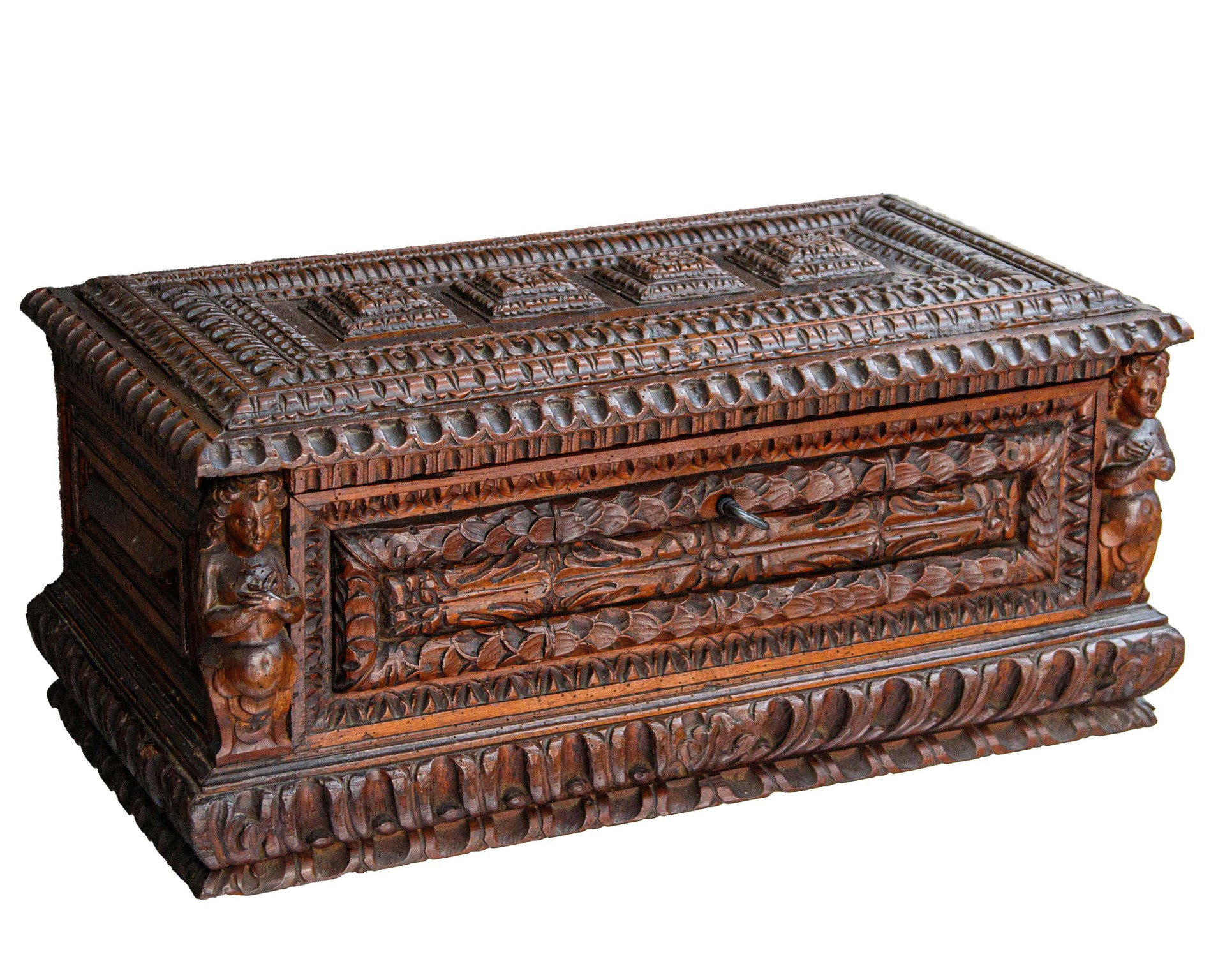
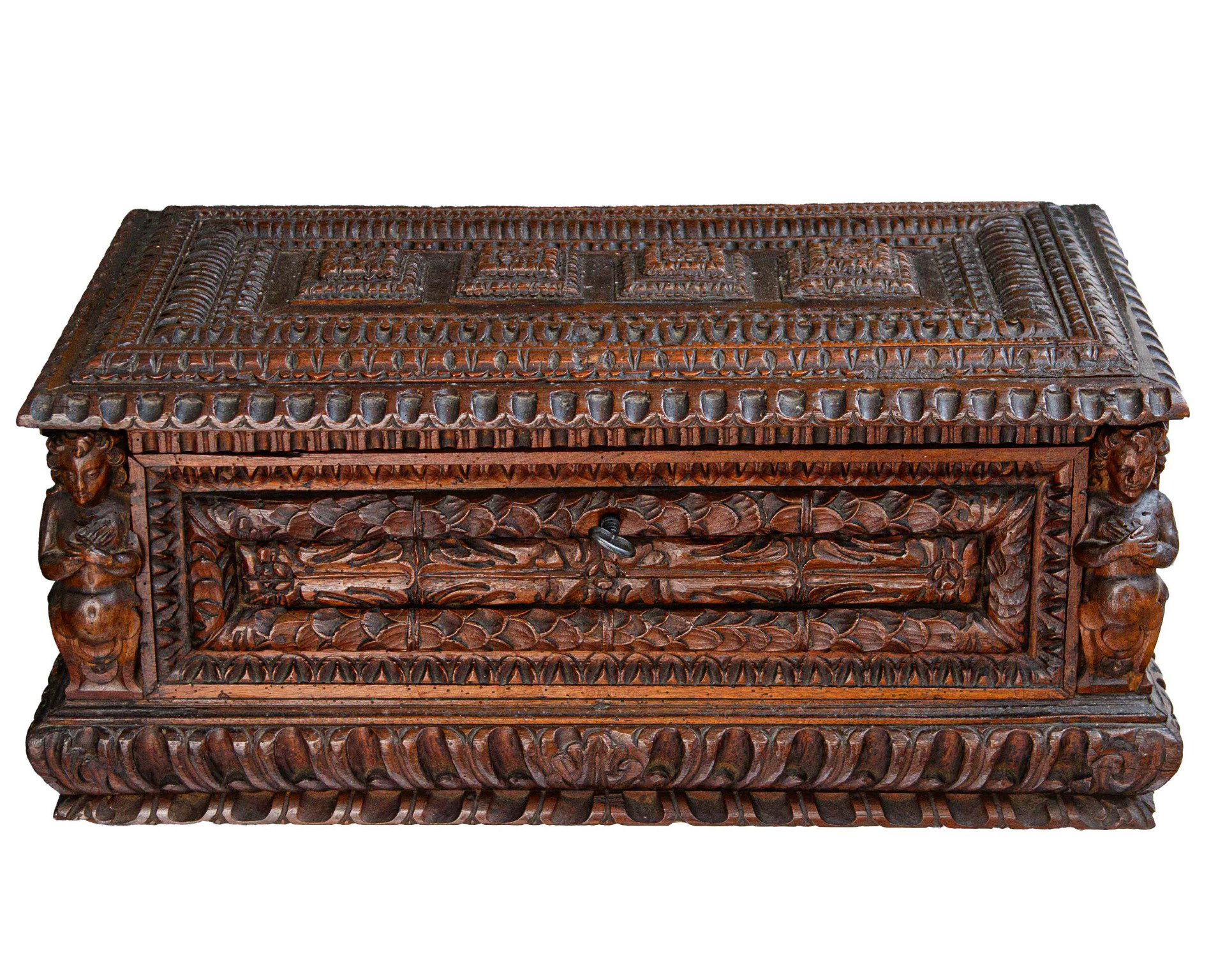
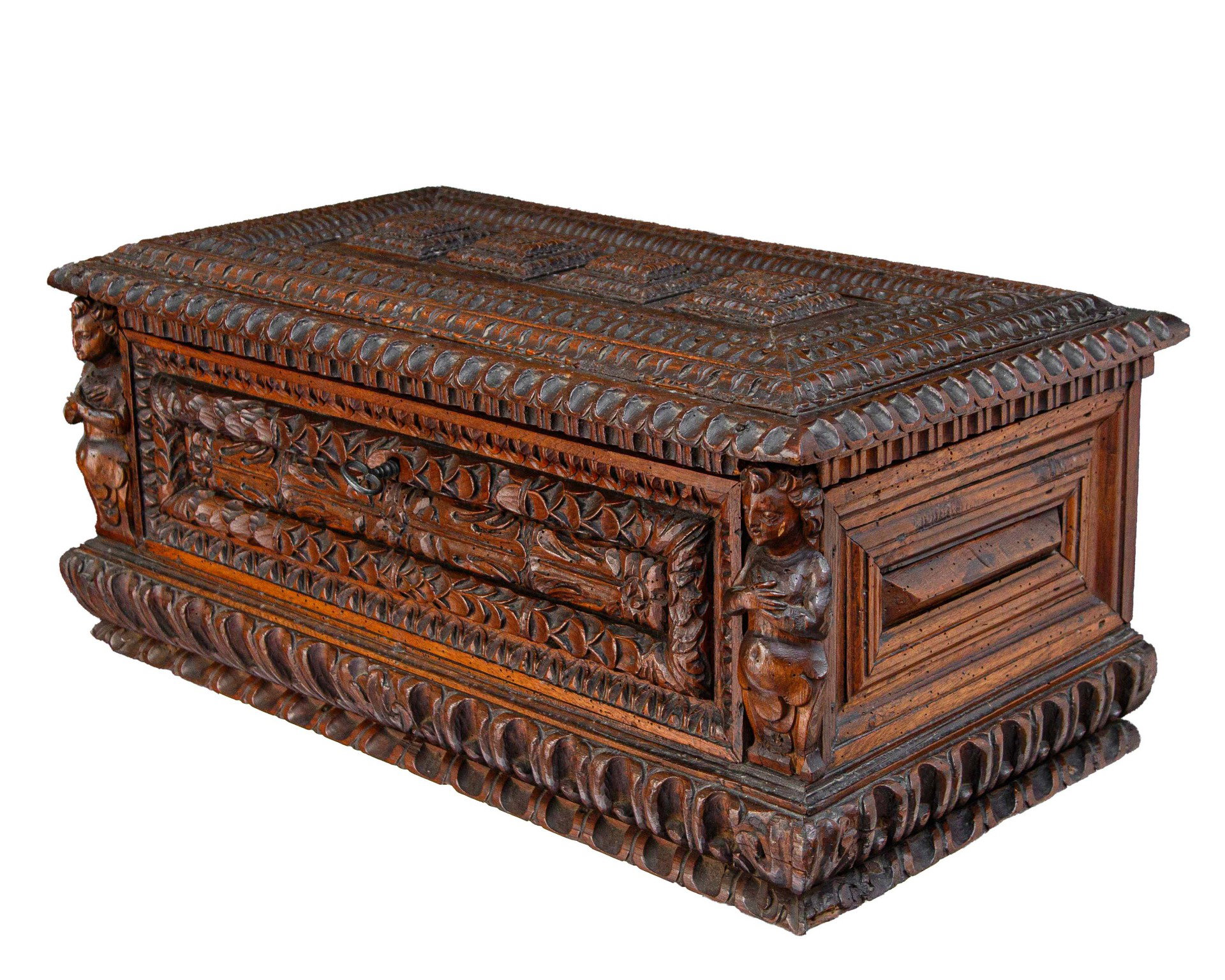
Lombardy, 17th century. Carved walnut chest, 29 x 64 x 36 cm. This refined carved walnut chest is an extraordinary example of Lombard craftsmanship from the 17th century, a period when workshops in Northern Italy reached peaks of technical and formal excellence in wood carving. Rectangular in shape and of generous dimensions, the artifact features a projecting flat lid, entirely decorated with carved panels of geometric and floral motifs arranged within concentric frames, bordered by a rich egg-and-dart and bead-and-reel molding that runs along the entire perimeter. The sides of the main body are adorned with a continuous band of intertwined foliage carving, populated by naturalistic motifs of great executive finesse, while at the corners stand full-round figures of putti or caryatids, skillfully carved and integrated into the architectural structure of the case. The base rests on an egg-and-dart molding that gives the whole a sense of monumental solidity, balancing the decorative richness with a rigorous architectural arrangement of classical origin. The walnut wood, darkened by time to a deep, warm brown hue, reveals the quality of the carving in the raking light, showcasing the extraordinary skill of the craftsmen who worked it. The production of carved wooden chests and boxes flourished in Lombardy in the 17th century, reaching high quality and fitting into an artisanal tradition rooted in the High Renaissance and consolidated through the work of specialized workshops active between Milan and Bergamo. These artifacts, intended for aristocratic patrons and the wealthy merchant bourgeoisie, served both practical functions—storing documents, jewelry, precious objects—and a precise representative purpose, testifying to the owner's refined taste and economic availability. The decorative language adopted in this piece, with its repertoire of egg-and-dart moldings, bead-and-reel, classical foliage, and corner human figures, directly relates to the tradition of Lombard carving of Mannerist descent, reinterpreted in the 17th century with more pronounced plasticity and a more dramatic sense of chiaroscuro, in line with the cultural climate of the Baroque. Lombard workshops were distinguished by their ability to combine the formal legacy of 16th-century classicism with the demands of the new taste, producing objects of extraordinary material quality destined to circulate even beyond regional borders.