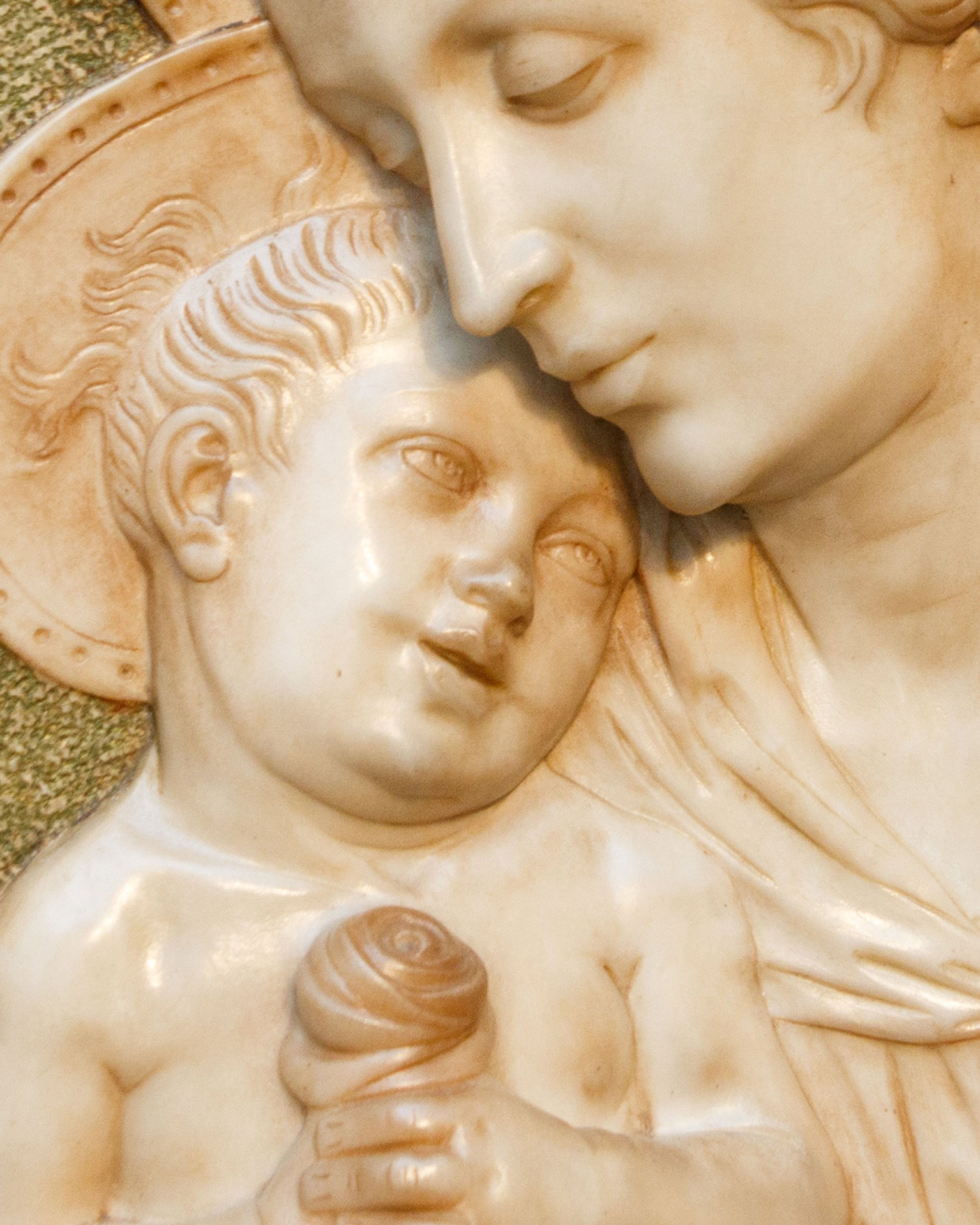
Alceo Dossena (Cremona, 1878 – Rome, 1937), Mater Amabilis
Description:
Alceo Dossena (Cremona, 1878 – Rome, 1937)
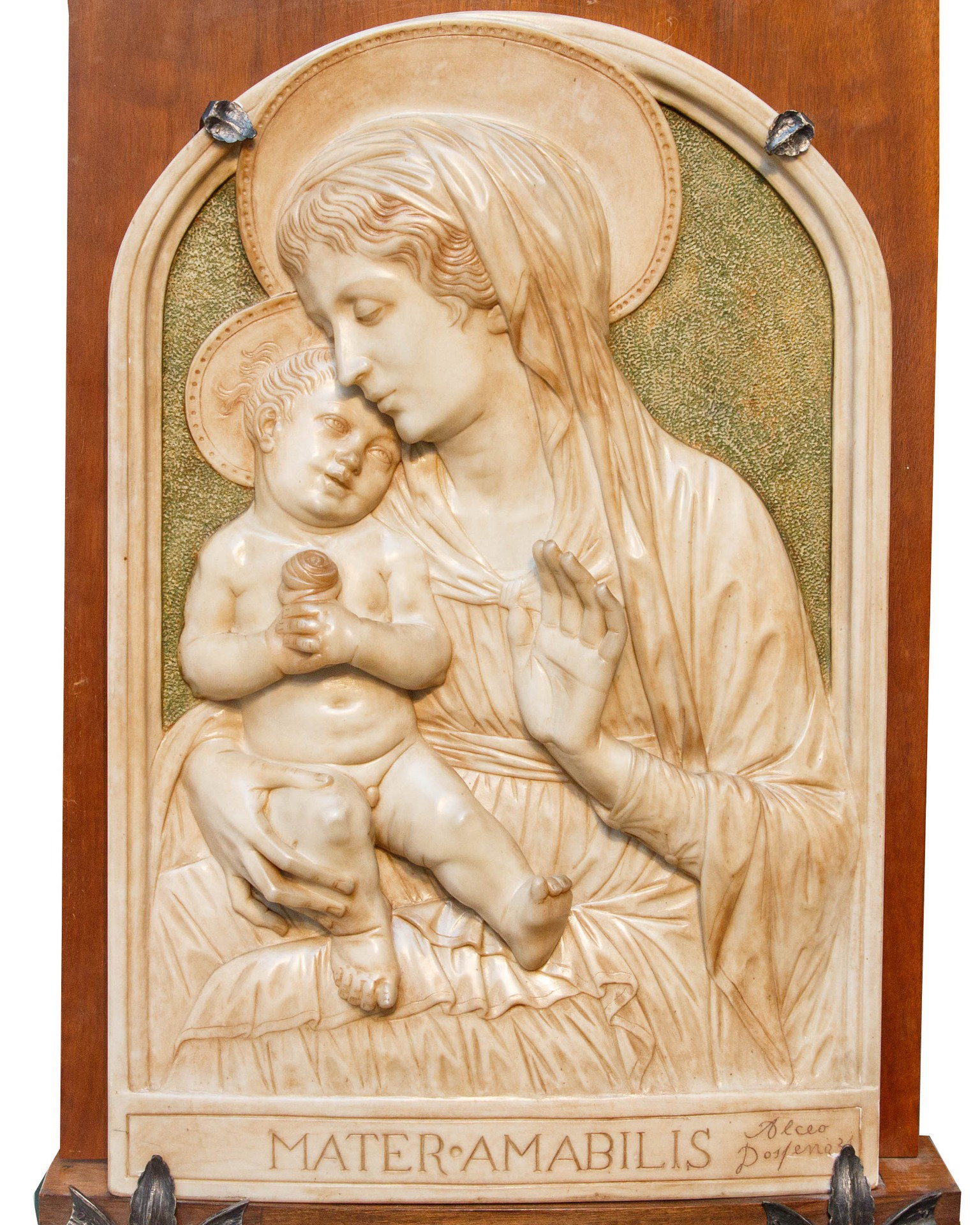
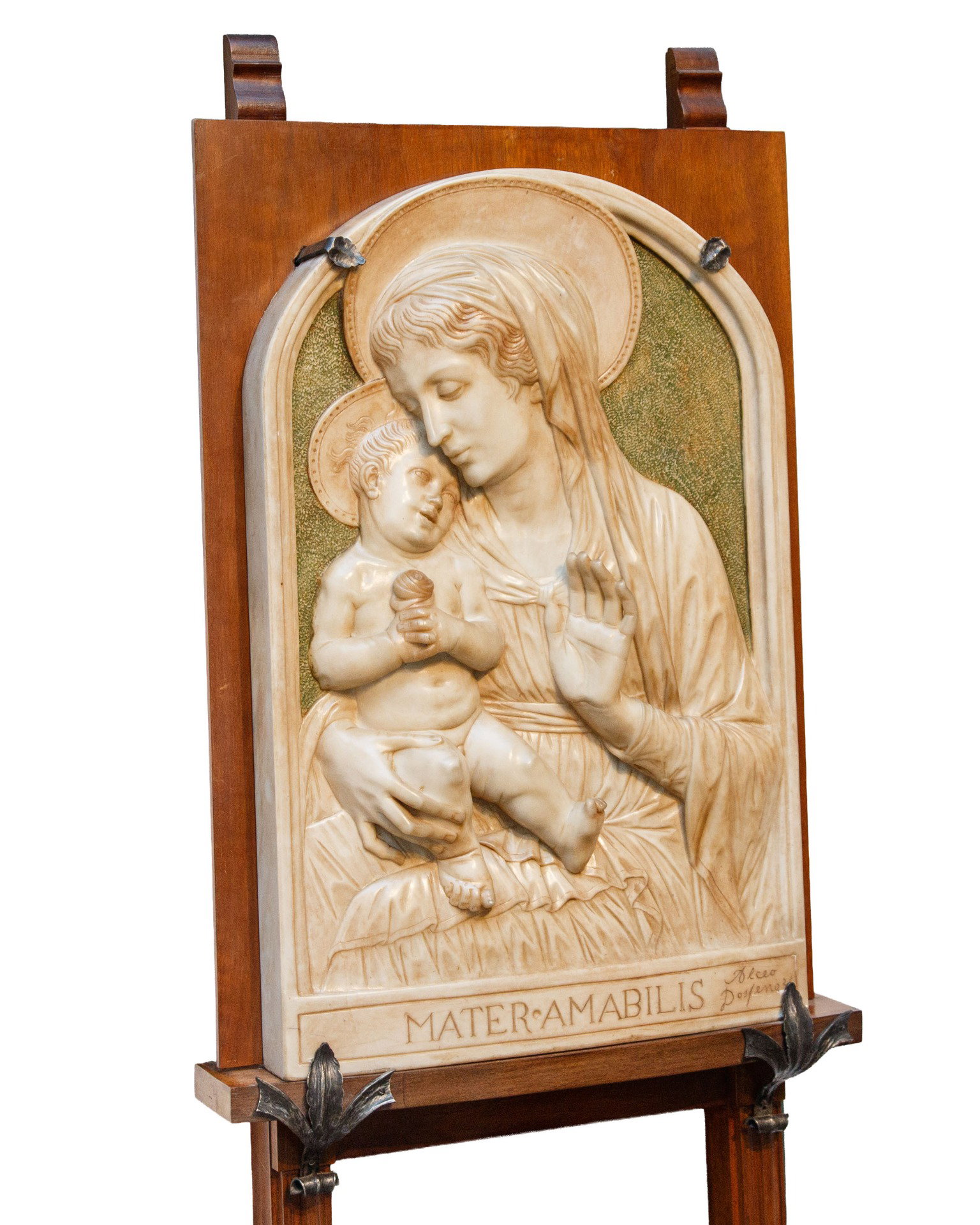
Mater Amabilis
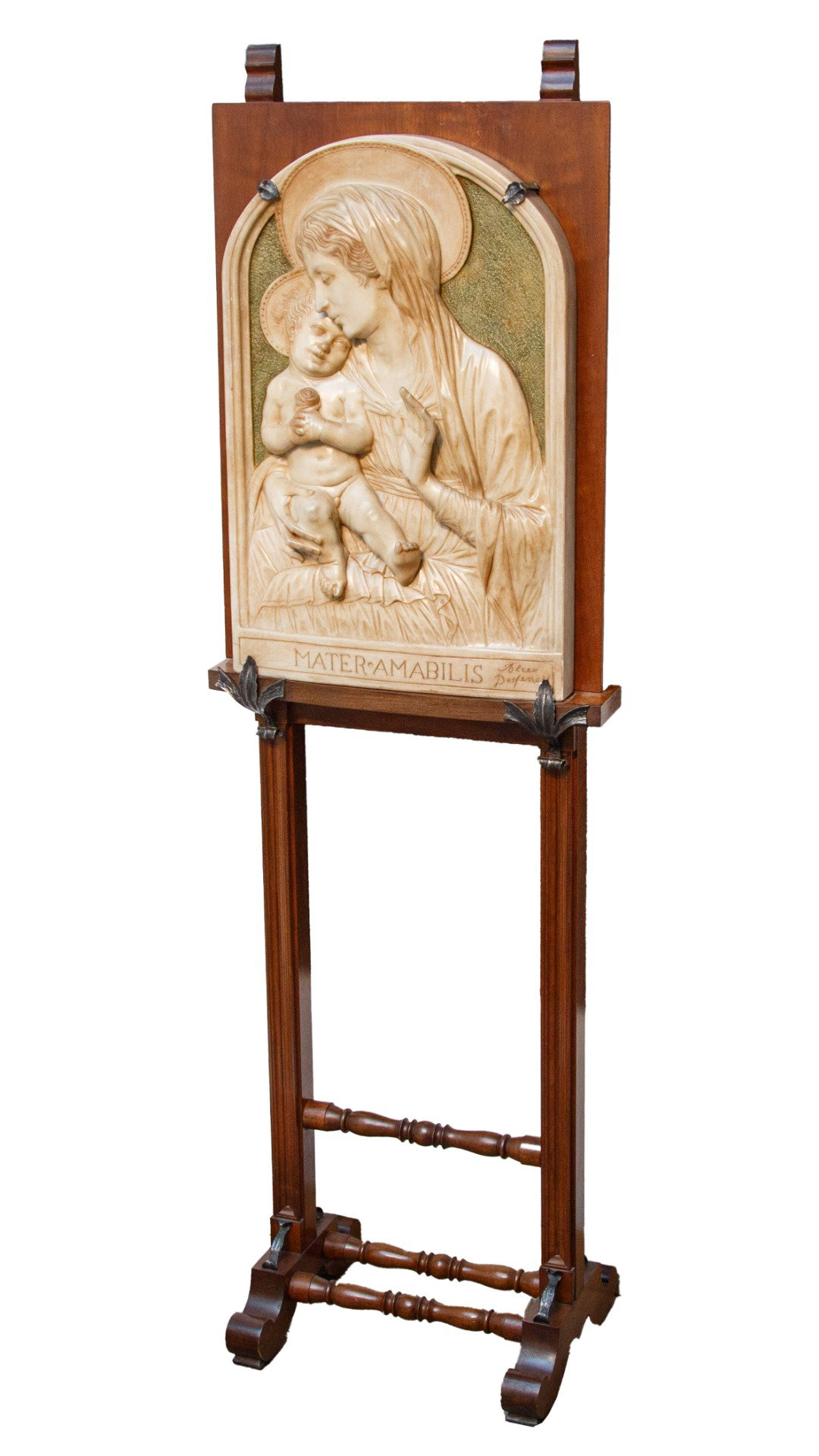
Marble, 70 x 46 x 5.5 cm
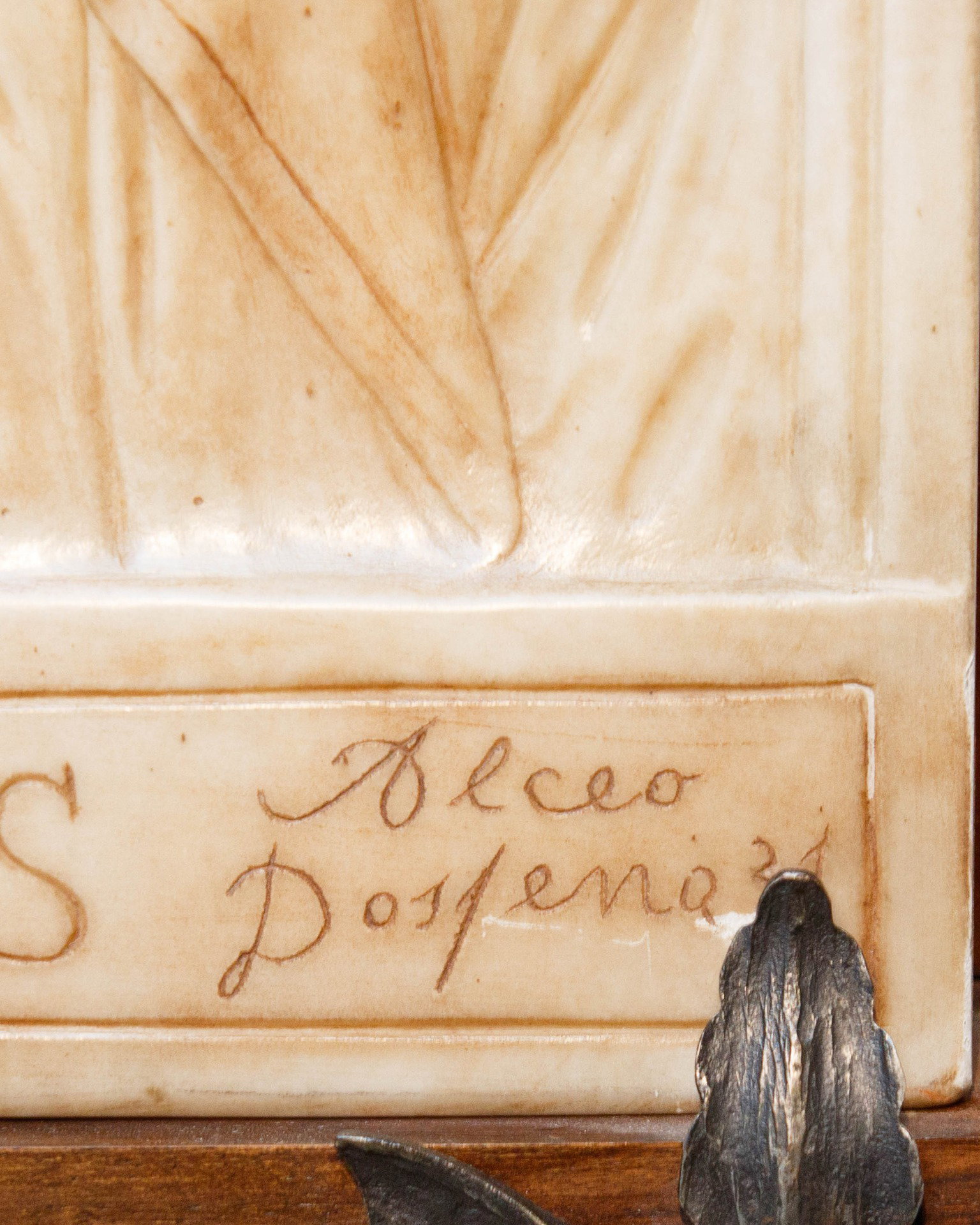
Signed and dated lower right Alceo Dossena 34
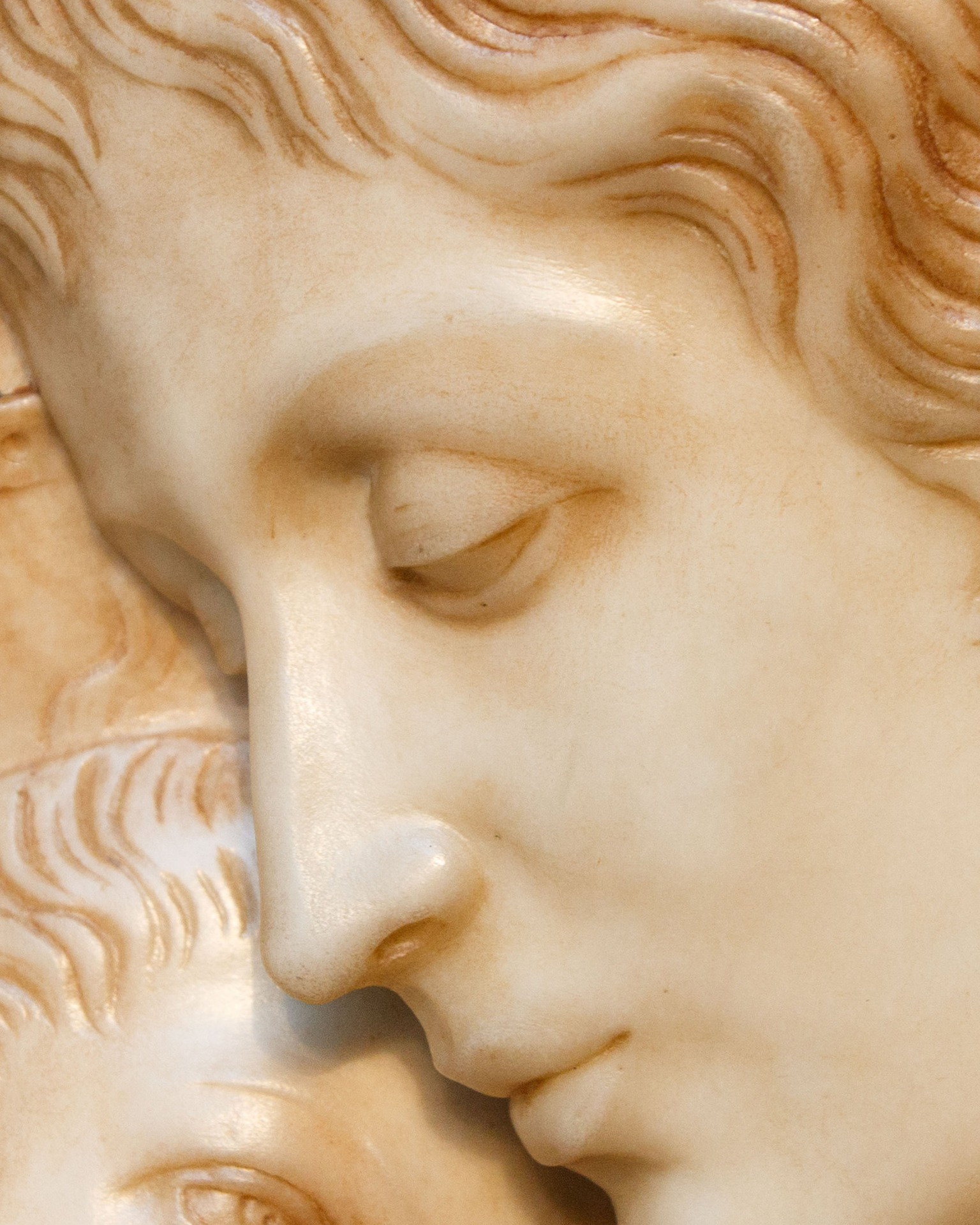
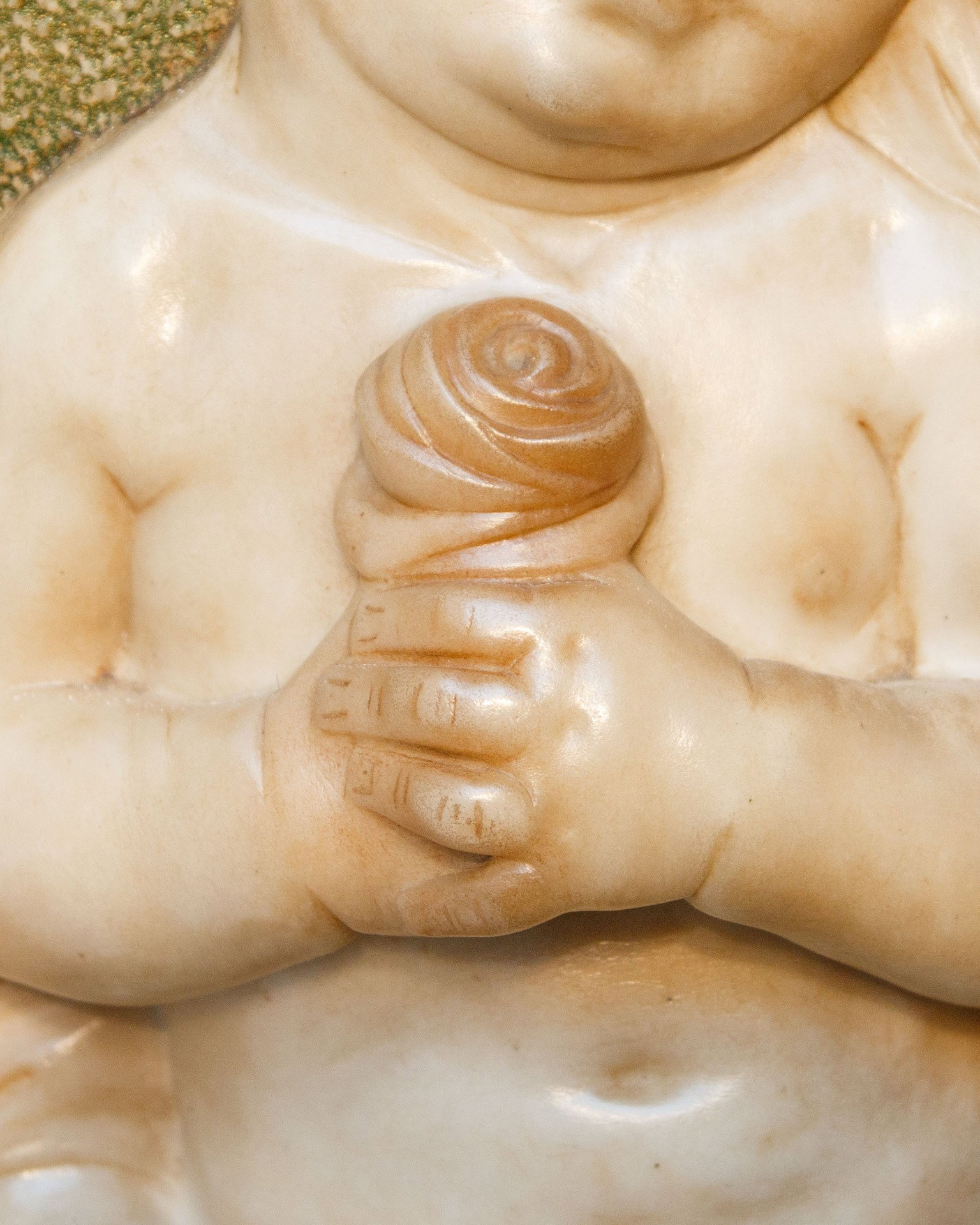
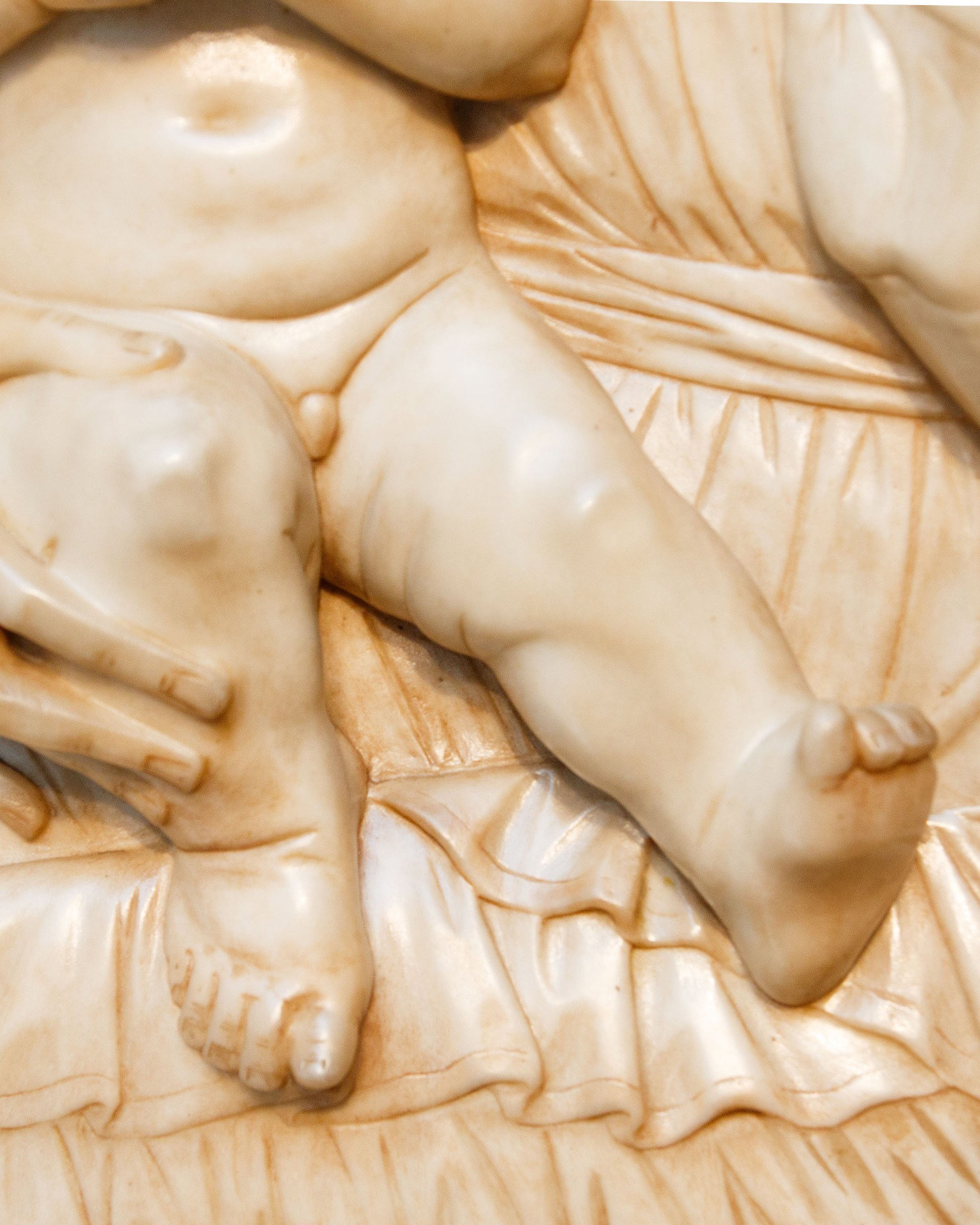
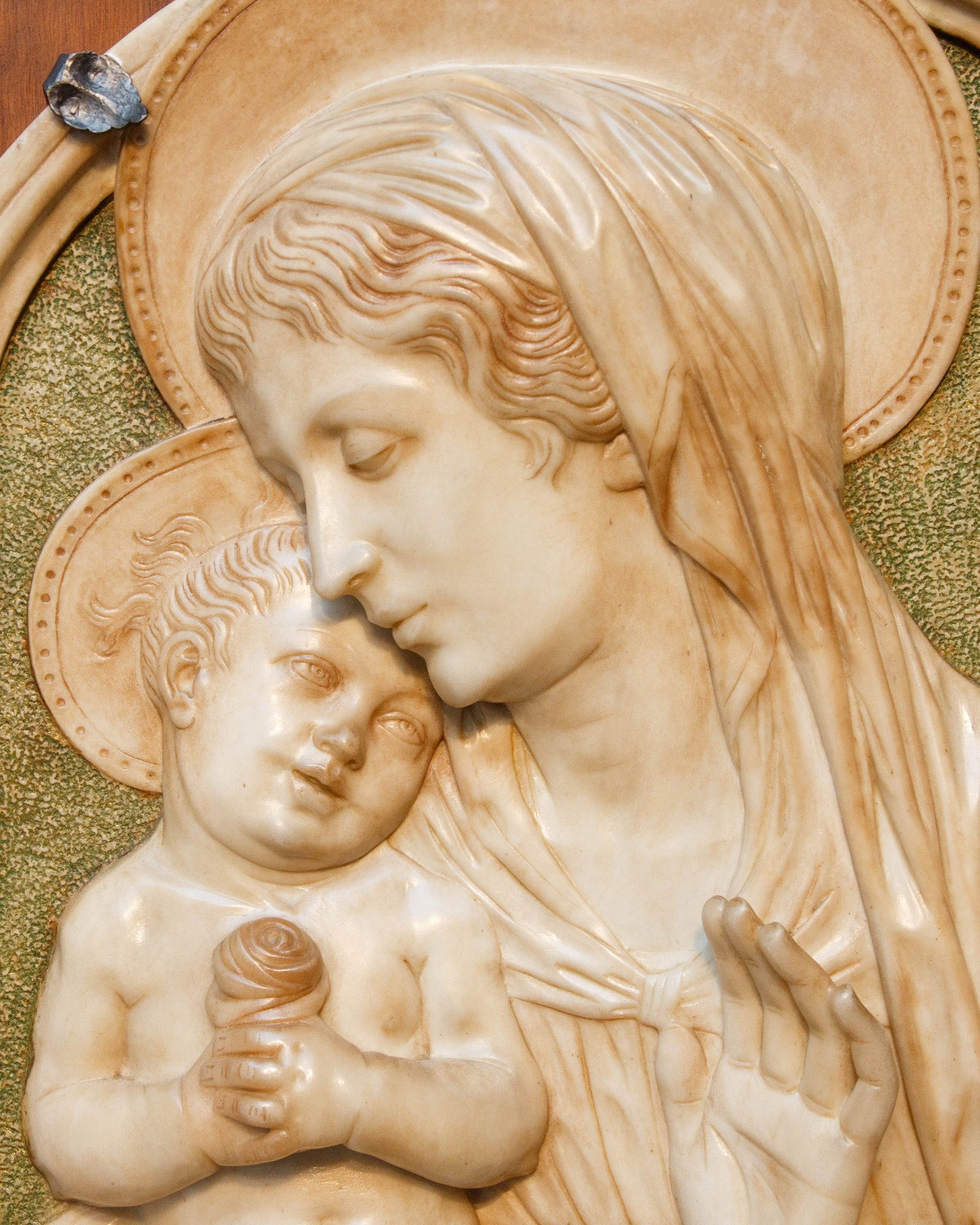
The marble relief in the shape of an aedicule, crowned by a semi-circular arch, features the Virgin holding the Child in her arms in an embrace: their faces almost touch in a kiss, while the infant's hands grasp a rose. The green background frames the aureoled figures, while a molded cornice at the base holds the inscription MATER AMABILIS and the artist's signature, Alceo Dossena, placed in the same spot where the sculptor habitually placed it on contemporary works. The naturalistic rendering of the drapery, the softness of the flesh tones, and the skill in constructing the gaze reveal an extraordinary technical mastery, the result of in-depth study of 15th-century Tuscan and Lombard sculpture, a language that Dossena assimilated to the point of making it his own.
Alceo Dossena moved to Parma, where he remained until 1915, working with stonemason Umberto Rossi: the two founded a small company active for churches and cemeteries. At the outbreak of World War I, he was enlisted in the air force, sent to Perugia and then to Rome to work in an armaments depot. After the war, he settled permanently in the capital, dedicating himself to the production of terracotta and marble reliefs. Dossena was one of the most enigmatic and fascinating figures in the art world: he created masterpieces that scholars and museum directors attributed at various times to Giovanni and Nino Pisano, Simone Martini, Vecchietta, Amadeo, Donatello, Mino da Fiesole, Desiderio da Settignano, Andrea del Verrocchio, Antonio Rossellino, and other famous masters of the past, without anyone ever suspecting they were works by a contemporary sculptor.
This Mater Amabilis is part of a dense group of Madonnas and Children created by Dossena in the same years, variations on a theme dear to the artist. The background chased with touches of green finds a precise comparison in the Madonna and Child with a Goldfinch preserved in the church of San Biagio in Mamiano di Traversetolo, in the province of Parma, while in terms of composition, the work is close to the Madonna and Child with Rose from 1929, now in the Dario Del Bufalo Collection in Rome. The link is closer with the Mater Dei, dated 1933, at the Cavallini Sgarbi Foundation in Ferrara, and with the Ave Maria, also from 1933, in the Furio Colombo Collection in Mola di Bari: works that share the same composition and signature placement with ours, differing only in title, and which allow us to place the present relief, made the following year, in close sequence with those two exemplars. Dossena returned to the subject multiple times to rework the details, as evidenced by the Madonna and Child with Rose from 1936, also at the Cavallini Sgarbi Foundation, and again the following year with a terracotta Madonna and Child, now in a private Milanese collection, a sign of the artist's constant formal research around this devotional subject.