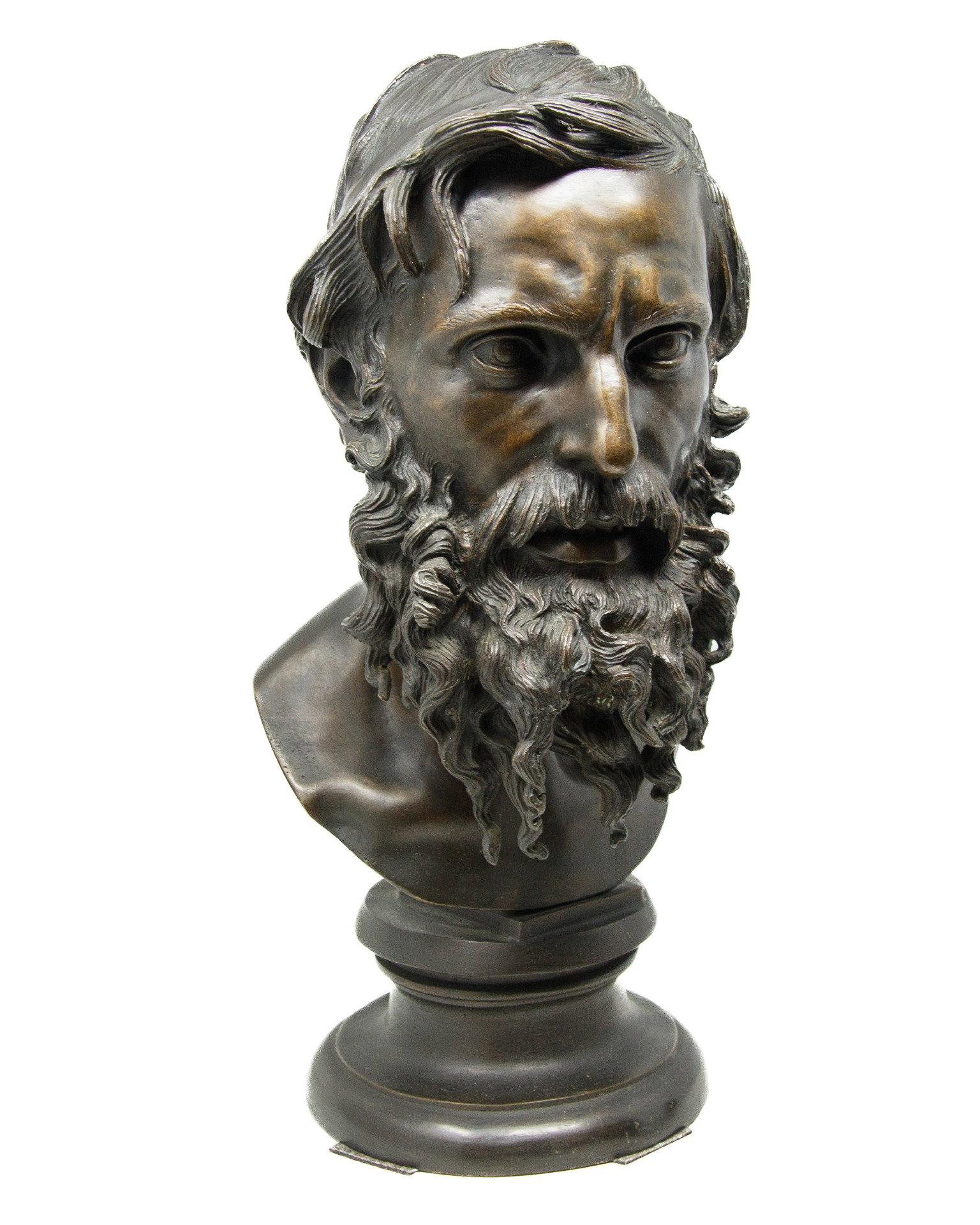
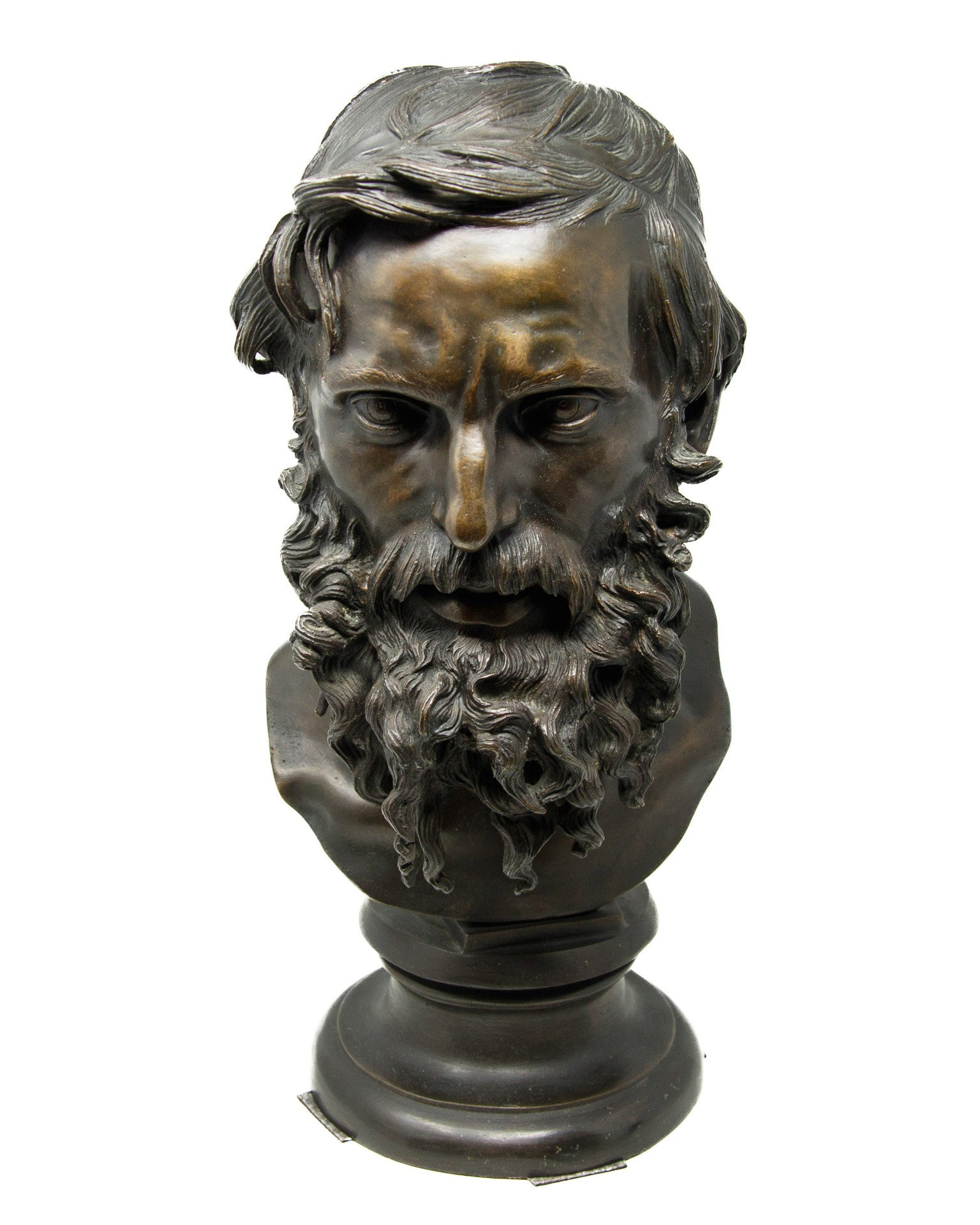
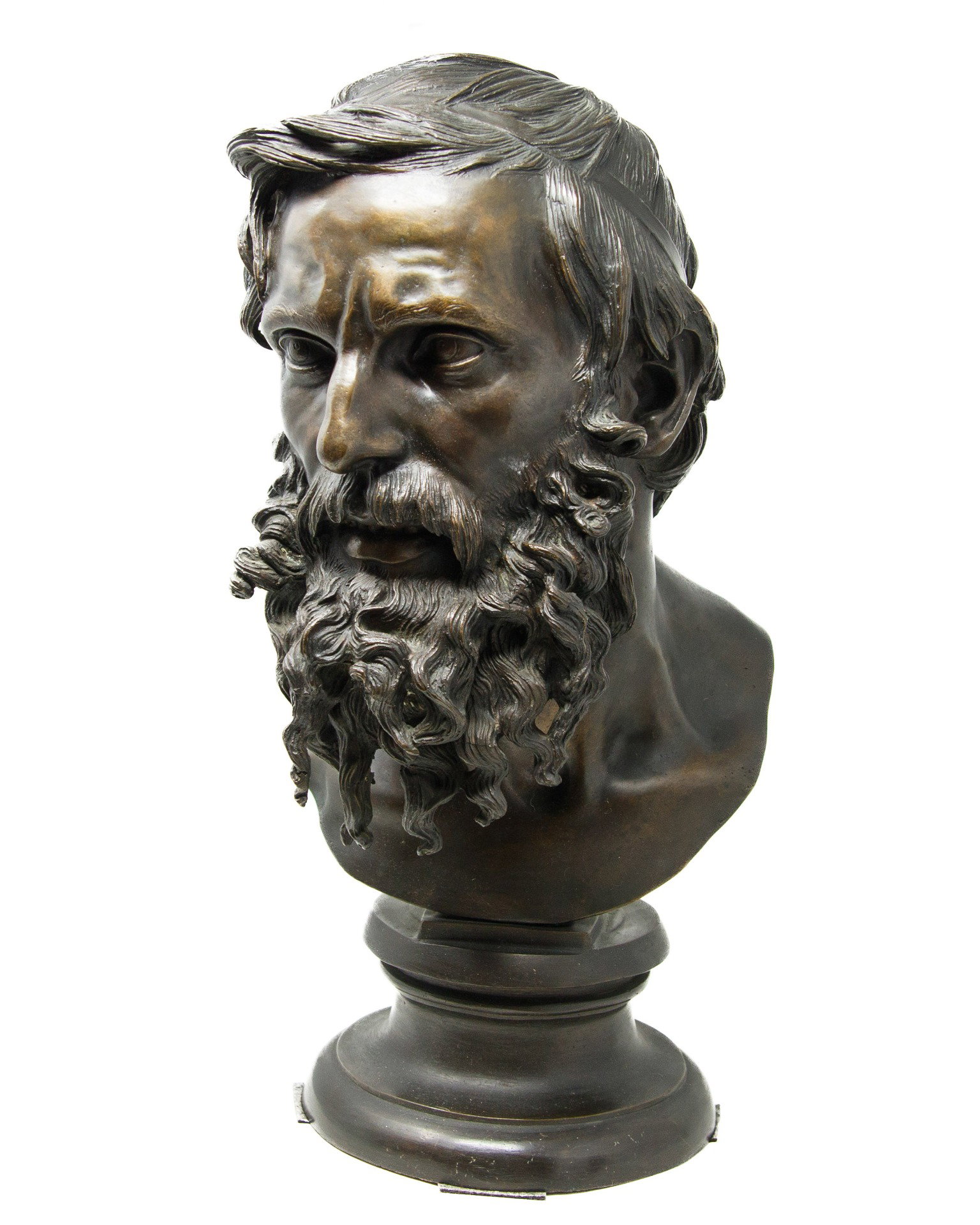
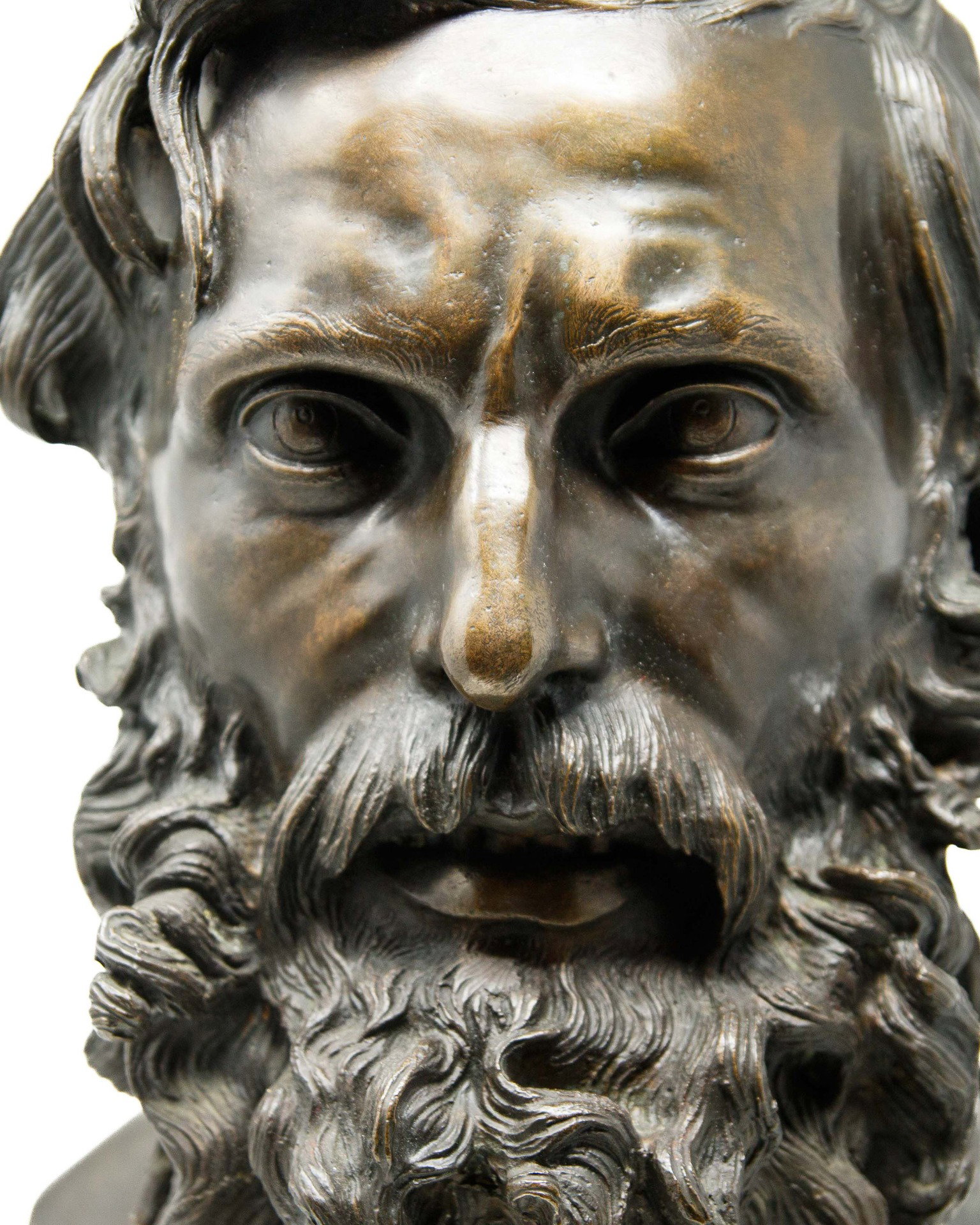
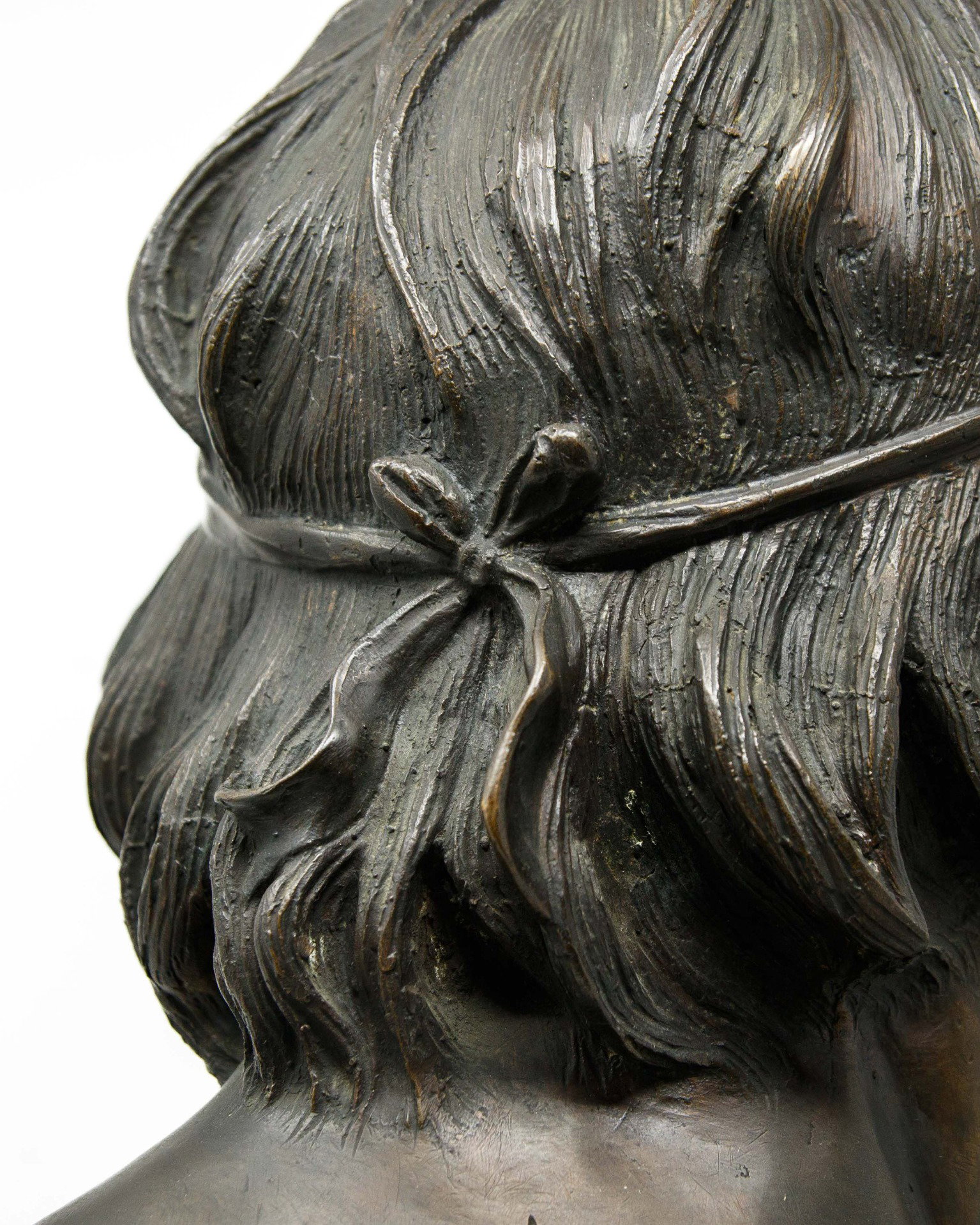
Vincenzo Gemito (Naples, 1852 – 1929), Bust of a Philosopher
Description:
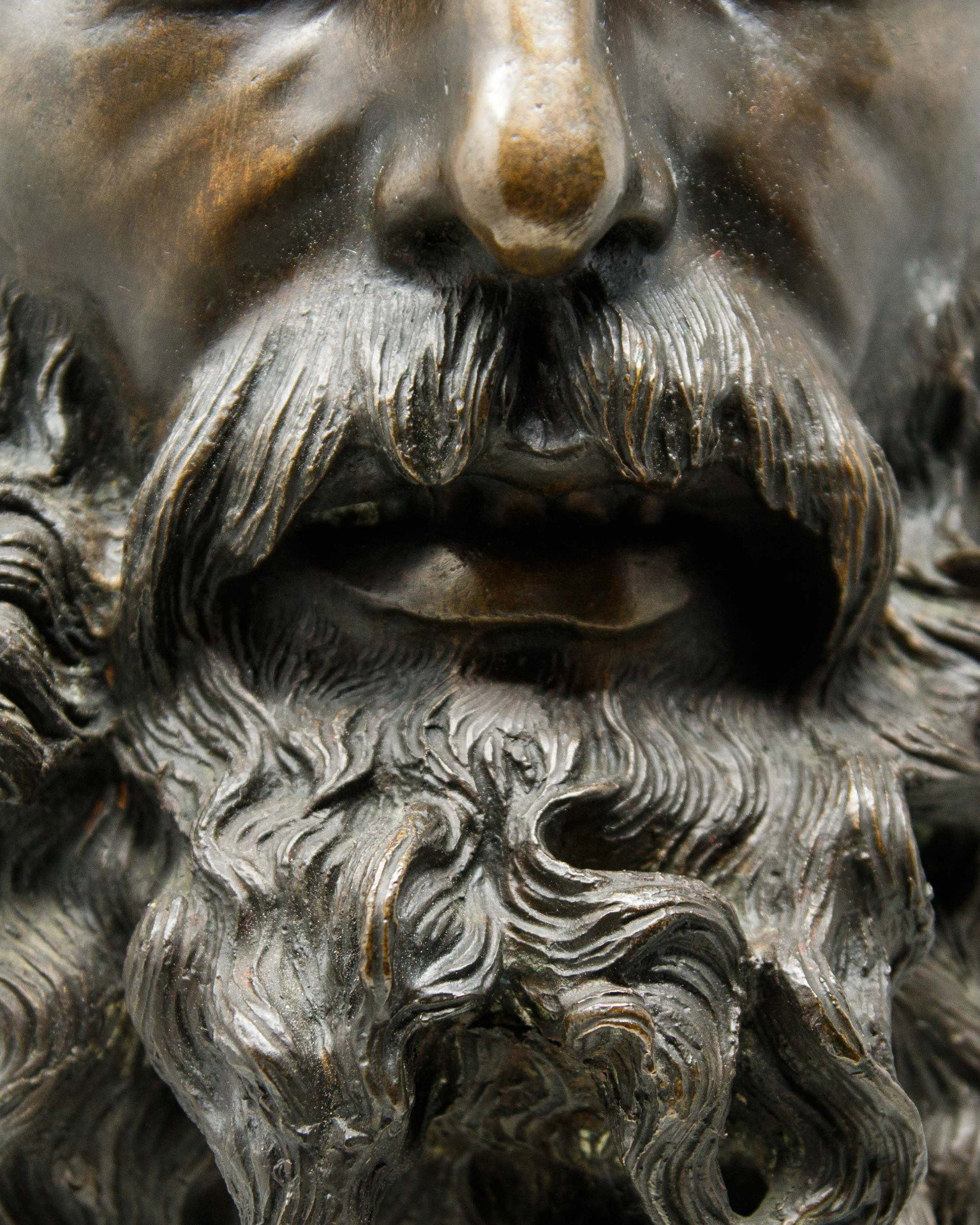
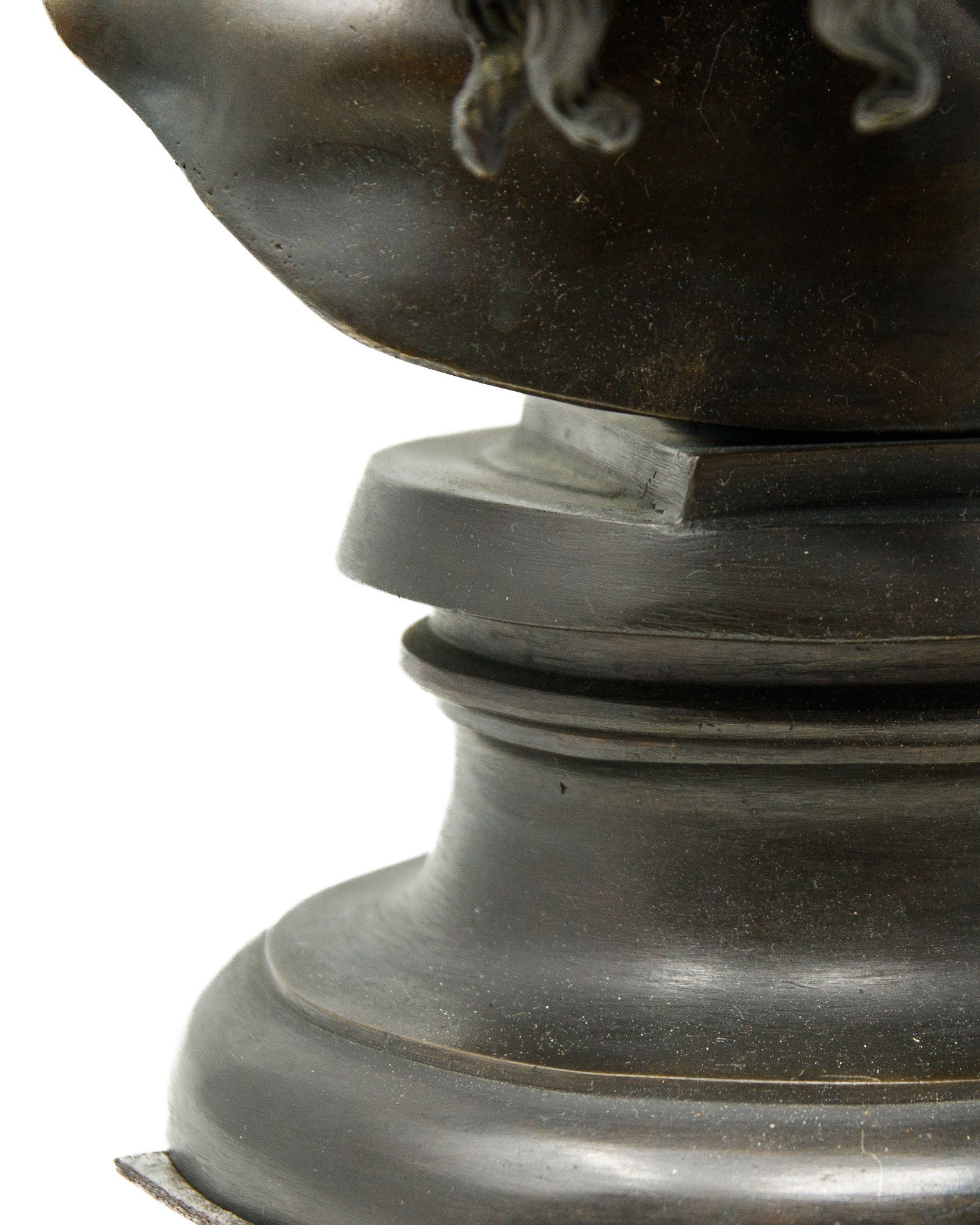
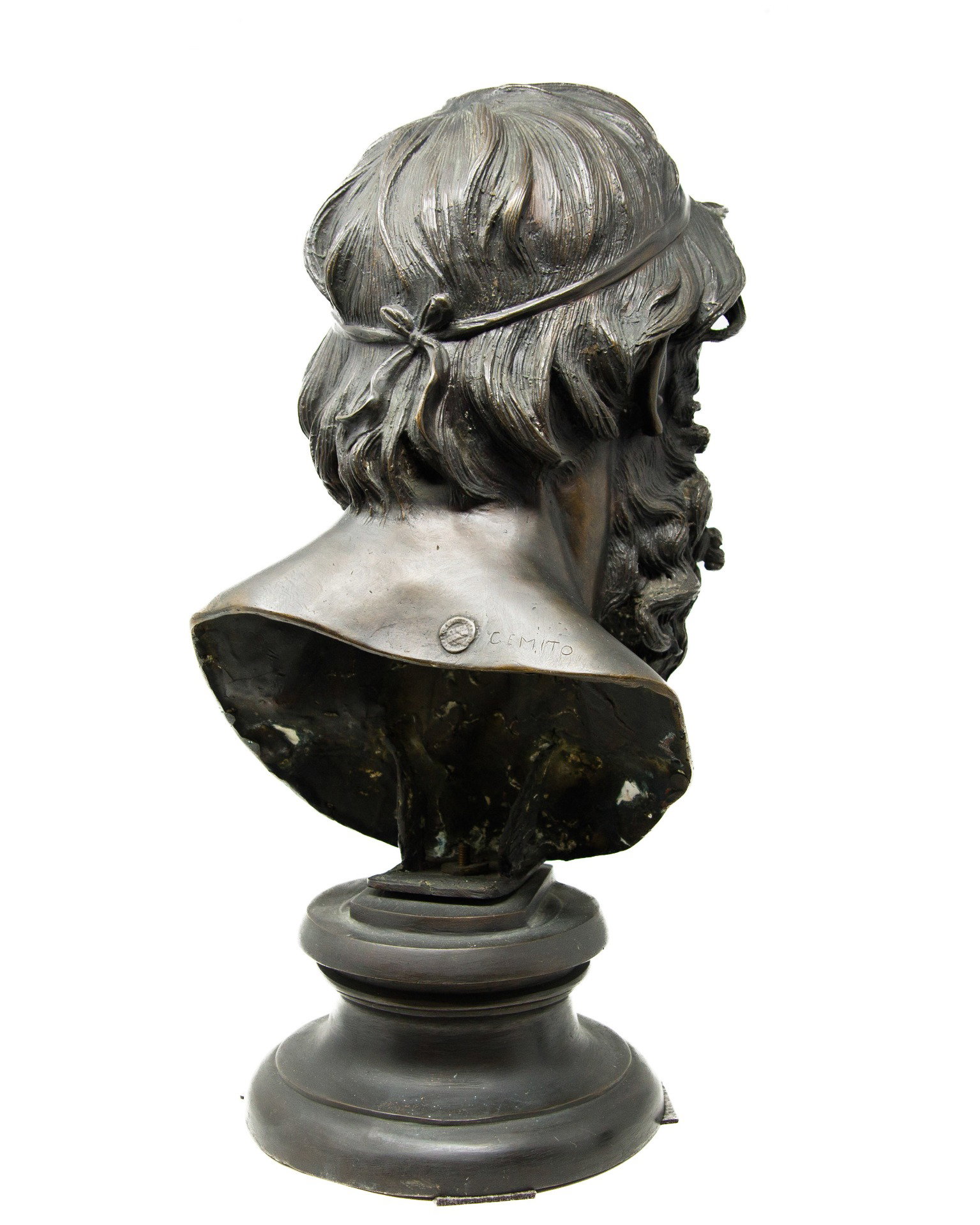
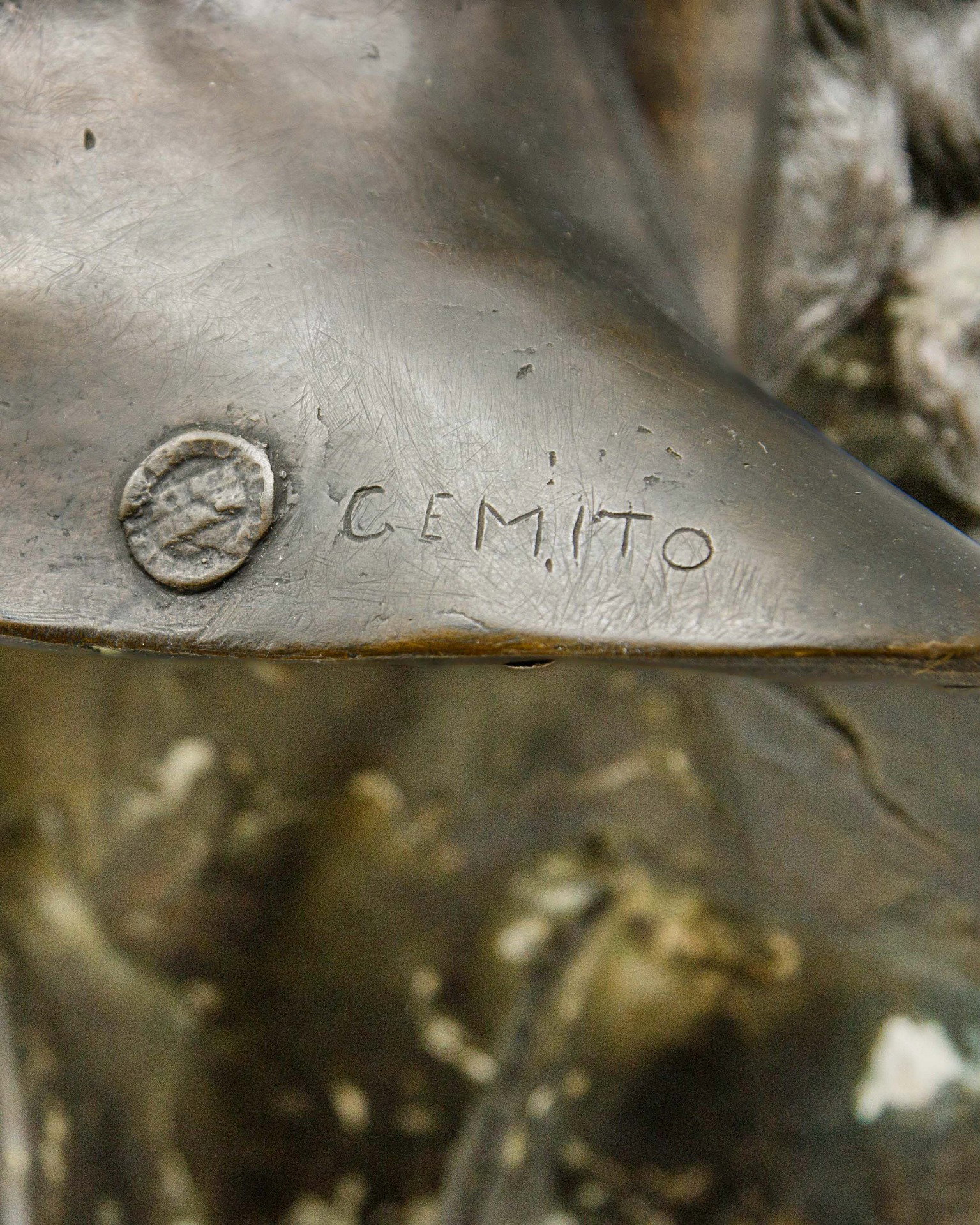
Vincenzo Gemito (Naples, 1852 – 1929) Bust of a Philosopher Bronze, 49 cm high. Signed: GEMITO Vincenzo Gemito's Bust of a Philosopher represents one of the peaks of his portrait production: the work depicts a mature man, caught in a moment of intense inner concentration. The hollowed face, the absorbed gaze, and the long, flowing beard construct an image of strong psychological power, where idealization gives way to a penetrating exploration of the human soul. The bronze surface is modeled with an almost painterly sensitivity; light flows over the locks of hair, the folds of the beard, and the features of the face, animating the material with effects of great naturalness. While evoking figures from classical tradition, the character does not appear as an abstract type but as a real presence, captured in his individuality and intense emotional dimension. Vincenzo Gemito was born in Naples in 1852 to unknown parents who left him at the Pia Casa dell’Annunziata. He was taken in by Giuseppina Baratta and, still a child, showed precocious talent for drawing and modeling. At the age of nine, he entered Emmanuele Caggiano's studio, where he began copying plaster models, and later continued his training with Stanislao Lista. An independent spirit, impatient with academic rules, he soon chose to work autonomously, sharing a studio with his friend Antonio Mancini. As early as 1868, he received important recognition with the Gladiator, which was purchased by the king. Between 1873 and 1880, he experienced a period of extraordinary success, founding his own foundry, creating famous portraits, and living in Paris, where he consolidated his international fame. In 1881, also following the death of Matilde Duffaud, he returned to Naples, finding solace in Anna Cutolo, his best model, and in his work. Works from this Neapolitan period include Carmela, Zingara Maria, Narcissus, the very famous Acquaiolo, and the Philosopher, with which he won first prize at the Paris International Exposition. The subject of the philosopher accompanied Gemito for several years and saw different versions, including those now preserved at the Museum of Fine Arts in Boston and Palazzo Zevallos in Naples. An interesting comparison can also be made with the painting depicting the same character in profile, now in the Fondazione Cariplo collection, where the psychological exploration is entrusted to color and line instead of plastic modeling. The rendering of the bronze surface also recalls the Portrait of Mariano Fortuny kept at Palazzo Zevallos, in which the material seems to come alive through free and nervous work. Similar attention to natural detail emerges in the Bust of a Fisherman at the National Gallery in London, although youthful freshness prevails there, while meditative gravity dominates the Philosopher. The Bust of Amedeo of Savoy, now in a private collection, also shares the ability to blend physiognomic truth and expressive intensity. In all these works, Gemito demonstrates a profoundly modern conception of sculpture, capable of combining the heritage of tradition with direct and engaged observation of reality.