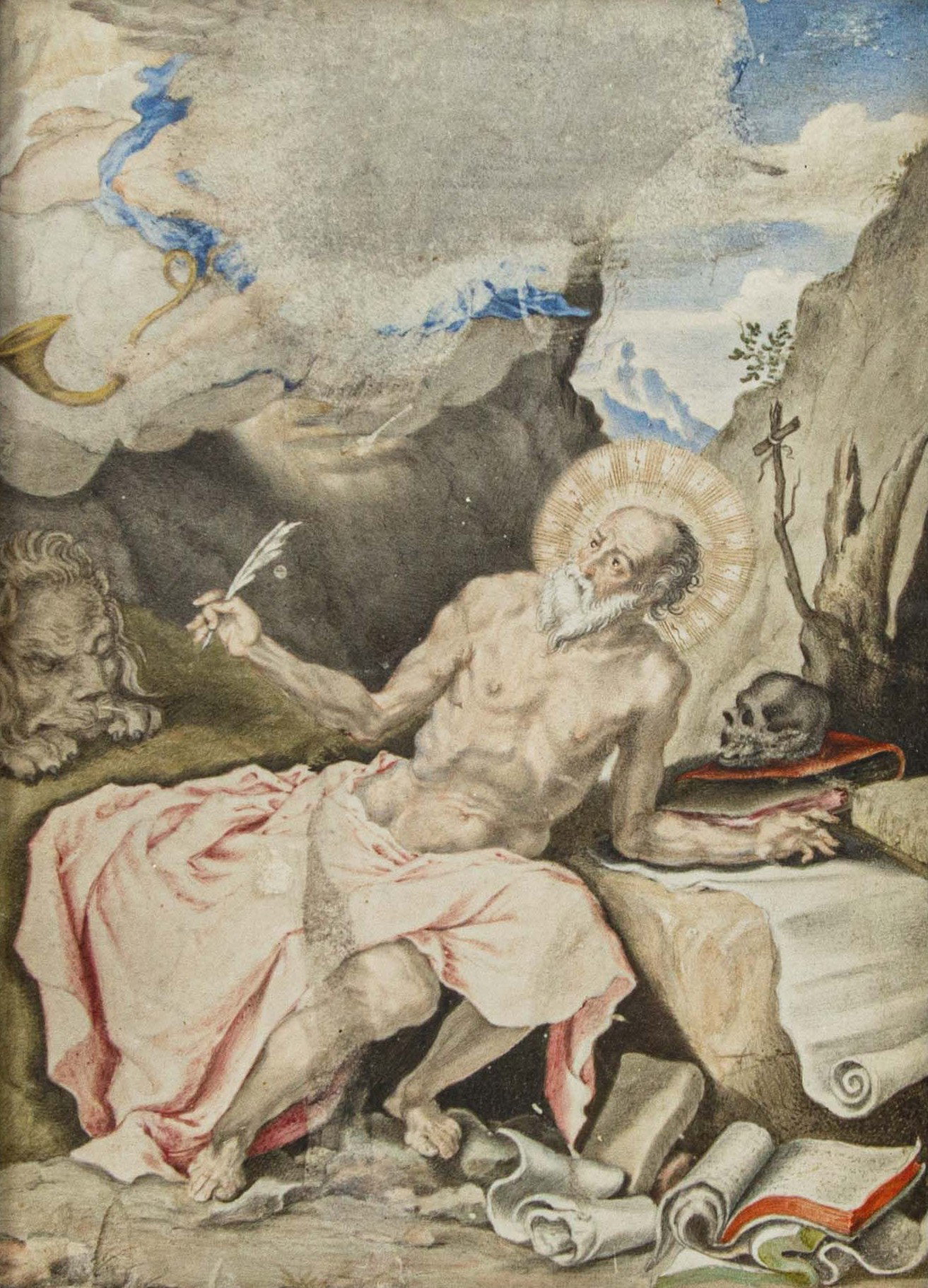
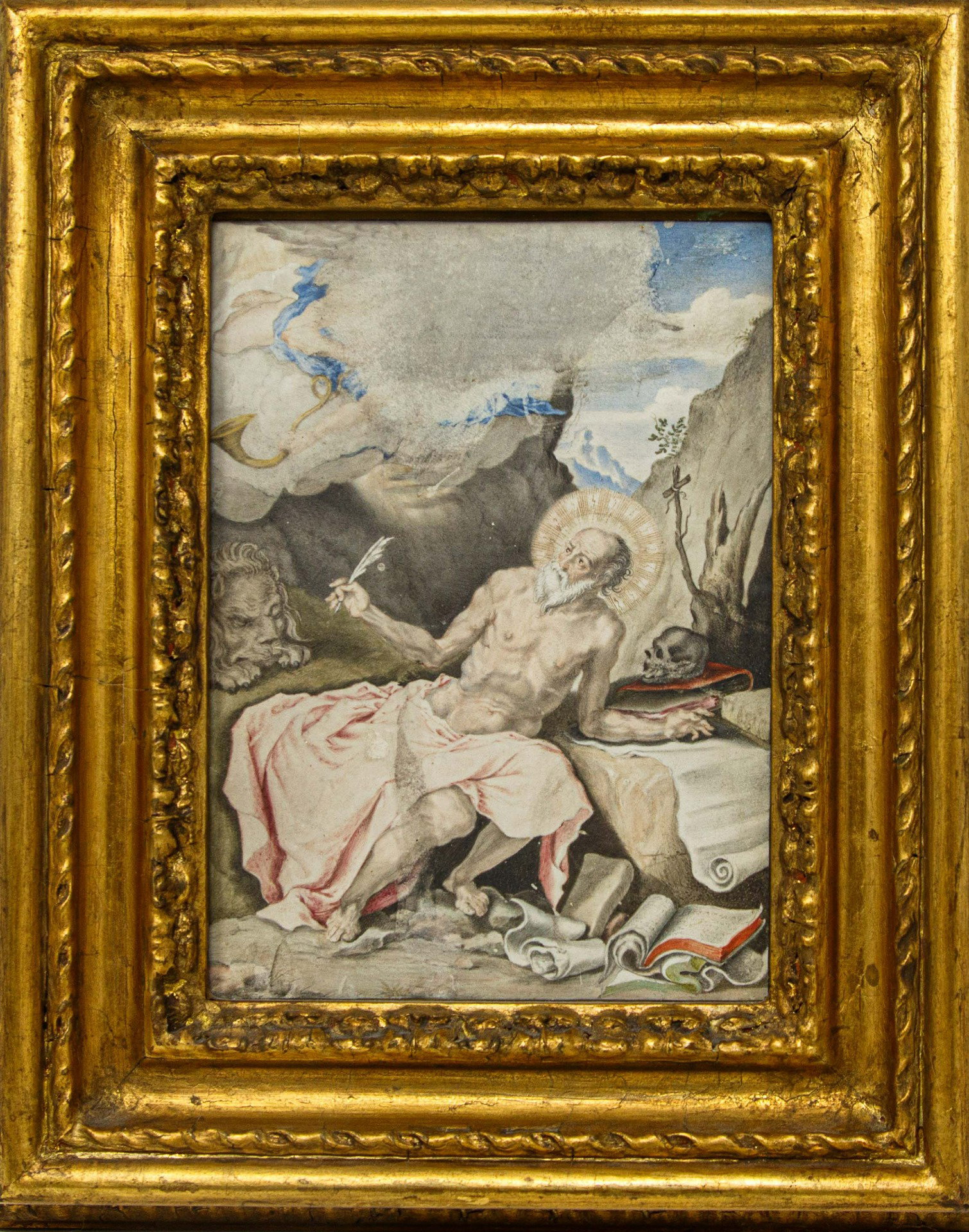
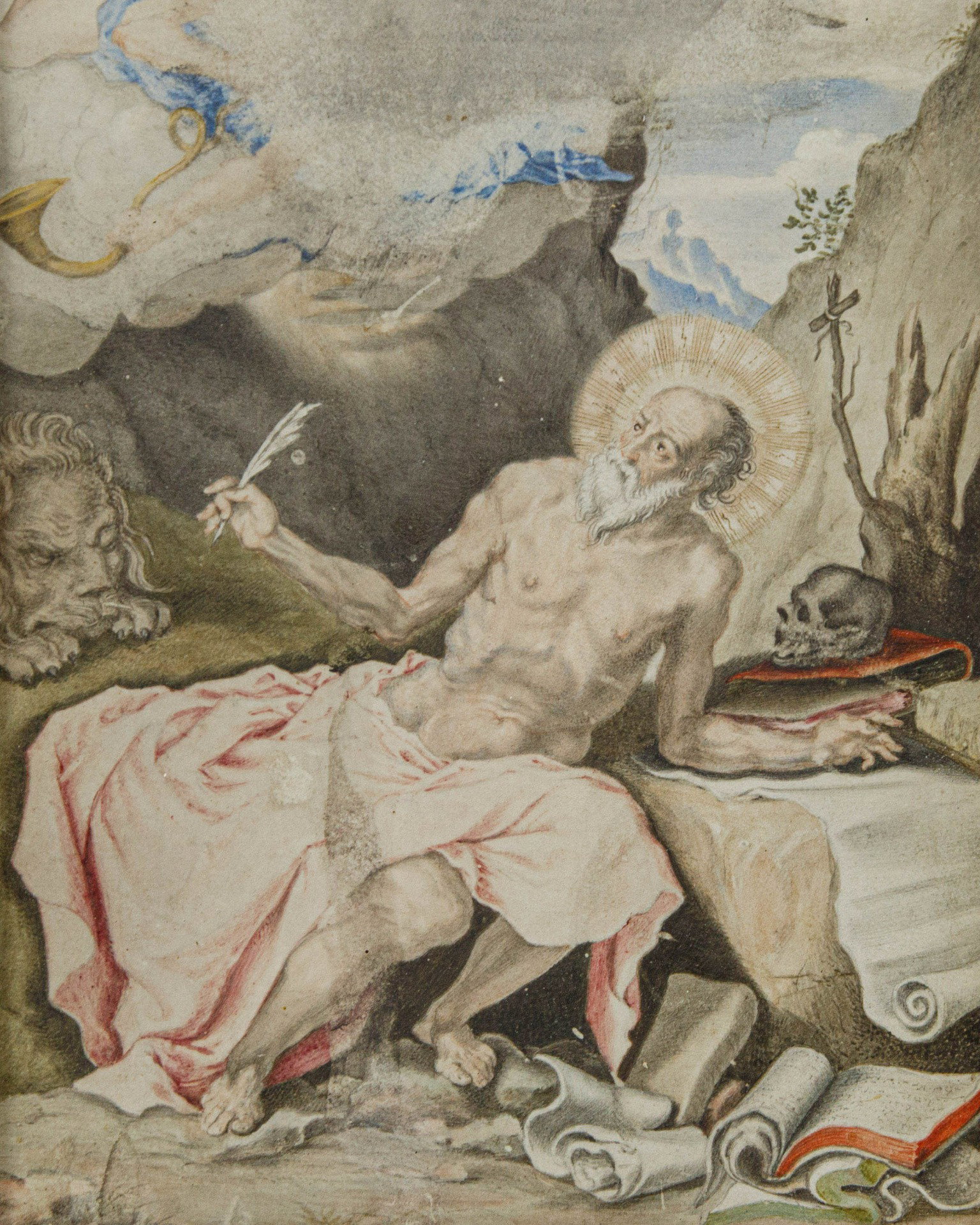
17th century, Saint Jerome in the desert
Description:
17th century
Saint Jerome in the desert
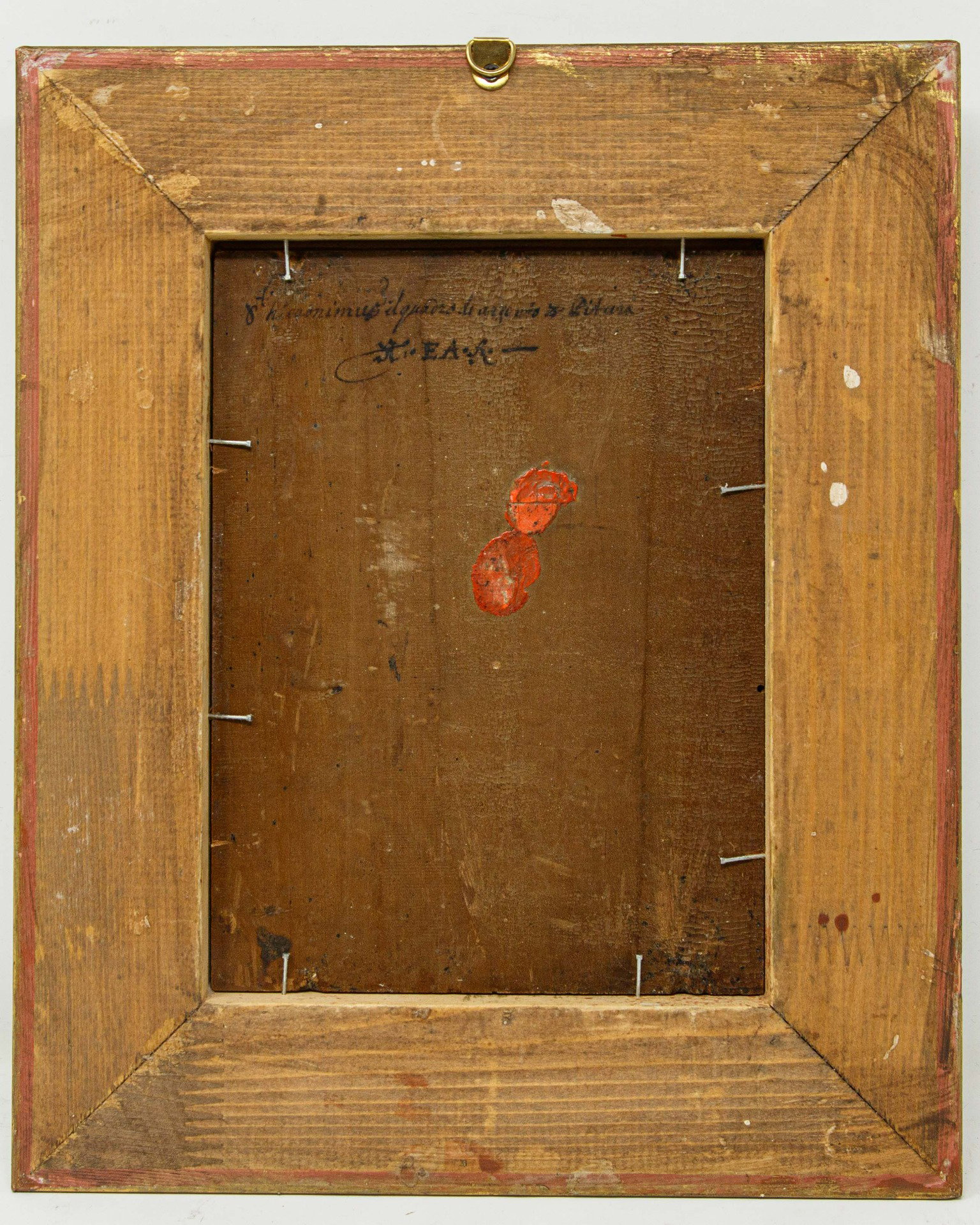
Oil on vellum applied to panel, 18 x 23 cm
With frame, 29.5 x 24 cm
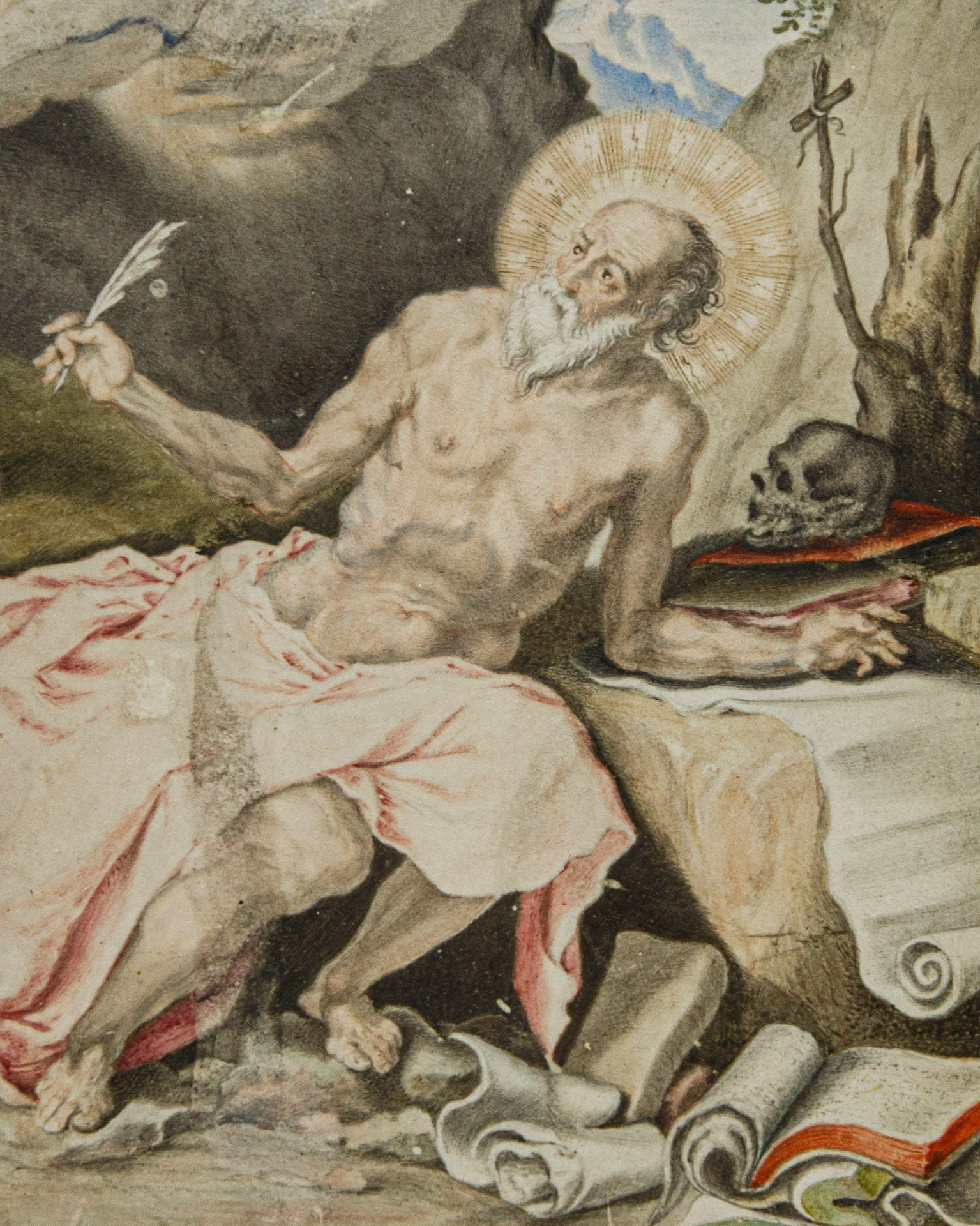
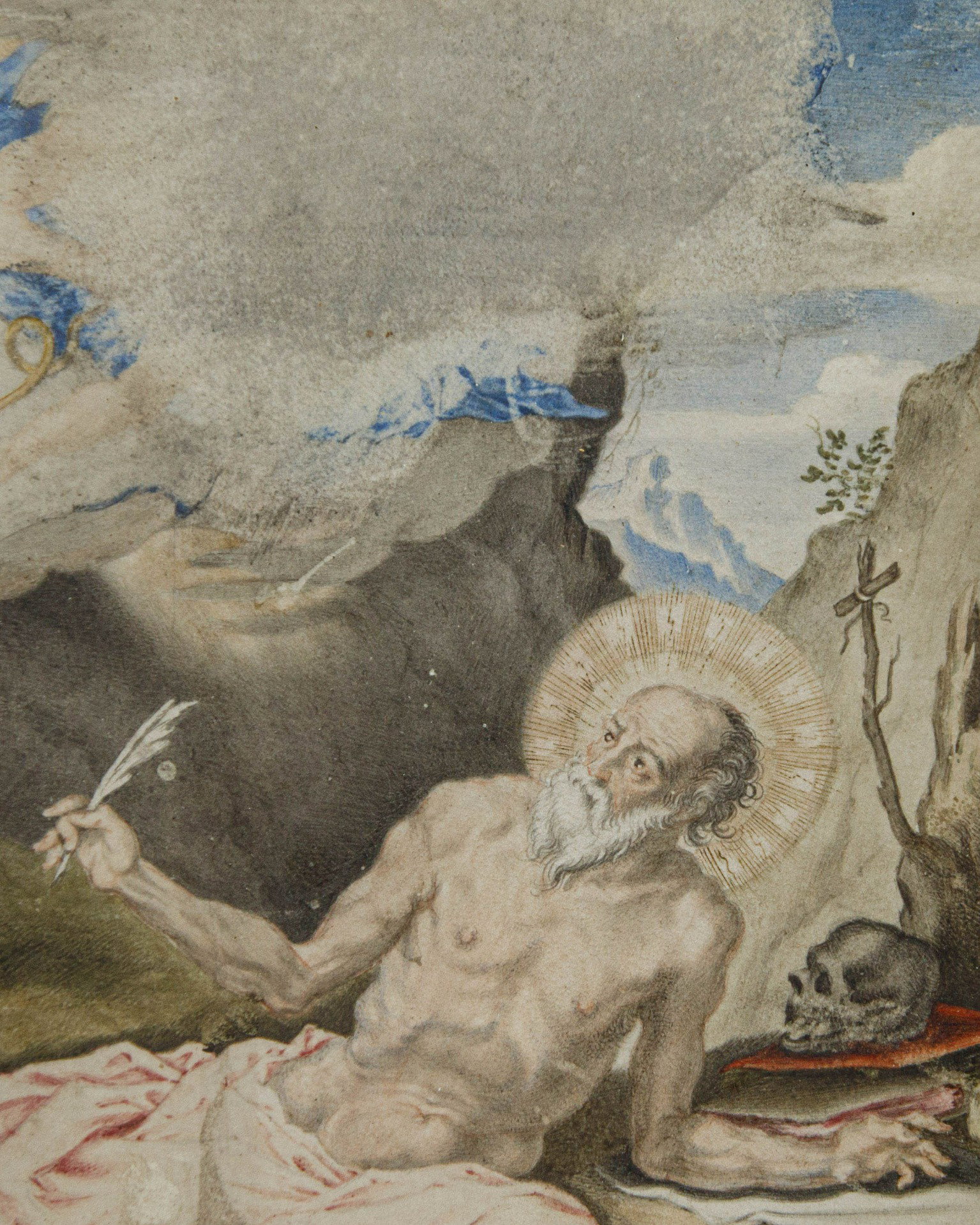
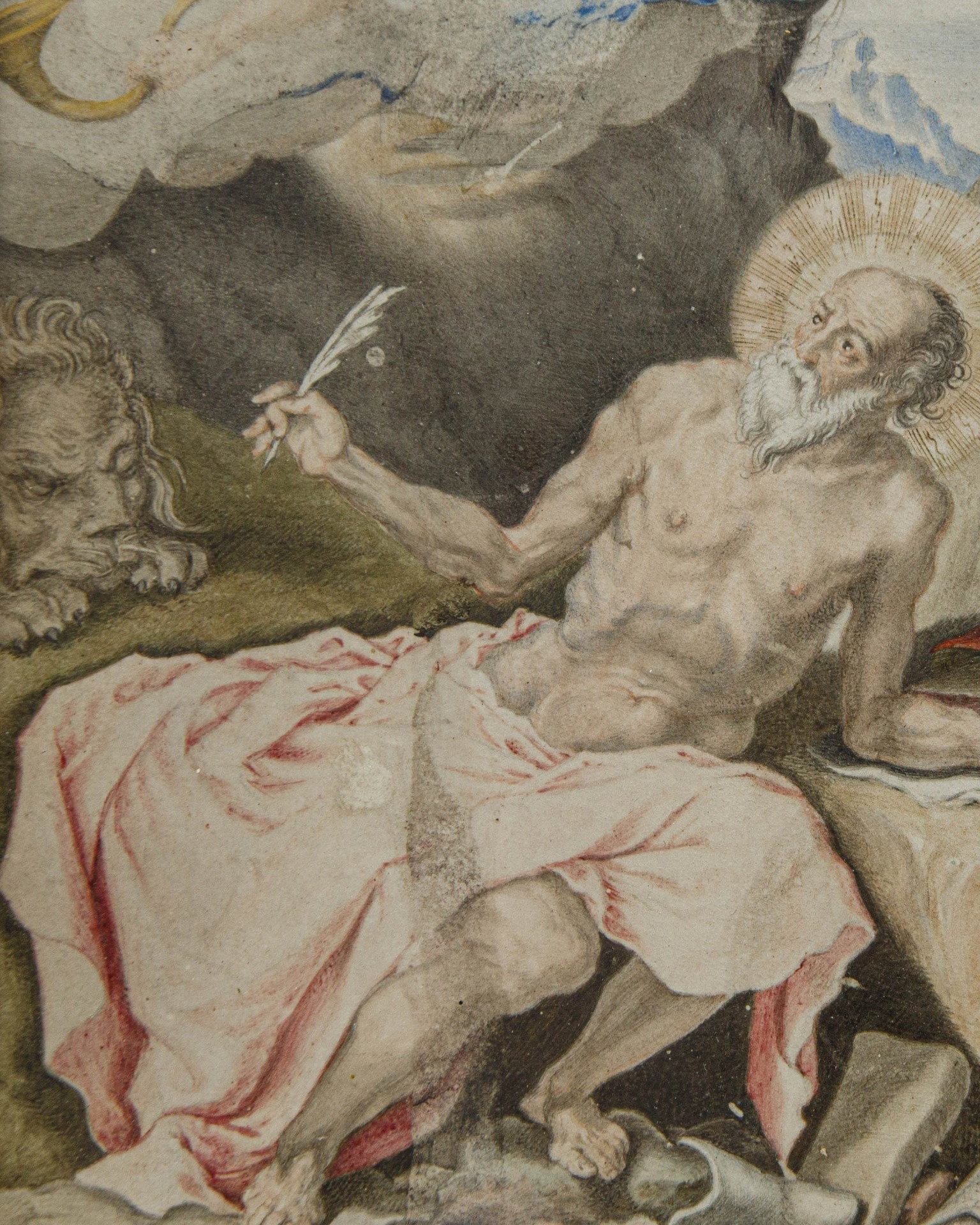
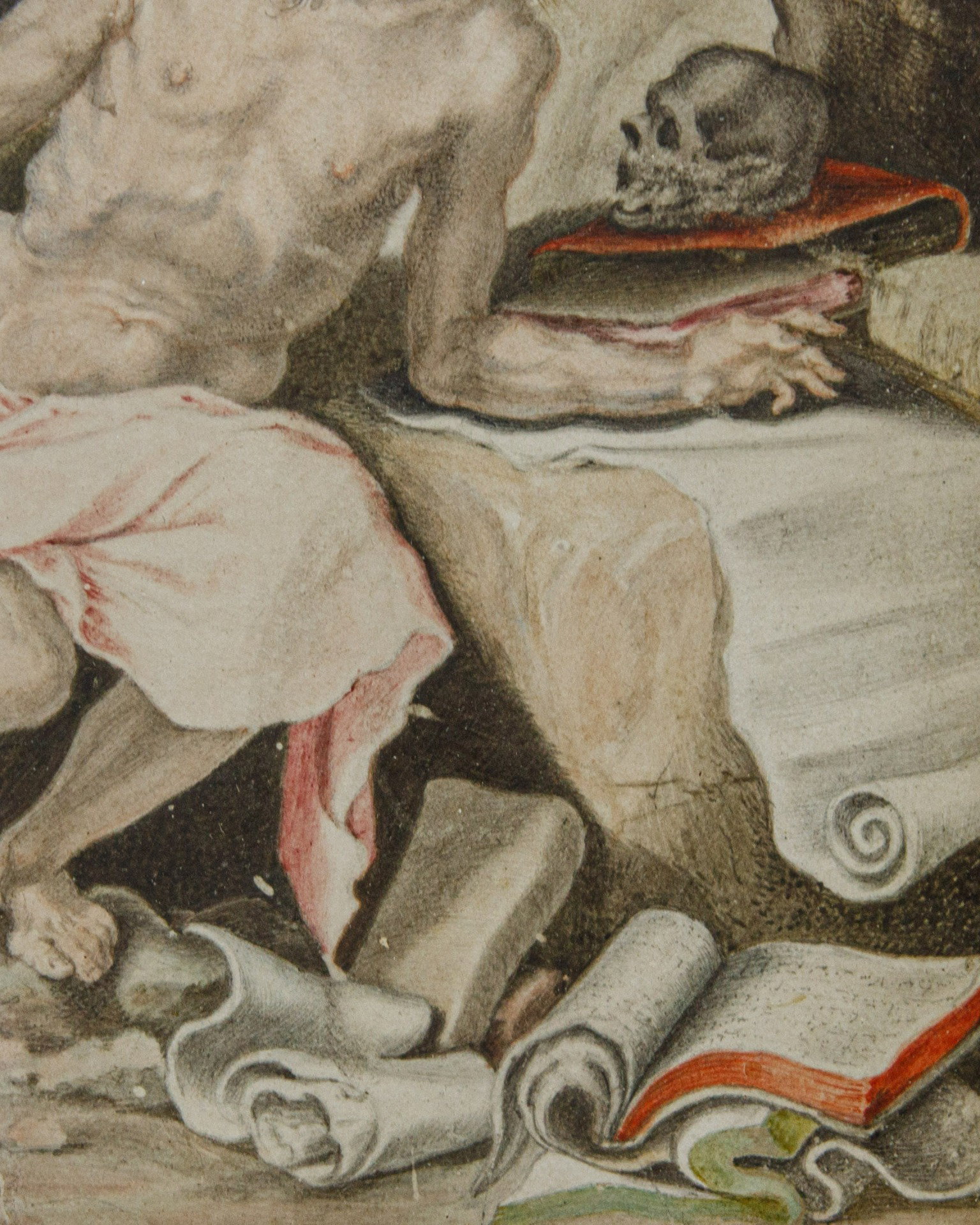
This small painting, executed in oil on vellum applied to panel, depicts Saint Jerome as a penitent, caught in a moment of intense meditation among the rocks of a harsh desert landscape. The old man, with his gaunt face and white beard, is encircled by a luminous halo that emphasizes his holiness; his semi-nude body, covered only by a pink drapery, testifies to his ascetic choice of renunciation of earthly goods. Beside him appears the lion, his faithful companion according to hagiographic legend, while on the rocky mass a skull can be seen, a symbol of vanitas and memento mori that recalls the transience of human life. In the foreground, books and a sheet of paper are visible, alluding to his activity as a translator of the Bible and Doctor of the Church. In the sky, amidst wispy clouds, an angelic figure with a trumpet is glimpsed, while a small cross on the mountaintop reinforces the sense of Christian devotion. The pictorial style, with the soft rendering of the flesh and the chromatic contrast between the pink of the drapery and the earthy tones of the landscape, is typical of 17th-century devotional production. This was a period in which the subject of Saint Jerome as a penitent enjoyed extraordinary iconographic popularity during the Counter-Reformation, which exalted introspection, penance, and meditation on death, in line with the Baroque taste for emotional pathos and descriptive naturalism.