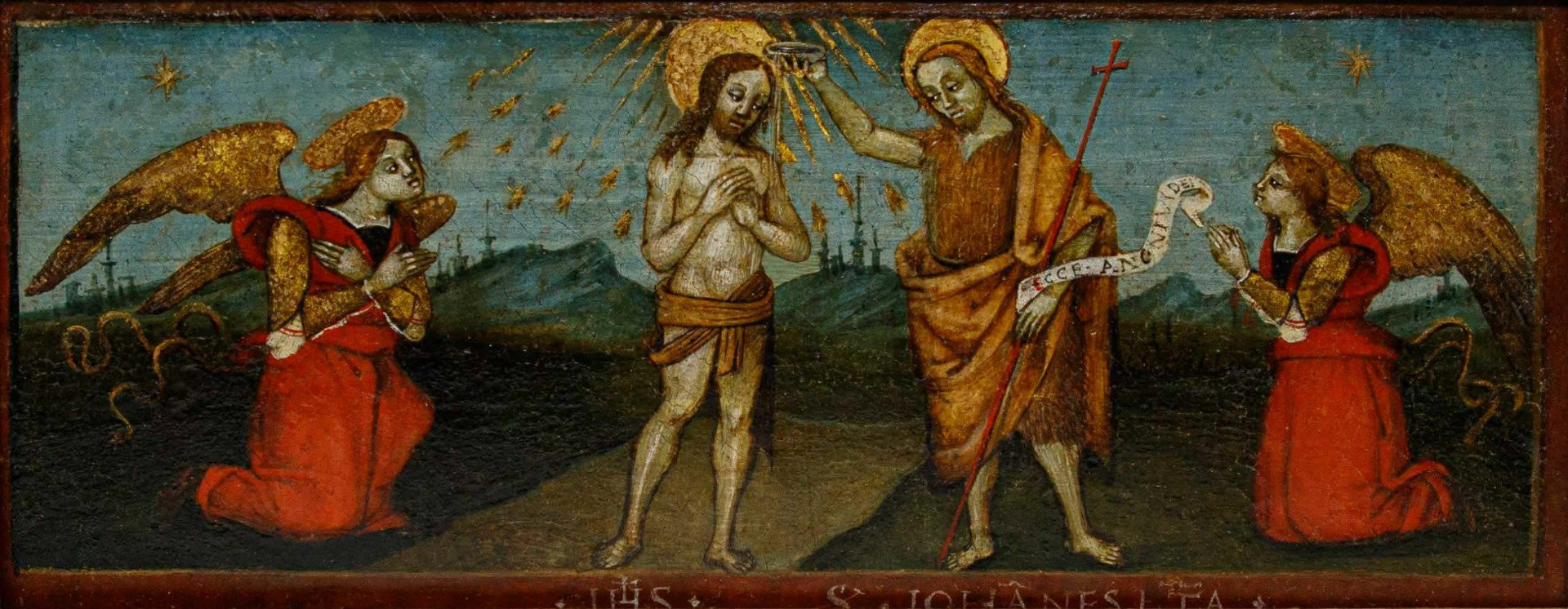
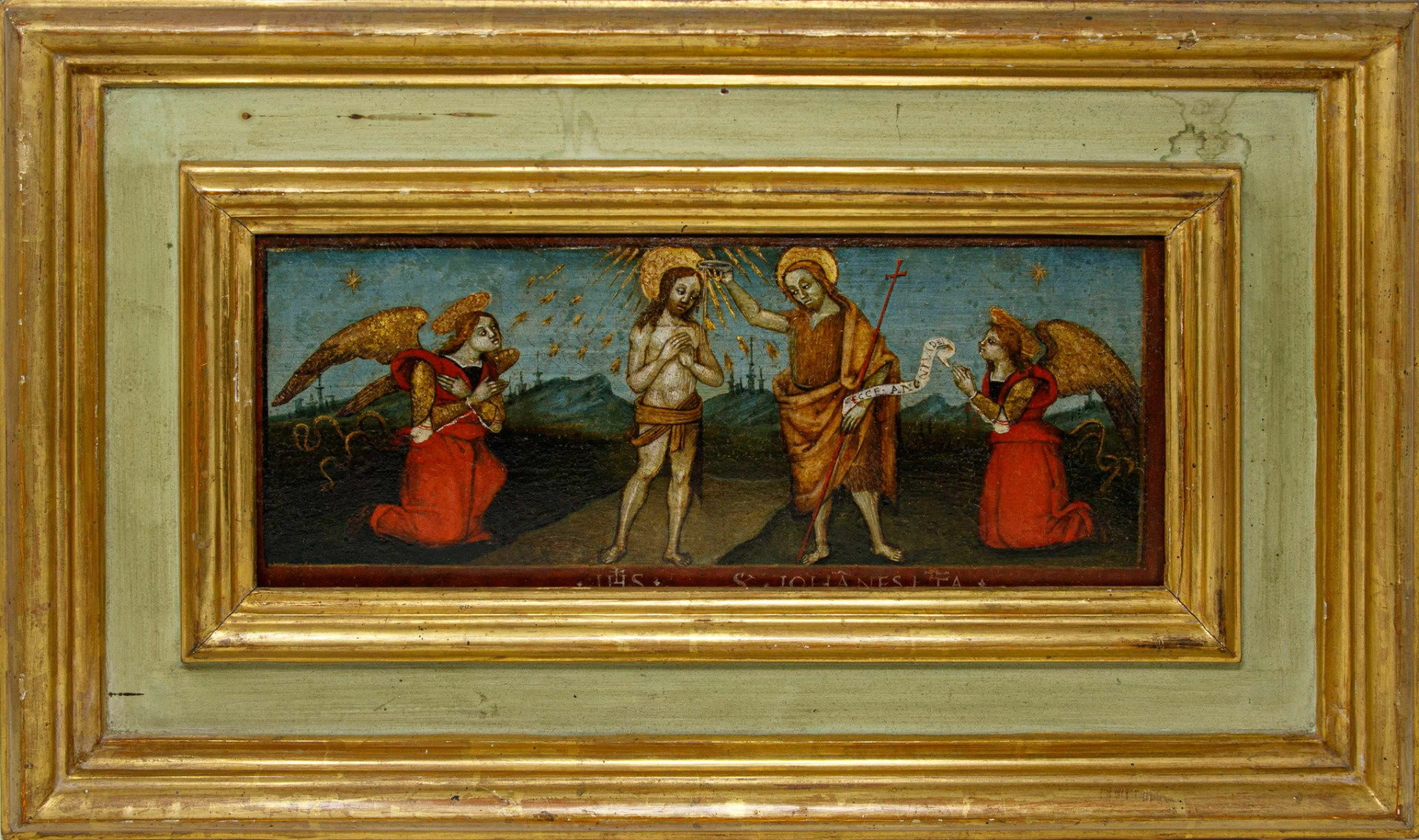
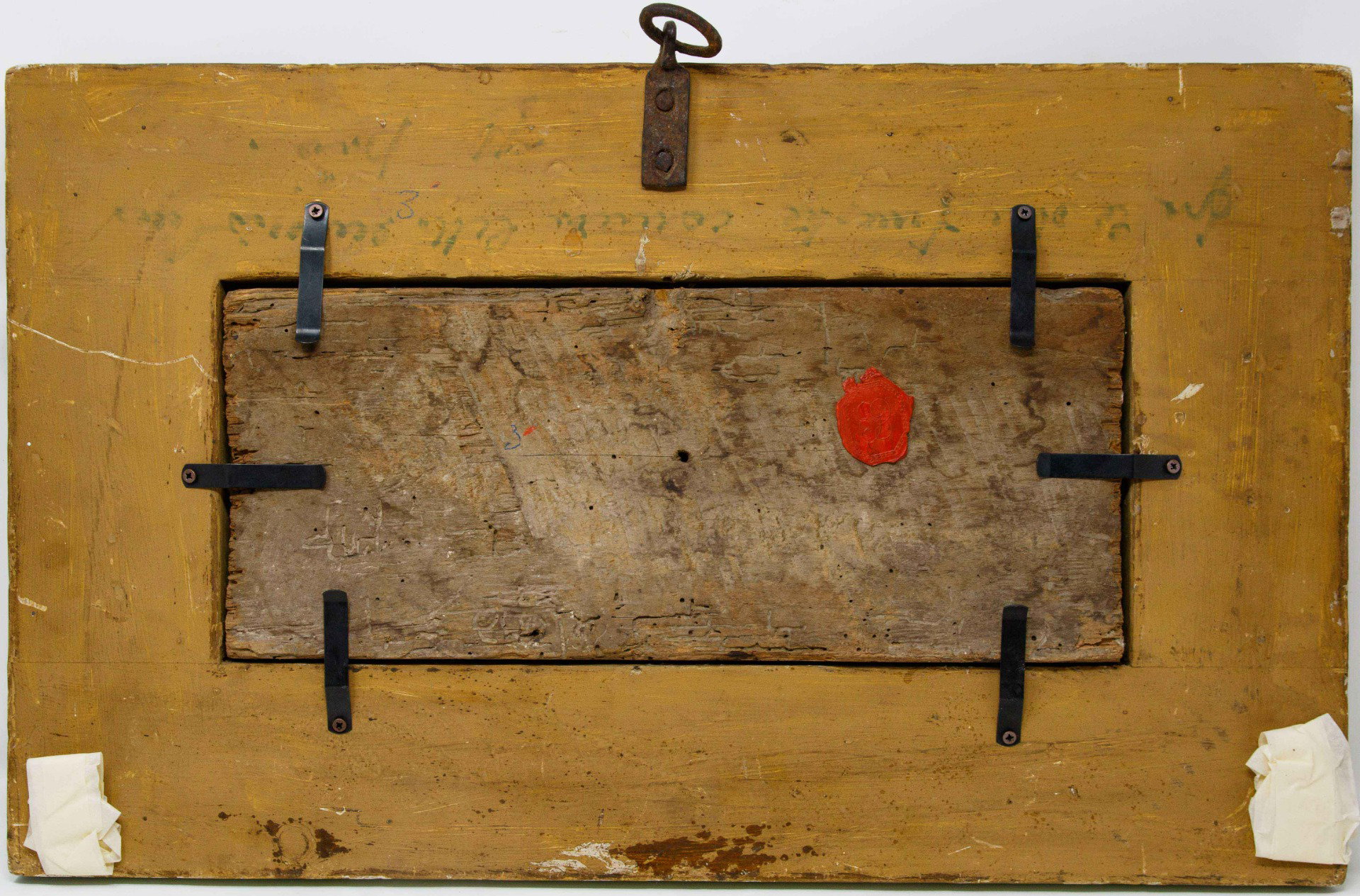
Lombard school, late 15th century, Baptism of Christ with two angels
Description:
Lombard school, late 15th century
Baptism of Christ with two angels
Oil on panel, 15.5 x 37 cm
With frame, 33 x 56 cm
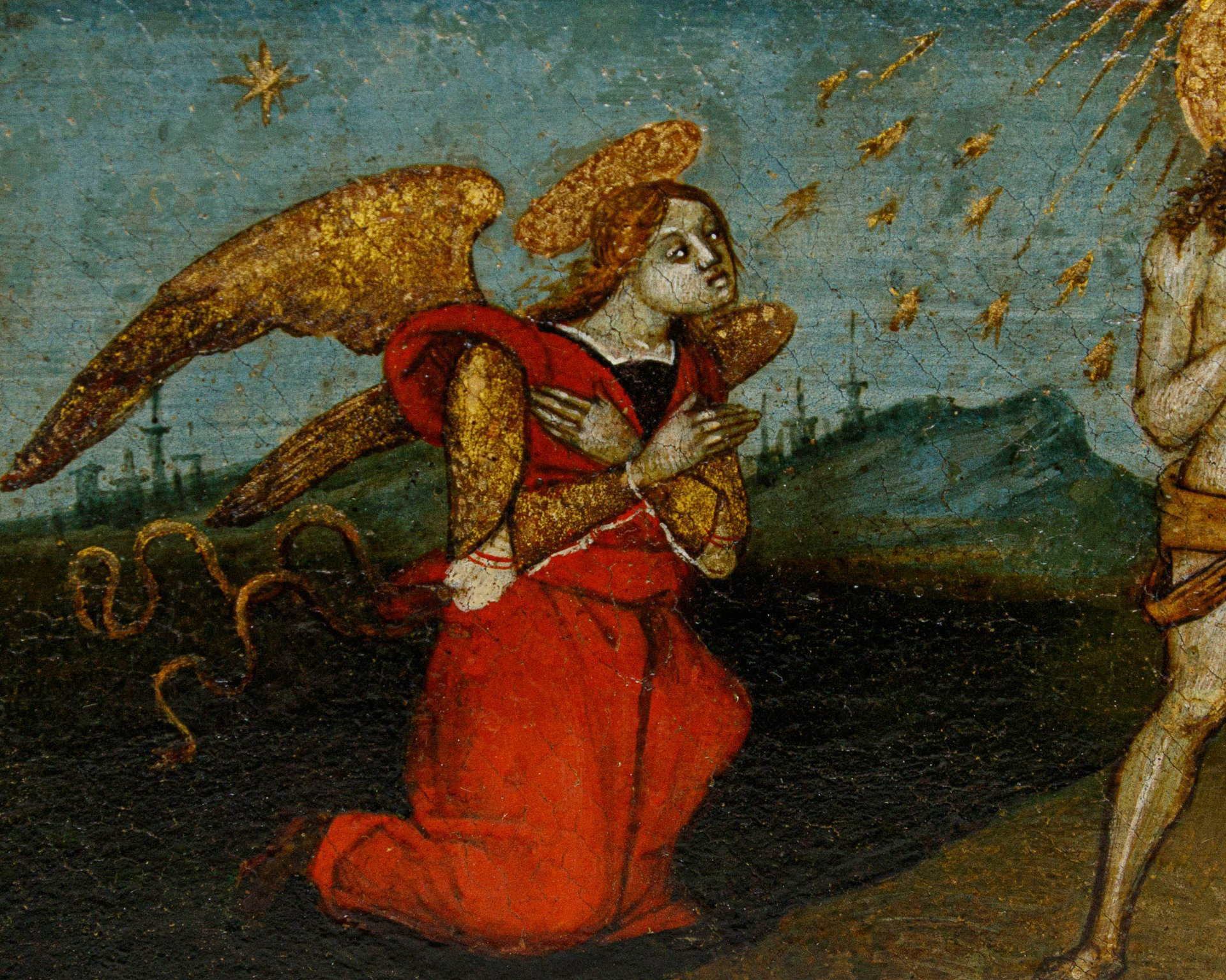
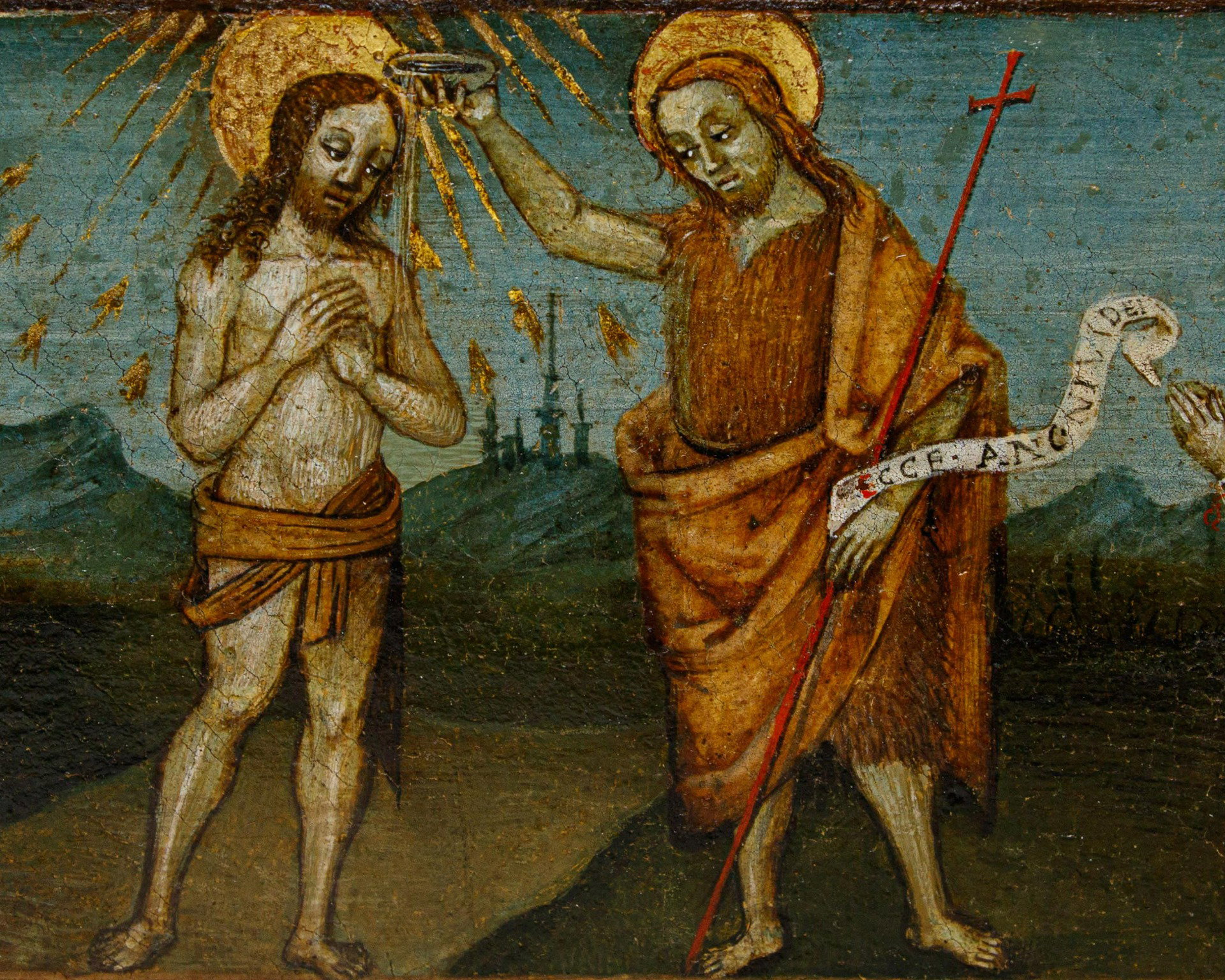
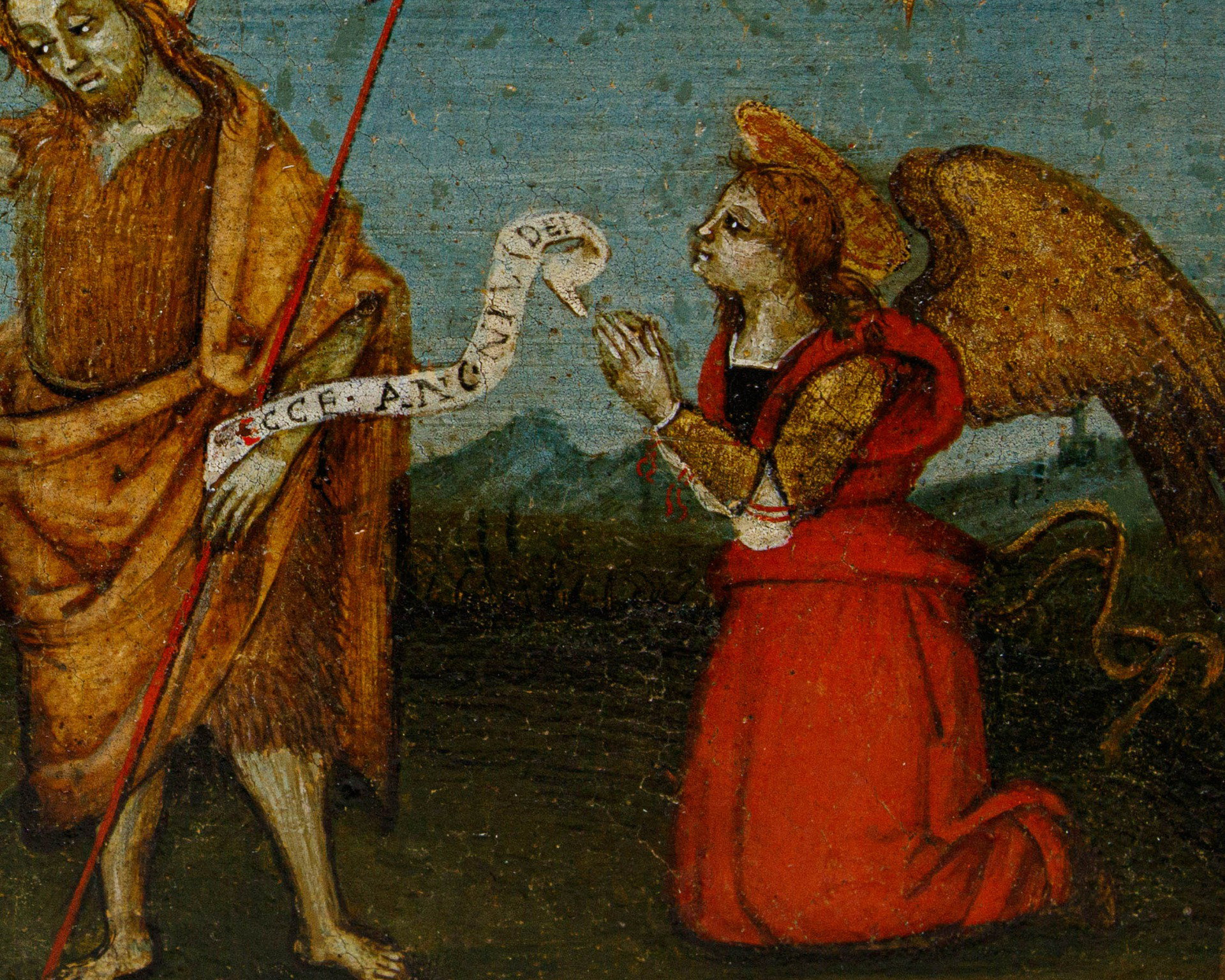
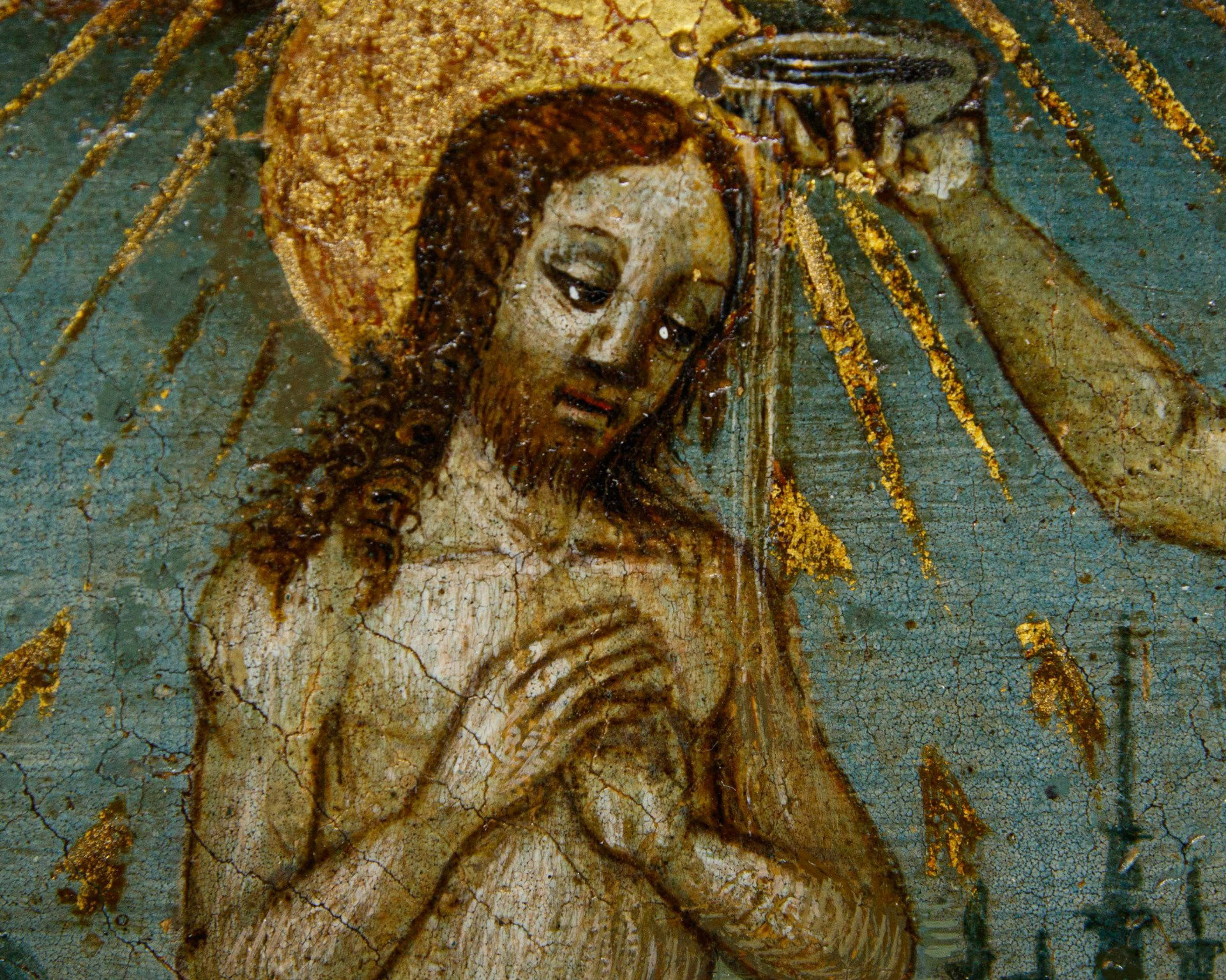
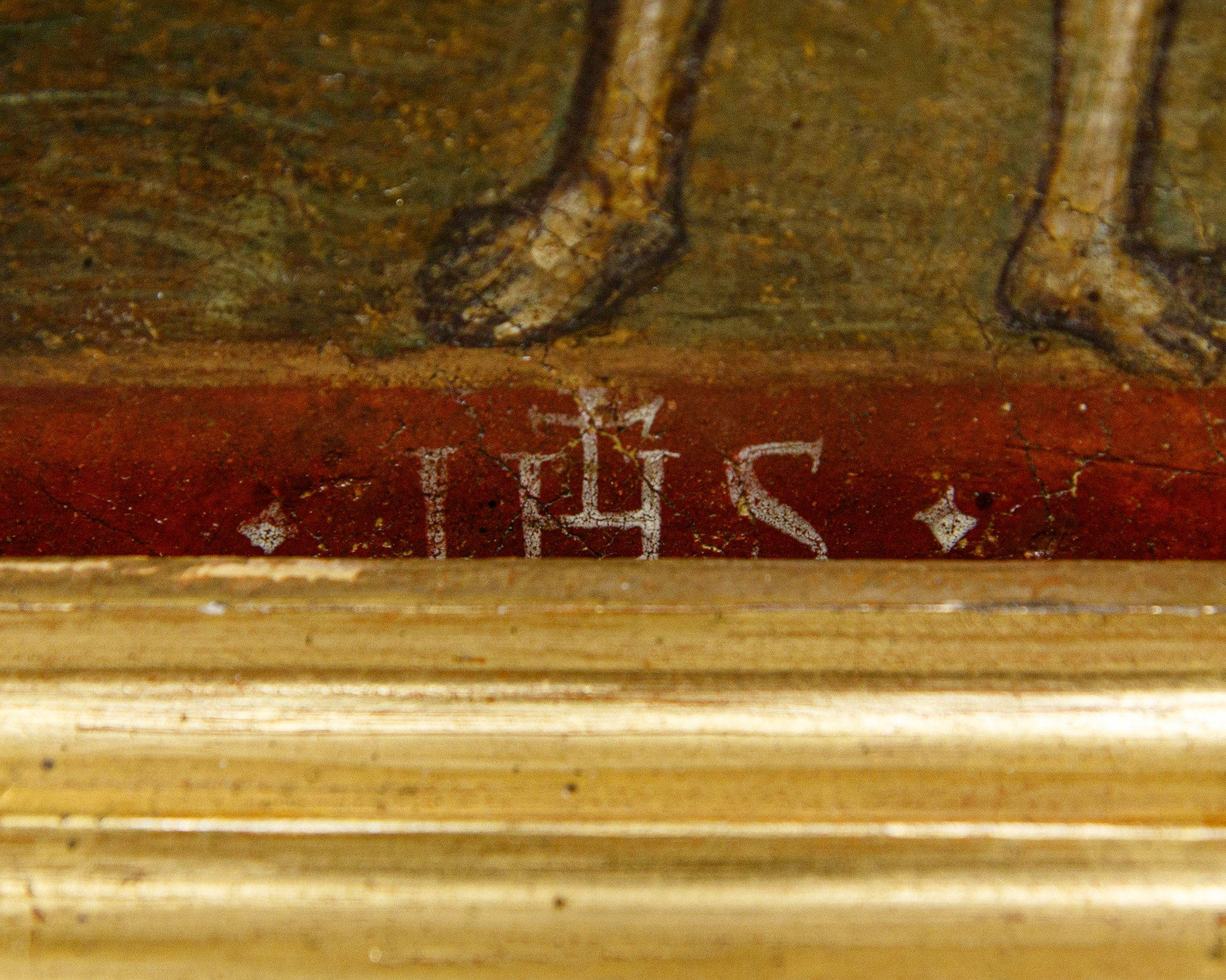
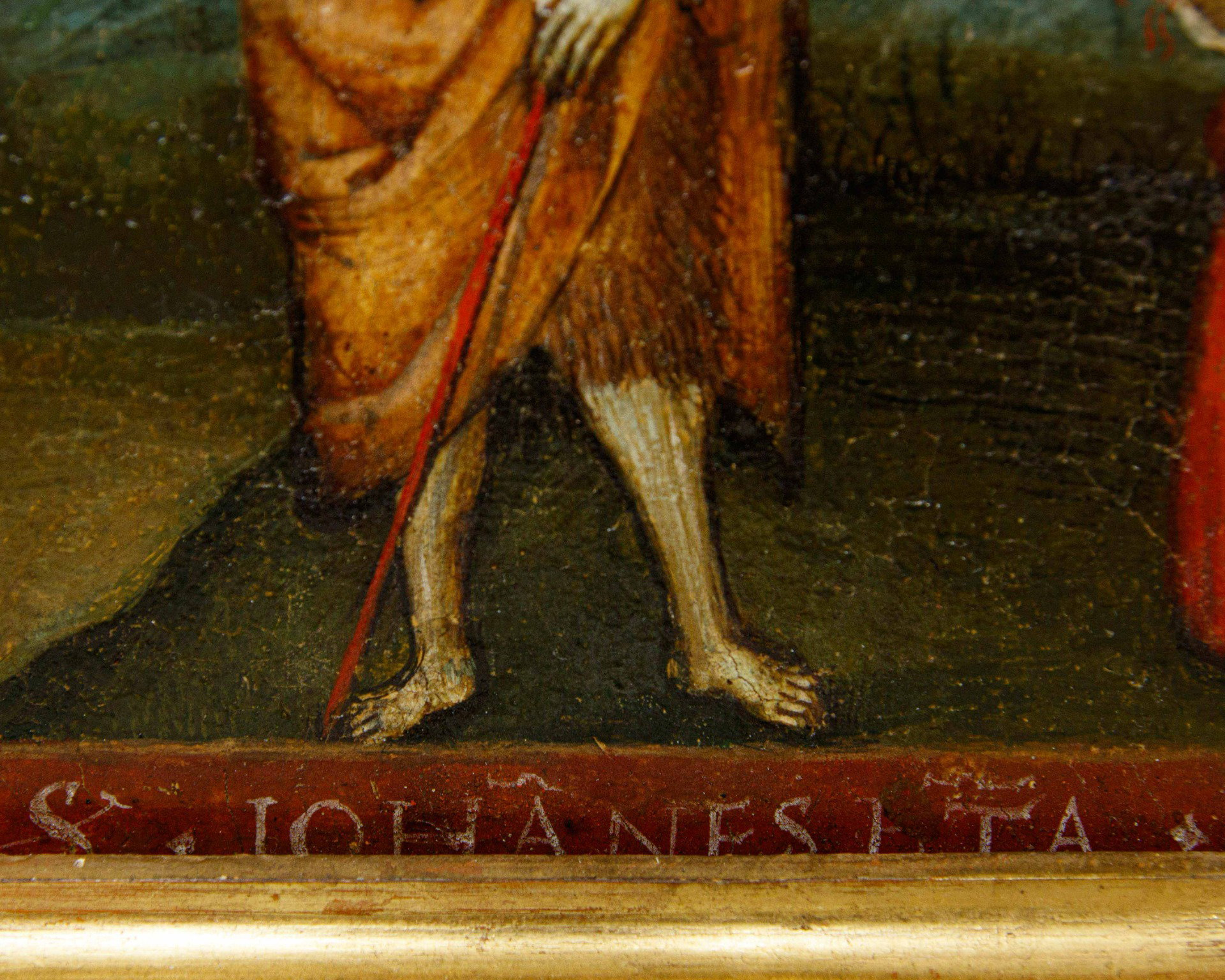
The painting depicts the Baptism of Christ, a central scene flanked by two adoring angels in red robes and golden wings, kneeling at the sides of the composition, following an iconographic scheme typical of devotional painting of the late 15th century. In the center, Christ, with his hands crossed over his chest in a sign of humility, receives the baptismal water from Saint John the Baptist, recognizable by the red processional cross and the cartouche with the inscription "Ecce Agnus Dei". The golden light descending from the sky, rendered with fine rays and stars, symbolizes the divine presence and the Holy Spirit. The inscriptions at the bottom, "IHS" and "S. Iohannes", confirm the identity of the sacred protagonists. The hilly landscape in the background, with stylized towers and architecture, is typical of the Lombard tradition, which favored populating backgrounds with meticulously described urban and natural elements.
Stylistically, the work fits into the trend of late 15th-century Lombard painting, characterized by a still persistent Gothic linearity, combined with a growing interest in the volumetric rendering of figures, of Ferrarese and Venetian origin. In this context, artists such as Bernardo Zenale, active between Milan and Treviglio, known for the solemnity of his figures and the use of warm, golden light, and Baldassarre di Biagio, a less documented painter but representative of a widespread Lombard workshop attentive to popular devotion and the production of small panels for domestic altars or private chapels, are active. Our painting, with its frontal composition, sweet and slightly melancholic faces, gold-punched decorations on the angelic wings, and the chromatic palette dominated by vivid reds and golden ochres, fully belongs to this figurative culture, midway between the late Gothic heritage and the first Lombard Renaissance openings, at a moment of transition that precedes the disruptive arrival of Leonardo da Vinci in Milan.