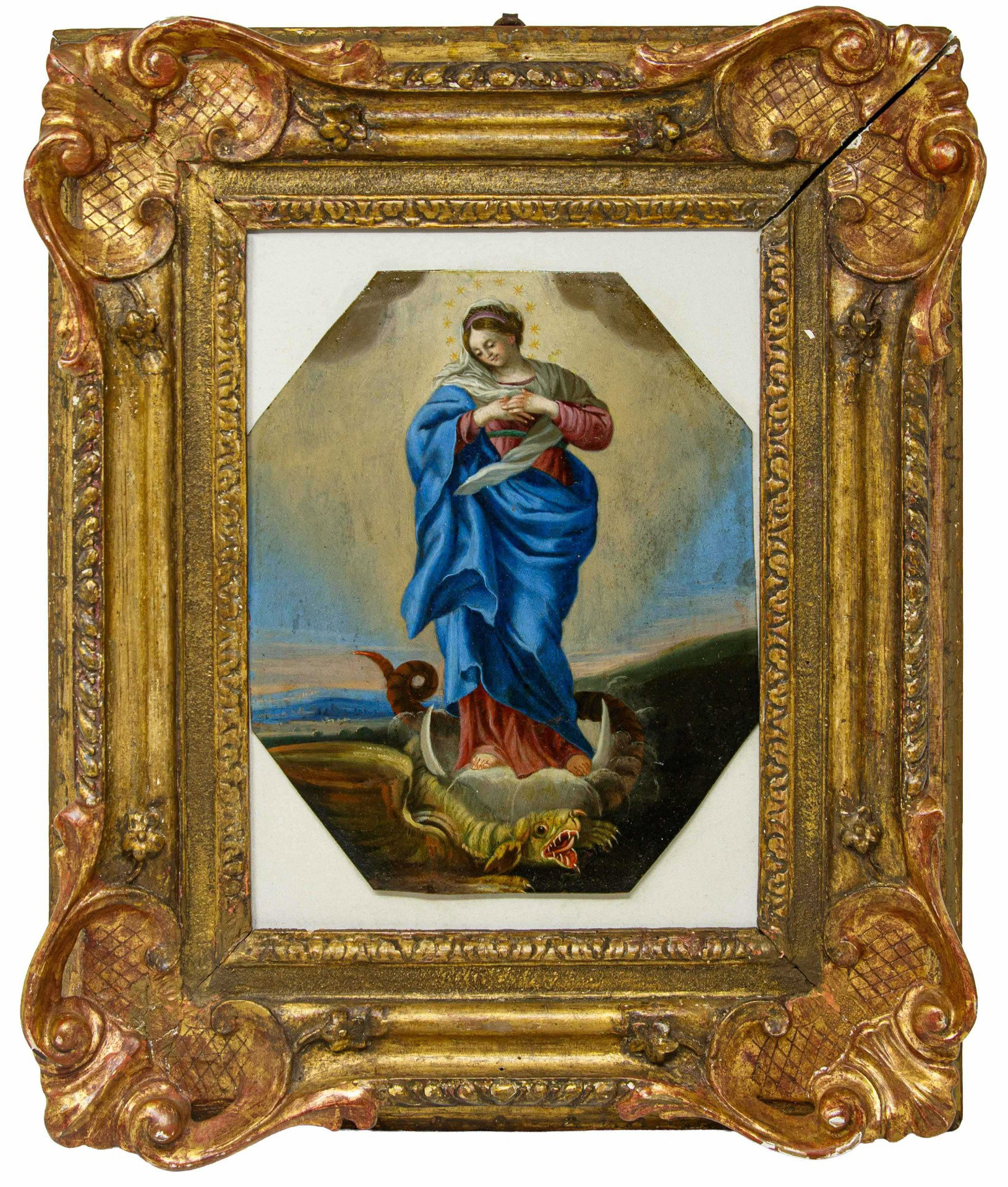
Cortonesque painter, 17th century, Immaculate Conception
Description:
Cortonesque painter, 17th century
Immaculate Conception
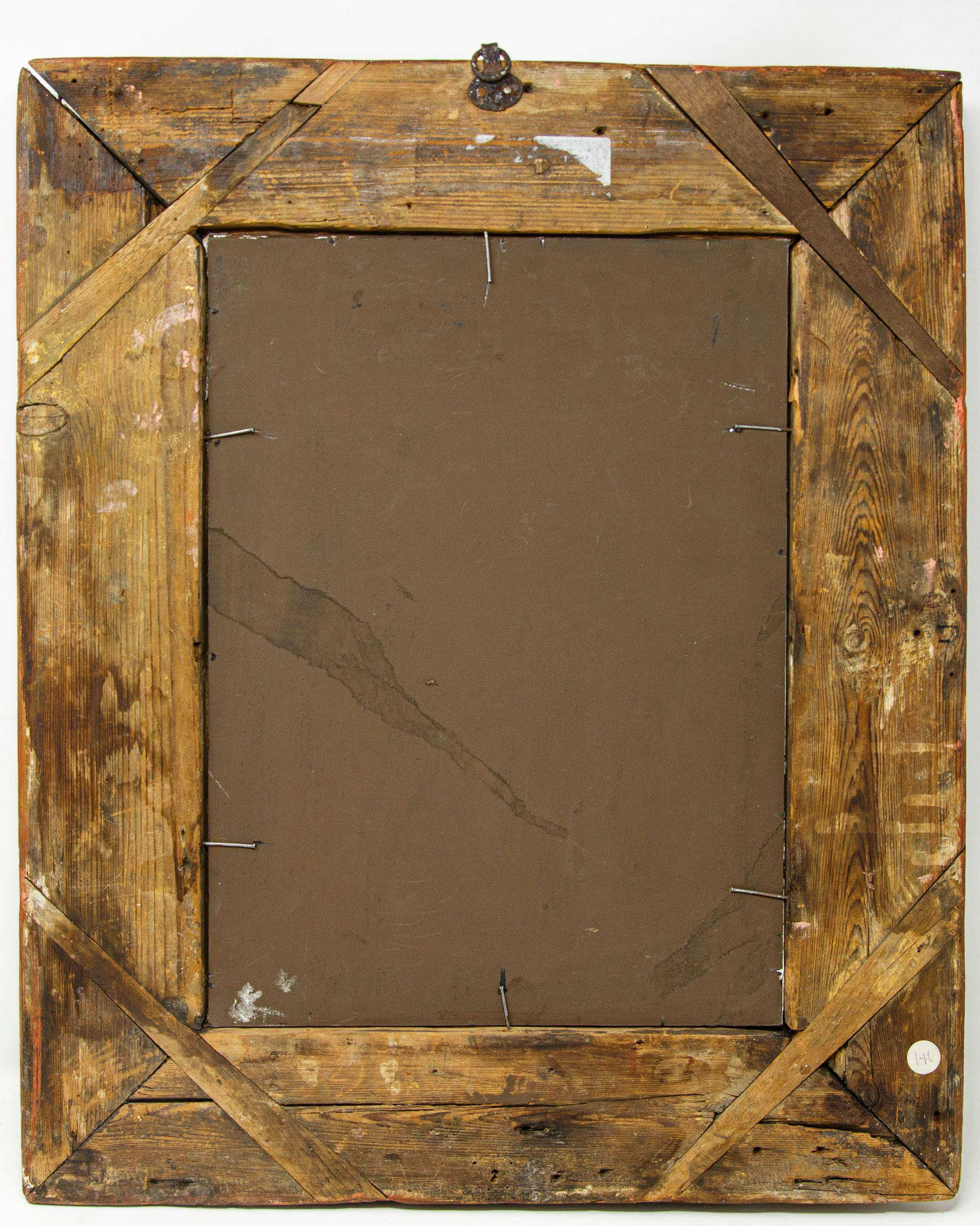
Oil on copper, 26.5 x 21 cm
With frame, 48 x 39 cm
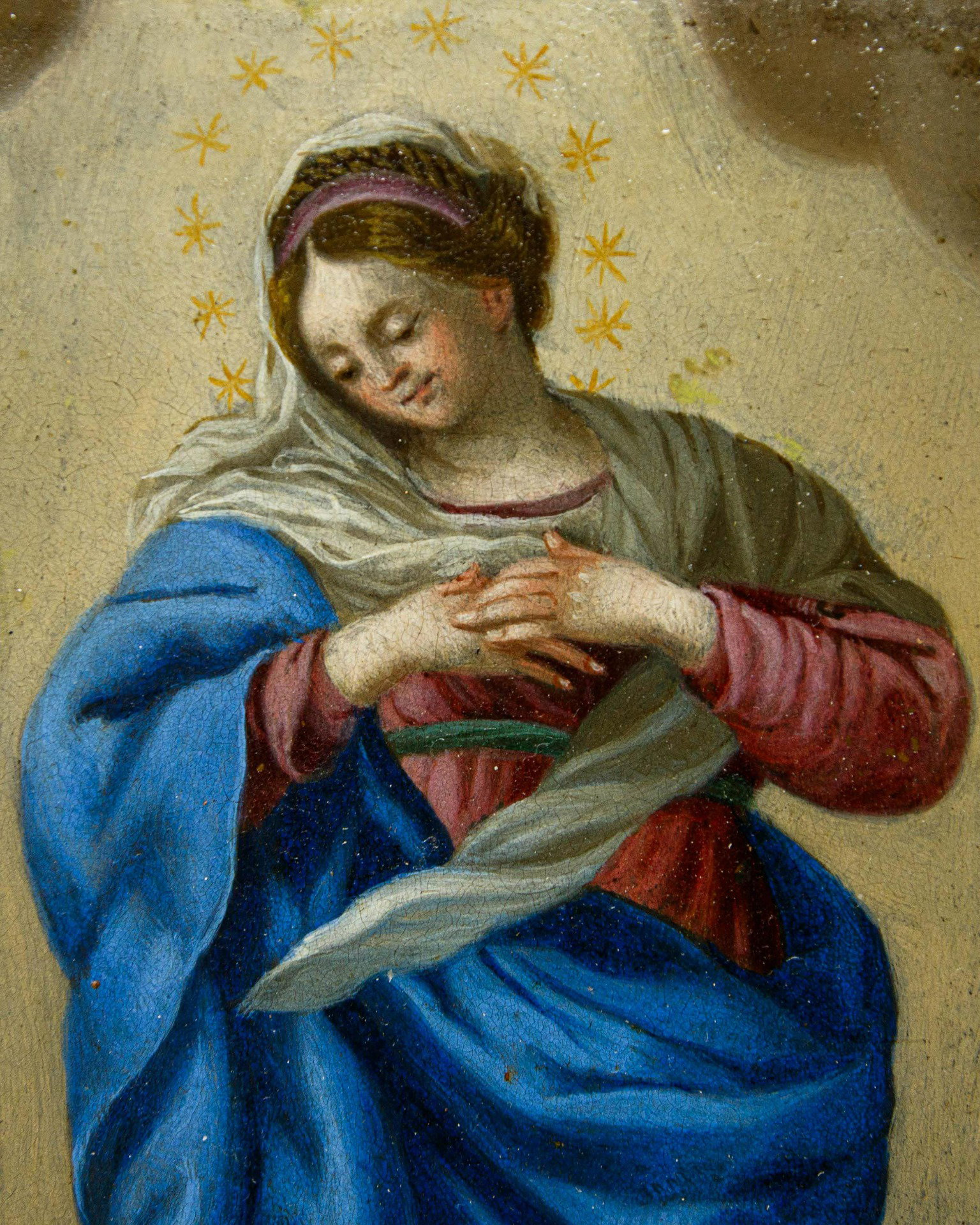
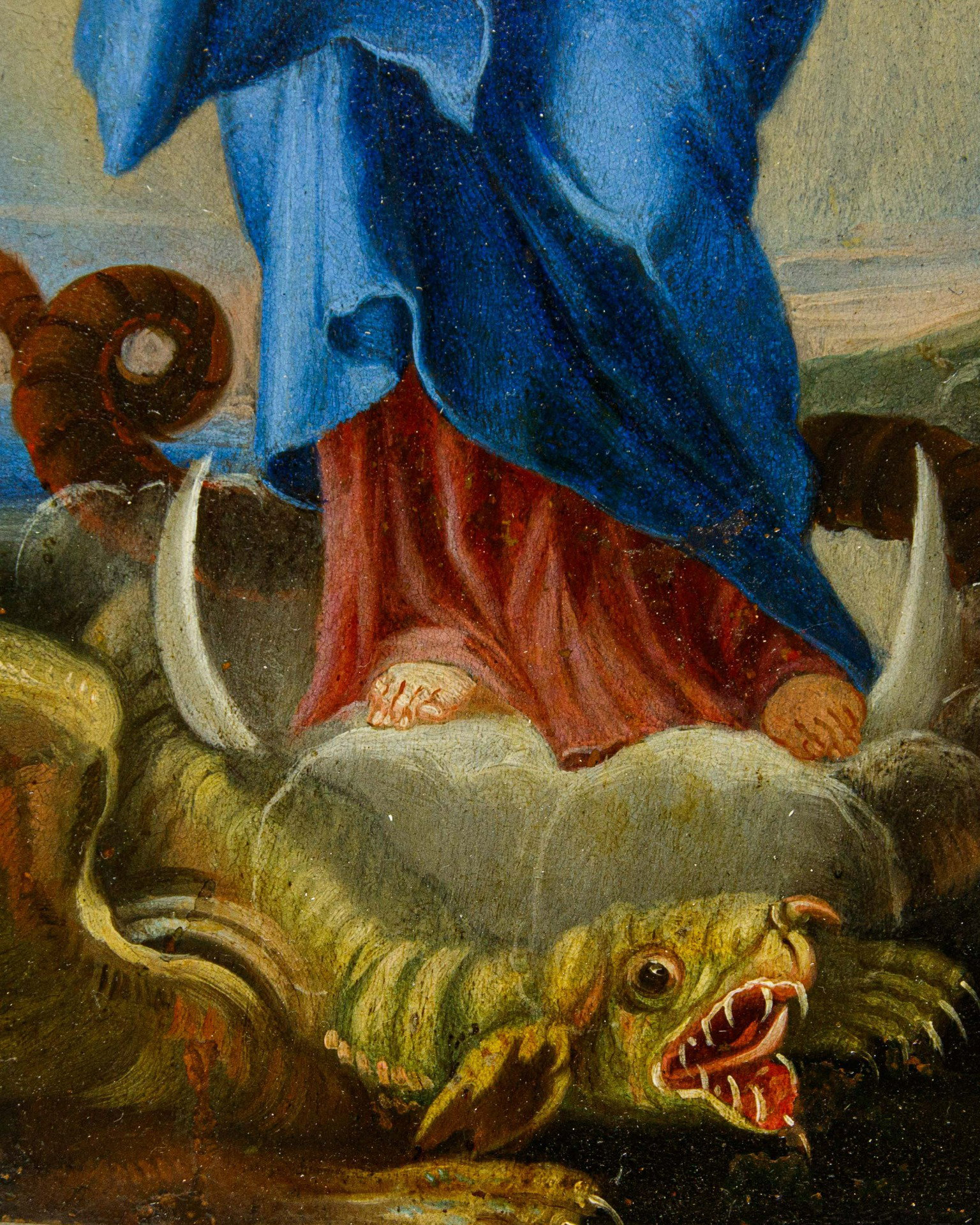
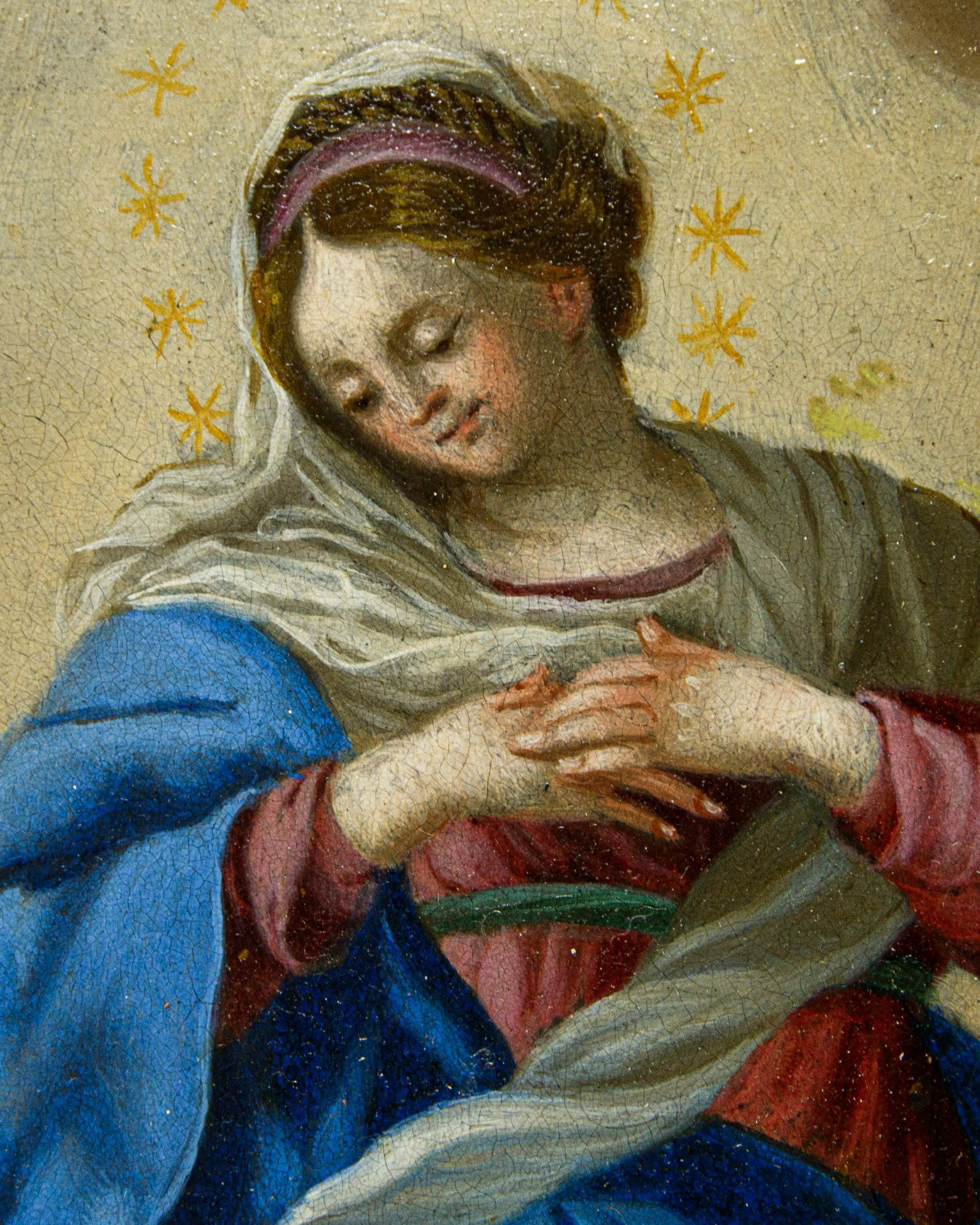
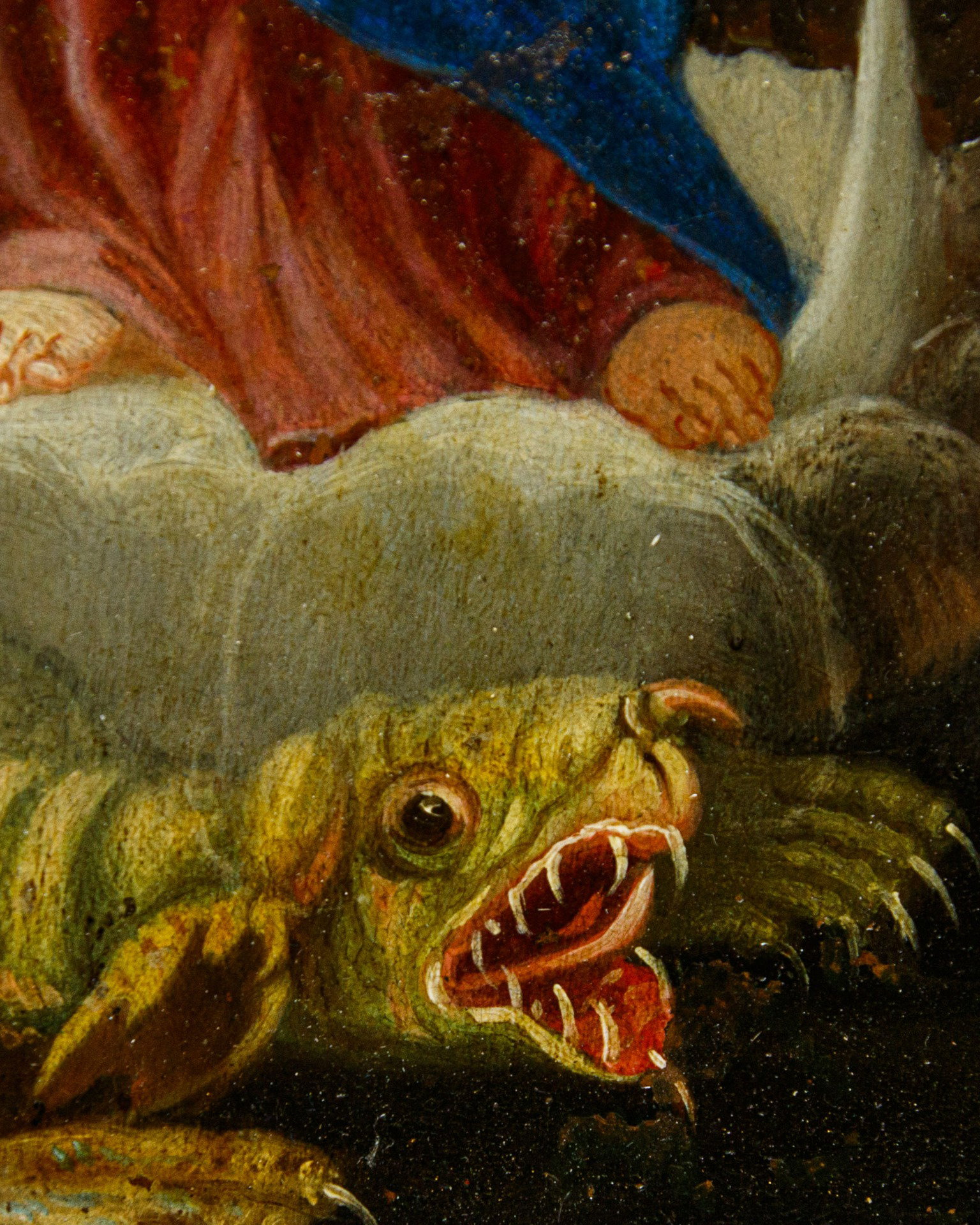
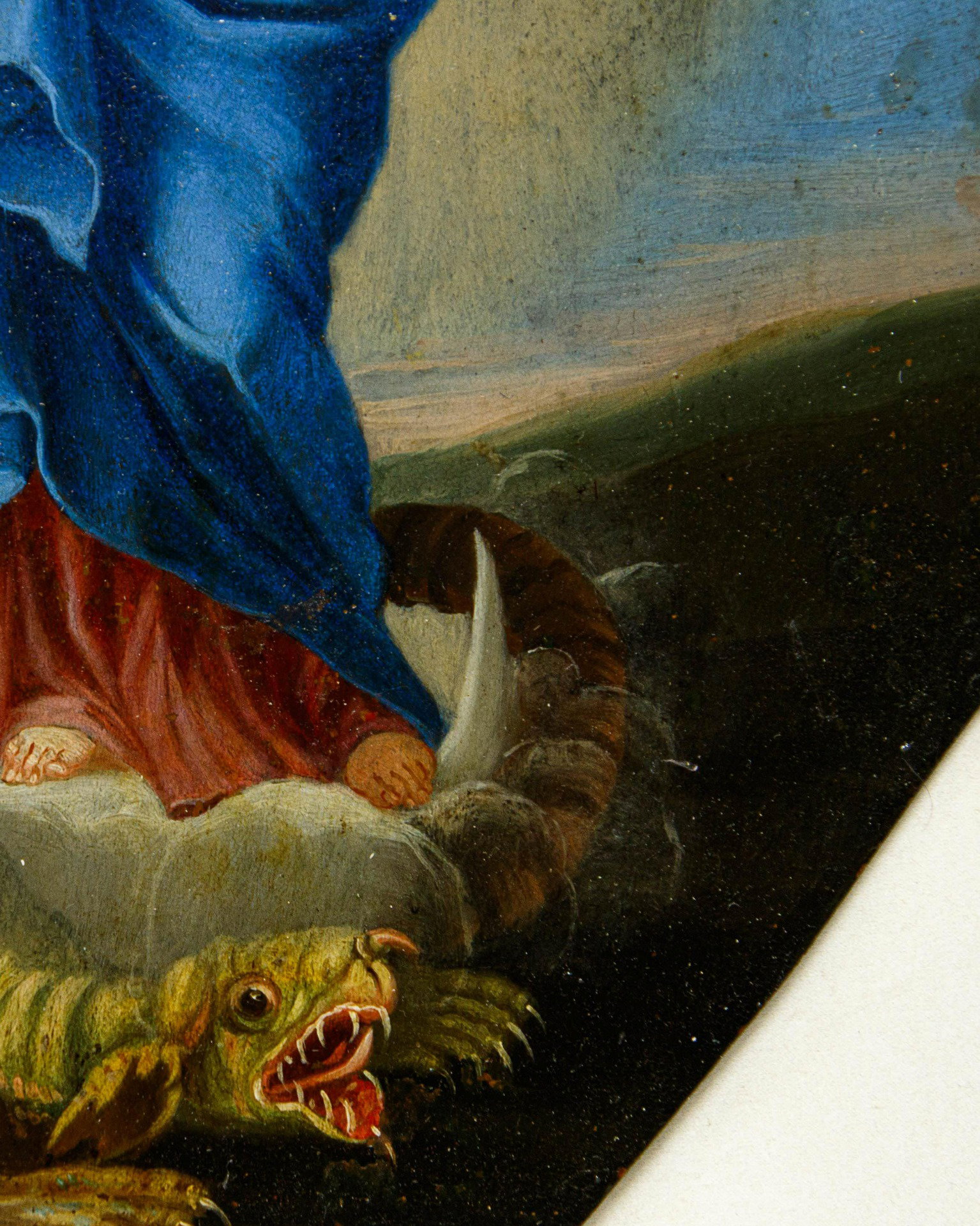
A small oil painting on copper, elongated octagonal in shape, depicting the Immaculate Conception according to traditional iconography: the Virgin, dressed in red and wrapped in a large blue cloak, is portrayed standing on the crescent moon, her hands crossed over her chest in a gesture of humble recollection, her face tilted and her eyes closed, while at her feet lies the defeated dragon, symbol of original sin conquered by Marian purity. Her head is encircled by a crown of stars, an allusion to the verses of the Apocalypse that fuel devotion and iconography linked to the dogma of the Immaculate Conception.
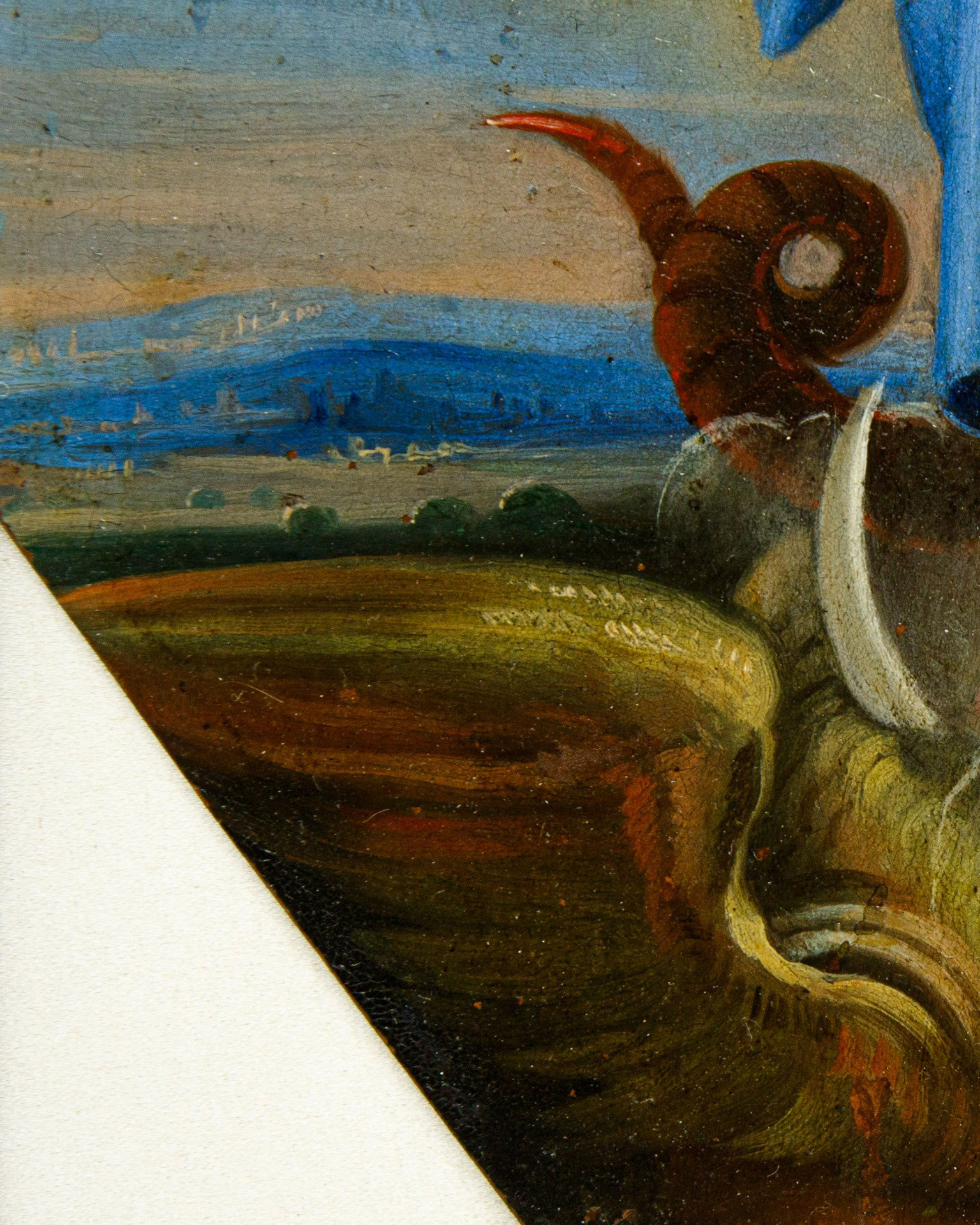
The composition refers to the great model developed by Pietro da Cortona for the altarpiece of the Immaculate Conception, now in the church of San Filippo Neri in Perugia, from which the painter of this small work takes the figure of the Virgin, the crescent moon, and the dragon. The success of the Cortonesque invention, capable of establishing itself as a reference for countless variations of the same subject throughout the peninsula, is largely due to the dissemination of prints, particularly the engravings made by François Spierre in the second half of the 17th century, which allowed the Cortonesque model to be known beyond the Umbrian borders, making it available to painters working in different contexts. Compared to the majority of paintings that take up this subject, here the background abandons the usual sky filled with clouds and angelic faces for a sober hilly landscape, with a city perched on a height rendered with a very fine brushstroke.
A useful comparison to understand the Cortonesque figurative culture within which the author of this panel operates can be found in the decorations of Palazzo Pitti painted by Pietro da Cortona himself: many female faces in the Hall of Jupiter share with the Virgin represented here the same sweetness, the same way of tilting the head with eyes closed on the shoulder, the same slight and composed smile.
The octagonal format and the copper support, a smooth and compact surface ideal for detailed painting, place the work within the flourishing production of small devotional paintings intended for domestic environments and private chapels, widespread in the 17th century: works of modest size, designed for personal meditation, often replicated from highly successful models such as the Cortonesque one.