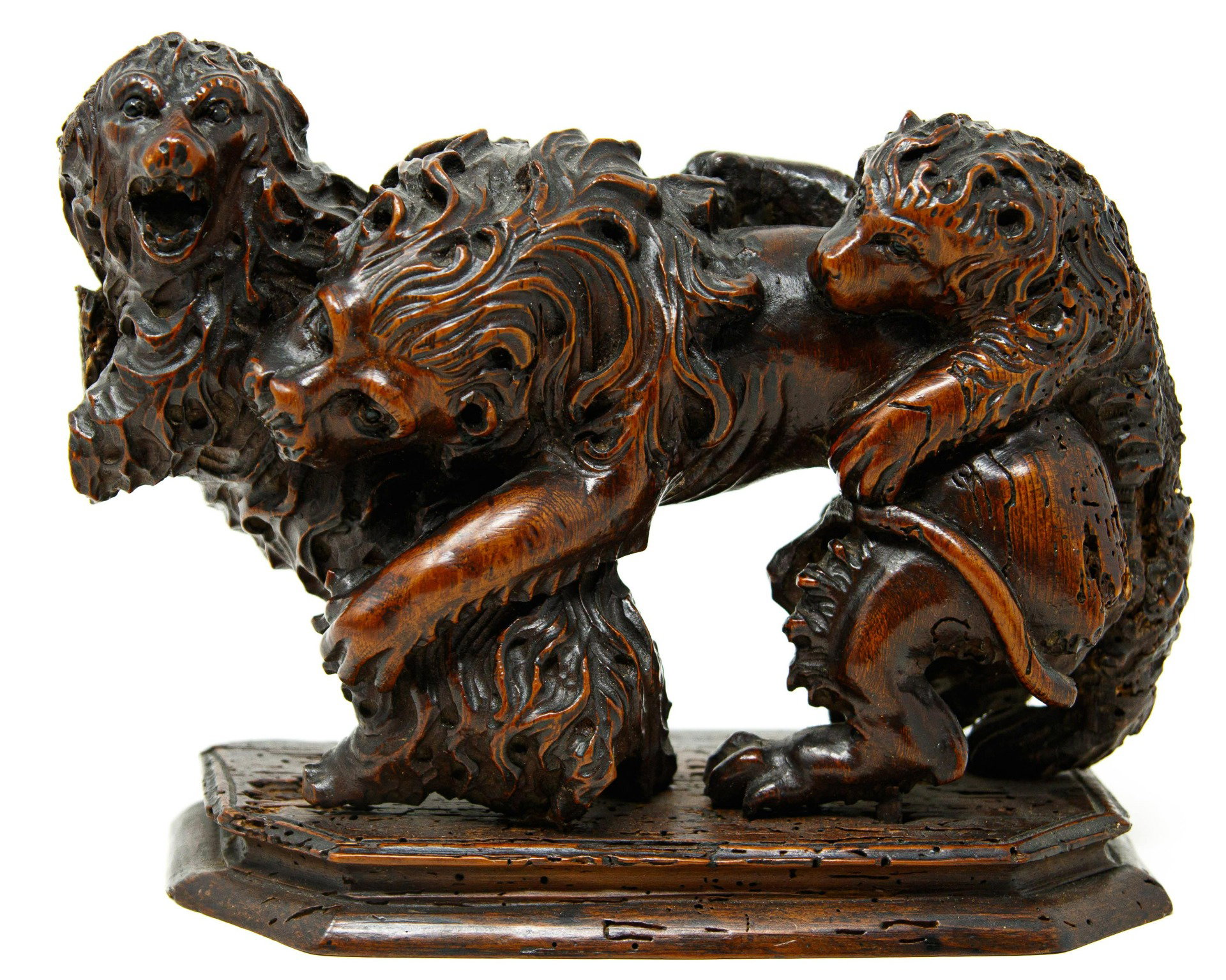
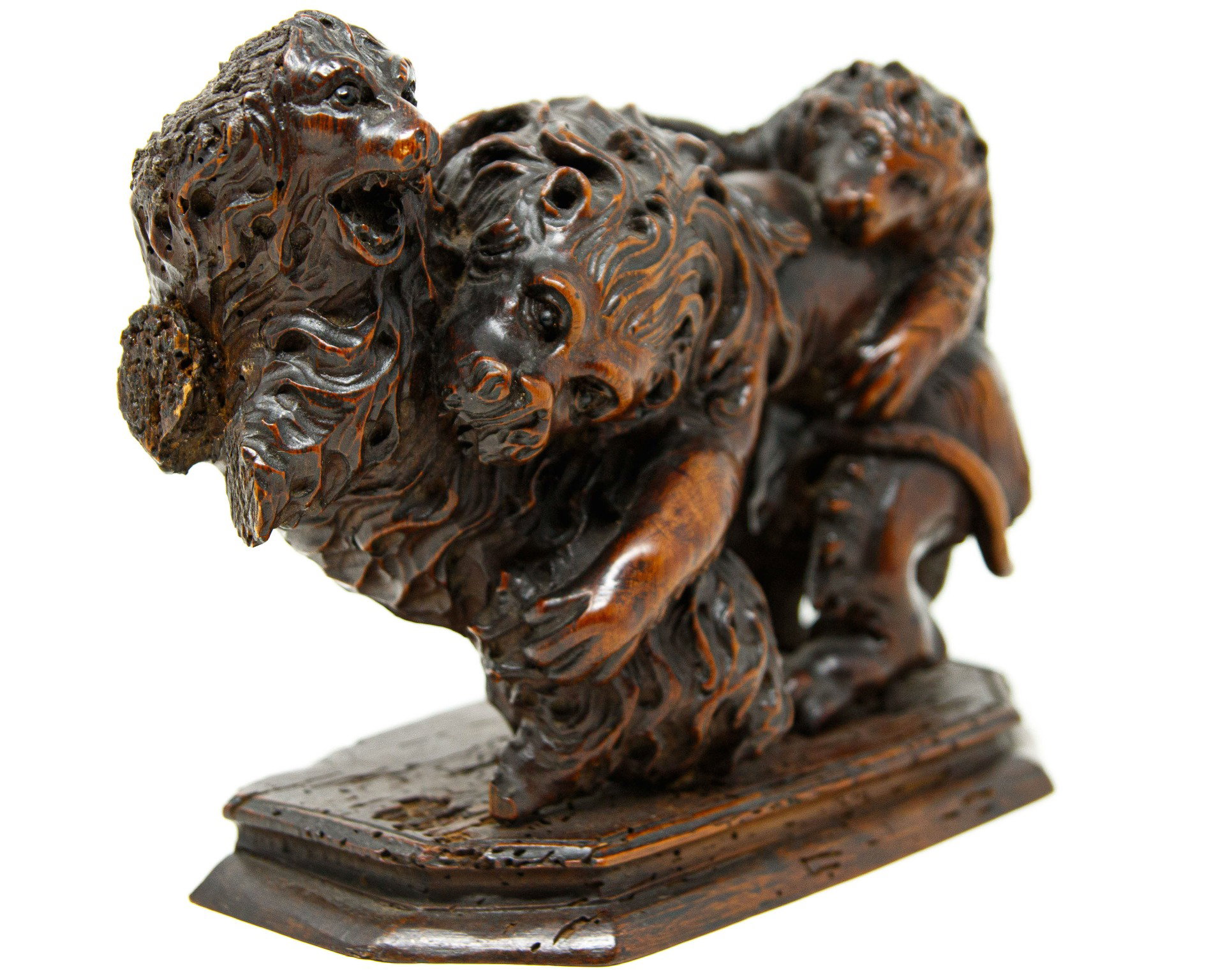
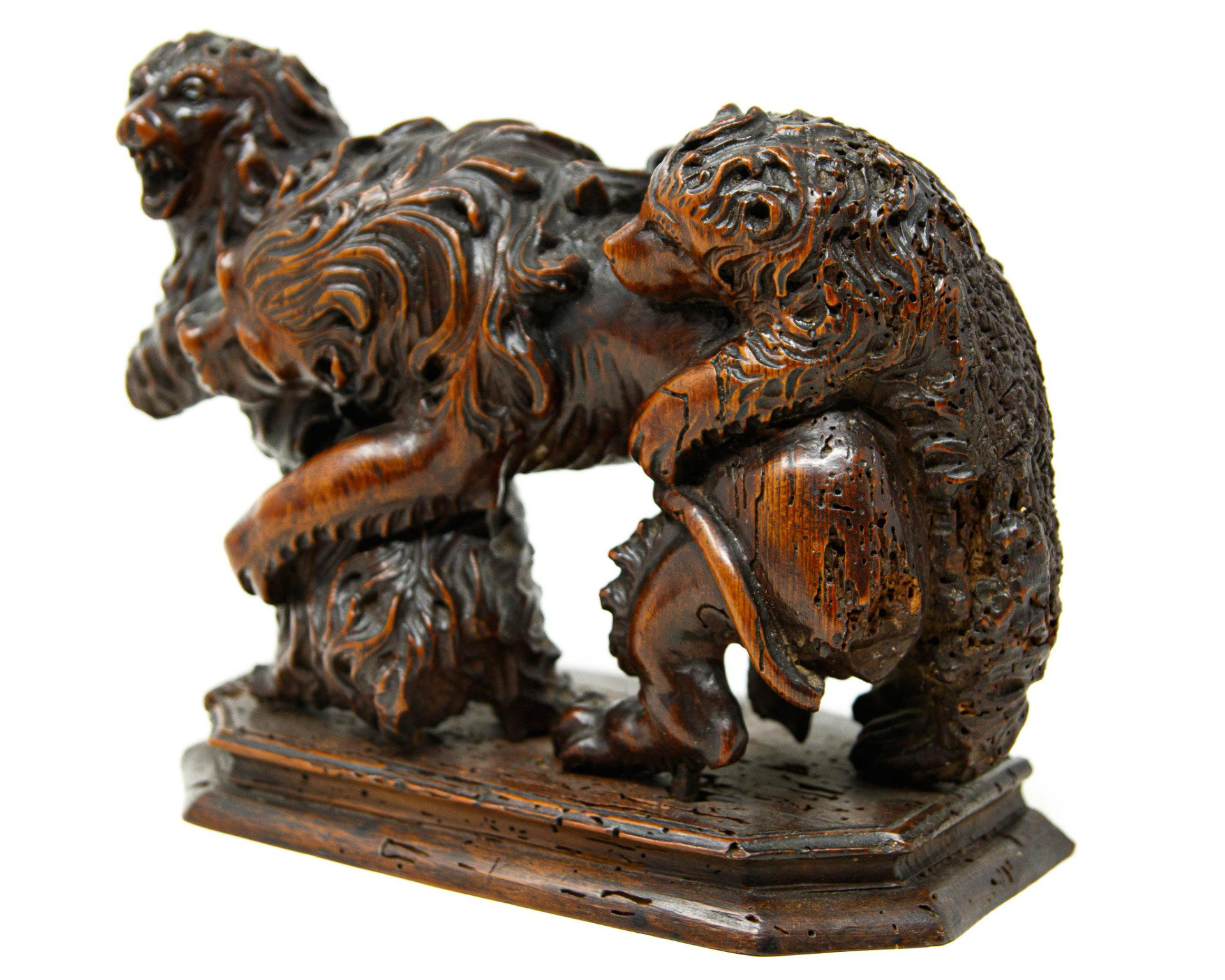
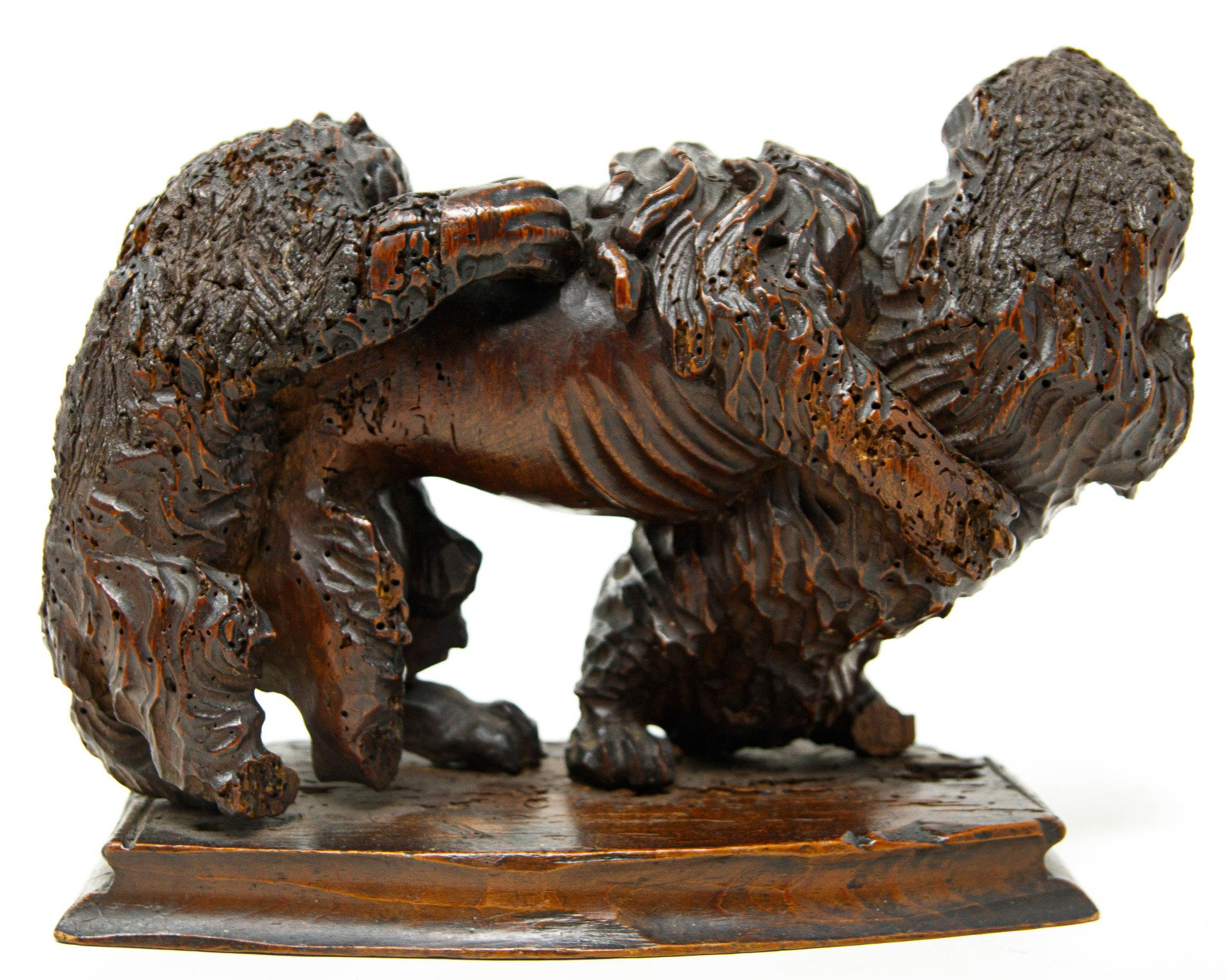
Germany, 17th century, Clash between a lion and dogs
Description:
Germany, 17th century
Clash between a lion and dogs
Carved wood, cm h.17 x 23 x 9
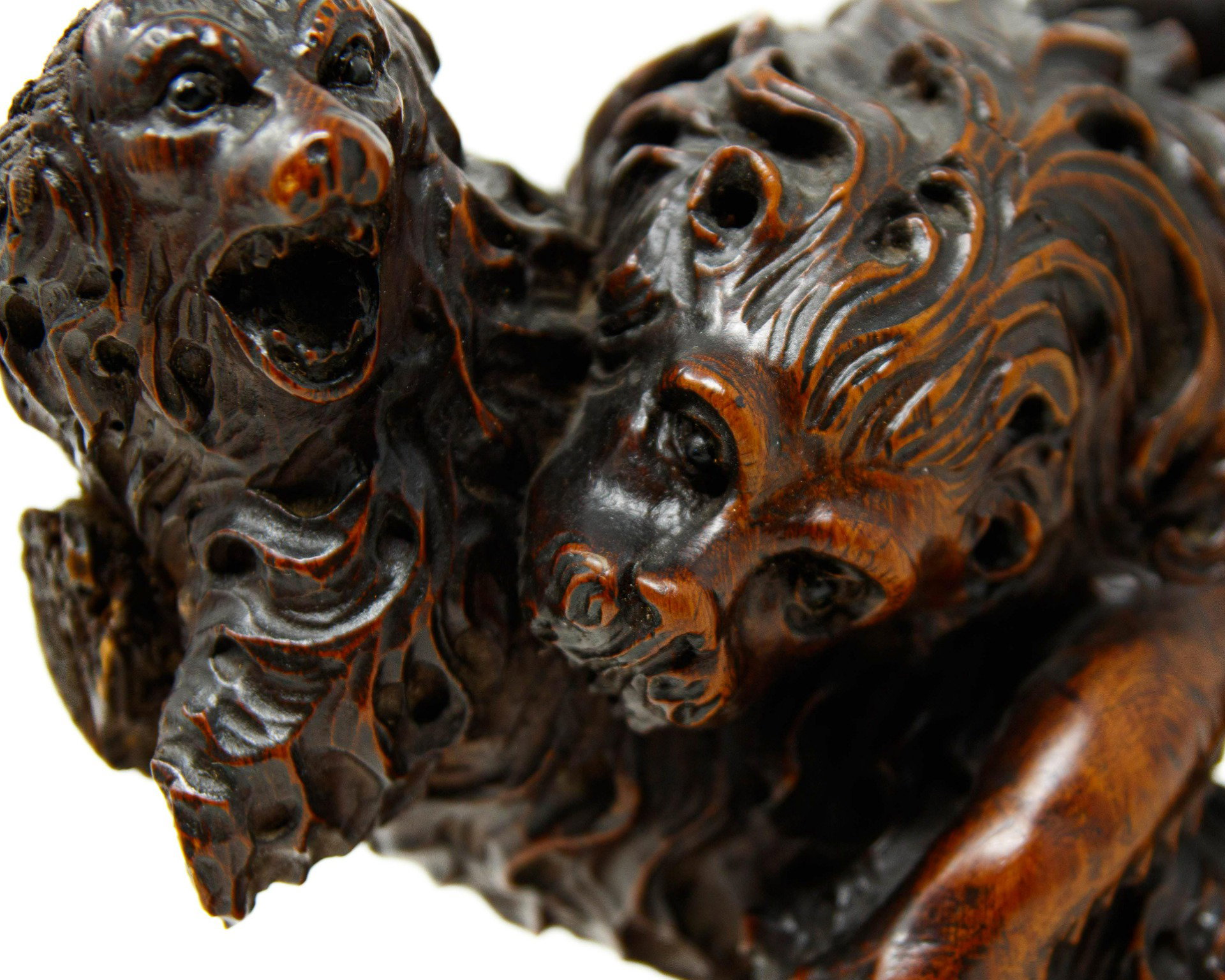
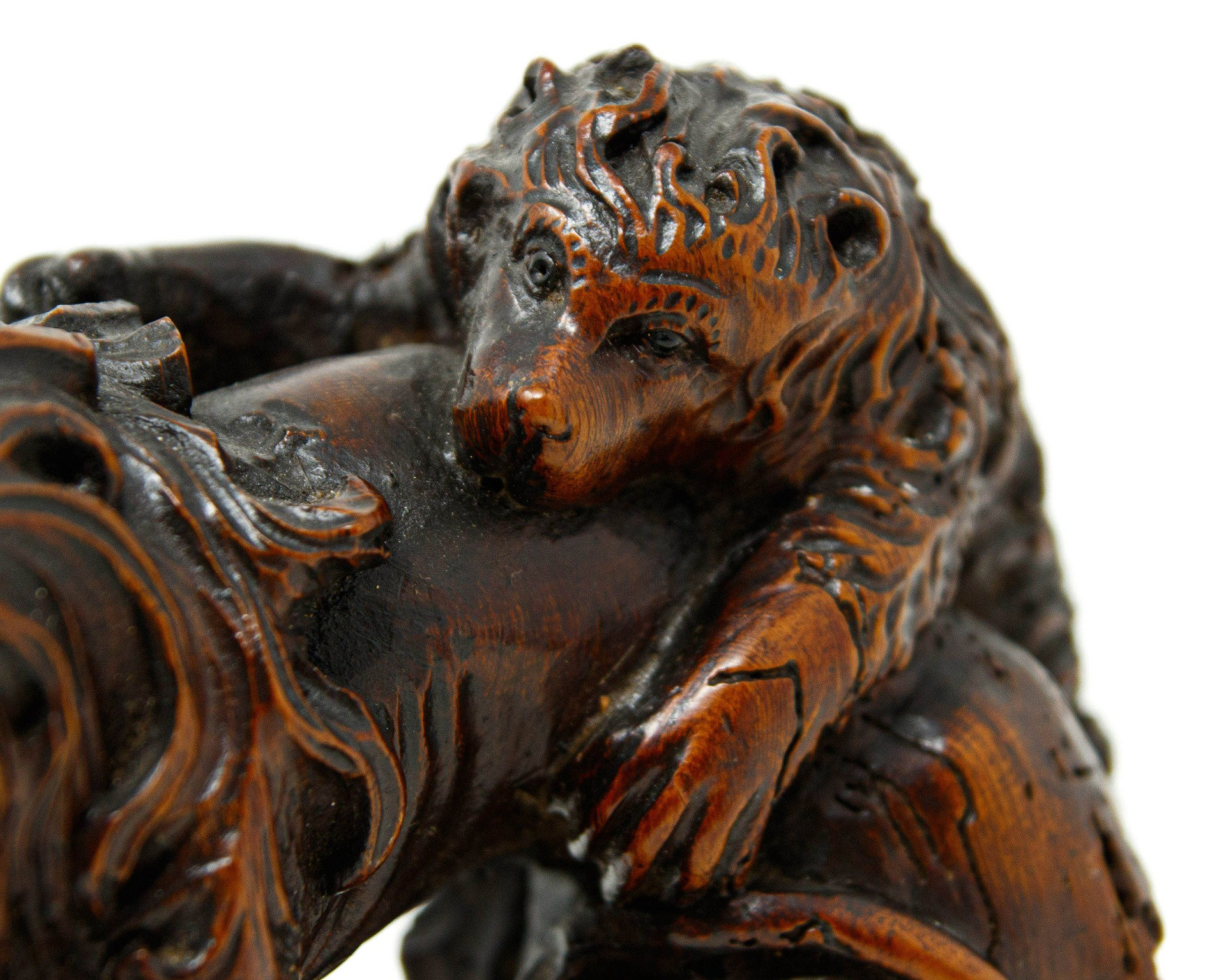
This refined micro-sculpture in carved wood, attributable to 17th-century Venetian manufacture, represents an important testament to the reception of Baroque dynamism in Adriatic applied and plastic arts. The work transposes a bustling hunting scene into the three-dimensionality of matter, focusing on the dramatic core of the bestial clash: an imposing lion, captured in a moment of maximum muscular tension, defends itself from the combined assault of two mastiff dogs, which savagely and expressively attack the predator with anatomical precision. The carver demonstrates a masterful command of the wooden material, likely a dense and compact wood such as boxwood, ideal for accommodating descriptive detail and complex volumetric modulation without compromising the structural stability of the small artifact. From an iconographic and formal perspective, the composition is heavily influenced by the stylistic idioms of Peter Paul Rubens, whose famous pictorial prototypes dedicated to large cat hunts – widely disseminated throughout Europe thanks to graphic reproductions and print translations by Flemish engravers like Schelte à Bolswert – exerted a lasting fascination on Baroque artisans. In adapting this cultural climate, the Venetian author successfully synthesizes the overwhelming energy of the Antwerp master with his own lagoon sensibility, characterized by a vibrant rendering of surfaces and an accentuated chiaroscuro contrast. The lion's thick mane, rendered through sinuous and deeply carved locks, dialogues with the volumetric texture of the dogs' fur and the entanglement of their bodies, amplifying the effects of light and shadow and imbuing the group with a sense of perpetual and dramatic movement. The sculpture fits perfectly into the category of art objects destined for the sophisticated environments of private collecting and 17th-century Wunderkammern, contexts in which technical virtuosity, exoticism of the subject, and small dimensions were the primary parameters of aesthetic appreciation.