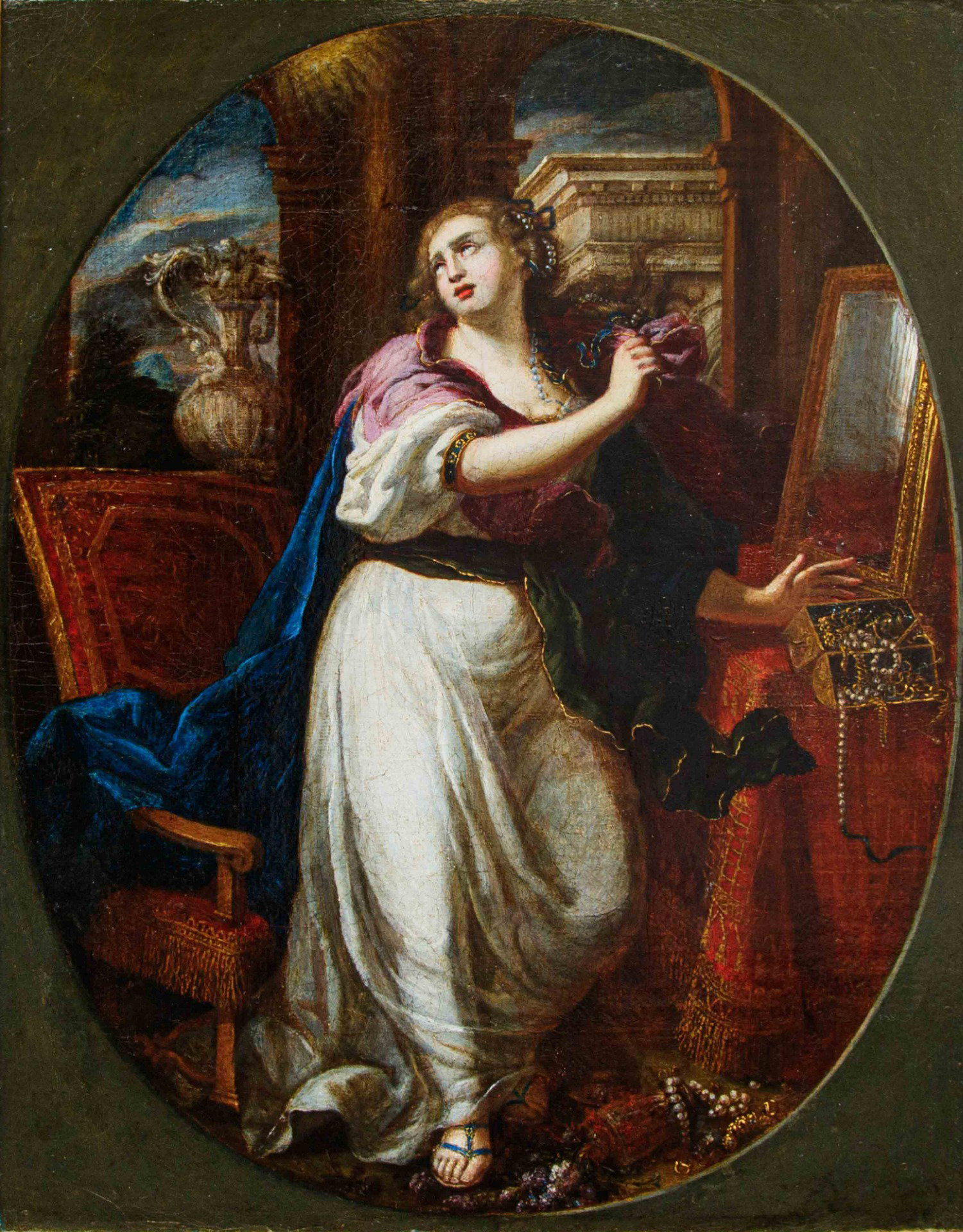
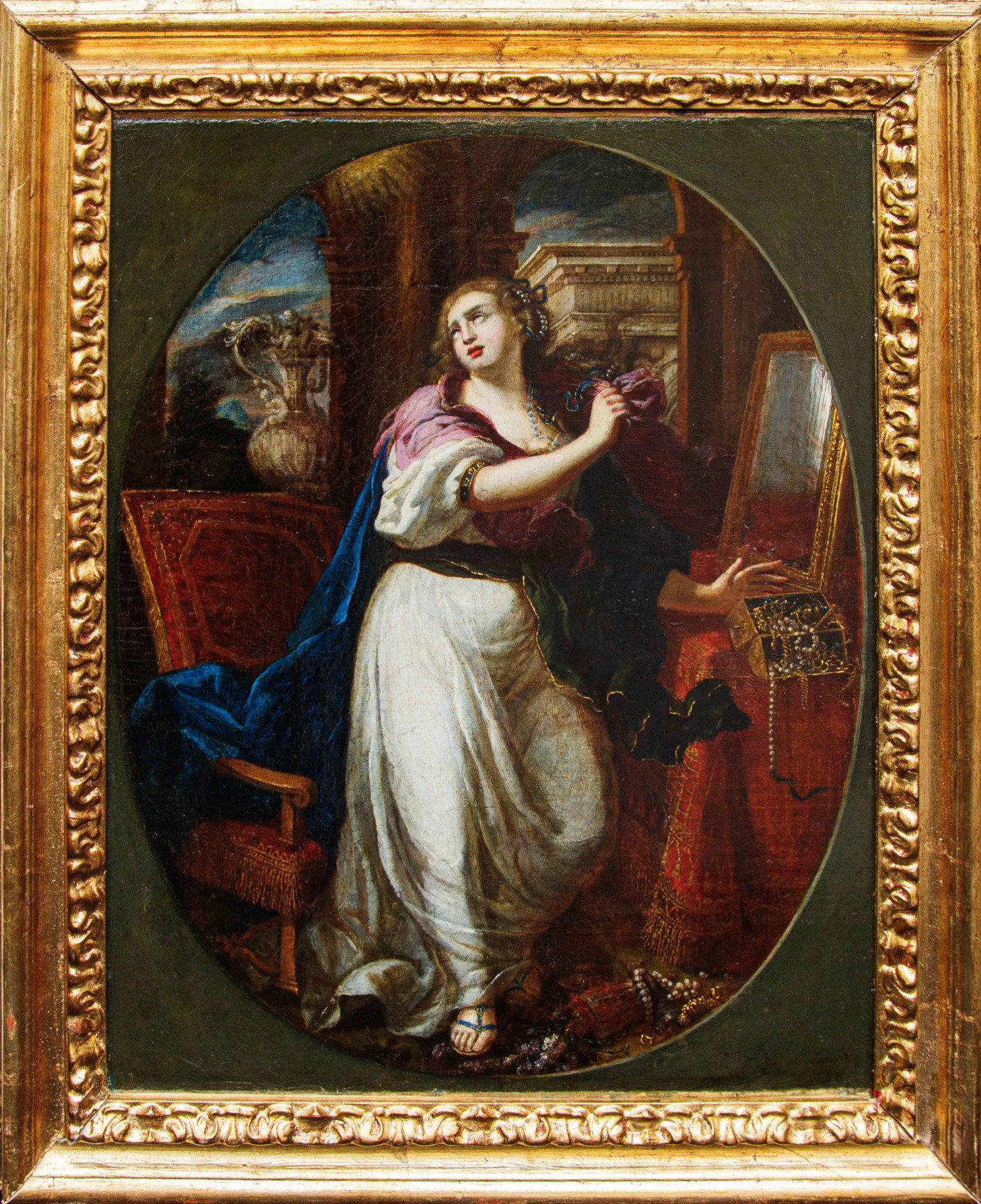
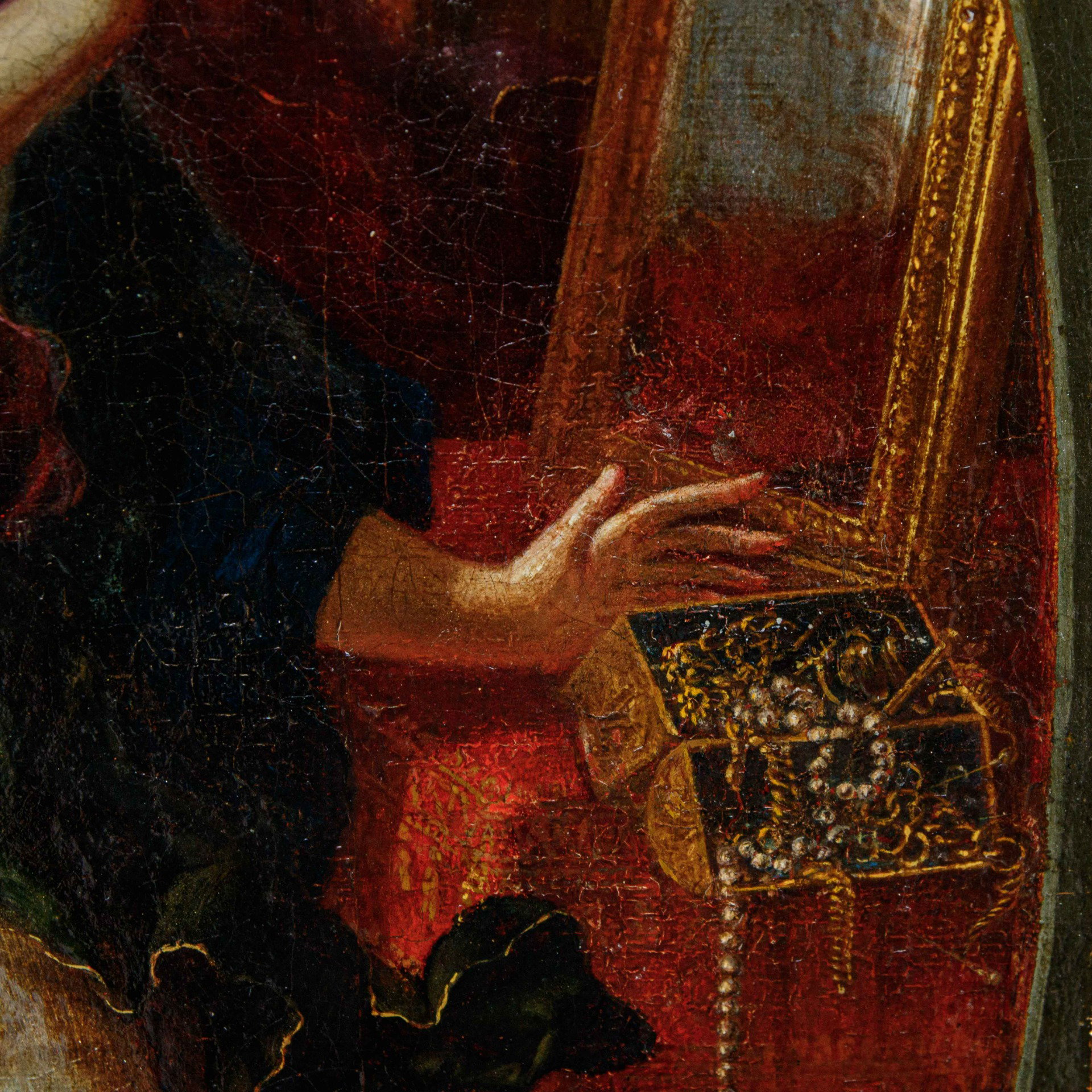
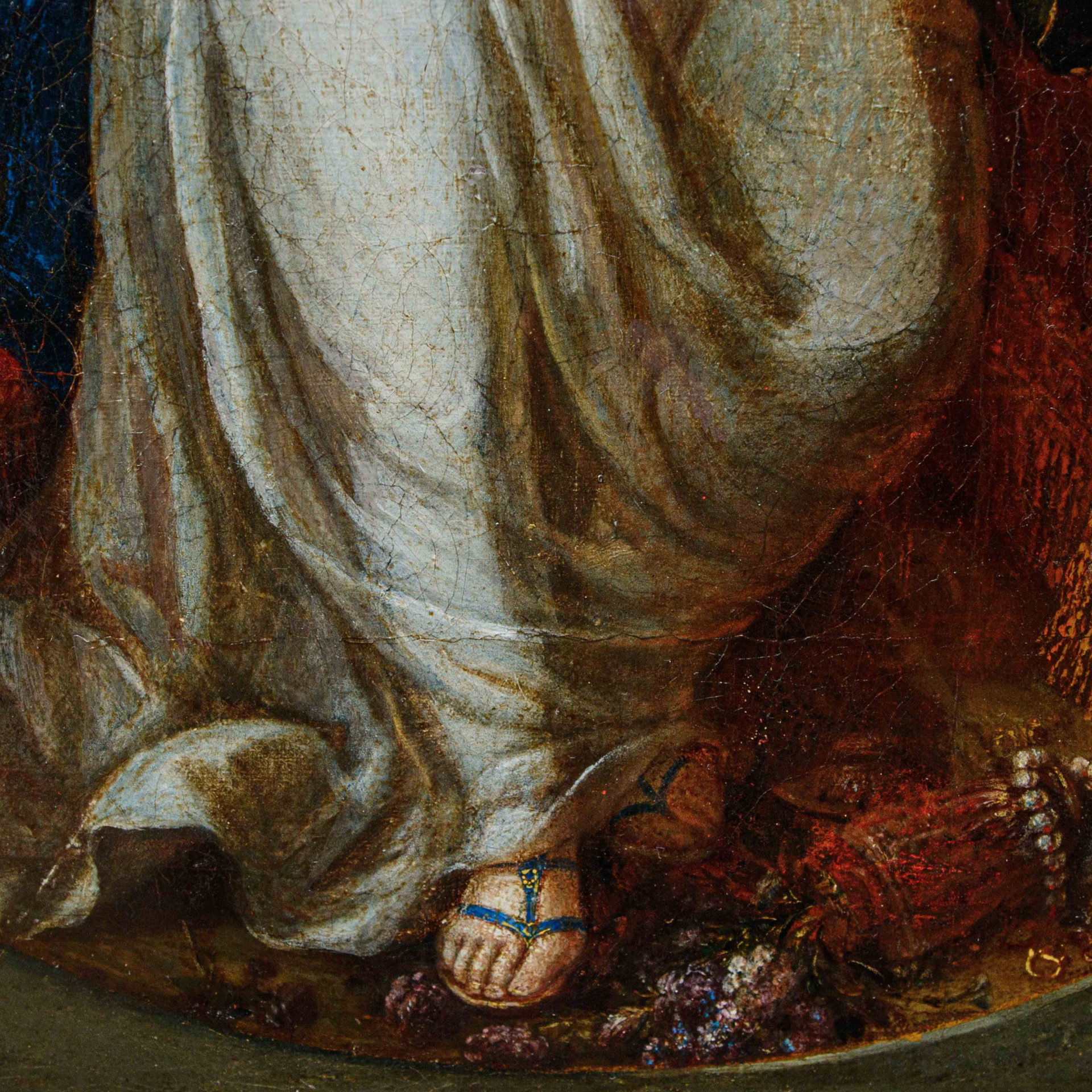
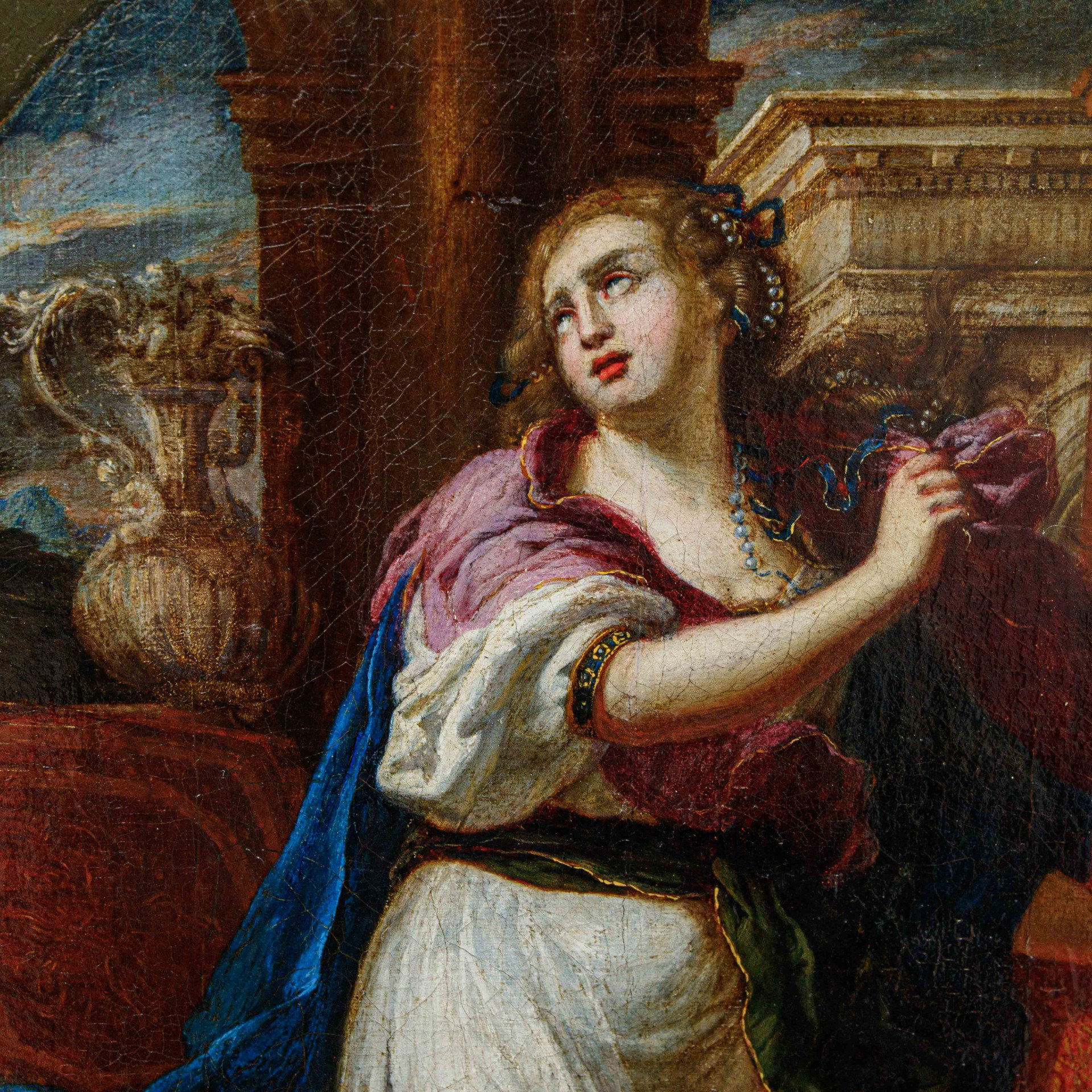
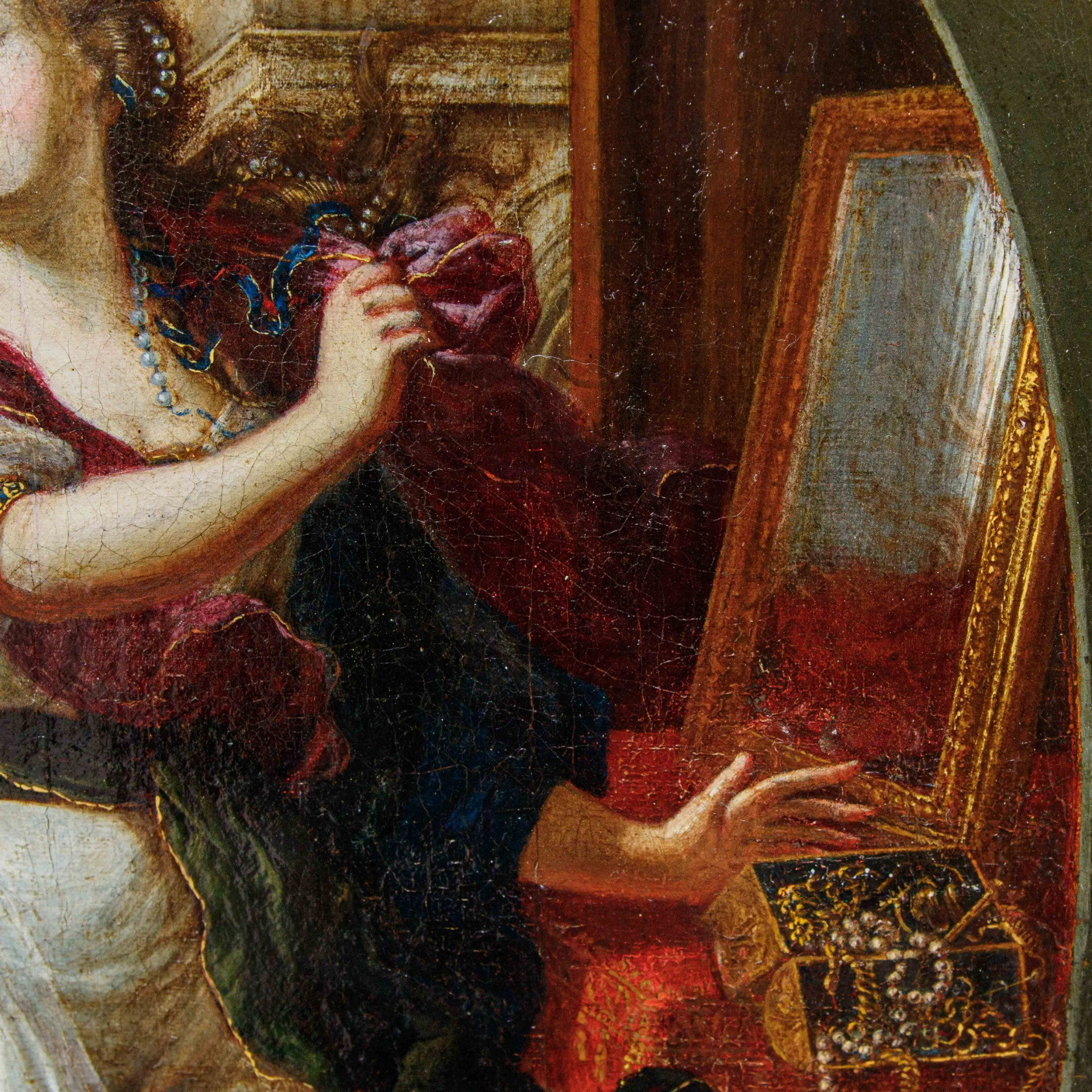
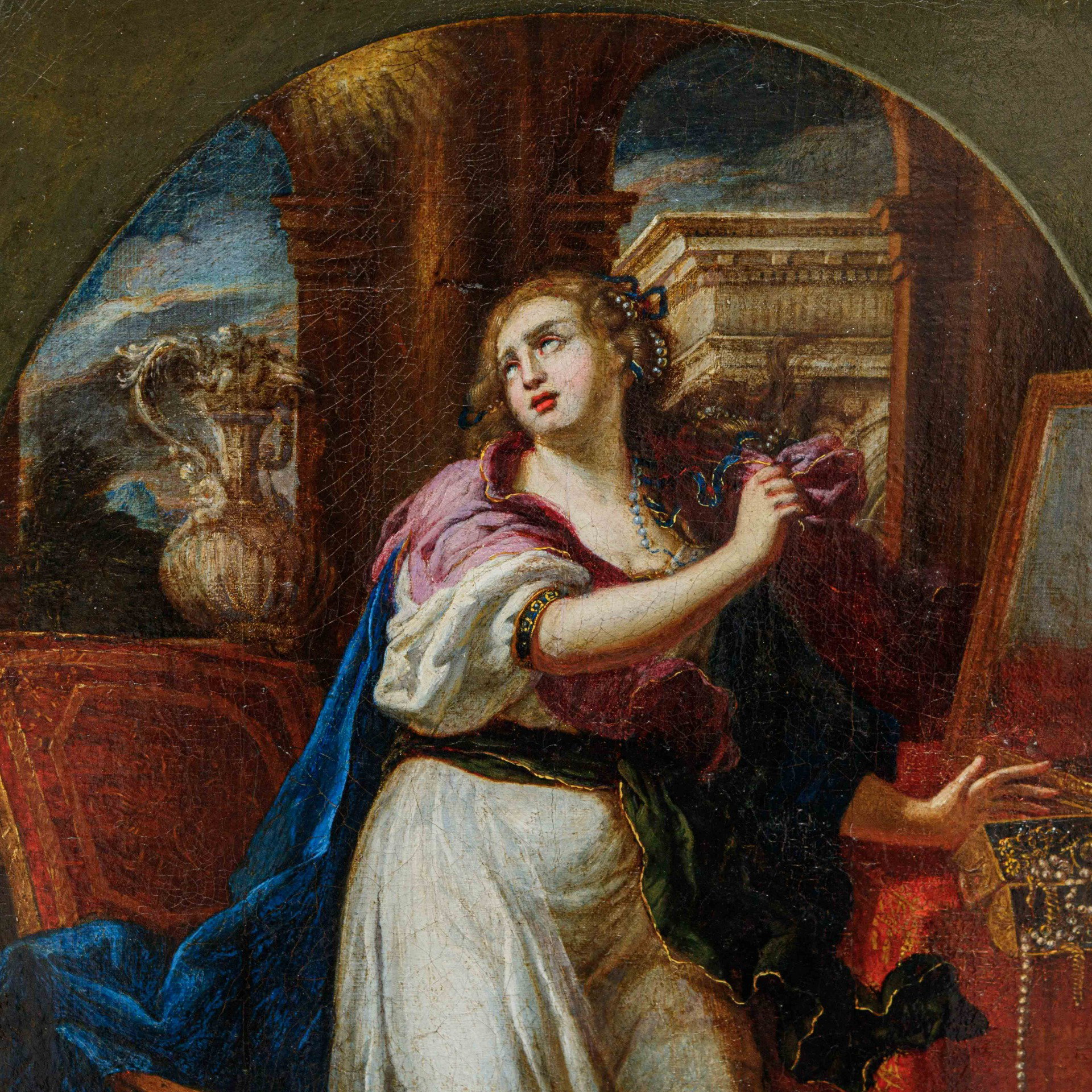
Follower of Baldassarre Franceschini, known as Il Volterrano (Volterra, 1611 – Florence, 1690), Mary Magdalene
Description:
Follower of Baldassarre Franceschini, known as Il Volterrano (Volterra, 1611 – Florence, 1690)
Mary Magdalene
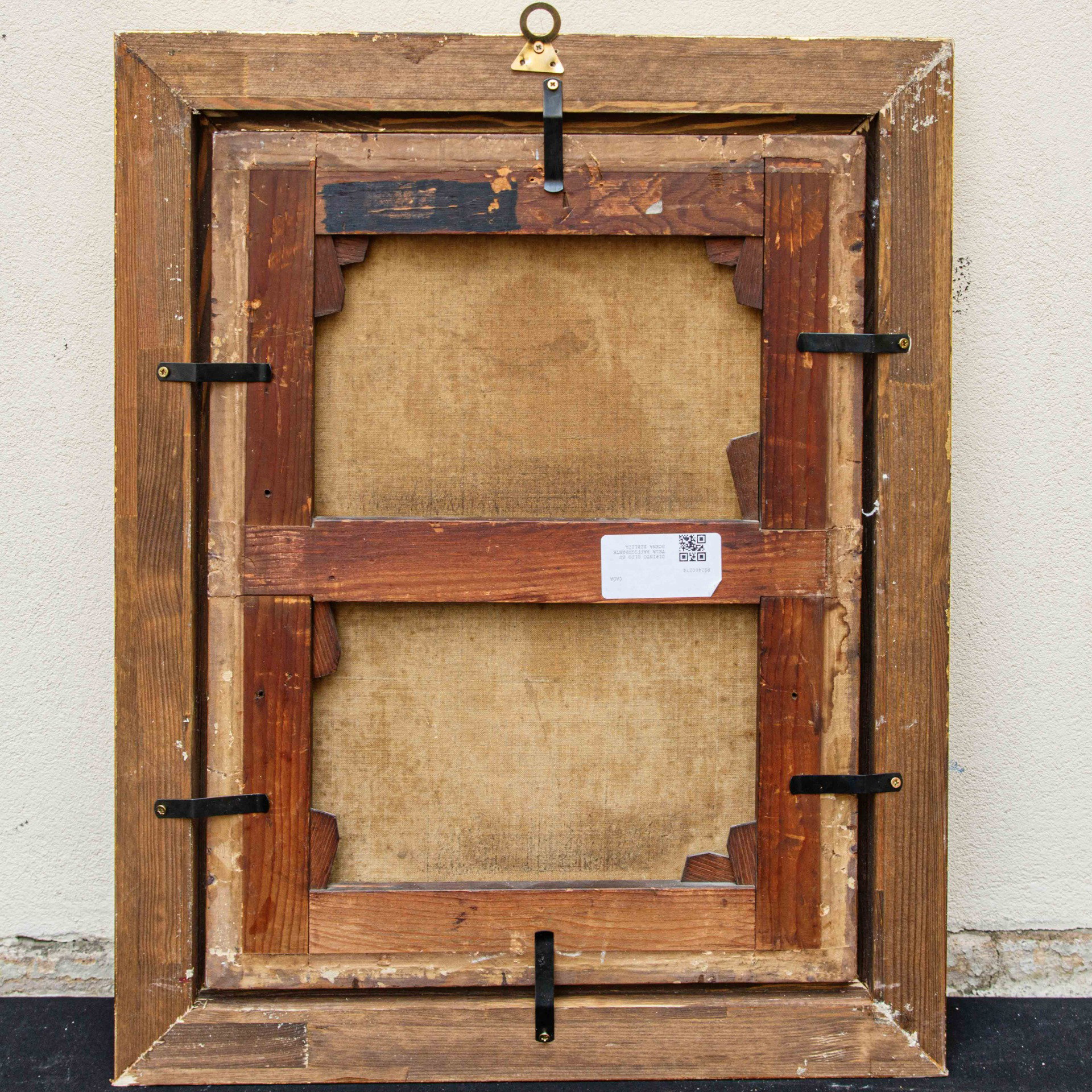
Oil on canvas, 46 x 35 cm
Framed, 56 x 44.5 cm
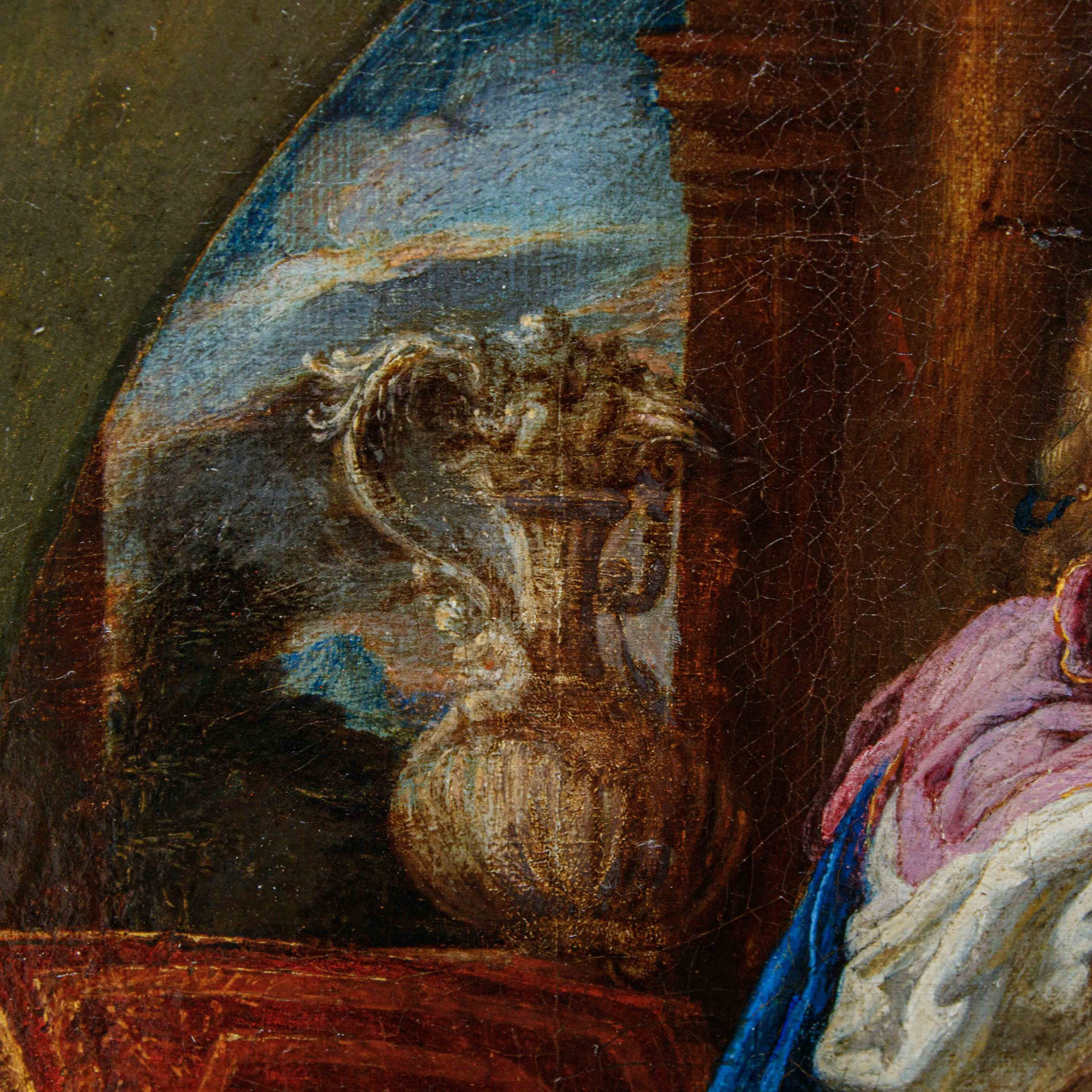
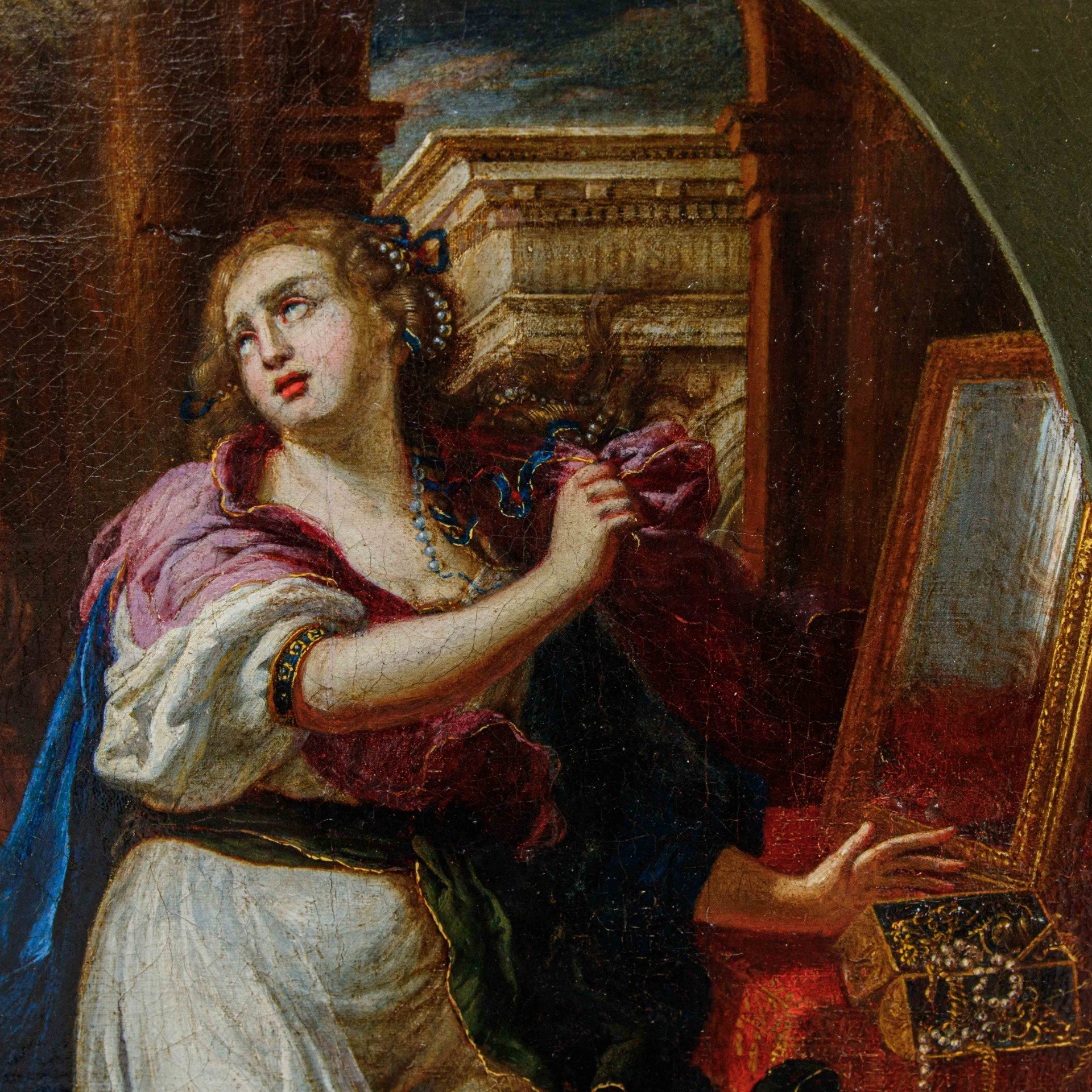
The work, an oil on canvas depicting Mary Magdalene, can be attributed to an artist associated with the workshop of Baldassarre Franceschini, known as Il Volterrano (Volterra, 1611 – Florence, 1690), as evidenced by stylistic and iconographic comparison with the Mary Magdalene executed by the master himself.
Volterrano was born in Volterra in 1611 (a date provided by Baldinucci, who wrote his biography). The son of the local sculptor Gaspare Franceschini, he was introduced to the art of painting by his father, and later became an apprentice in Volterra to the Florentine Cosimo Daddi. He was noticed by one of his first patrons, Ludovico Guarnacci, and by Curzio Inghirami, brother of the more influential Giulio, secretary to Cristina di Lorena. It was Giulio who introduced him to the Florentine scene and ensured that in 1628 he entered the workshop of Matteo Rosselli, one of the most highly regarded artists working in the city at the time. Due to the plague, Franceschini returned to Volterra a year later, where he painted a series of frescoes that are among his earliest known works: a Purification in Sant'Agostino, an Assumption (formerly in the congregation of the Cathedral Chaplains and now in the oratory of Sant'Antonio Abate, 1631), and the Dream of Elijah in the Abbey of San Giusto (1632). The frescoes in the vault and choir are lost. These works show the influence of Rosselli, although a certain compositional rigidity still reflects the provincialism of his early steps.
Upon returning to Florence, he spent five months in the workshop of Giovanni da San Giovanni, working on both the altar fresco in the church of San Felice in Piazza and the decoration of the Audience Chamber in the summer apartments of Palazzo Pitti (now known as the Giovanni da San Giovanni Room in the Museum of Silver). Here, a pendentive with a monochrome of feathers in a vase (1635) is attributed to him. After the death of his master (1636), who was the principal artist of the Medici court, and again through the interest of his fellow citizen Giulio Inghirami, Franceschini was officially presented at court, with one of his works (a lost portable fresco called "paniera," for which a couple of preparatory drawings remain) exhibited at Palazzo Pitti.
The effects of this initiative were not long in coming, as Don Lorenzo de' Medici entrusted him with the important task of frescoing a cycle of works depicting the "Fasti Medicei" in the loggias of the courtyard at Villa La Petraia just a year later. Having become one of the most appreciated artists of the time, in the 1650s he painted numerous religious works, easel paintings, and some frescoes in the palaces of the Florentine nobility, such as Palazzo della Gherardesca (for Guido della Gherardesca), Palazzo di Valfonda (for Cosimo Riccardi), Palazzo Niccolini (for Filippo Niccolini), Palazzo di San Clemente (for Tommaso Guadagni and his sons), Palazzo Taddei (for Vincenzo Giraldi), and Villa Medicea di Castello (for Cardinal Giovan Carlo de' Medici).
As a portraitist, he depicted, among other important figures, a young Cosimo III (still a prince), Pope Alexander VII, and his friend Filippo Baldinucci.