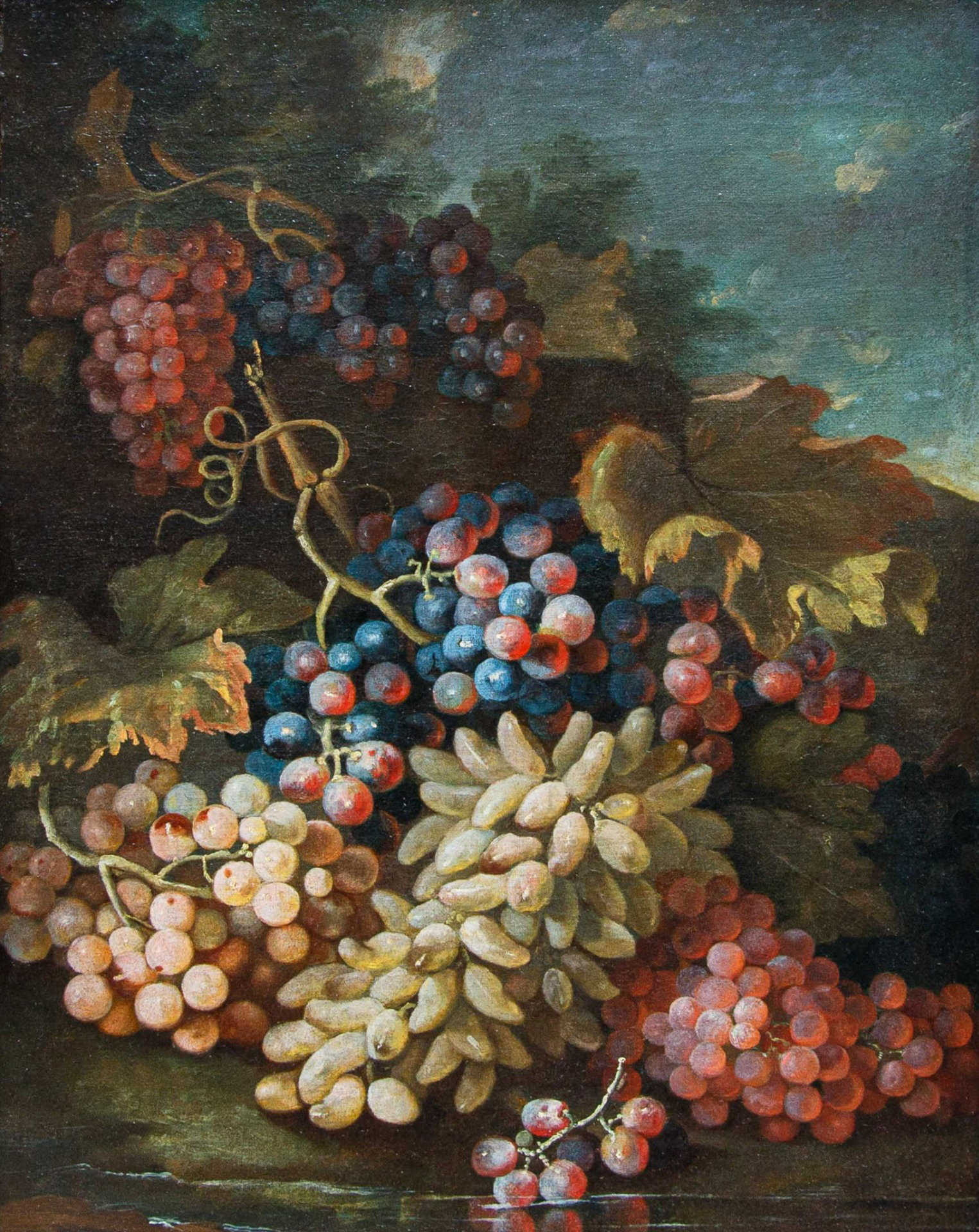
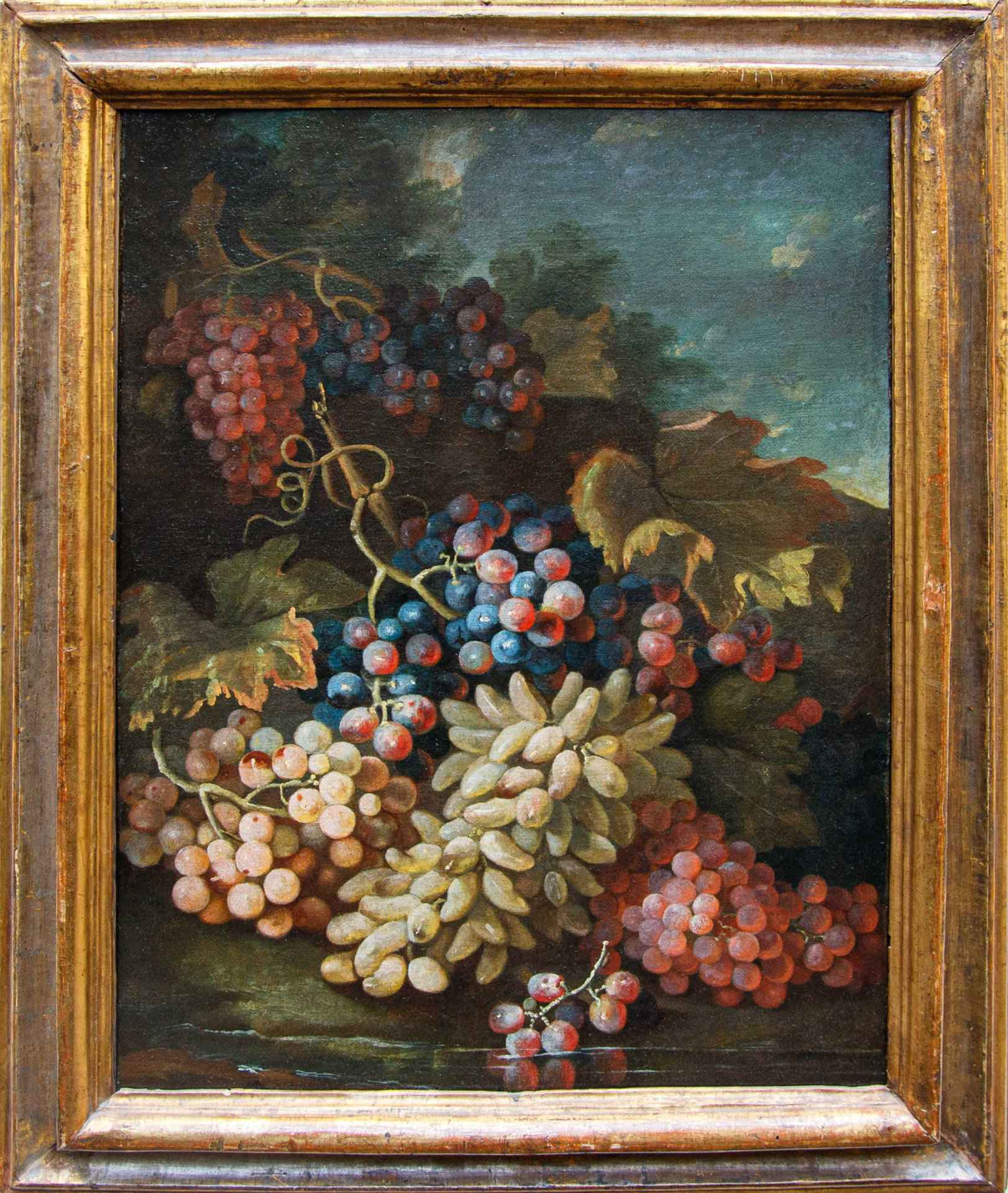
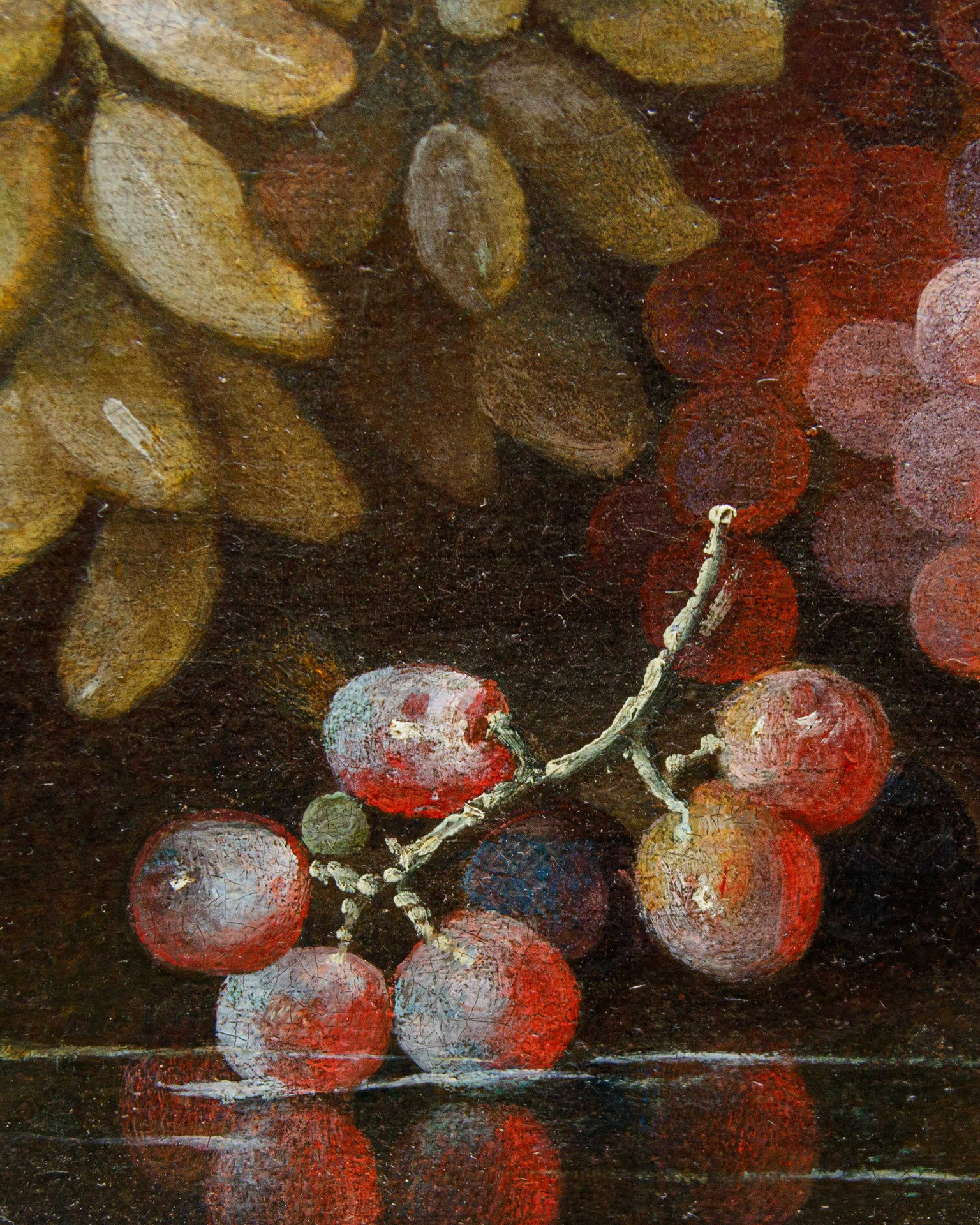
Maximilian Pfeiler (active c. 1683 - 1721), Still life with white and black grapes
Description:
Maximilian Pfeiler (active c. 1683 - 1721)
Still life with white and black grapes
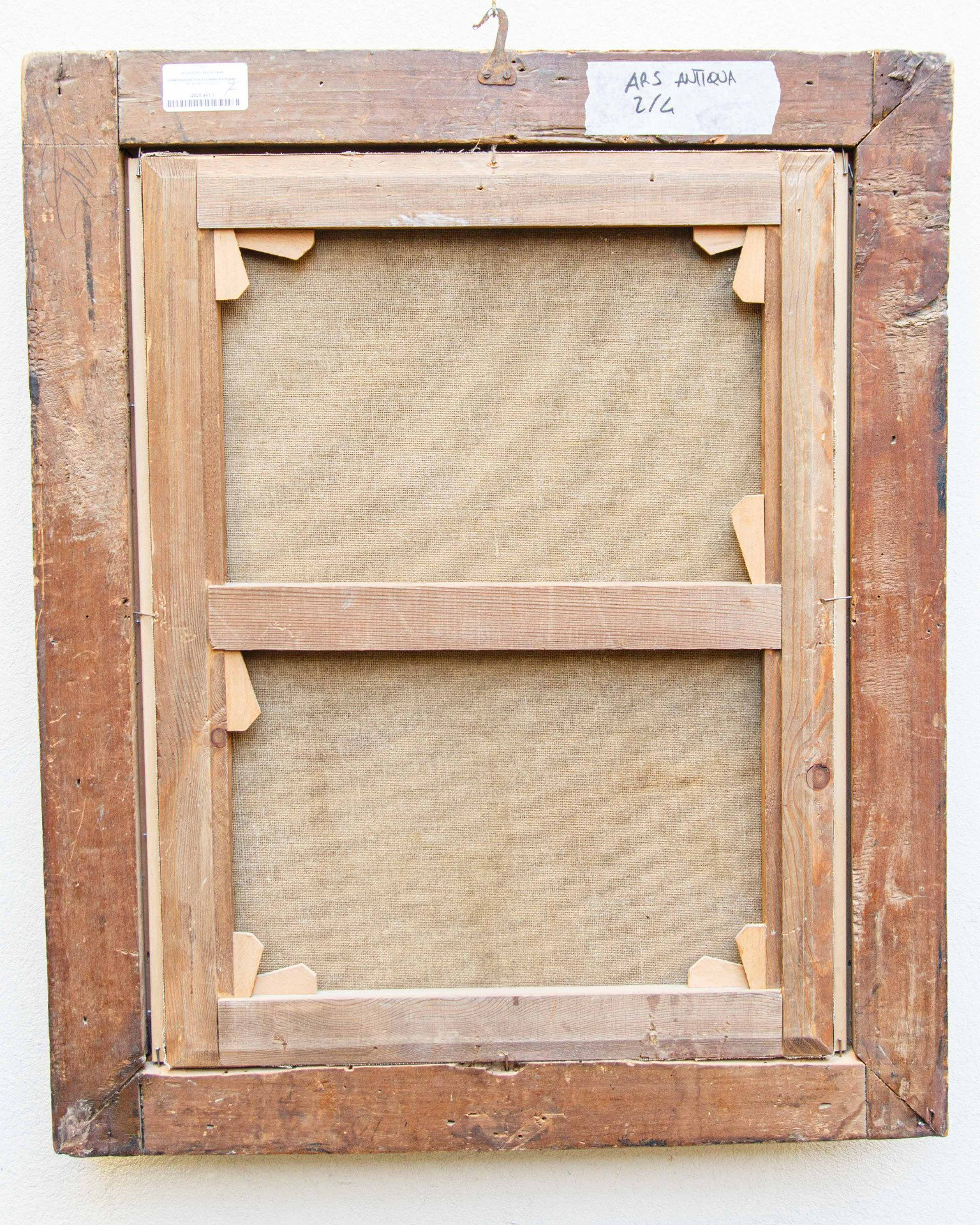
Oil on canvas, 63.5 x 47 cm
With frame, 77 x 63 cm
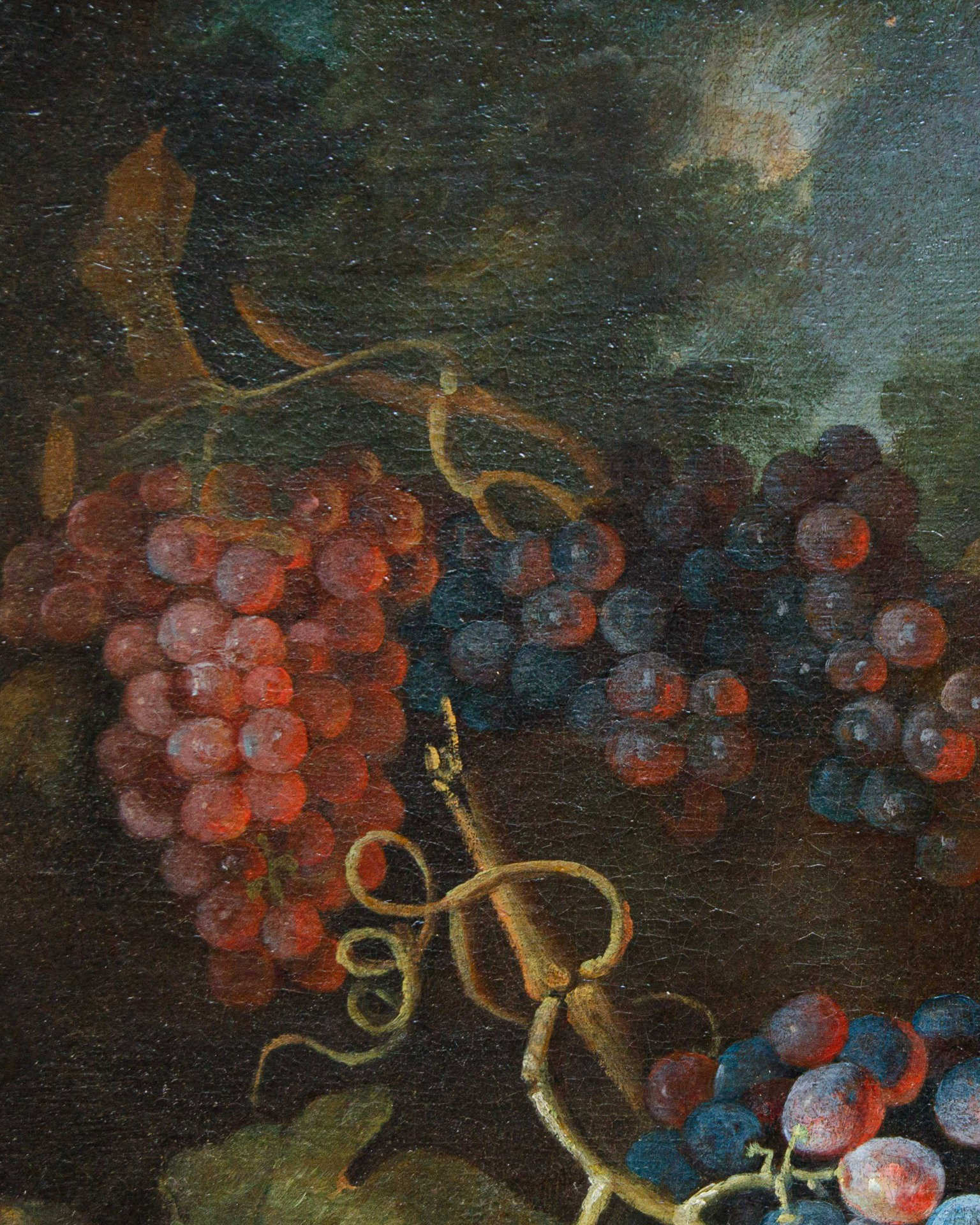
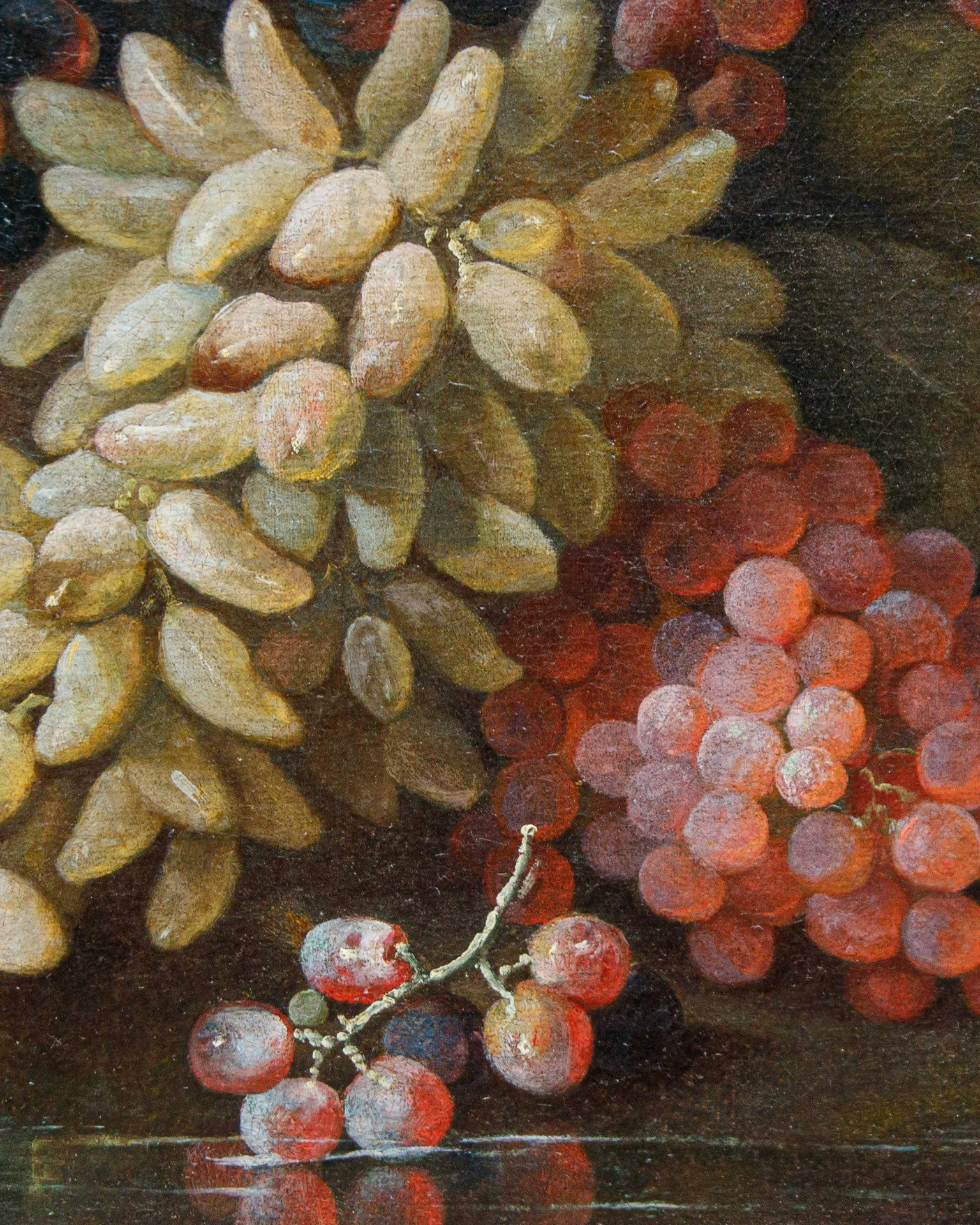
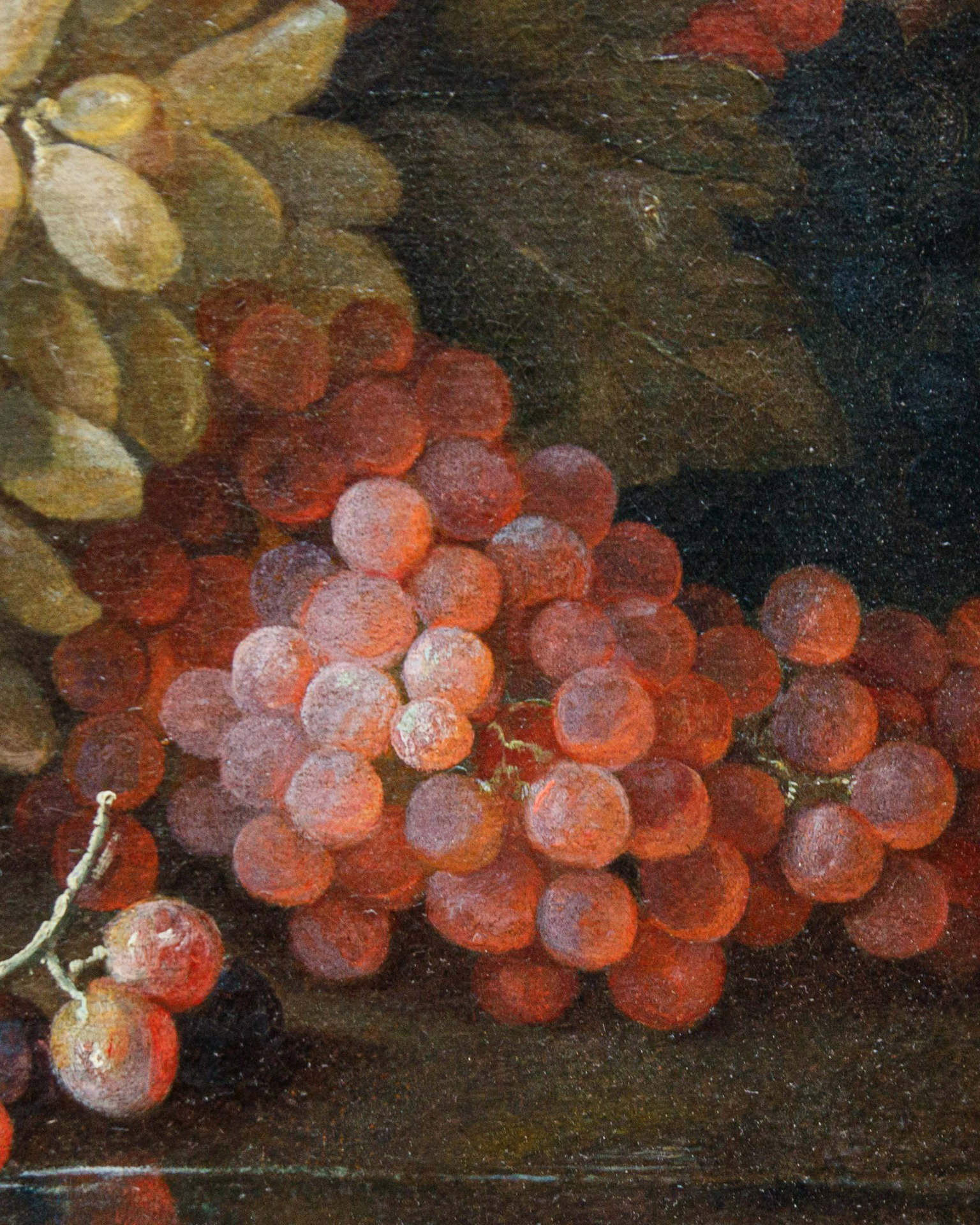
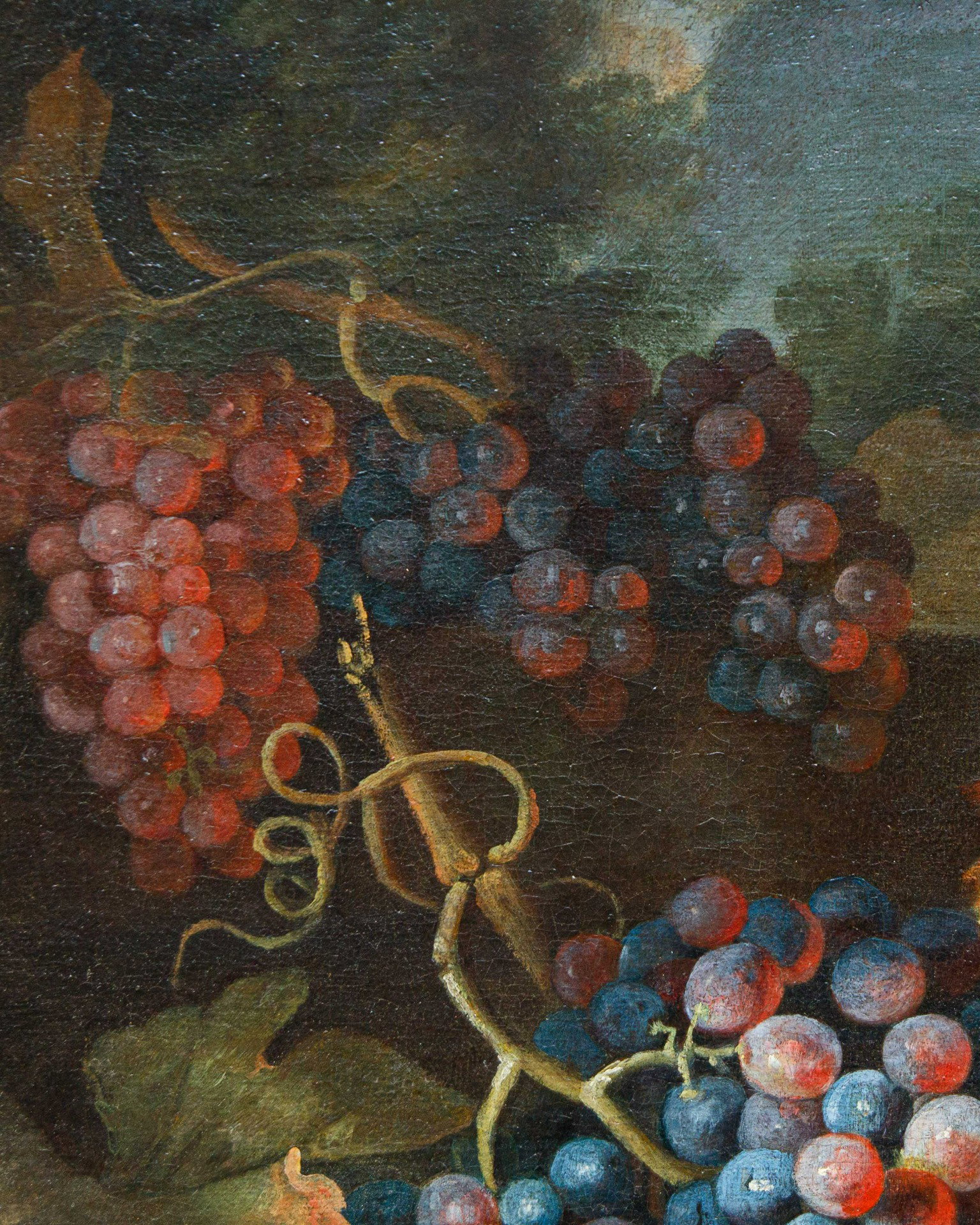
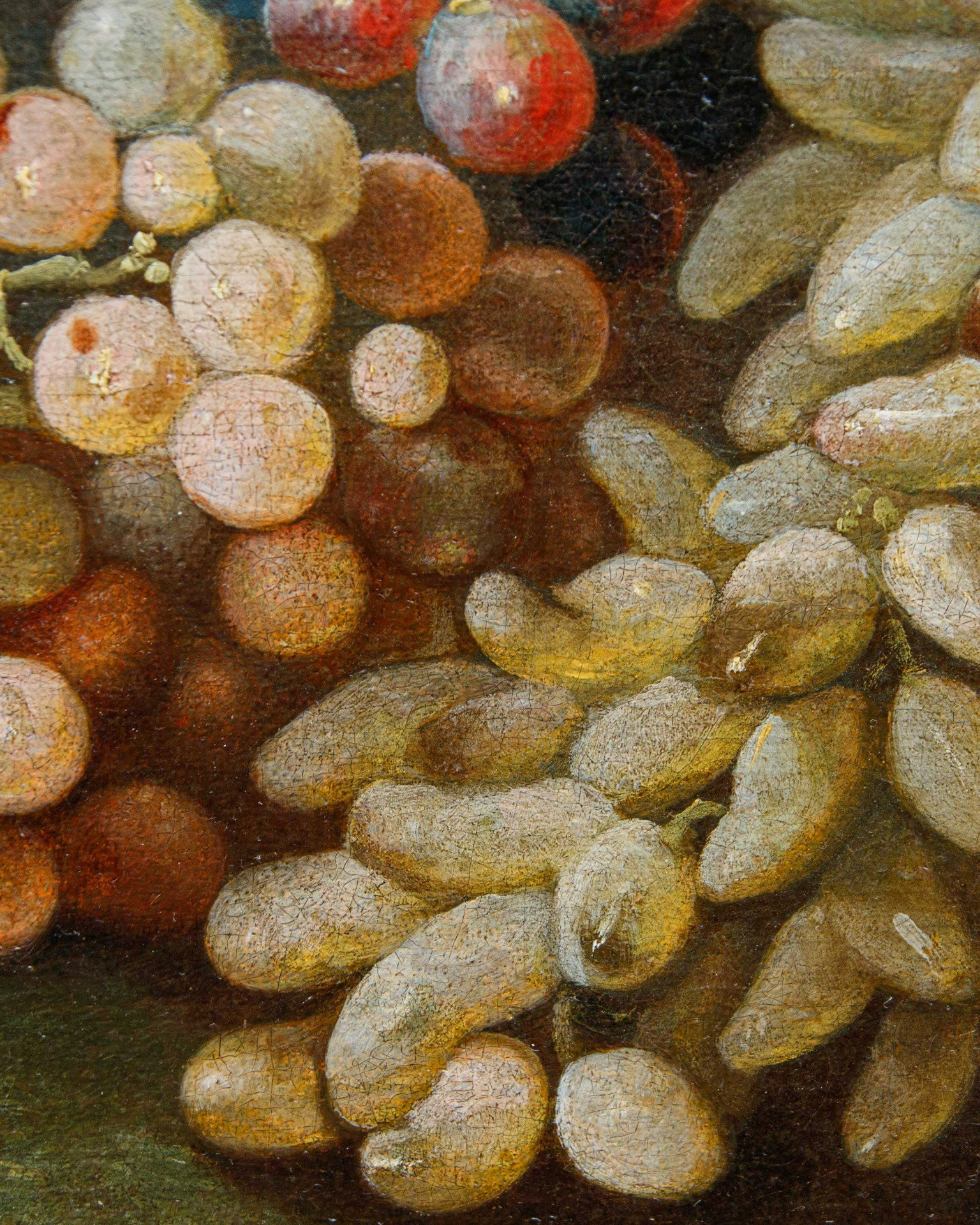
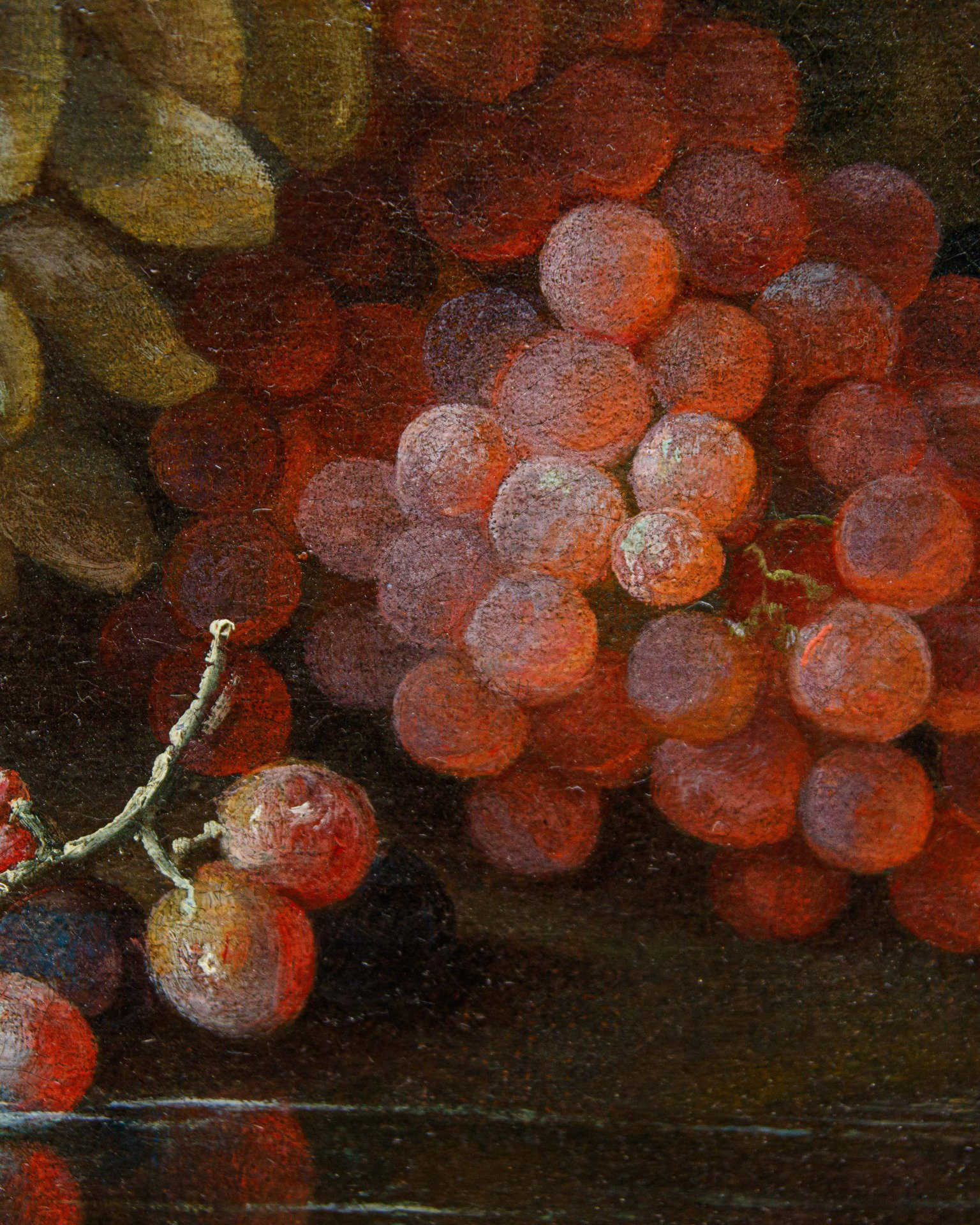
There are few biographical details and fragmented chronological references available for Maximilian Pfeiler, but surviving works clearly outline his artistic profile and the significant role he played in European visual culture between the late 17th and early decades of the 18th century. Born in Prague, Pfeiler is documented in 1683 as a member of the city's Painters' Guild, a fact that attests to his already completed training and early integration into the local professional context. According to sources, he was a student of Christian Berentz, a painter of German origin specializing in still life, whose artistic career unfolded between the Netherlands and Rome. Through Berentz, Pfeiler came into contact with the Northern European tradition of the genre, characterized by meticulous naturalistic rendering, strong attention to materiality, and refined chromatic orchestration. It is not entirely clear whether the apprenticeship with Berentz took place directly in Rome; however, it is certain that Pfeiler was active in the papal capital at least from 1694. Here, the artist successfully integrated into a lively and competitive artistic environment, initiating collaborations with established painters such as Francesco Trevisani and Michele Rocca. His presence in late 17th-century Rome coincided with a period of particular success for still life, a genre appreciated both for its decorative value and for subtle symbolic allusions related to abundance, transience, and the cycle of life. The Still Life with White and Black Grapes fits fully into this context and represents an emblematic example of Pfeiler's production. The composition, built on a balanced accumulation of grape clusters of different varieties, leaves, and delicate flowers, reveals an extraordinary attention to the tactile rendering of surfaces: the berries appear plump and translucent, struck by soft light that enhances their chromatic nuances, from golden green to purplish red. The dark, atmospheric background contributes to isolating the natural elements, giving the scene an intimate and contemplative tone. These elaborate and recognizable compositions found favor with important collectors. Some of Pfeiler's works, for example, were in the collection of Cardinal Fesch, testifying to the high level of appreciation the artist achieved. The last documented information on Maximilian Pfeiler dates back to 1721; it is likely that he spent much of his life in Rome, enjoying a solid and lasting reputation. The Still Life with White and Black Grapes thus presents the image of a painter capable of blending Northern rigor with Italian sensibility, offering an original and highly elegant synthesis within the panorama of Baroque still life.