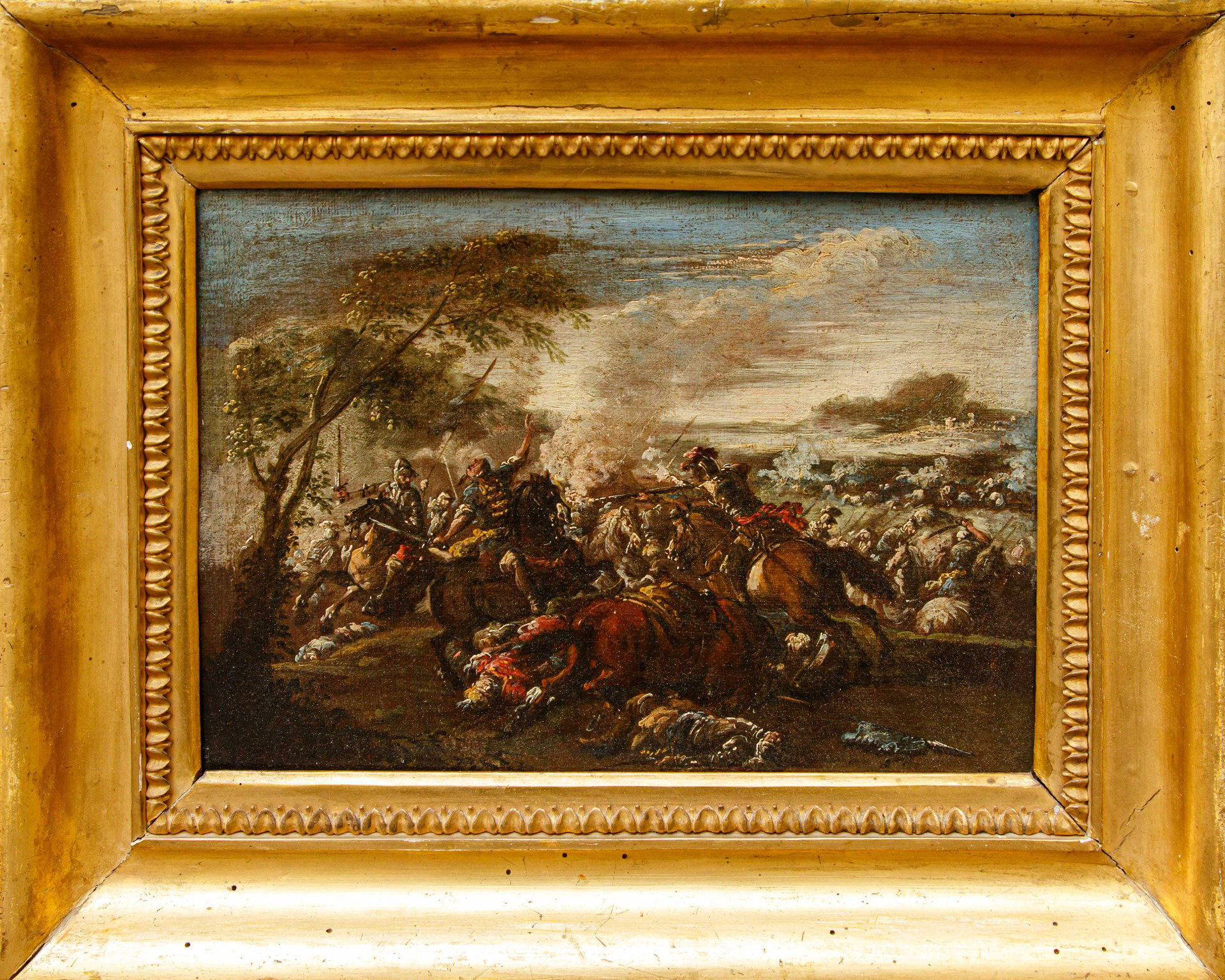
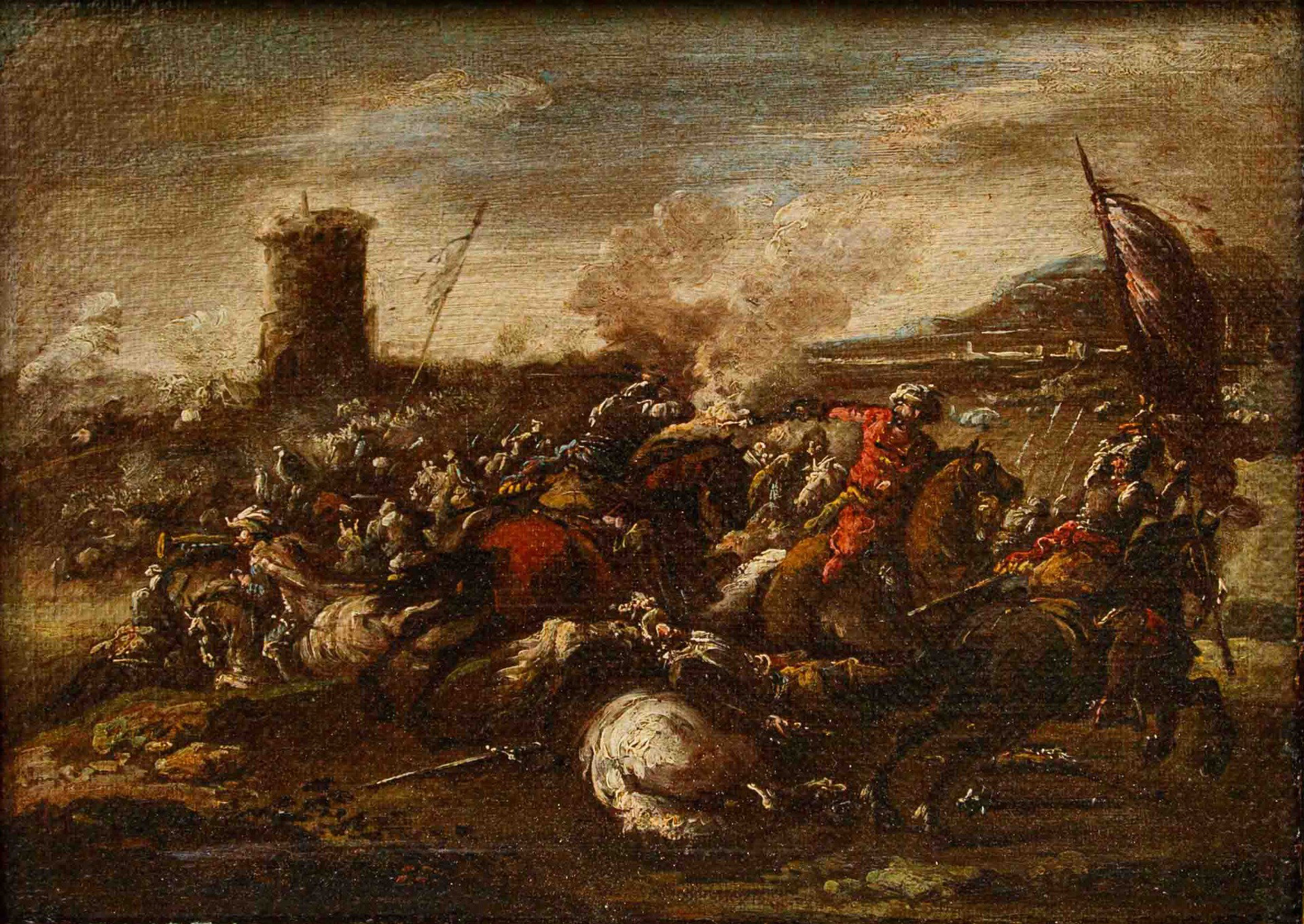
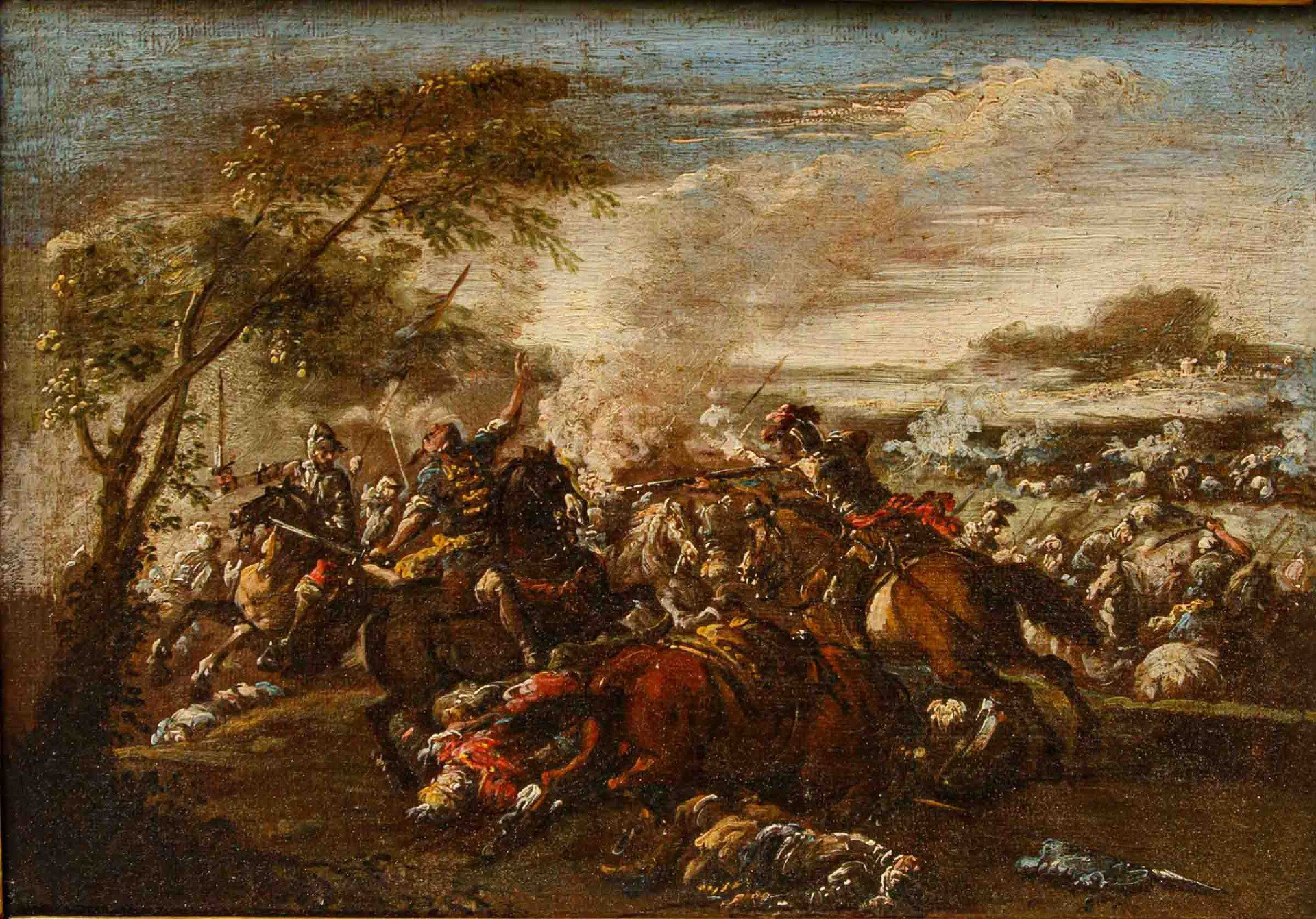
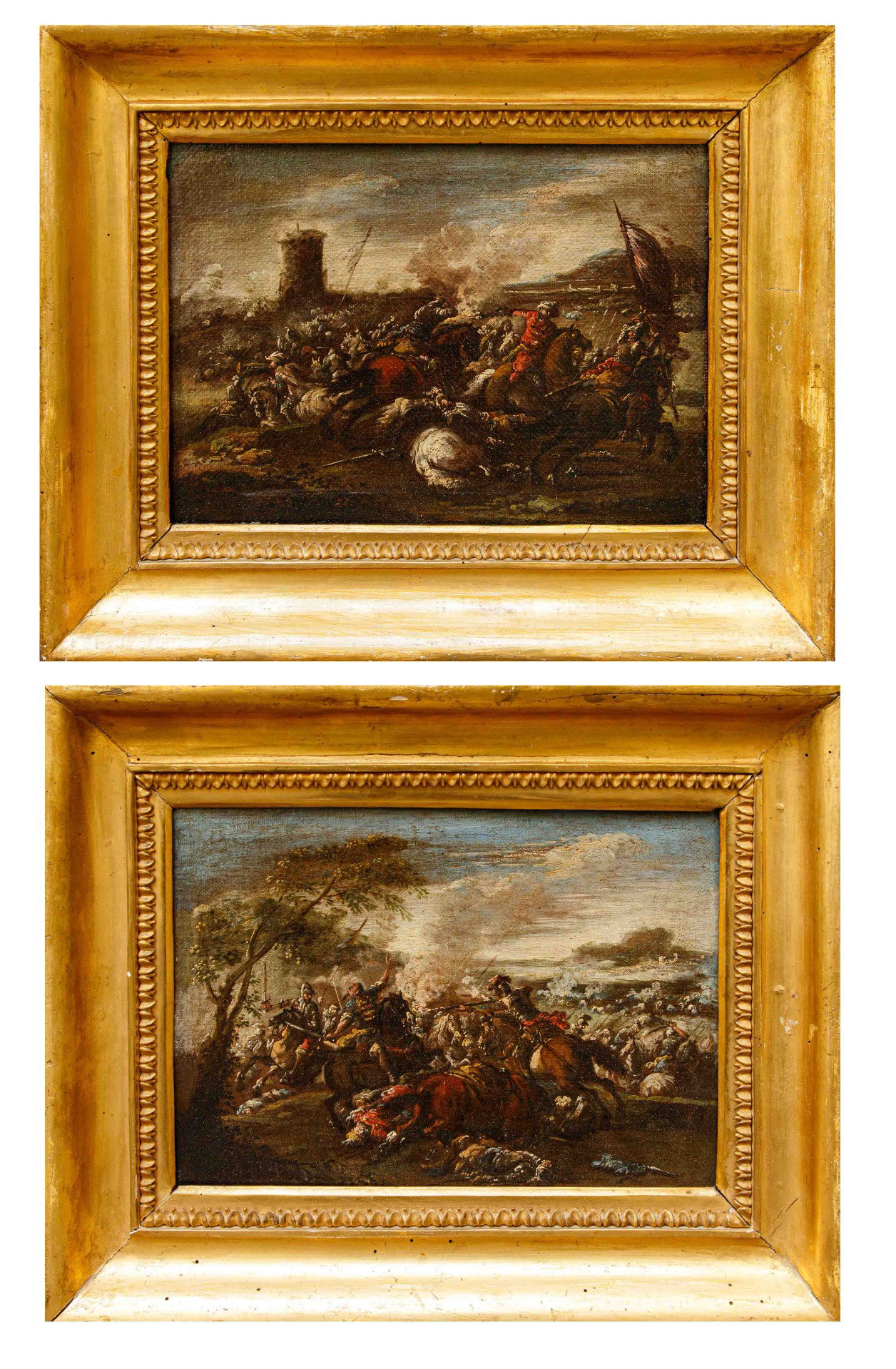
Francesco Graziani, known as Ciccio Napoletano (Active in Naples and Rome in the second half of the 17th century), Cavalry battle against the Turks – Battle between European cavalcades
Description:
Francesco Graziani, known as Ciccio Napoletano (Active in Naples and Rome in the second half of the 17th century)
Cavalry battle against the Turks – Battle between European cavalcades
(2) Oil on copper, 23.7 x 17.4 cm
With frame, 37 x 45 cm
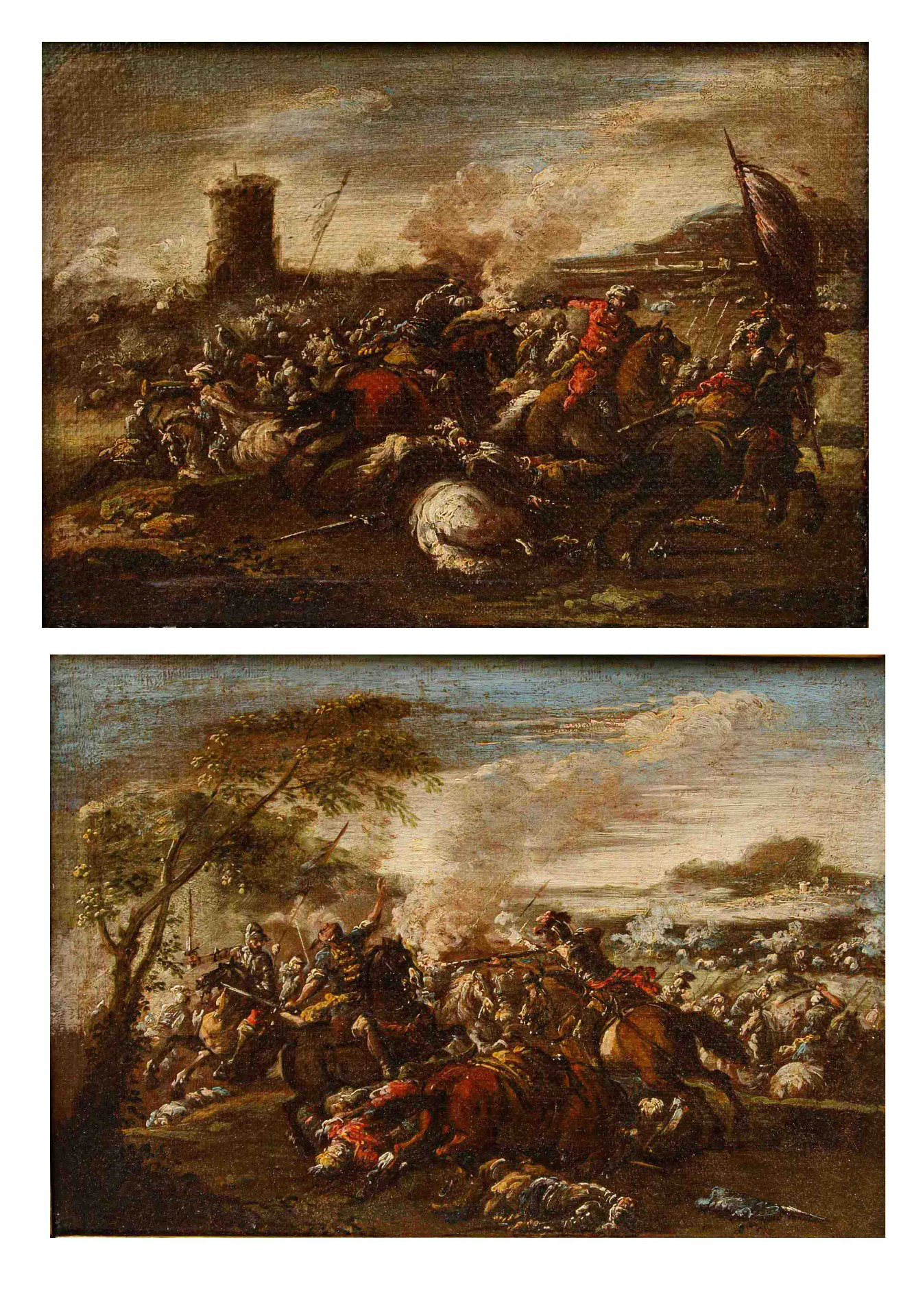
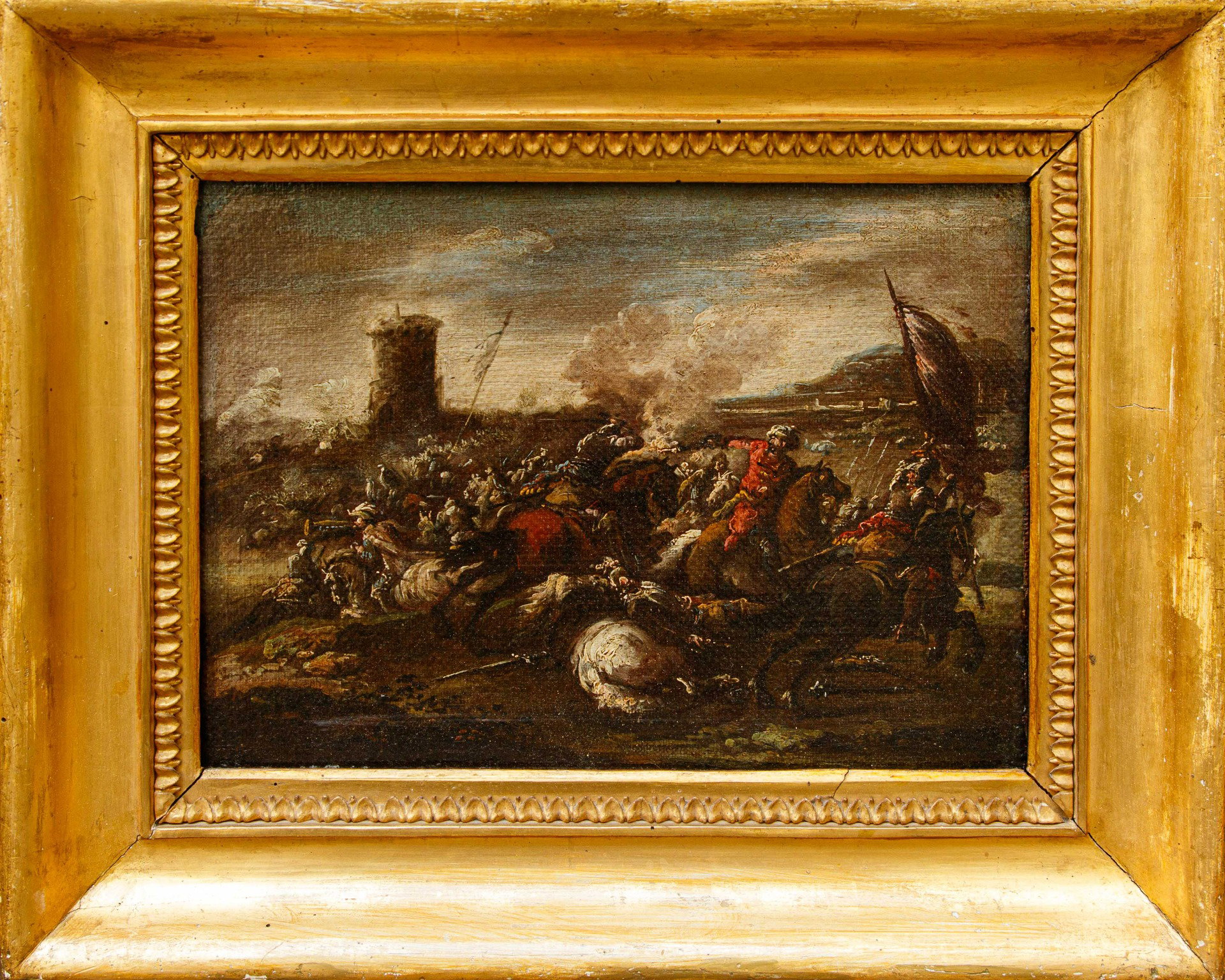
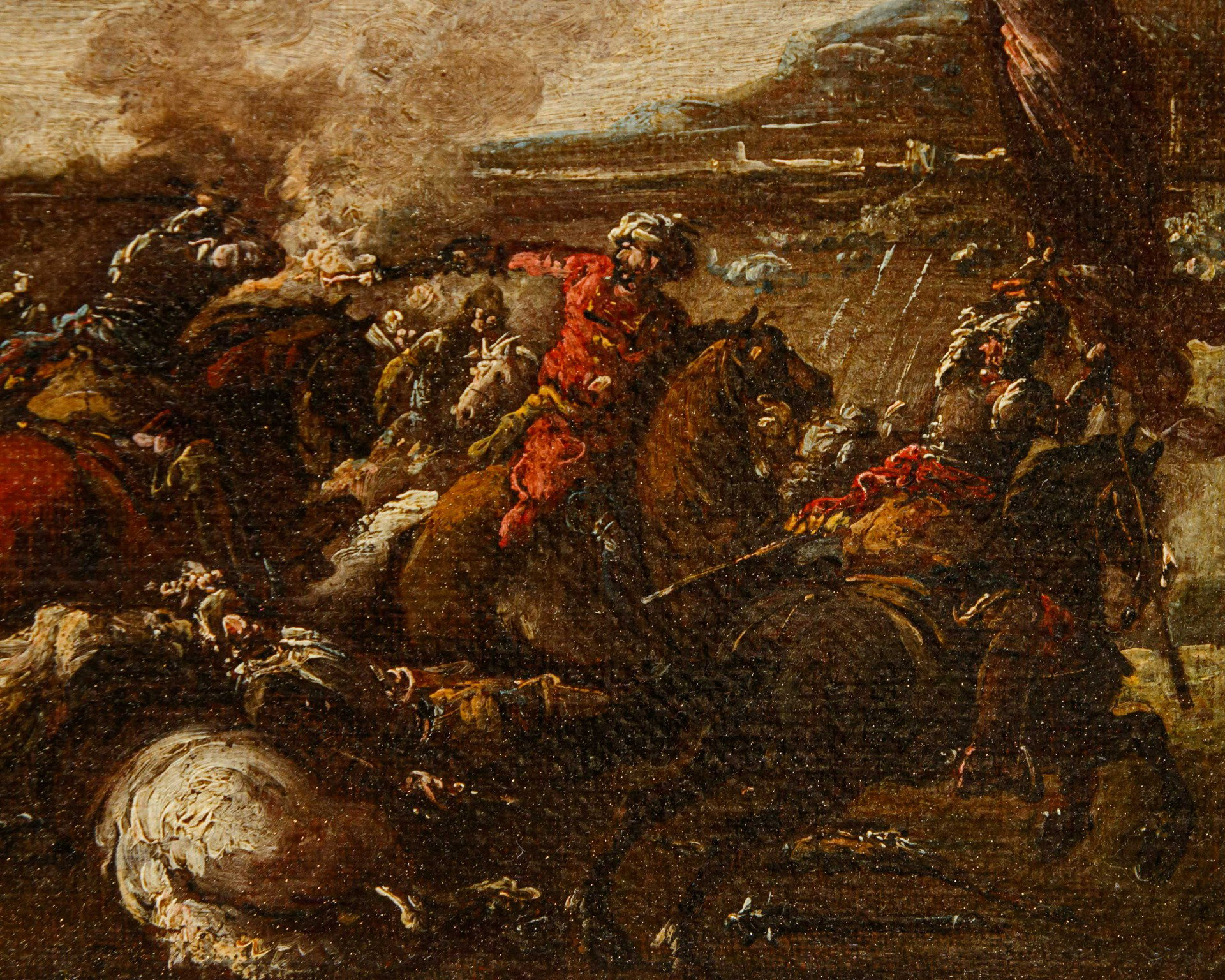
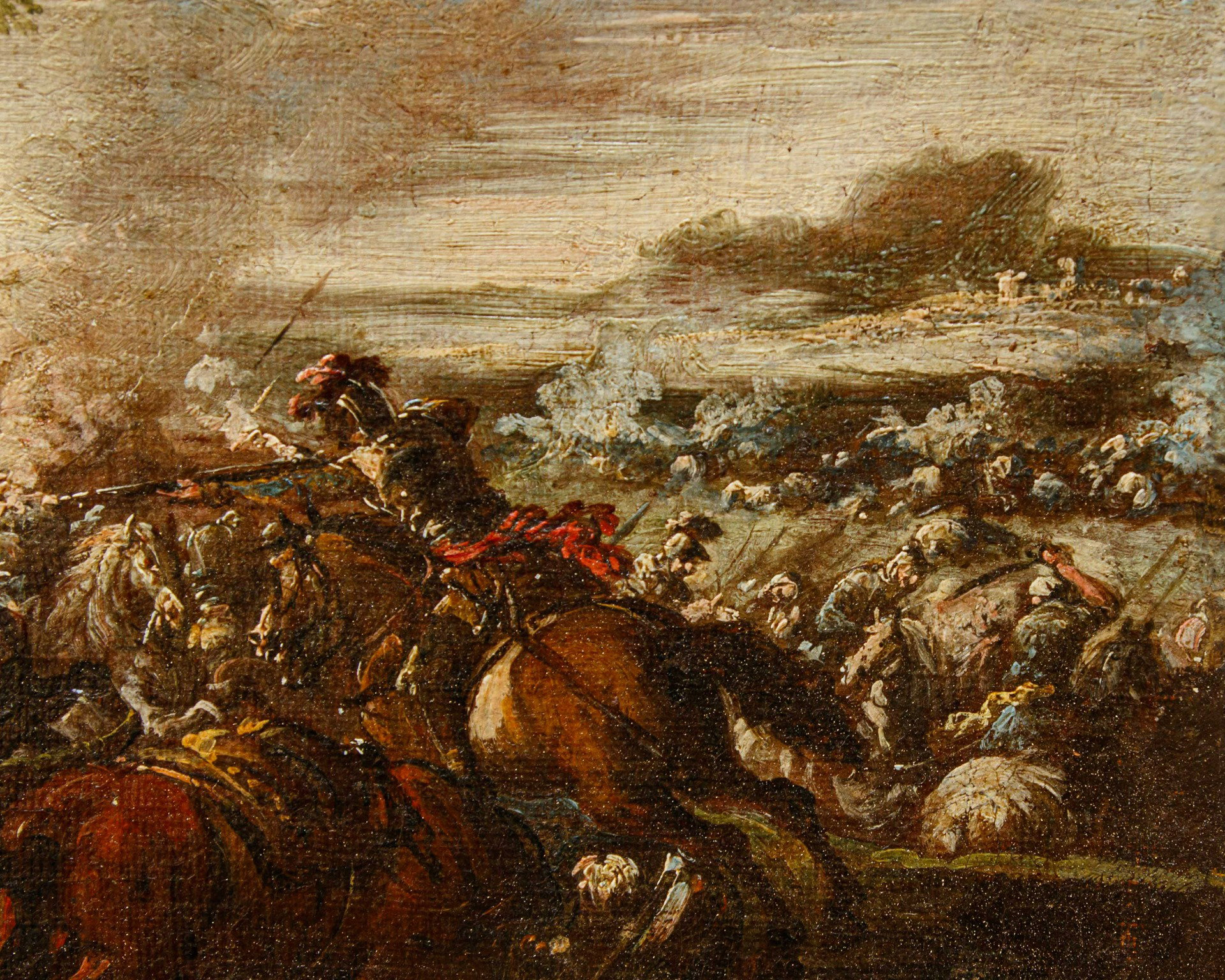
The two oil paintings on copper presented here are a particularly eloquent example of the mature work of Francesco Graziani, a Neapolitan painter active in the second half of the 17th century, known to his contemporaries by the nickname Ciccio Napoletano. The first painting depicts a clash between European and Turkish cavalry in an open, barren landscape, traversed by a stormy sky with gray-ochre hues. At the center of the composition, the heart of the combat is concentrated: knights in armor and soldiers in colorful attire hurl themselves against each other in a chaotic tangle of bodies, lances, and banners. A knight in a striking red jacket and white turban occupies the right side of the scene, visually dominating the fray with an imperious gesture. In the foreground, the bodies of fallen horses and figures prostrate on the ground emphasize the sense of violence and carnage just enacted. In the background, a cylindrical tower stands out, enveloped in a misty light – an architectural element recurring in Graziani's repertoire, as seen in the 'Battle near a bridge' at Palazzo Bardini in Florence – which helps to place the scene in a plausible and recognizable landscape. The second painting, set on a battlefield with a fortified city in the background, stages a clash between European cavalry.
Francesco Graziani, known as Ciccio Napoletano, is a figure not yet fully clarified by art history, but whose body of work is progressively being defined thanks to discoveries and stylistic comparisons. A painter of Neapolitan training, he specialized in the battle genre, developing a personal style of great expressive immediacy. The influences that shaped his training can be attributed primarily to two great masters: Salvator Rosa, the Neapolitan painter-poet famous for his wild landscapes and scenes of soldiers and brigands, and especially Jacques Courtois, known as Borgognone, a Lorrain painter active in Rome, whose name often appears in relation to Graziani as a possible teacher or direct model. From Borgognone, Graziani borrowed the dynamic arrangement of equestrian masses, the placement of figures on superimposed planes, and a certain theatrical management of space. From Salvator Rosa, he derived a more acute atmospheric sensibility, a freedom of brushwork that translates into lively, fragmented passages, and a taste for dark and dramatic background landscapes. To support the attribution of these paintings to Francesco Graziani, comparison with some known works, preserved in museums and public collections, is useful. Particularly significant is the aforementioned 'Battle near a bridge' now preserved at Palazzo Bardini in Florence: in this painting, a cylindrical tower appears, practically identical to the one visible in the background of the first of the two oils described here, with the same construction using loose brushstrokes and the same scenic placement in a hazy light. A second fundamental comparison is with the 'Battle Scenes' in the Walters Art Museum in Baltimore. In these works, the same solutions are found in the rendering of horses – powerful, agile, depicted with highly synthesized brushstrokes – and of the knights, figures almost anonymous in their agitation but capable of conveying an immediate physical presence.