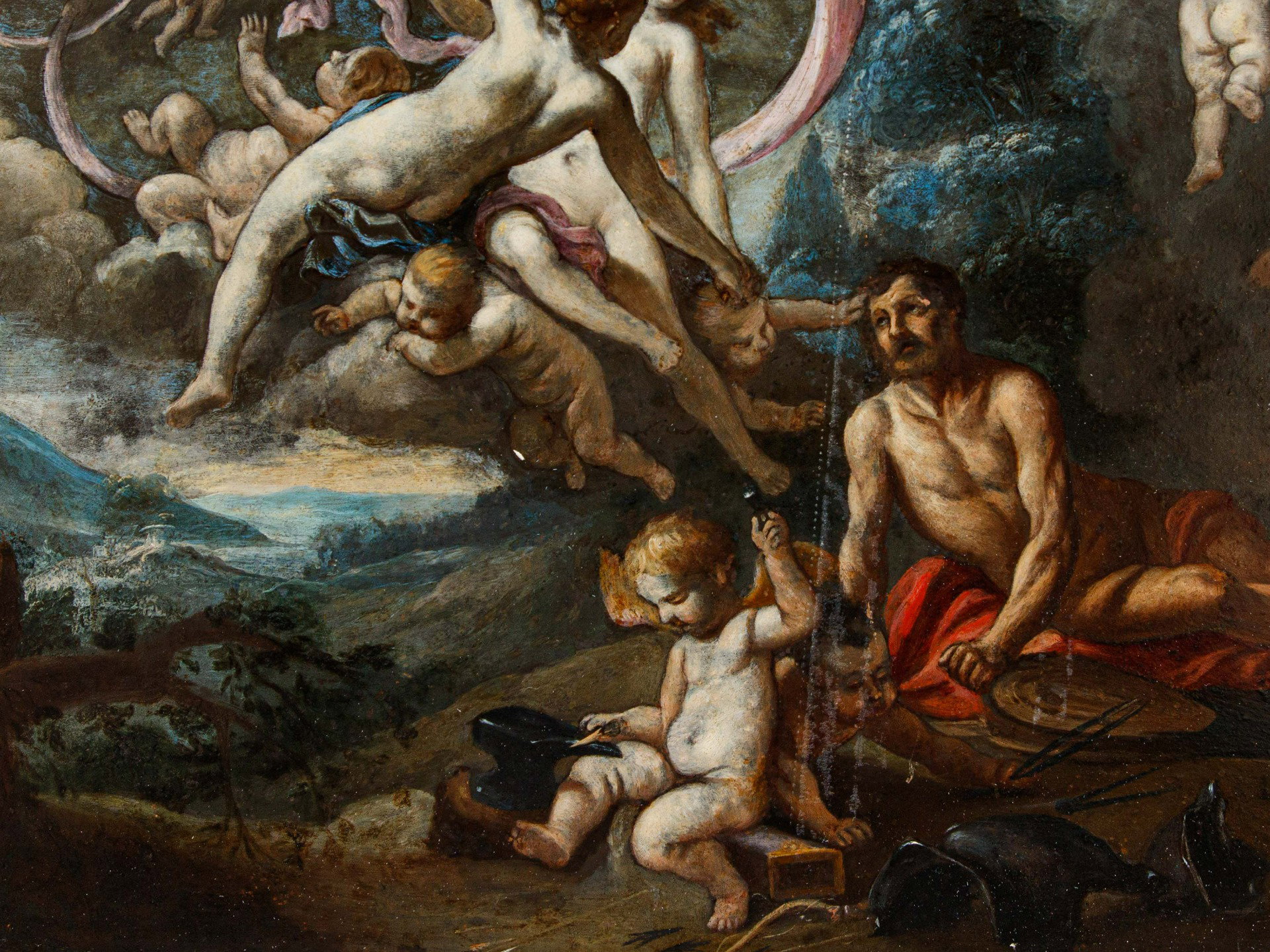
Cornelis Shut (Antwerp, 1597 – Antwerp, 1655), attr., Venus Appears at Vulcan's Forge
Description:
Cornelis Shut (Antwerp, 1597 – Antwerp, 1655), attr.
Venus Appears at Vulcan's Forge
Oil on copper, 31.5 x 42.5 cm
With frame, 33 x 44.5 cm
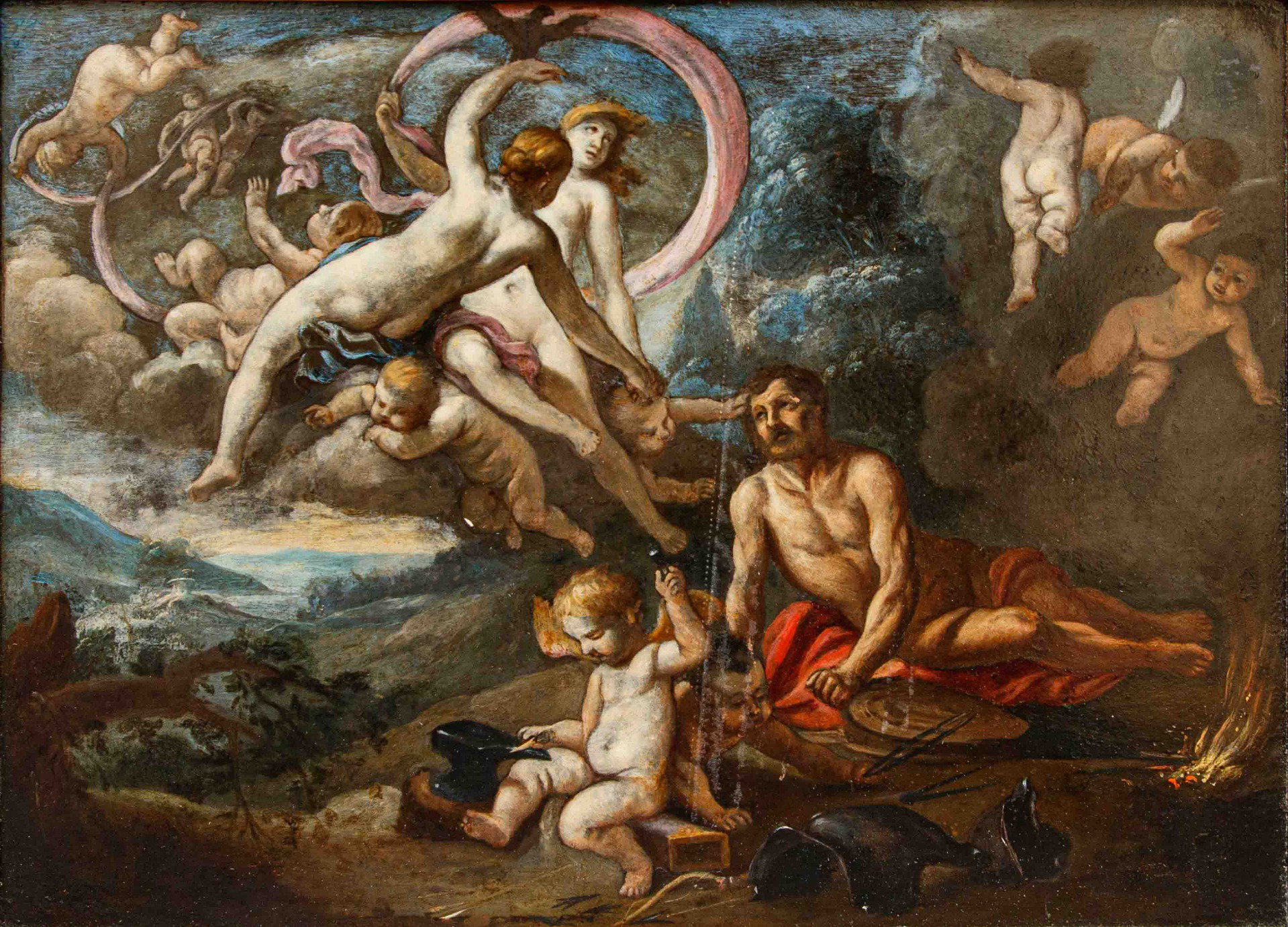
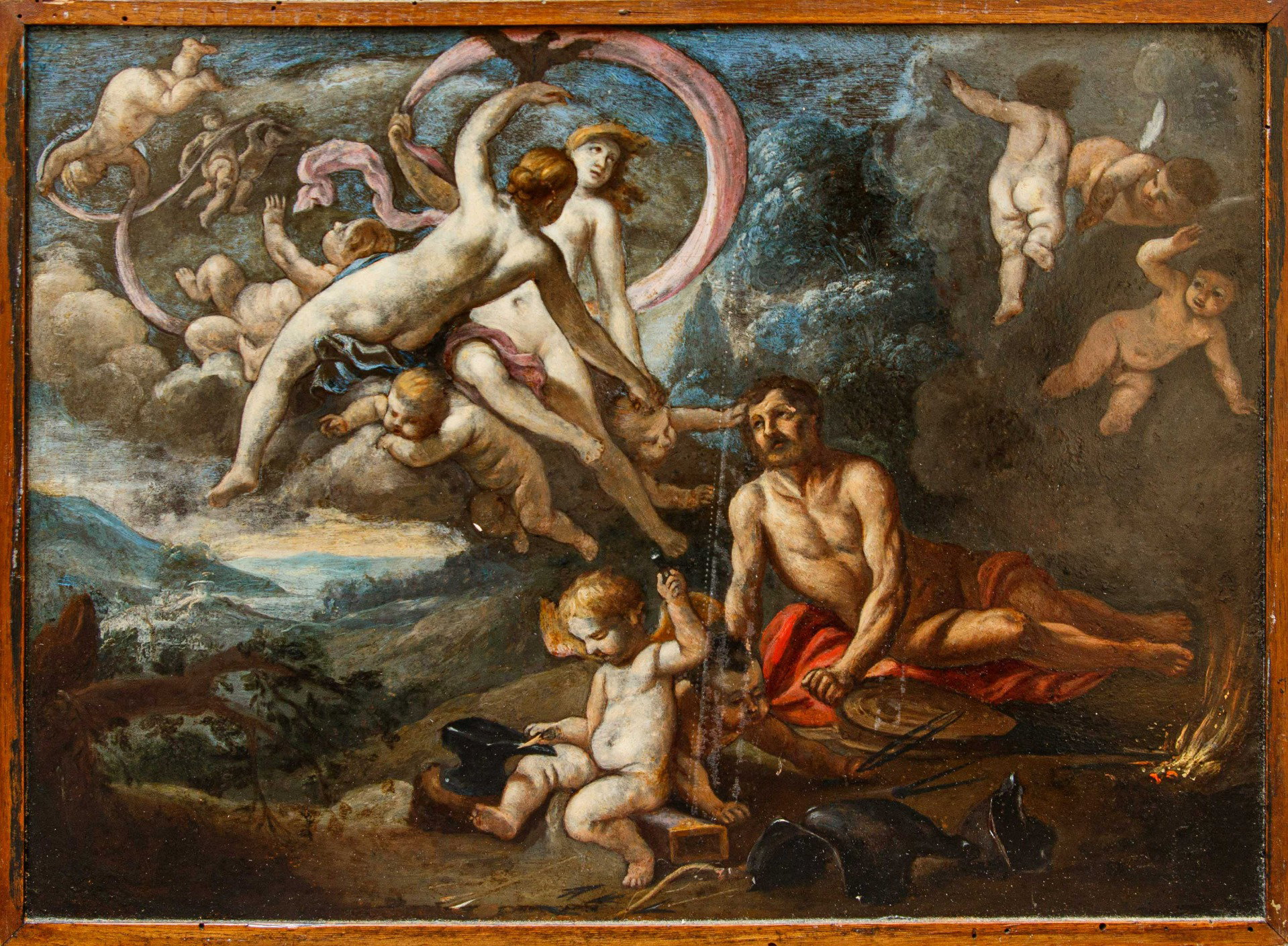
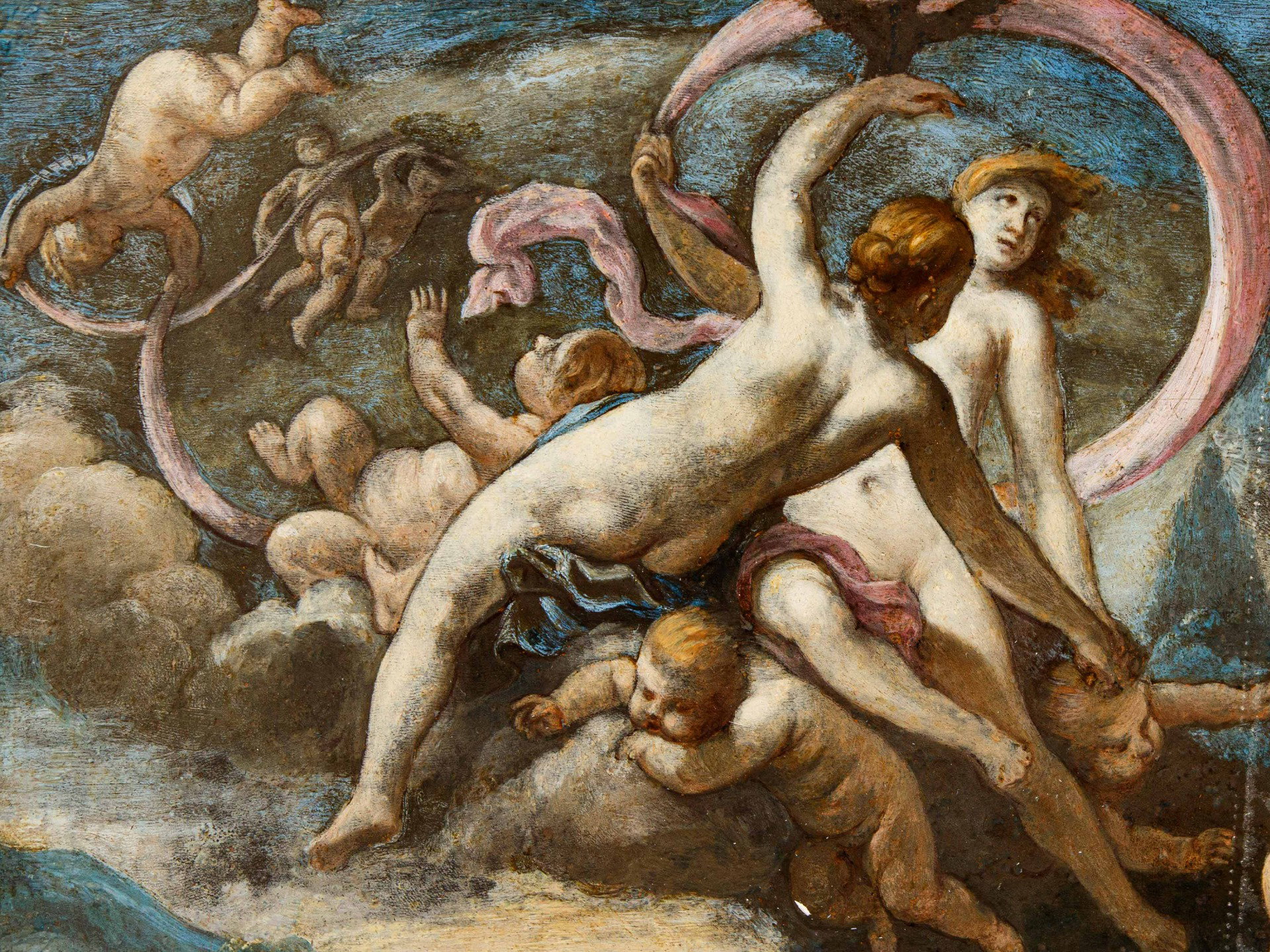
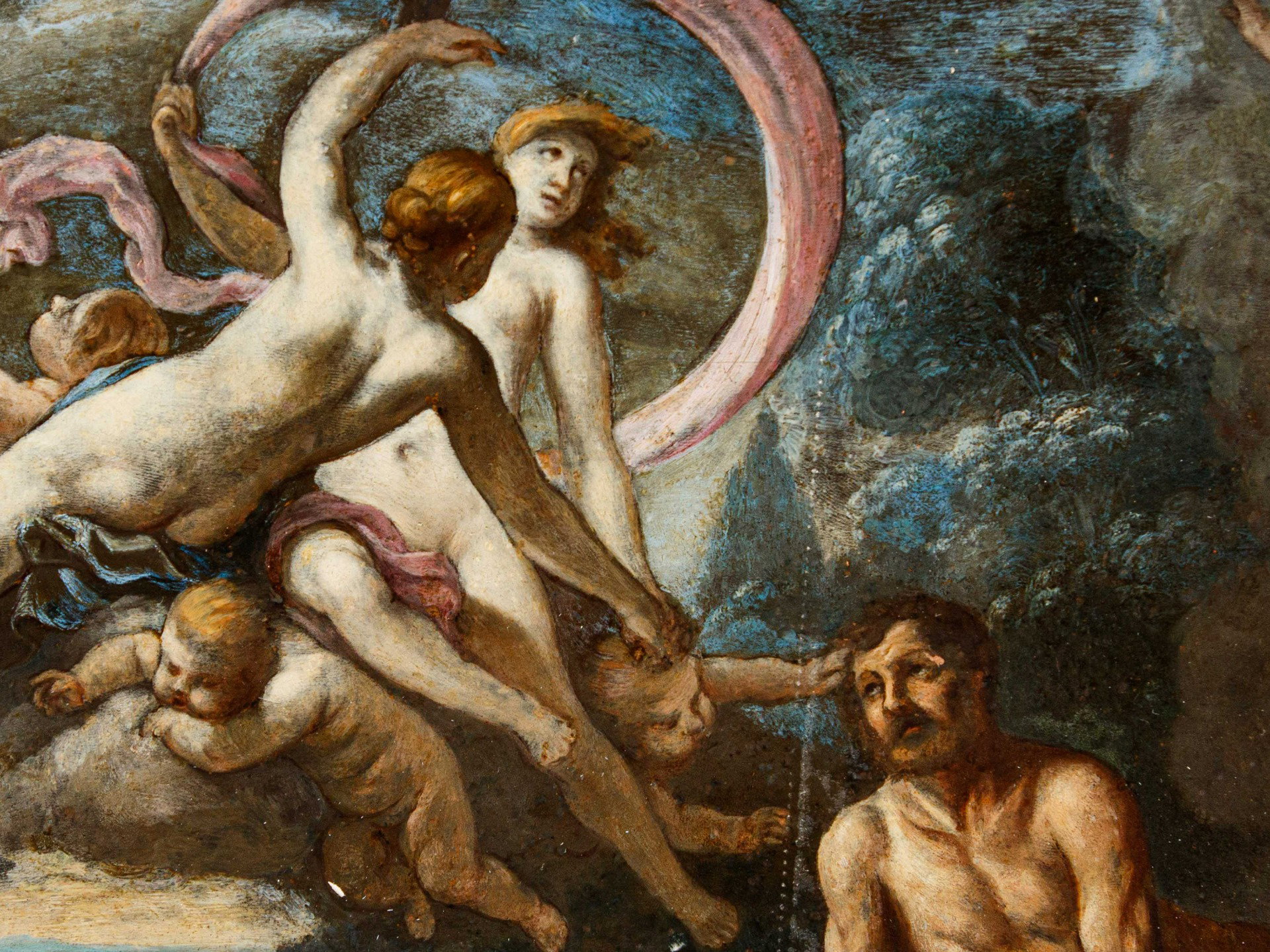
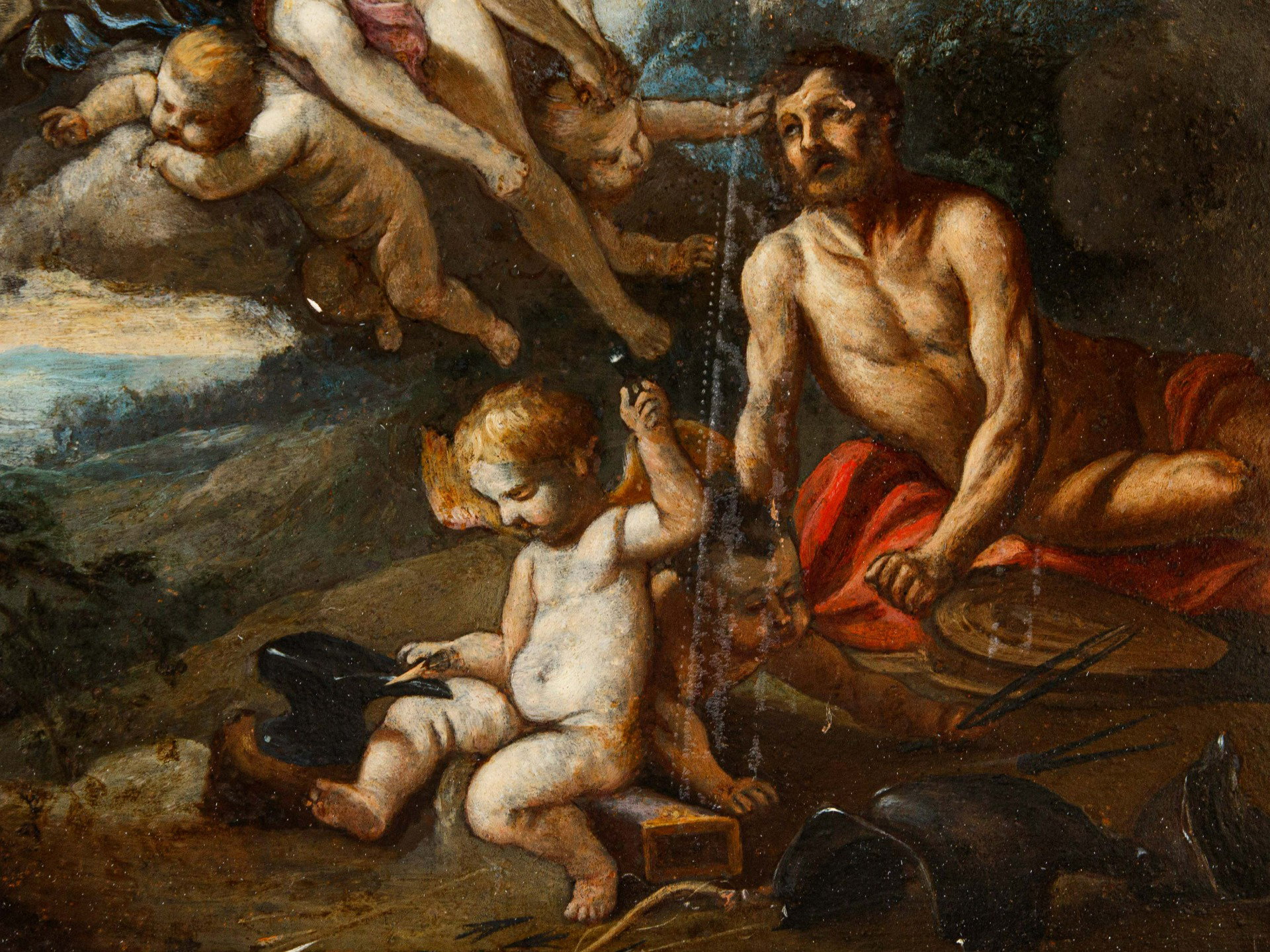
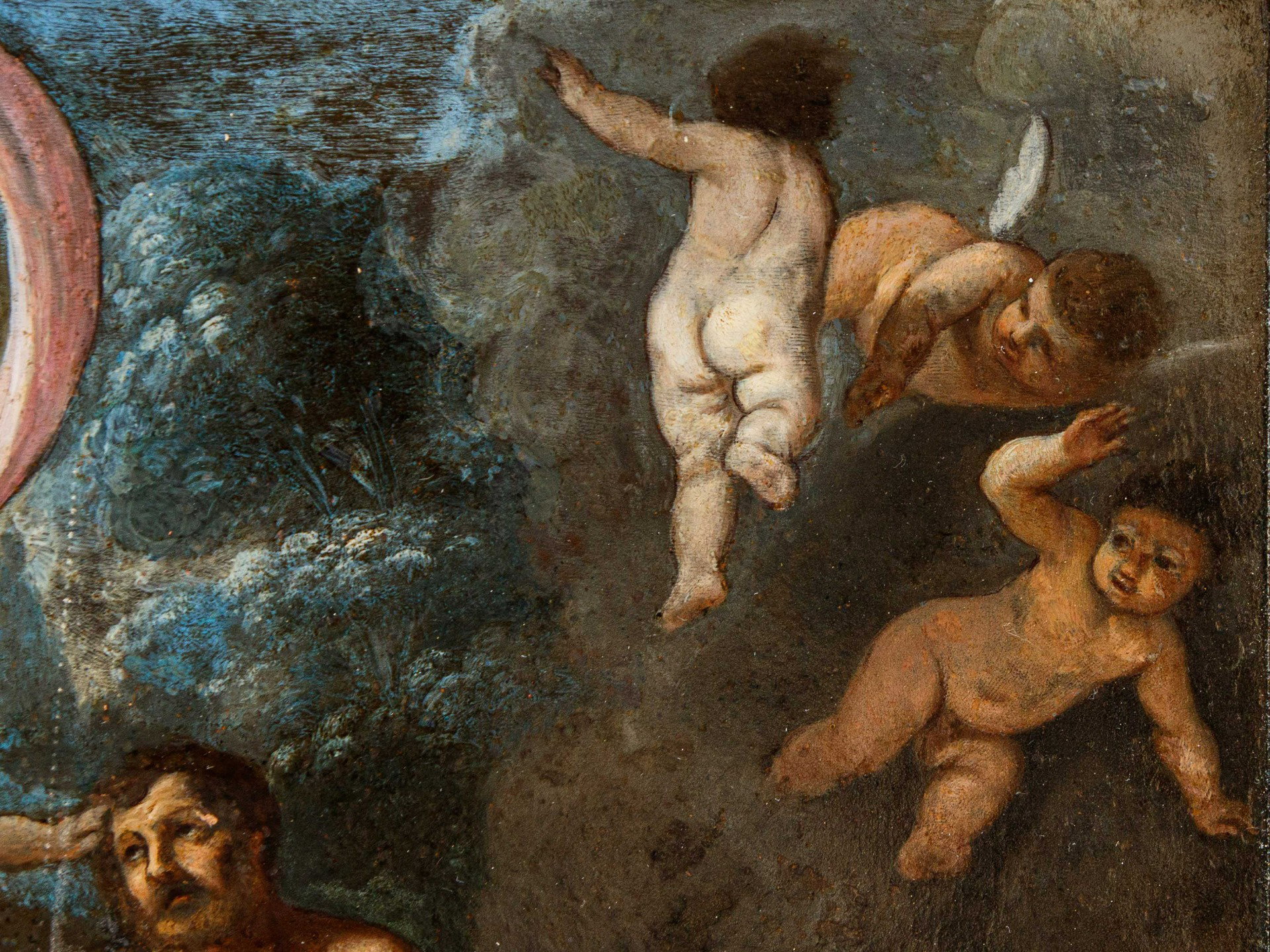
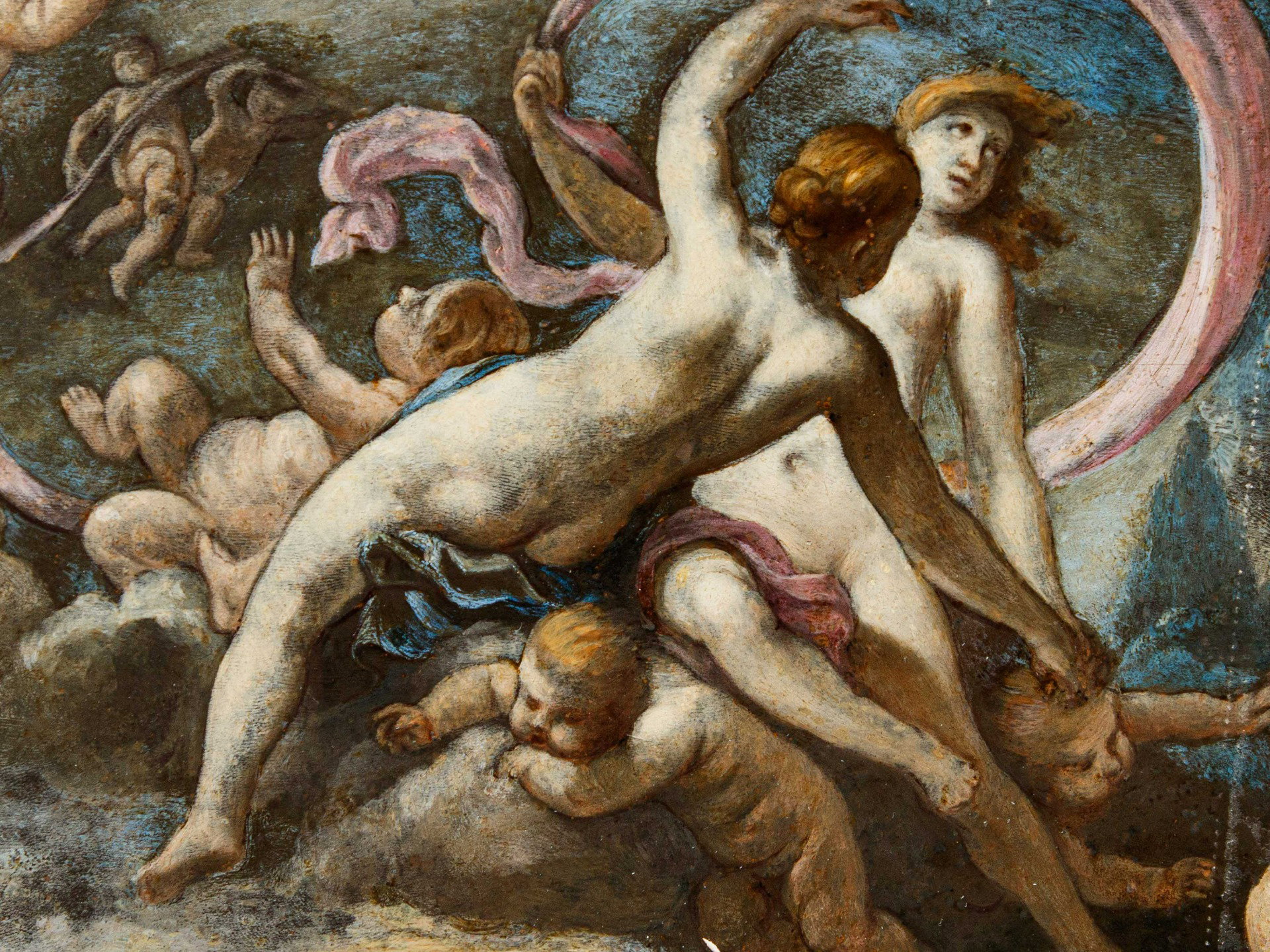
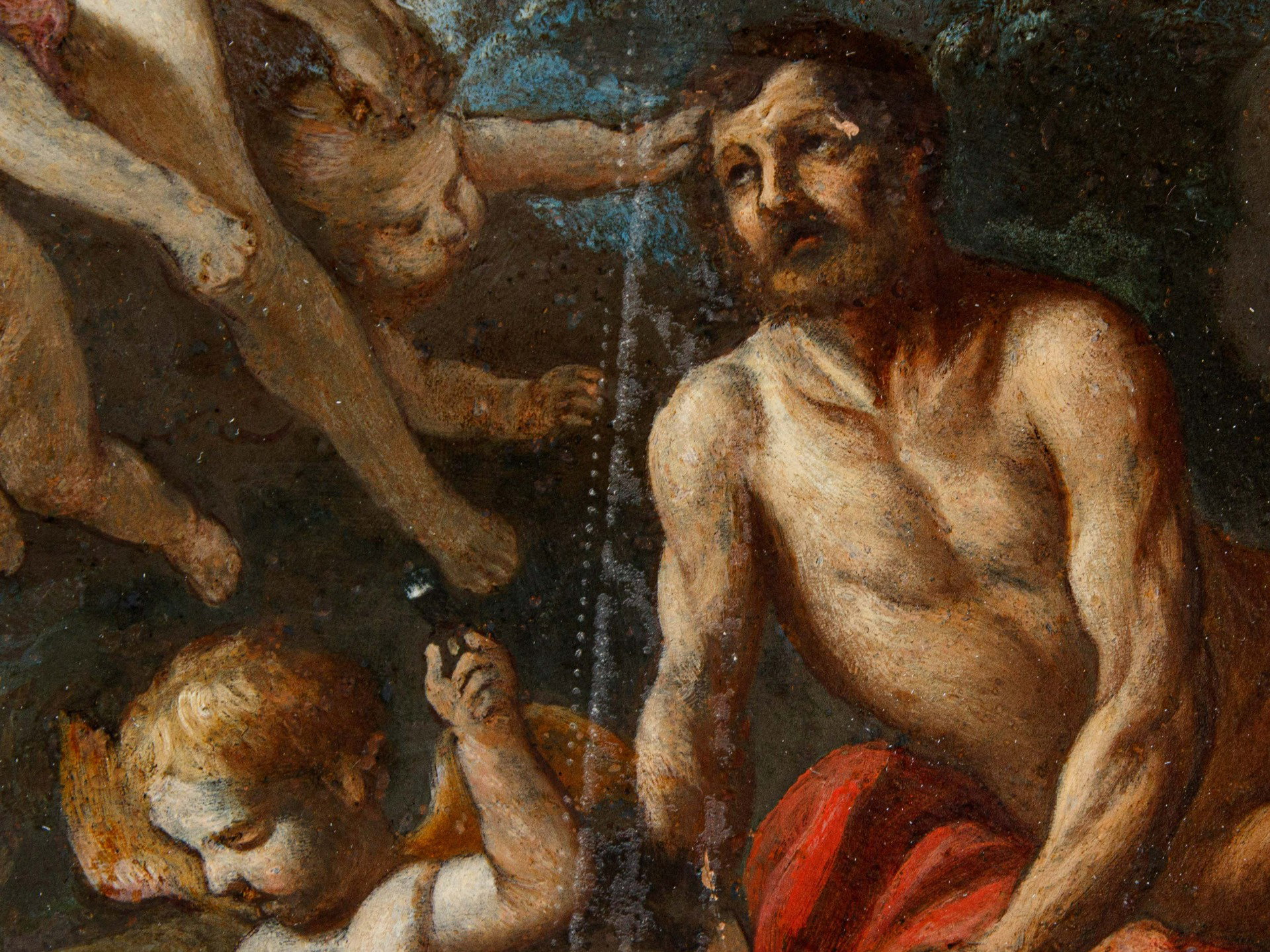
This small-format oil on copper depicts Venus appearing at Vulcan's forge in a whirlwind of figures that occupies most of the pictorial surface. In the upper half of the composition, the goddess, accompanied by a companion and enveloped in a pink veil that opens into a wide circle, descends from the clouds amidst a crowd of celebrating putti, while on the right other cherubs frolic in the air. Below, Vulcan, semi-reclining, covered by a bright red cloth, holds the tools of his trade next to a still-burning forge, surrounded by further putti tinkering with helmets and weapons. A hilly landscape opens up in the background, bathed in a twilight light with a Northern flavor.
The painting is attributed to Cornelis Schut, a Flemish painter whose training remains undocumented. A connection with Rubens' workshop is assumed, a master exempt from the obligation to register apprentices with the Guild of Saint Luke, to which Schut was admitted in 1618–1619. His early works, however, show affinities with Abraham Janssens, the leading history painter in Antwerp at the time. From 1624 to 1627, Schut stayed in Rome, where he was among the founders of the Schildersbent and worked under the protection of the Flemish merchant Pieter de Vischere. In 1628, he moved to Florence, where he created cartoons for the Medici Tapestry Factory. Throughout his career, he consistently adopted the mature Baroque style of Pietro da Cortona and Guercino, characterized by strong animation, expressive use of light and color, with Mannerist remnants evident in exacerbated foreshortening, chiaroscuro contrasts, and intense facial expressions.
The attribution to Schut is based on precise stylistic and thematic correspondences. The type of putti, with their chubby anatomies and lively gestures, recurs identically in the Madonna with Child, Saint Anne, Saint John the Baptist, and Angels in a private collection and in the Allegory of Autumn, also in a private collection. The mythological subject fits into a homogeneous series that includes Vulcan's Forge and the Triumph of Neptune and Amphitrite, now at Villa dei Georgofili in Florence, and the Rape of Europa preserved at the Hermitage Museum in St. Petersburg. The production for tapestries, to which the cartoon for the Seven Liberal Arts now at Villa Hügel in Essen belongs, confirms Schut's familiarity with crowded compositions of aerial figures arranged on overlapping planes, a scheme that also governs this panel. Finally, Music, preserved at the Rubenshuis in Antwerp – formerly in the possession of Rubens himself – attests to the direct link between the two artists, a further guarantee of authenticity for a work that so faithfully reflects his style.