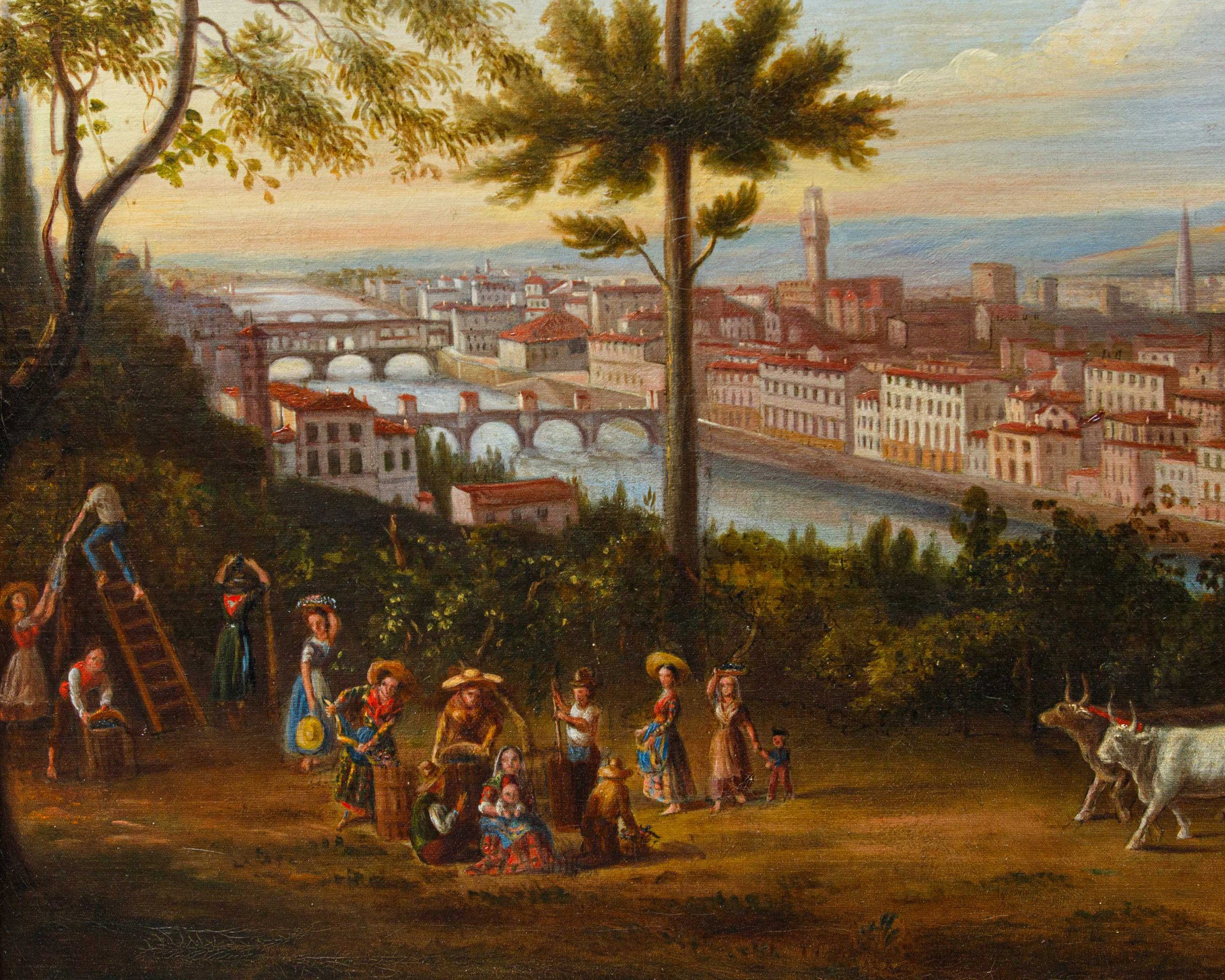
Gabriele Carelli (Naples, 1820 – Menton, 1900), View of Florence
Description:
Gabriele Carelli (Naples, 1820 – Menton, 1900)
View of Florence
Oil on canvas, 56 x 89 cm
With frame, 73 x 106 cm
Signed G. Carelli lower center
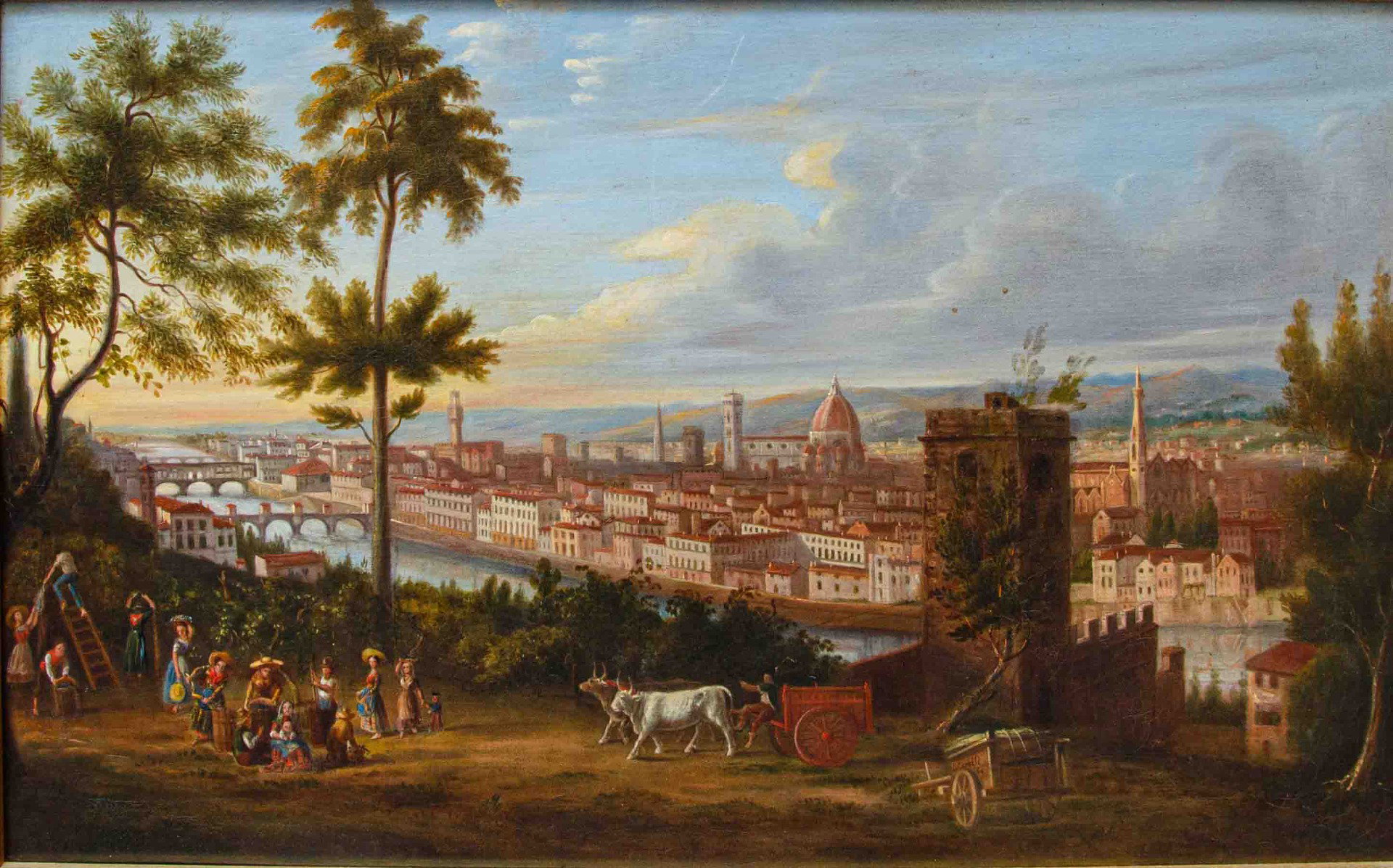
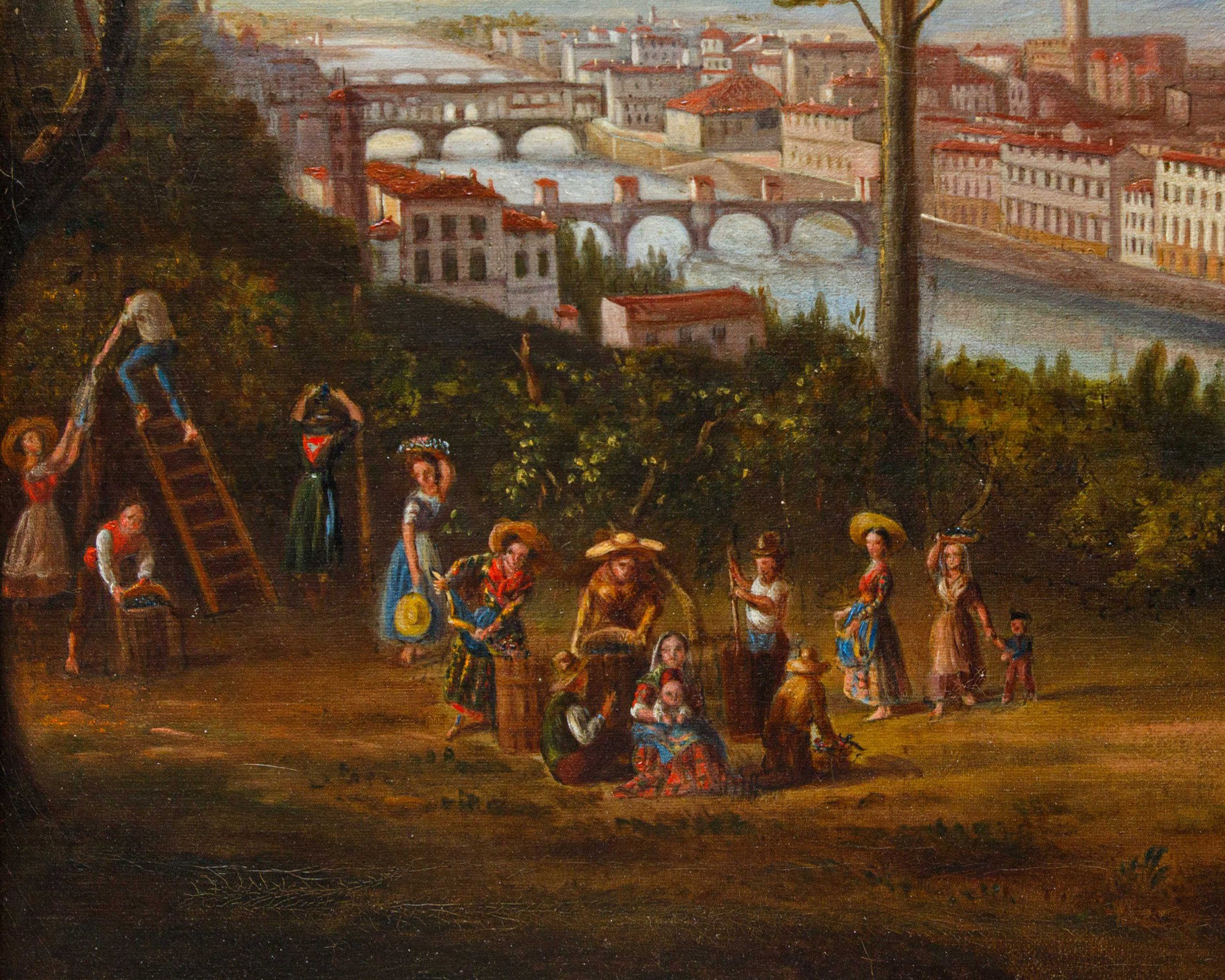
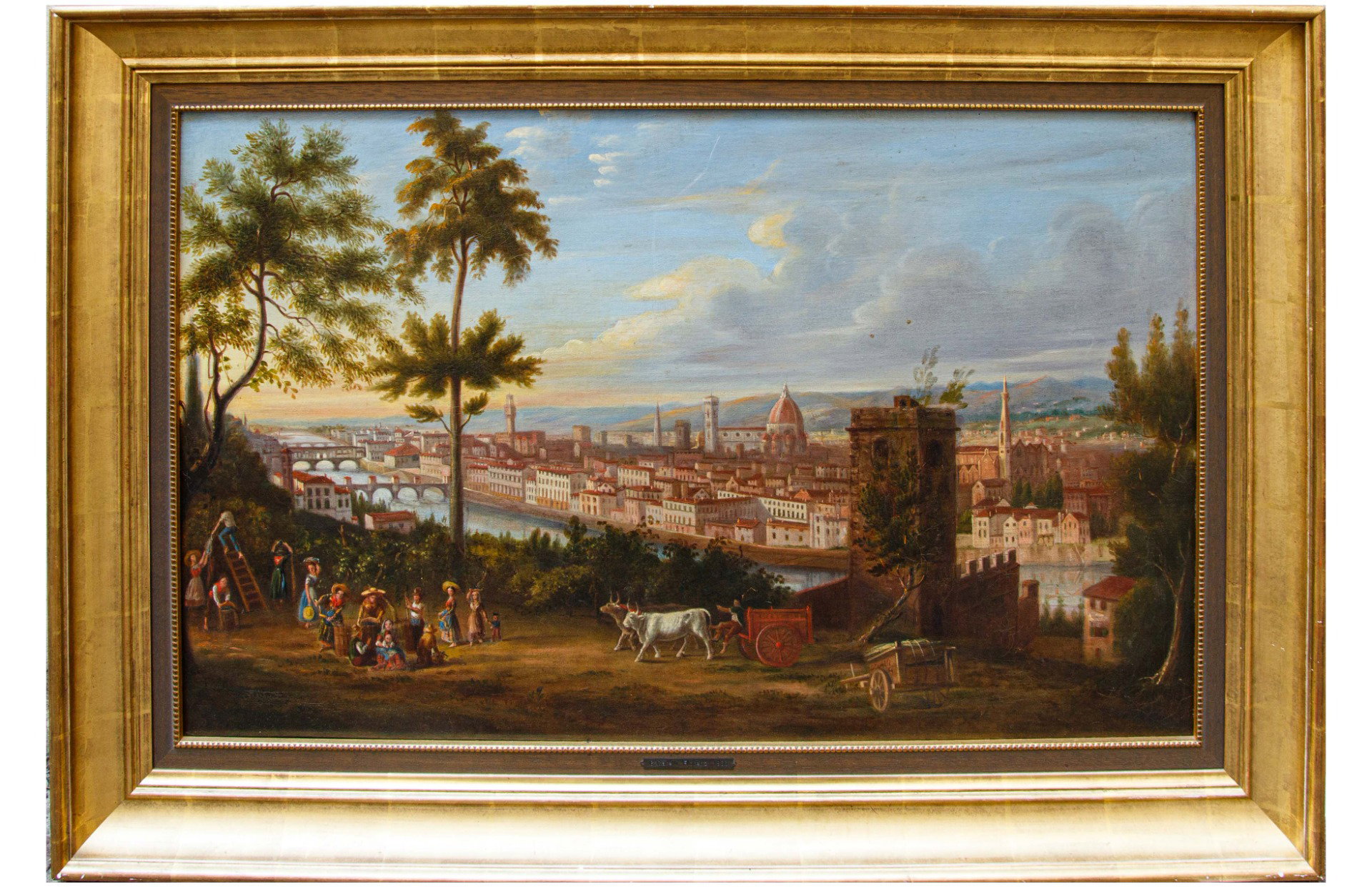
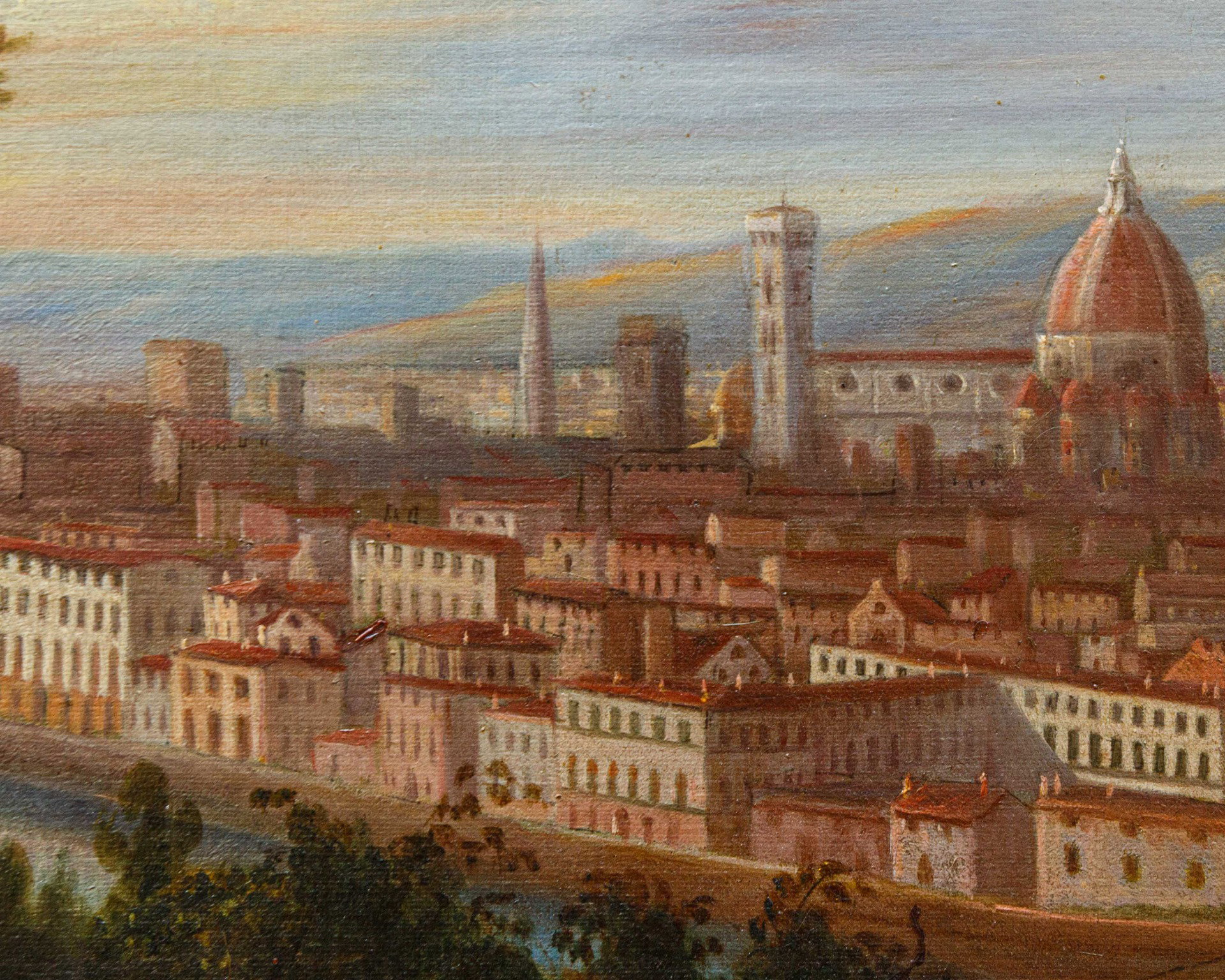
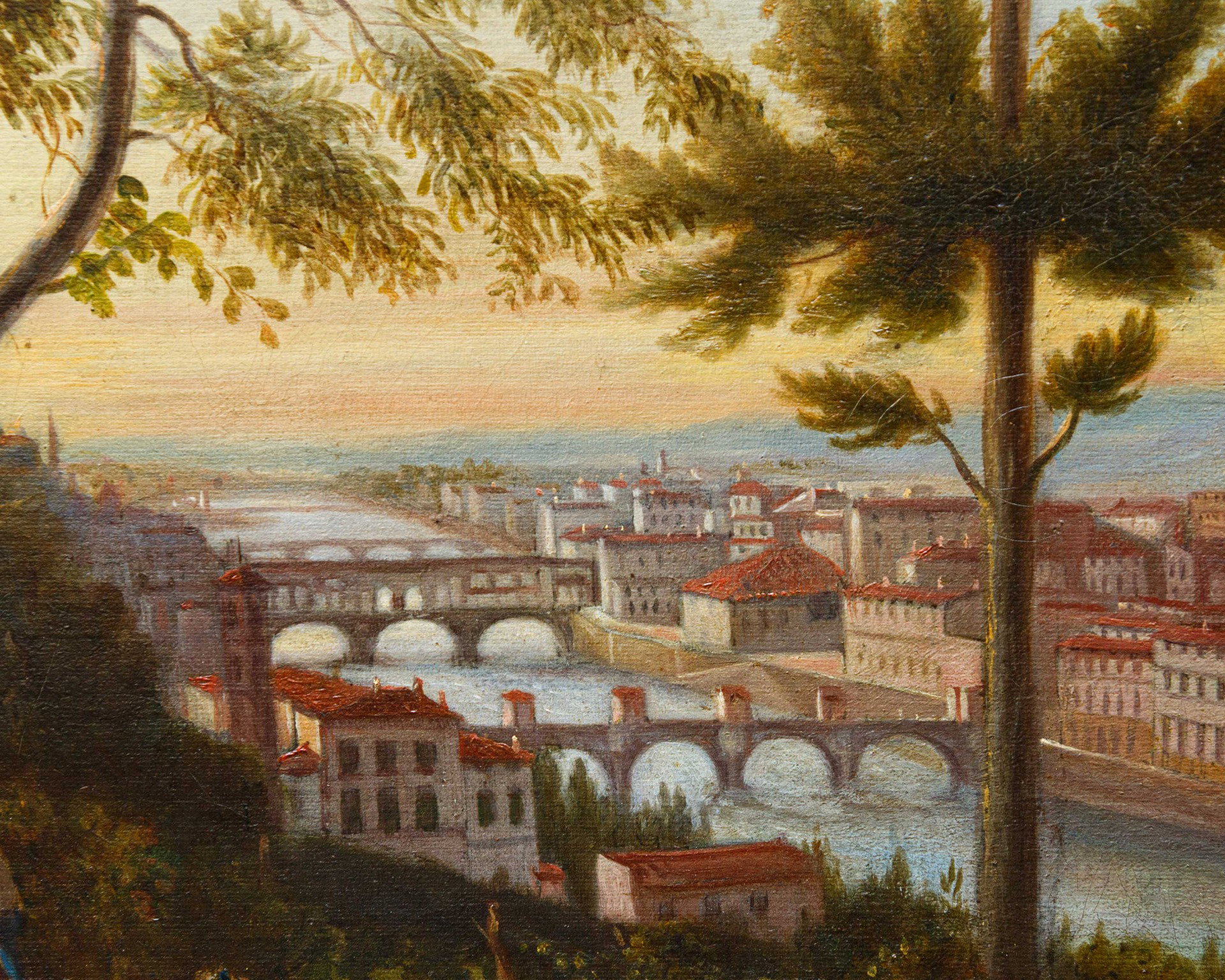
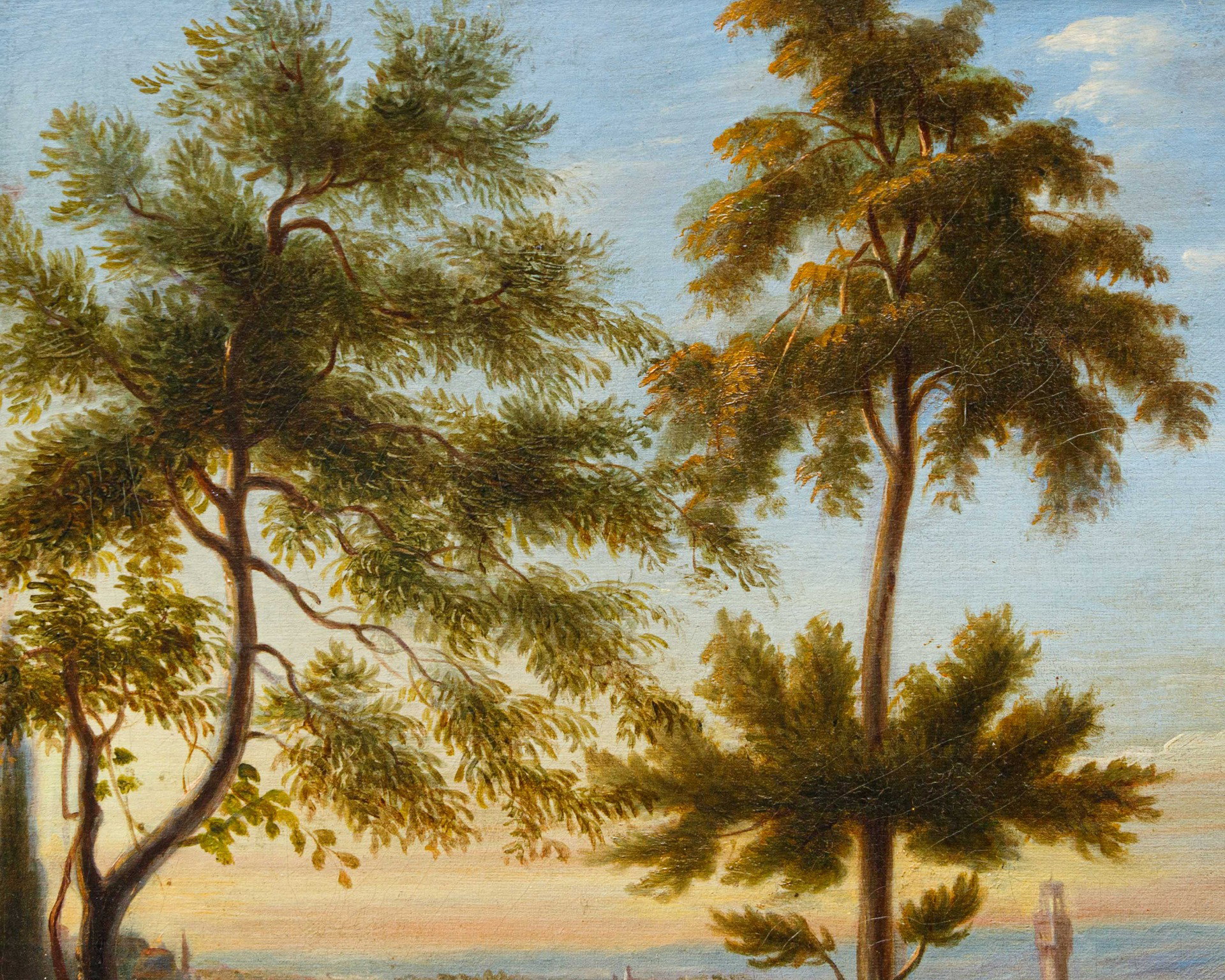
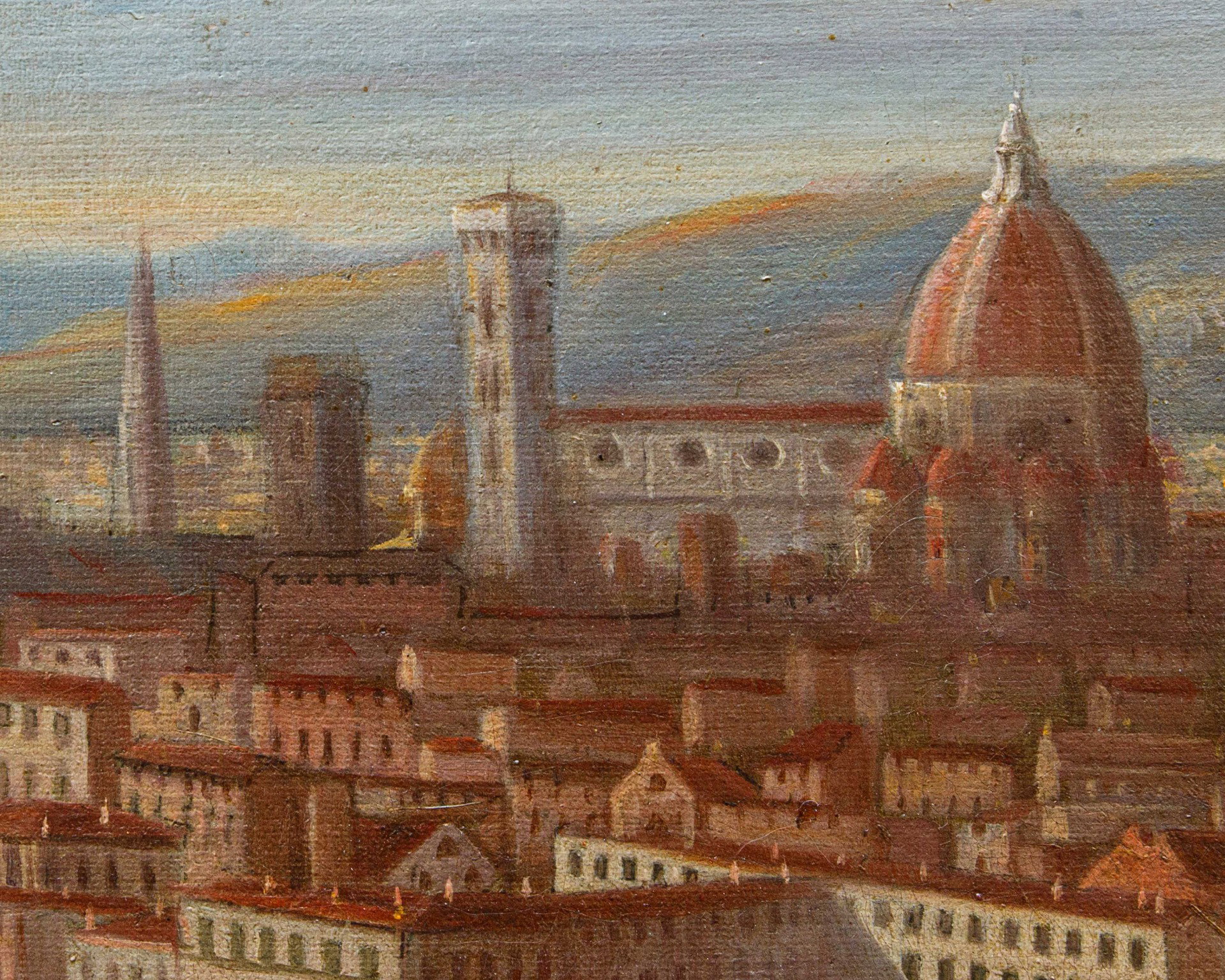
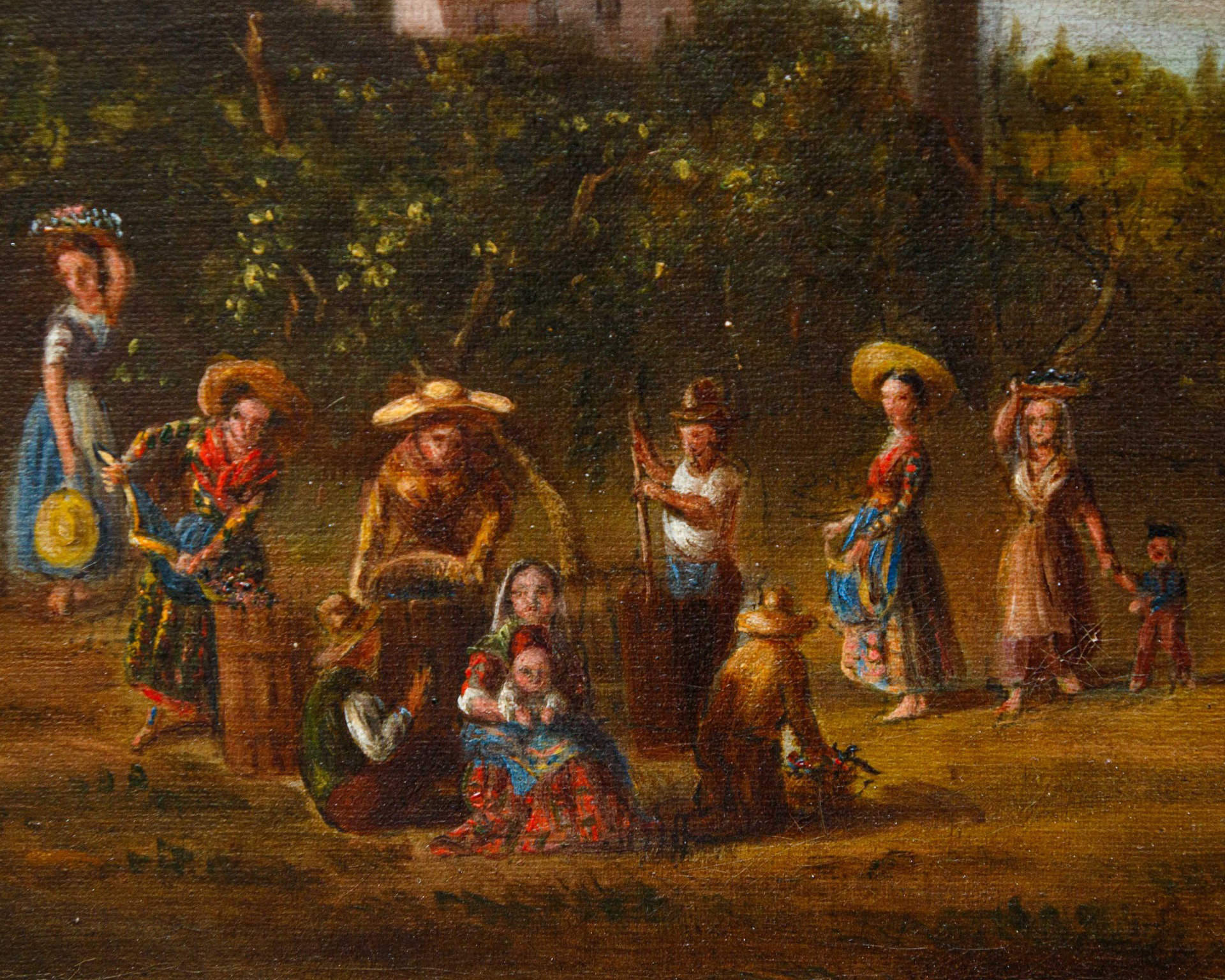
View of Florence, attributed to Gabriele Carelli, depicts the city seen from a hill, likely from the surroundings of San Miniato, with the Arno river crossing the composition and its famous bridges, including the Ponte Vecchio, which are clearly recognizable. On the right, Brunelleschi's dome and Giotto's Campanile emerge, along with other characteristic towers of the city's skyline. In the foreground, a scene of rural life enlivens the landscape: peasants, an ox-drawn cart, leafy trees, and remnants of ancient walls form a picturesque frame that encloses the urban view in the background, in keeping with the veduta style typical of the 19th century. Gabriele Carelli was born in Naples in 1820 into a family of artists connected to the Posillipo School. He trained under his father Raffaele, alongside his brother Gonsalvo, initially focusing on interior painting with a realistic approach. In 1837, he moved to Rome with his brother, learning watercolor techniques from him and dedicating himself to architectural studies and ancient ruins. He returned to Naples in 1840. In 1847, William Cavendish, 6th Duke of Devonshire, took him to England, to Chatsworth, where he also stayed in London. Upon his return, he stopped in Lombardy, discovering the work of Giovanni Migliara, whose style he later adopted. After a period in Malta in 1850, he settled permanently in London in 1860, achieving great success with his watercolors exhibited in various British shows. In 1874, he joined the Royal Society of Watercolors. He traveled again to Switzerland and Lombardy in 1872, and received a gold medal in Boston in 1881. Carelli was an excellent landscape and architectural painter, renowned for his seascapes of Naples, Amalfi, and the Coast, as well as for his evocative interior views, as evidenced by works preserved at the Avellino Art Museum and the Bindi Art Gallery in Giulianova.