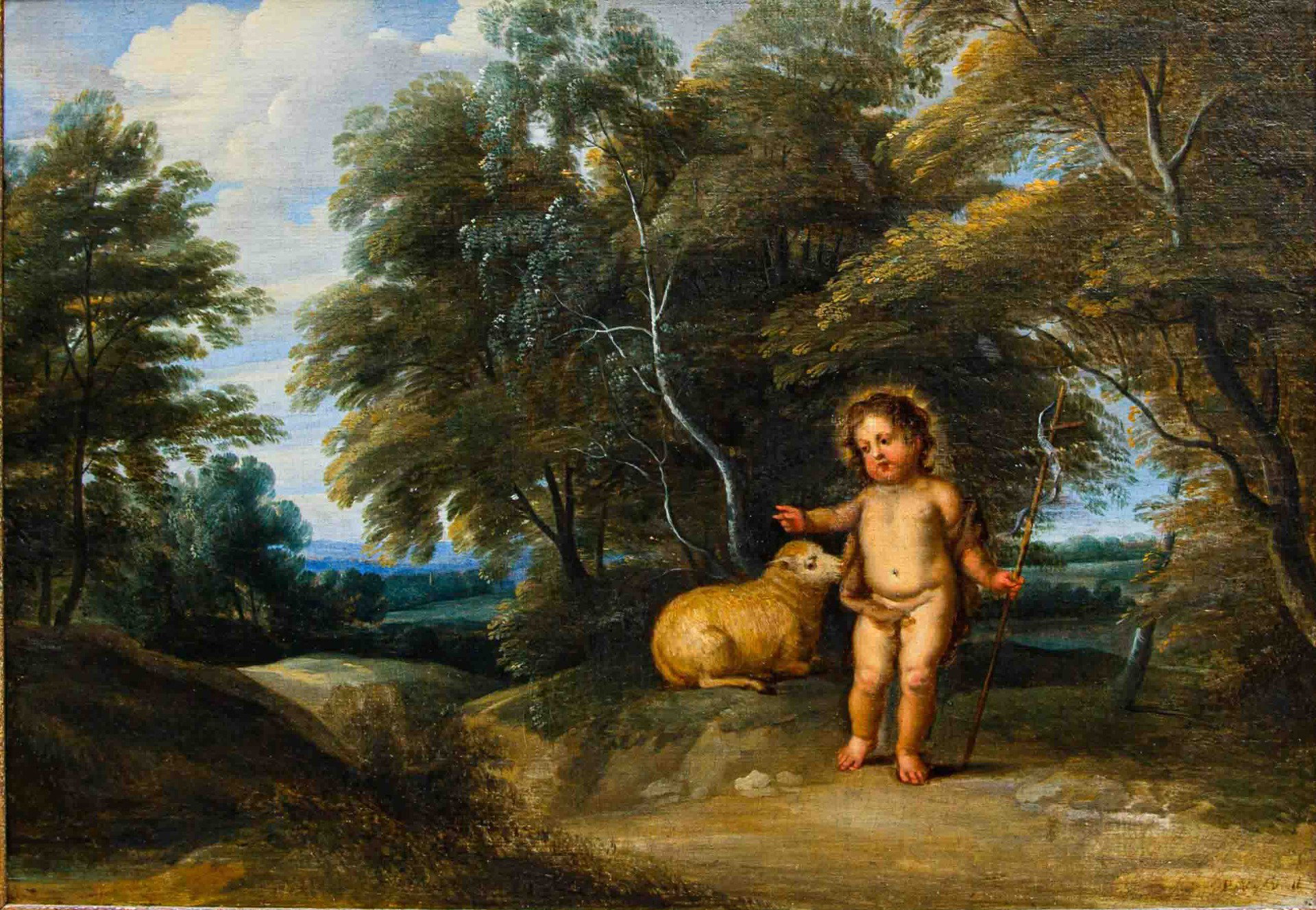
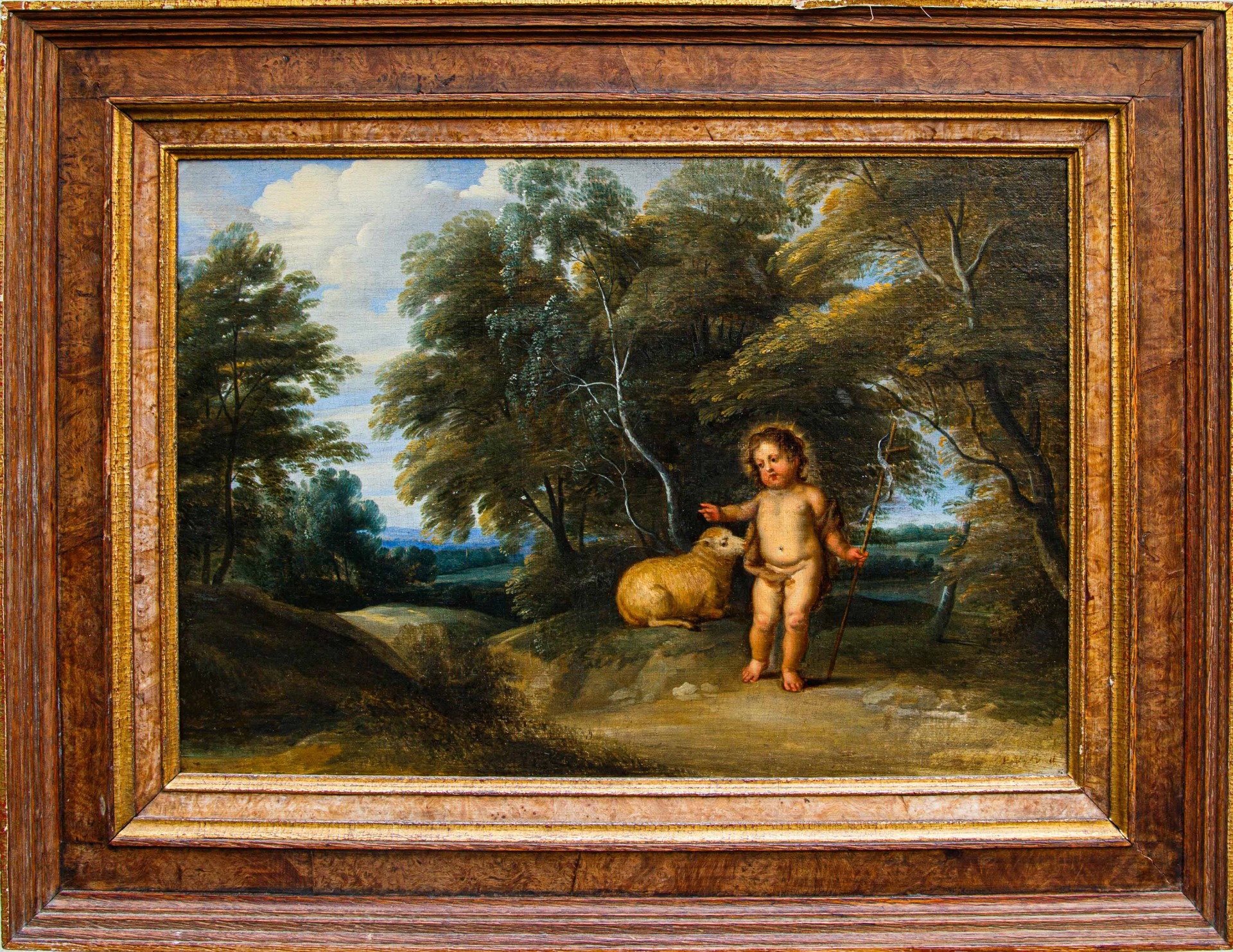
Pieter van Avont (Mechelen, 1600 – Deurne, 1652), Landscape with the Young Saint John and the Lamb
Description:
Pieter van Avont (Mechelen, 1600 – Deurne, 1652)
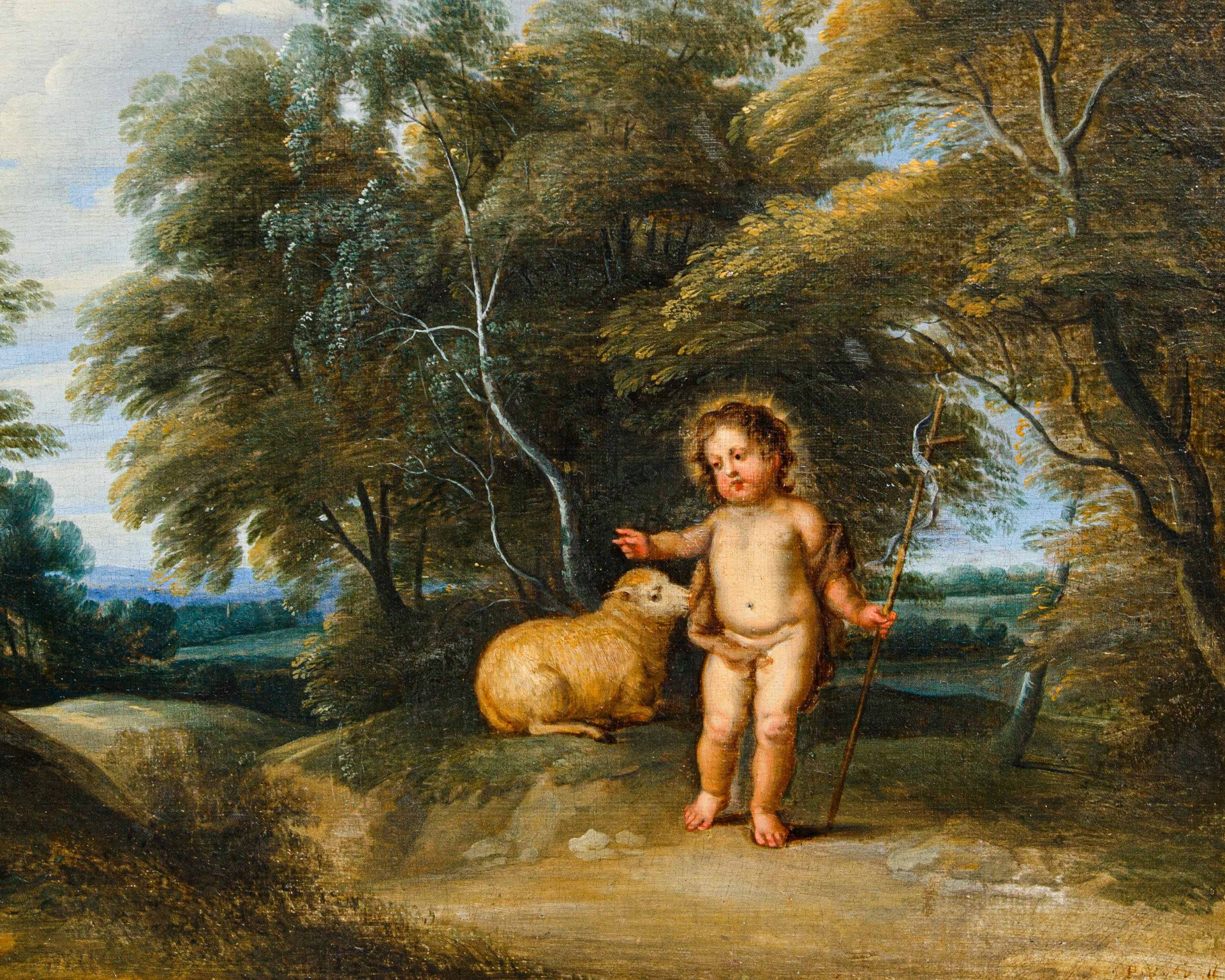
Landscape with the Young Saint John and the Lamb
Oil on canvas, 31.5 x 45 cm
With frame, 48 x 61 cm
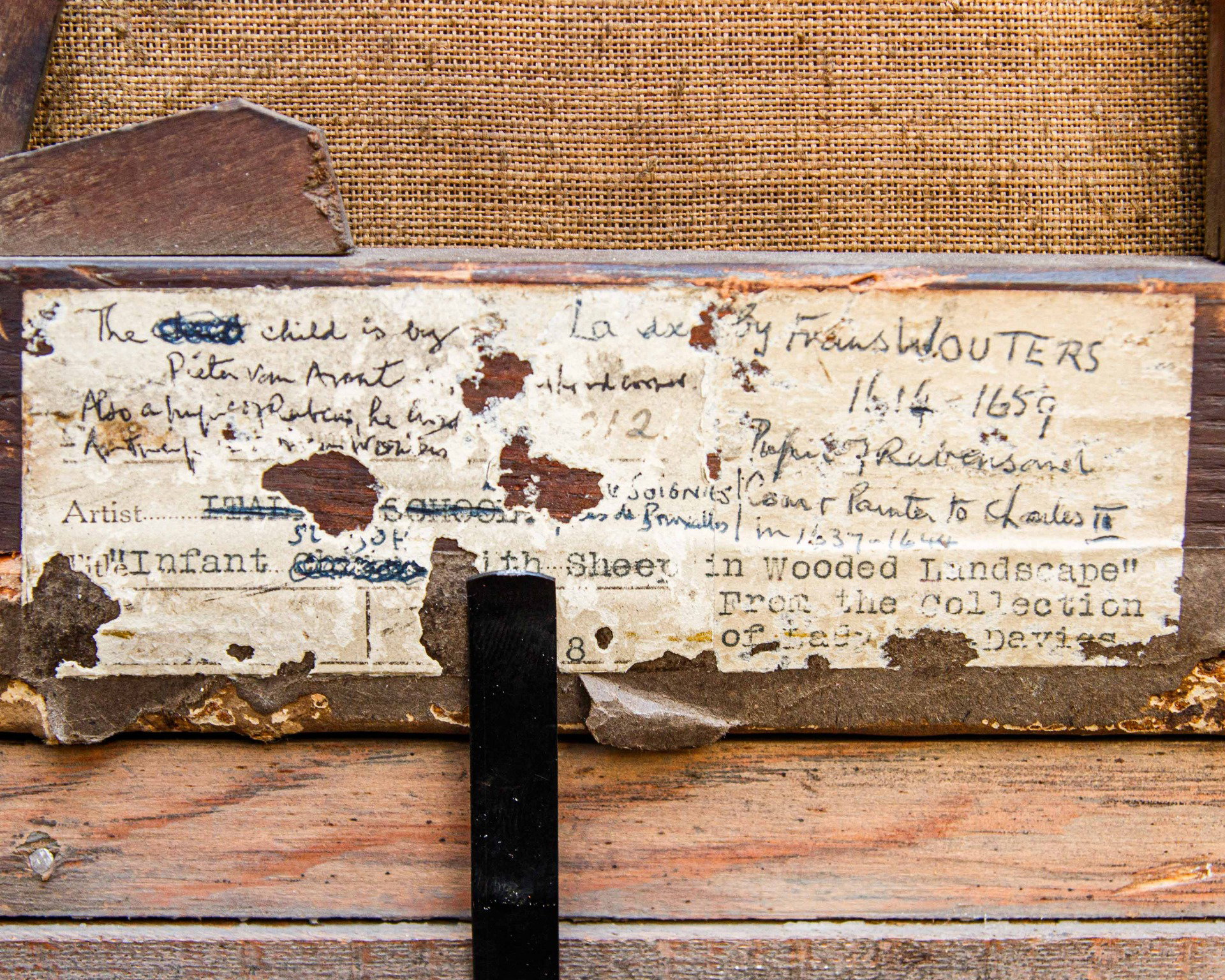
Signed lower right: P. Van Avont
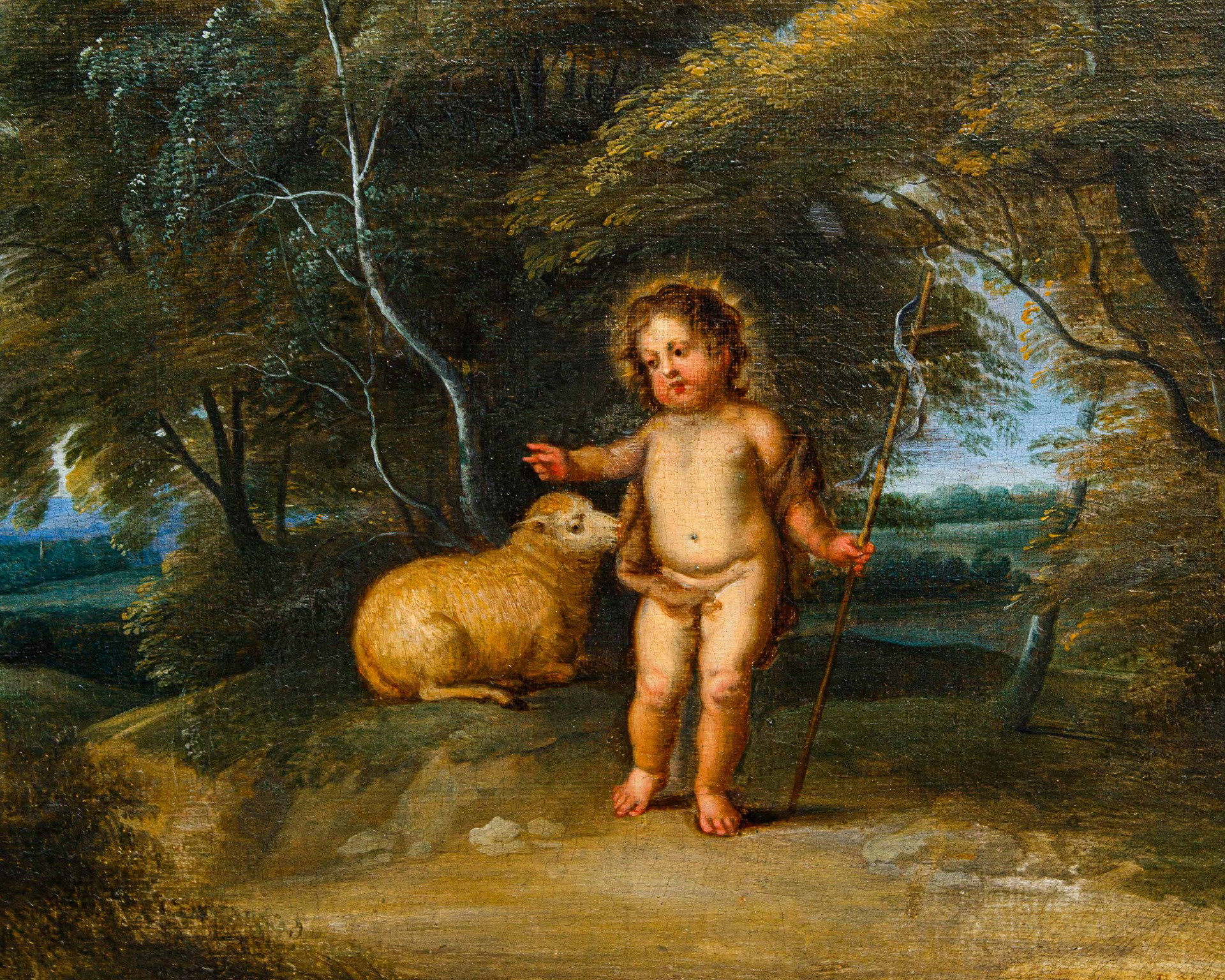
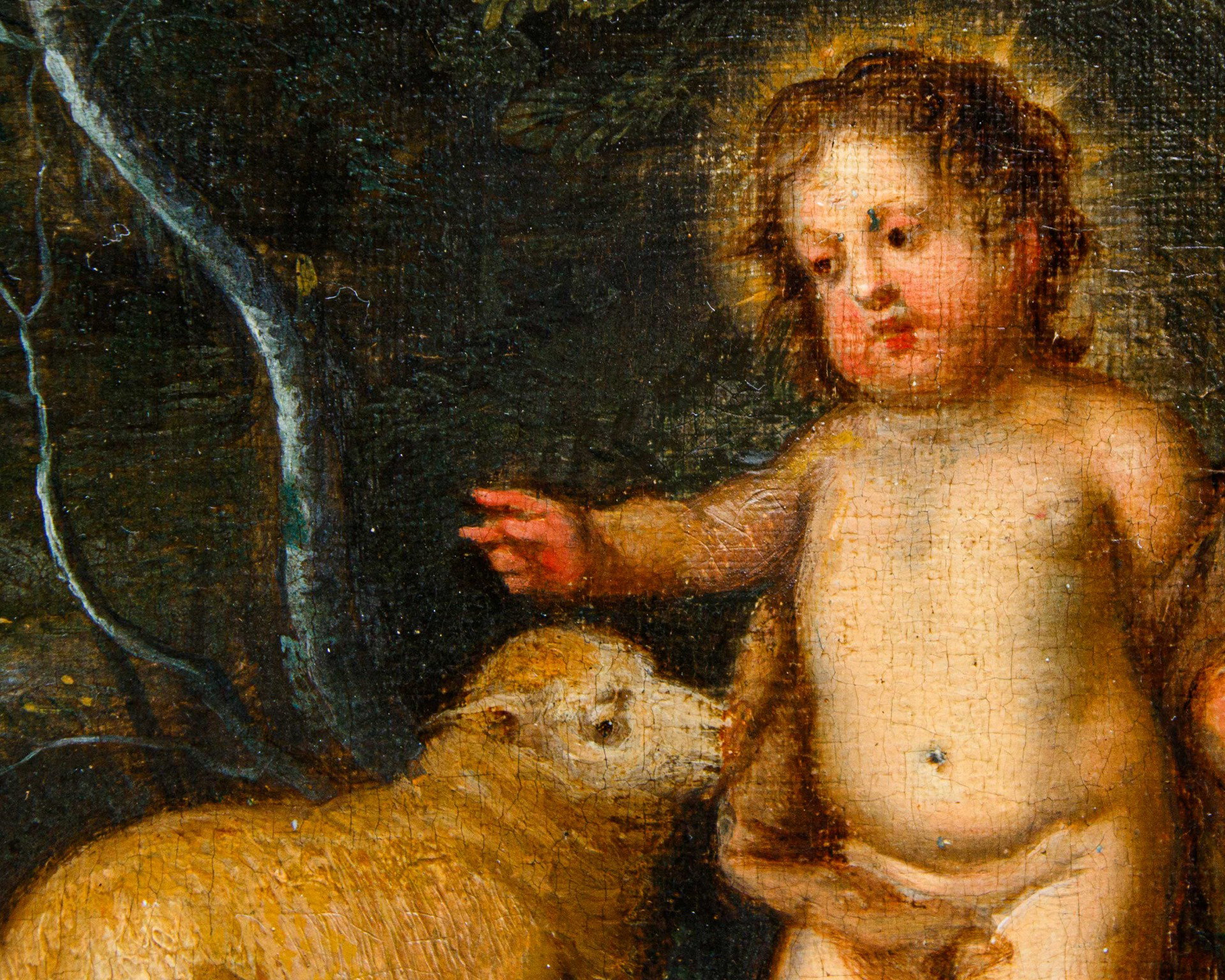
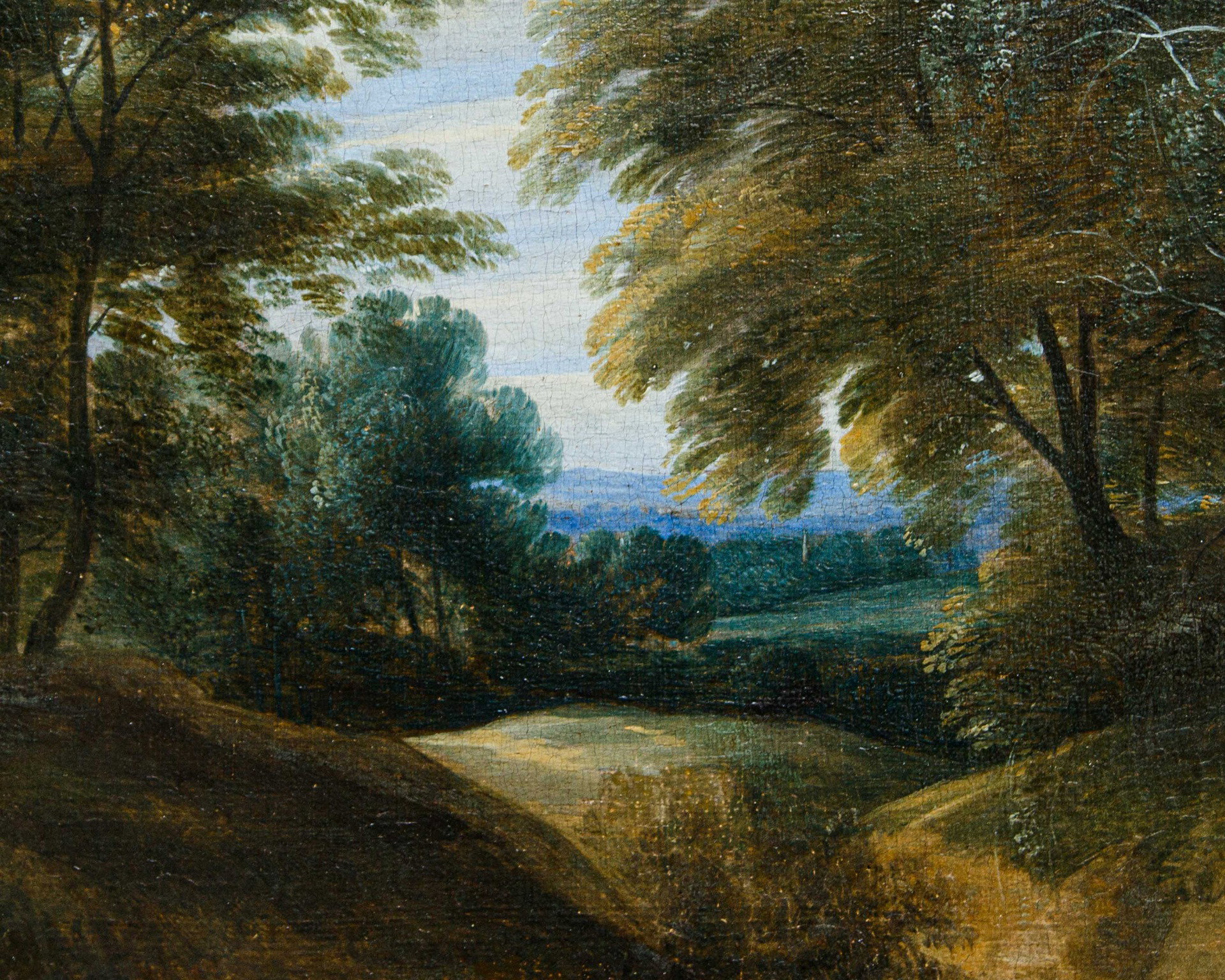
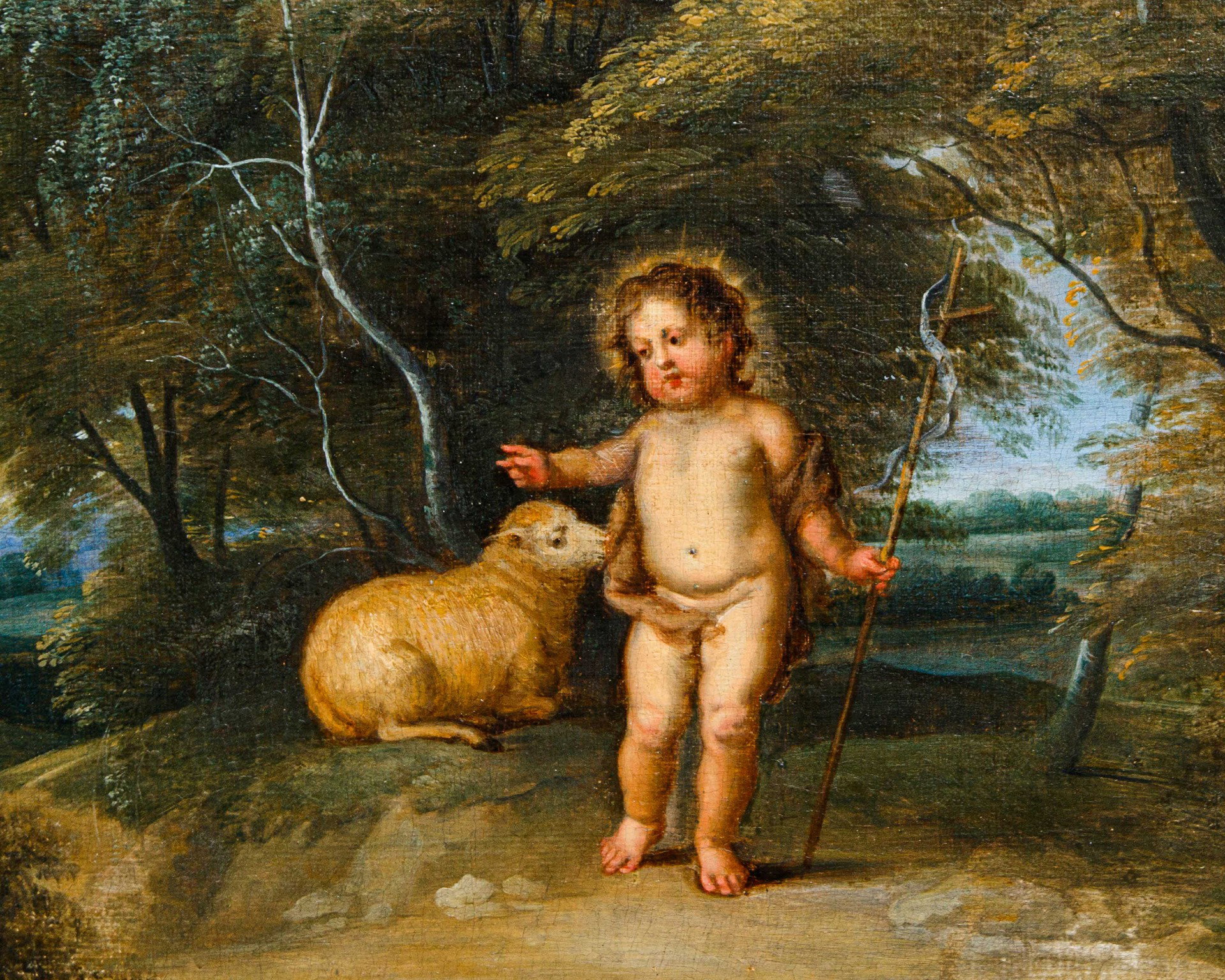
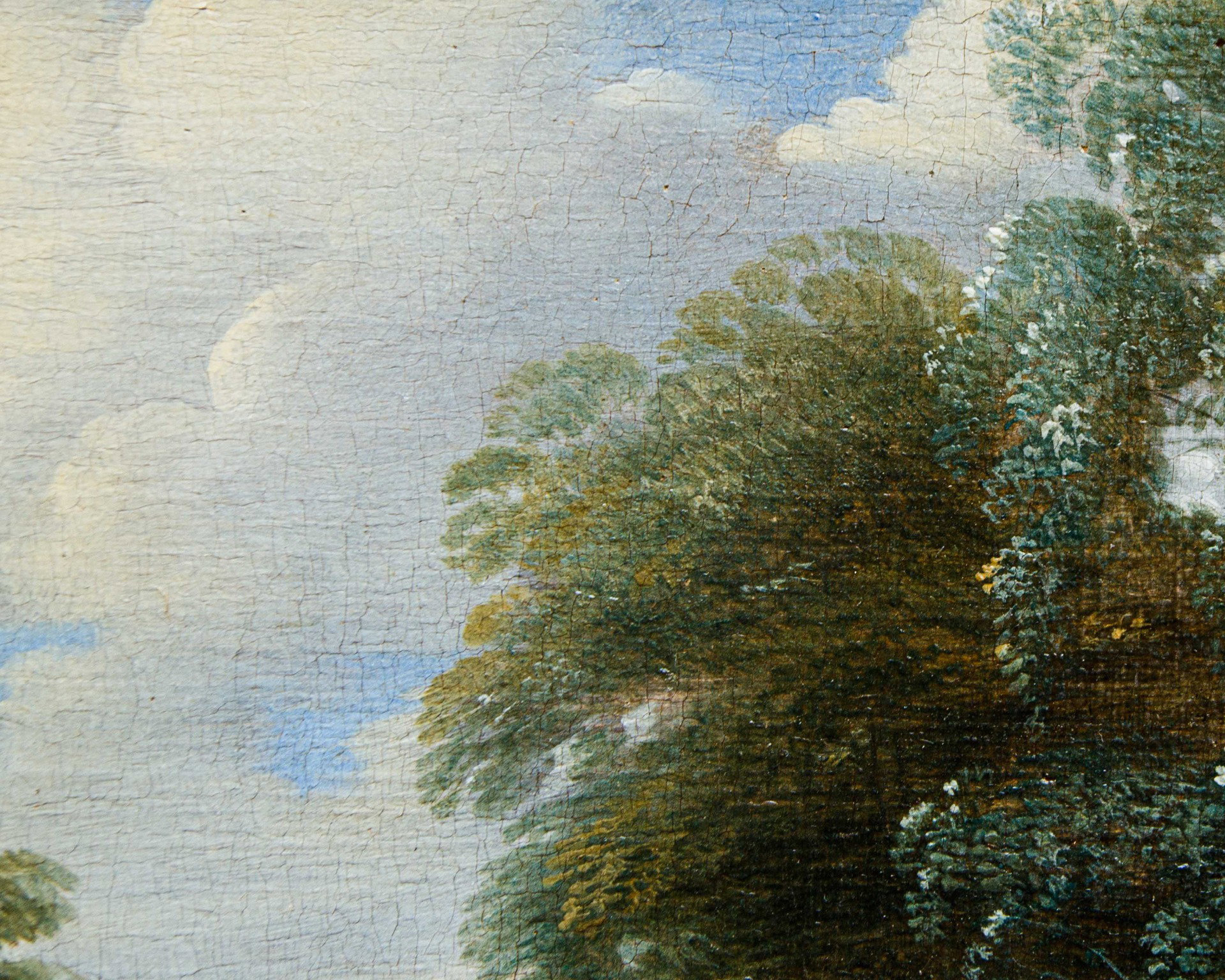
In a luminous wooded landscape with green and golden tones, a plump, naked child stands in the center of the composition, his right hand outstretched in a gesture of blessing towards a lamb lying at his feet. The child holds a long pointed staff with his left hand, an iconographic attribute that immediately identifies him as a young Saint John the Baptist, the precursor of Christ, portrayed according to an iconographic tradition that was consolidated in the Italian Renaissance and later widely disseminated in 17th-century Flanders. The lamb, the symbol par excellence of Christological sacrifice, rests on the ground with placid docility, its light fleece rendered with soft touches and a warm light that models its body. The arboreal background, rich with foliage moved by diffused light, opens to the left onto a distant panorama where descending hills and a sky streaked with luminous clouds can be glimpsed, following a typically Flemish landscape structure. The work is signed by Pieter van Avont, a Flemish painter born in Mechelen to Hans van Avont, a sculptor, and Anna le Febure. His early training was likely under his father, and in 1620 he was admitted as a master to the Mechelen guild, later moving to Antwerp, where around 1622-1623 he obtained master status in the prestigious Guild of Saint Luke, becoming a citizen of that city in 1631. His career developed within the fertile artistic environment of 17th-century Antwerp, where collaboration between specialized painters was a common and fundamental practice. Van Avont collaborated with many of the city's most important painters, including Jan Brueghel the Elder and Younger, David Vinckboons, Lucas van Uden, and Jacques d'Arthois, for whom he provided the human figures inserted into the landscapes painted by his colleagues. Van Avont is primarily known for his religious and mythological scenes and for the so-called cabinet paintings, small and medium-format compositions intended for private devotion and collection. A recurring motif in his work is the presence of groups of nude children and putti, who in numerous versions of the Holy Family appear as the Christ Child, Saint John the Baptist, or angels. The style with which he models these figures is characterized by a soft volumetric rendering achieved through the use of sfumato and warm colors. The painting in question fits perfectly within this catalog and finds precise parallels in numerous works by the painter. In the Bacchanal of Children and the Allegory of Autumn, both in private collections, the wooded landscape that serves as a background is entirely comparable to the one described here: the same dense and leafy arboreal backdrops, the same alternation of shadows and luminous glares among the branches, the same perspectival opening towards a distant horizon. And above all, in these works, the children and putti reappear with anatomies fully corresponding to those of the young Saint John in the painting in question: round thighs, prominent belly, soft and warm skin tones. Similar considerations apply to the Landscape with Dancing Putti in the Royal Collection in London, where the same infant figures come to life in a similar landscape context, confirming how these figurative types were a true stylistic hallmark of the painter, re-proposed with slight variations throughout his career. Another precise comparison is offered by the Rest during the Flight into Egypt with the Young Saint John and Angels in a private collection, in which the figure of the Precursor reappears in the foreground, here depicted in profile rather than frontally as in our work, but with identical body construction. In the Allegory of Autumn and the Allegory of Spring, both housed at the Staatliche Kunsthalle in Karlsruhe, the same children are found, while in the Holy Family with Saint John the Baptist and Saint Elizabeth at the Musée des Beaux-Arts in Besançon, the figure of the Baptist appears in a more complex devotional context, always within a landscape of similar scope. Finally, the lamb lying at the saint's feet in the painting under consideration finds a precise parallel in the example depicted in the Rest during the Flight into Egypt with the Young Saint John and Angels at the Walters Museum in Baltimore, where the rendering of the animal's fleece and posture are almost identical, confirming a consolidated practice of reusing and varying figurative solutions already successfully tested.