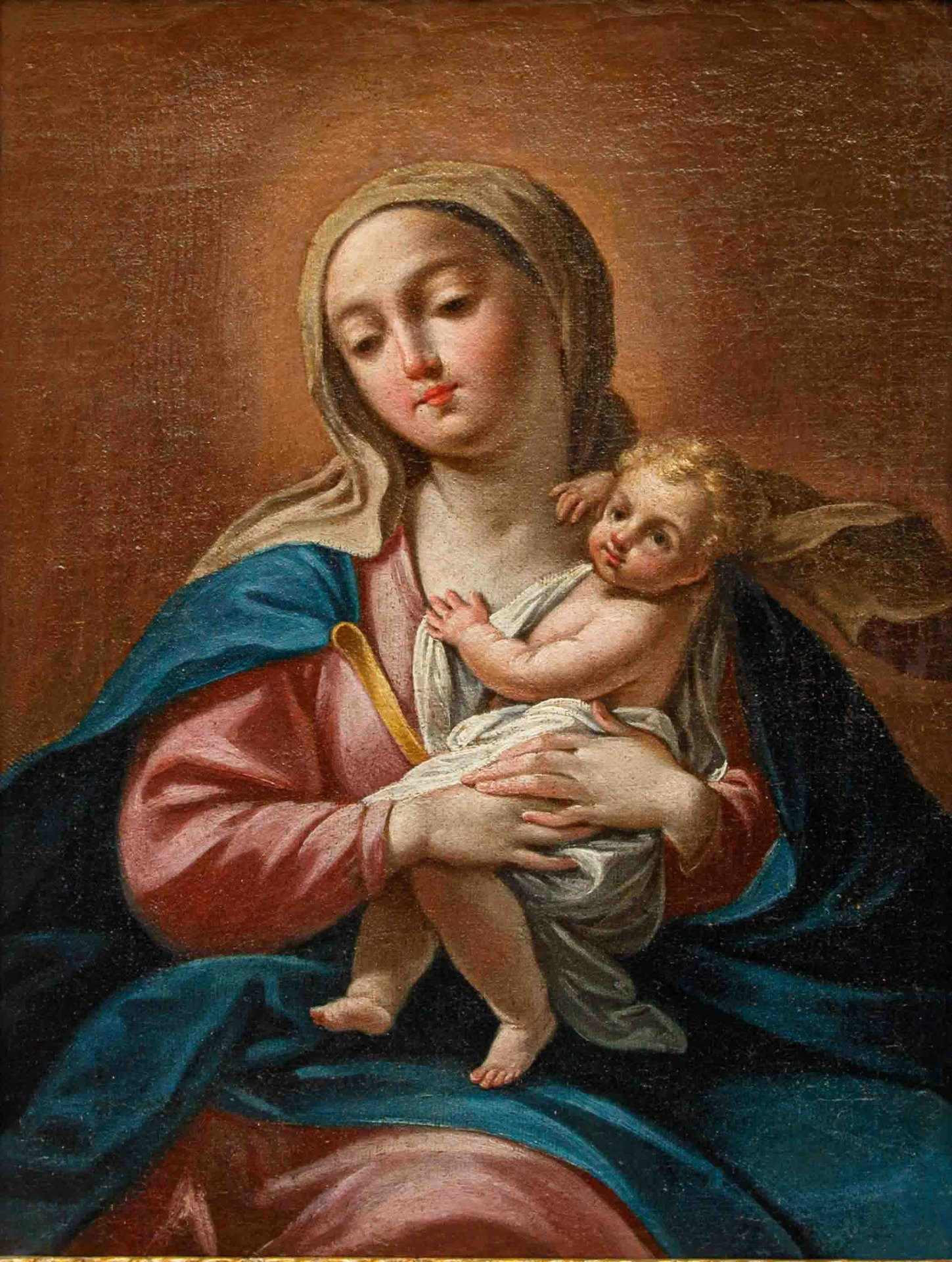
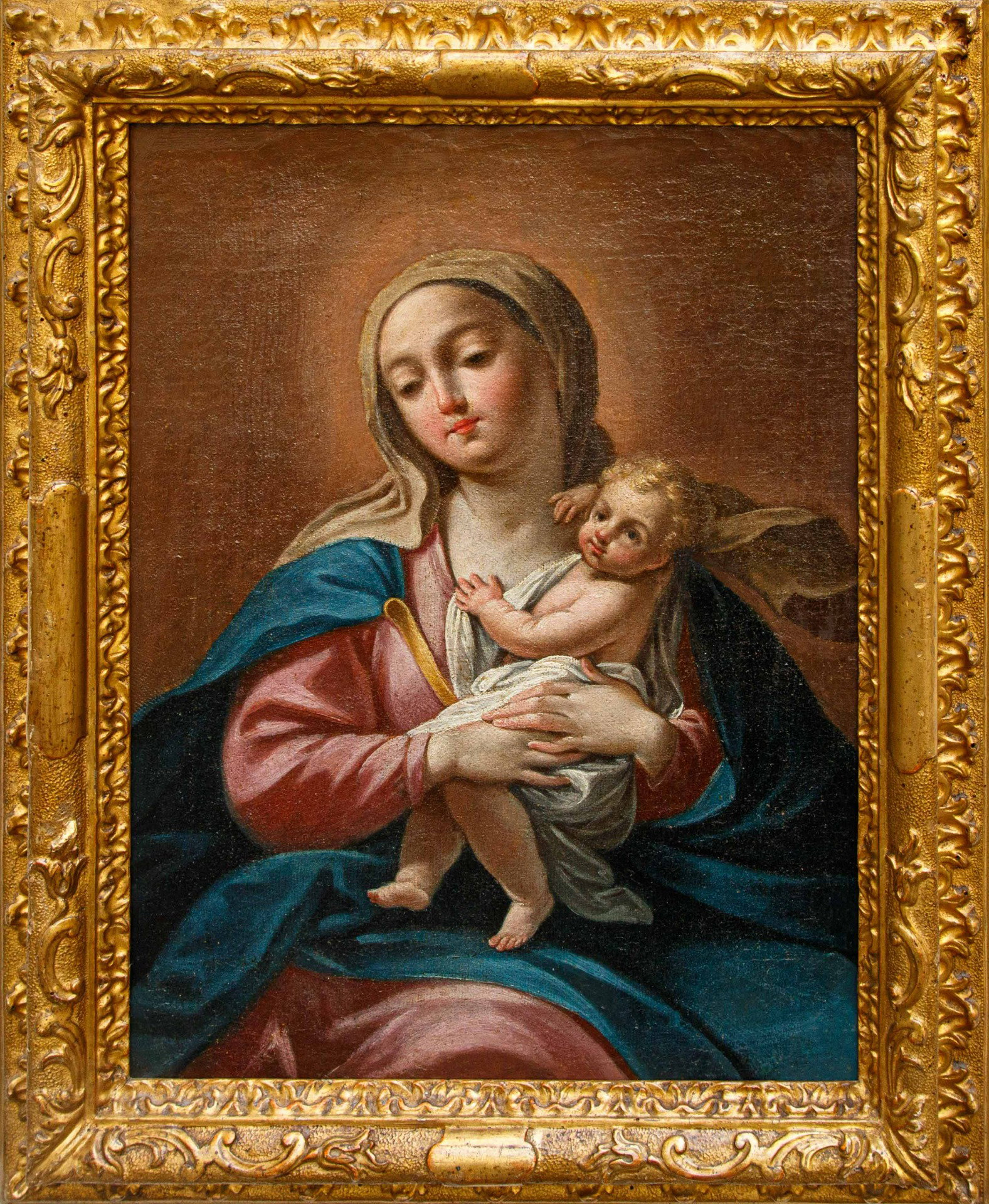
Emilian School, 18th Century, Madonna and Child
Description:
Emilian School, 18th Century
Madonna and Child
Oil on canvas, 40 x 31 cm
Frame, 54 x 44 cm
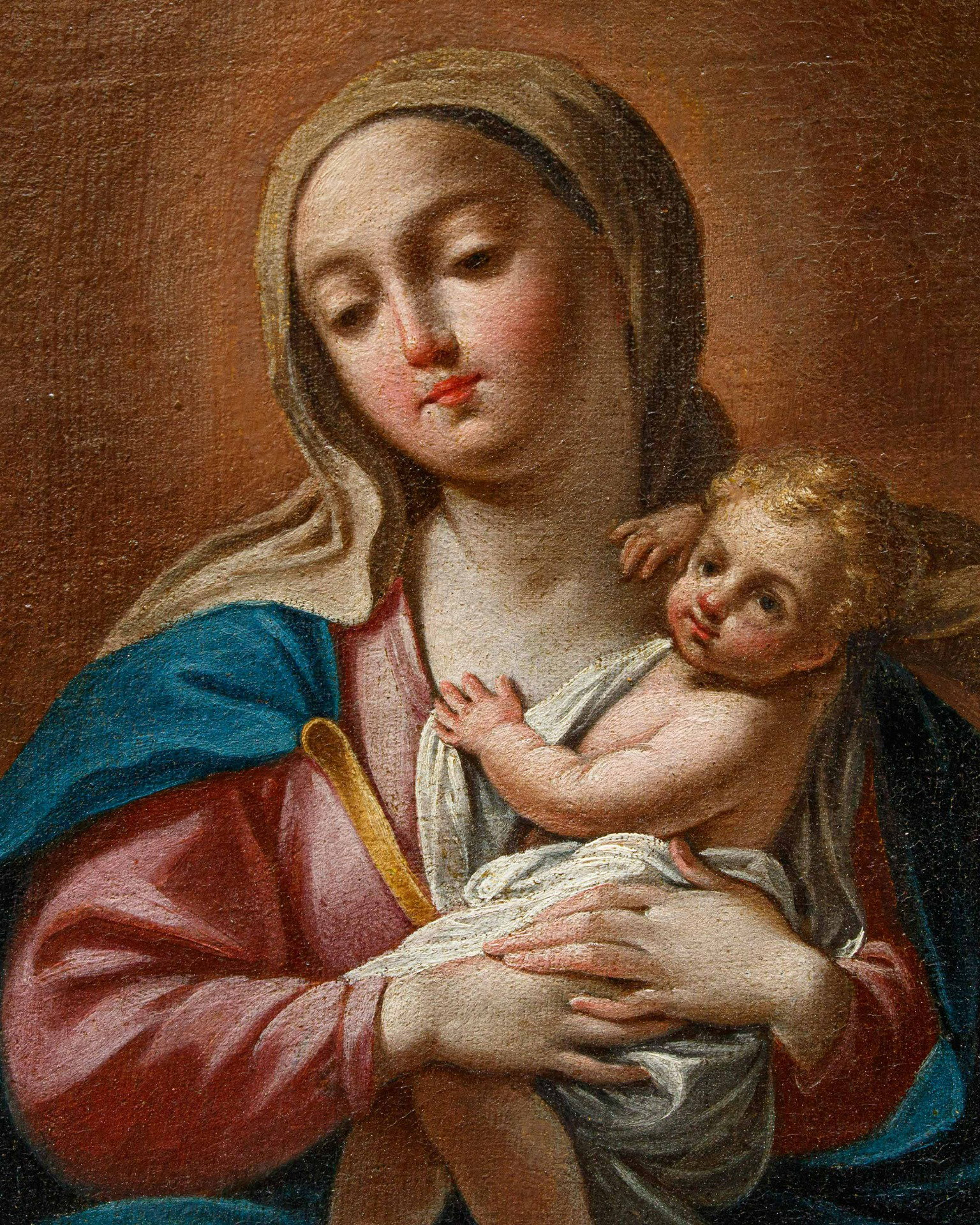
The painting under examination depicts a refined and intimate Madonna and Child, presented in a half-figure format and conceived for private or domestic devotion. The work fits with absolute coherence and formal rigor into the production of the Emilian school—specifically Bolognese—of the early eighteenth century, a period when the Clementine academic legacy evolved towards instances of grace and measured sentimentalism with an Arcadian flavor.
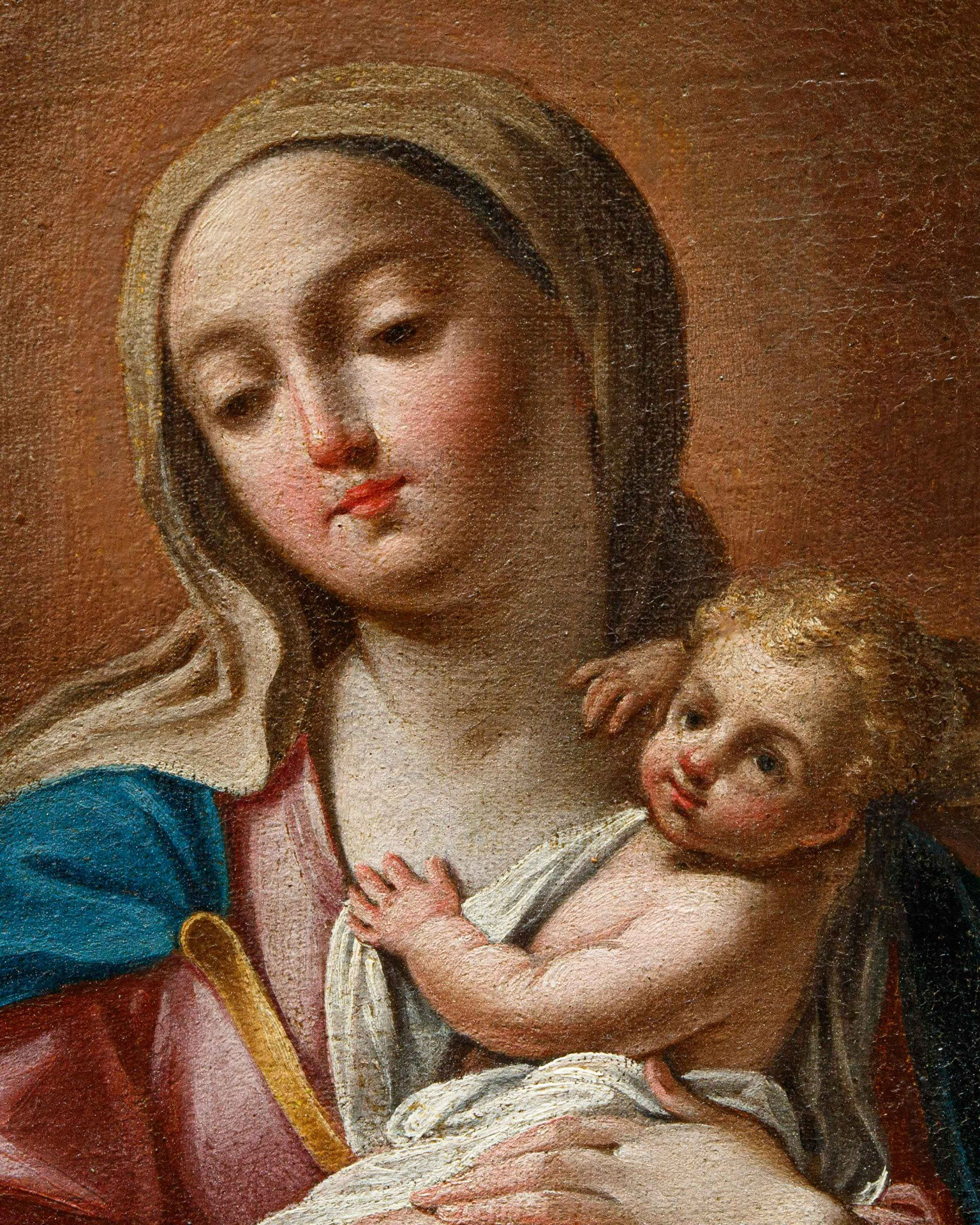
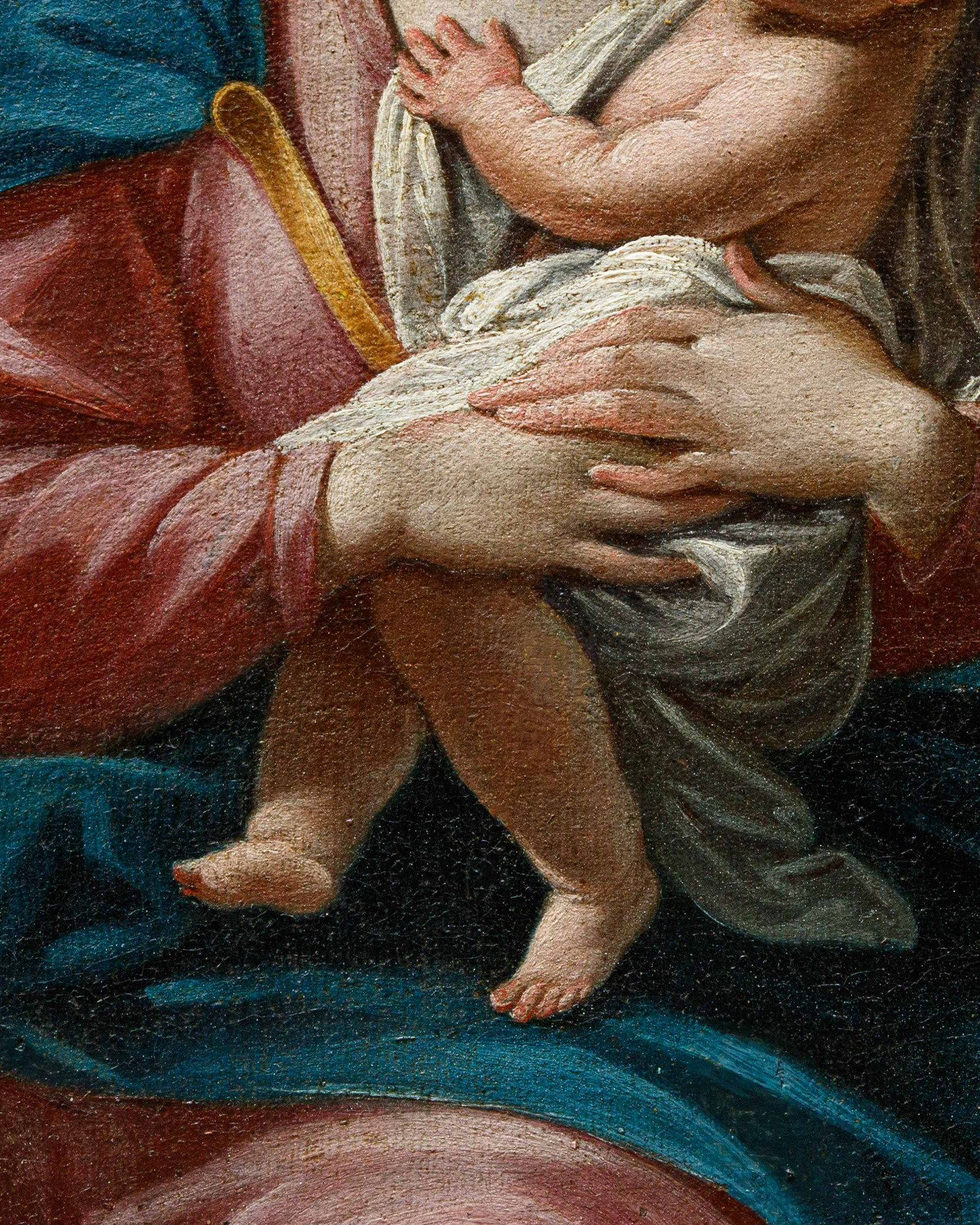
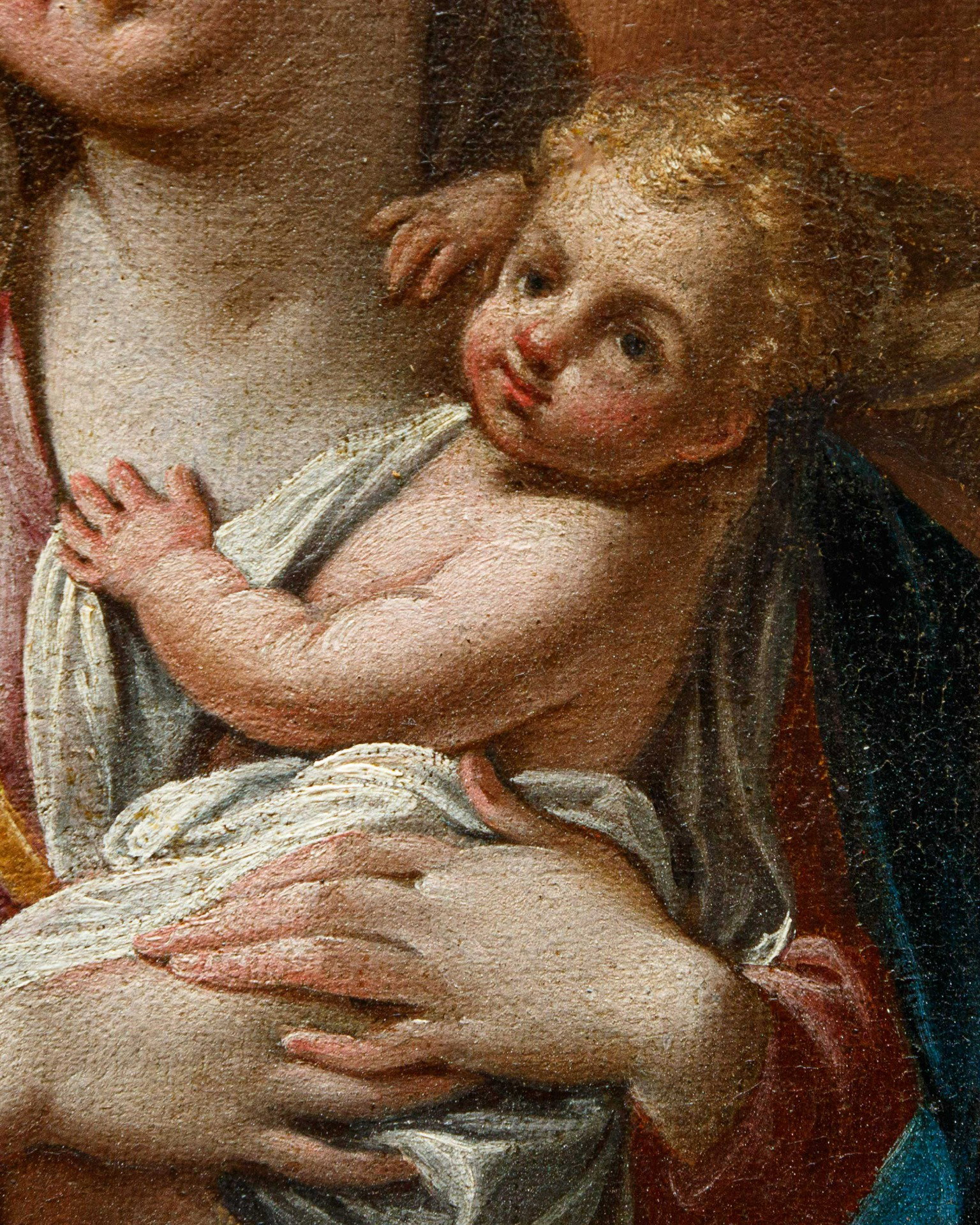
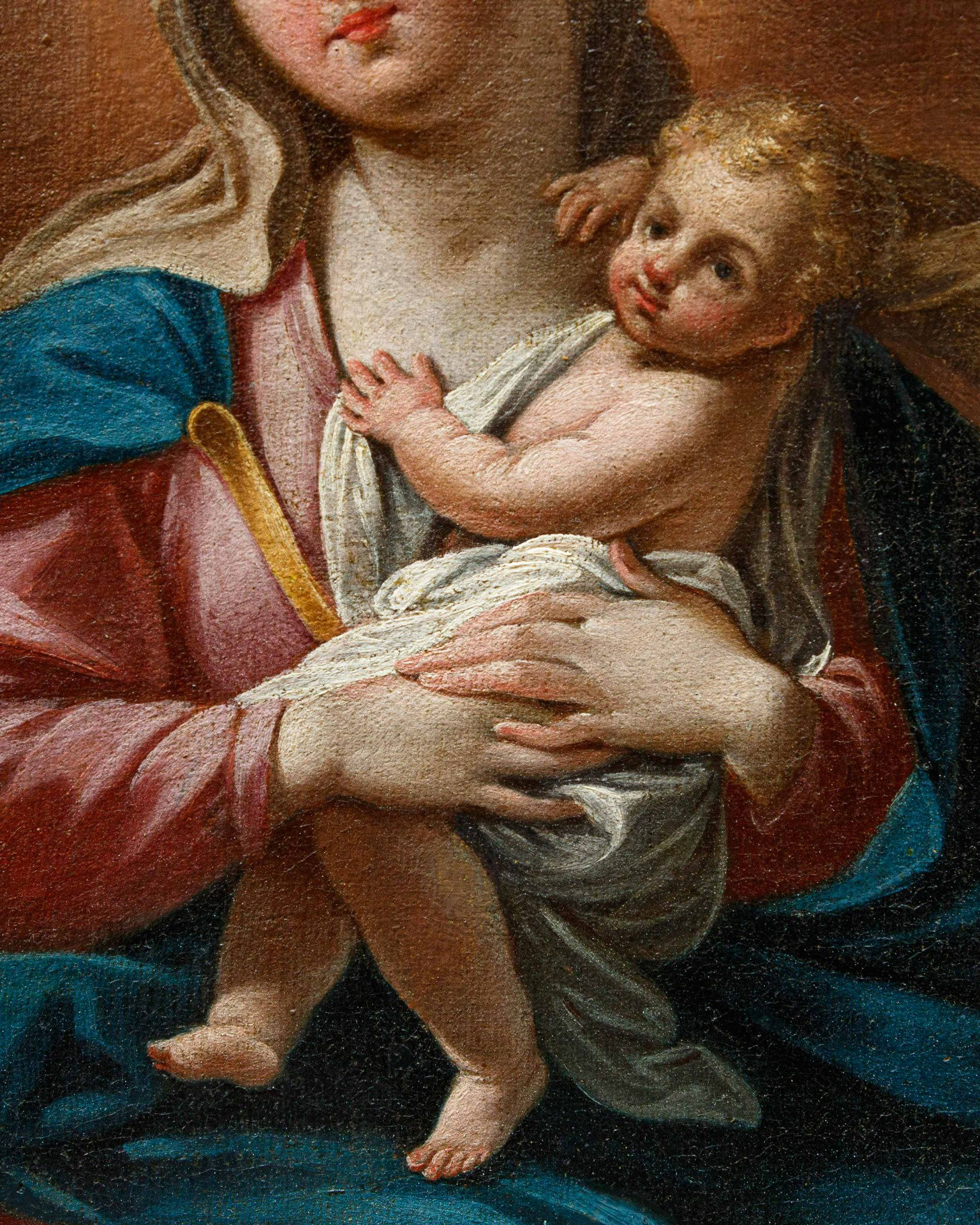
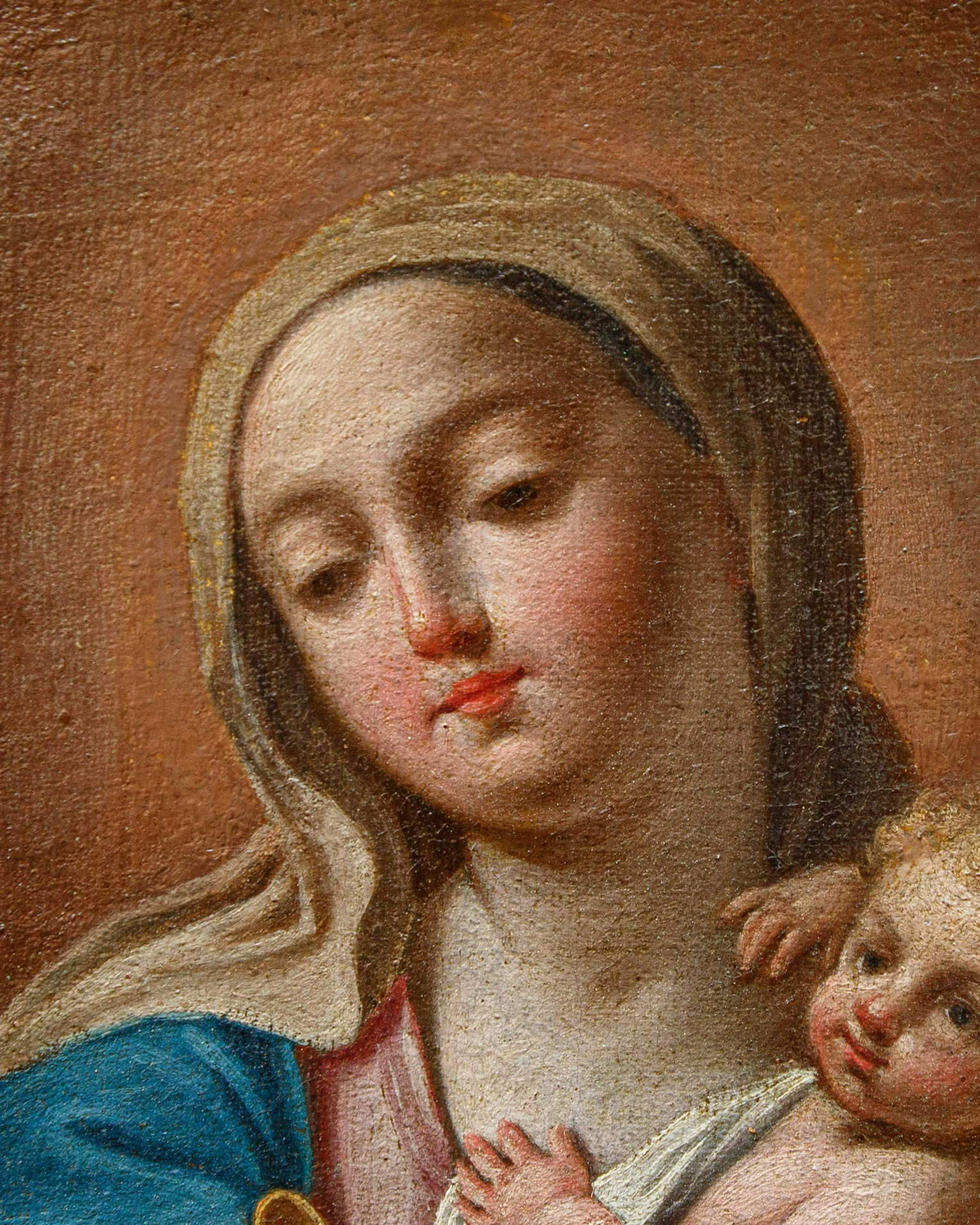
The compositional structure is based on a model of exceptional formal balance, aimed at enhancing the tenderness of affections and the composure of the figures. The gestural and postural vocabulary can be traced in the bent head of the Virgin, the foreshortening of the Child, and, above all, in the eloquent detail of Jesus's left arm, which reaches back to spontaneously grasp the edge of his mother's veil near her shoulder.
The painterly execution and chromatic sensibility attest to an exquisitely Emilian figurative culture. The brushwork is compact, soft, and smooth, resolved through chiaroscuro passages of extreme physiognomic delicacy that blend the flesh tones without resorting to harsh plastic contrasts. The immaculate oval of the Virgin, the light shadow veiling her lowered eyelids, and the soft, rounded anatomical treatment of the Child directly evoke the Bolognese classicist tradition, drawing on the early-century models of Marcantonio Franceschini (1648–1729) and the circle of Carlo Cignani, masters capable of translating the Rhenish legacy into forms of purist and enamelled taste.
The chromatic harmony, based on the traditional contrast between the deep blue of the mantle (whose drapery seeks monumental but composed amplitude) and the muted tones of the antique rose robe and ochre veil, contributes to creating an atmosphere of intimate recollection, devoid of the theatrical bursts typical of the Baroque or the pathetic exaggerations of other contemporary schools. The work thus qualifies as a significant testament to that elegant classicist taste which chose the path of measured grace and ideal design as the supreme formal canon of devotional painting in the mid-eighteenth century.