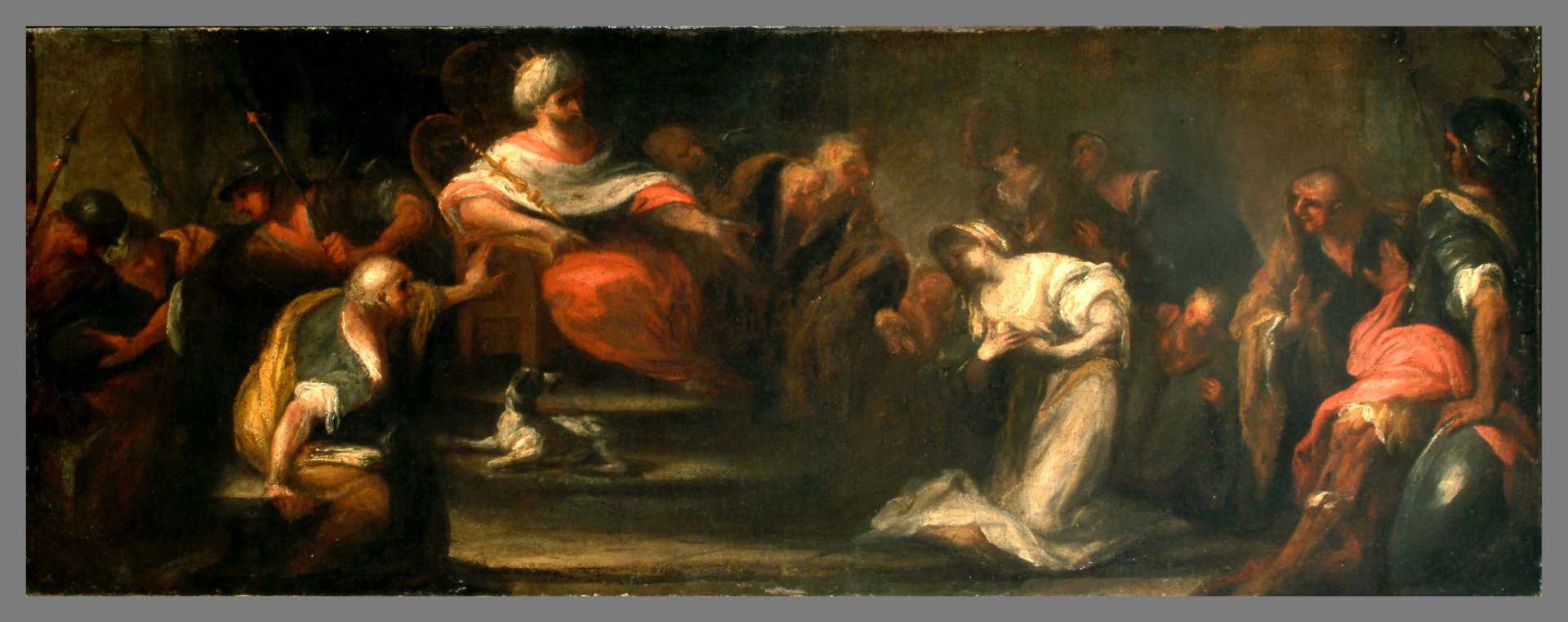
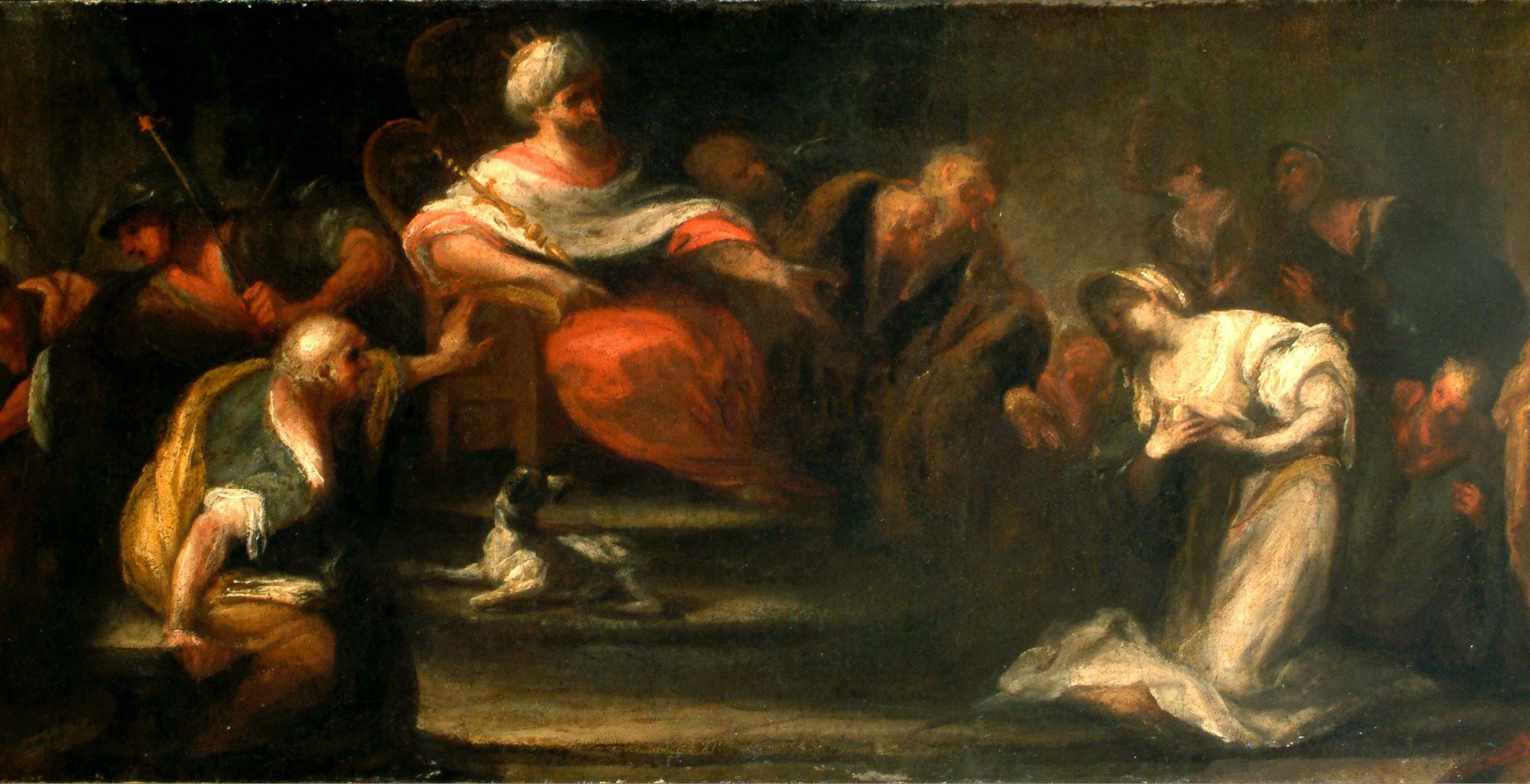
Francesco Maria Raineri, called "Lo Schivenoglia" (Schivenoglia, Mantua 1676-1758) - Esther and Ahasuerus
Description:
Esther and Ahasuerus
oil on canvas
Dimensions: 52x137 cm
Artwork exhibited during the exhibition dedicated to the namesake painter:
"Francesco Maria Raineri - Lo Schivenoglia 1676-1758, works from private collections"
and published in the catalogue, page 13.
Esther is the daughter of Abicàil of the tribe of Benjamin, one of the two tribes that constituted the Kingdom of Judah before its destruction by the Babylonians and the deportation, in 597, of the kingdom's elite to the provinces of the Persian empire.
Upon the death of her parents, she is adopted by her cousin Mordecai, who holds an administrative position in the royal palace in Susa. Having heard that King Ahasuerus is seeking a new bride, Mordecai has his cousin Esther participate in the selection process. Esther is chosen and becomes the wife of Ahasuerus.
When the prime minister Haman decides to exterminate all the Jews in the kingdom, Mordecai, who has always watched over Esther, urges her to present herself to the king to intercede on behalf of her countrymen. Although it was forbidden, under penalty of death, to approach the king without being summoned, after a three-day fast, Esther appears before the king to ask him the favor of accepting his invitation to dine with Haman.
During the supper, she invites them again, and during the second banquet, she informs the king that she is Jewish and that Haman has decreed the extermination of all the Jews in the kingdom.
She then obtains from the king the right for the Jews to defend themselves on the day they were to be exterminated.
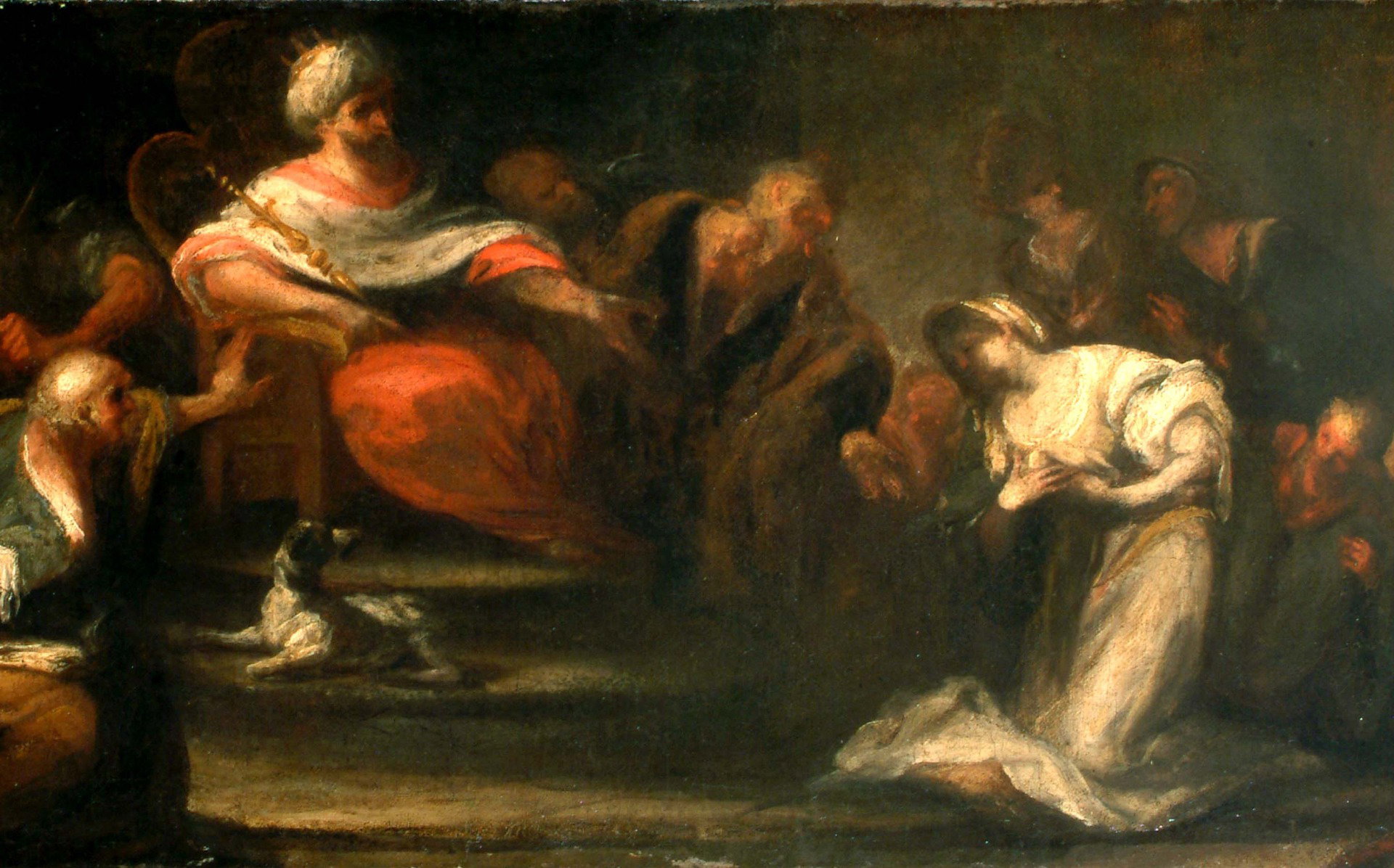
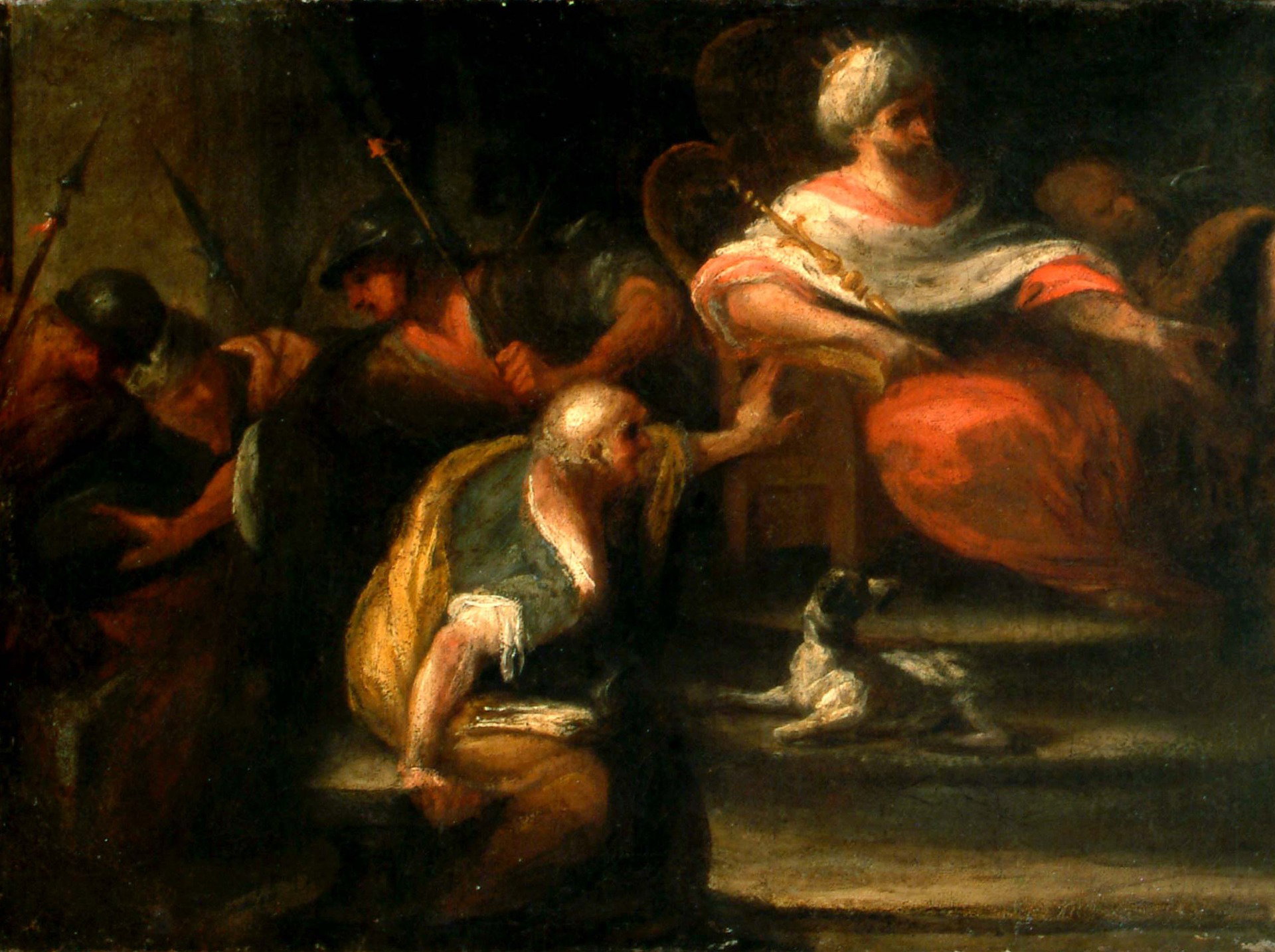
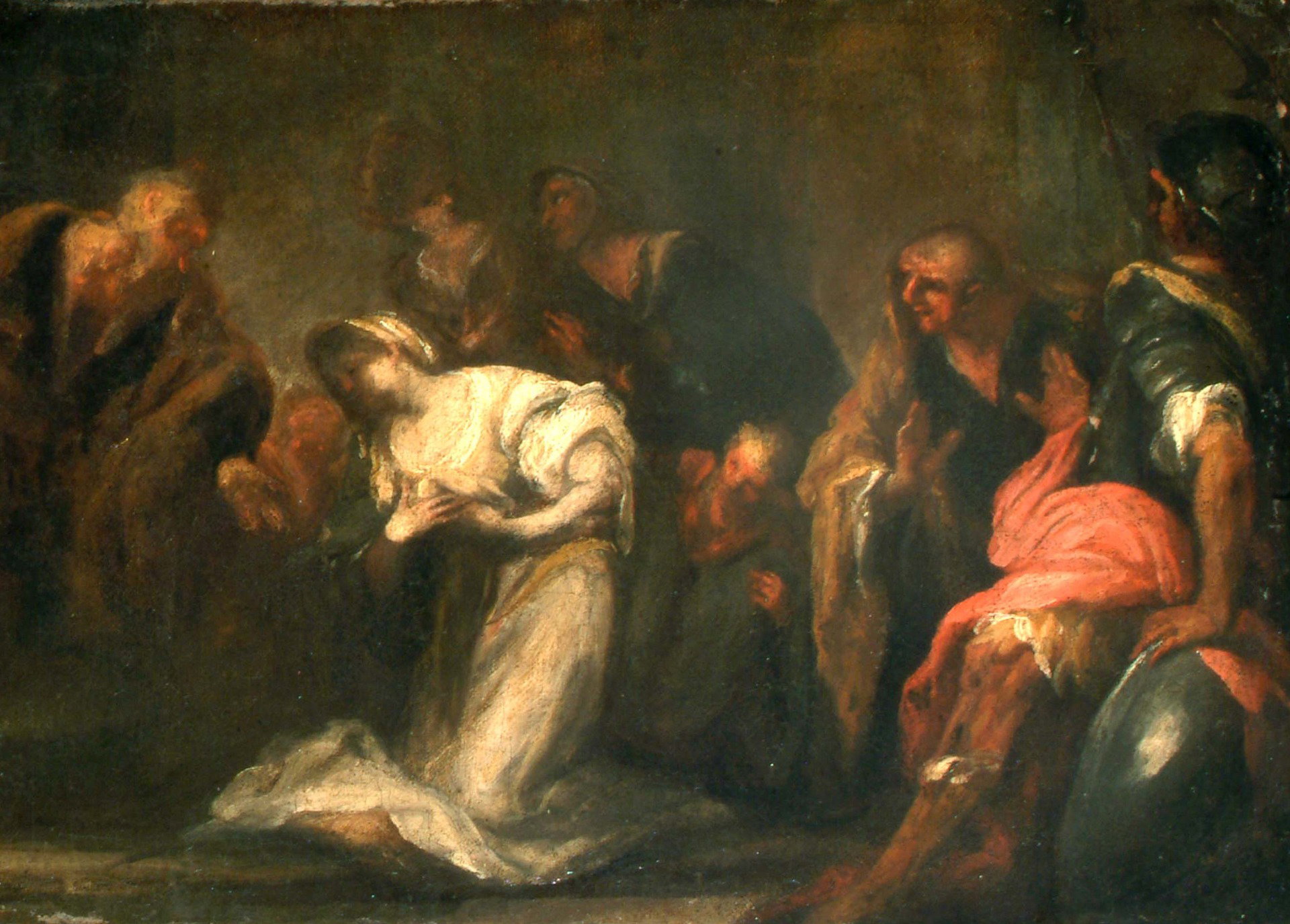
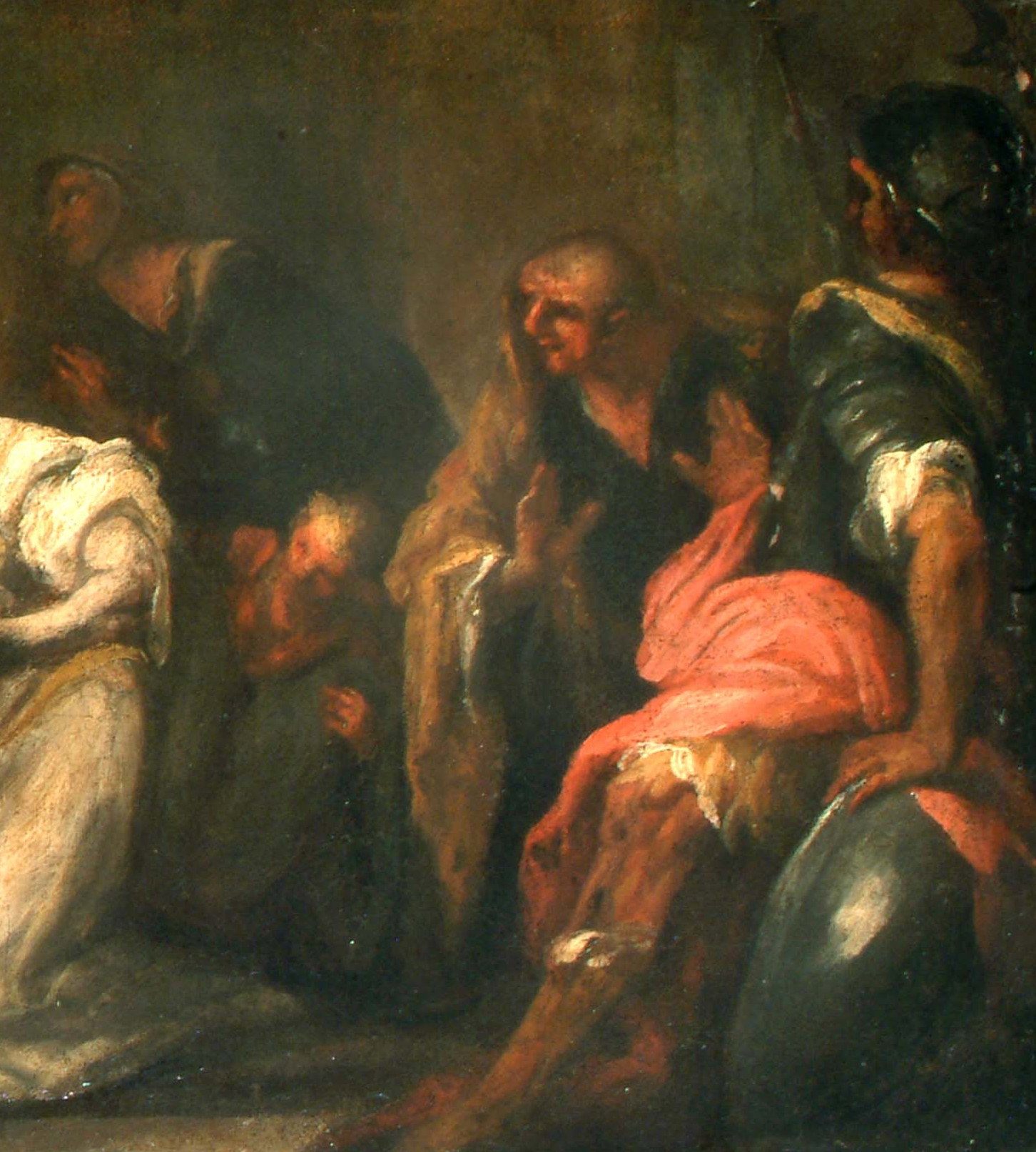
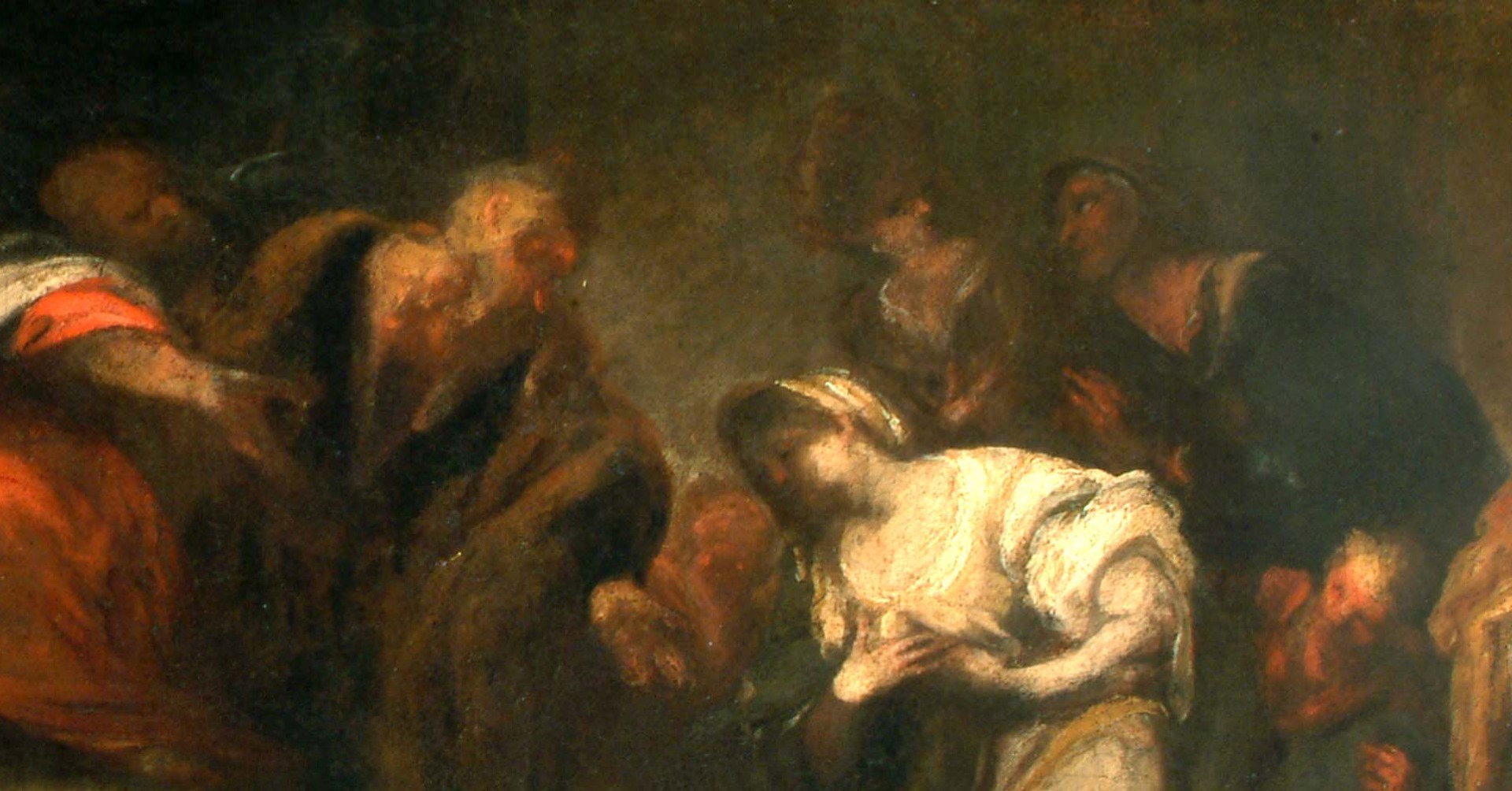
Our painting depicts the moment when Esther addresses King Ahasuerus.
Francesco Maria Raineri
Fifth of seven children, four boys and three girls, born to Laura Tomirotti and Angelo Raineri, both well-to-do, he was orphaned of both parents at a young age (his mother died in 1681 and his father in 1694). For this reason, it is highly probable that Raineri was sent for his education to Mantua, to a religious college or boarding school where, in addition to the usual instruction in reading, writing, and arithmetic, he also developed a taste for art, given that at that time, Mantua still possessed notable masterpieces scattered among the Gonzaga palace, the Te, patrician homes, and churches.
Known as "Lo Schivenoglia," he was a pupil of Giovanni Canti, from whom he learned the technique of rapidly applied paint with quick and decisive brushstrokes. He far surpassed his master and achieved sublime levels thanks to his inventive depth, originality, and pictorial flair, his skill in drawing, and the novelty of his deliberate asymmetry, which led to an innovation in aesthetics and the spatial composition of his canvases.
He collaborated on canvases and frescoes with Bazzani (1690-1769), also a pupil of Canti.
He painted battles, mythological scenes, portraits, sacred figures, religious scenes, and landscapes. He has been described as the "Surrealist of the Mantuan eighteenth century." His work shows an affinity with both Lombard and Emilian painting. He ran a painting school.
He was appointed the first director of the Academy of Fine Arts of Mantua (also called Teresiana) in 1753. The Academy was founded by Giovanni Cadioli (painter) in 1752, with the authorization of Maria Theresa of Austria. To Giovanni Cadioli, a painter and preparer of canvases, and to Antonio Bonoris, a painter, he bequeathed (as per his will) his entire studio.
The object is provided with a certificate of free circulation, issued by the Ministry of Cultural Heritage, which certifies its age and allows the item to be exported.
The artwork, like all our other items, will be sold with certificates of authenticity and lawful origin.
We personally handle and organize the packing and shipping of artworks with worldwide insurance.