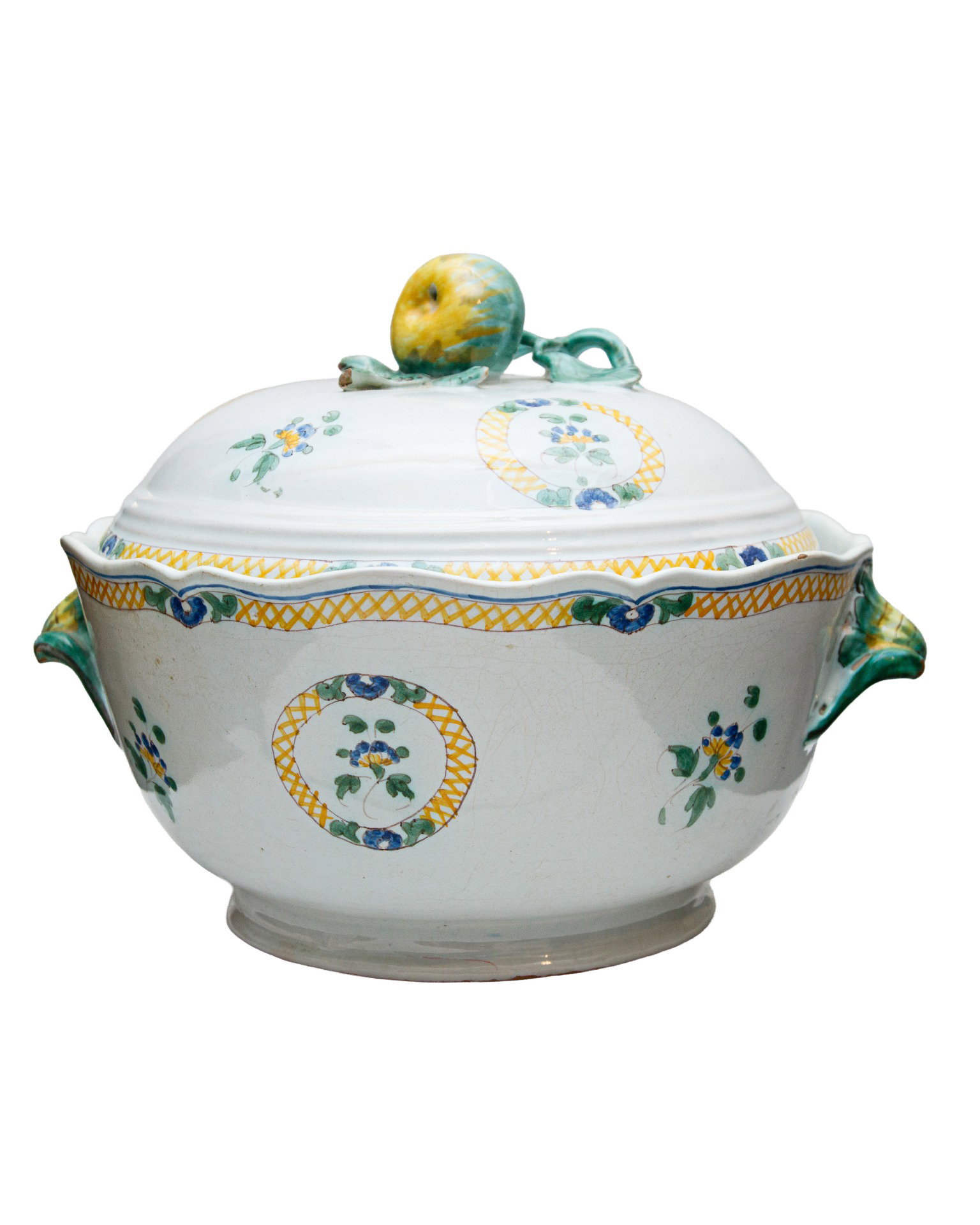
Ceramist from Cerreto Sannita, late 18th century, Soup tureen
Description:
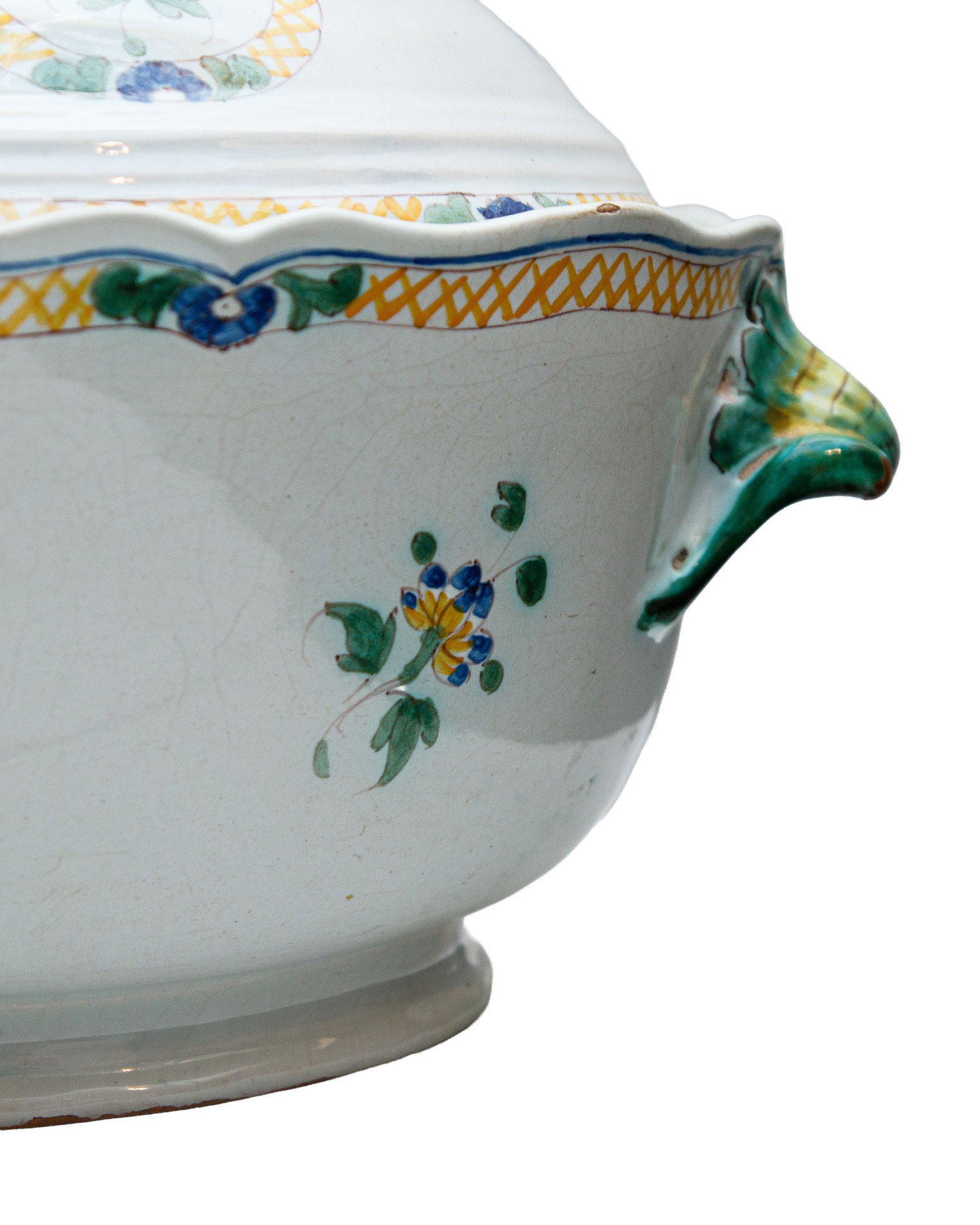
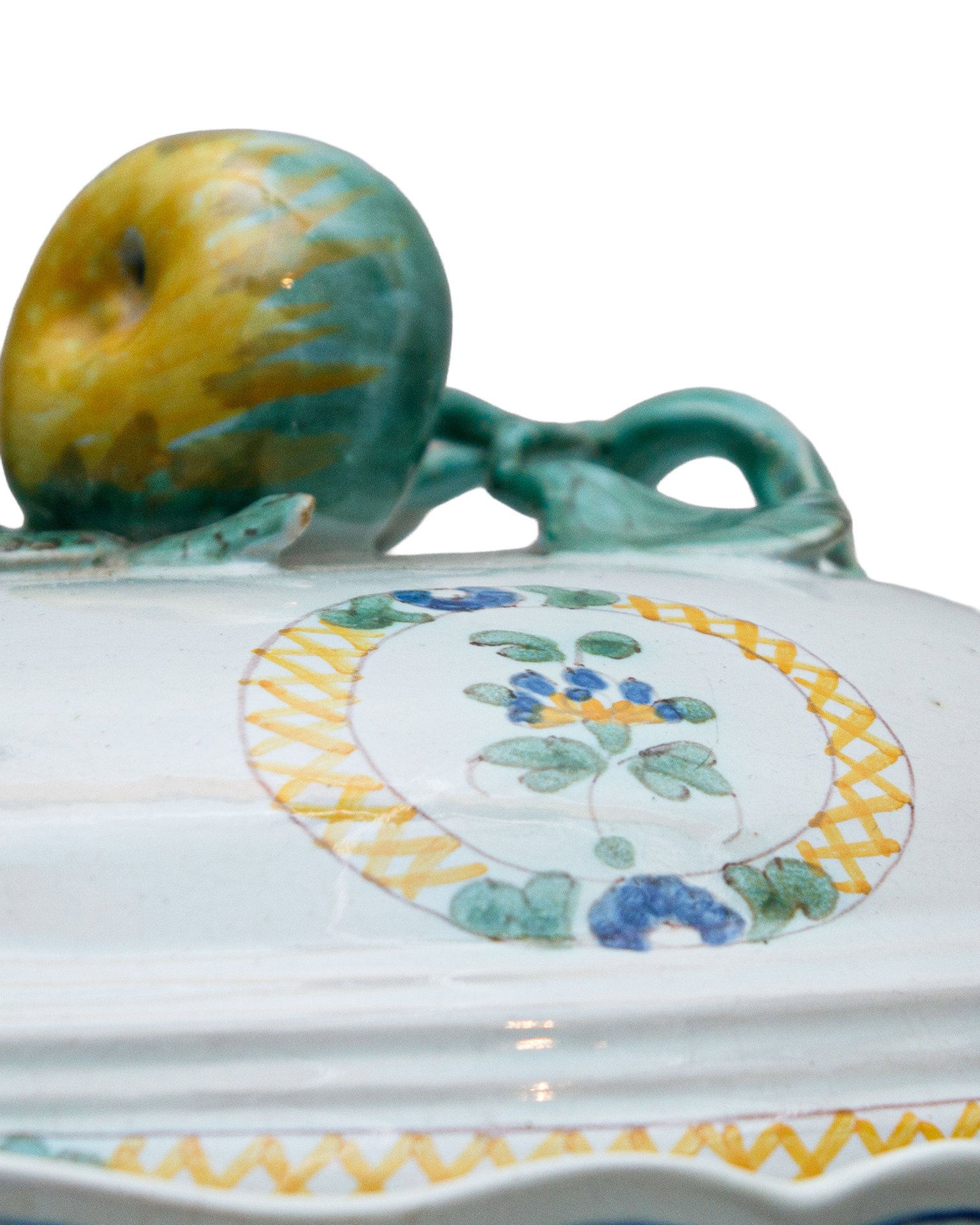
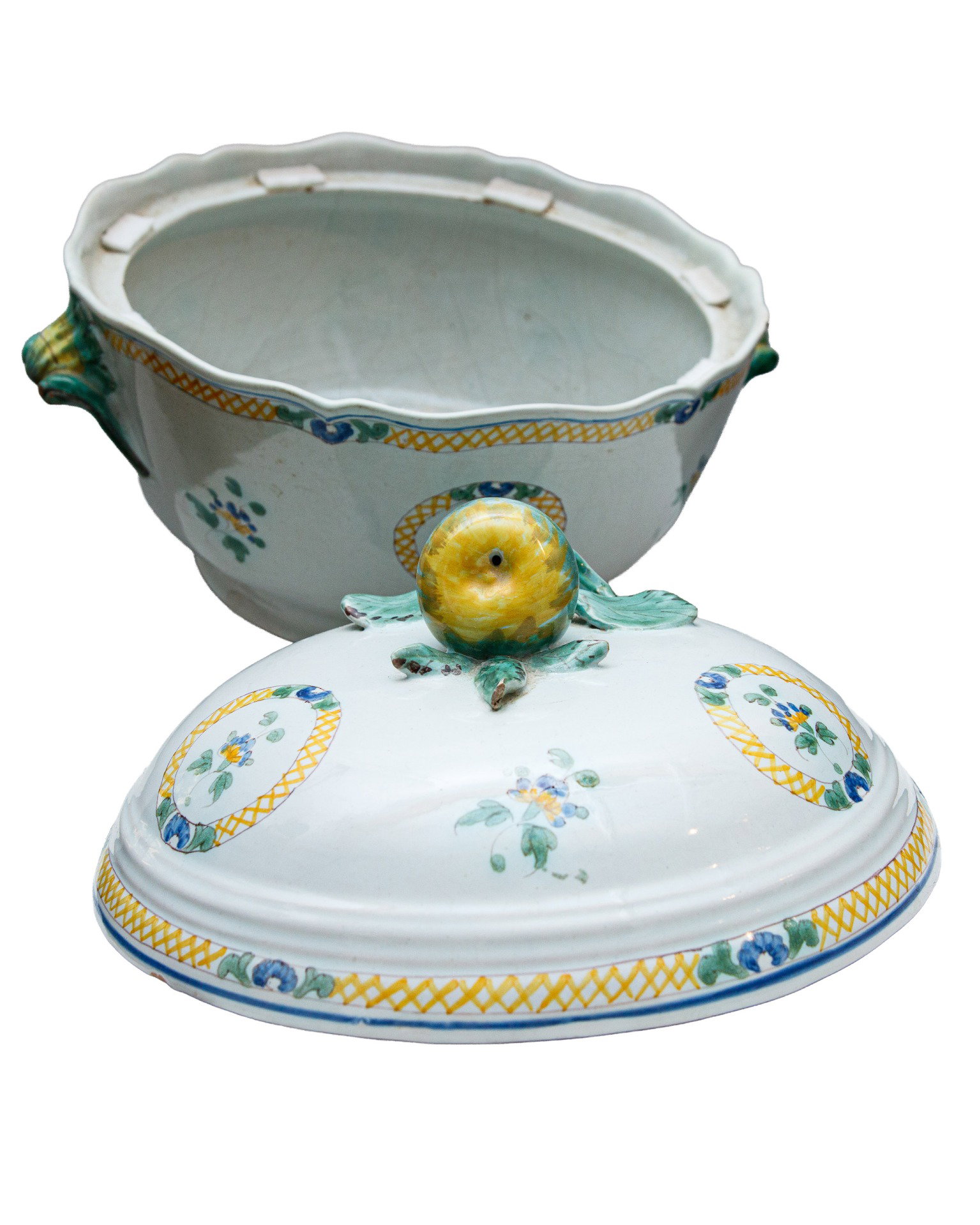
Ceramist from Cerreto Sannita, late 18th century. Soup tureen. Majolica, 21 x 28 x 25 cm. The majolica artifact presented here is an excellent testament to the ceramic tradition of Cerreto Sannita and San Lorenzello, centers of excellence in the Benevento area where clay is transformed into historical and artistic narrative. The object is distinguished by a generous globular body and a domed lid surmounted by a lively fruit-shaped knob with applied relief leaves, an element that directly recalls the plasticity typical of 18th-century production. The decoration, executed with masterful skill on a milky white glaze, alternates delicate polychrome floral motifs enclosed within circular medallions with a characteristic yellow lattice band, which lends the ensemble an elegant and proportionate geometric rhythm. The success of this specific production has roots in a tragic event, namely the earthquake of June 5, 1688, the subsequent reconstruction of which attracted numerous Neapolitan Faenza masters who brought the Baroque and Rococo taste of the capital to the territory. The central figure of this revival was Nicolò Russo, who arrived in 1692, whose workshop became the hub for entire generations of Laurentian and Cerretan ceramists, among whom stand out names like Antonio Giustiniani and Domenico Marchitto, supported by the talent of the decorator Lorenzo Salandra. The ceramics of Cerreto and San Lorenzello, officially recognized as artistic and traditional, blend the wise use of ochre yellow, cobalt blue, and copper green in a perfect balance between function and plastic research. This soup tureen represents not only a decorative element, but embodies a piece of Campanian history and the resilience of a community that has skillfully ennobled local craftsmanship, making it famous throughout the world. The stylistic continuity that links the center of Cerreto to its ancient hamlet of San Lorenzello is reflected in the attention to detail and the brilliance of the glazes, making each piece a precious fragment of a cultural heritage that continues to live through fire and clay.