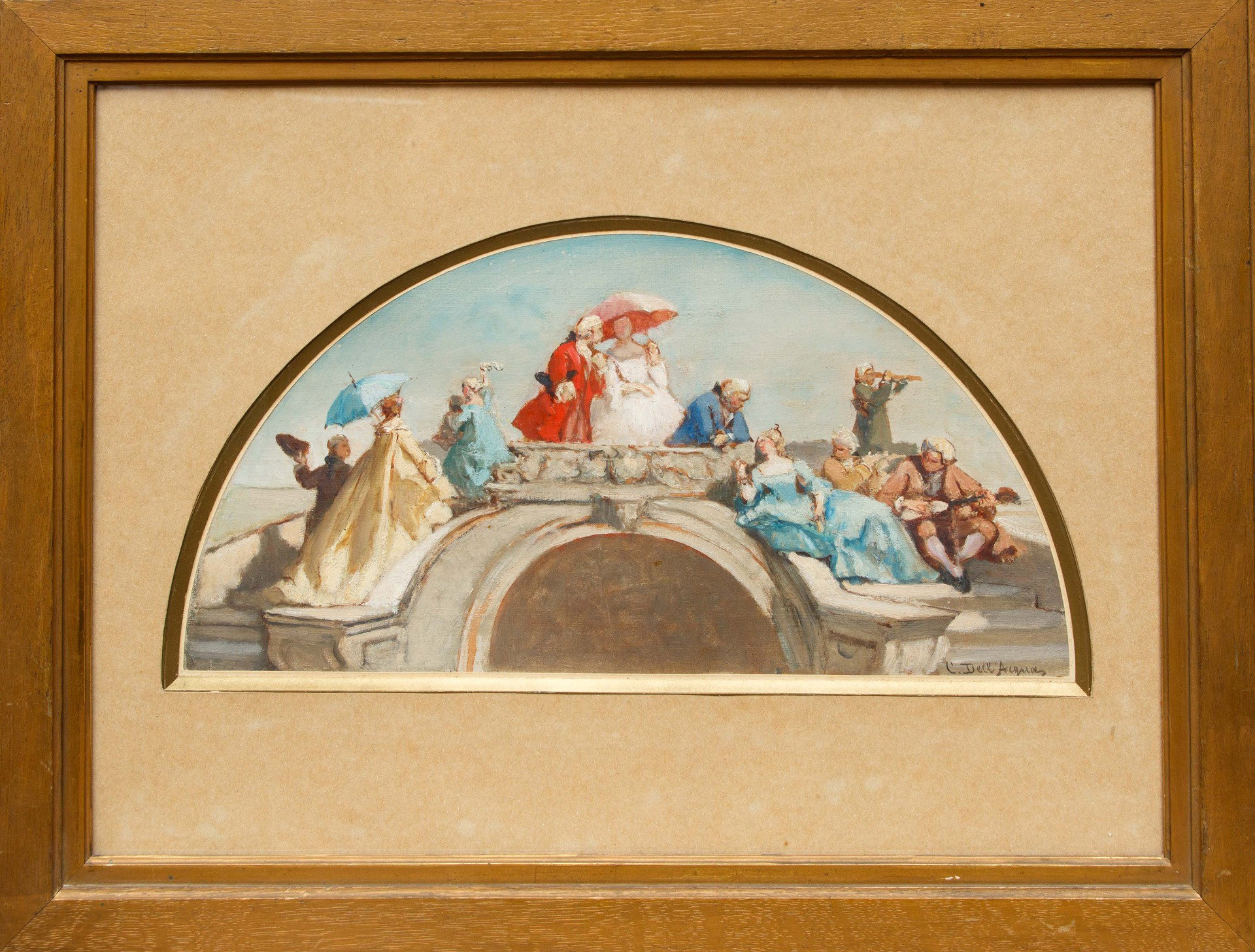
Cesare Dell’Acqua (Pirano d'Istria, July 22, 1821 – Ixelles, February 16, 1905), On the Bridge in Venice
Description:
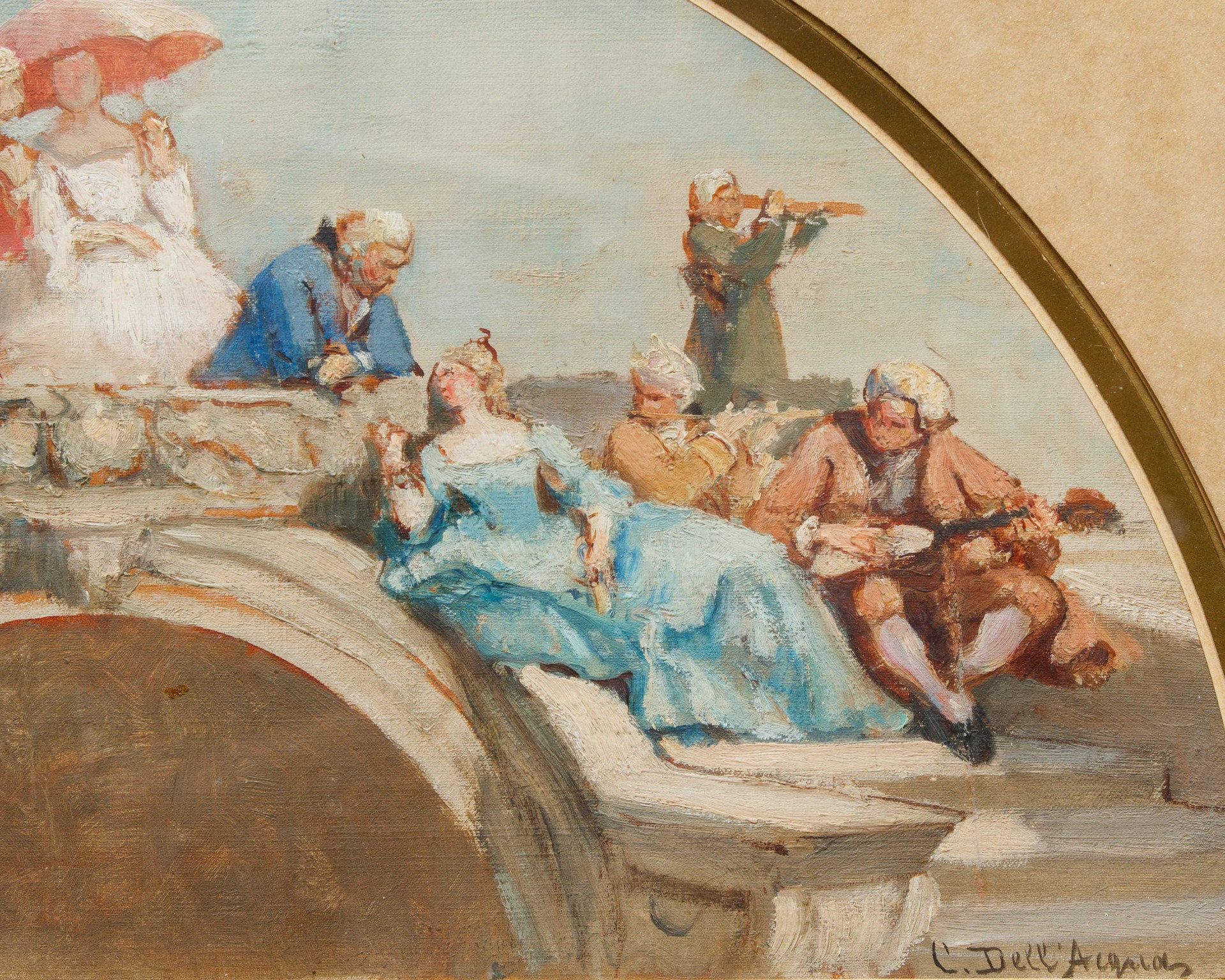
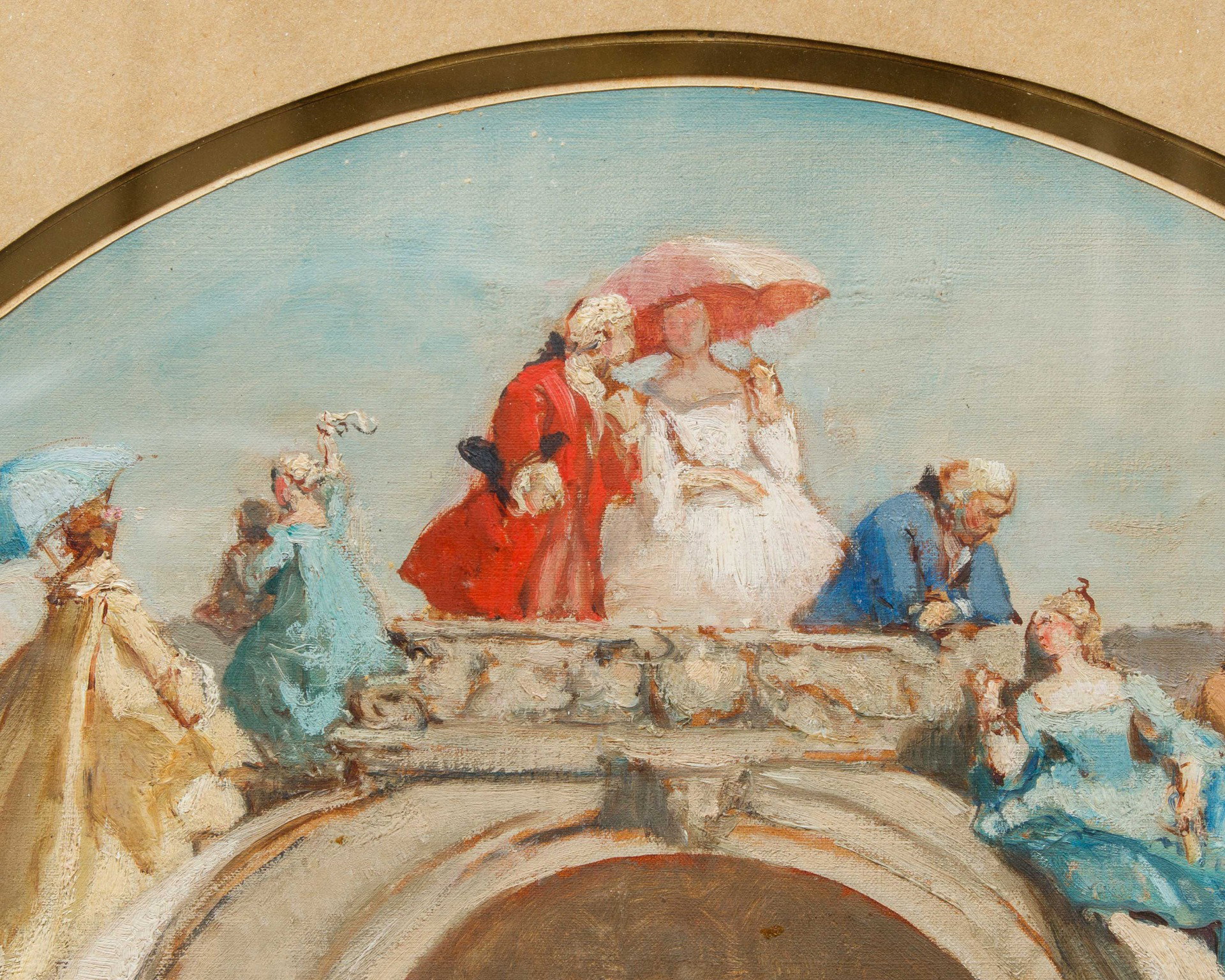
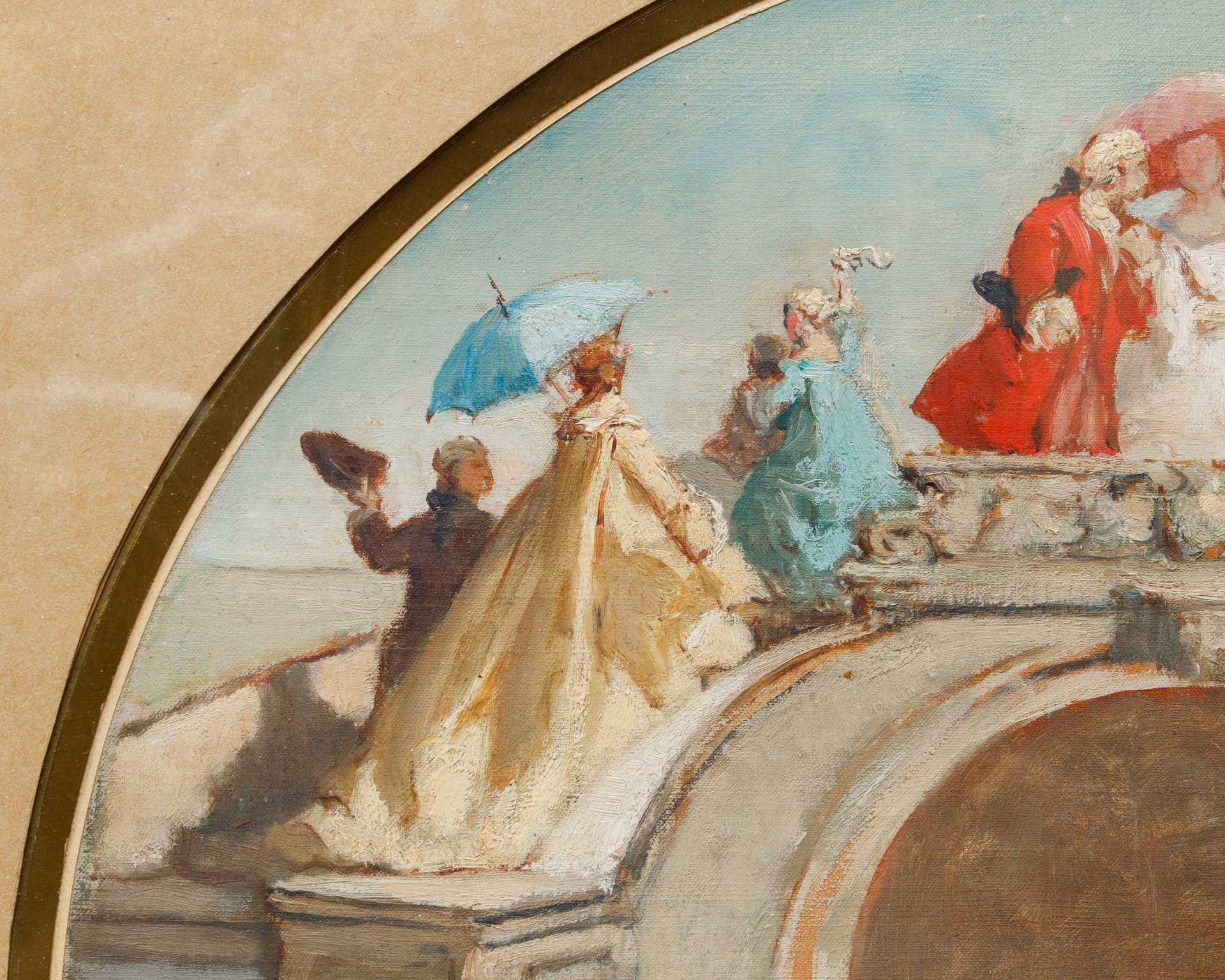
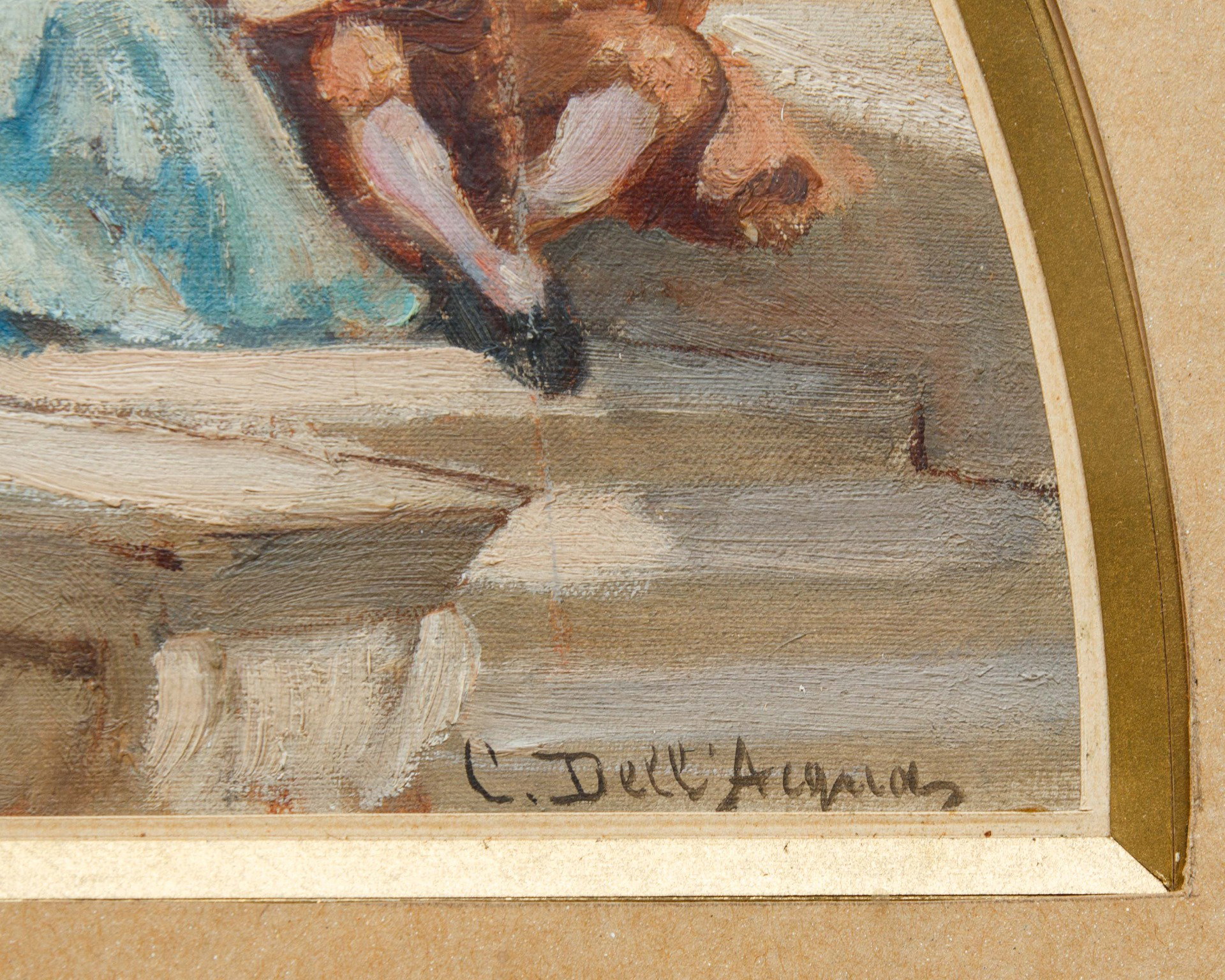
Cesare Dell’Acqua (Pirano d'Istria, July 22, 1821 – Ixelles, February 16, 1905) On the Bridge in Venice, ca. 1882. Oil on cardboard, 22 x 45 cm Signed lower right C. Dell’Acqua Publications: F. Tossi, Cesare Dell’Acqua (1821-1905). General Catalog, Mosetti, Trieste, 2021, pp. 56, 176 On the Bridge in Venice is an oil sketch on a lunette-shaped cardboard, a formal solution that immediately recalls the world of painted fans and of 18th-century interior decoration. The composition develops above an arched architectural structure, on top of which elegant figures in 18th-century Venetian costume are crowded: ladies with parasols, gentlemen in cloaks, musicians, and figures that animate the scene with an air of carefree worldliness. The colors are bright and airy – the vivid red of the male cloak in the center, the pearly white of the lady's dress, the turquoise of the female figure on the right – and they contribute to conveying that festive and sunny atmosphere that characterizes the open-air parties of the Venetian aristocracy. The brushstroke is agile and synthetic, as is appropriate for a preparatory sketch, yet rich in detail in the costumes and postures of the characters. Cesare Dell'Acqua was born in Parenzo, Istria, in 1821. After his initial studies in Capodistria, he moved to Trieste in 1833 and between 1842 and 1847 attended the Academy of Fine Arts in Venice, where he trained in the tradition of the great lagoon painting. In 1848 he went to Brussels, where he joined the studio of Louis Gallait, one of the leading figures of Belgian historical romanticism, and specialized in the representation of historical events of broad narrative scope. Between 1852 and 1877 he created numerous works in Trieste that made him famous and highly sought after by local and international clients. Among the most prestigious commissions of this period was the one entrusted to him by Archduke Ferdinand Maximilian of Habsburg, who wanted him to create a series of canvases depicting episodes from the history of Miramare Castle: those works still decorate the room on the second floor that bears his name. In 1873 he participated in the Universal Exhibition in Vienna and the following year in that in London, confirming his reputation on the European stage. In the last phase of his life, he settled permanently in Brussels. On the Bridge in Venice is placed at a specific and significant moment in Dell'Acqua's career: it is the preparatory sketch for a part of the pictorial cycle created in 1882 for the Antwerp residence of the collector August André. That cycle, inspired by the repertoire of 18th-century Venice, consisted of three large canvases dedicated to Venetian festivals. Of this, the painting Venetian Festival, preserved in a private collection, survives today, allowing us to measure the distance between the synthesis of the sketch and the completeness of the final version, and to appreciate how Dell'Acqua knew how to consistently develop the compositional ideas sketched out in the preparatory phase. The watercolor Mardi Gras in Venice, now in a private collection, which shows a similar sensitivity for rendering the lagoon's carnival atmosphere and could constitute a further project developed in connection with the Antwerp cycle, is also probably attributable to this same figurative universe. What makes On the Bridge in Venice particularly interesting is its position as a link between two areas of the artist's production: large-format decorative painting and the applied art of the painted fan. Fans by Dell'Acqua are preserved at the Fan Museum in London, which reproduce the same arched architectural structure, the same costumes of the Venetian aristocracy, and the same summer brightness that pervades the sketch in question. This dialogue between the two genres is not accidental: it shows how projects developed for fans could be transferred and expanded into decorative painting, and vice versa, revealing a unified creative practice in which the format and destination of the work did not imply a qualitative or inventive break. Dell'Acqua moved with ease between large public and private commissions, between monumental canvas and luxury object, each time declining the same repertoire – the festive, aristocratic, and timeless Venice of the eighteenth century – with a technical mastery and stylistic coherence that make him one of the most original interpreters of that late-Romantic and decorative trend that was highly successful in European collecting in the second half of the nineteenth century.