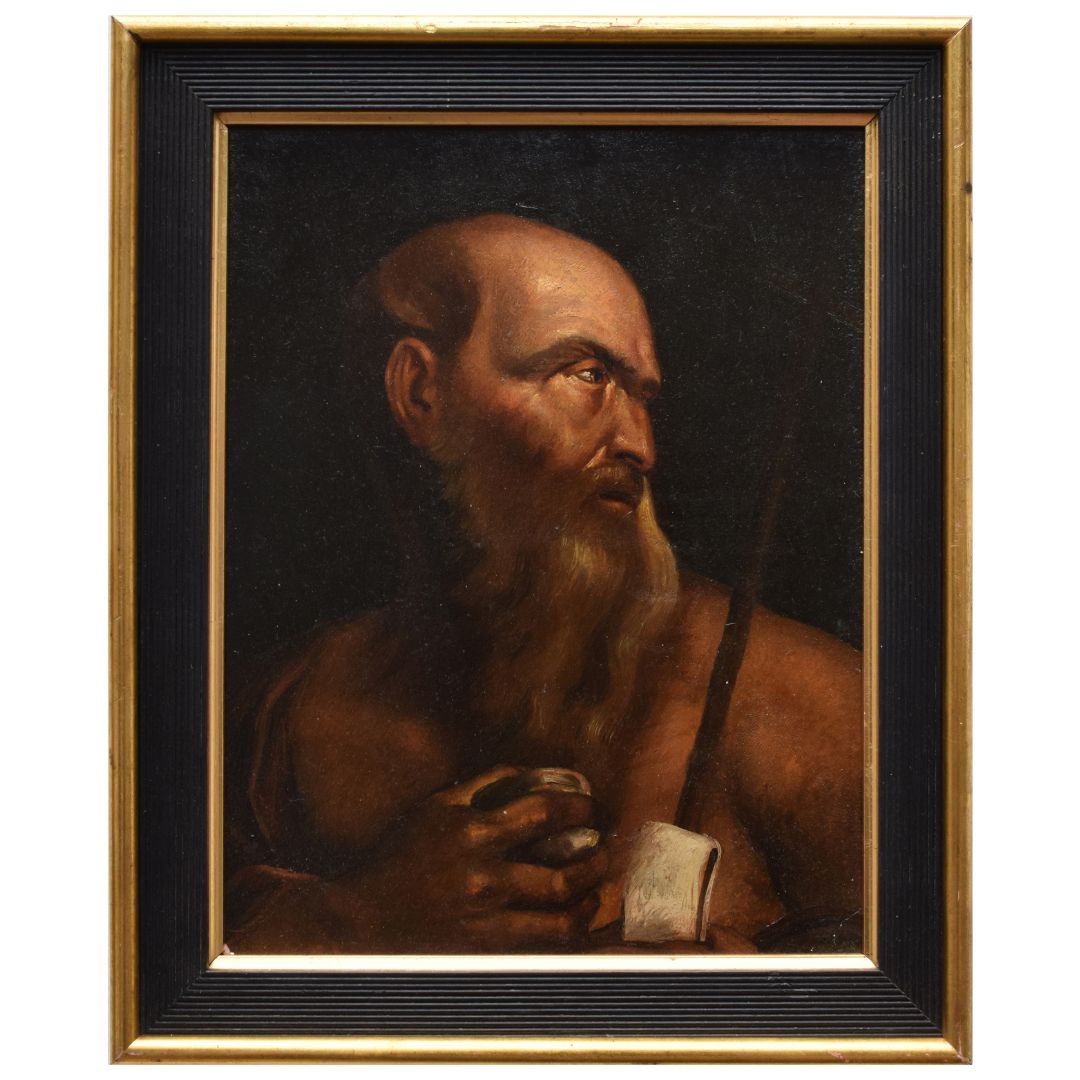
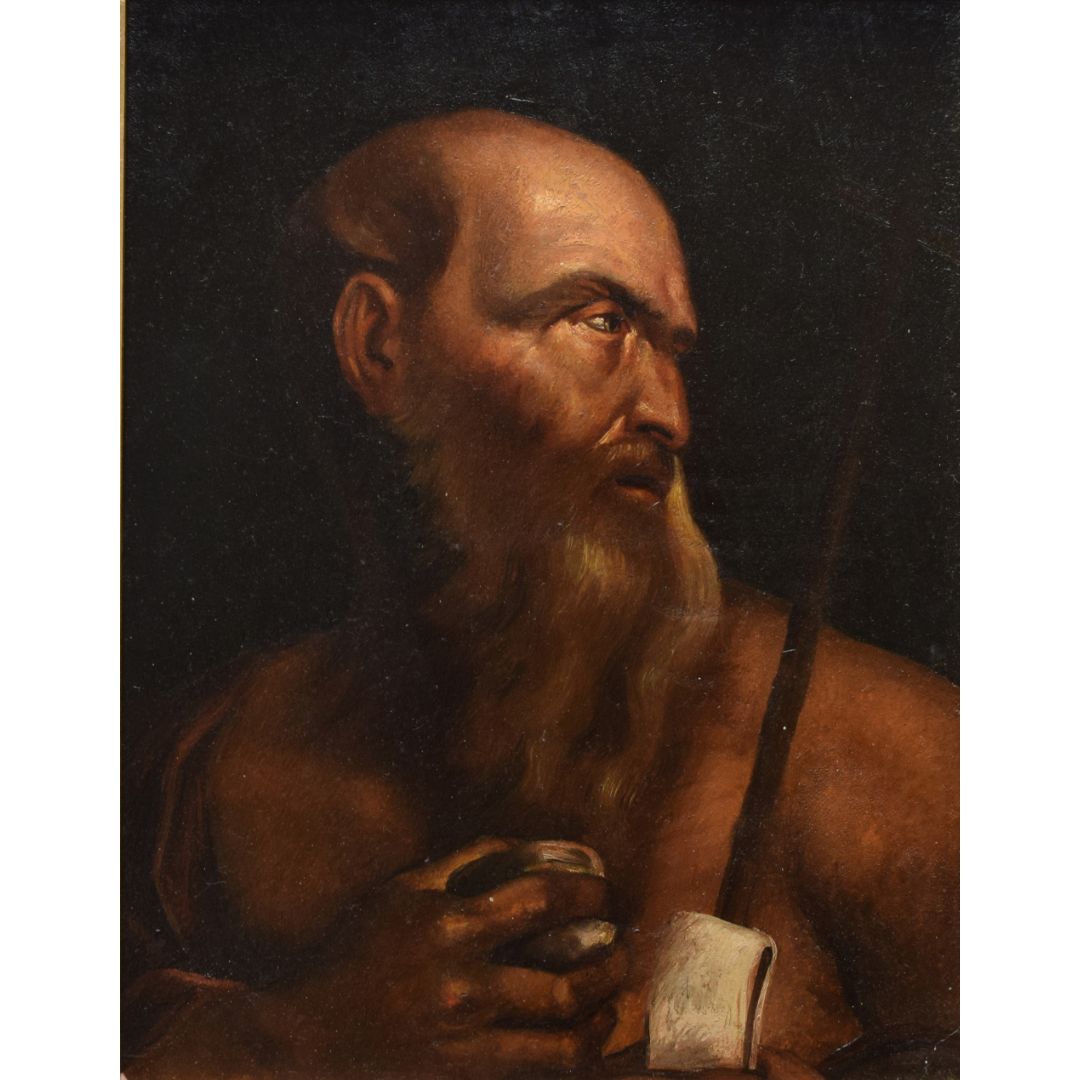
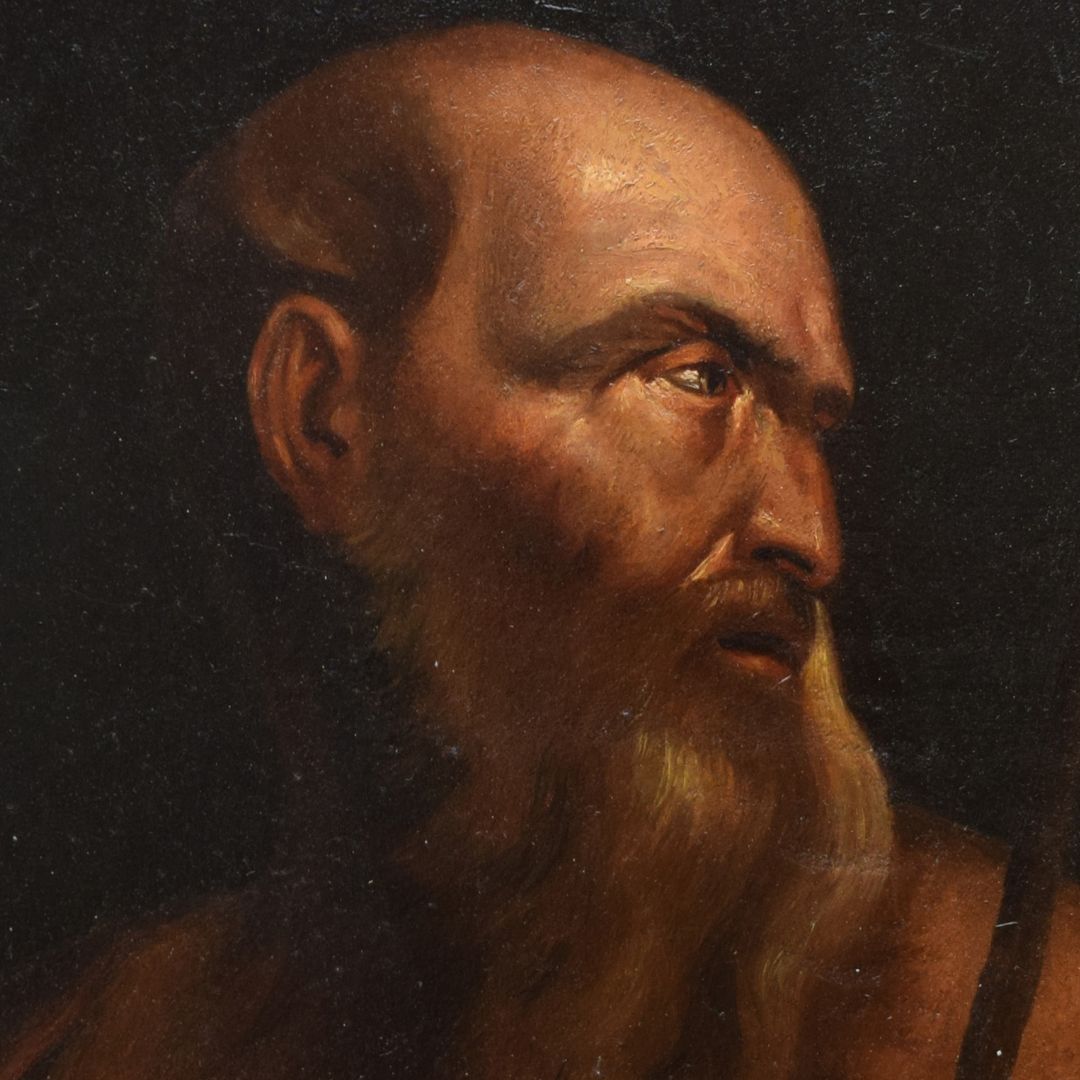
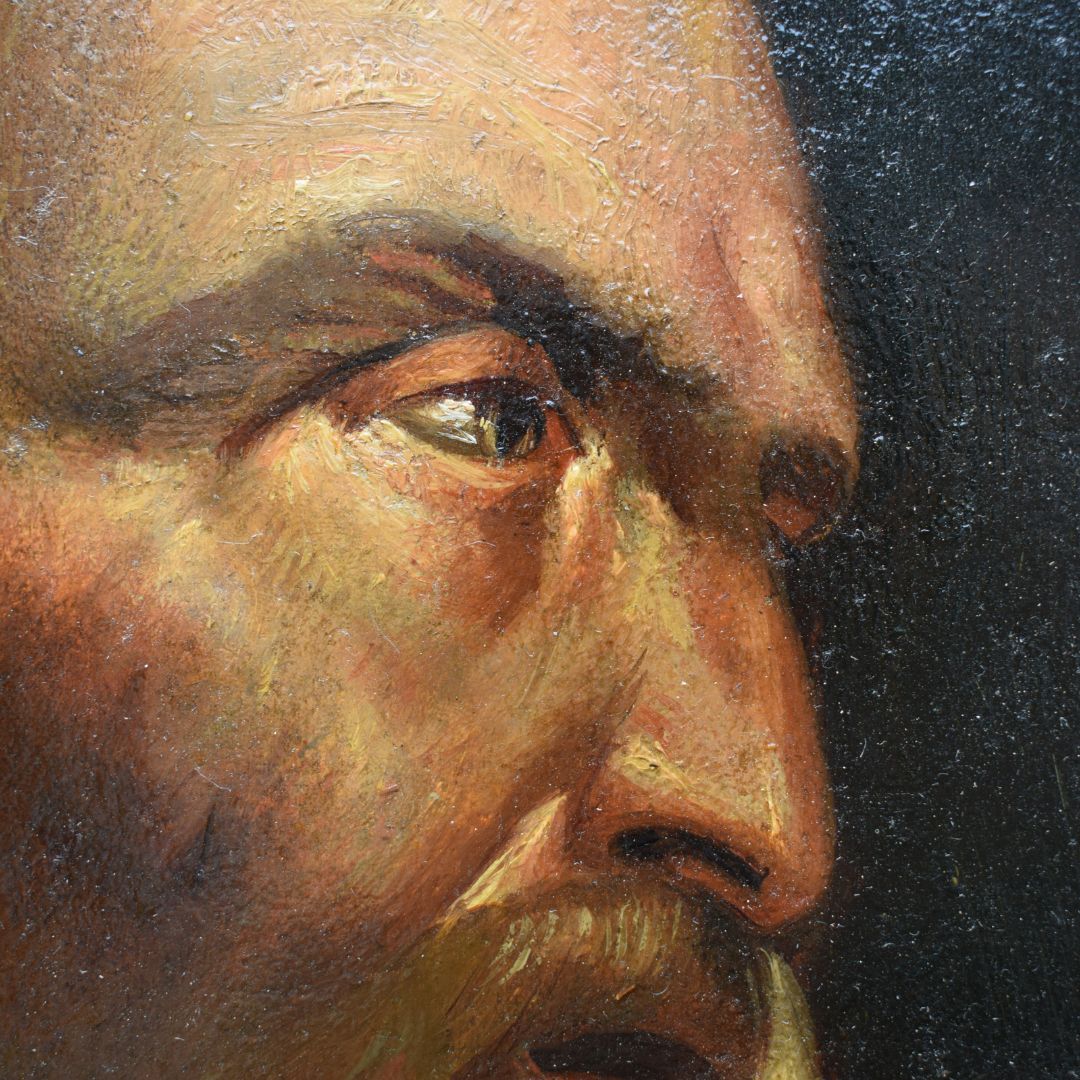
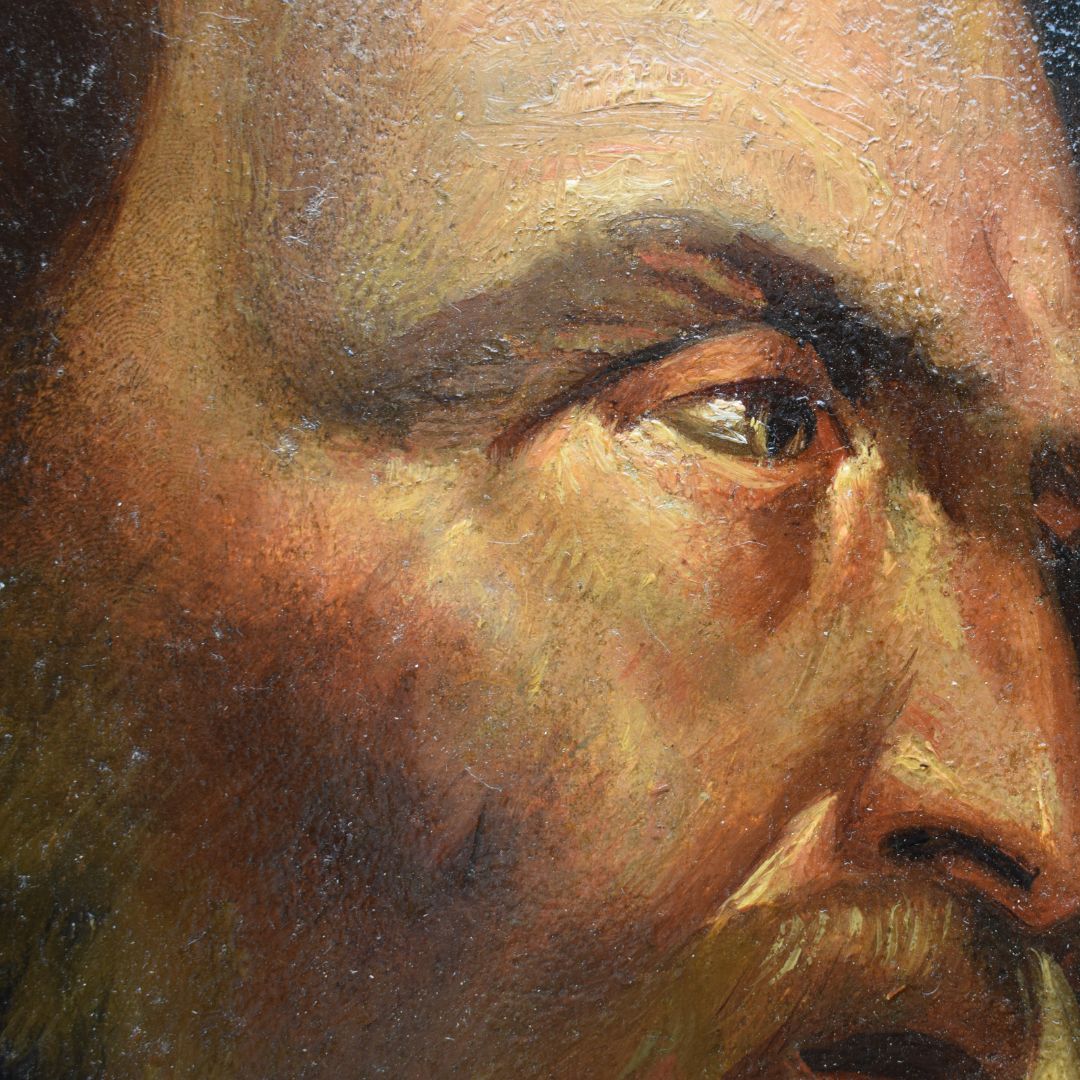
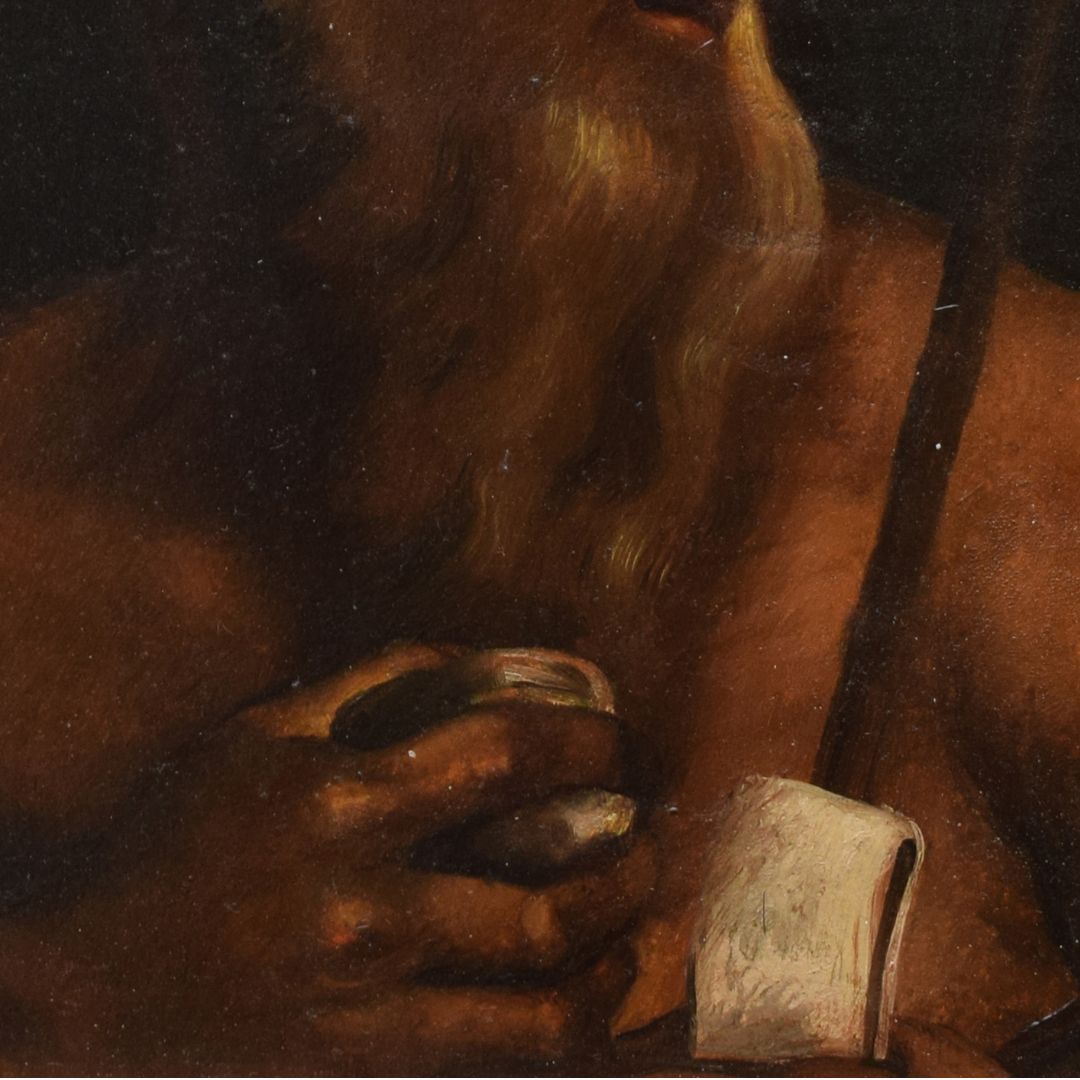
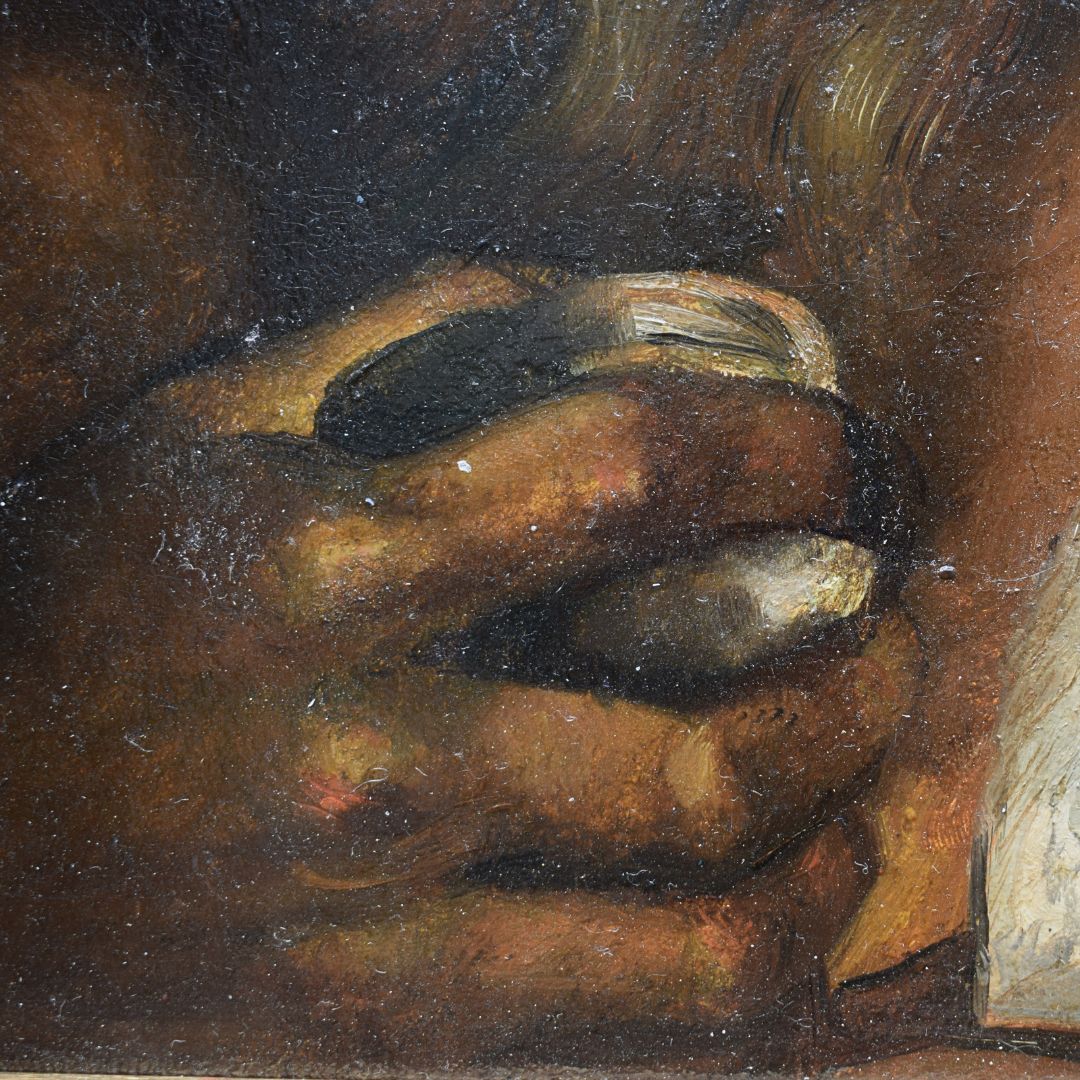
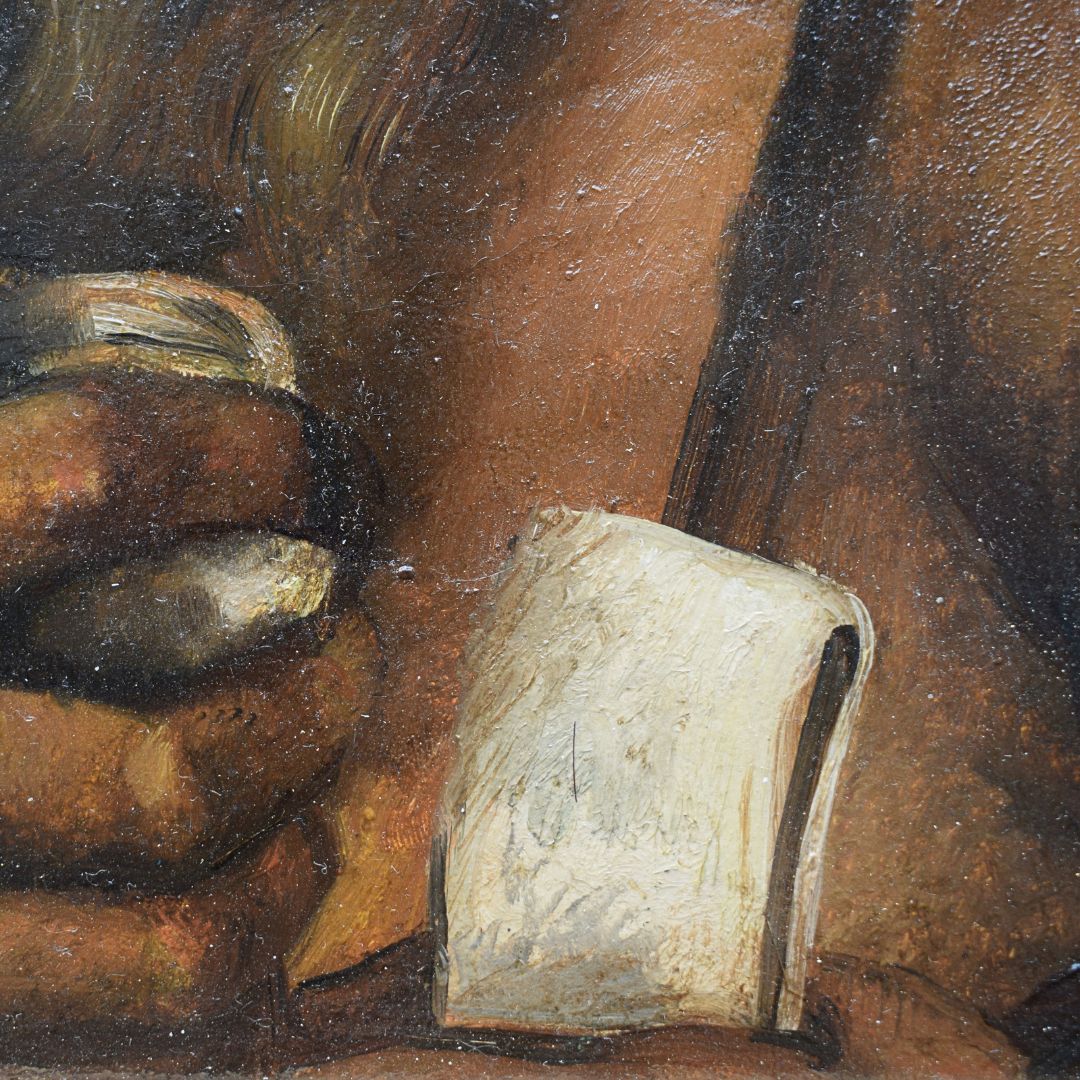
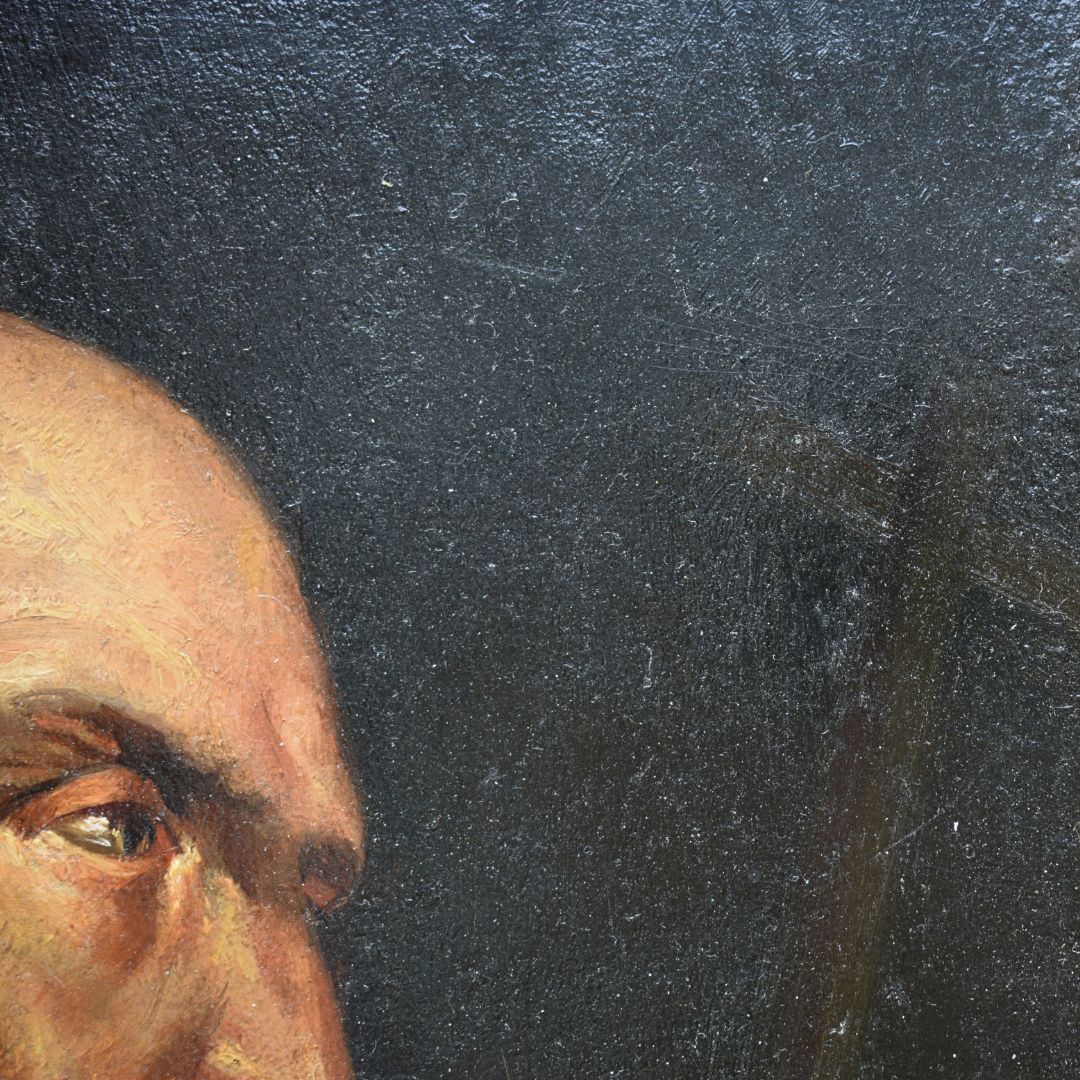
17th century Saint Jerome Oil on cardboard, 35 × 28 cm Frame 41 × 34 cm The painting examined depicts Saint Jerome, one of the most frequently depicted subjects in devotional painting between the 16th and 17th centuries. The saint is presented in a bust, captured in a moment of intense spiritual concentration, with a face marked by age, a long flowing beard, and a partially uncovered torso. The stern expression and the vigorous foreshortening of the head lend the figure strong psychological tension, accentuated by the dark background and raking light that models the volumes through a marked chiaroscuro. The iconography refers to the theme of Saint Jerome as a penitent hermit, traditionally depicted in the desert during his years of meditation and study of the Holy Scriptures. Although the composition is concentrated almost exclusively on the saint's bust, some conventional attributes of his depiction can be distinguished: partial nudity, allusive to an ascetic life; a scroll, referring to the translation of the Bible into Latin (the Vulgate); the stone in his right hand, which, with the gesture gathered to his chest, recalls his meditation and penance. The work fully fits into the figurative culture of 17th-century Italy, a period in which the representation of saints was profoundly renewed by the orientations of the Counter-Reformation. After the Council of Trent (1545–1563), sacred art was called upon to favor images of immediate legibility, capable of eliciting emotional participation and devotion. In this context, the figure of Saint Jerome became one of the ideal models of Christian contemplation, study, and mortification. The luminous construction of the painting, based on the contrast between the figure emerging from the shadow and the dark background, reveals the assimilation of naturalistic models widespread in Italy in the early and mid-17th century. The incisive rendering of the head, the accentuated physiognomic characterization, and the warm palette, dominated by browns and reddish earths, recall the vast success of Caravaggio's lesson and its numerous regional variations. Probably intended for private devotion or a small domestic oratory, according to a typology very common in the art market of the time, the work is particularly intense in its choice to focus attention on the face and essential gestures, renouncing secondary narrative elements to favor a direct relationship between observer and sacred figure. The painter demonstrates good psychological synthesis skills, concentrating interest on the expressive power of the gaze and the ascetic character of the saint. The collected and stern composition effectively responds to the devotional needs of post-Tridentine culture. ??All our works are accompanied by an in-depth certificate of authenticity. ?? Professional packaging and insured shipping to ensure maximum safety during transport. ?? For more information, do not hesitate to contact us +39 329 319 4887 –
[email protected] ??Possibility of VIDEO CALLS and direct viewings by appointment in MILAN and BORGOMANERO (NO). ?? Further information and photographs: www.dequart.com IG - FB @dequ.art