Artwork Description
Type and Style
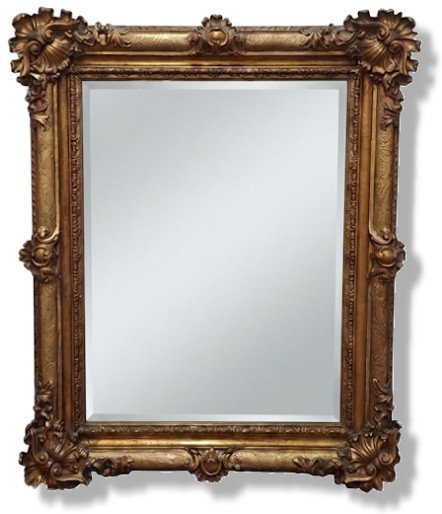
Object: Gilded wood mirror with gold leaf
Period: Mid-19th century (High Victorian era), precisely datable around 1850.
Style: Louis Philippe / Second Empire (Neo-Baroque Eclecticism). The frame fits perfectly into the eclectic taste of the 19th century, which reinterpreted the glories of the Baroque and Rococo styles, filtering them through a more solid and geometric composure (the rectangular load-bearing structure) typical of the Louis Philippe period.
Structural and Decorative Features
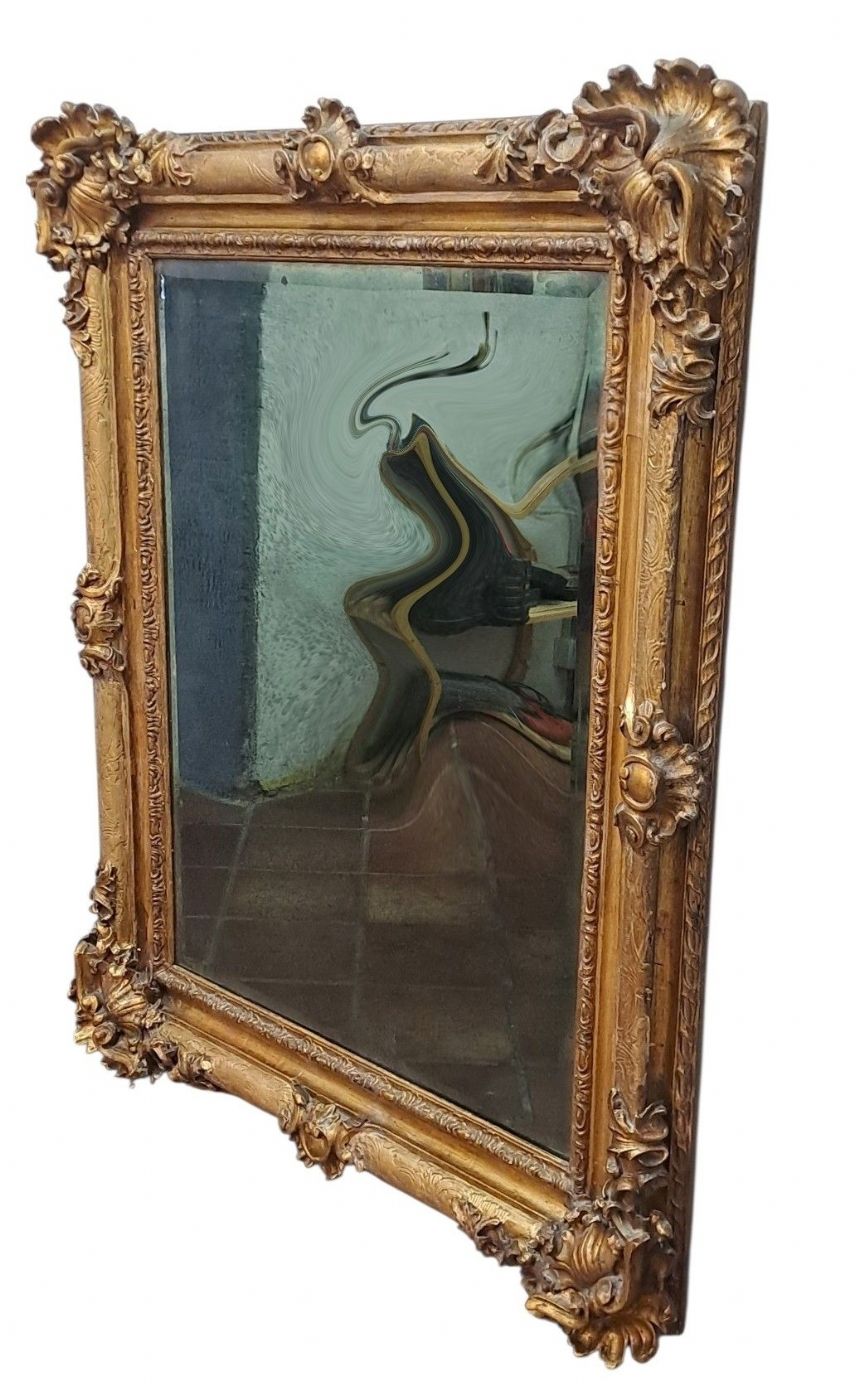
The mirror features an imposing rectangular frame, richly carved and decorated:
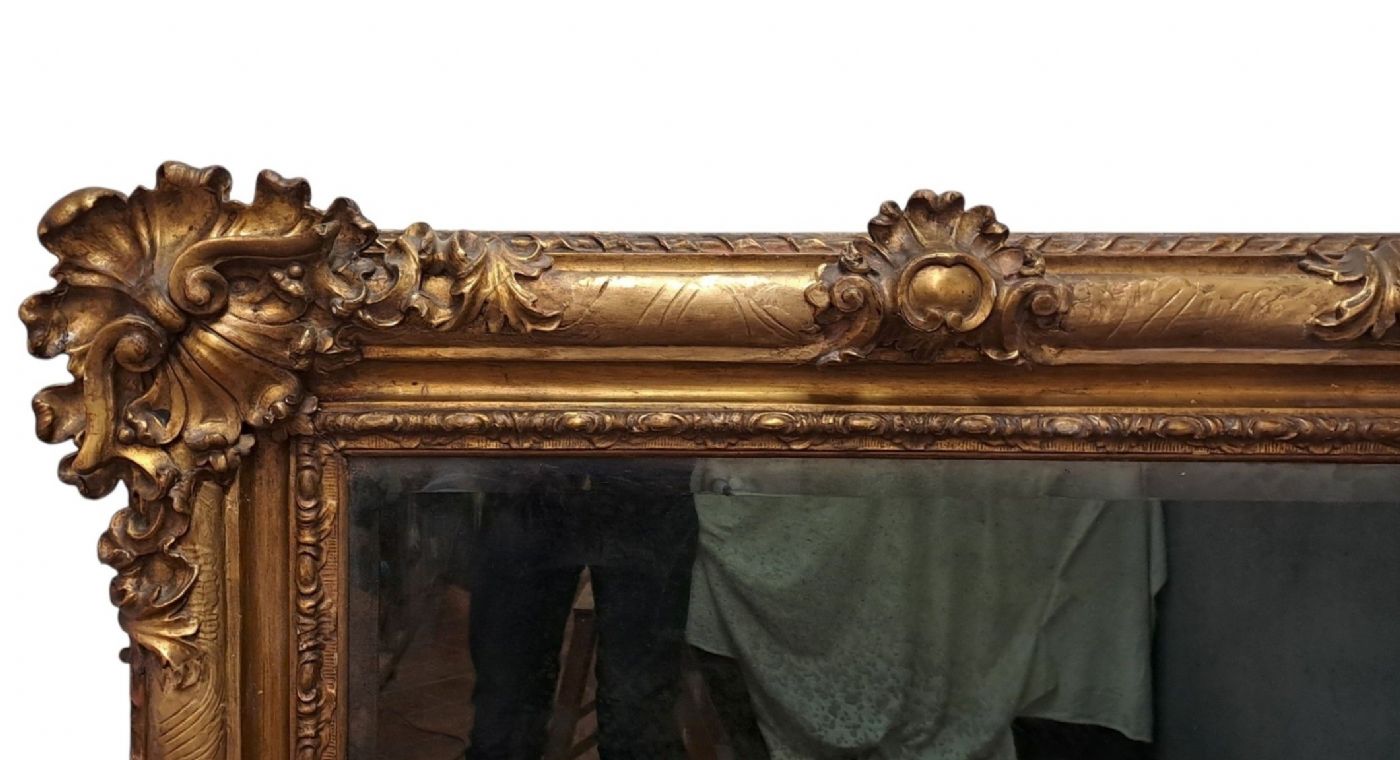
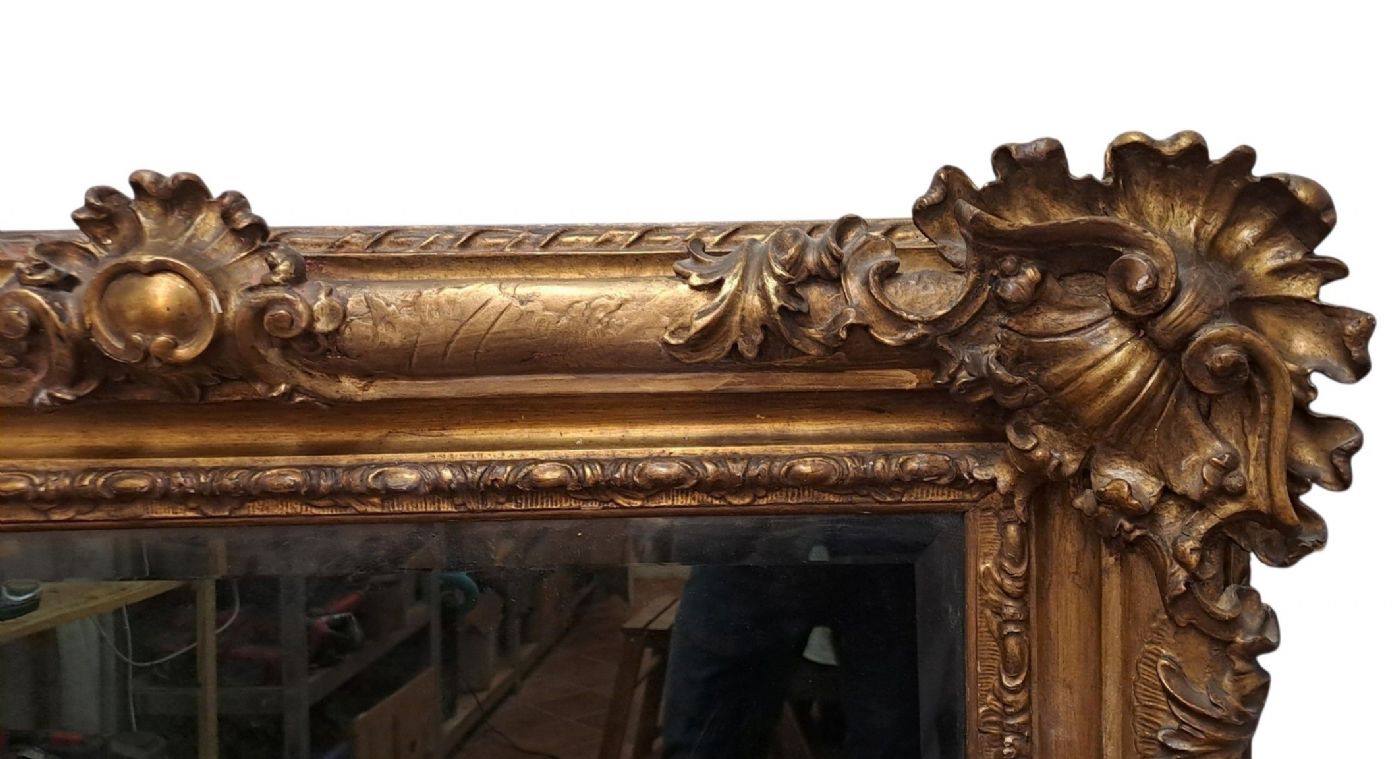
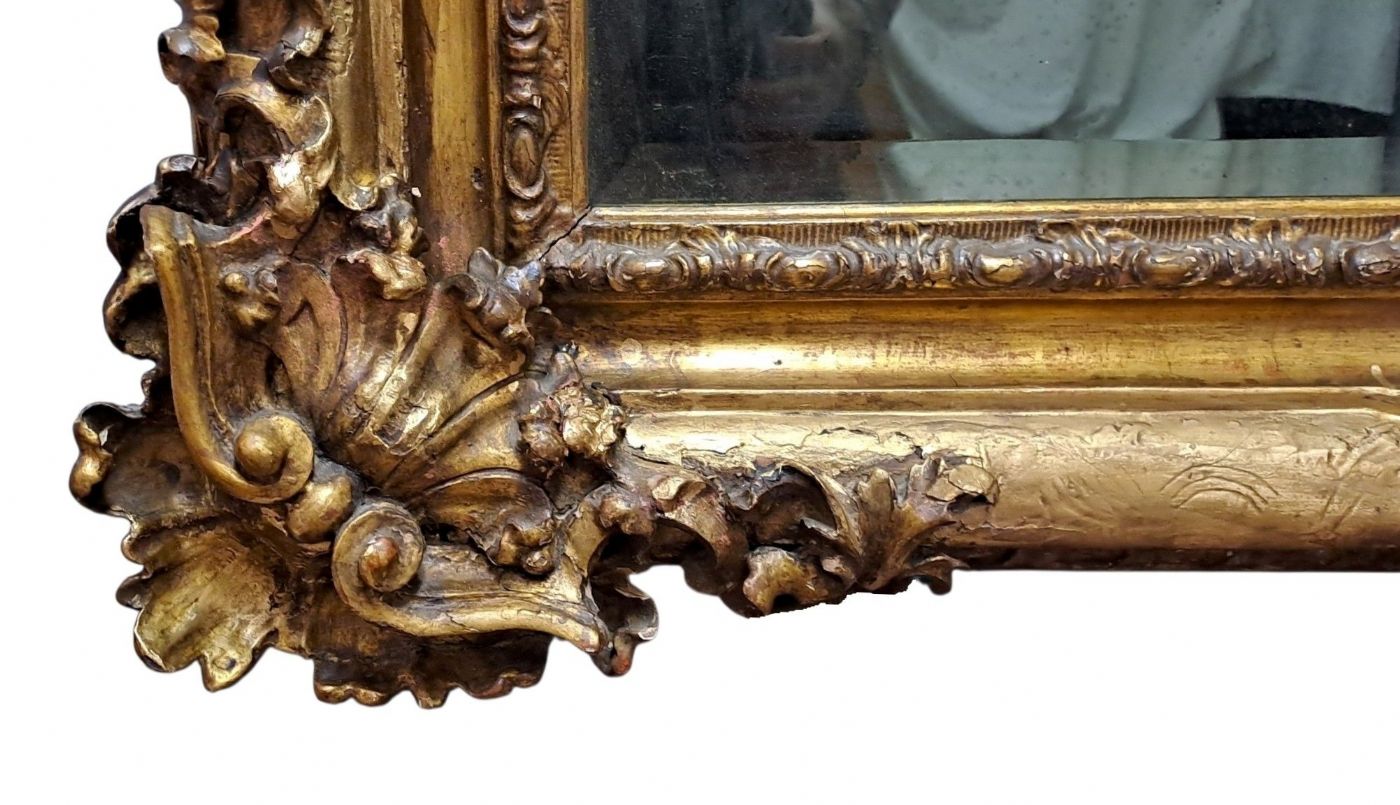
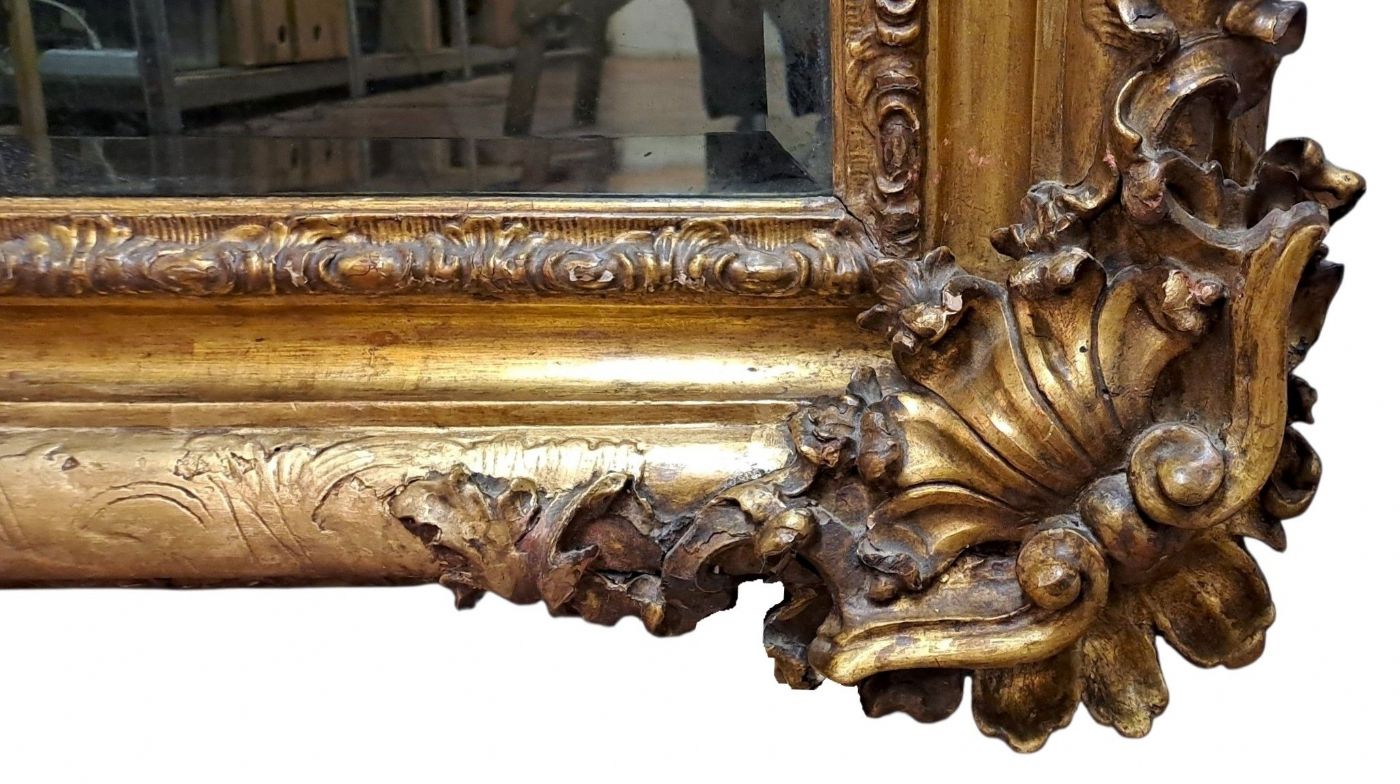
Corner Embellishments: The four corners are the plastically most valuable elements. They feature large stylized shell elements (rocaille) and ample acanthus leaf scrolls that project from the linear profile of the frame, creating strong chiaroscuro dynamism.
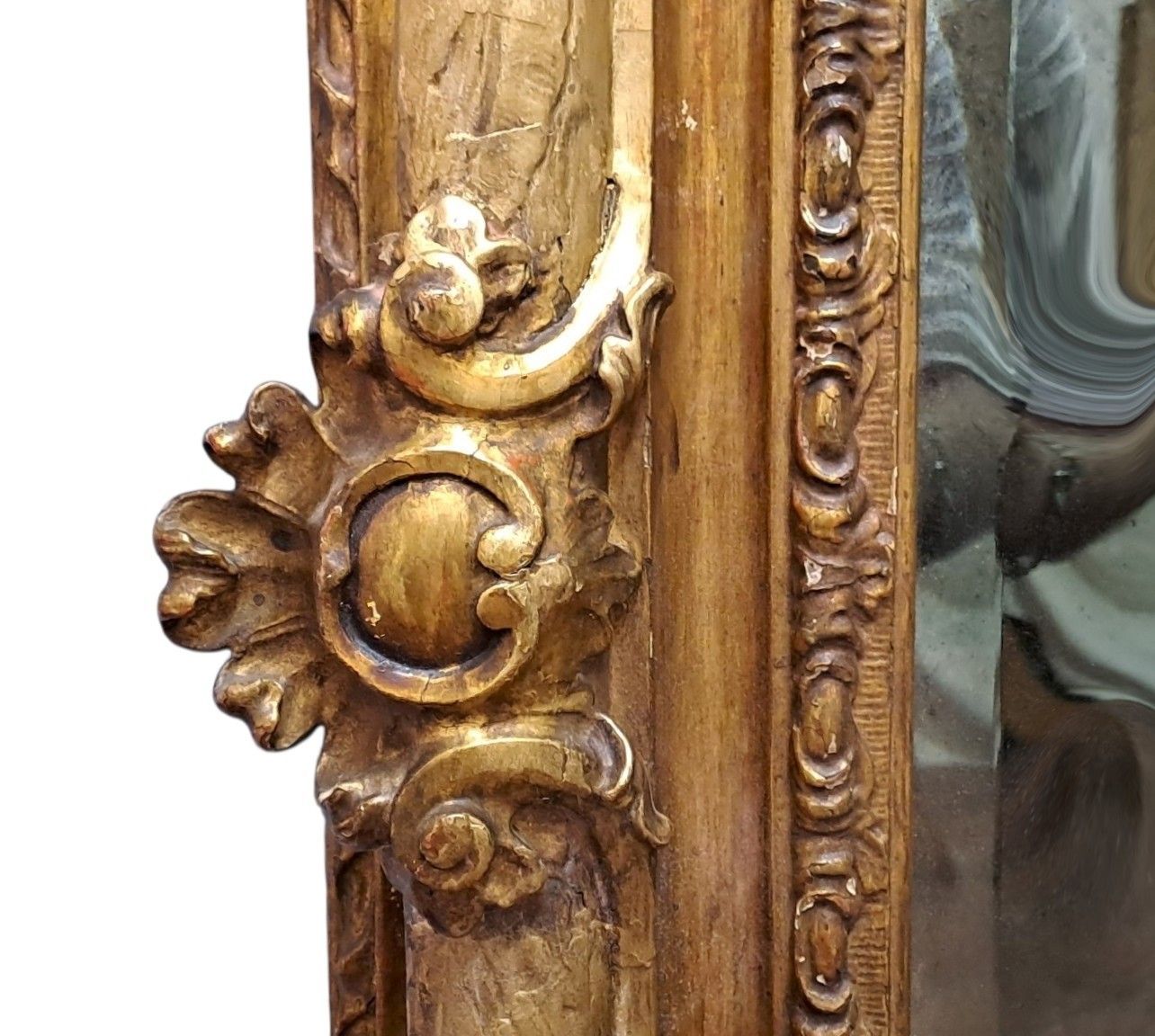
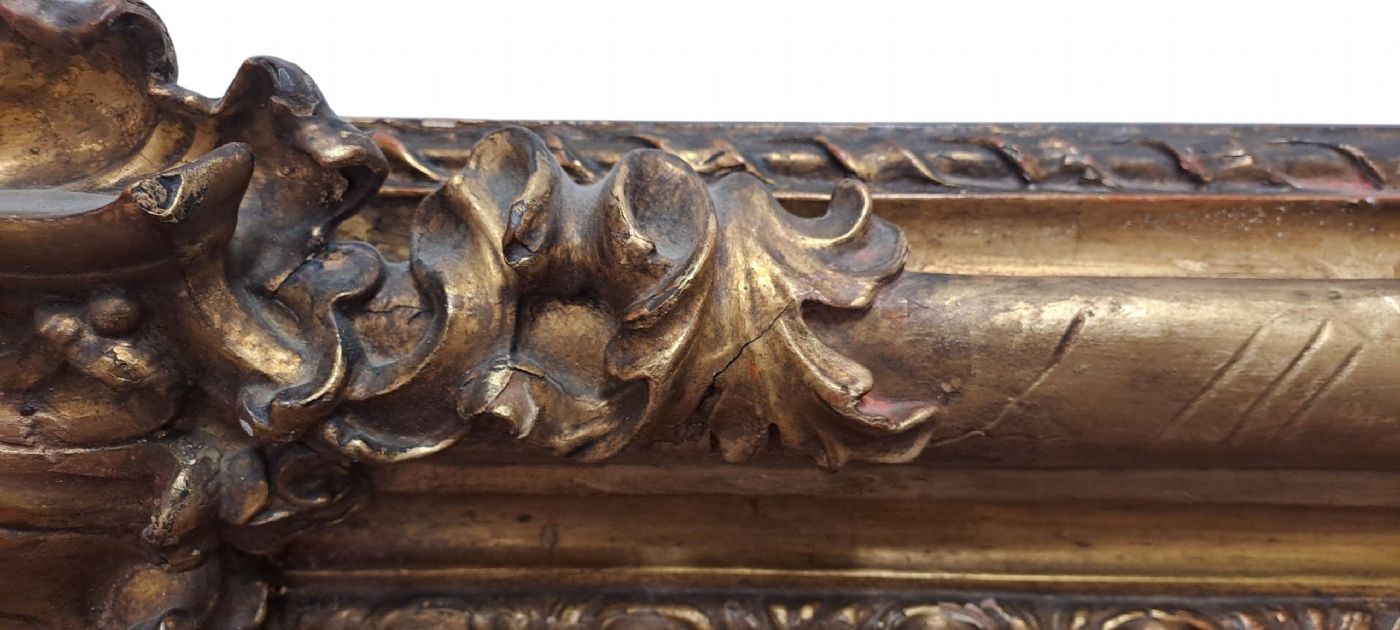
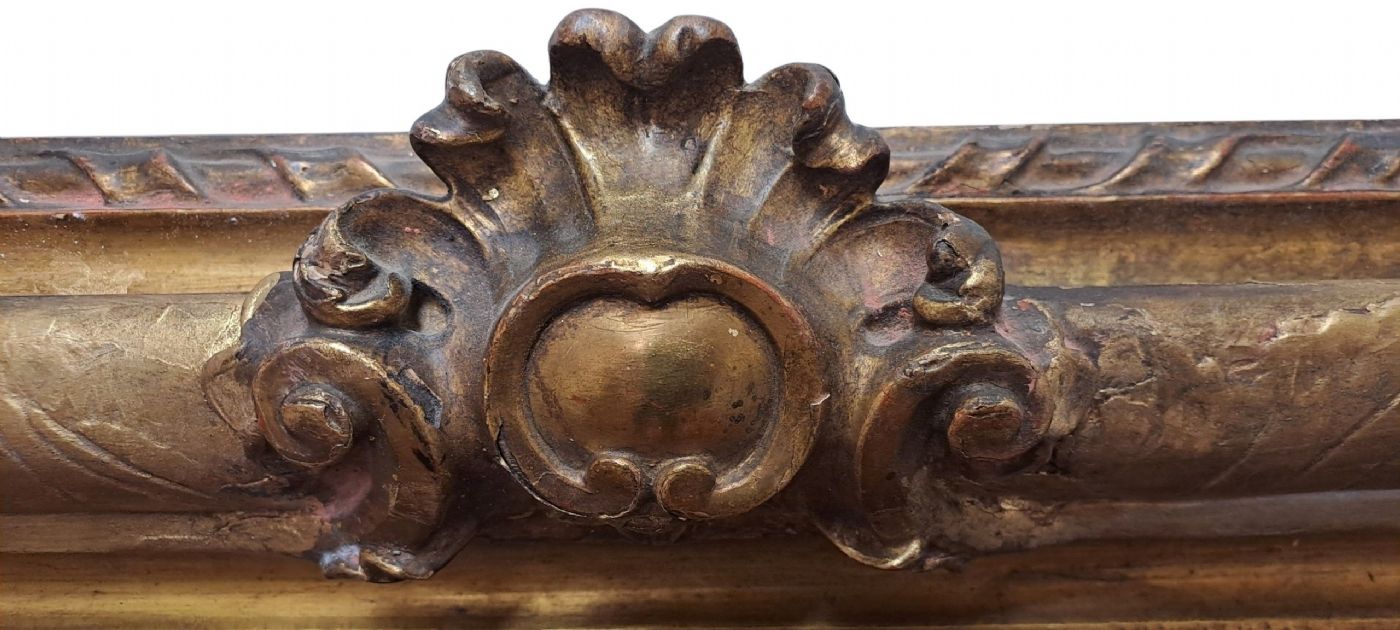
Median Elements: At the center of the upper, lower, and vertical sides, central cartouches (or median crests) are applied in the form of a smooth shield enclosed by small curls and floral motifs, which break the linearity of the shafts.
Side Shafts: The main molding is smooth and bulging, bordered internally by a pearl-like profile with small acanthus leaves in direct contact with the mirror's rebate.
Manufacturing Technique: Carved wood with a plaster finish, subsequently gilded. The gilding shows the typical red bole background, visible in worn areas, which lends warmth to the gold.
The Mirror: Contemporary plate glass with a noticeable hand-executed perimetral bevel.
Analysis of the Back and Historical Label
The back of the mirror offers fundamental details for the authentication and provenance of the piece.
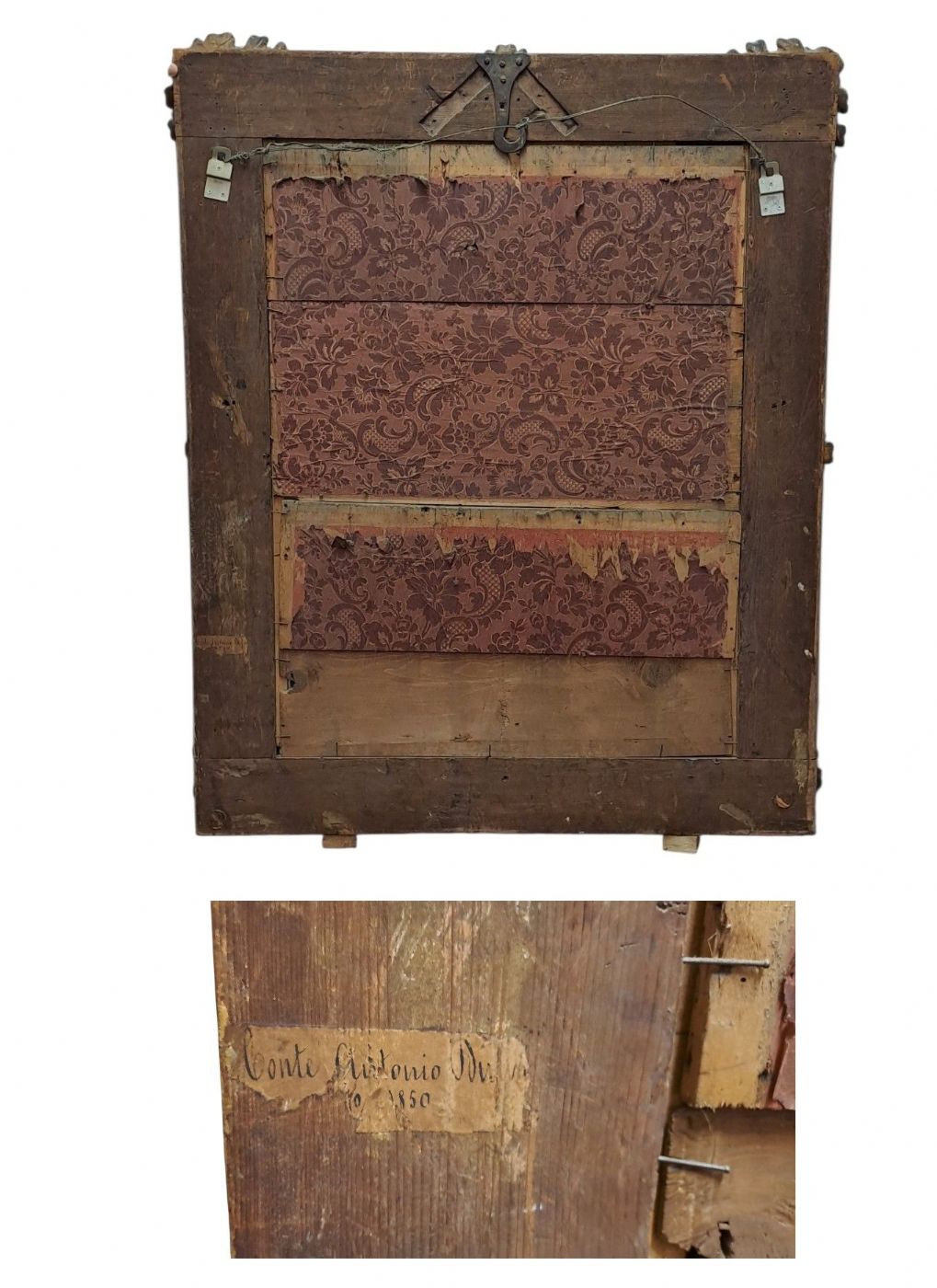
Support Structure: The back is closed by a solid wood backing divided into horizontal planks, partially covered with antique paper printed with burgundy/rust damask motifs, a typical element of 19th-century furniture manufacturers to protect the mirror from dust and wall humidity.
Hardware: Old mounting hooks and original hammered nails are visible.
Focus on the Paper Label
Transcription: "Count Antonio Du[...]
[...]o 1850"
The fragmented paper label applied directly to the wood of the backing is the element of greatest historical and collectible interest:
Attribution of Ownership/Commission: The inscription clearly indicates original ownership by an aristocratic collection, specifically Count Antonio (the surname, unfortunately, is partially missing and abraded at the end, where the initial letters Du... are legible).
Dating: The presence of the date 1850 written in ink (likely contemporary or shortly after for inventory purposes) unequivocally establishes the terminus ante quem or the year of manufacture/purchase of the artifact, confirming the Louis Philippe stylistic analysis.
Condition
Frame: Overall solid with a sound wooden structure. Some physiological cracks and splits are visible on the plaster and stucco layer due to the natural movement of the underlying wood. Small areas of gilding are missing, revealing the bole, which lends the piece its authentic patina.
Mirror: Excellent condition for an antique glass; oxidation is limited and does not compromise the reflectivity of the plate.
Dimensions: 135 x 110 cm.
A regular certificate of authenticity with a photo will be provided. We assure a response to your emails within 24 hours. REGISTERED WITH THE BOARD OF EXPERTS AND CTU AT THE COURT OF LA SPEZIA