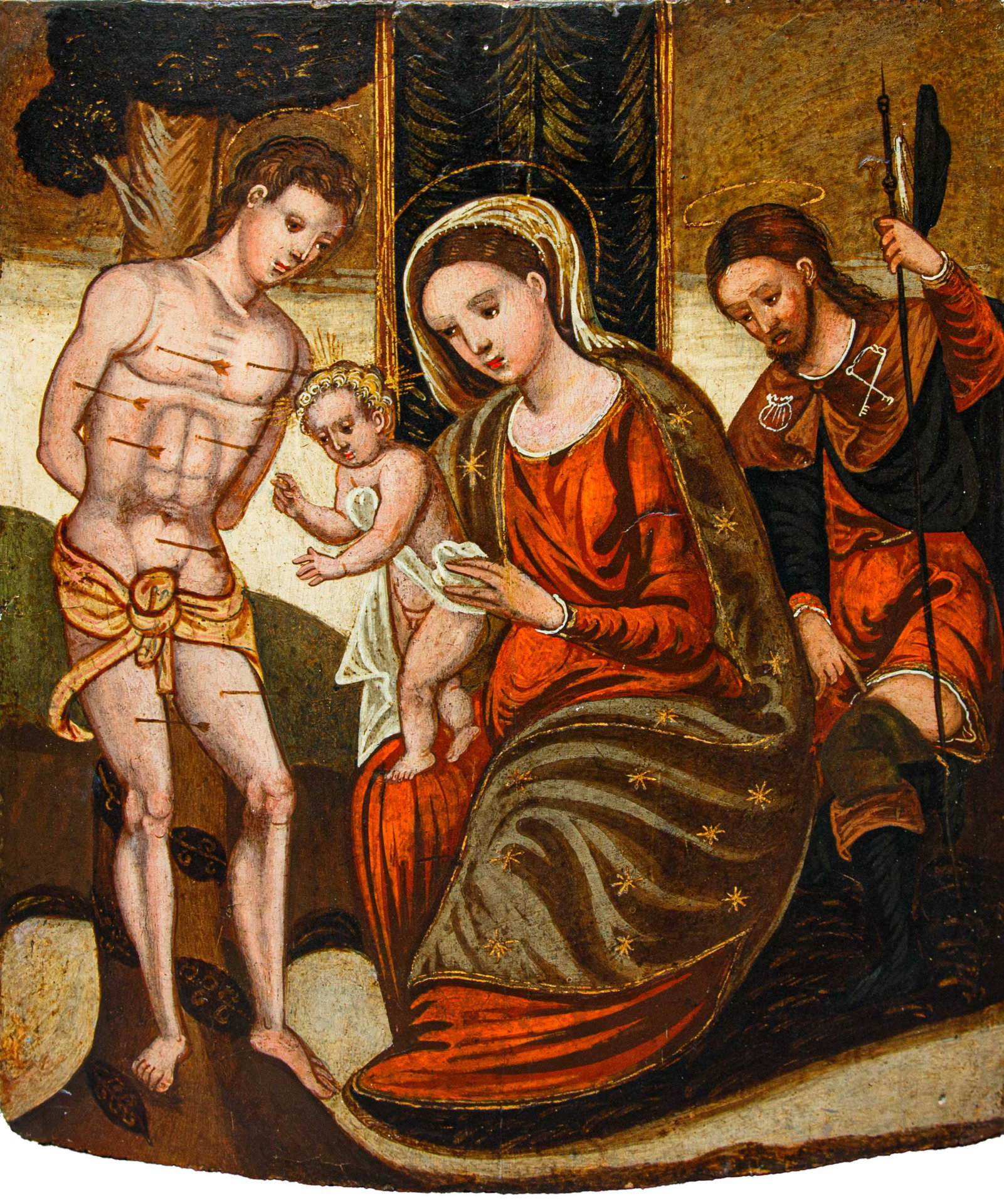
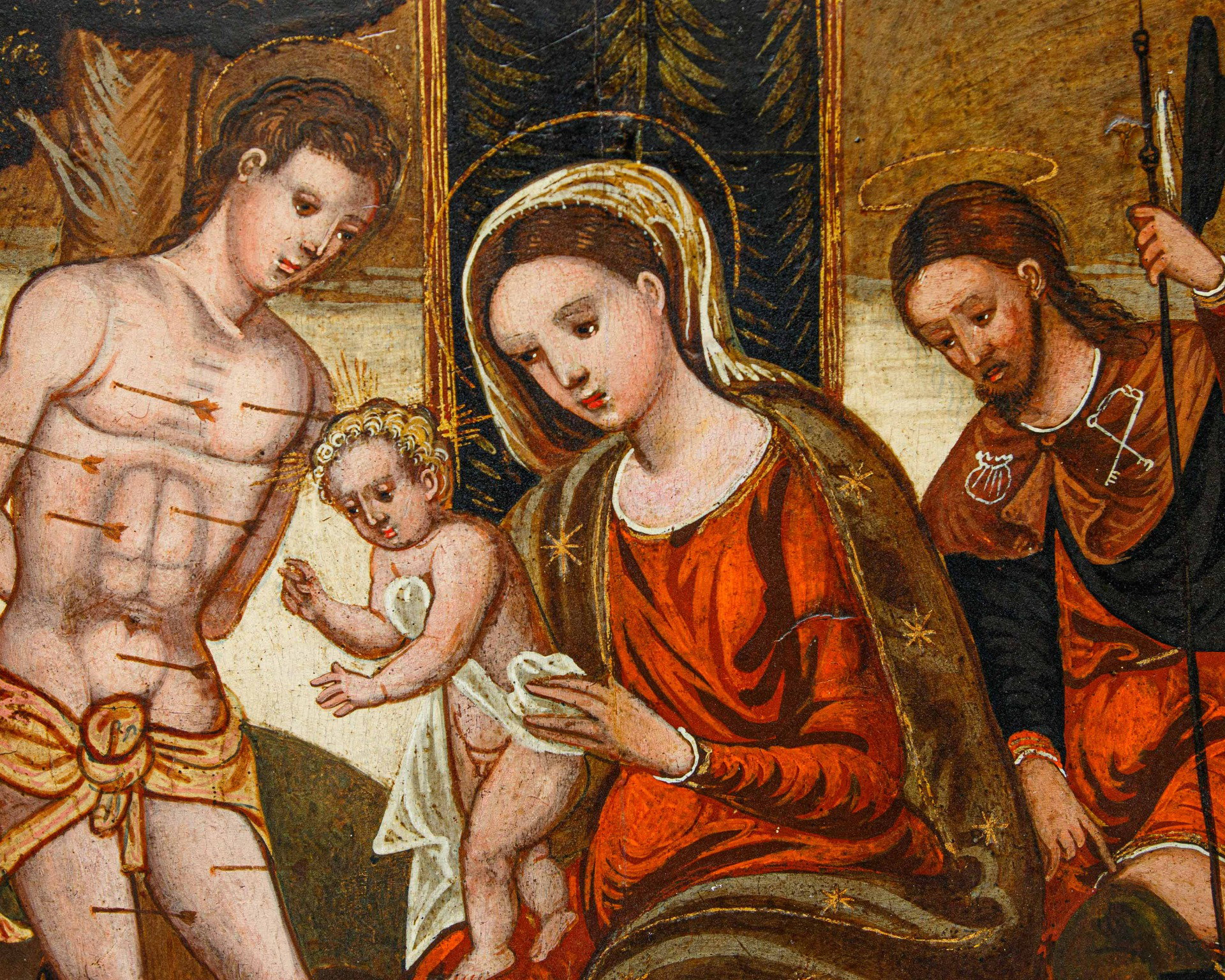
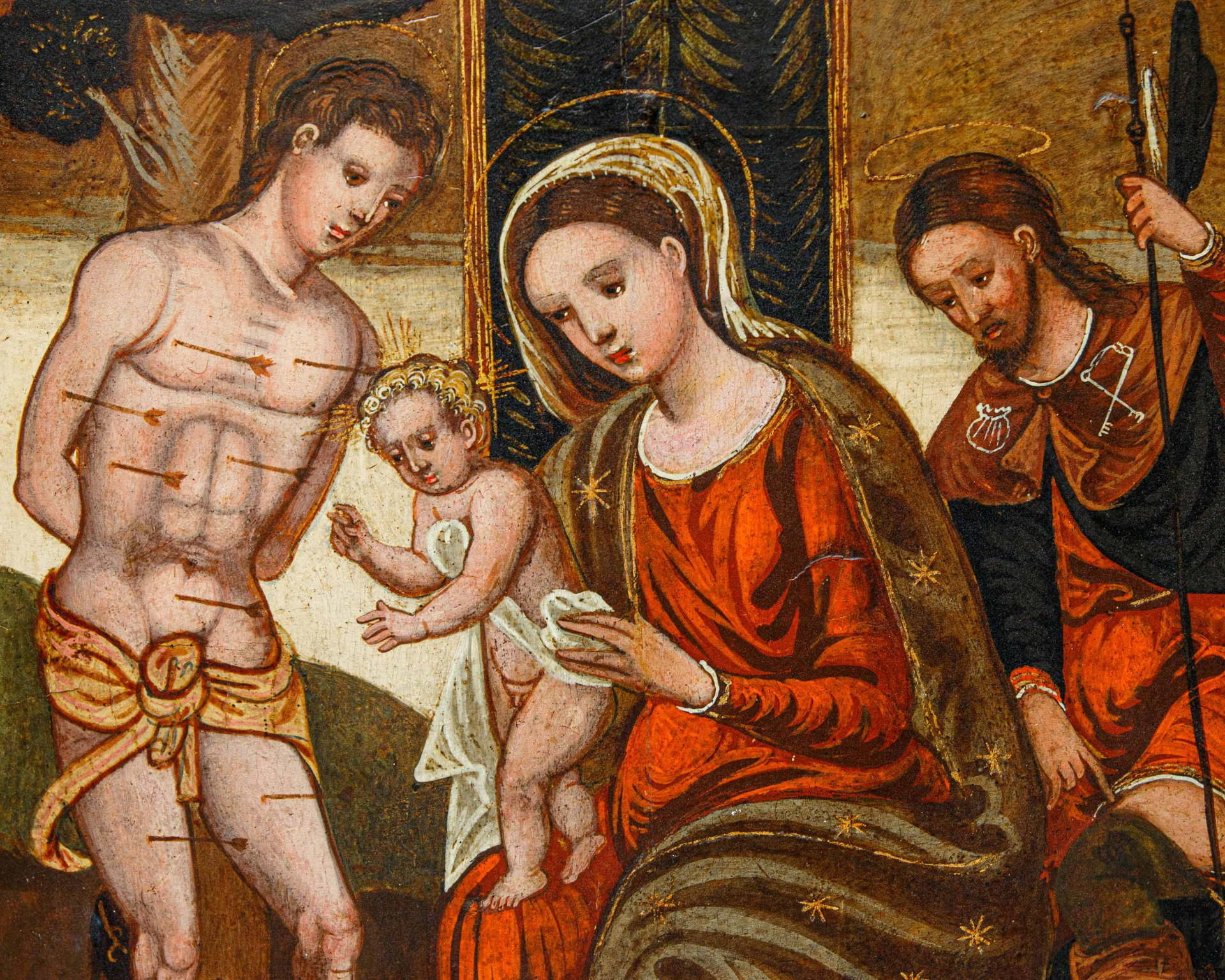
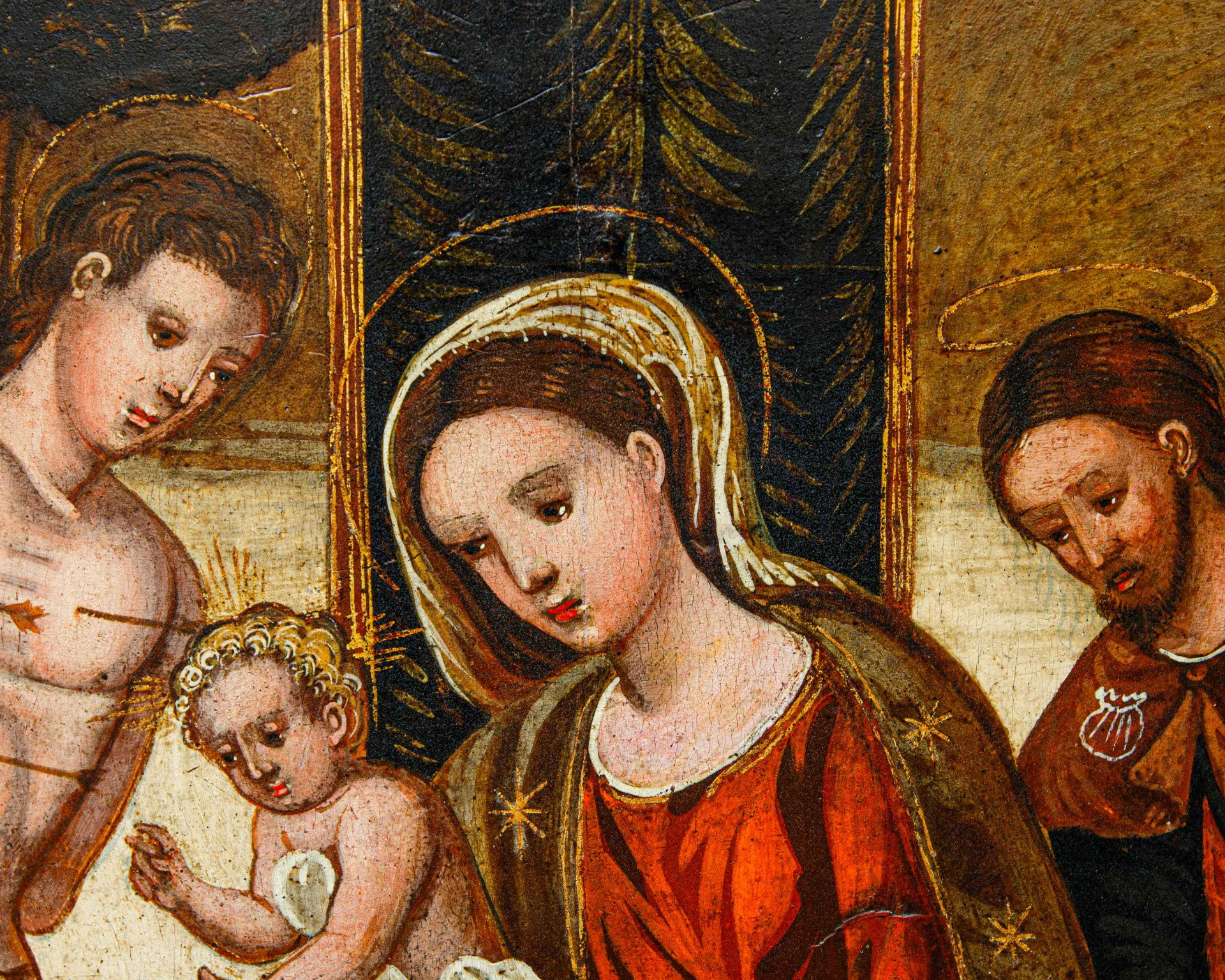
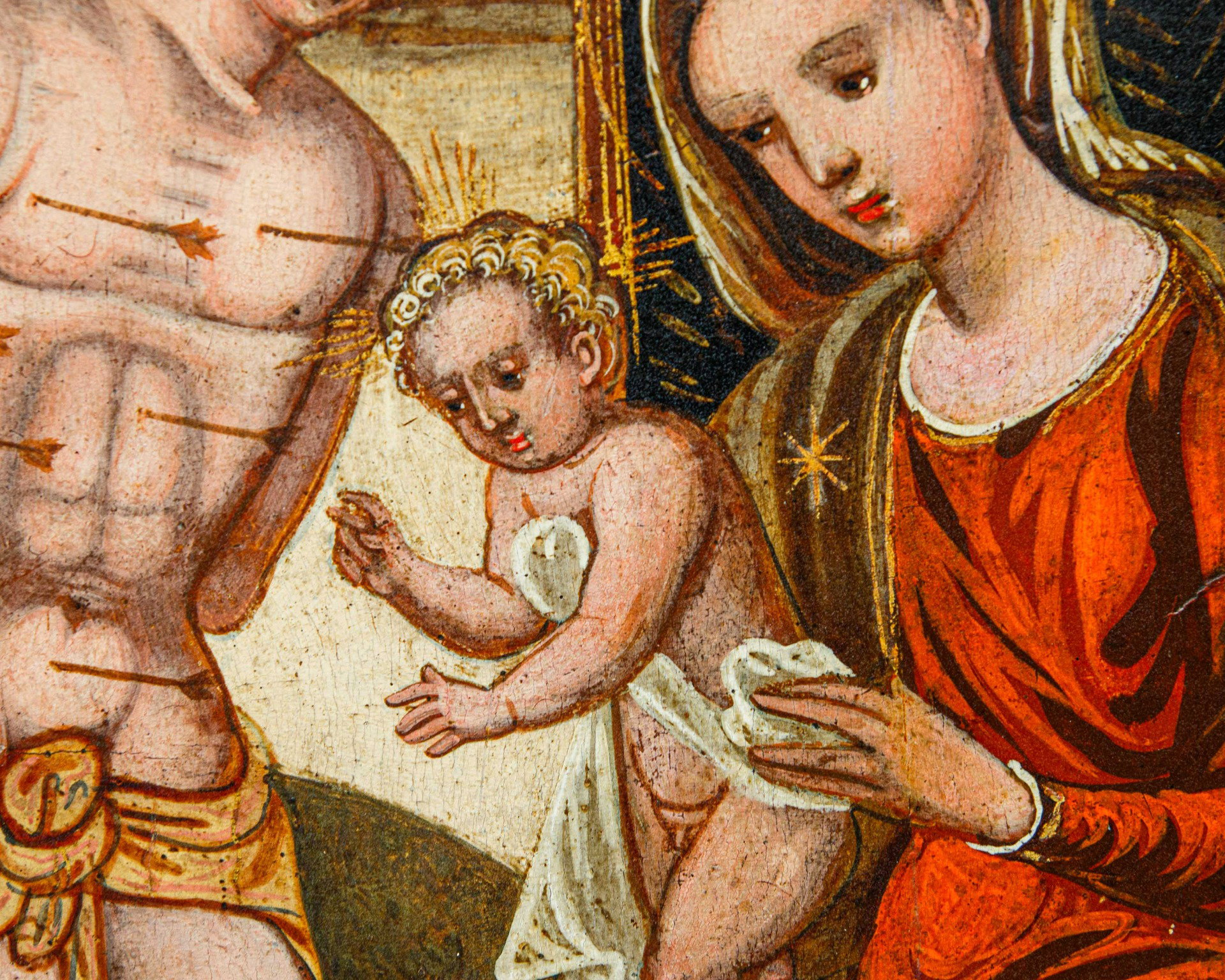
Painter from the Lower Adriatic, 16th century.
Madonna and Child with Saints Sebastian and Roch.
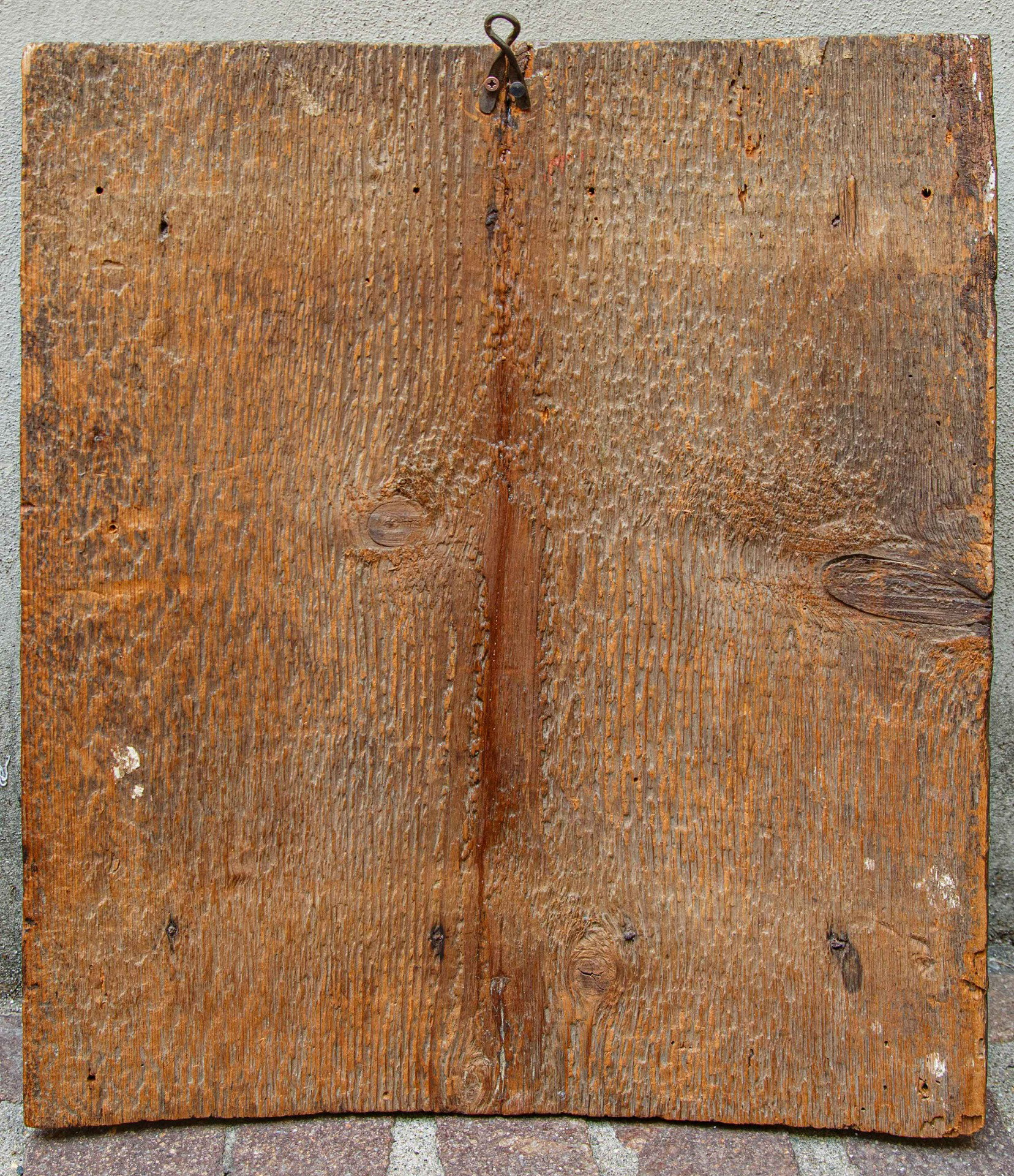
Oil on panel, 44 x 38 cm.
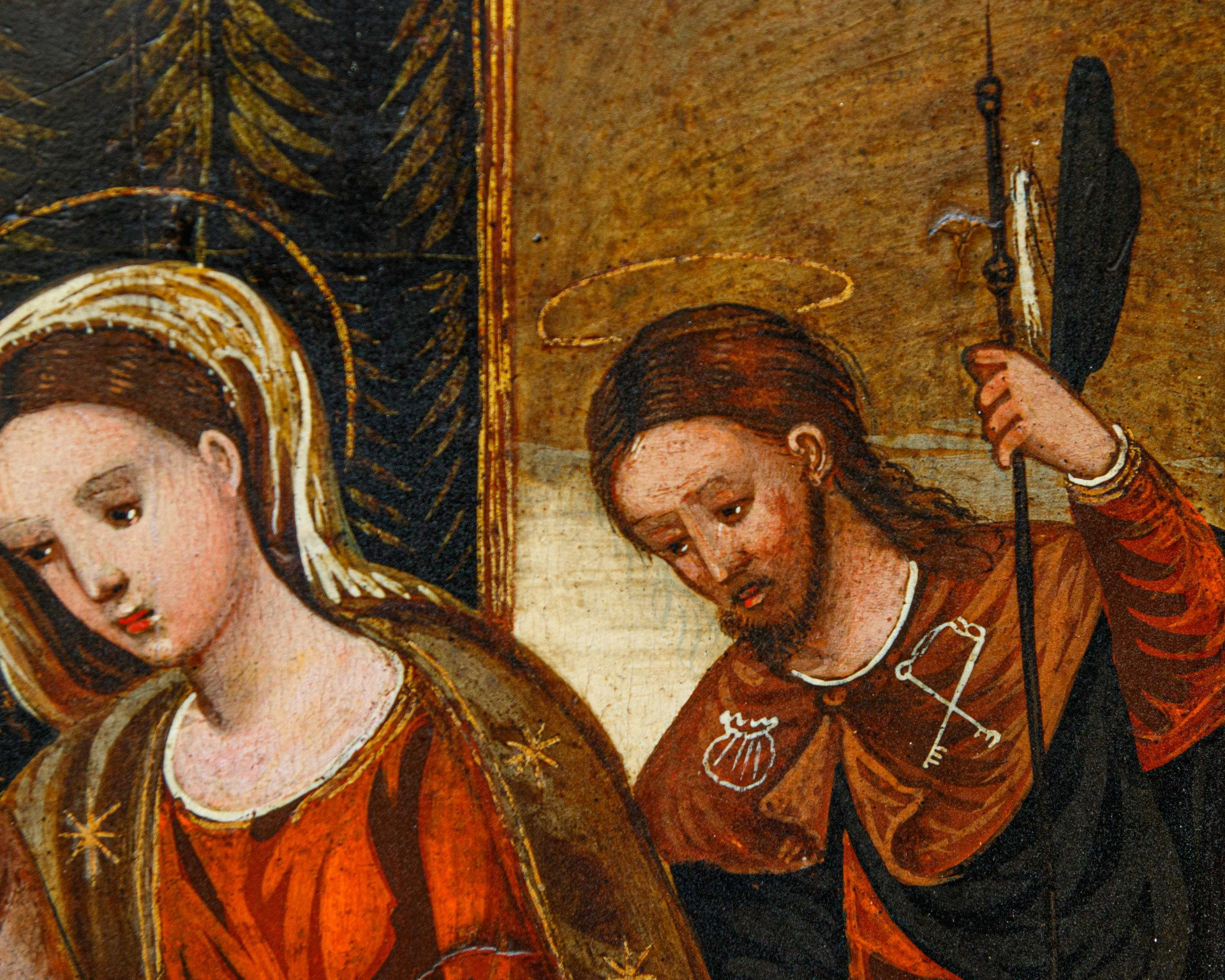
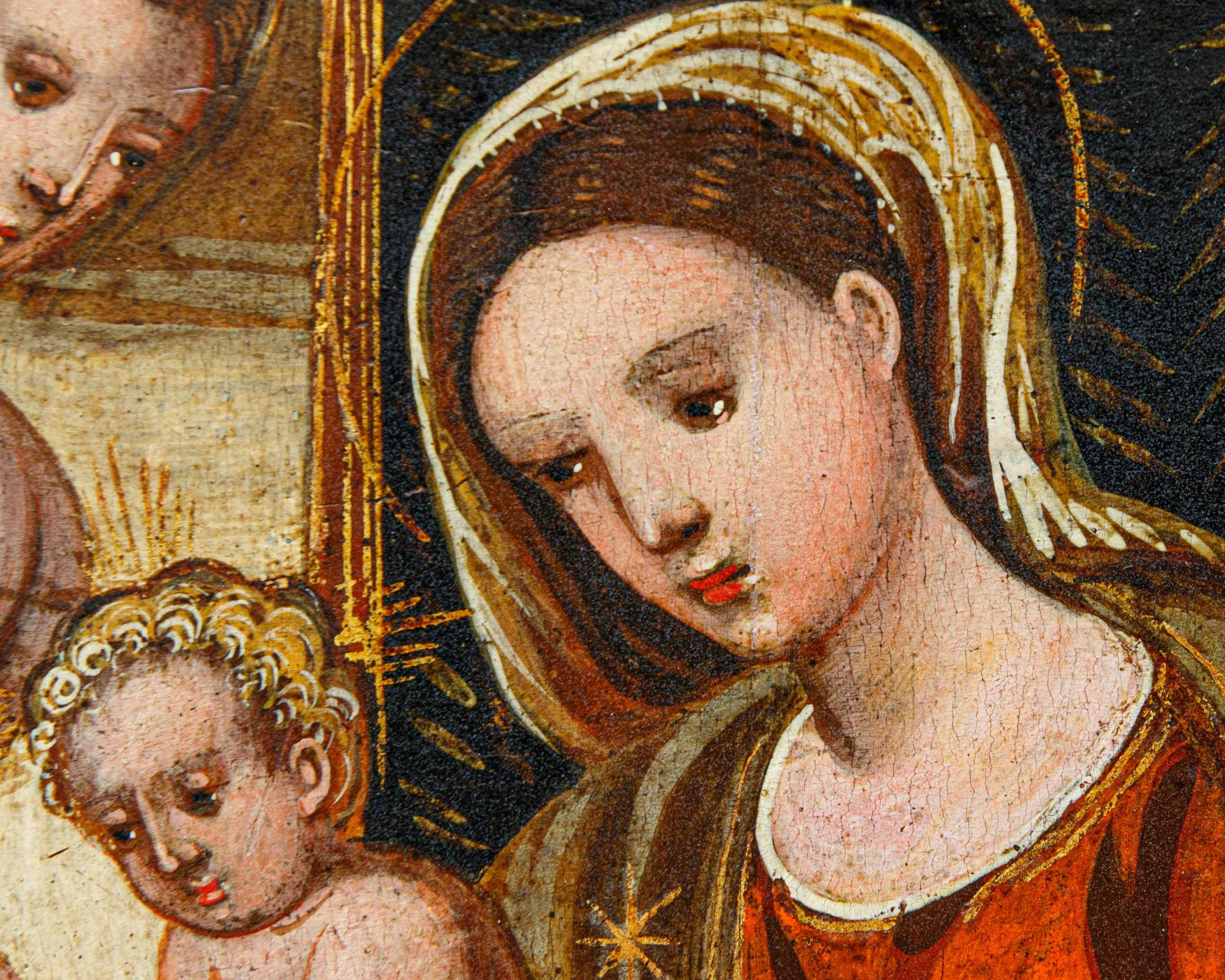
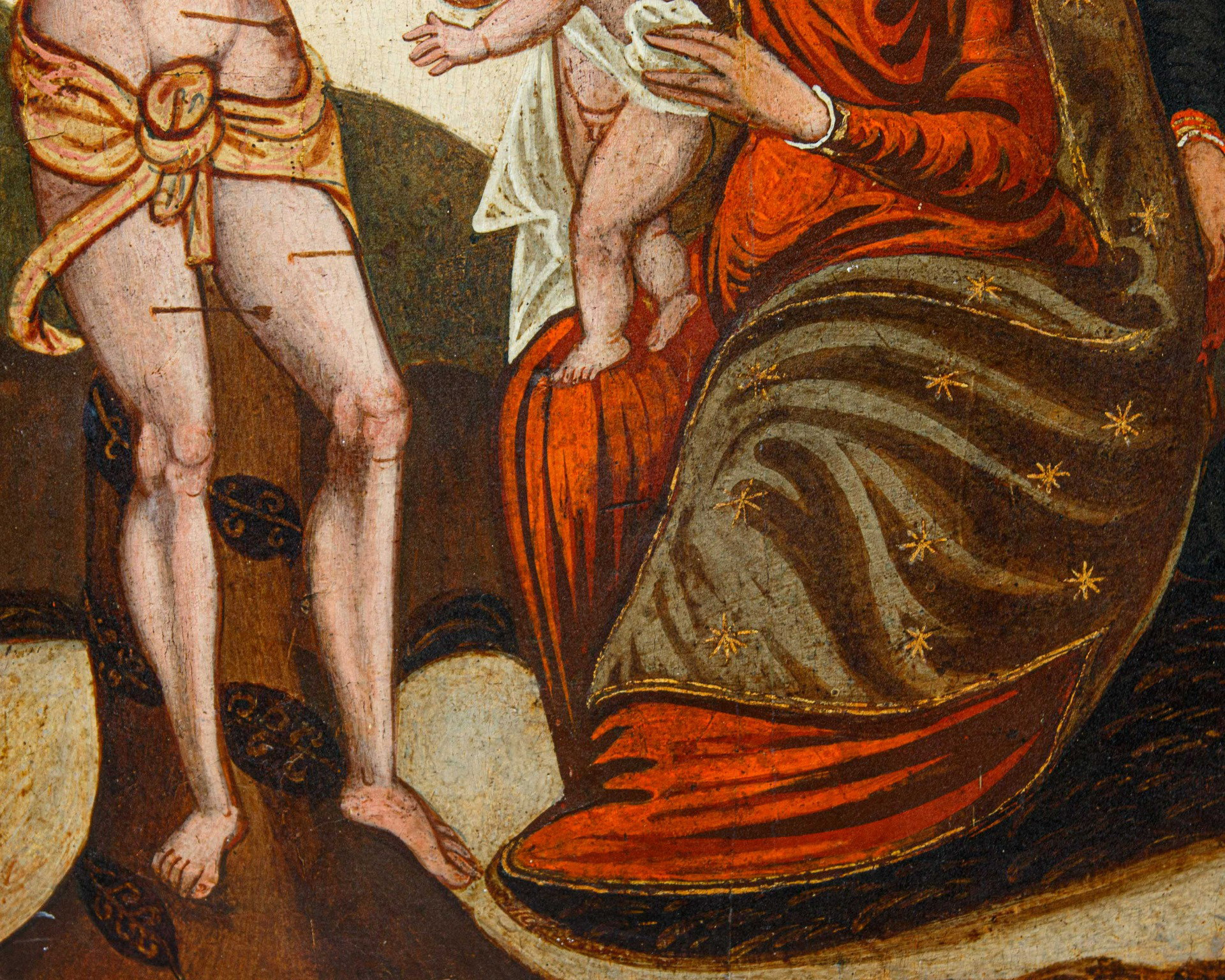
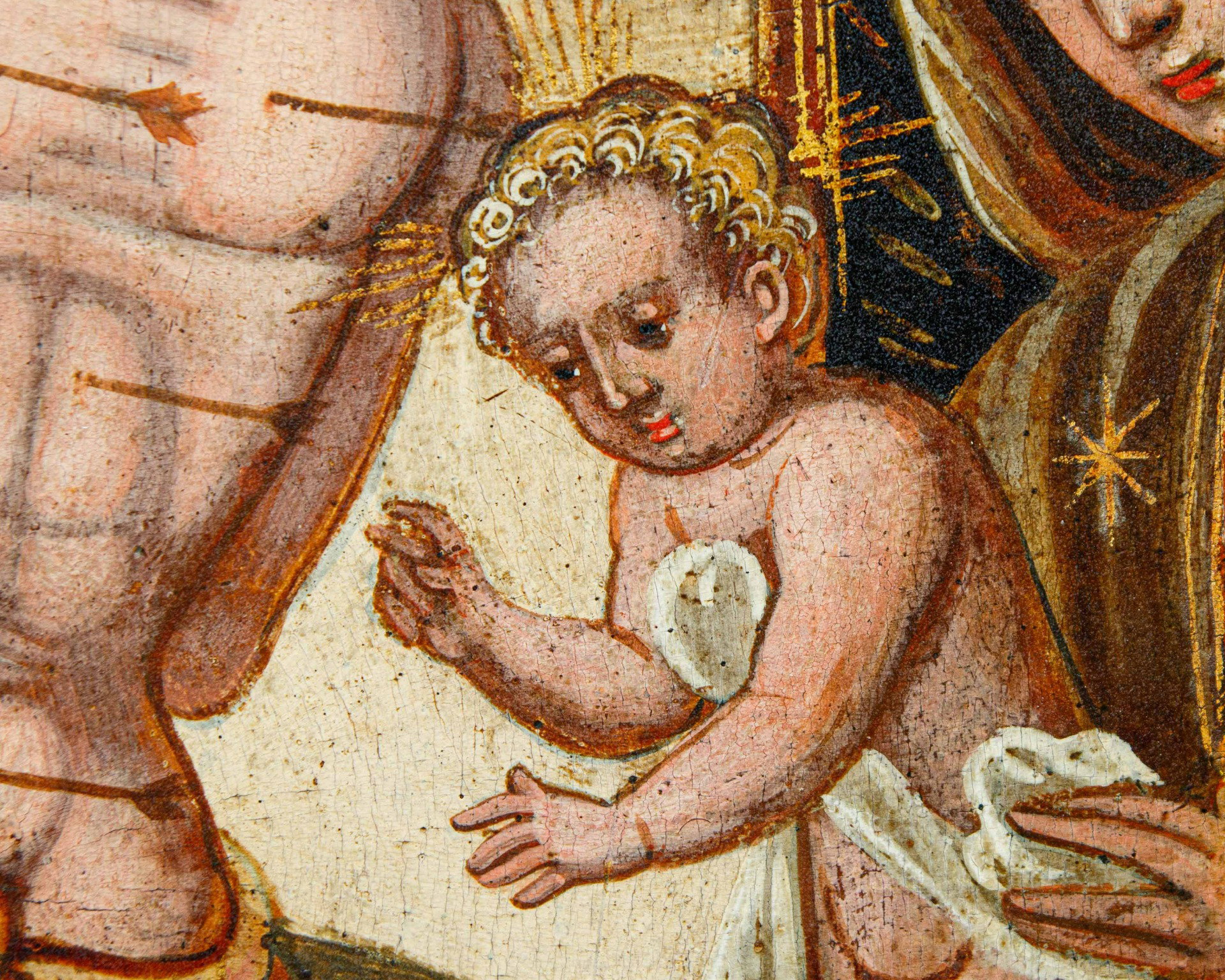
This panel, dating back to the 16th century, is a significant testament to devotional painting in the Lower Adriatic, representing a synthesis of the solemnity of the Byzantine East and the naturalism of the Western Renaissance. The composition features the Madonna and Child at the center, with the Virgin depicted with a melancholic expression and dressed according to post-Byzantine canons, wearing a red tunic and a dark mantle outlined with fine golden highlights that define its folds graphically. The Child, sitting on his mother's lap, leans towards the saint with a blessing gesture. On the sides stand the patron saints against pestilence, Sebastian and Roch: the former, on the left, appears bound to a tree and pierced by arrows with a deliberately schematic and symbolic anatomical rendering, while the latter, on the right, wears the typical pilgrim's attributes such as a staff and a shell, pointing to the bubonic plague sore on his thigh to emphasize his role as a health intercessor. The work fully belongs to the Dalmatian-Cretan school, a style characterized by pronounced linearity and the use of warm, earthy colors that define monumental but almost two-dimensional figures, lacking Venetian sfumato but possessing immediate communicative power. This artistic production, typical of workshops operating between the coasts of Puglia, Dalmatia, and the Greek islands, demonstrates how in the 16th century a universal figurative language persisted, capable of uniting the different shores of the Adriatic, merging the hieraticism of the Greek icon with Latin sacred narration into an image destined for spiritual reassurance and the protection of the faithful.