Neapolitan School of the 17th-18th Century, Adoration of the Magi
Description:
Neapolitan School of the 17th-18th Century
Adoration of the Magi
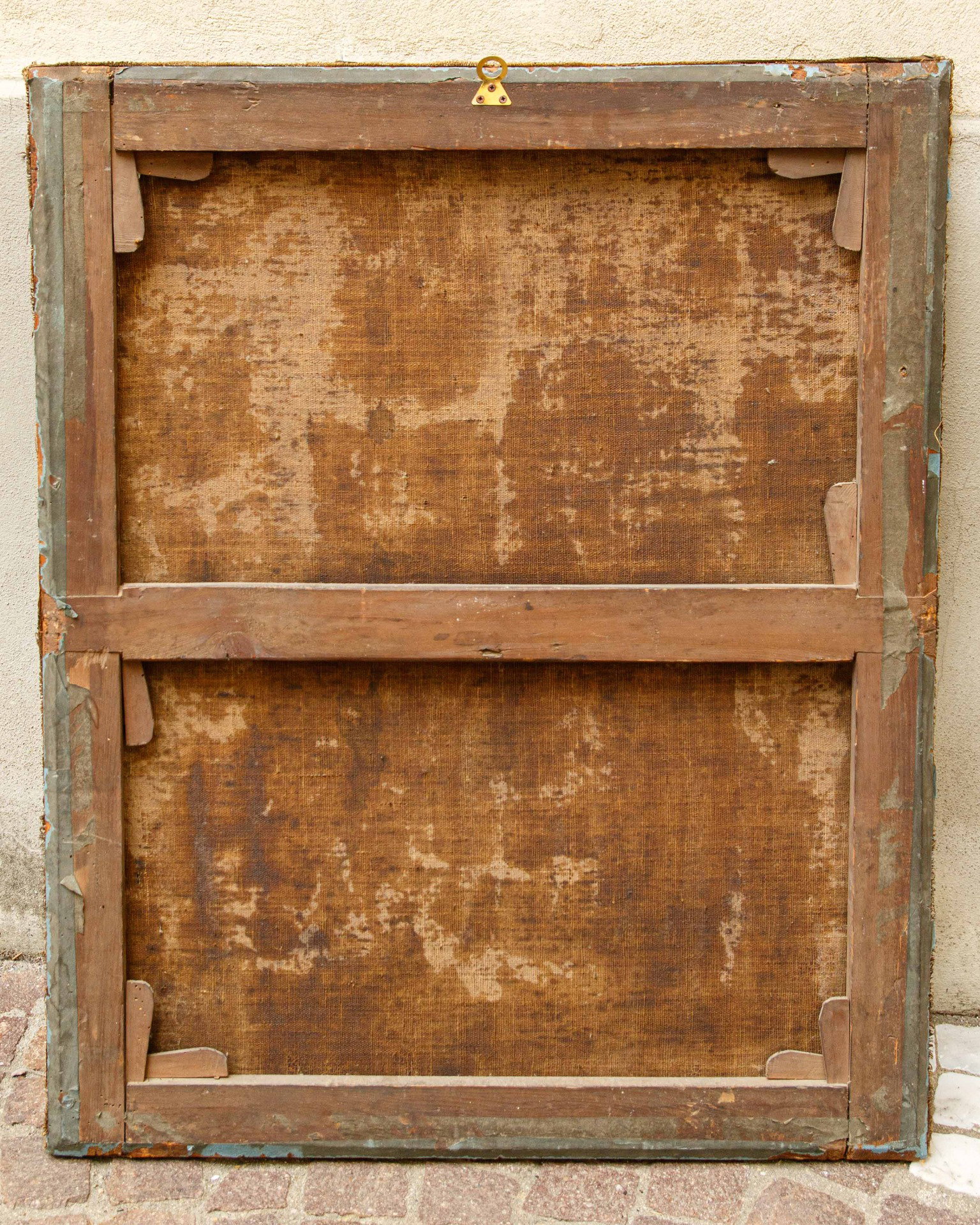
Oil on canvas, 81 x 65 cm
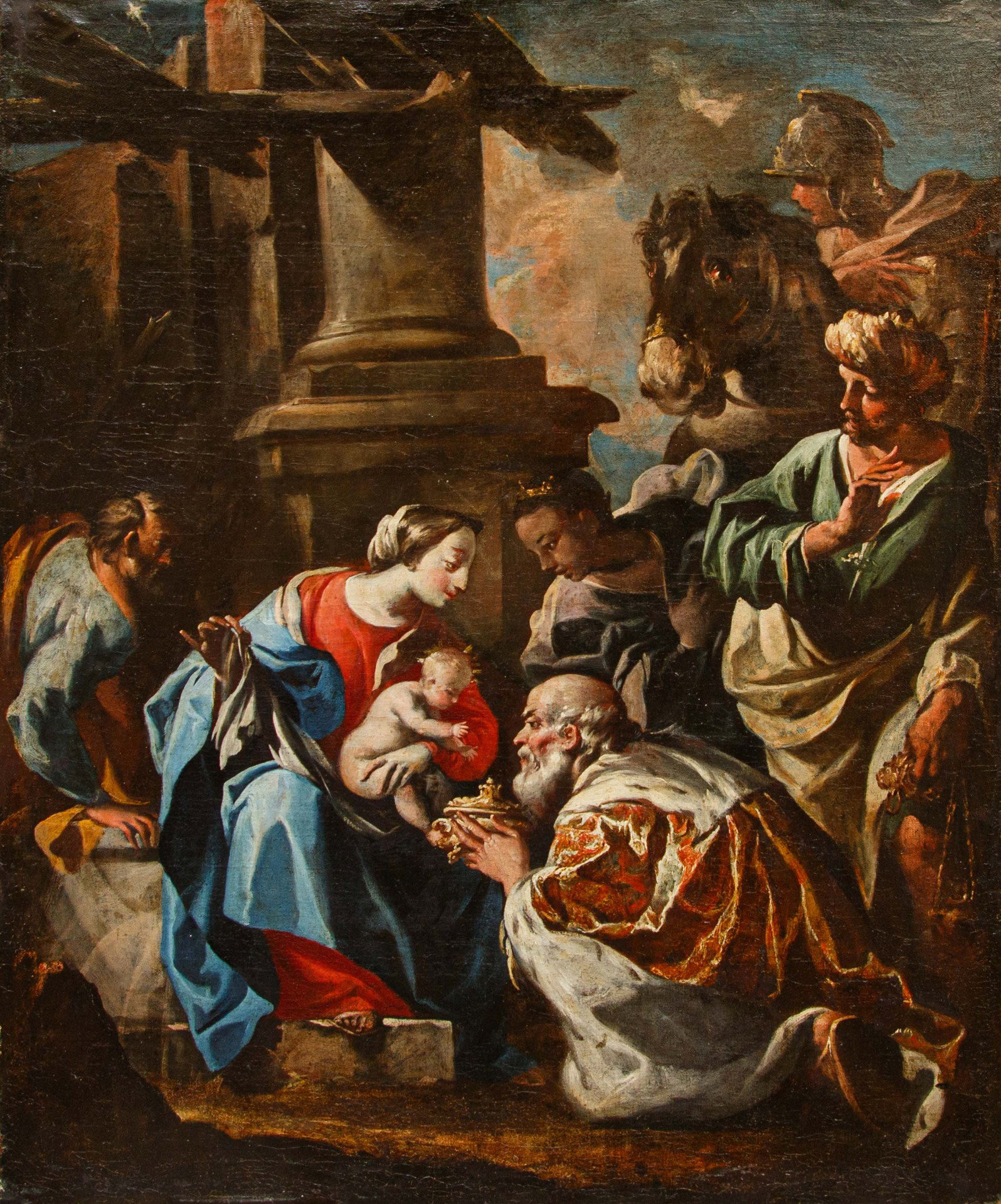
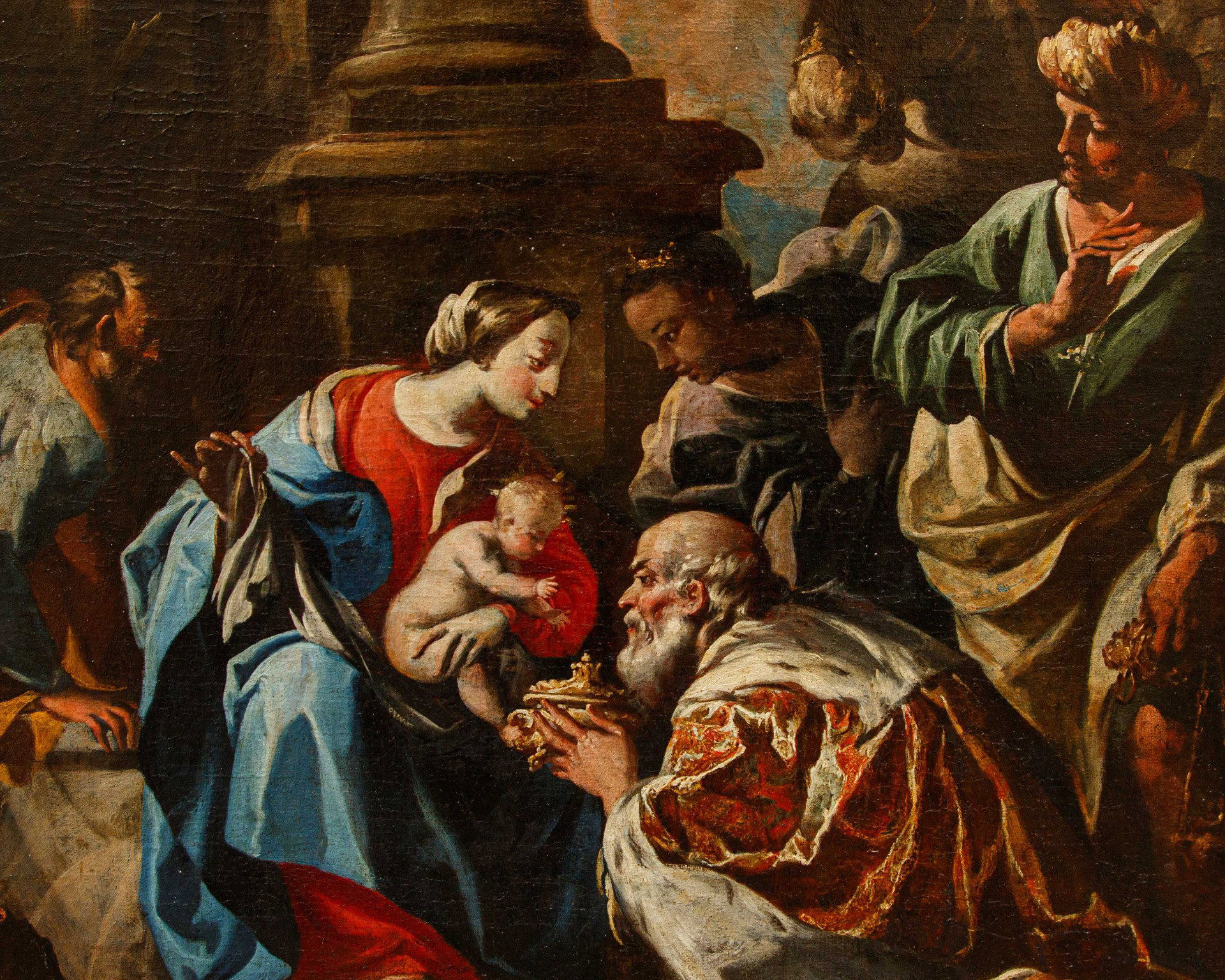
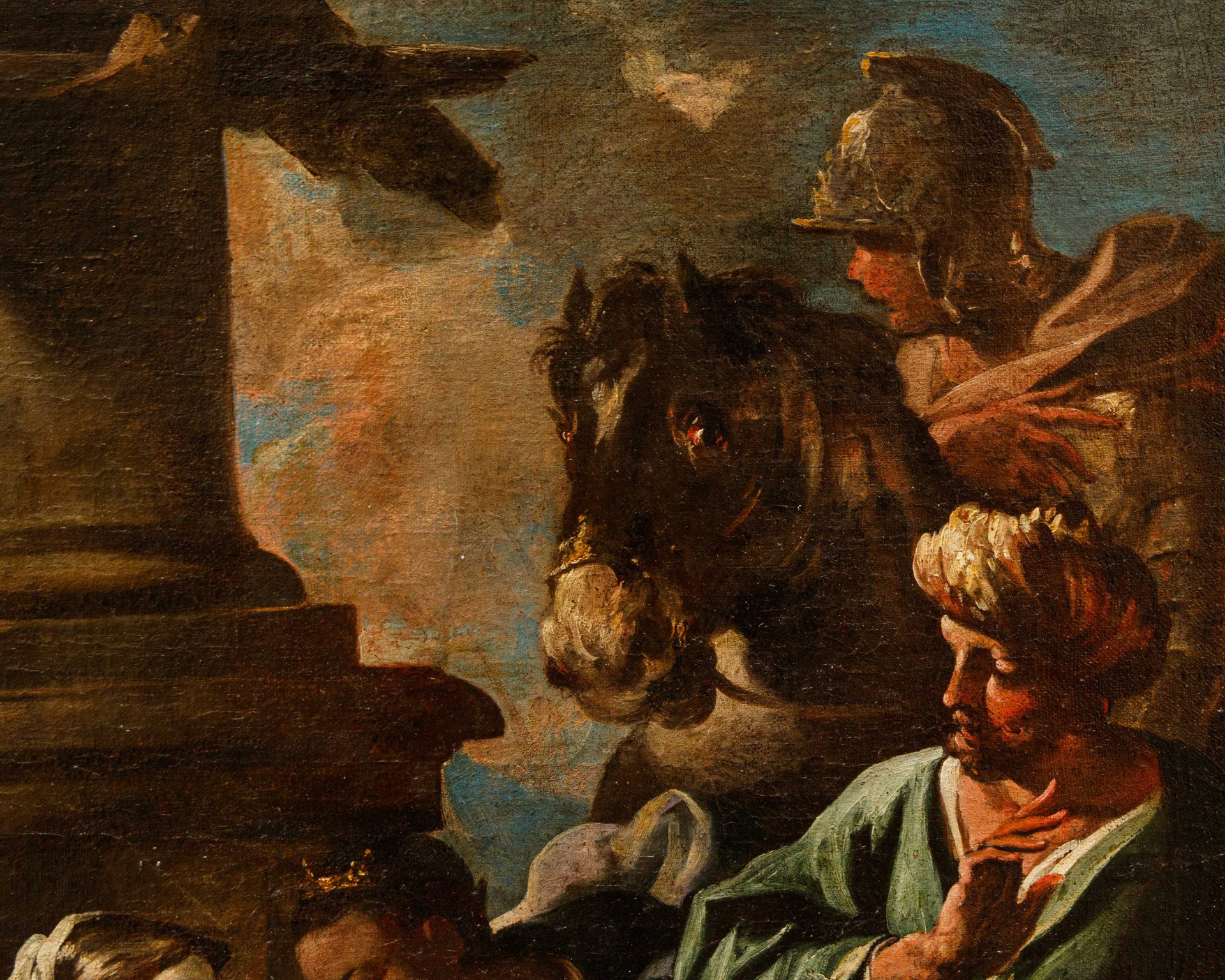
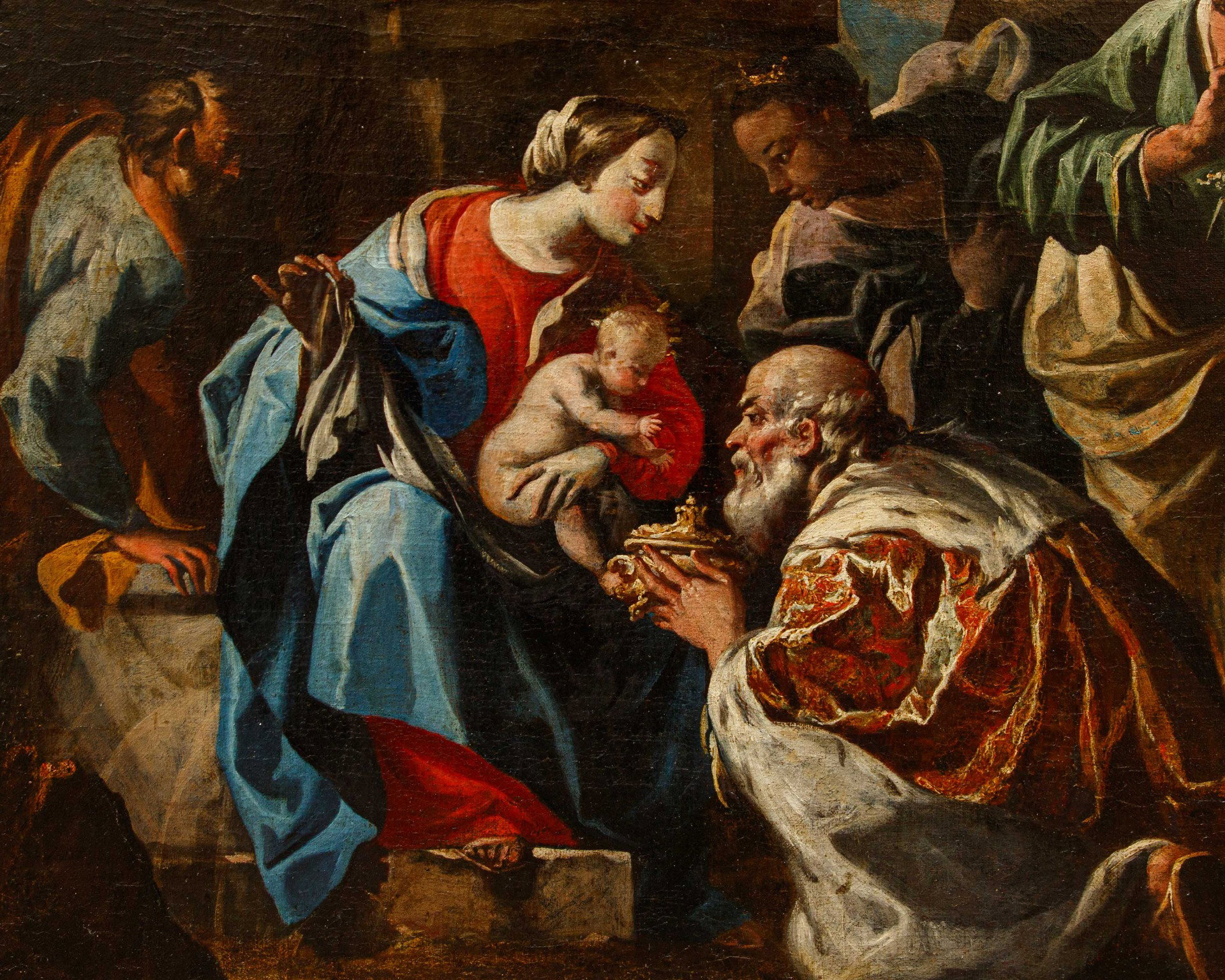
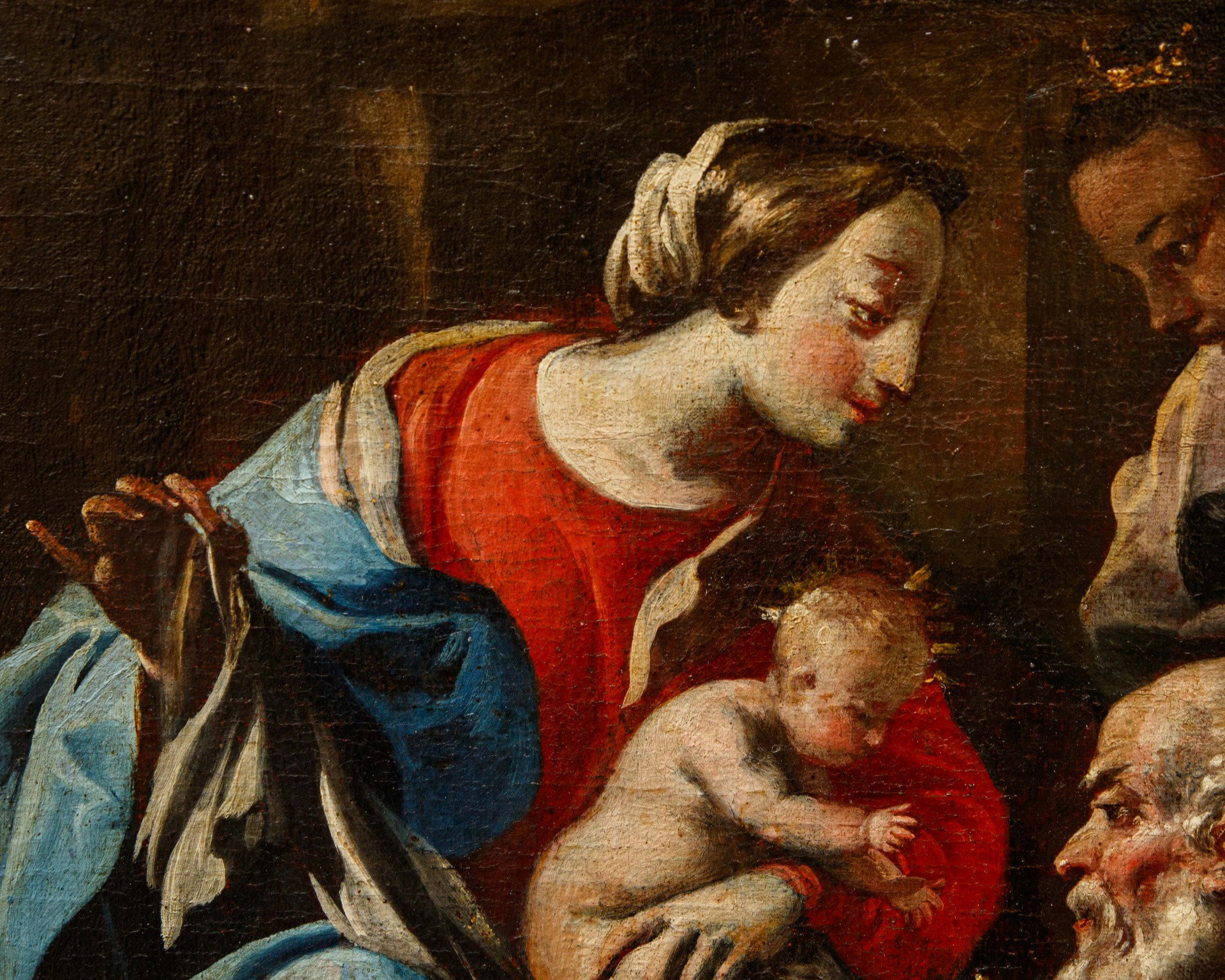
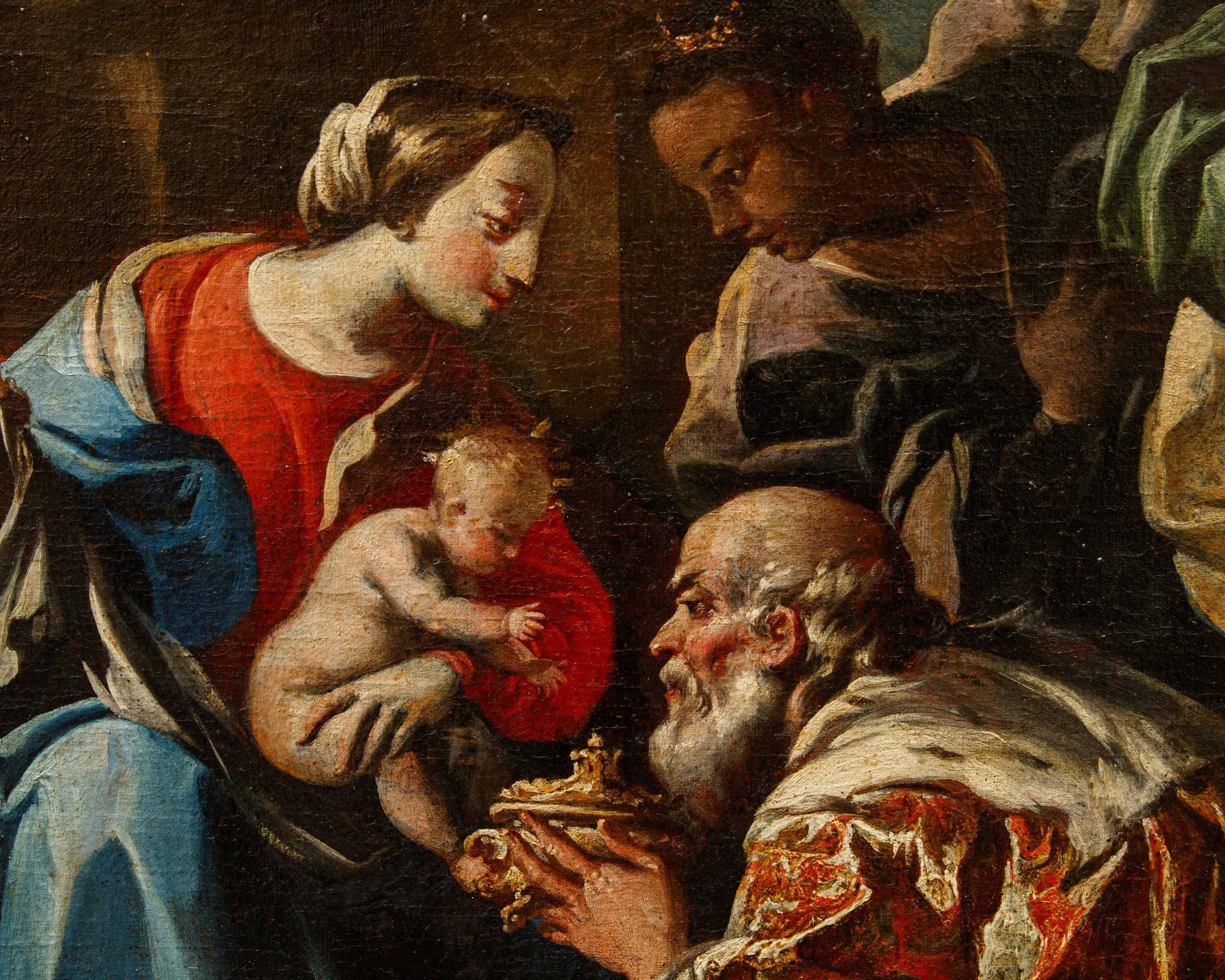
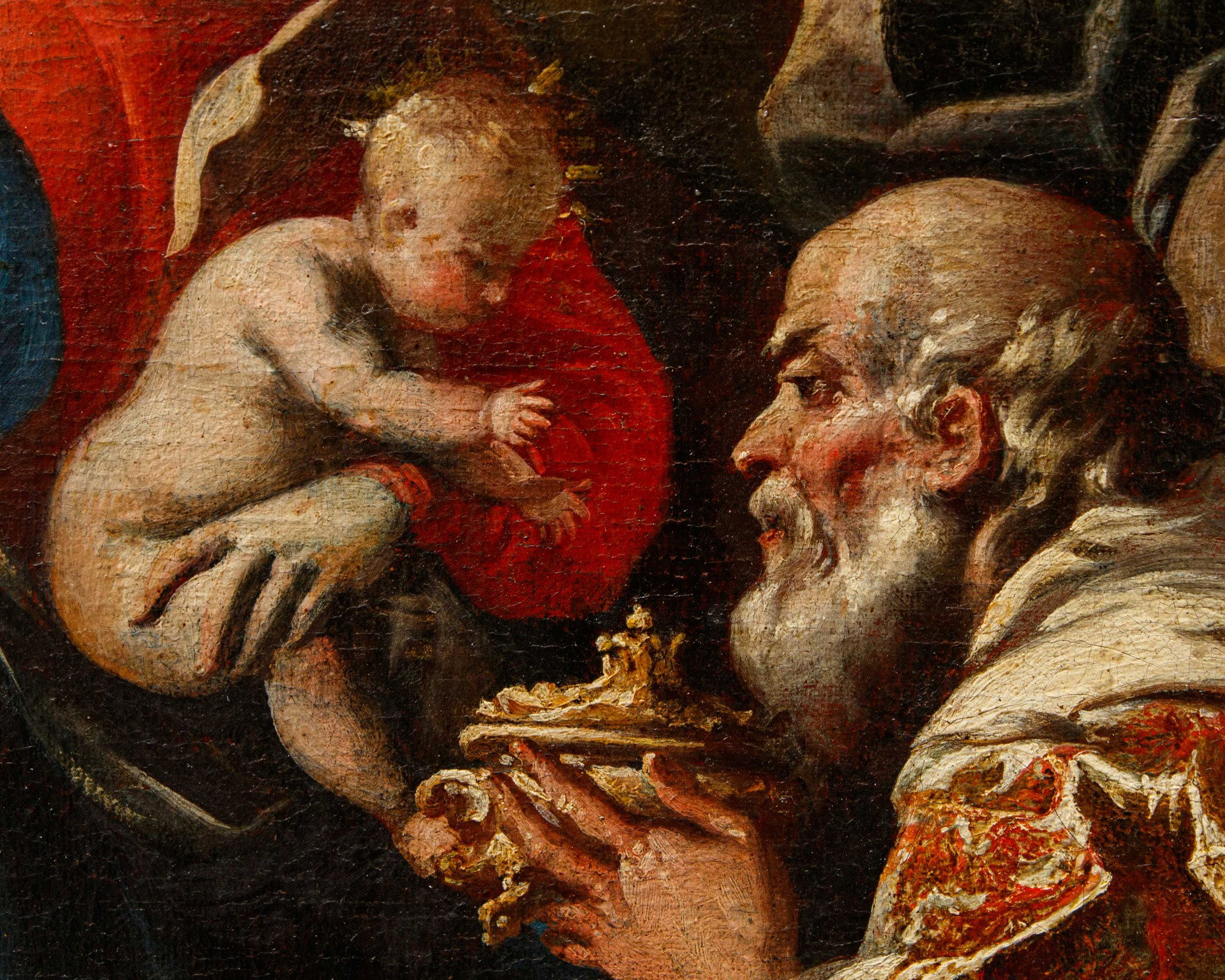
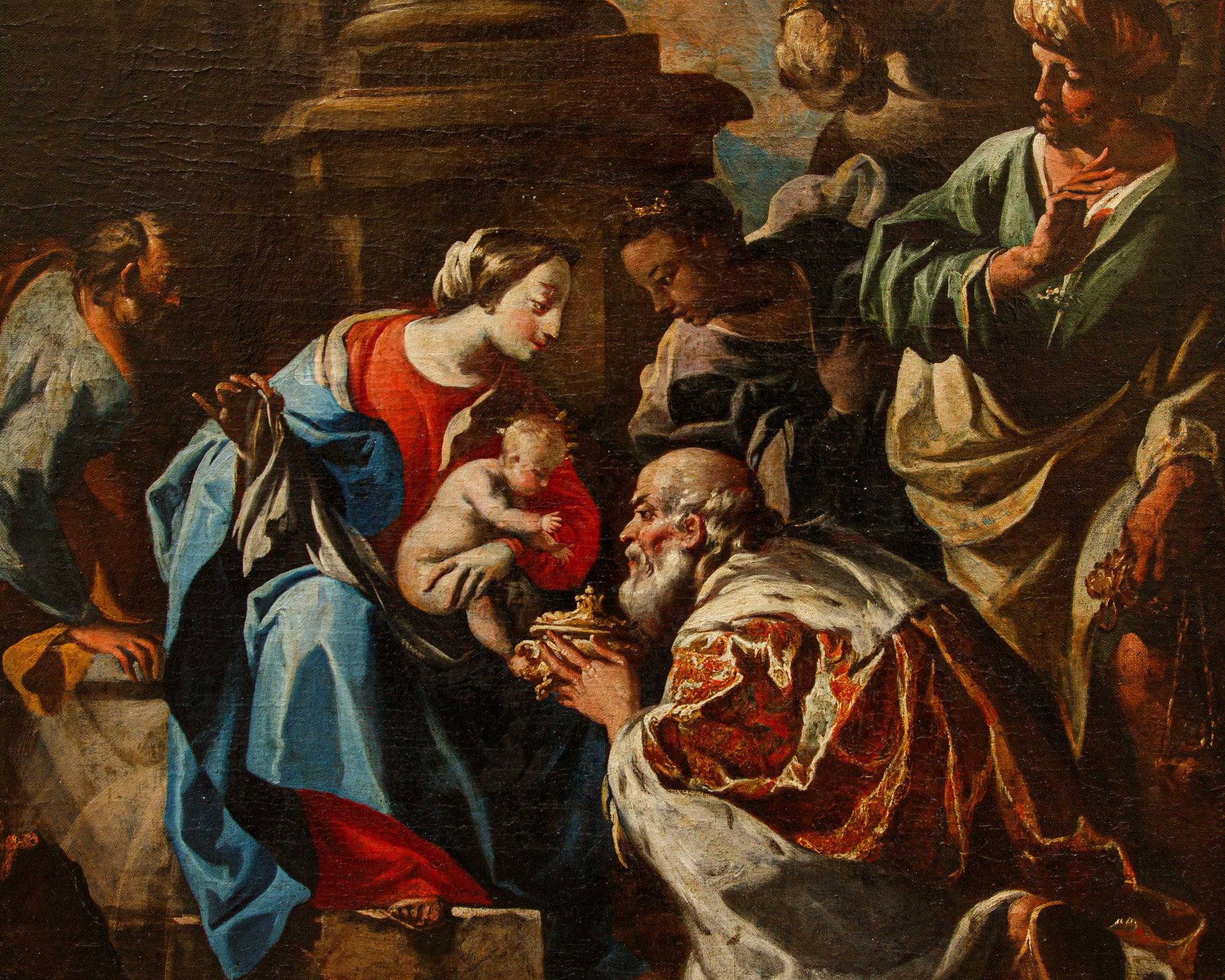
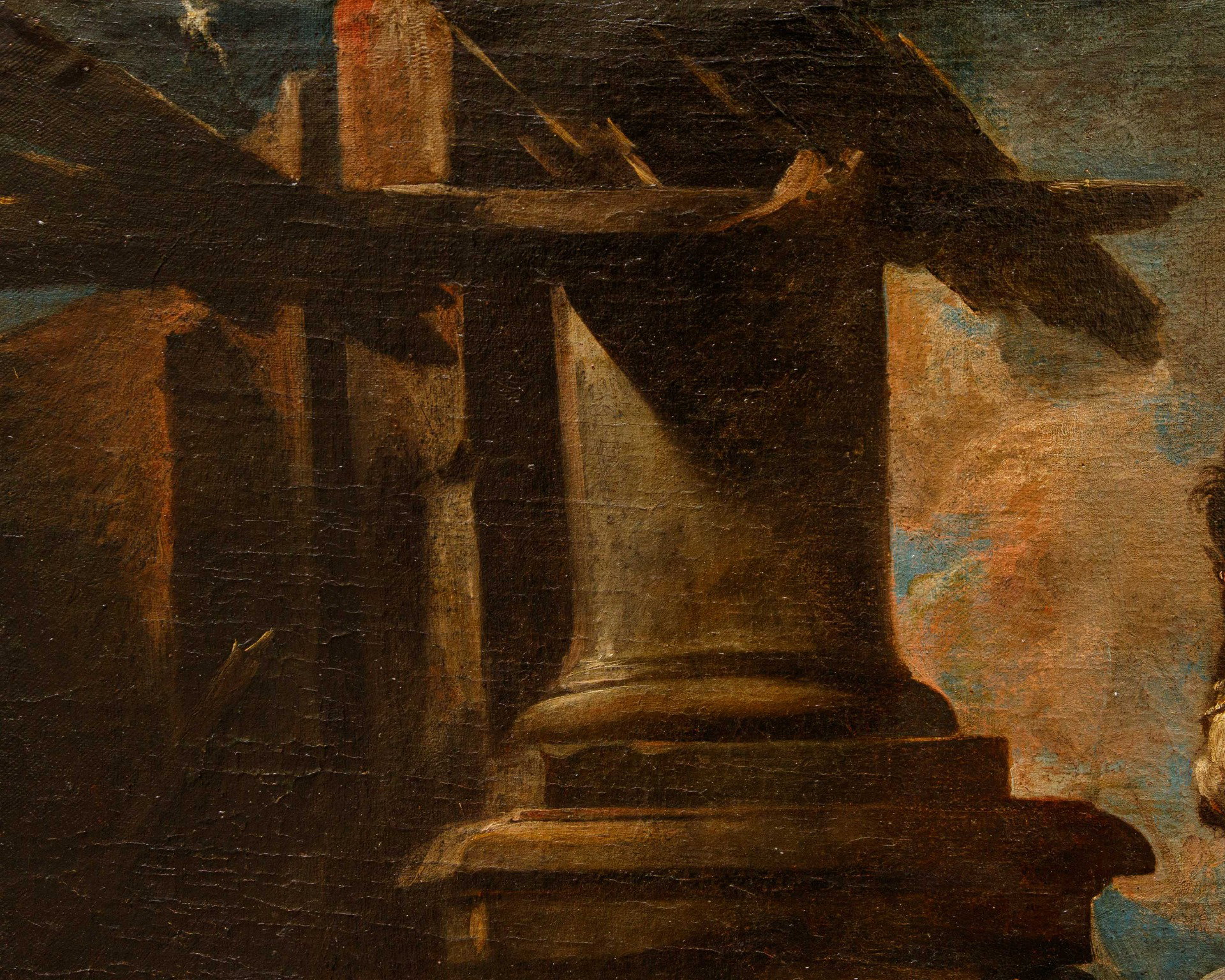
The work depicts the Adoration of the Magi according to a compositional structure of great scenic wisdom, typical of Neapolitan figurative culture between the 17th and 18th centuries. The scene is organized around a well-defined central core: the Virgin, wrapped in a blue mantle over a red dress, sits slightly raised and holds the Child, who stretches his hands towards the king kneeling at her feet. The latter, elderly and with his head uncovered as a sign of devotion, presents his gifts wrapped in rich golden vestments with decorated borders, whose warm chromaticism dominates the lower right portion of the canvas. To the Virgin's left, Saint Joseph emerges from the shadows, his figure in shadow marking his role as a discreet witness. Behind the royal procession, other figures can be glimpsed, partly hidden by darkness, while in the architectural background, a structure of ruined columns, an evocation of pagan ruin giving way to the new Christian order, opens up a glimmer of bright sky. In the upper right, a figure in green and ochre, perhaps a third king or a page, points towards the scene with an eloquent gesture. The raking, warm light constructs a chiaroscuro dramaturgy of Caravaggesque derivation, filtered, however, through the softer and more colorful sensibility of the mature Neapolitan school.
The painting fits perfectly into the context of Neapolitan painting of the late 17th and early 18th centuries, a period when the lesson of Luca Giordano, with his ability to synthesize naturalism and the Venetian and Baroque coloristic elegance, had paved the way for a generation of painters capable of combining compositional invention and executive quality. In this climate, artists like Francesco Solimena were formed, whose highly dramatic and refined production would profoundly mark European taste in the following decades, and Paolo De Matteis, a follower of Luca Giordano and a sensitive interpreter of sacred subjects with a more relaxed and luminous vein. Compositional solutions similar to those adopted here, with the group of the Virgin and Child placed in a central position, the kneeling king in the foreground, and the procession of the Magi winding towards the background in an alternation of lights and shadows, are found in some Adorations by Corrado Giaquinto, a painter from Puglia with Neapolitan training active in the first half of the eighteenth century, whose versions of the subject preserved at the Kunsthistorisches Museum in Vienna, the Museum of Fine Arts in Boston, and the Museo Civico in Bevagna show the same vocation for the crowded and luminous scene, governed by a vibrant sense of color and a skillful management of space. The comparison with Giaquinto, while taking into account the chronological and stylistic distance, helps to place the painting in question within a coherent Neapolitan tradition, in which the sacred narrative becomes an occasion for a visual feast of velvets, brocades, and illuminated flesh, always supported by a solid compositional architecture of 17th-century origin.