Flemish master of the first half of the 18th century
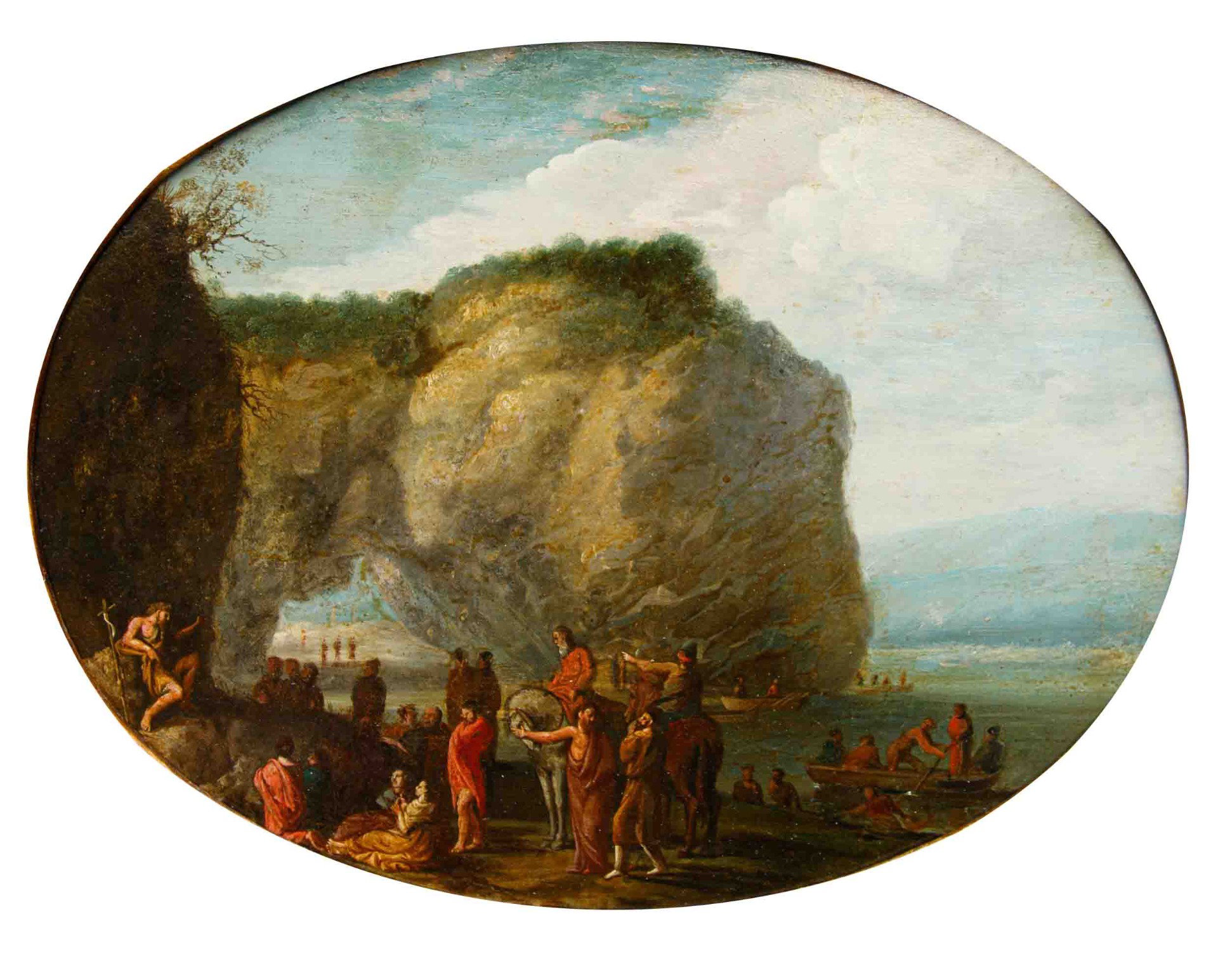
Sermon of the Baptist
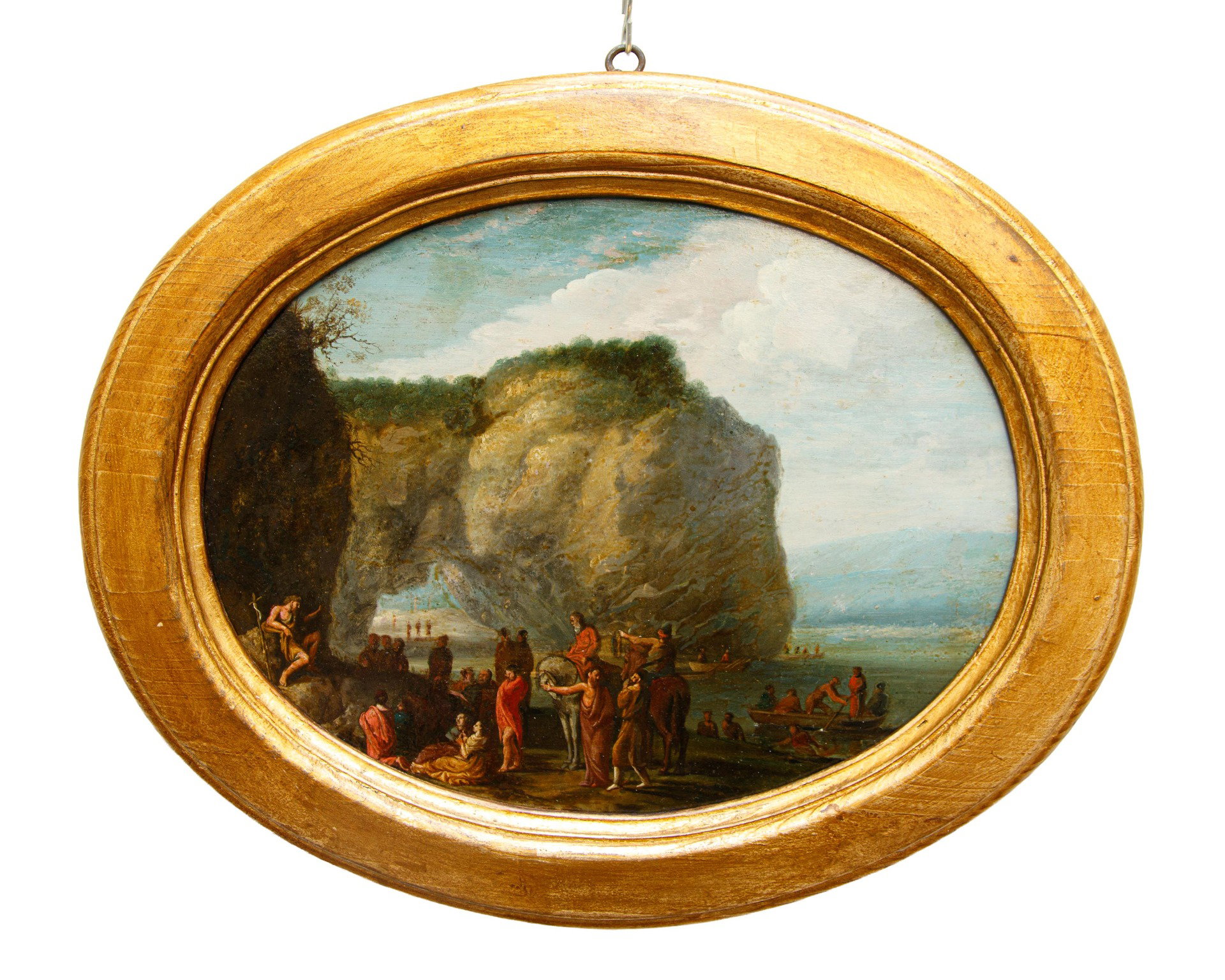
Oil on copper, 26.2 x 33.7 cm
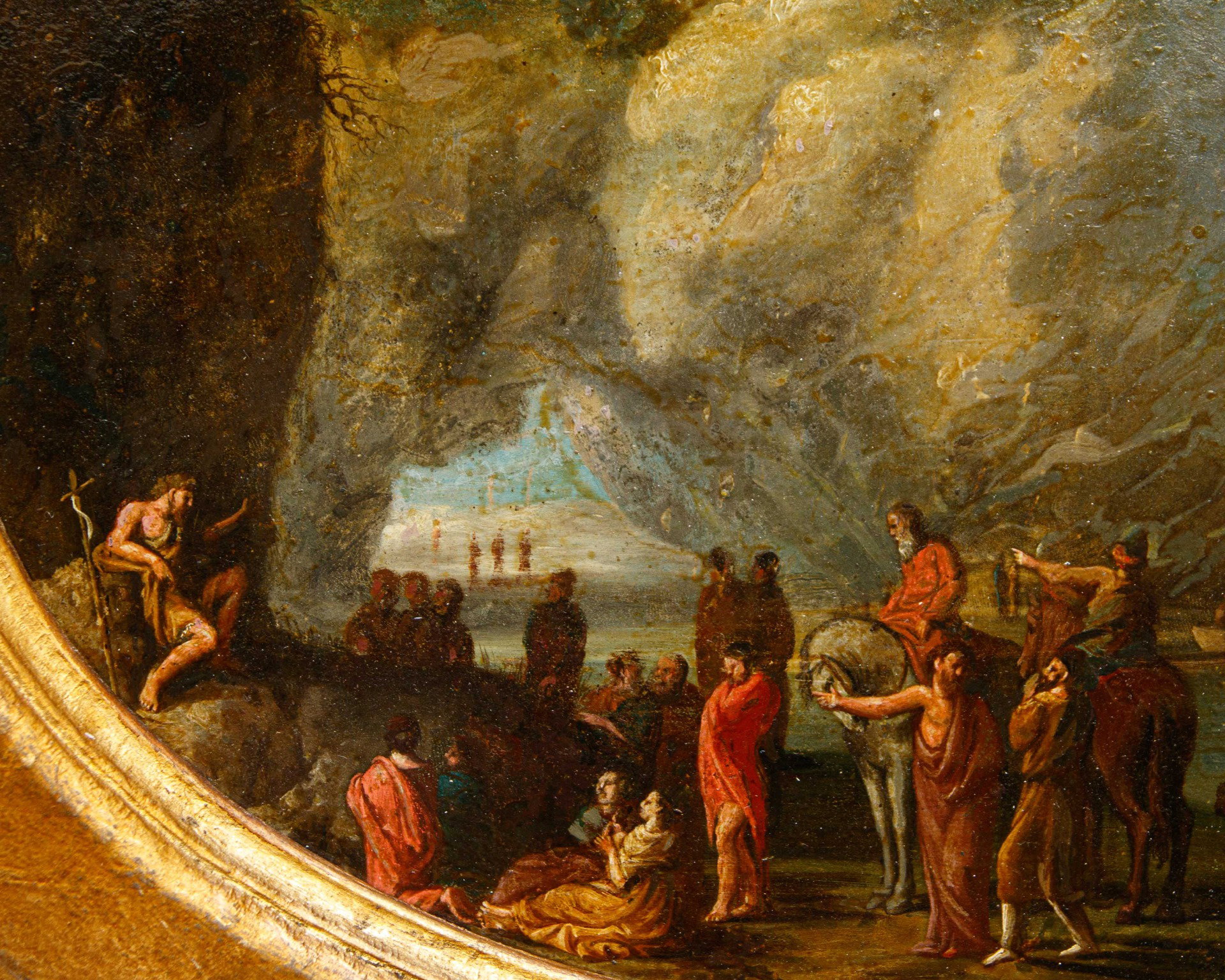
The composition, a finely crafted Flemish oil on copper from the 18th century, is an emblematic example of how "cabinet" painting of the era succeeded in combining religious fervor with an almost theatrical landscape sensibility. The choice of metal support is not accidental: copper, with its smooth, non-absorbent surface, allows the artist to apply minute brushstrokes and transparent glazes, lending the painting an intrinsic luminosity and a detail definition that, even after centuries, preserves its chromatic liveliness.
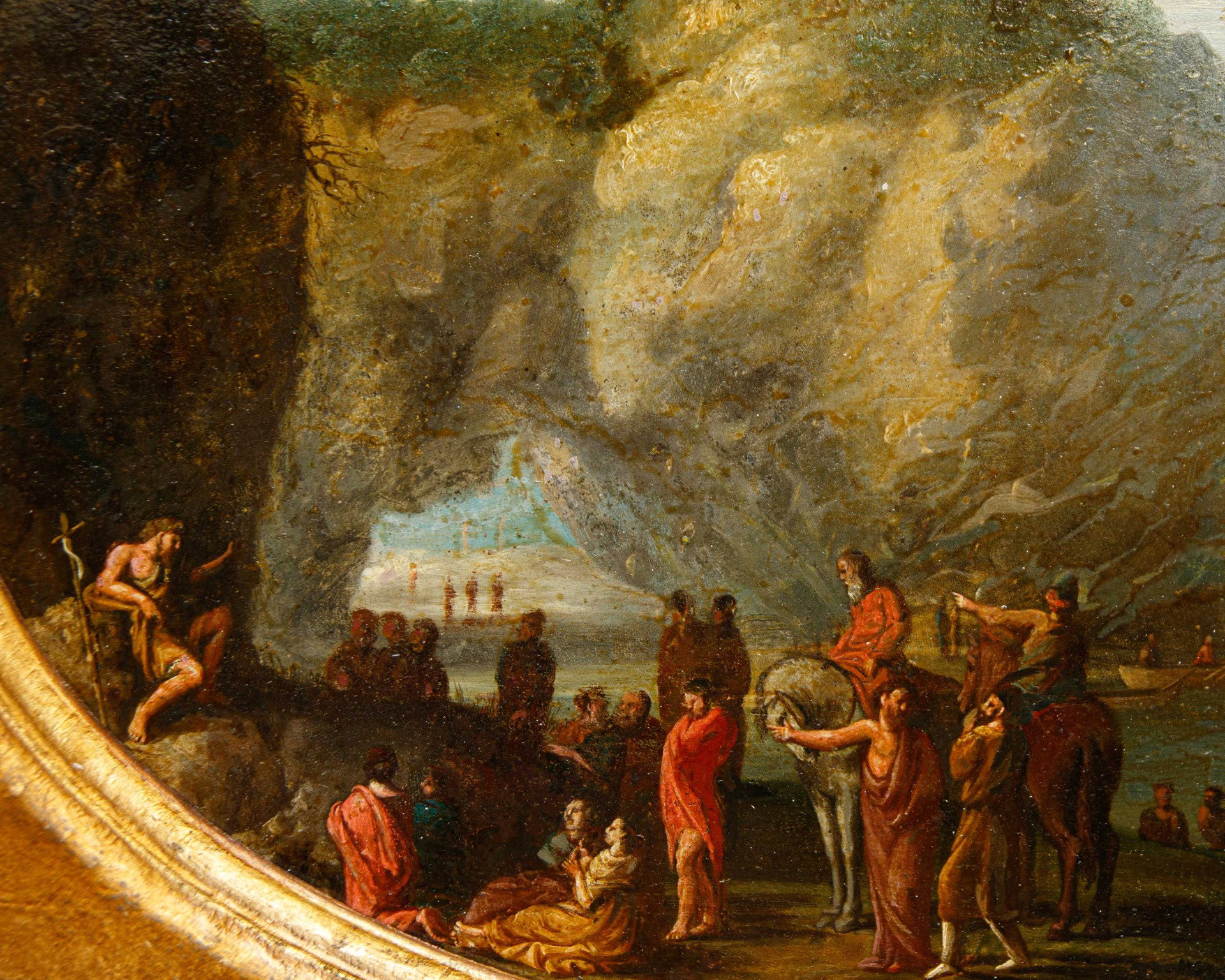
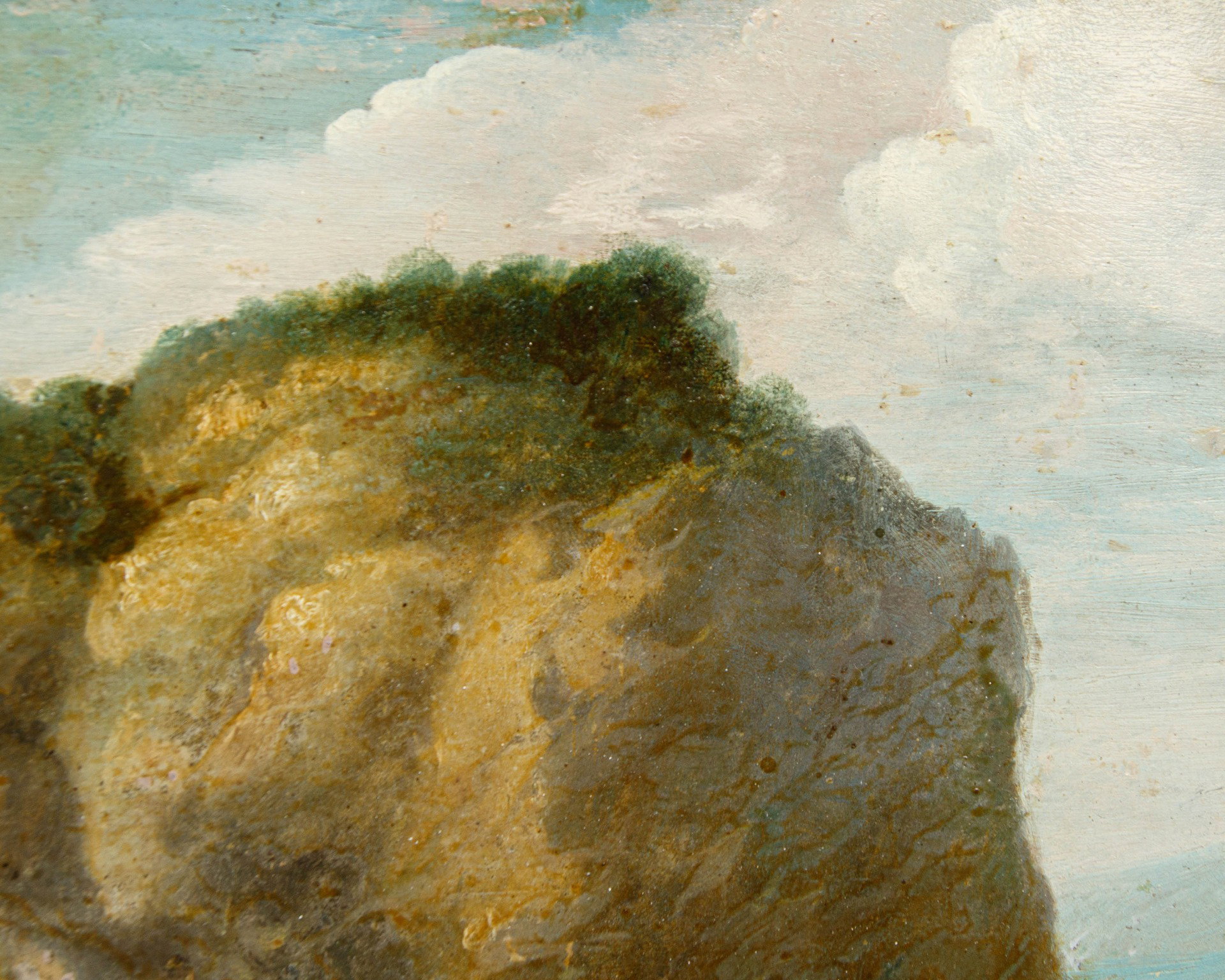
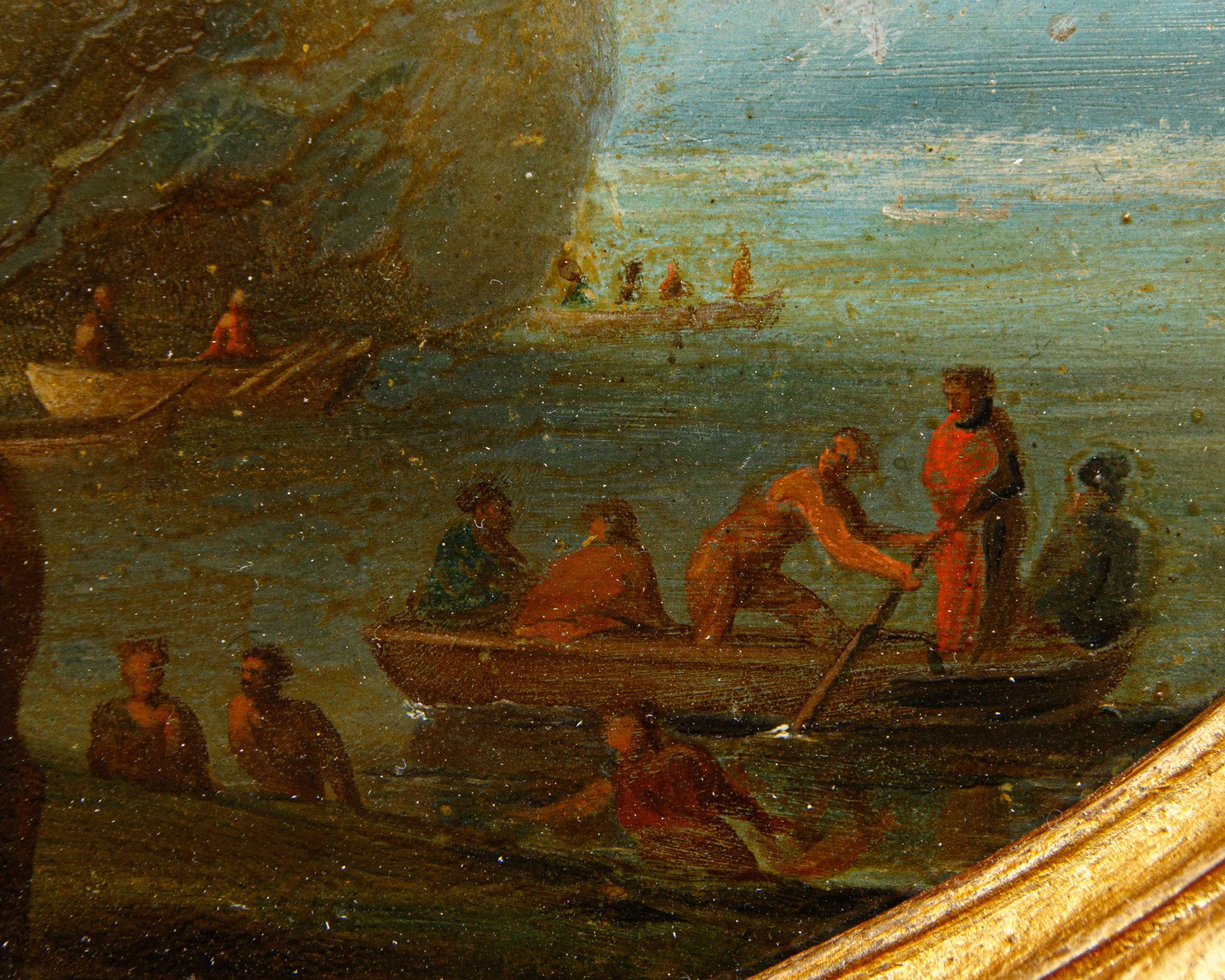
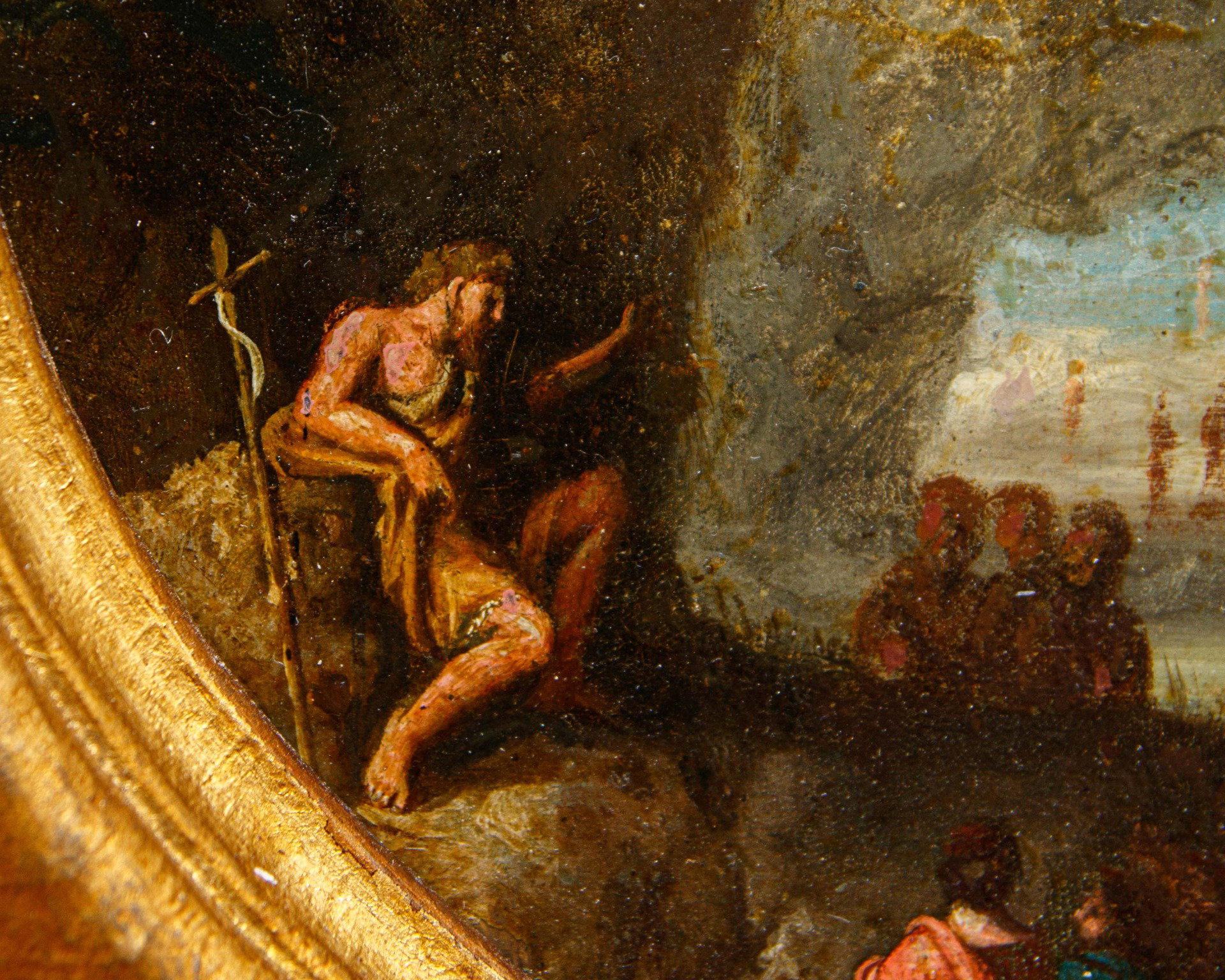
At the center of the iconographic narrative is the Sermon of Saint John the Baptist, a subject that in the Northern tradition often serves as a splendid pretext for exploring the genre of the anthropized landscape. The scene is dominated by an imposing rocky backdrop, a rugged natural formation that opens like a triumphal arch towards a distant, hazy horizon. This compositional device not only provides spatial depth but also creates a symbolic contrast between the darkness of the cave, a place of asceticism and penance, and the clear light of the sky reflected on the distant waters, evoking the hope of salvation introduced by the Precursor's message.
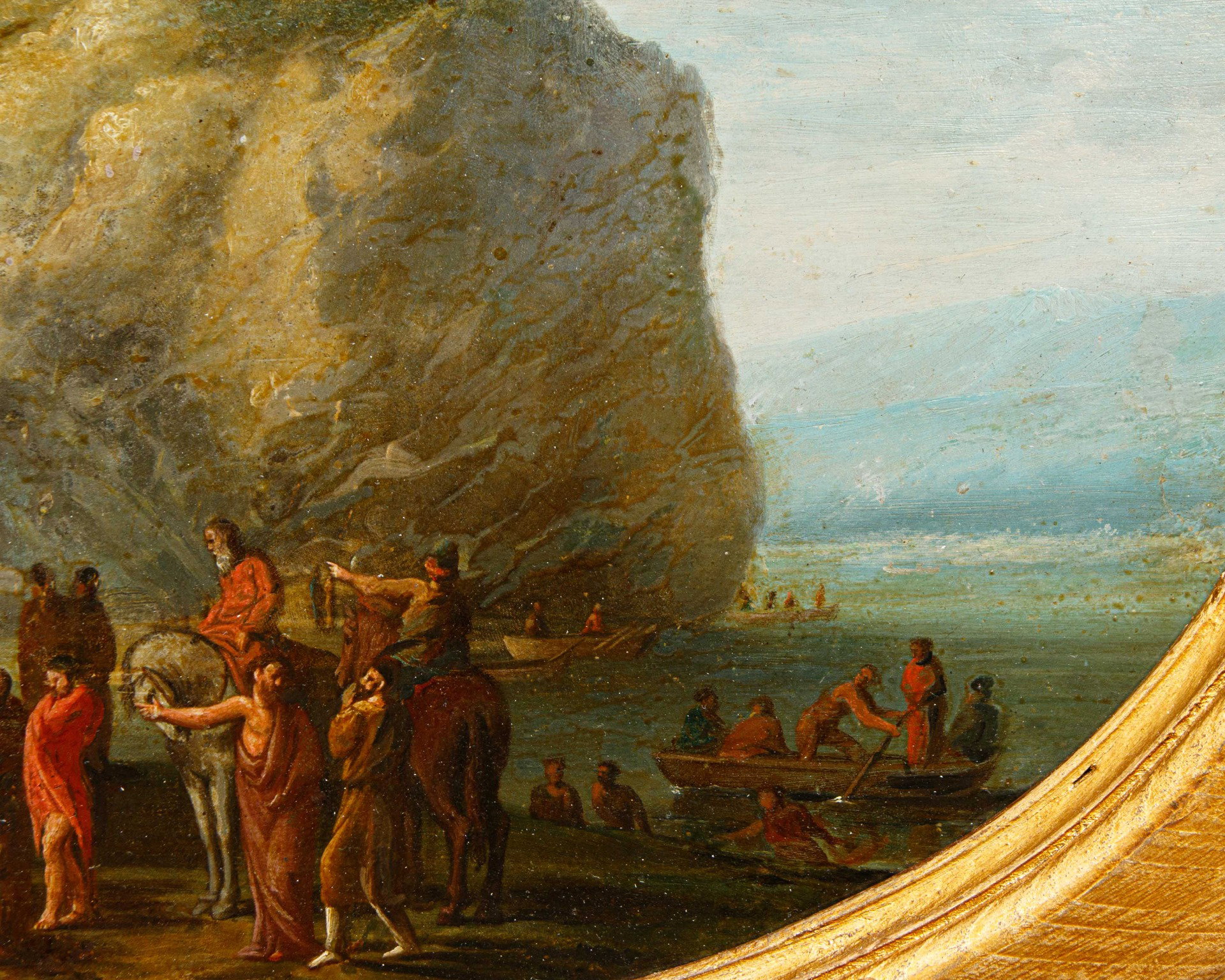
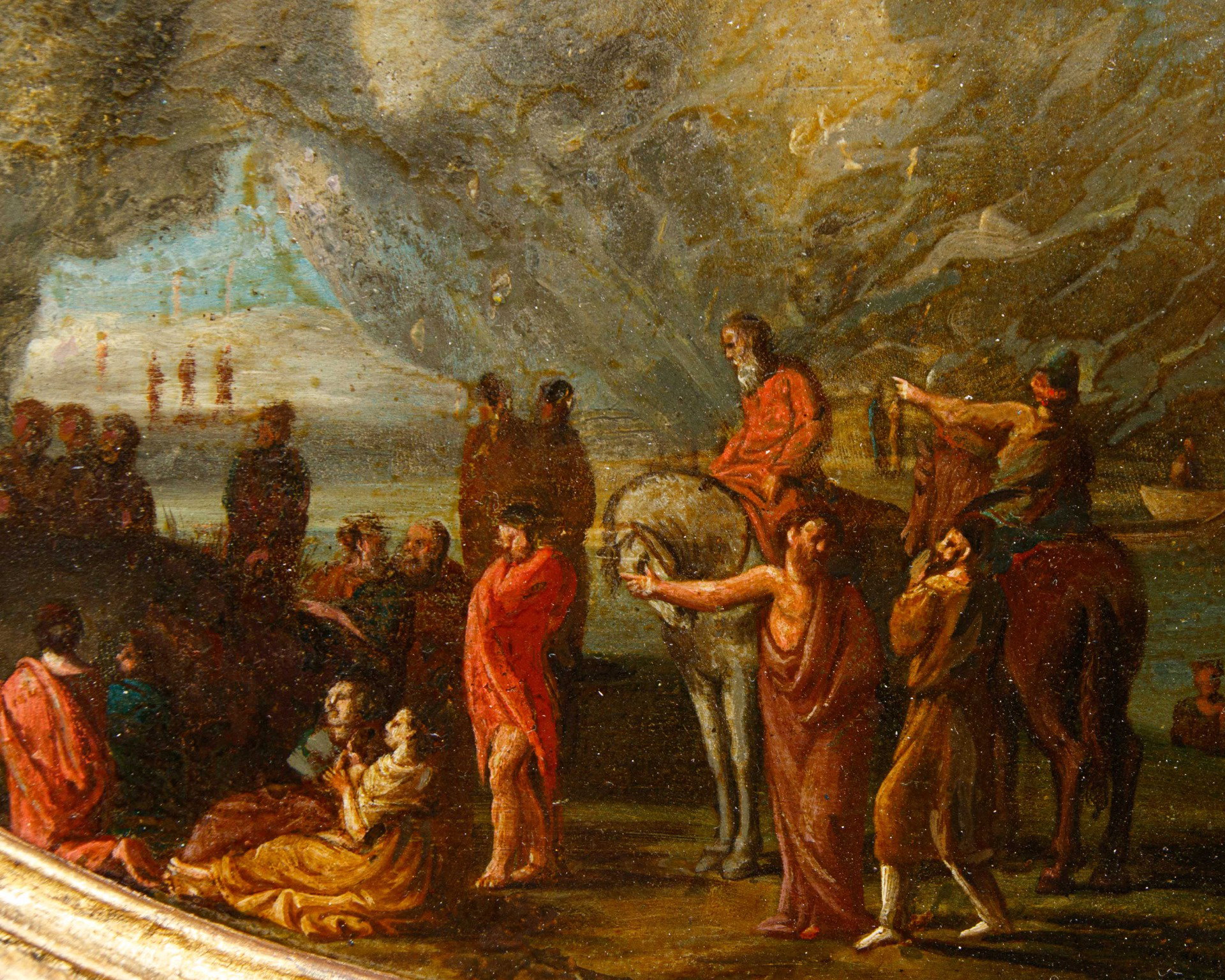
John the Baptist is positioned on the left, slightly elevated, clad in his typical camel-skin garment and holding the processional cross. Around him gathers a diverse crowd, rendered with almost miniature-like care: one can observe figures on horseback seemingly stopped out of curiosity, and common folk absorbed in devout listening. The Flemish painter's skill is evident in the ability to differentiate the attitudes and physiognomies of this varied audience, transforming a biblical episode into a lively cross-section of customs.
From a stylistic point of view, the work reflects the transition between the late Baroque and the early instances of a more measured classicism. Although the structure of the rocks retains a certain 17th-century drama, the palette is refreshed with the bluish and silvery tones typical of the 18th century, particularly evident in the rendering of the atmosphere and distant vapors. It is a work that invites close viewing, characteristic of private collecting of the era, where the sacred narrative transforms into an aesthetic pleasure made of reflections, chiaroscuro contrasts, and a deep sense of harmony between man and wild nature.