Description:
Trentino, 18th century
Chest
Walnut wood, 71 x 158.5 x 56 cm
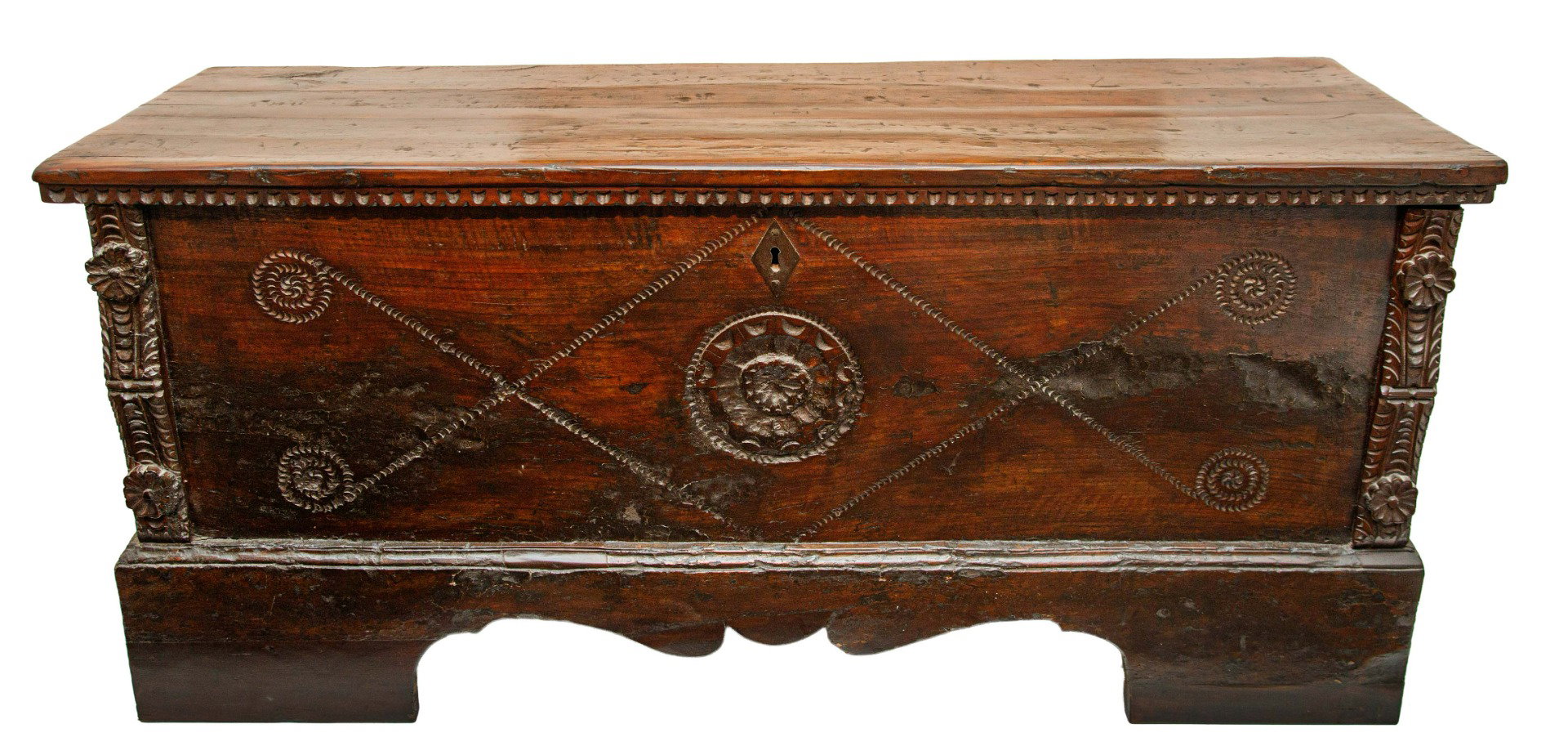
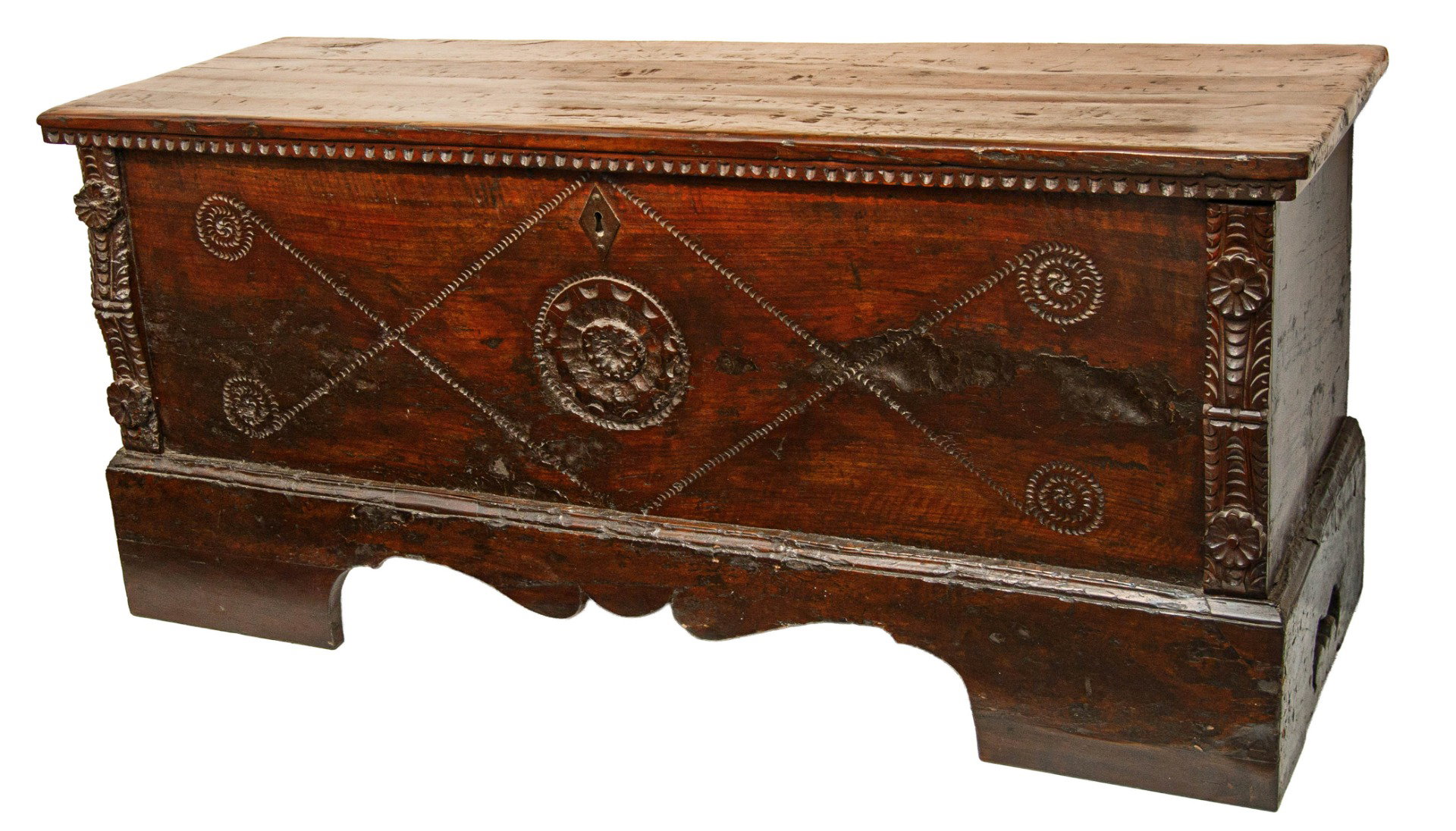
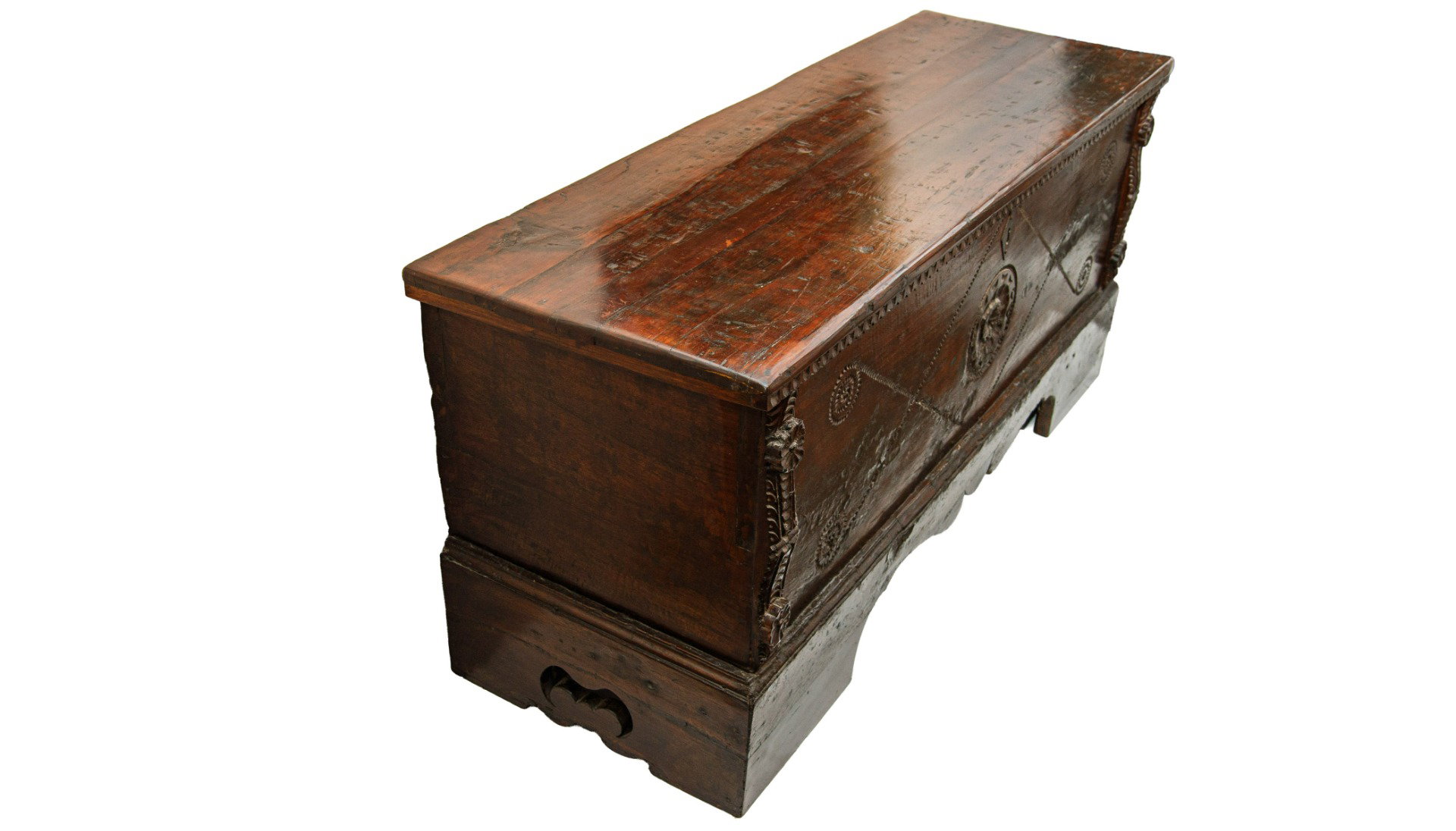
18th-century Trentino cabinetmaking finds a masterful synthesis in this piece of furniture, made from precious walnut wood, a preferred essence for its robustness and its ability to accommodate detailed carvings. The choice of material is suggested by the deep brown tone of the patina and the compact texture of the wood grain, visible especially on the top surface made of large solid planks. The front panel is distinguished by a geometrically rigorous design of great charm, where a double line incised with small dashed strokes outlines a large central rhombus. Inside this frame, a circular rose carved in relief stands out, characterized by fleshy petals and a well-defined central core. To the sides of the rhombus, the surface is enriched by four elegant spiral motifs, which recall solar symbolism and the ancient decorative traditions of the Alpine valleys. The corner uprights are treated with particular plastic care: they appear as pilasters richly decorated with three superimposed rosettes, connected by a stylized leaf motif that runs along the entire vertical profile. Under the edge of the lid, a band of incised dentils provides an additional element of compositional rhythm, connecting the horizontal top to the body of the furniture. The base consists of a high shaped plinth, whose curvilinear profiles create a play of solids and voids that gives momentum to the massive structure, avoiding a sense of excessive heaviness.