Workshop of Leandro dal Ponte called Leandro Bassano (Bassano del Grappa, 1557 – Venice, 1622)
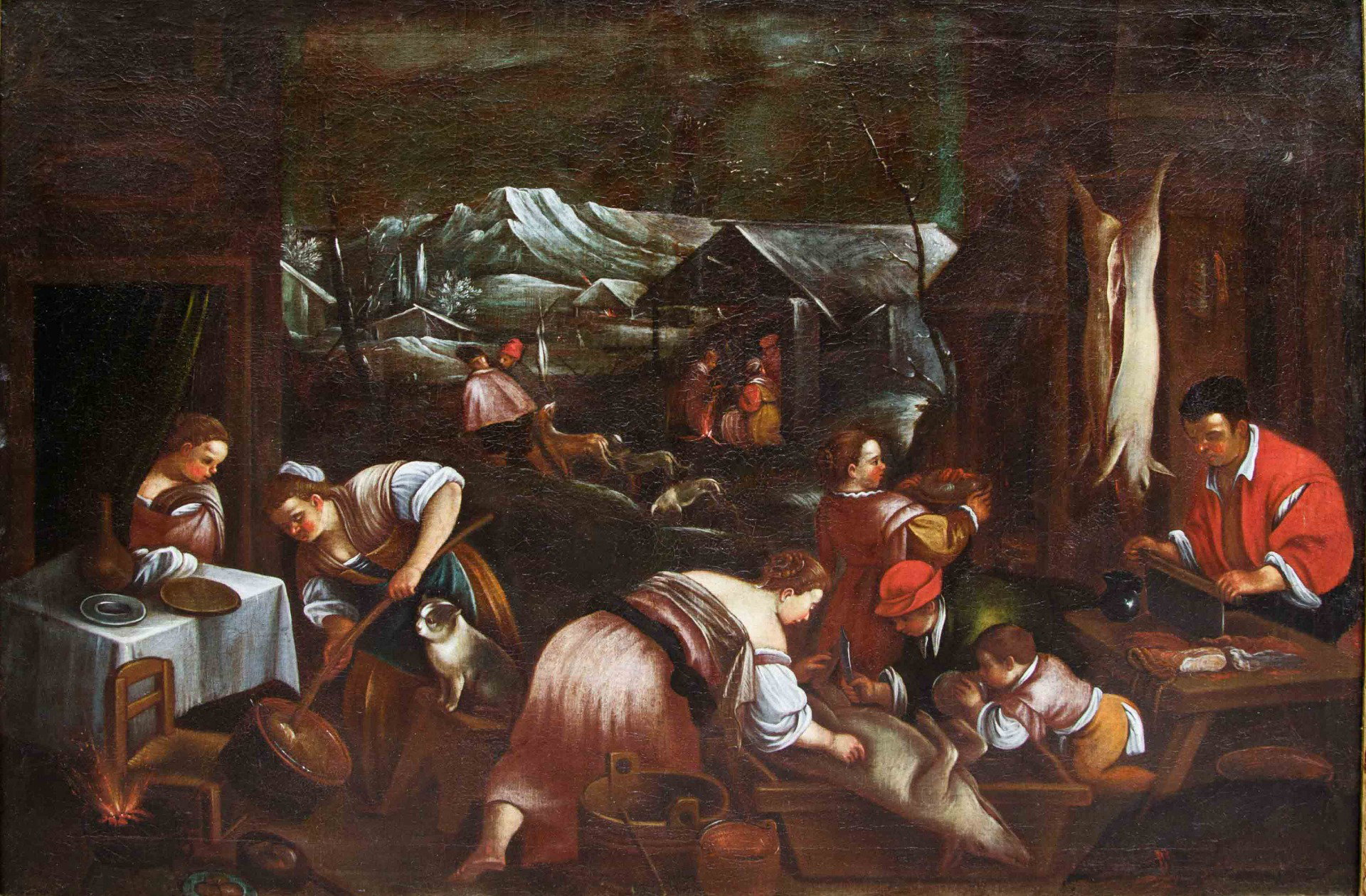
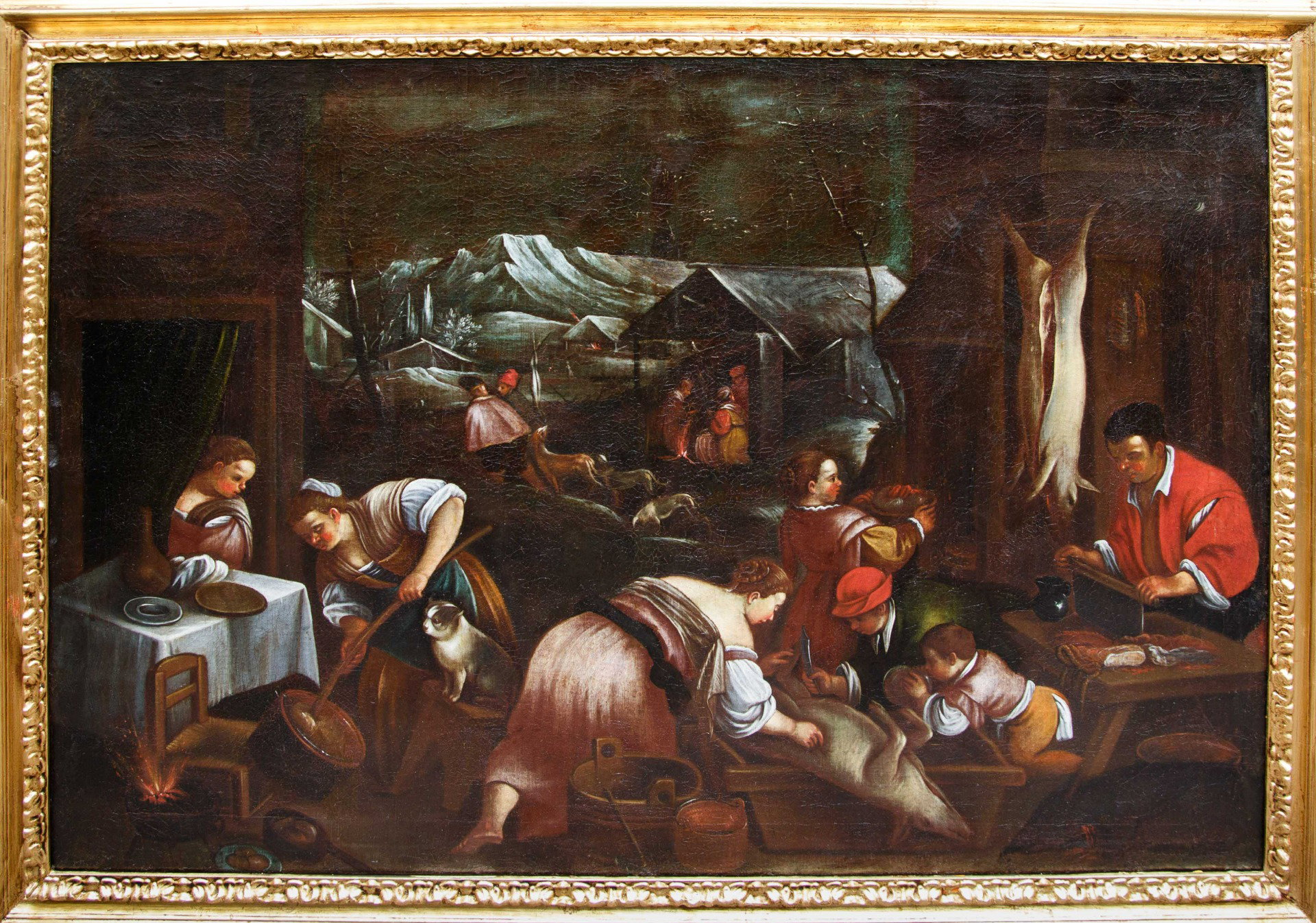
The month of December
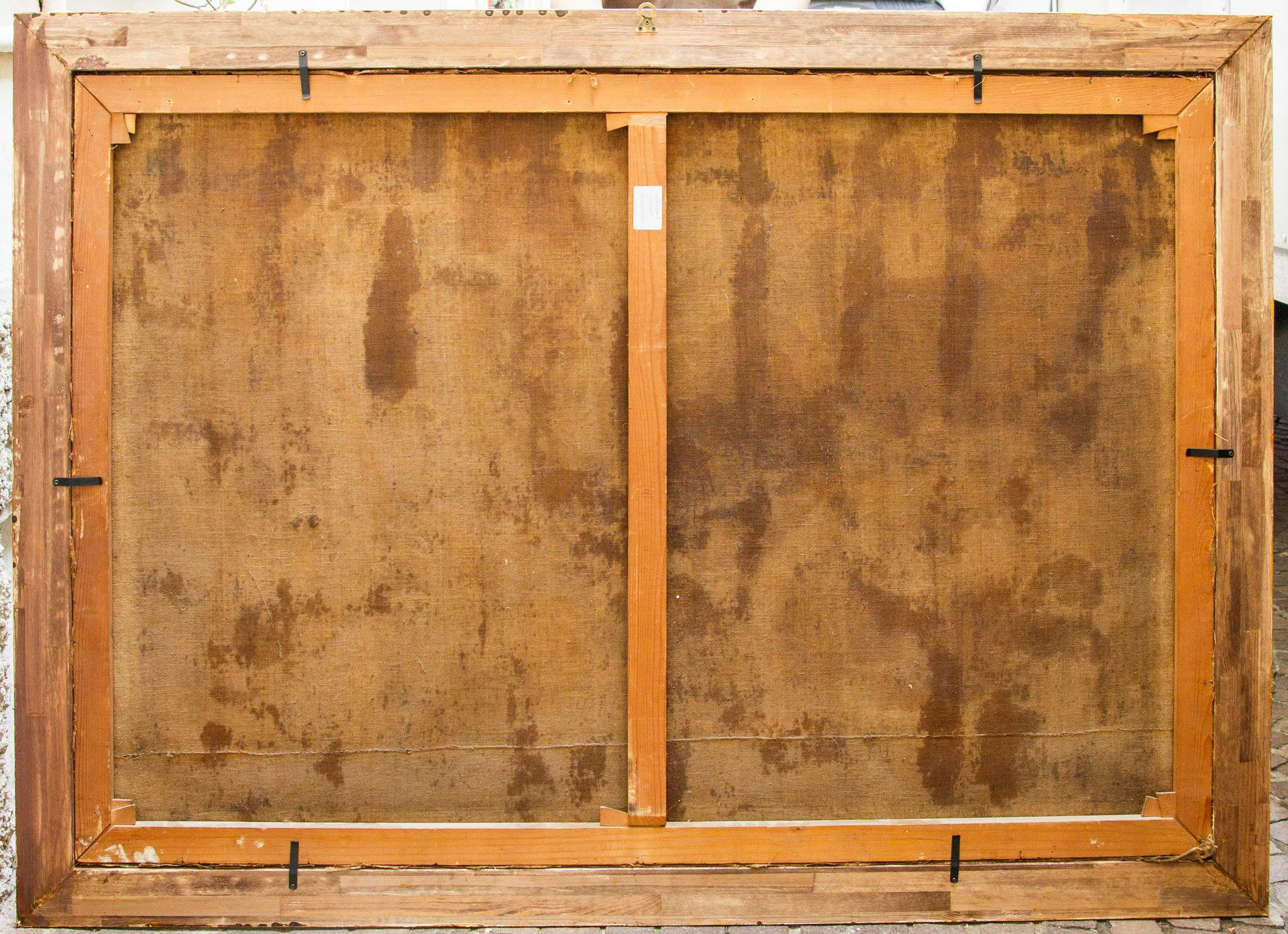
Oil on canvas, 96 x 139 cm – with frame, 112 x 152 cm
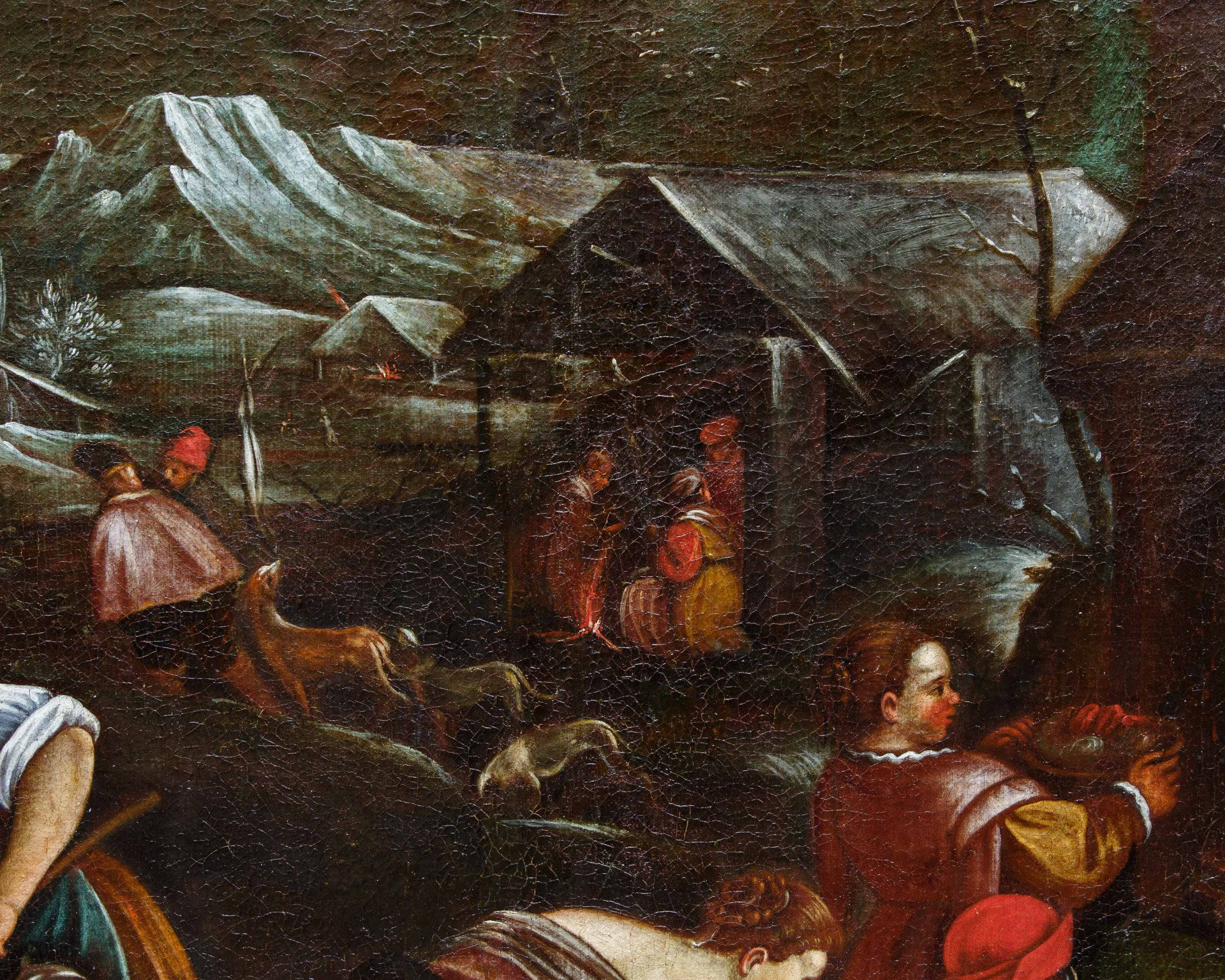
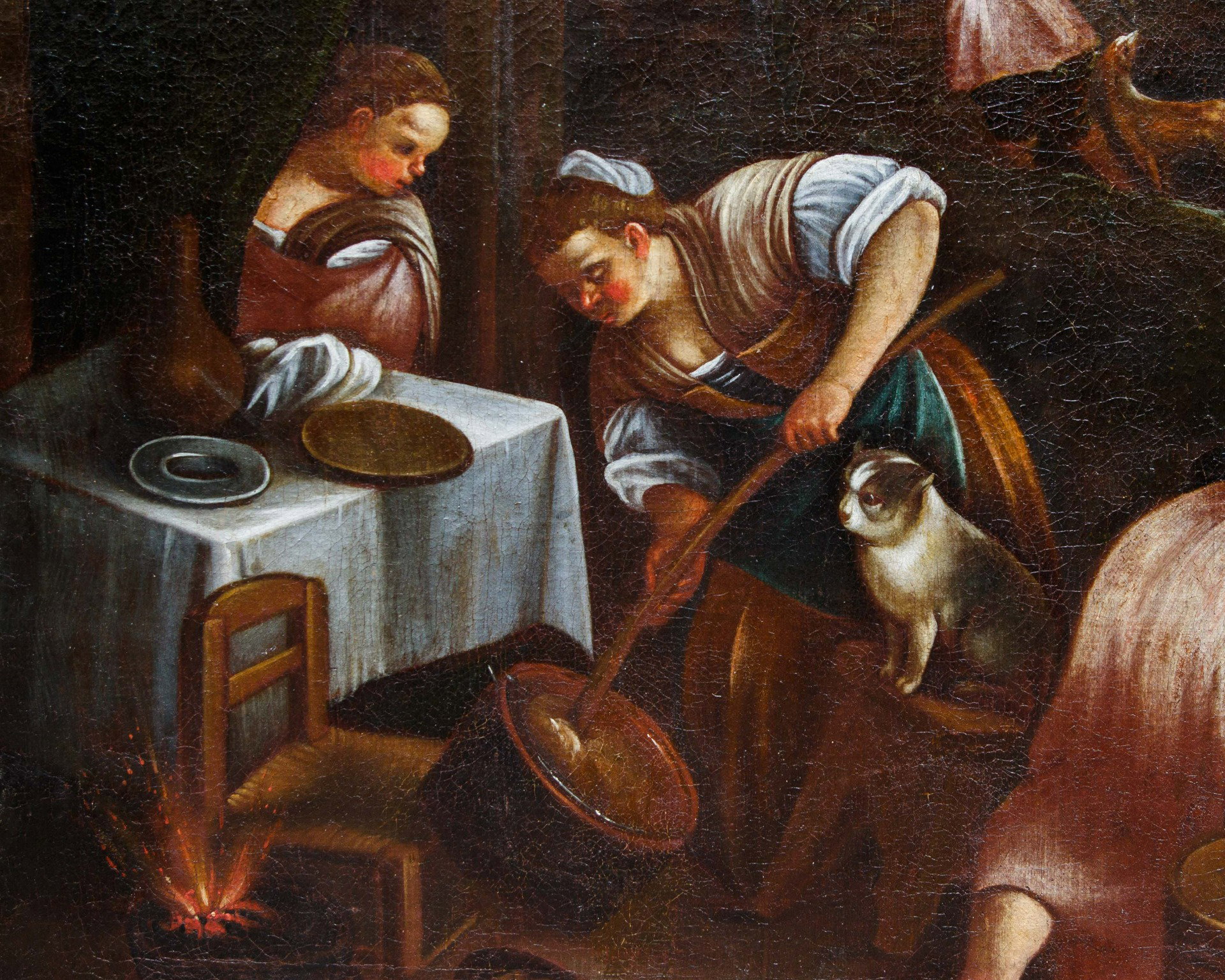
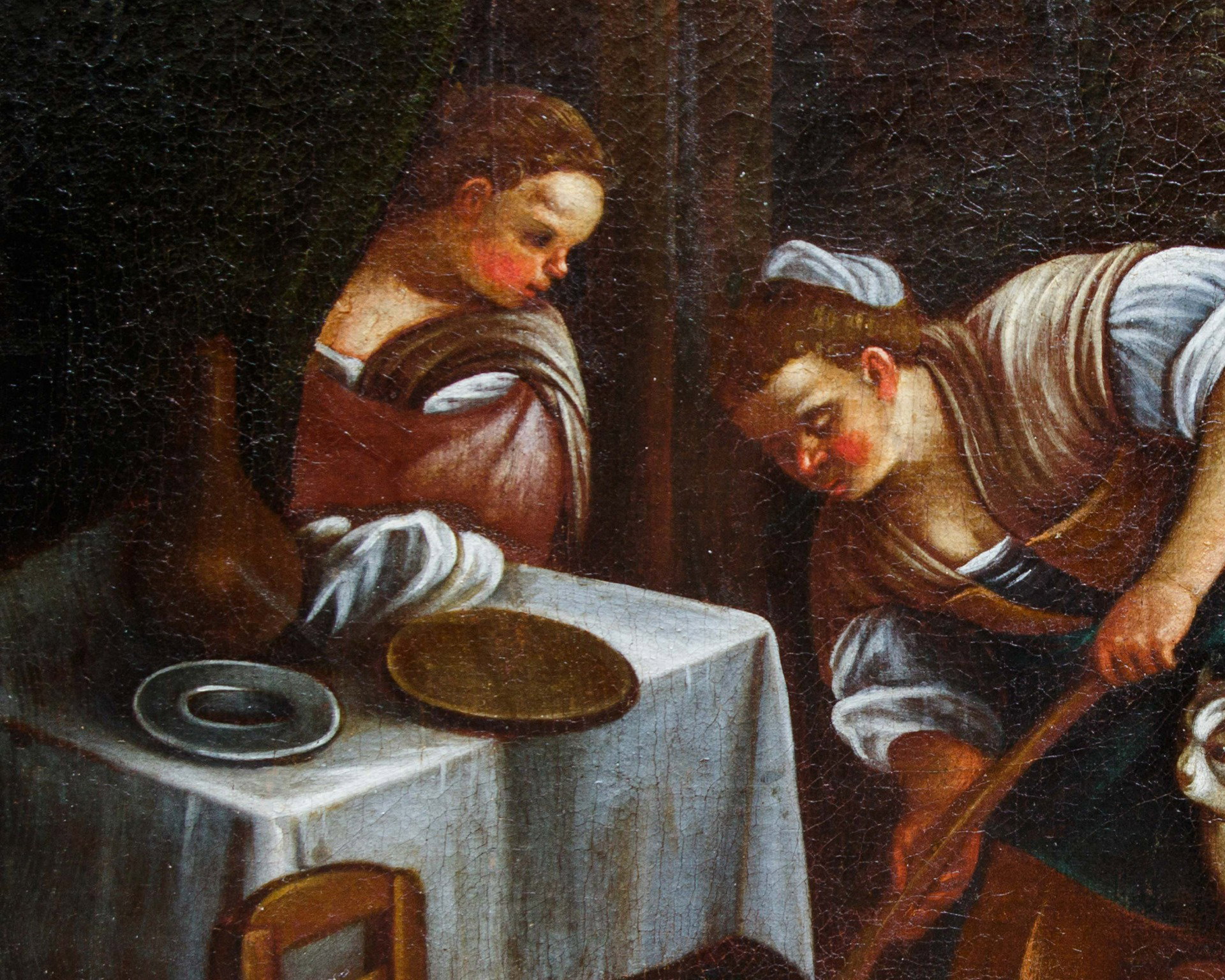
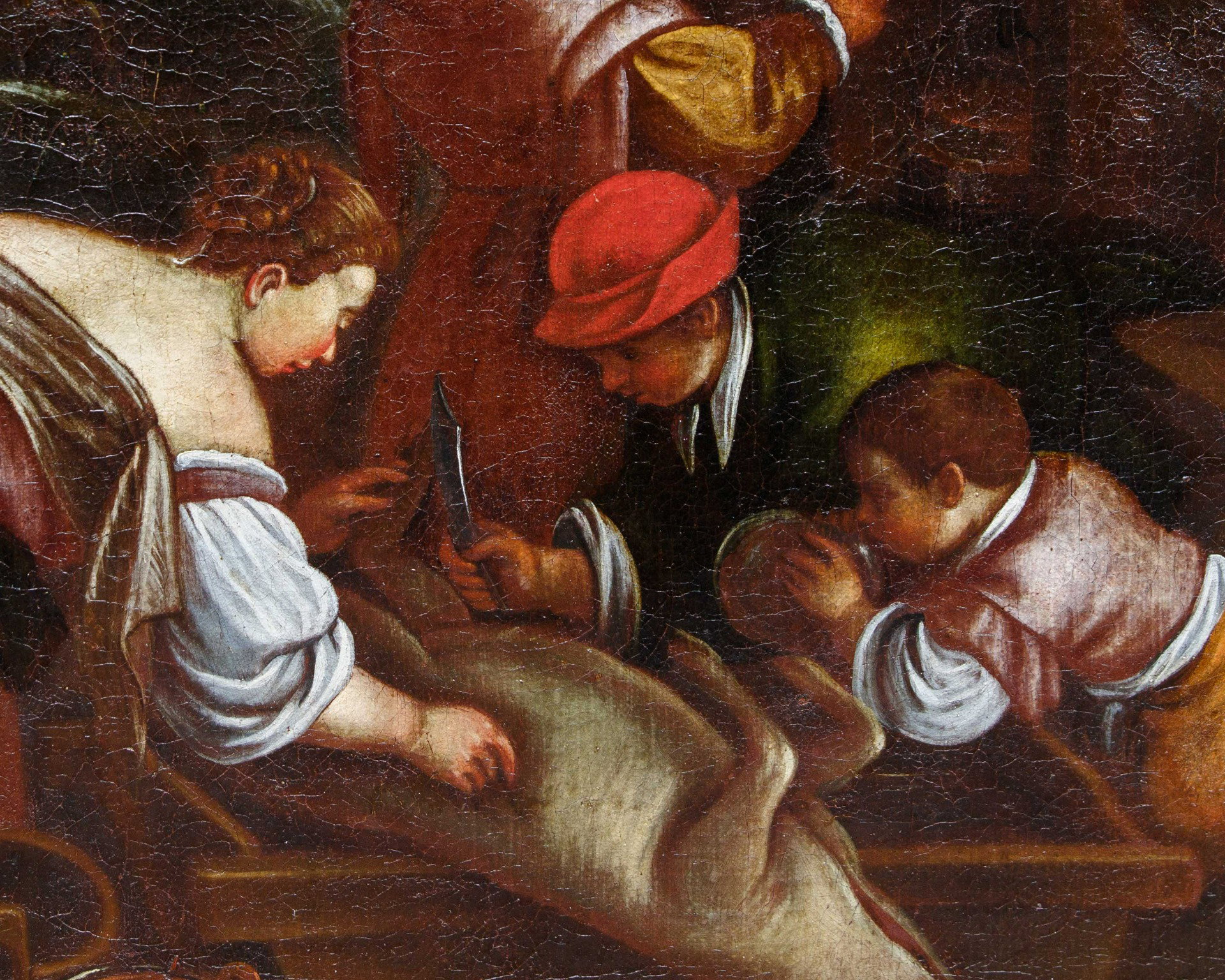
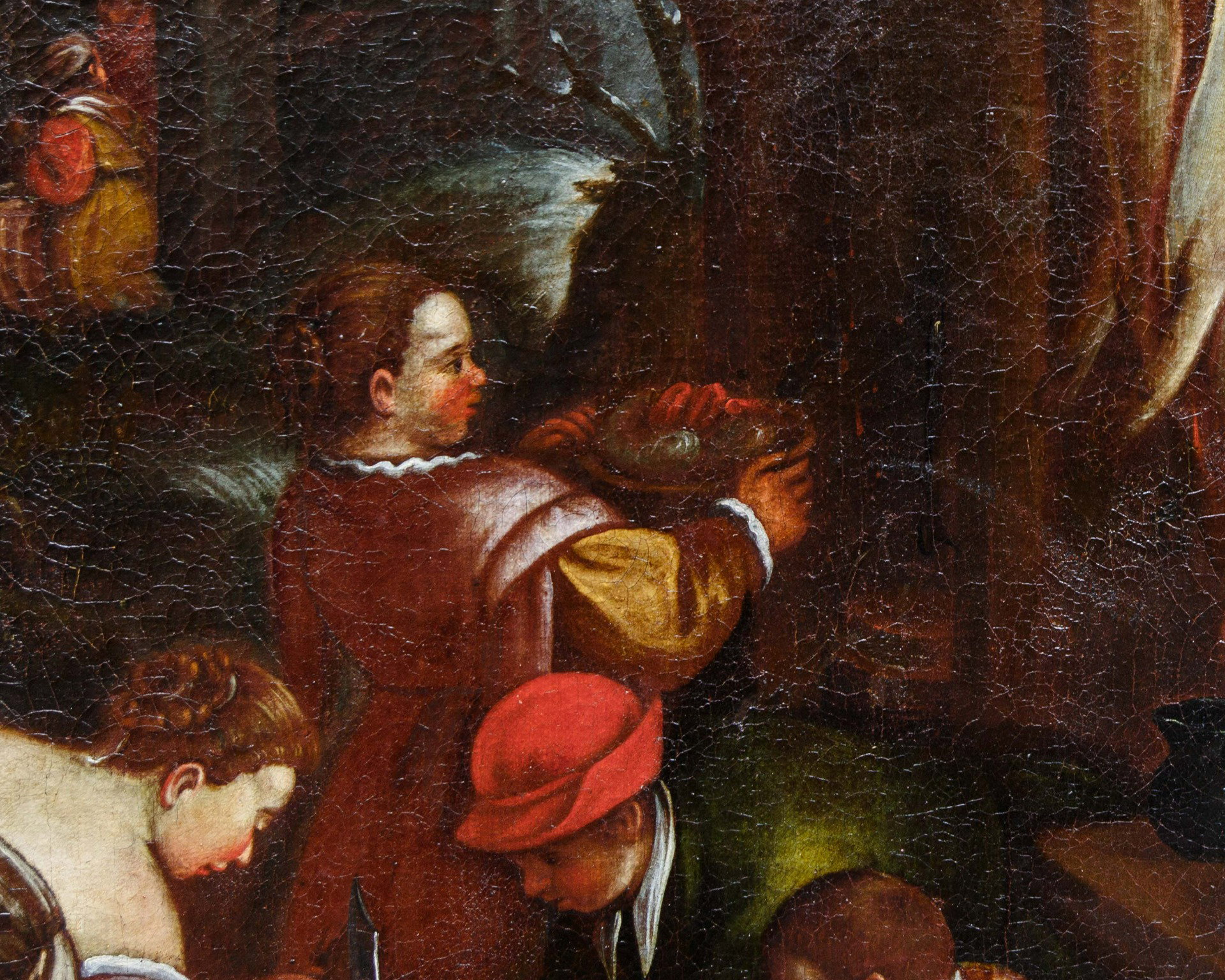
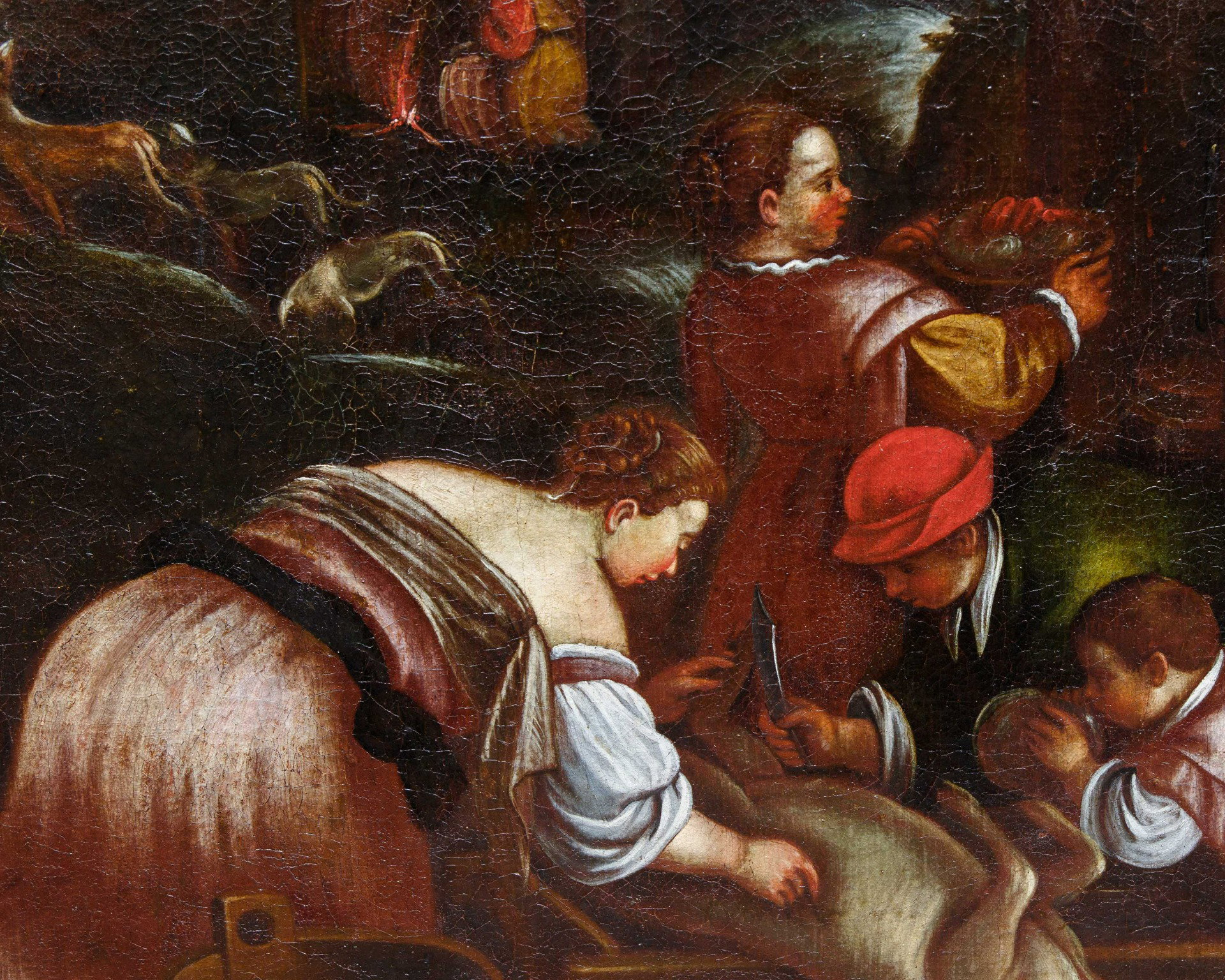
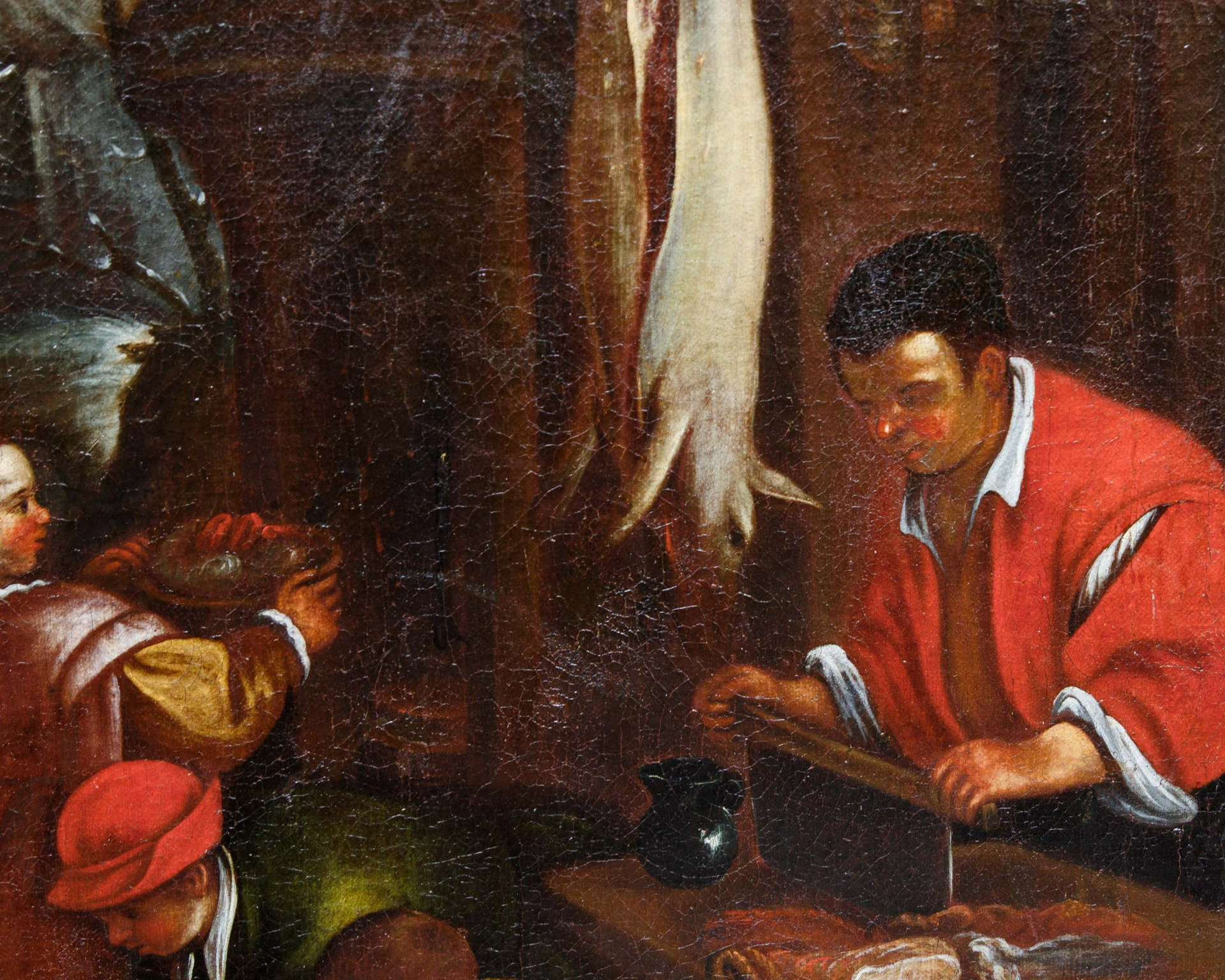
The canvas 'The Month of December' is a vivid testimony to the figurative culture produced by the Bassano workshop, the dynasty that profoundly marked Venetian painting between the 16th and 17th centuries. The canvas illustrates the allegory of the month of December through a choral and bustling narrative, where agricultural and domestic activities become absolute protagonists. In the foreground, attention is captured by the slaughter of a pig, a fundamental ritual of the winter peasant economy, executed with a strong realism found in the rendition of the meats and tools. Around this narrative core, other daily scenes unfold: a woman tending to cooking in a large cauldron, figures preparing food, and a man on the right working at a bench. The background reveals a landscape dominated by snow-capped mountains and bare trees, elements that immediately evoke the harshness of the cold season. The painting fits perfectly into the successful series of the Months conceived by Jacopo Bassano and widely replicated by his sons and collaborators to satisfy the growing demand from international collectors. The iconographic reference model for this specific composition can be found in Leandro Bassano's autograph canvas preserved at the Tula Museum in Russia, from which our work faithfully reproduces the spatial structure and the arrangement of figures. Further comparisons can be made with the version present in the Unicredit Art Collection, which, despite presenting some variations in the characters, shares the same scenic setting, and with the canvas from Leandro's school housed in the Uffizi Gallery in Florence. These derivations testify to the efficiency of the Bassano production system, capable of reinterpreting Jacopo's naturalism through Leandro's more calligraphic and crisp sensibility. The activity of the Bassano workshop originated with Francesco il Vecchio, but it was Jacopo who elevated the family style to heights of European excellence, synthesizing the Venetian coloristic lesson with an analytical observation of nature. Upon his death, his sons inherited a legacy of models and a consolidated technique. Leandro, in particular, after training in his father's shadow, settled in Venice in 1592, becoming one of the most sought-after portraitists and participating in prestigious projects at the Doge's Palace. His style, although rooted in the family tradition, was distinguished by a more marked contour line and a less diffused brushstroke than his father's, influenced by his exchanges with Tintoretto's works. In this painting, this transition is clearly perceived: although the composition respects the taste for genre scenes typical of the workshop, the definition of volumes and the management of light, which cut through the winter darkness to highlight domestic details, reflect the maturity achieved by Leandro and his close collaborators in interpreting Naturalistic Baroque.