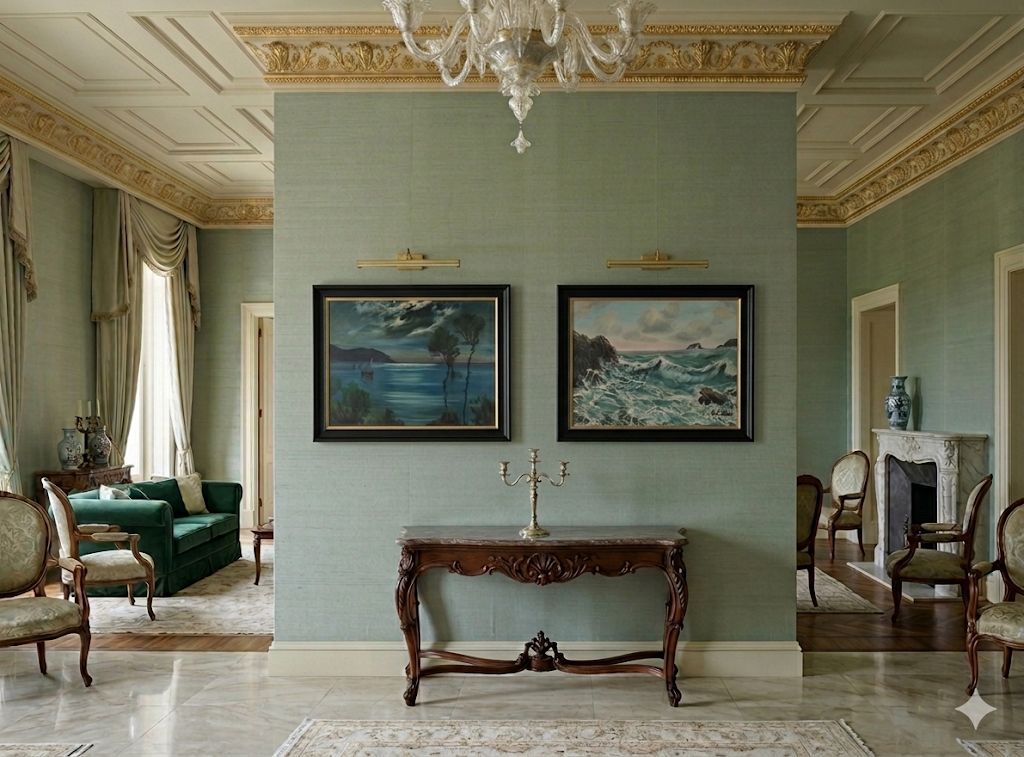
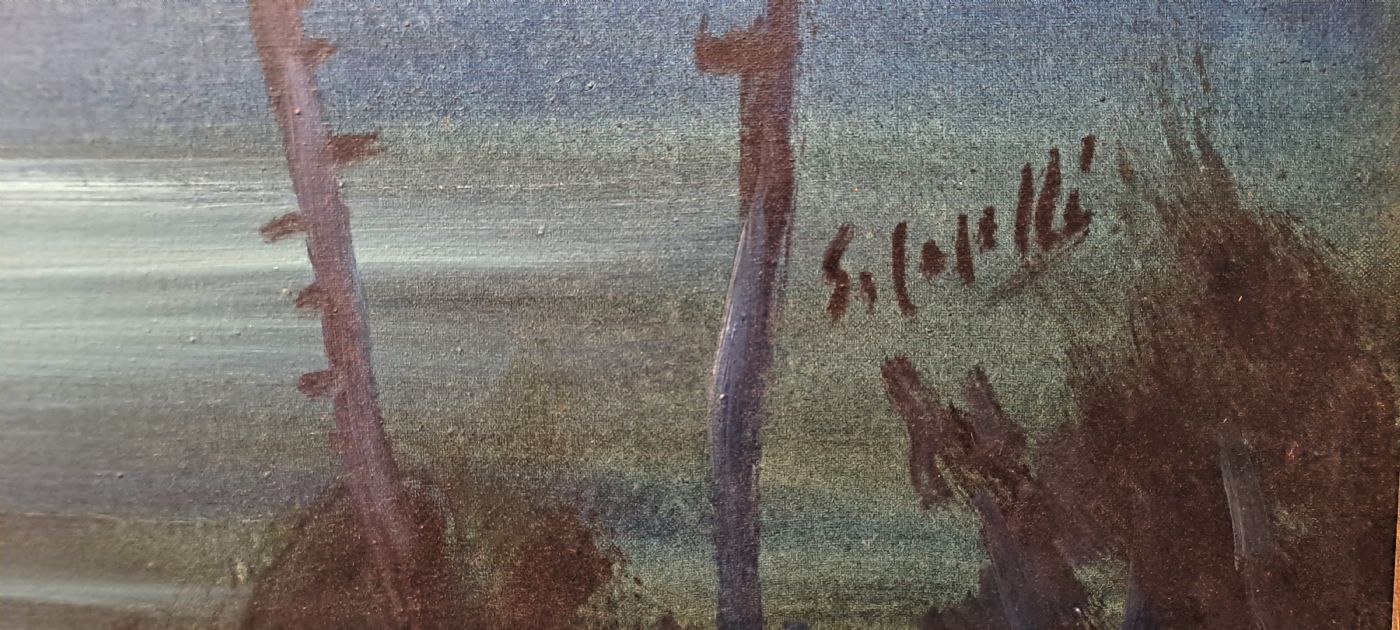
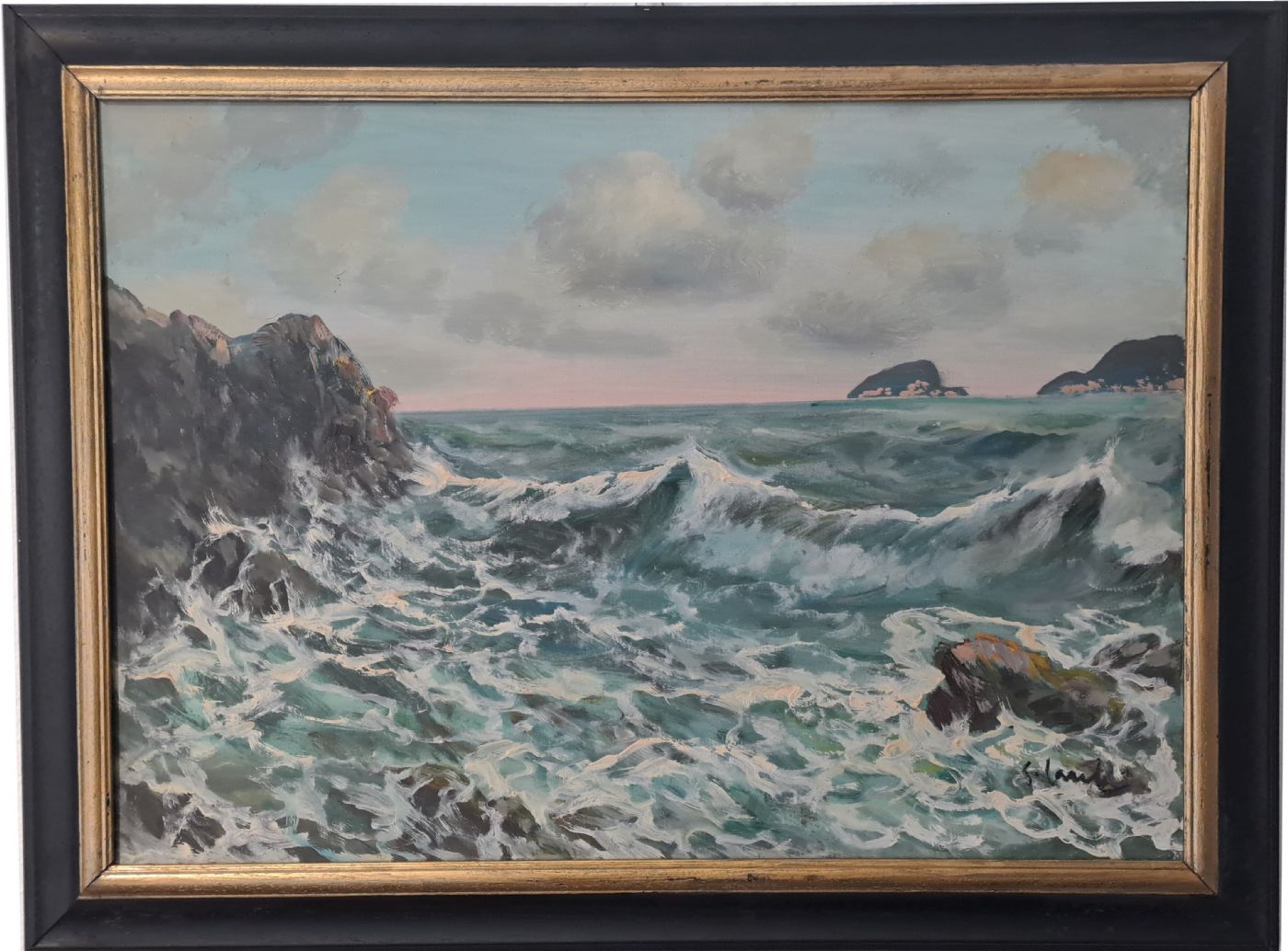
This pair of works by Giuseppe Caselli (1893–1976) offers a splendid synthesis of his poetics, deeply rooted in the Ligurian land and the Gulf of Poets. Caselli was one of the most authentic interpreters of the La Spezia landscape, capable of ranging from the lyricism of nocturnal atmospheres to the dramatic force of a stormy sea.
Analysis of the Works
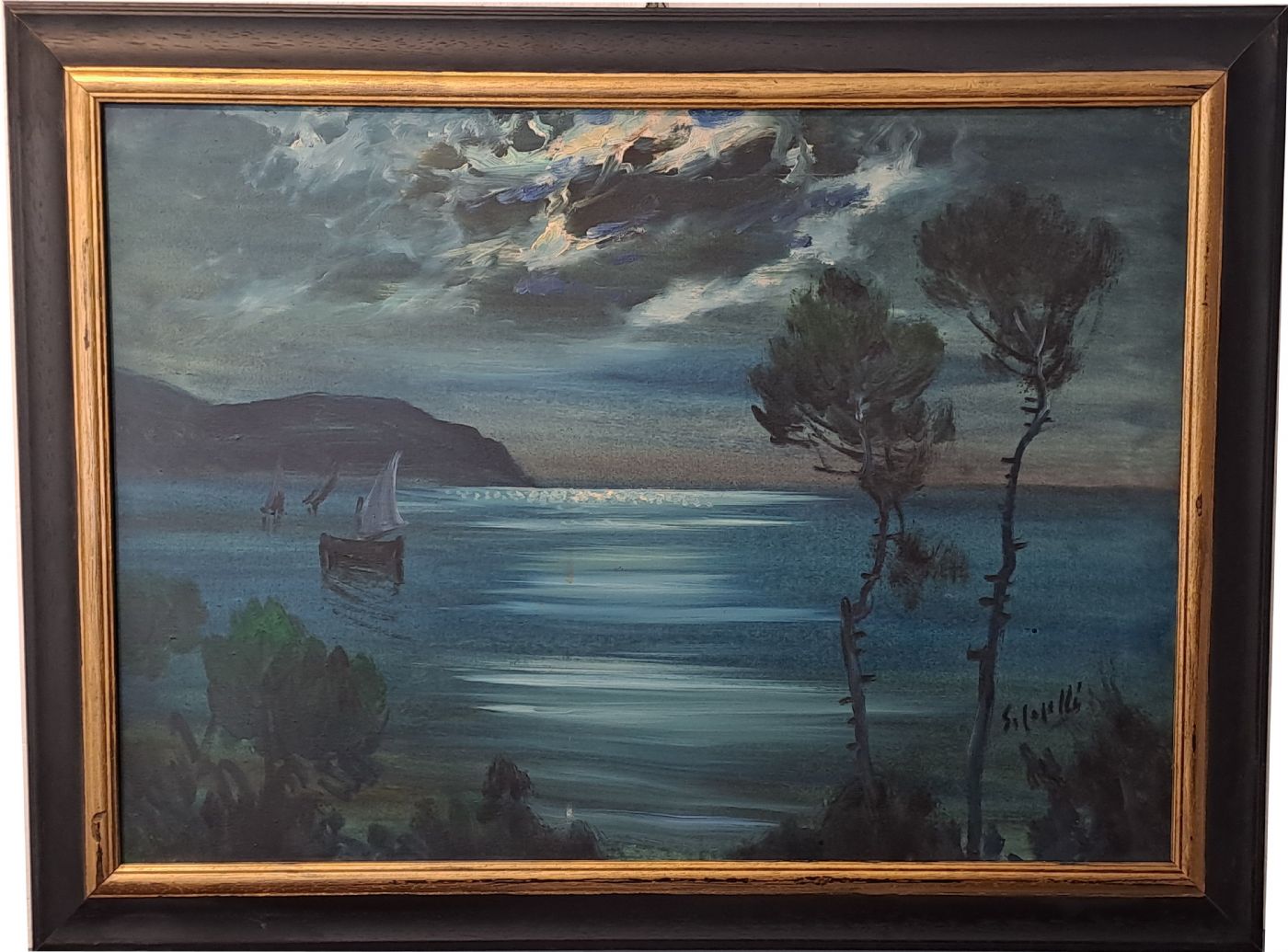
1. Night Seascape (Moonlight)
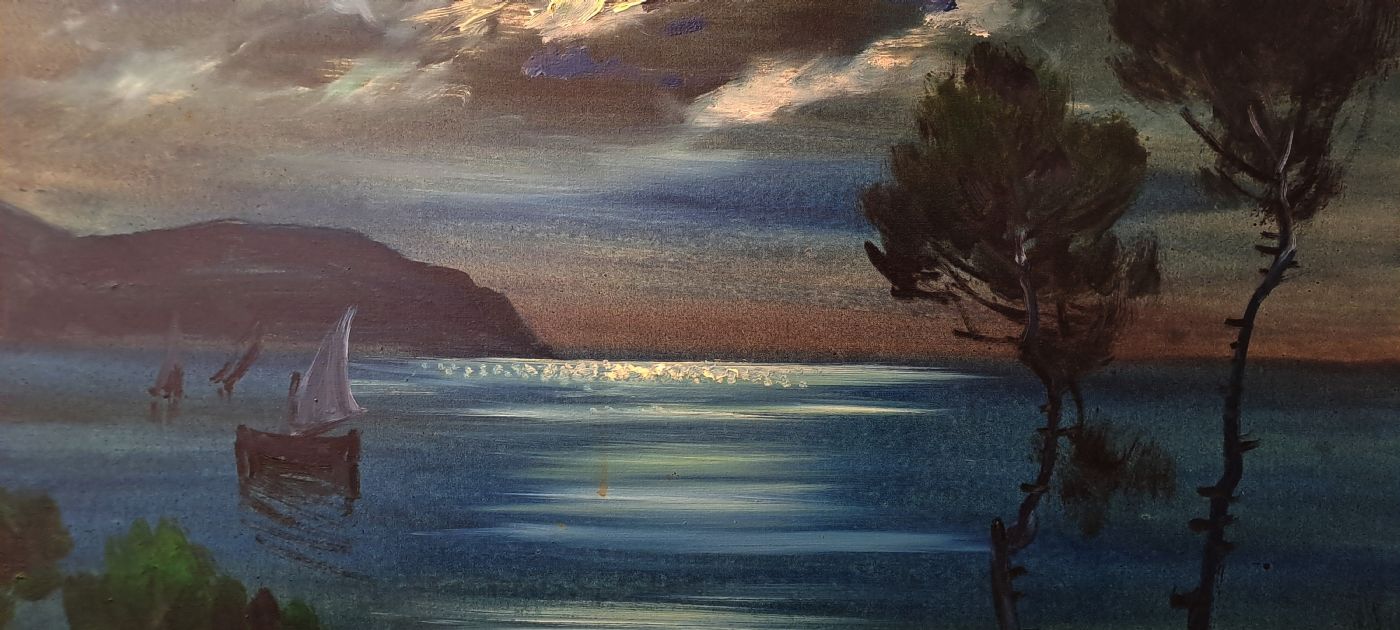
The first painting captures a moment of absolute tranquility. The composition is dominated by cool tones of blue and gray, with moonlight cutting horizontally across the water's surface, creating a vibrant silvery reflection.
Key Elements: In the foreground, the characteristic silhouettes of maritime pines stand out, rendered with dark, synthetic brushstrokes. In the background, one can discern the profiles of the Gulf's hills and some sailboats resting at anchor.
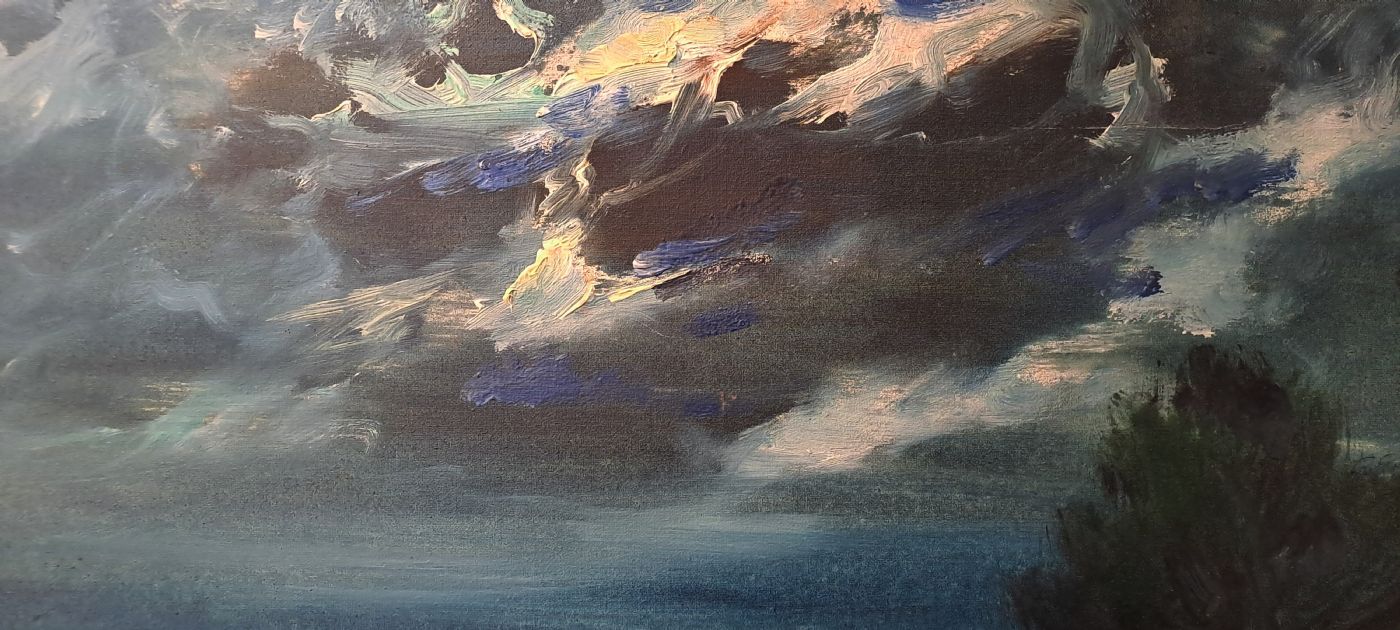
Style: Here, Caselli uses a more fluid, almost dreamlike application of color, evoking a sense of solitude and contemplation typical of his more intimate works.
2. Stormy Seascape (Cliff with Tino and Palmaria)
The second painting showcases the artist's more energetic and material side. It depicts a rocky cliff on the left, while on the opposite side, the profiles of the Tino and Palmaria islands stand out, with a choppy, foamy sea breaking against the coast.
Technique: The brushwork becomes dense, almost nervous. Caselli uses white and aquamarine with quick strokes to capture the incessant movement of the waves and the spray of water against the rocks.
Period: 1950s
Dimensions: 82 x 62 cm with frame, 70 x 50 cm canvas only
Biographical Notes on Giuseppe Caselli
Giuseppe Caselli is a central figure in the 20th-century artistic landscape of La Spezia.
Training: A student of Felice Del Santo, he trained in an environment where rigorous drawing was paramount. He subsequently attended the Academy of Fine Arts in Florence, coming into contact with post-Macchiaioli currents and the avant-garde movements of the early 20th century.
Wartime Experience: During World War I, he was taken prisoner and interned in the Mauthausen camp. This experience profoundly marked his sensibility, leading him to produce a series of raw and moving drawings documenting the lives of prisoners.
Connection to the Territory: Upon returning to La Spezia, he became the painter of "truth." He actively participated in the city's cultural life, often exhibiting at the Premio del Golfo. His painting was never a simple postcard; Caselli sought the soul of places, studying the variations of La Spezia's light at all hours of the day and night.
Style: Although influenced by Divisionism and partially by Futurism (he participated in the 1933 exhibition organized by Marinetti in La Spezia), Caselli always maintained his stylistic independence. His is a painting of light and matter, characterized by skillful use of the palette knife and brush laden with color.
These two paintings perfectly represent the binomial on which his entire work rests: the careful observation of reality and its emotional transfiguration through color.