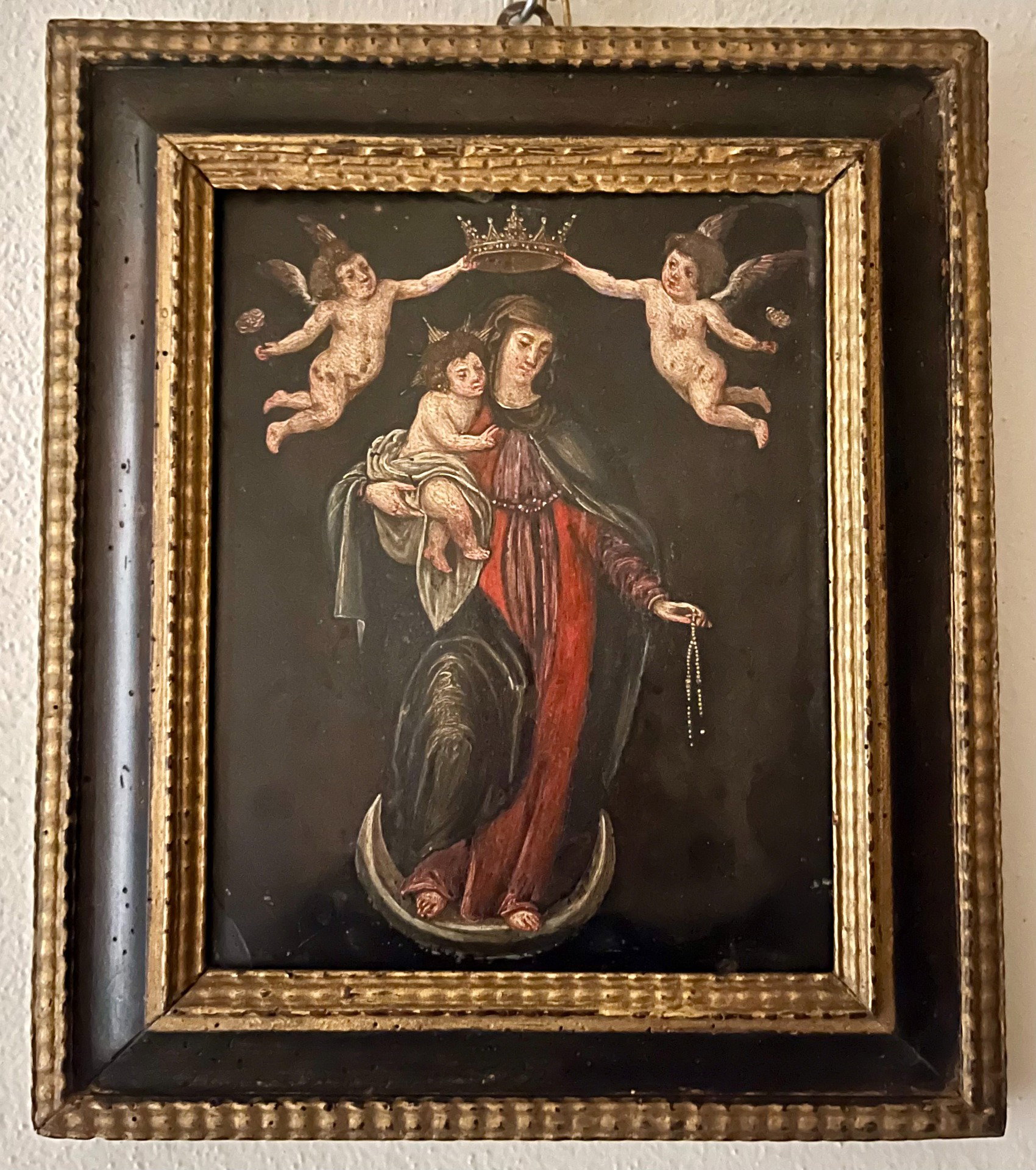
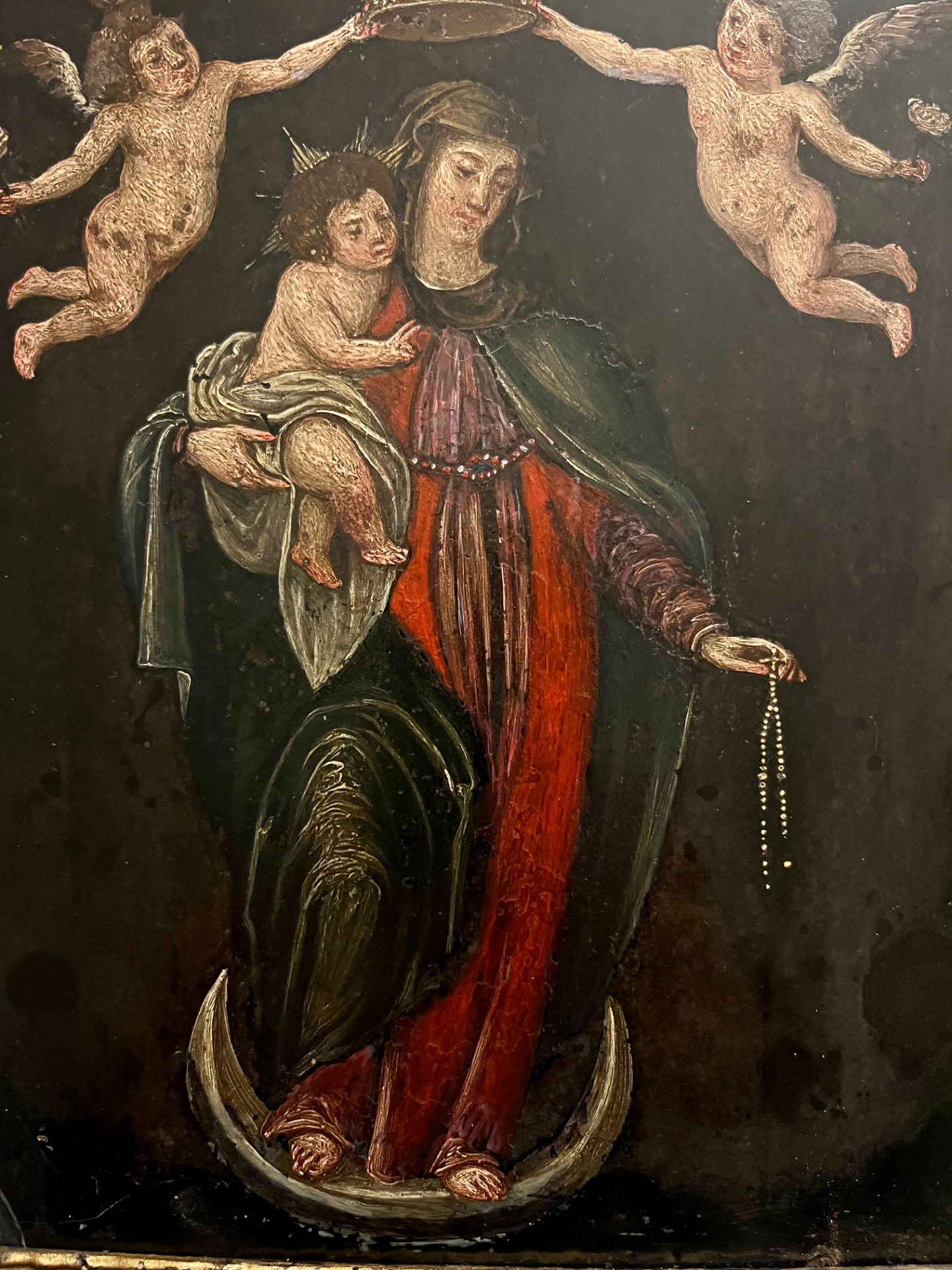
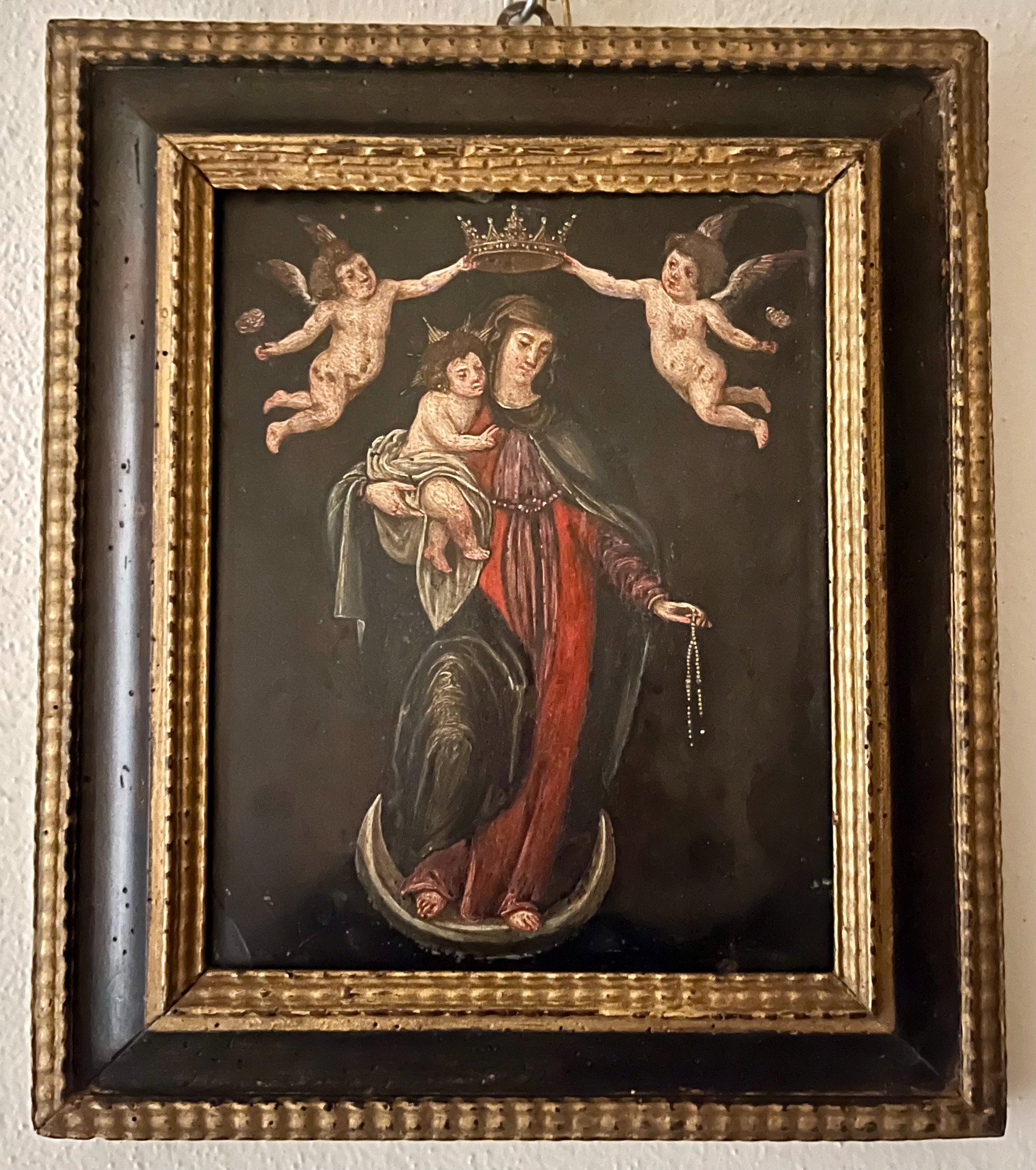
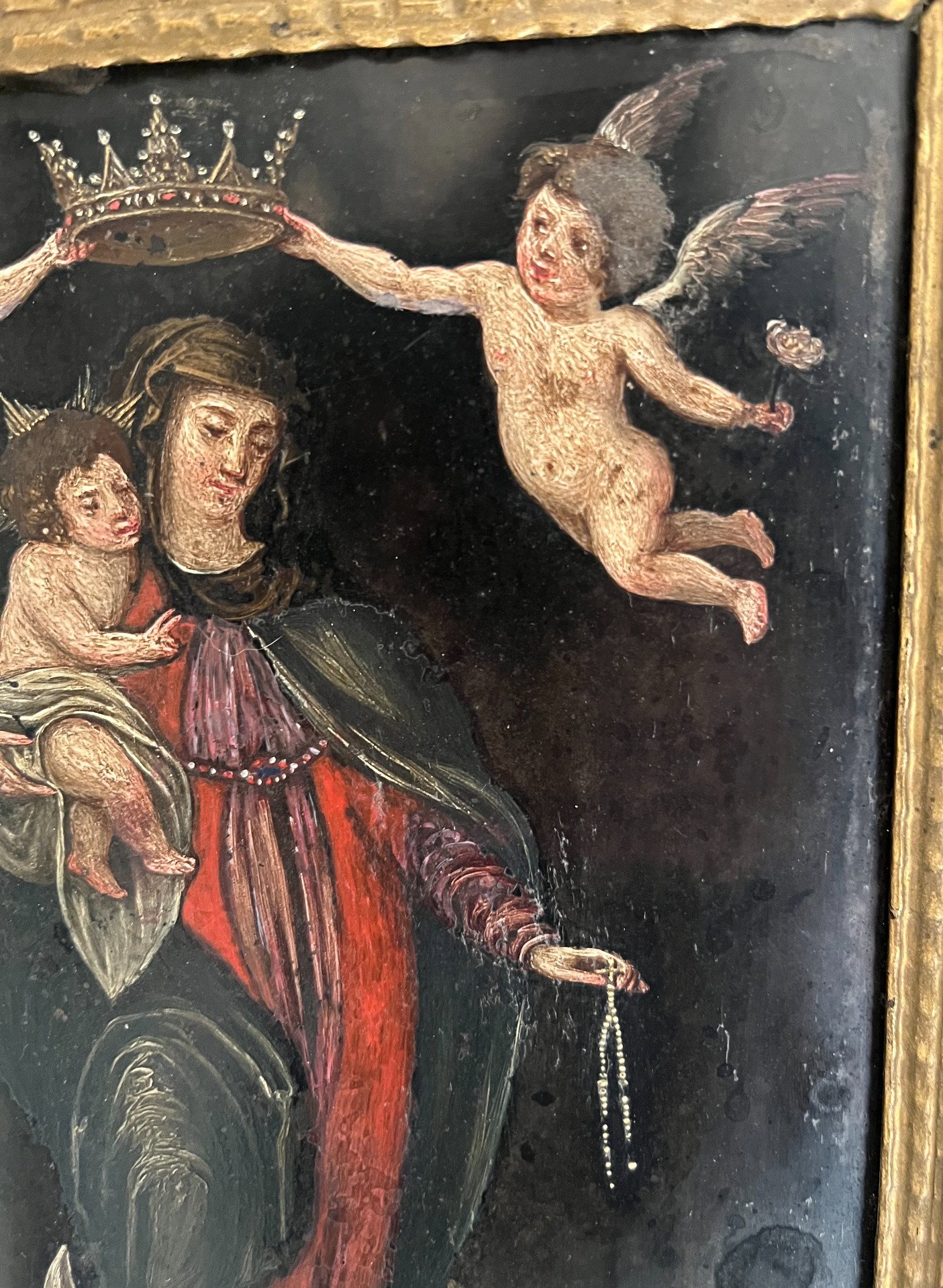
The painting depicts the Immaculate Conception, one of the most widespread subjects in Christian iconography, a symbol of the purity of the Virgin Mary since her conception.
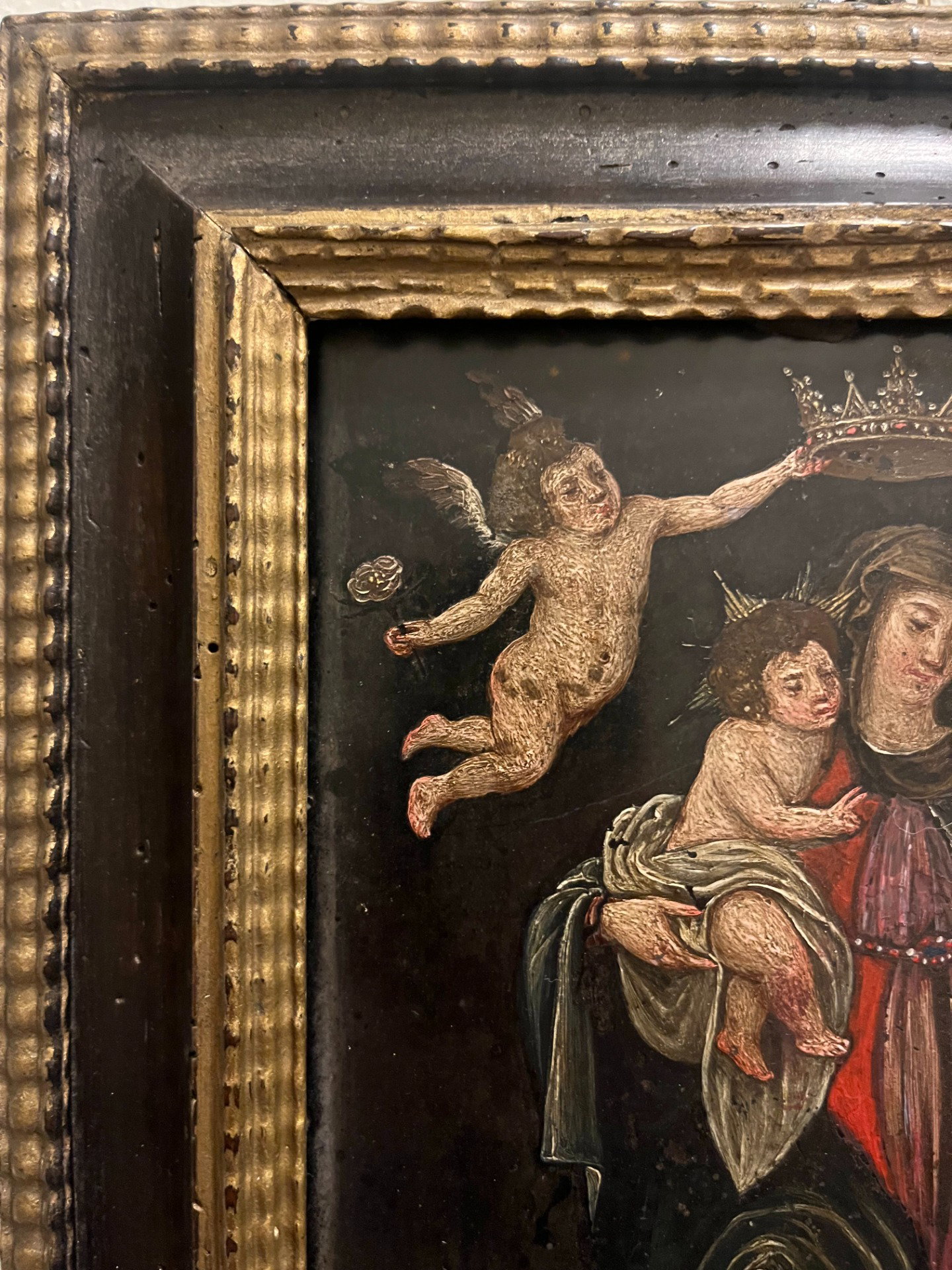
The Virgin is represented standing on the crescent moon, according to traditional iconography, and is surrounded by angels that emphasize her celestial dimension. The presence of the Child Jesus in her arms and the rosary help to strengthen the devotional character of the image, blending elements of the Immaculate Conception with those of the Madonna and Child.
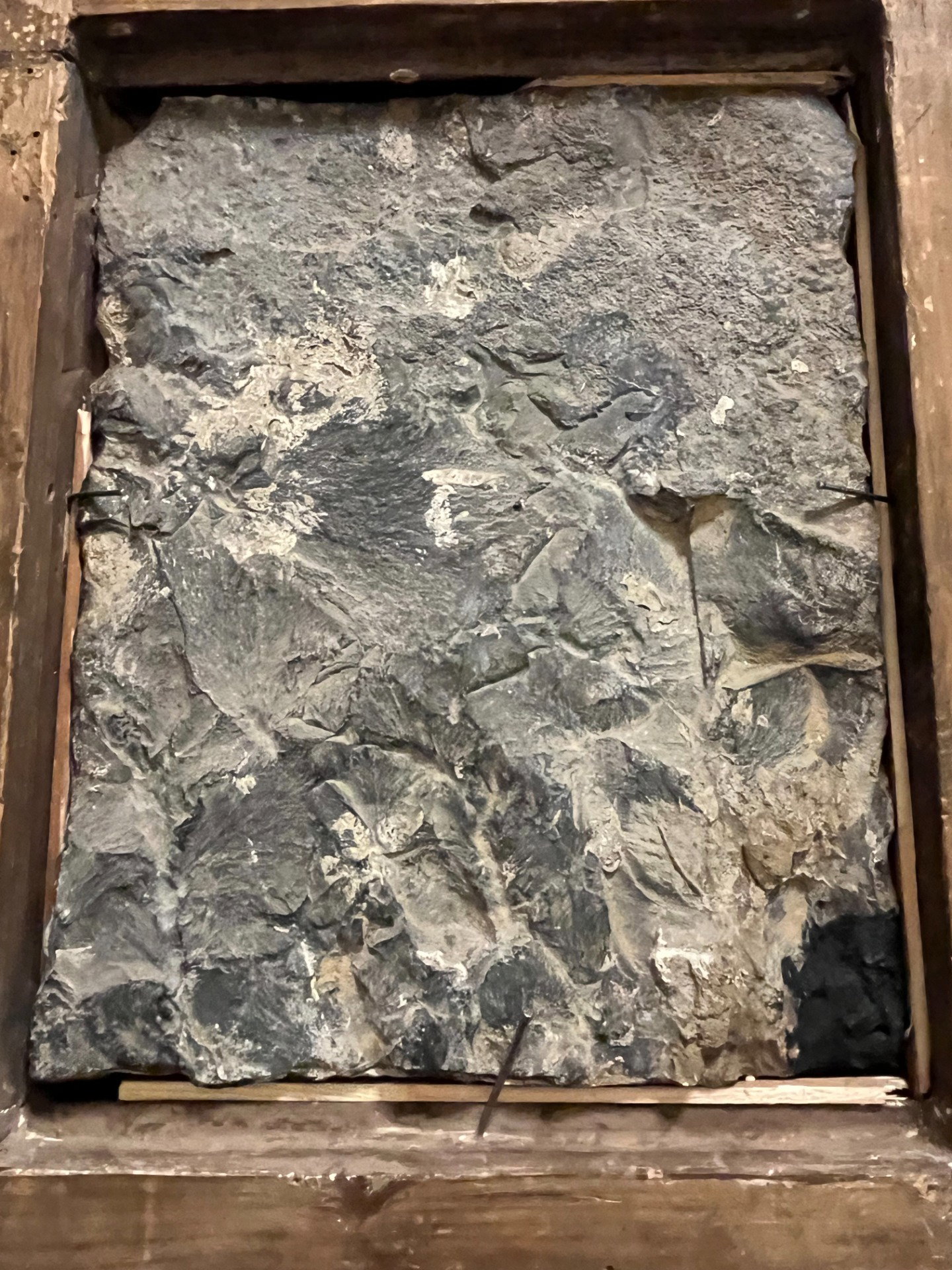
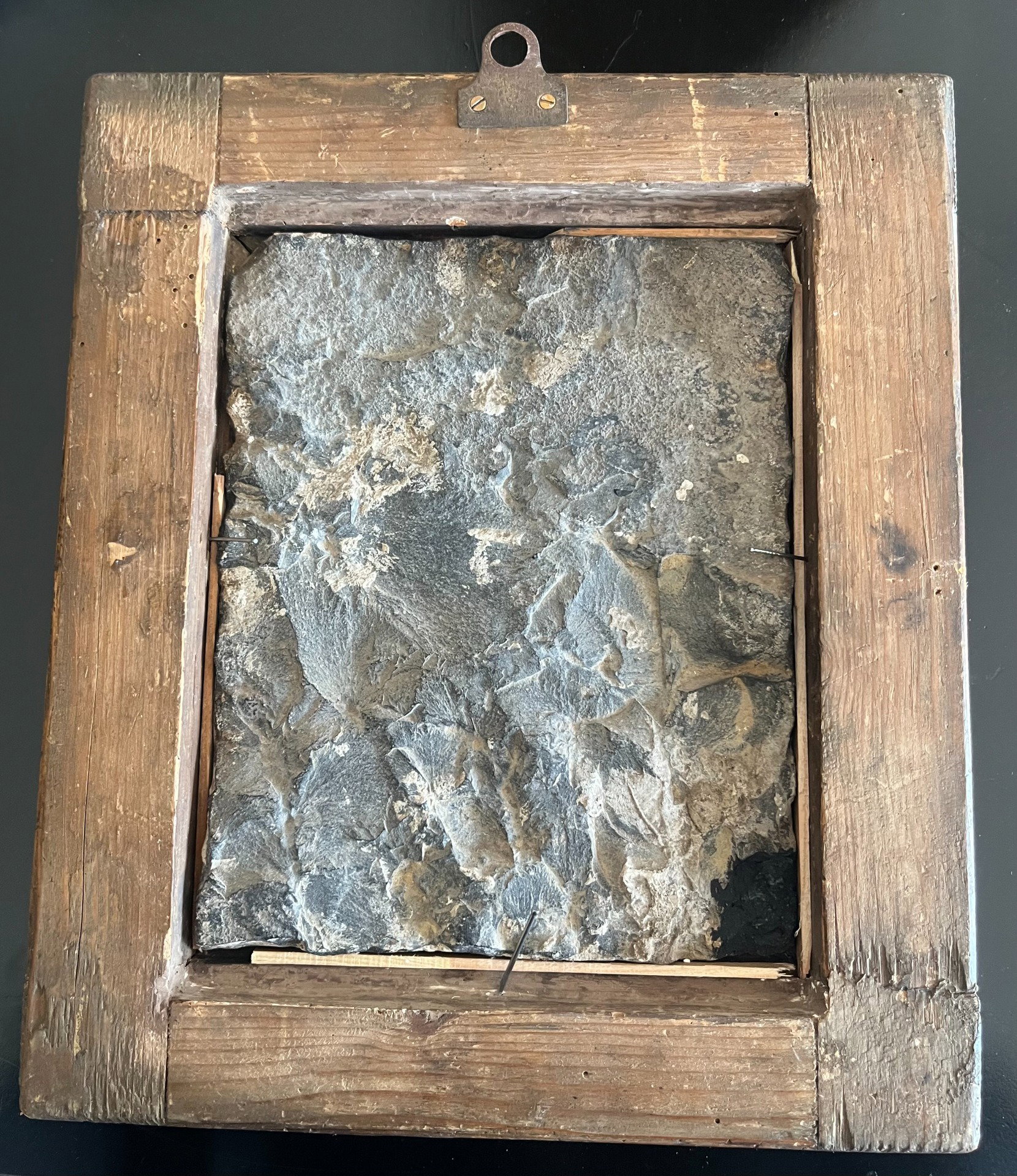
The choice of support is particularly significant: the work is painted on slate, a dark stone material that was widely used between the late 16th and 17th centuries, especially in the Republic of Venice and surrounding areas. The use of this support allowed artists to take advantage of the natural black background to achieve intense chiaroscuro effects and a strong luminous rendering of the figures.
From a stylistic point of view, the painting fits into the tradition of 17th-century Venetian and Veronese painting, a field in which painting on stone was particularly appreciated. Artists such as Sebastiano del Piombo were among the first to experiment with painting on stone supports, while in the Veronese area this practice was developed by masters such as Alessandro Turchi and Pasquale Ottino.
The work is therefore placed within the context of Northern Italian Baroque painting, characterized by a refined synthesis of devotion, luminous research, and material quality.
Technique: oil on slate
Dimensions: 18 x 23 cm (ancient frame 29 x 33 cm)
Artist: unknown
Period: 17th century
Restoration: conservation intervention
Provenance: private collection