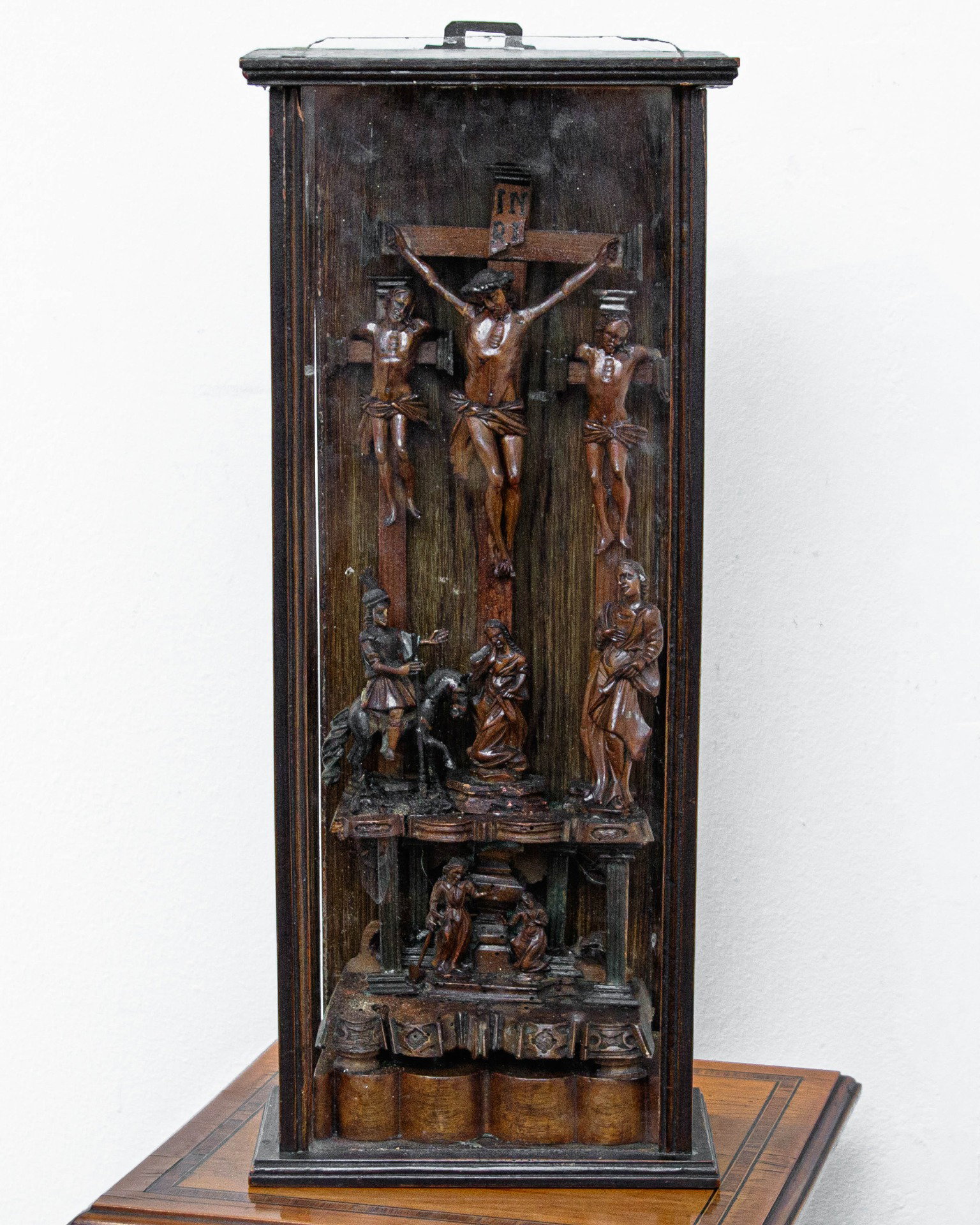
17th-century Transalpine sculptor, Wooden relief with Crucifixion and Noli me tangere
Description:
17th-century Transalpine sculptor
Wooden relief with Crucifixion and Noli me tangere
Wood, 45.5 x 19 x 10 cm
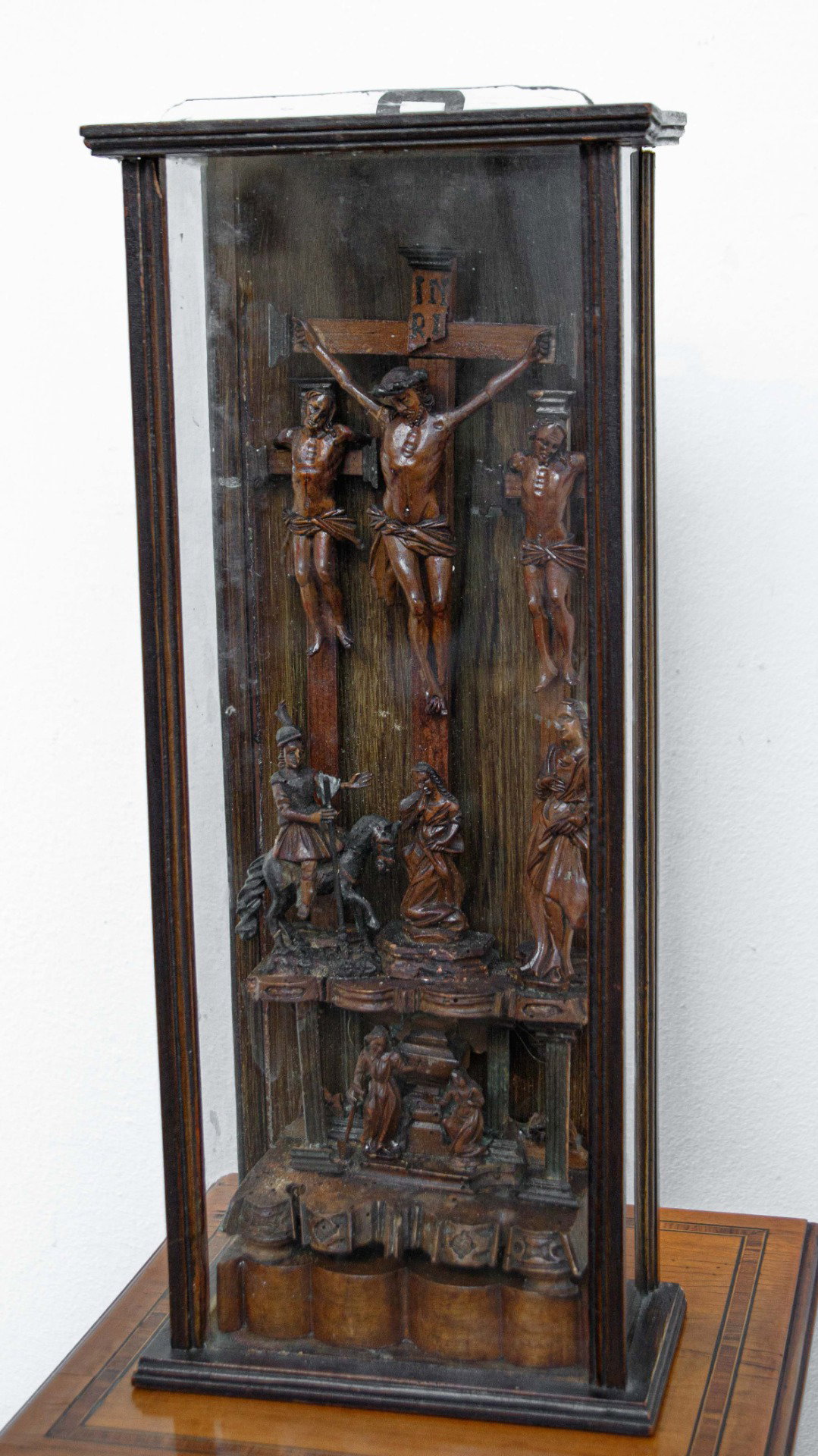
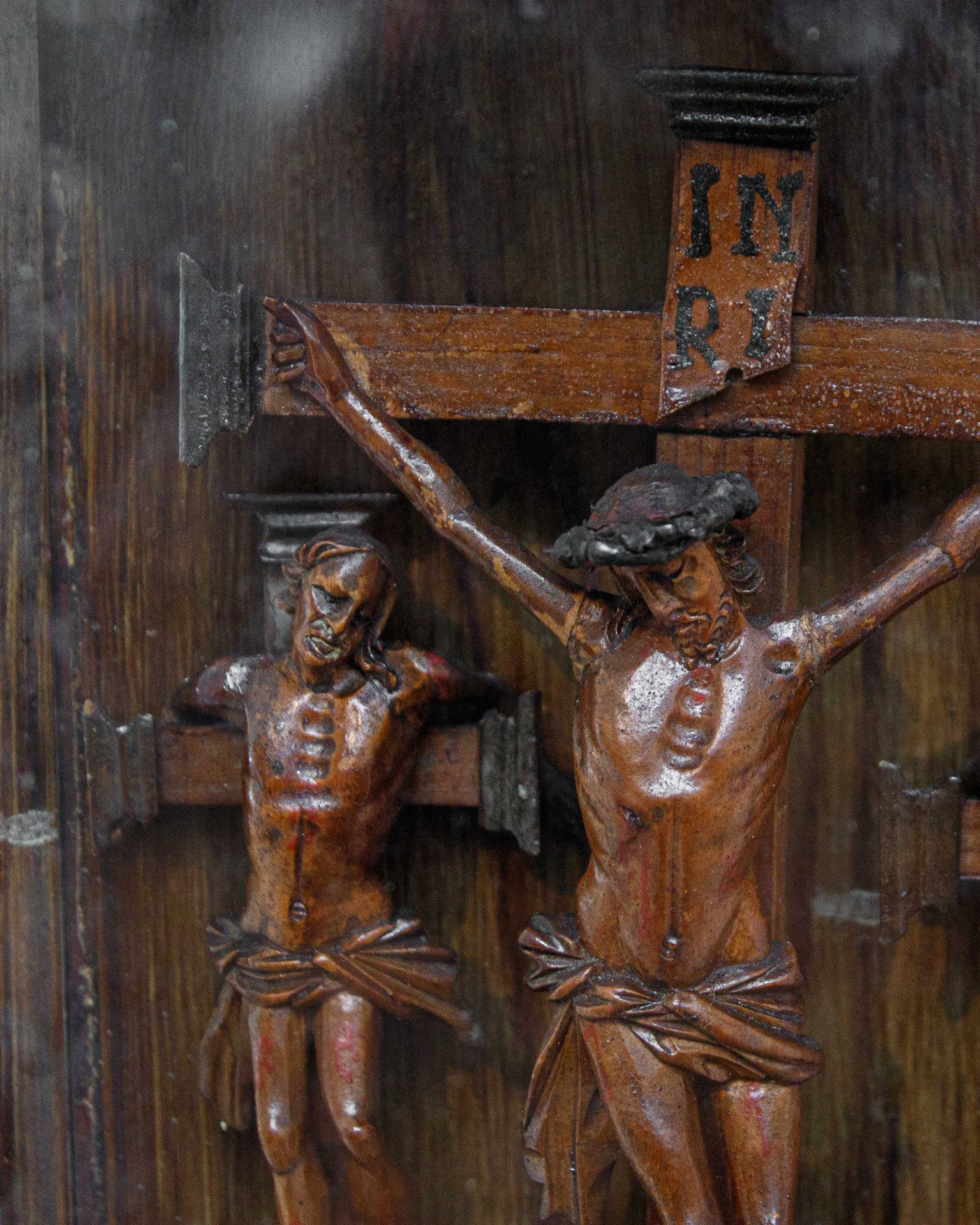
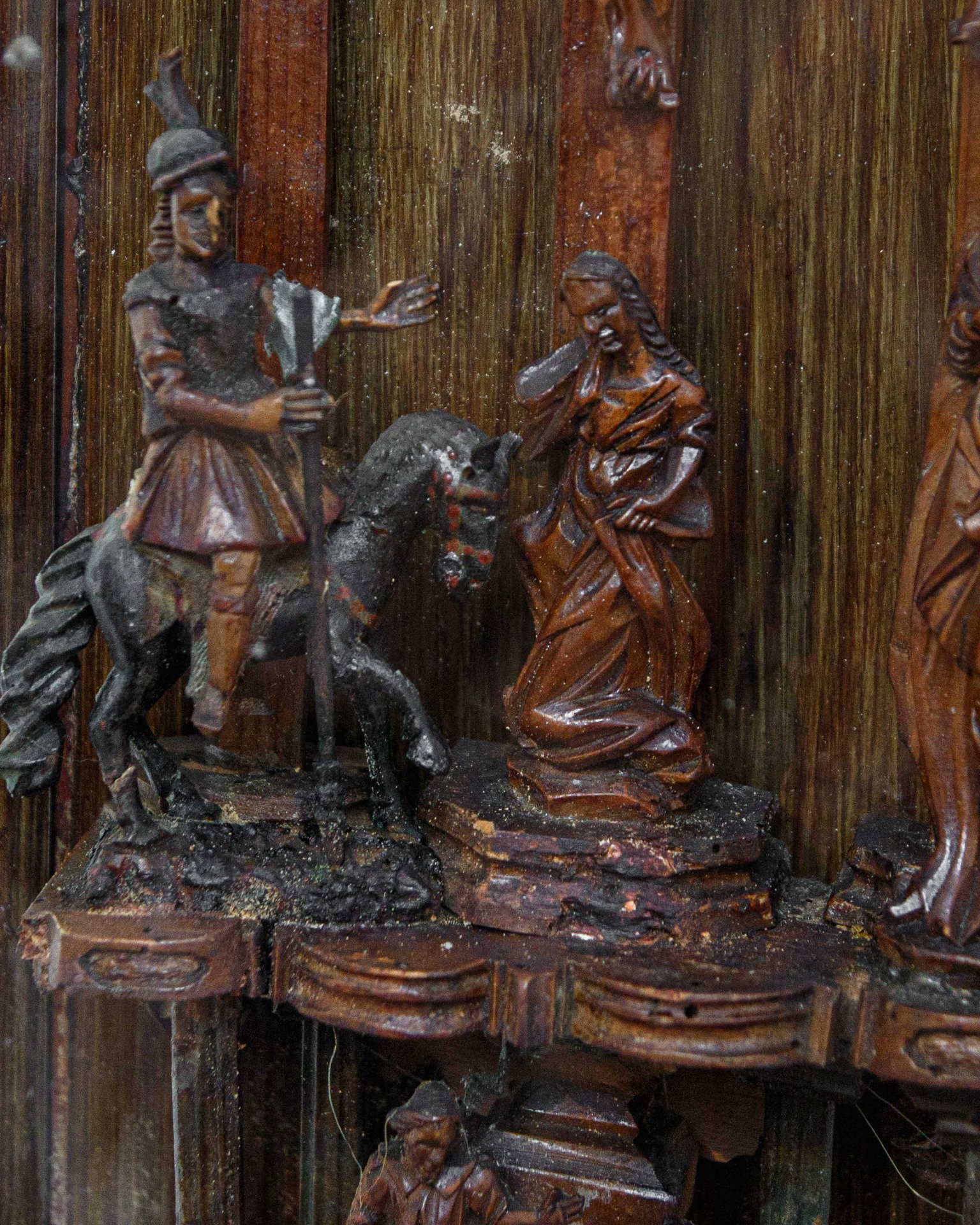
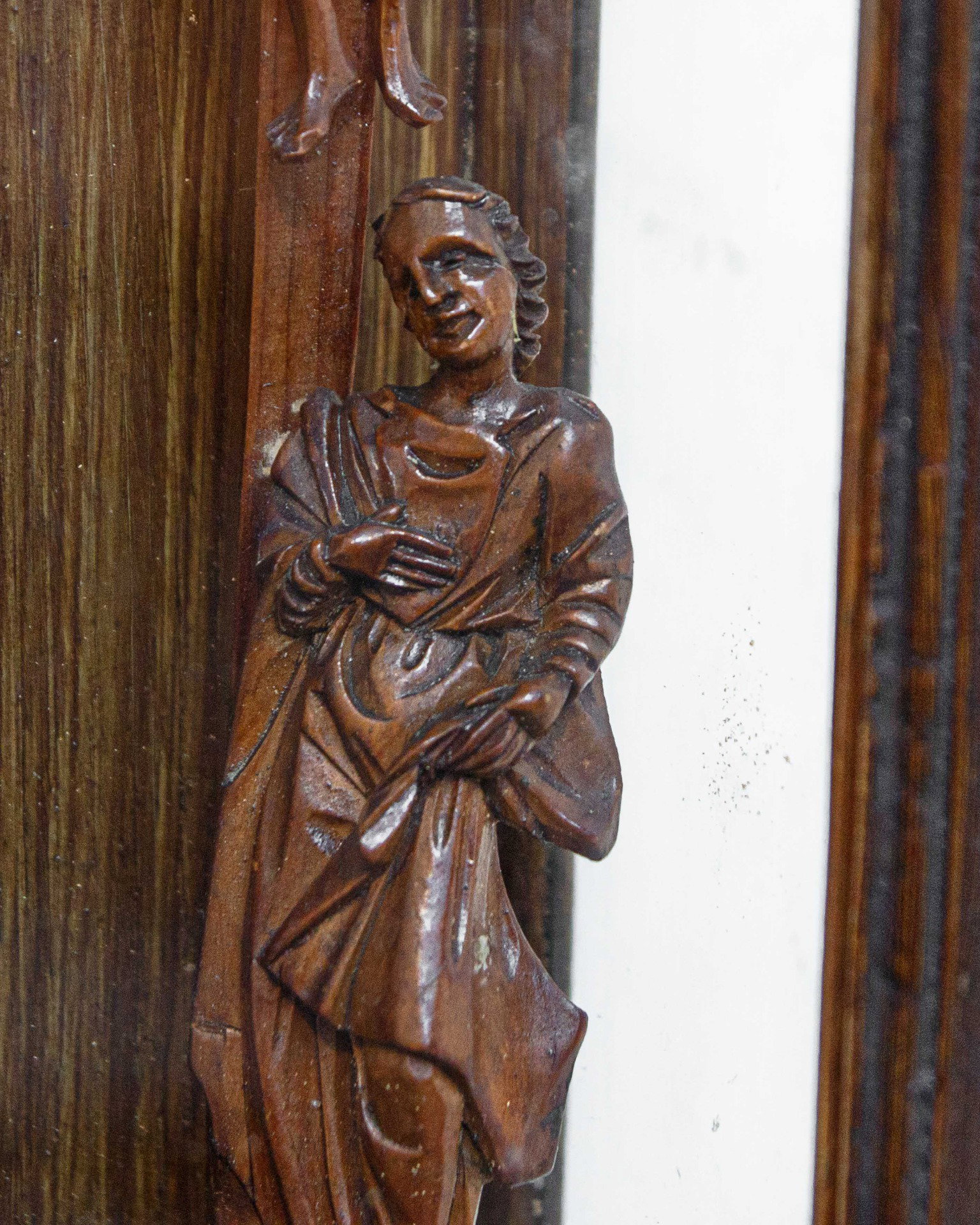
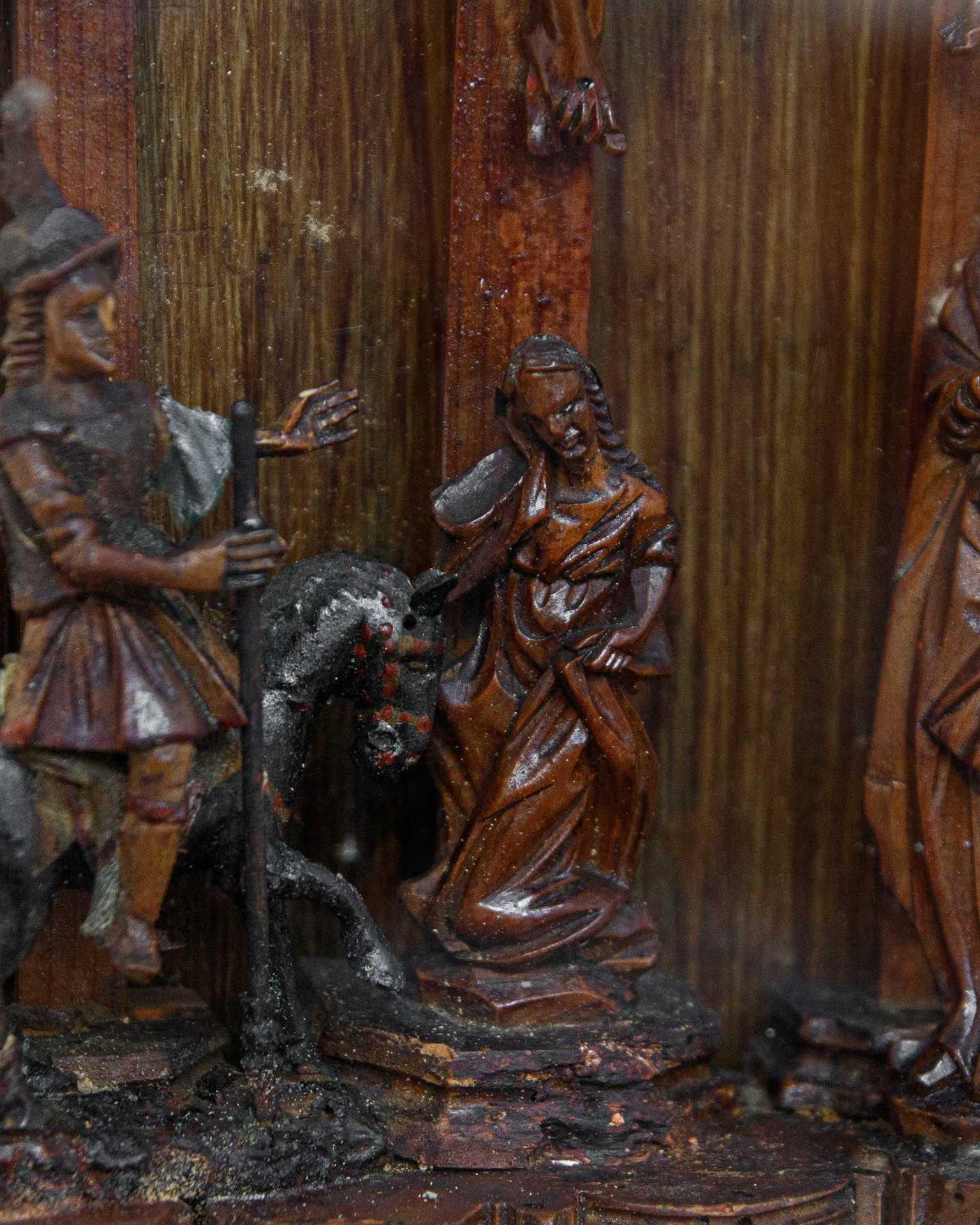
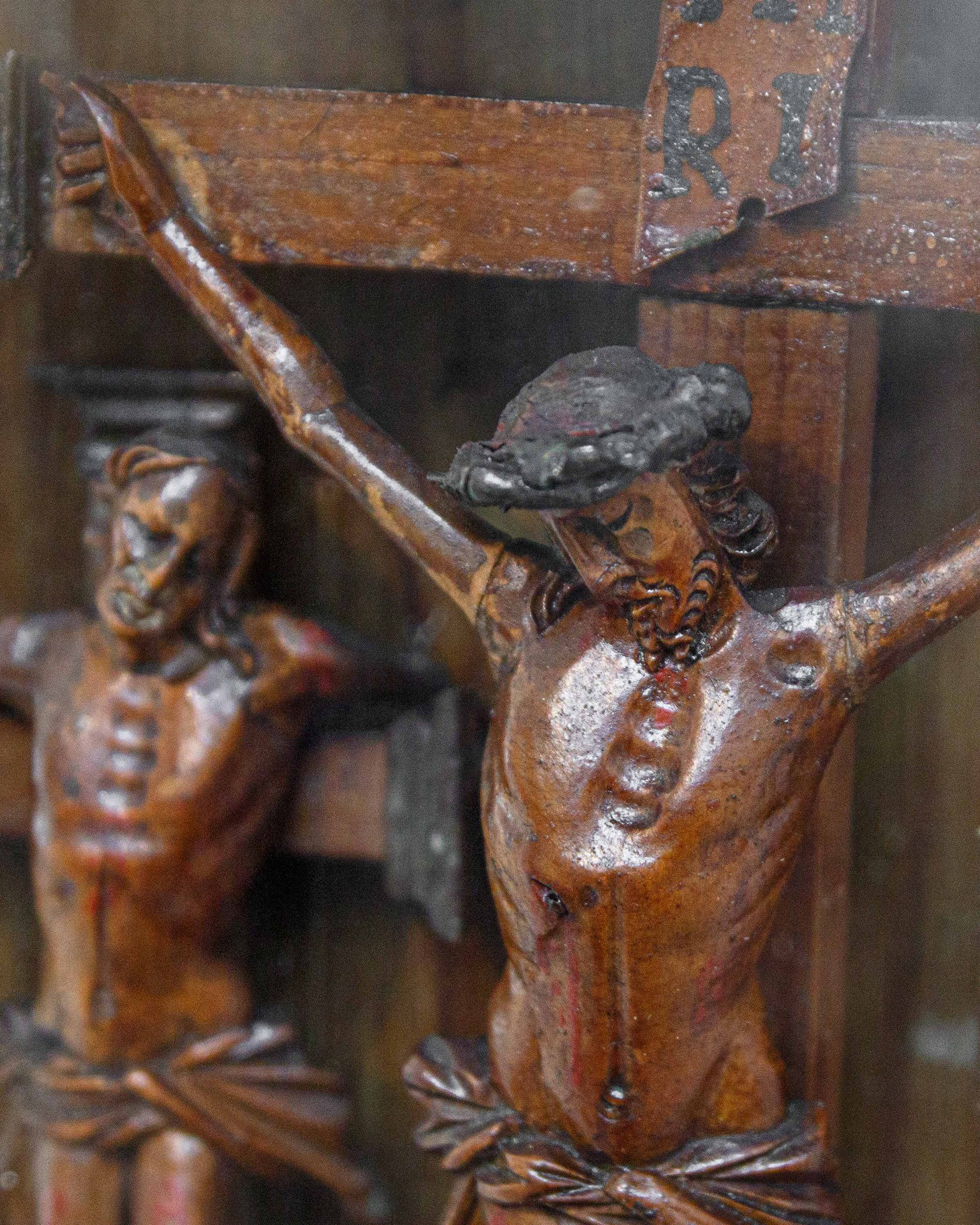
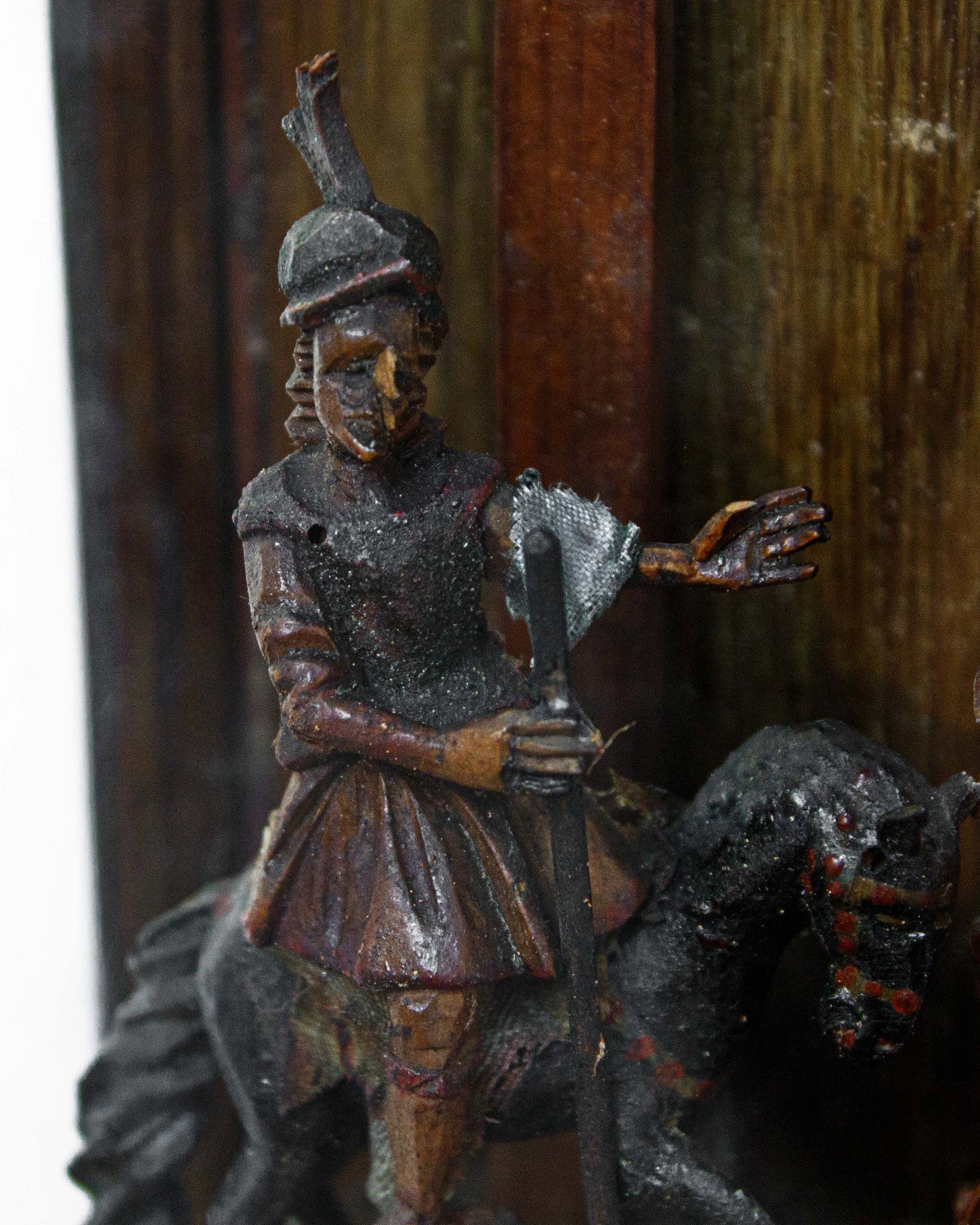
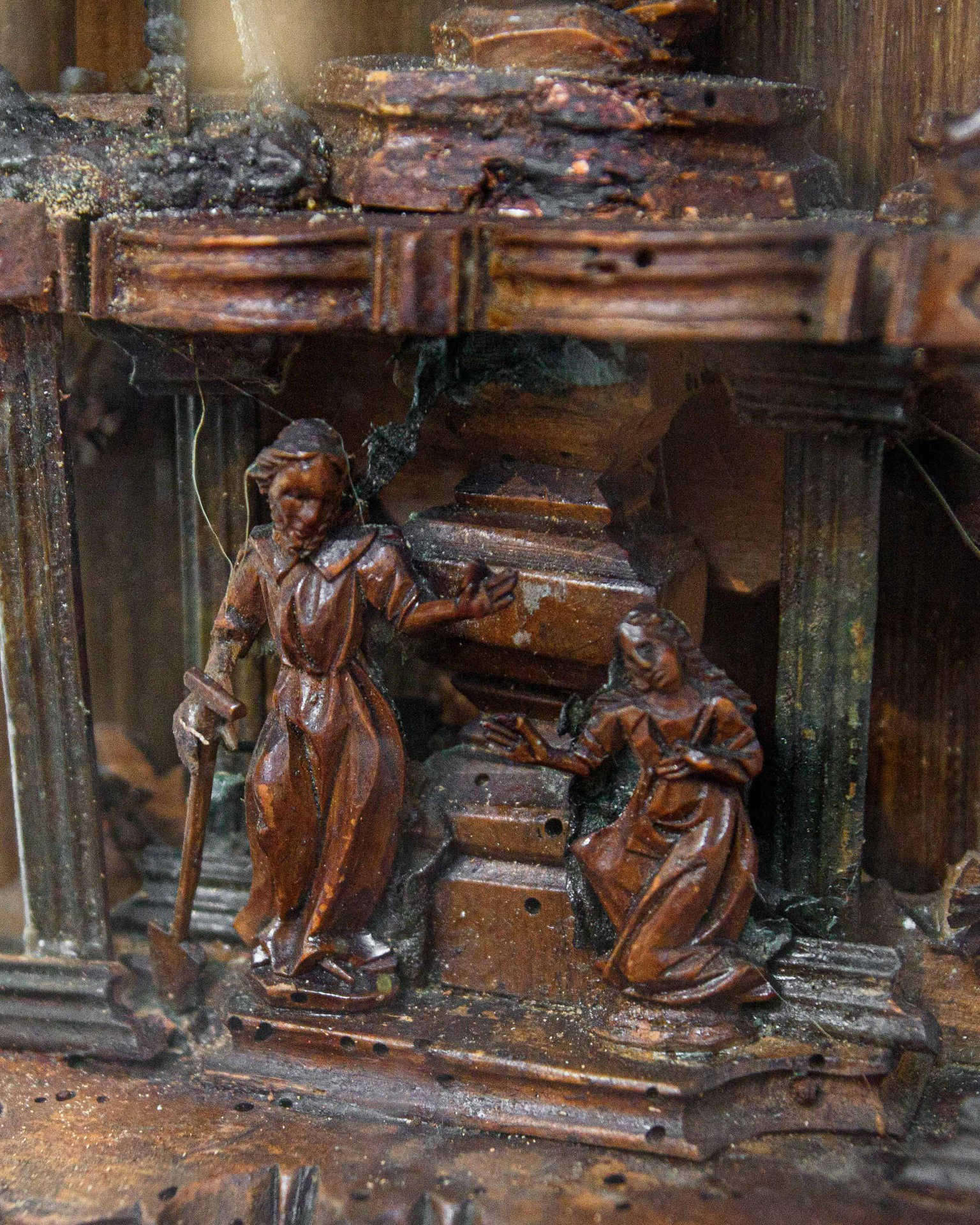
This refined work, encased in a wooden display case with a glass front that ensures its preservation and private devotional character, represents a valuable example of 17th-century Northern European micro-sculpture. The artifact is distinguished by its tightly packed vertical composition and the narrative density of the carved figures, which guide the observer through the climactic moments of Christ's Passion and Resurrection. The upper portion is dominated by the scene of Calvary, where the figure of the Redeemer stands tall in the center, symmetrically flanked by the crosses of the two thieves, traditionally identified as Dismas, the good thief who recognized Jesus' divinity, and Gestas, the one who mocked him. Below the central cross, the sacred drama is populated by key witnesses: the Virgin Mary, depicted in an attitude of deep contemplation and sorrow, and the evangelist John, whose presence embodies fidelity and support for the Mother. Next to them stands the dynamic figure of a knight, iconographically identifiable as the Roman centurion Longinus. According to hagiographic tradition, it was he who pierced Christ's side with the spear to ascertain his death; struck by the blood and water that flowed from the wound, he converted, exclaiming the divine nature of the man who had just died, thus becoming a symbol of immediate faith and redemption. The composition then descends to a more complex architectural base where the episode of the Noli me tangere unfolds, set in a garden at the dawn of the Resurrection. Here, Mary Magdalene, having gone to the tomb, encounters the Risen Christ but initially does not recognize him, mistaking him for the gardener. This iconographic misunderstanding is underscored by the detail of the spade that Jesus holds in his hands, an attribute that visually defines his role as the "mystical gardener" who cultivates souls. When she finally identifies him and attempts to approach, Christ stops her with the famous Latin phrase that gives the scene its name, admonishing her not to detain him as he has not yet ascended to the Father. The technical skill of the Northern European sculptor emerges in the handling of volumes in such a reduced space, capable of creating a dialogue between the tragedy of death on Golgotha and the luminous hope of Easter, enclosing the entire cycle of salvation in an object of exquisite craftsmanship and profound spirituality.