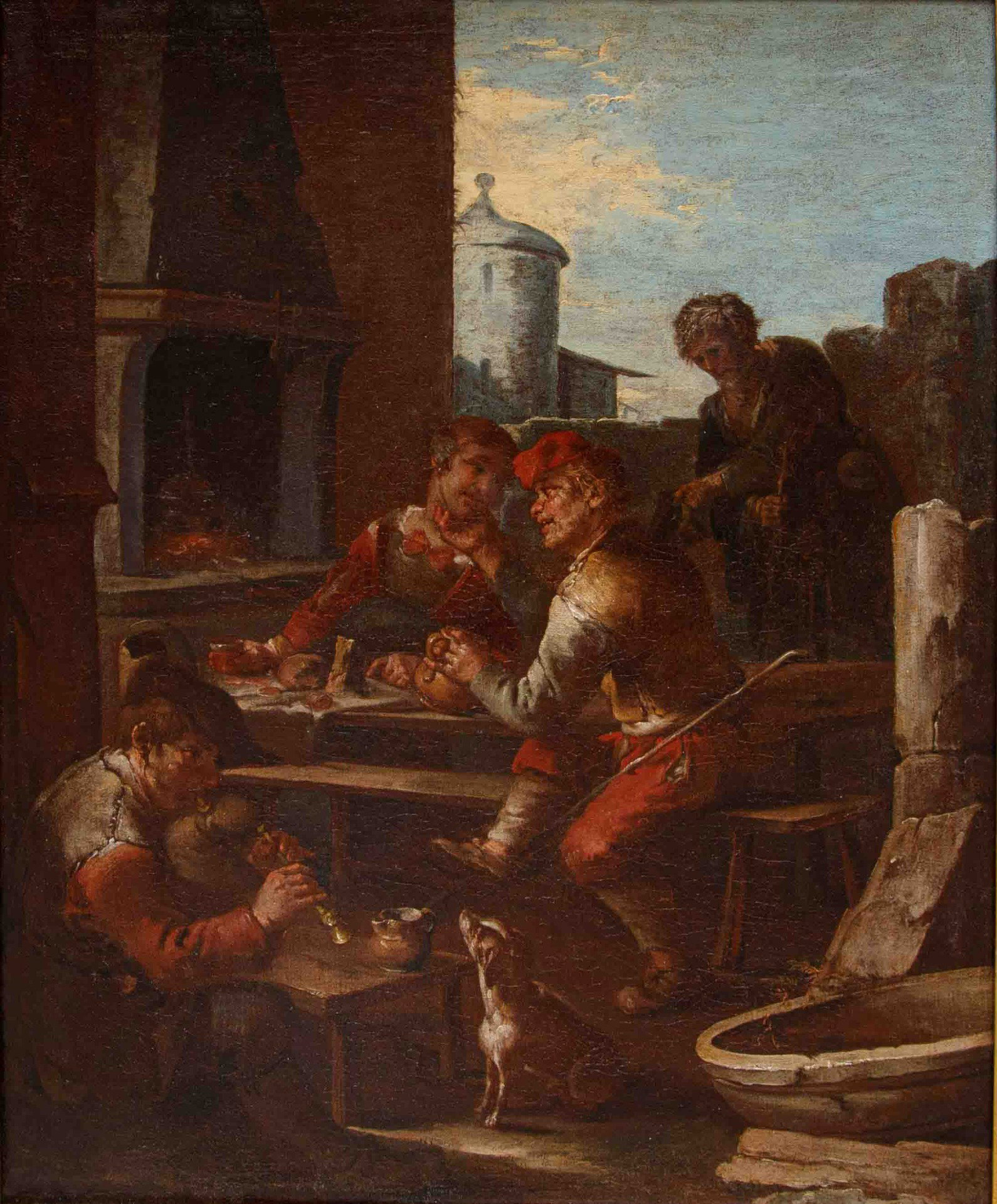
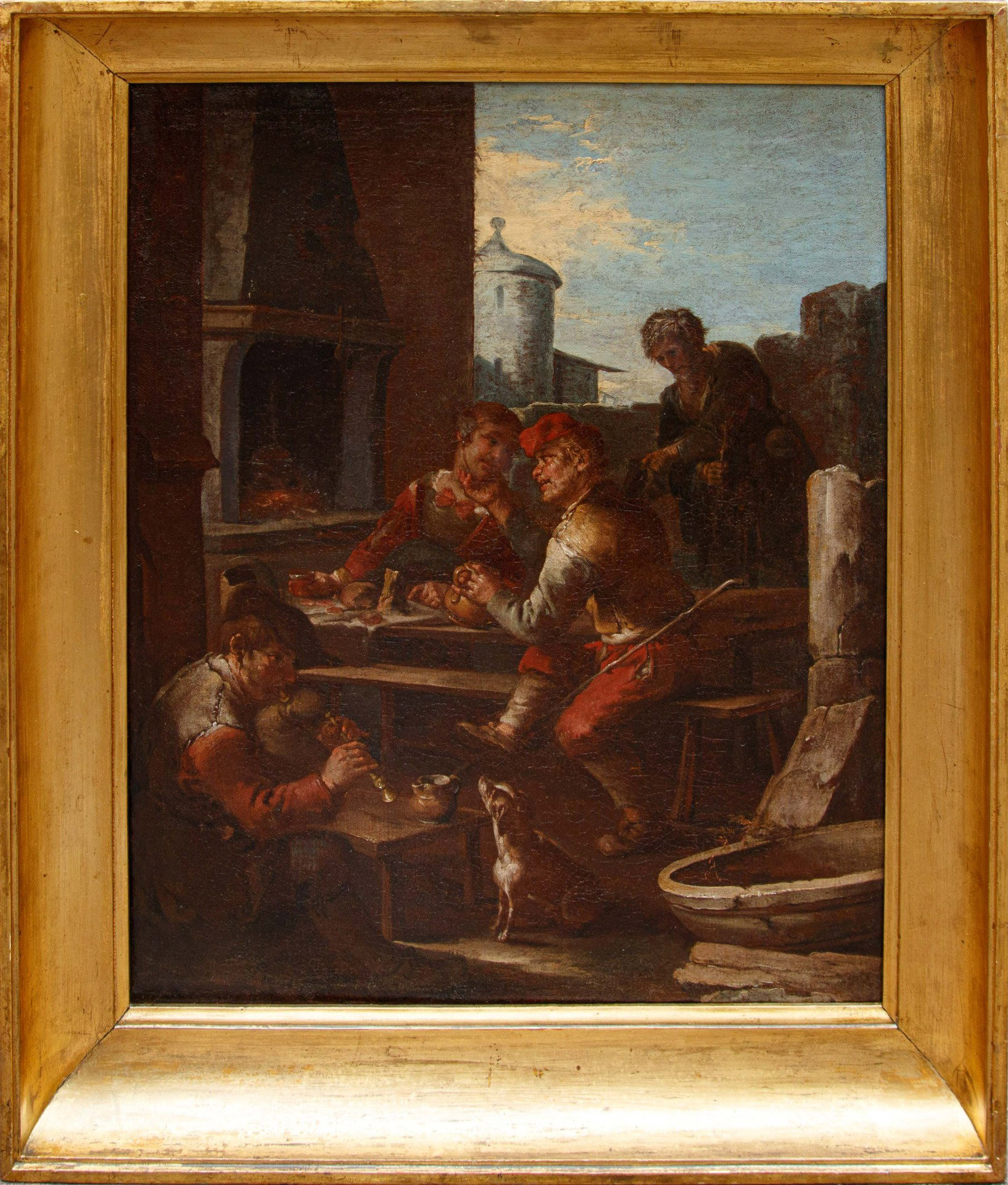
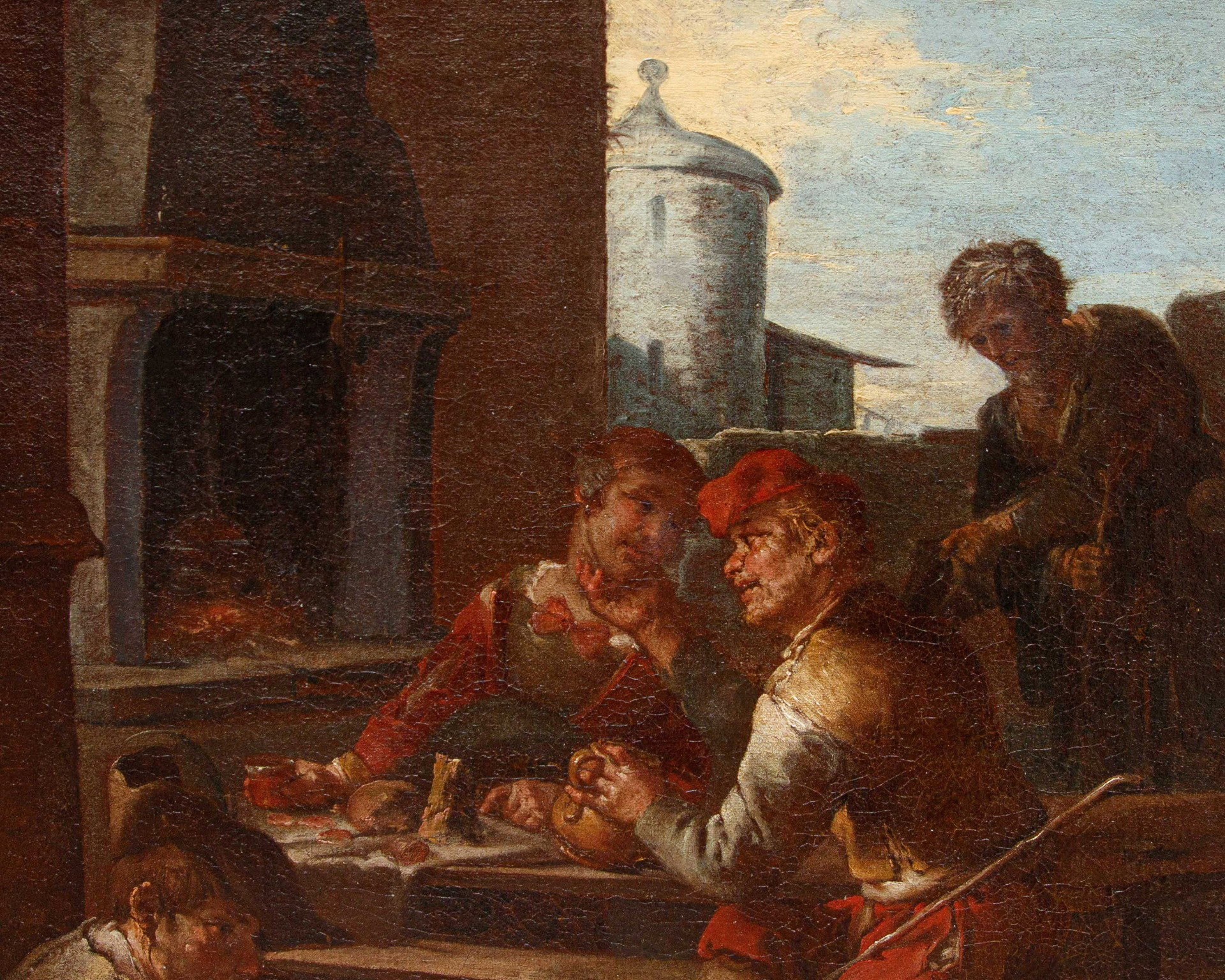
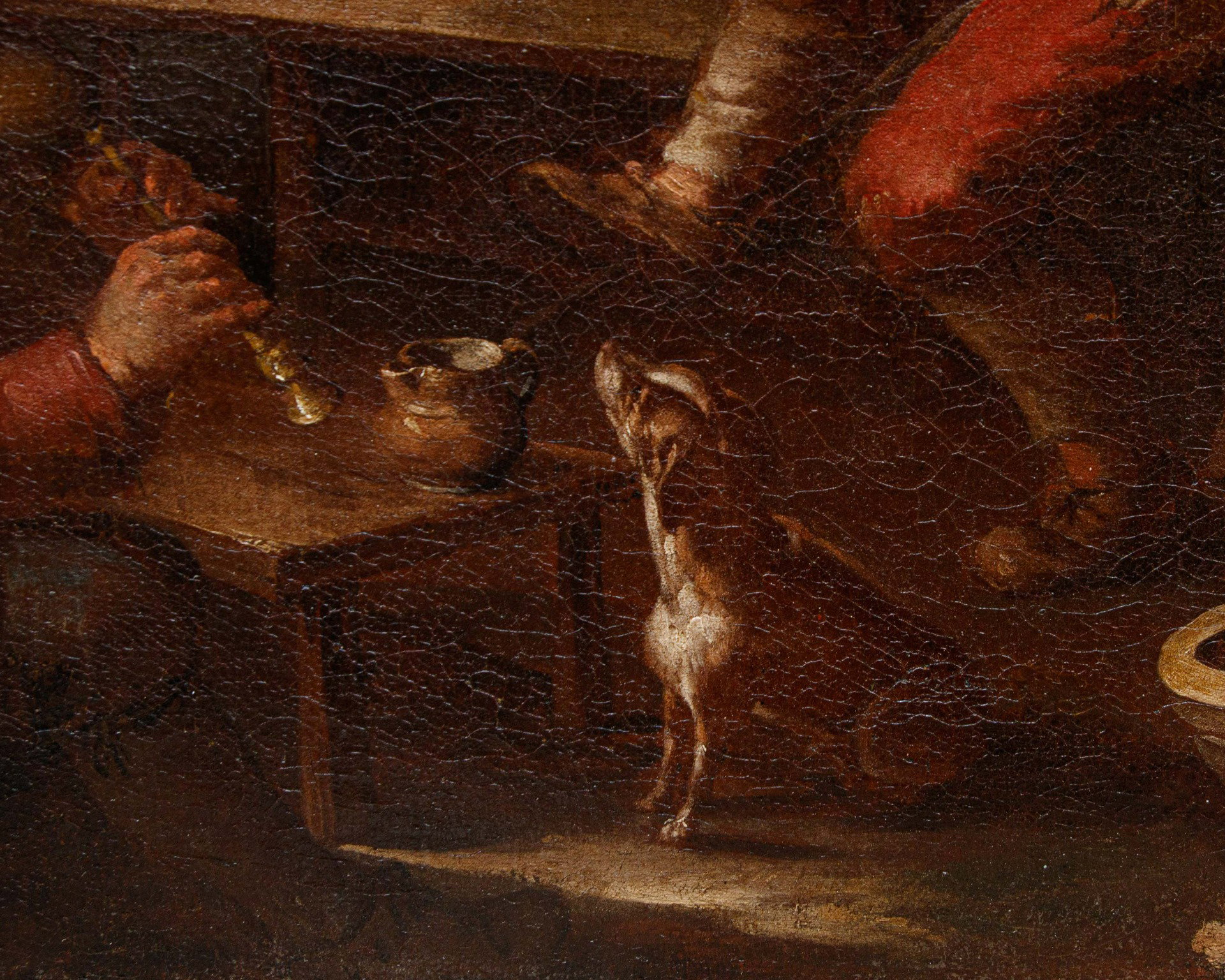
Giacomo Francesco Cipper, known as Todeschini (Feldkirch, July 15, 1664 – Milan, October 17, 1736), Tavern scene with a bagpipe player
Description:
Giacomo Francesco Cipper, known as Todeschini (Feldkirch, July 15, 1664 – Milan, October 17, 1736)
Tavern scene with a bagpipe player
Oil on canvas, 74 x 60 cm
with frame, 88 x 74 cm
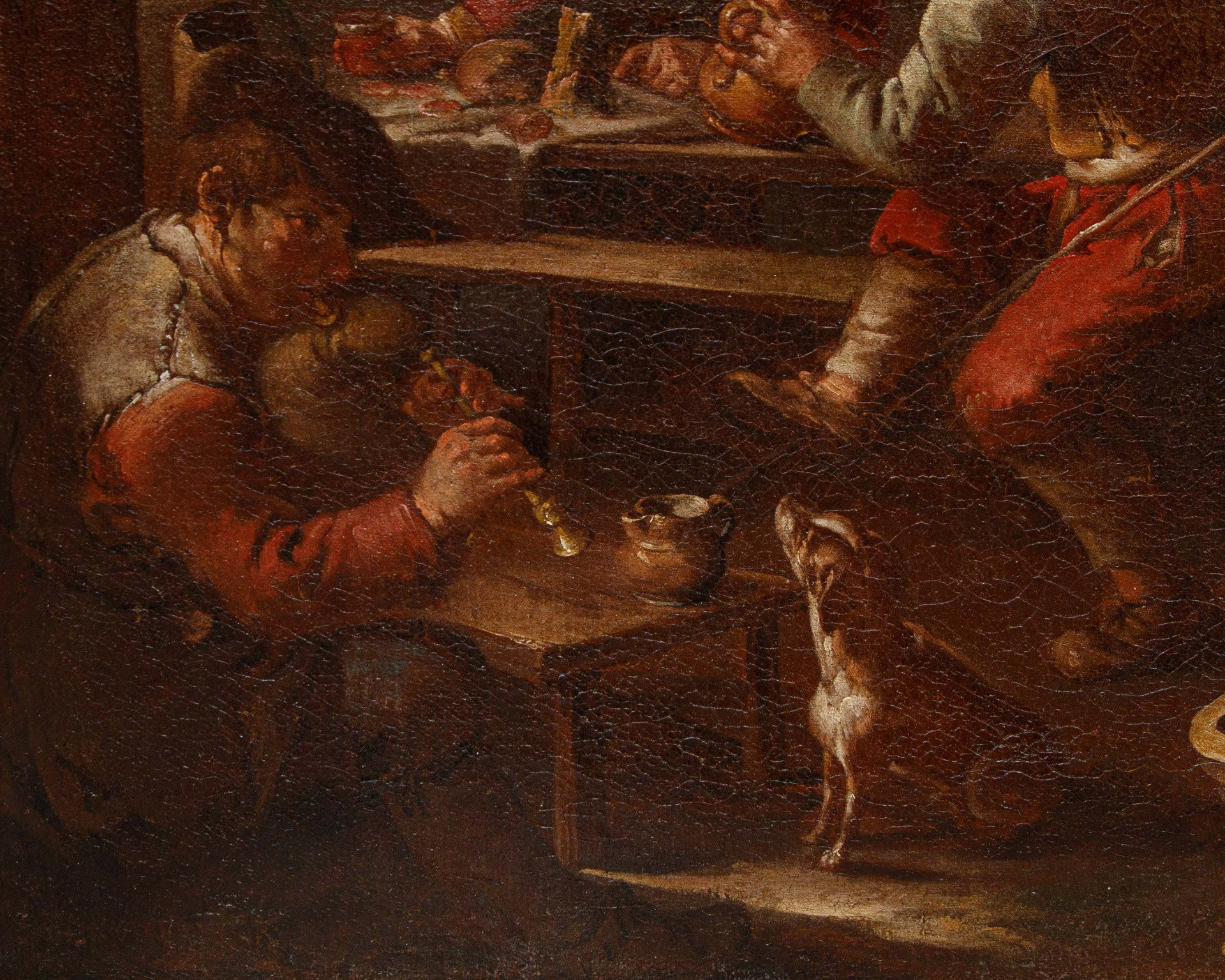
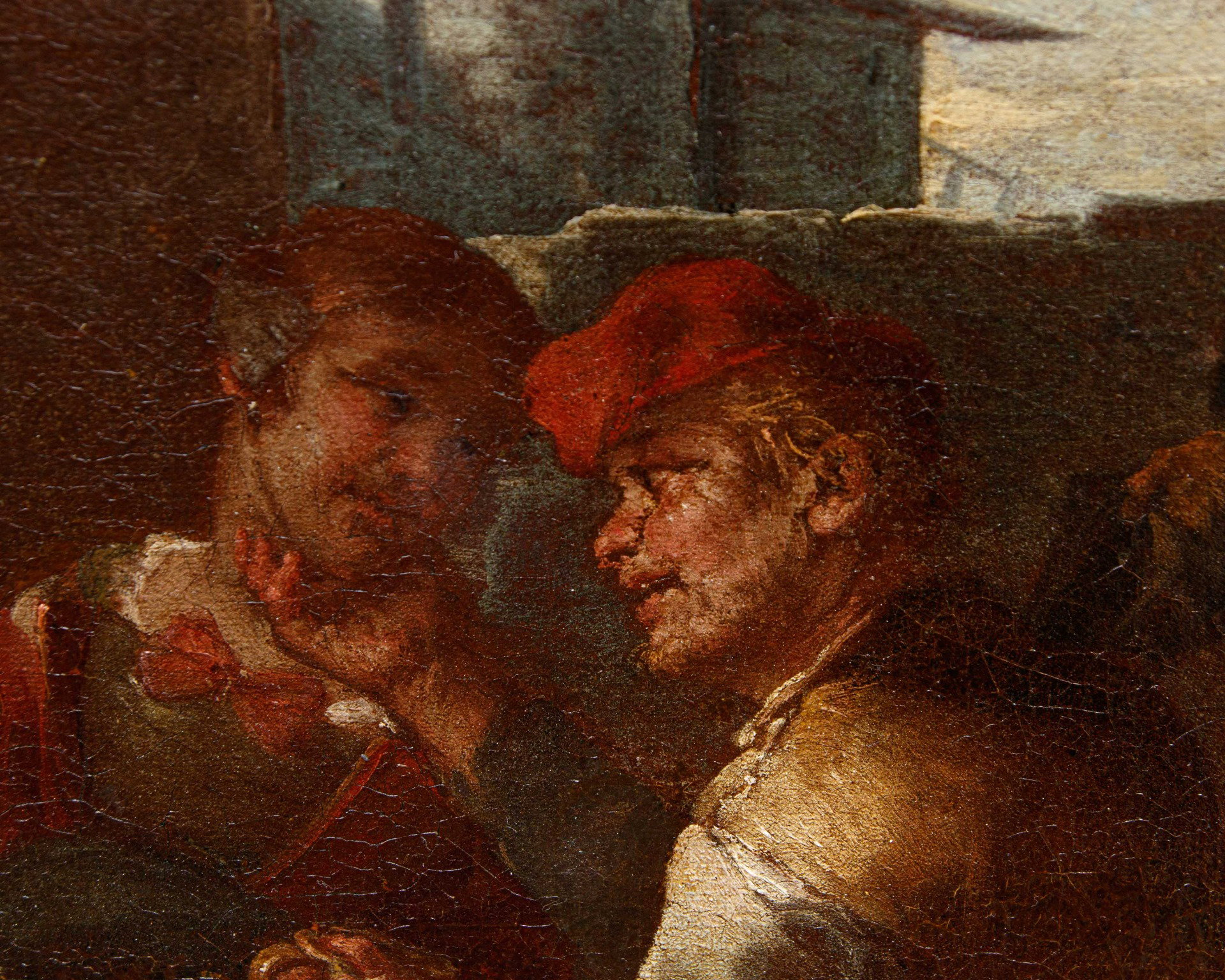
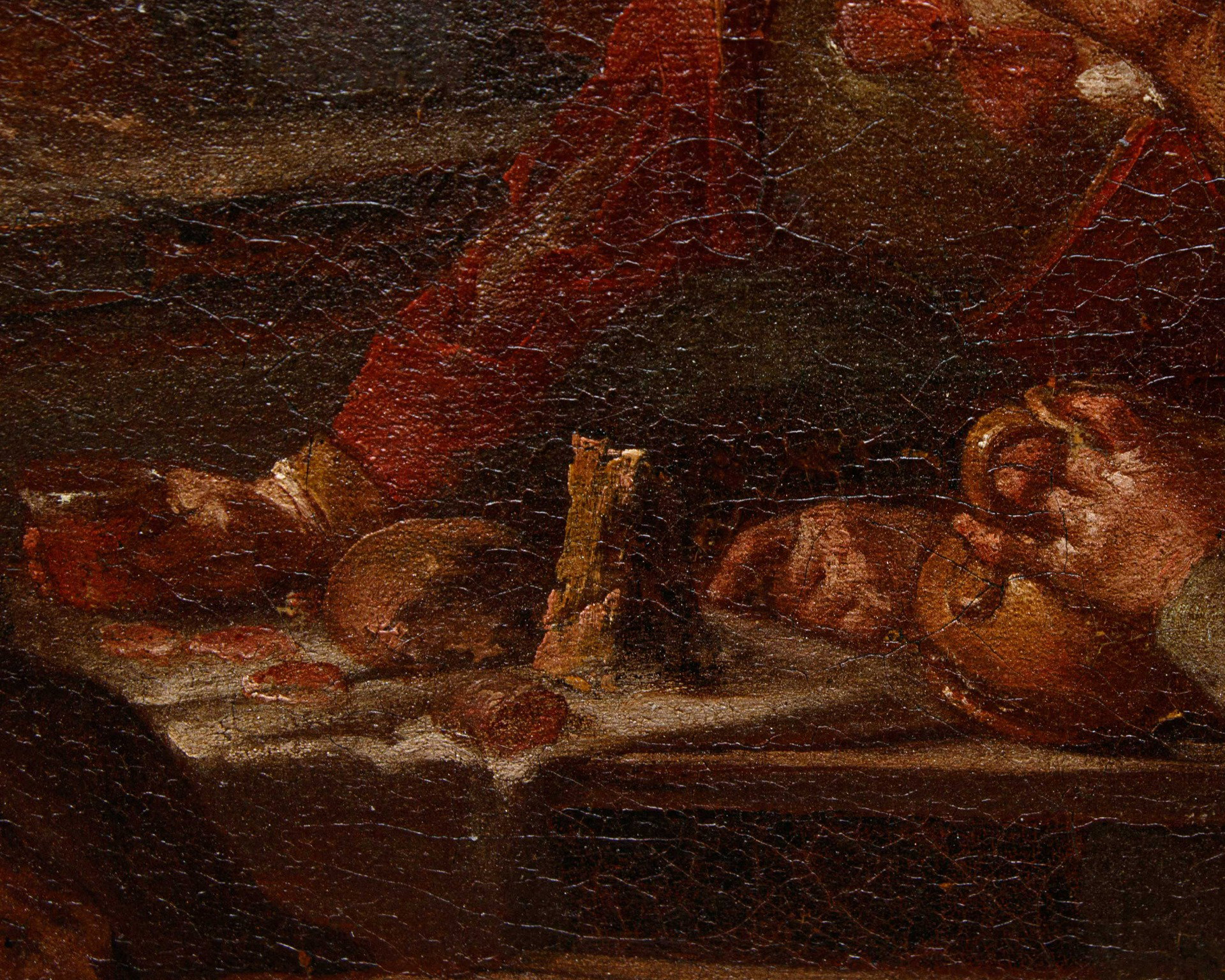
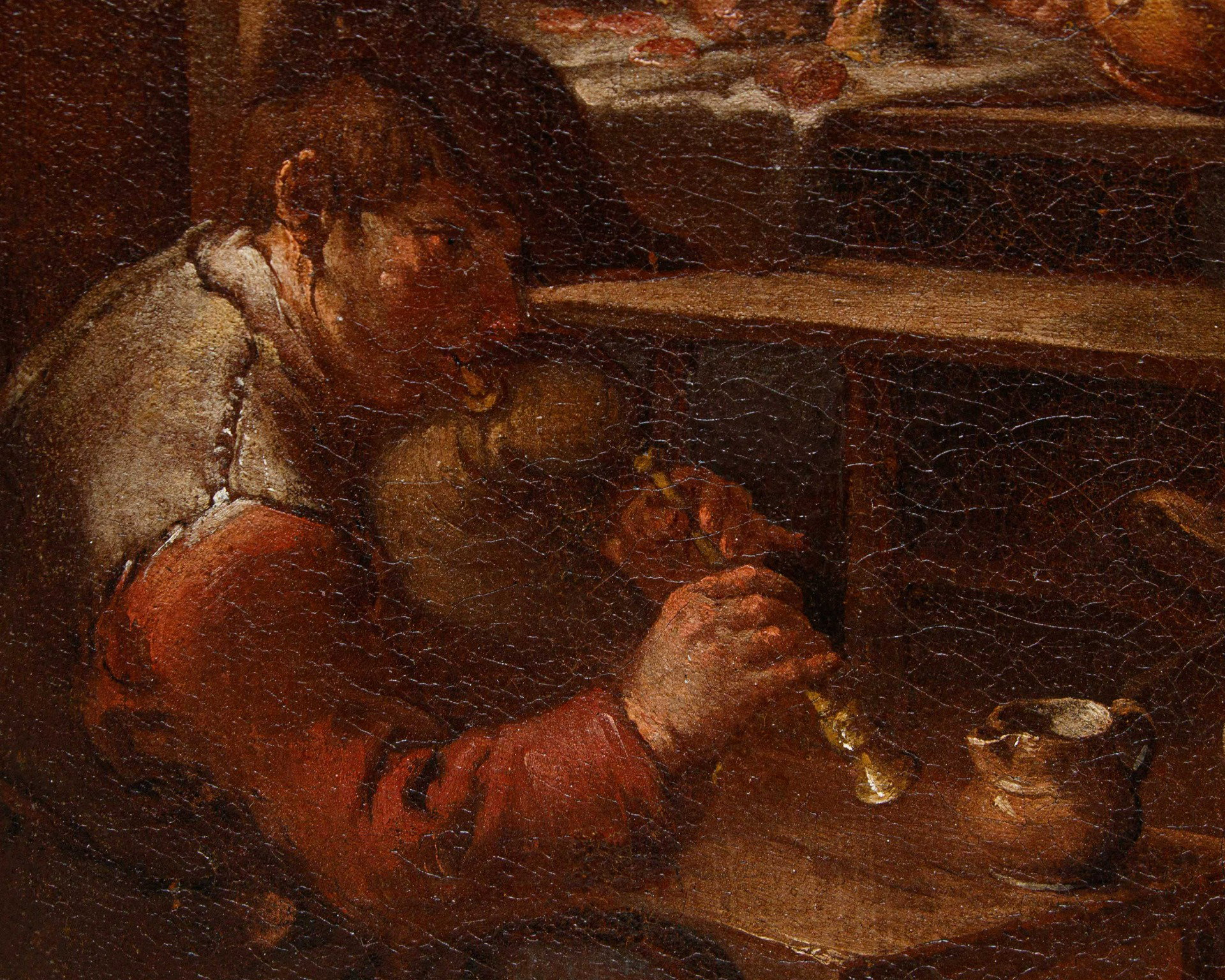
The canvas titled Tavern Scene with a Bagpipe Player is a work from the mature production of Giacomo Francesco Cipper, universally known as Todeschini. An artist of Austrian origin but deeply rooted in the cultural and figurative fabric of Lombardy between the 17th and 18th centuries, Cipper distinguishes himself in this work through a narrative that shuns any form of pity or moral condescension towards his humble protagonists. The artistic objective that emerges forcefully from the composition is the lucid and pragmatic rendering of the beauty inherent in concrete life, an aesthetic that clearly distances itself from the melancholic pathos typical of many of his contemporaries to embrace a vital and optimistic depiction of everyday reality. In this scene, Todeschini originally reworks the Bamboccianti tradition, infusing it with an almost monumental dignity that looks to the experiences of Monsù Bernardo and Alessandro Magnasco, while maintaining absolute adherence to the real. The composition is dominated by a group of figures caught in a moment of convivial pause: a bagpipe player, on the left, is intent on blowing into his instrument with a vigor that seems to almost spill out of the canvas, while in the center a young man engages in a silent dialogue with the other patrons. This specific physiognomy of the young man represents a recurring iconographic motif in the painter's catalog, traceable with variations in several canvases in private collections, confirming a repertoire of human "types" studied from life and skillfully re-proposed. The realism of the work extends with meticulous precision to the definition of everyday objects. The ceramic jug, the broken bread on the rough wooden table, and the furnishings that populate the scene are not mere decorative accessories, but key elements of a narrative that celebrates the material. The vibrant brushstrokes, typical of Cipper's hand, construct volumes through a chromatic plasticity that gives body and weight to the figures, immersing them in a chiaroscuro atmosphere where light, though dense, frankly defines the sometimes grotesque and satirically charged expressions of the characters. This approach, which borders on theatrical license, finds a significant parallel in the reforms of Milanese dialect theater of the time, suggesting an elective affinity between Todeschini's painting and the most authentic popular culture. The scene is set outside what appears to be a rural inn, with an architectural background dominated by a cylindrical tower that silhouetted its profile against a sky streaked with twilight lights. This landscape detail, combined with the presence of the dog in the foreground attentively observing the musician, lends spatial depth and a sense of serene everydayness to the entire composition. The stylistic references to other major works by the artist, such as the Market Scene from the Zeri collection or the canvases preserved at the Museo Ala Ponzone in Cremona, are evident in the treatment of still lifes and in the rendering of poor but vibrantly colored fabrics. Ultimately, the canvas stands as a fundamental chapter of that Lombard painting of reality, capable of elevating the everyday to the dignity of art through a powerful, ironic, and profoundly human pictorial language.