Kippel and Bietschhorn, 20th-century painting
Description:
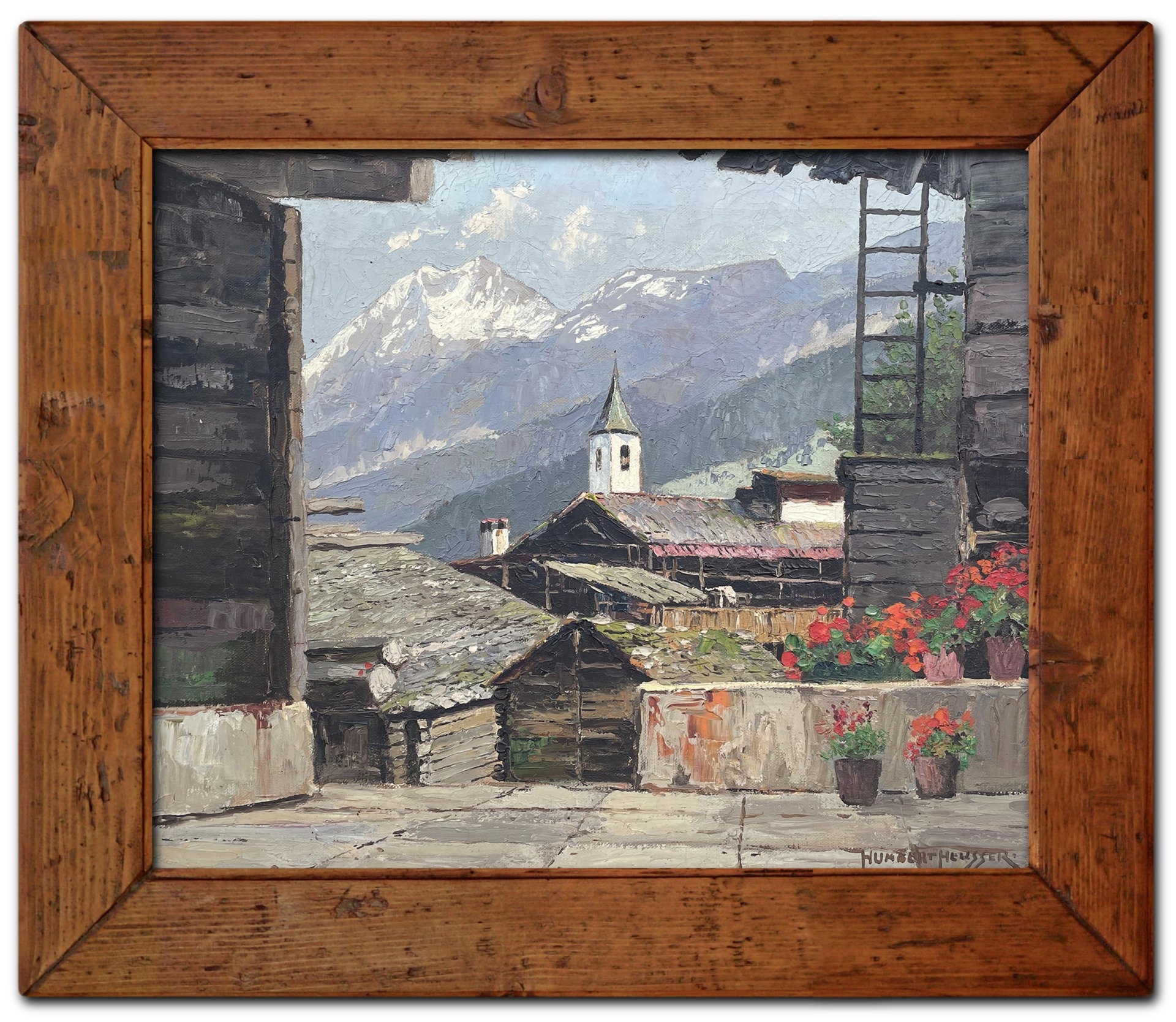
Kippel and Bietschhorn
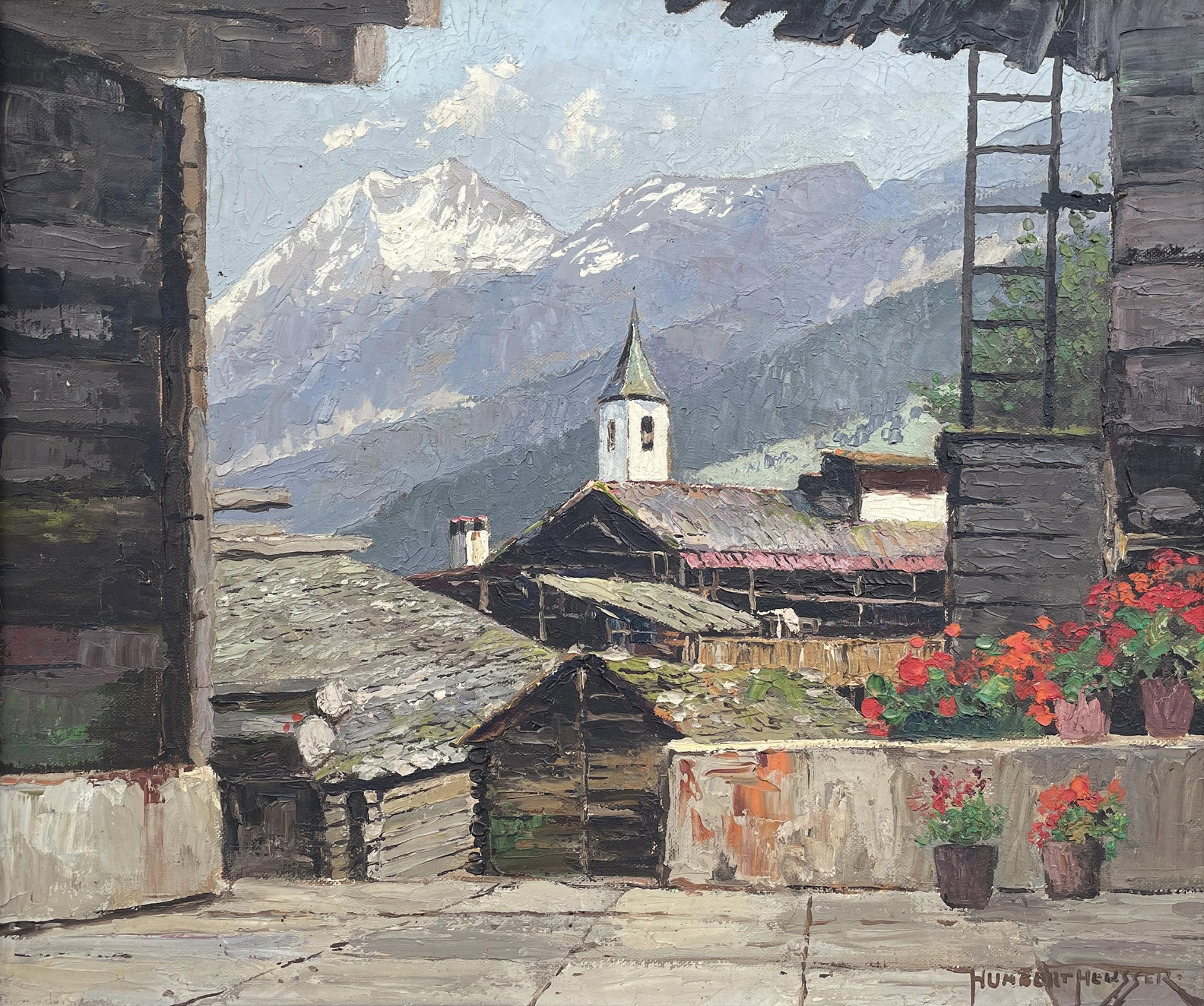
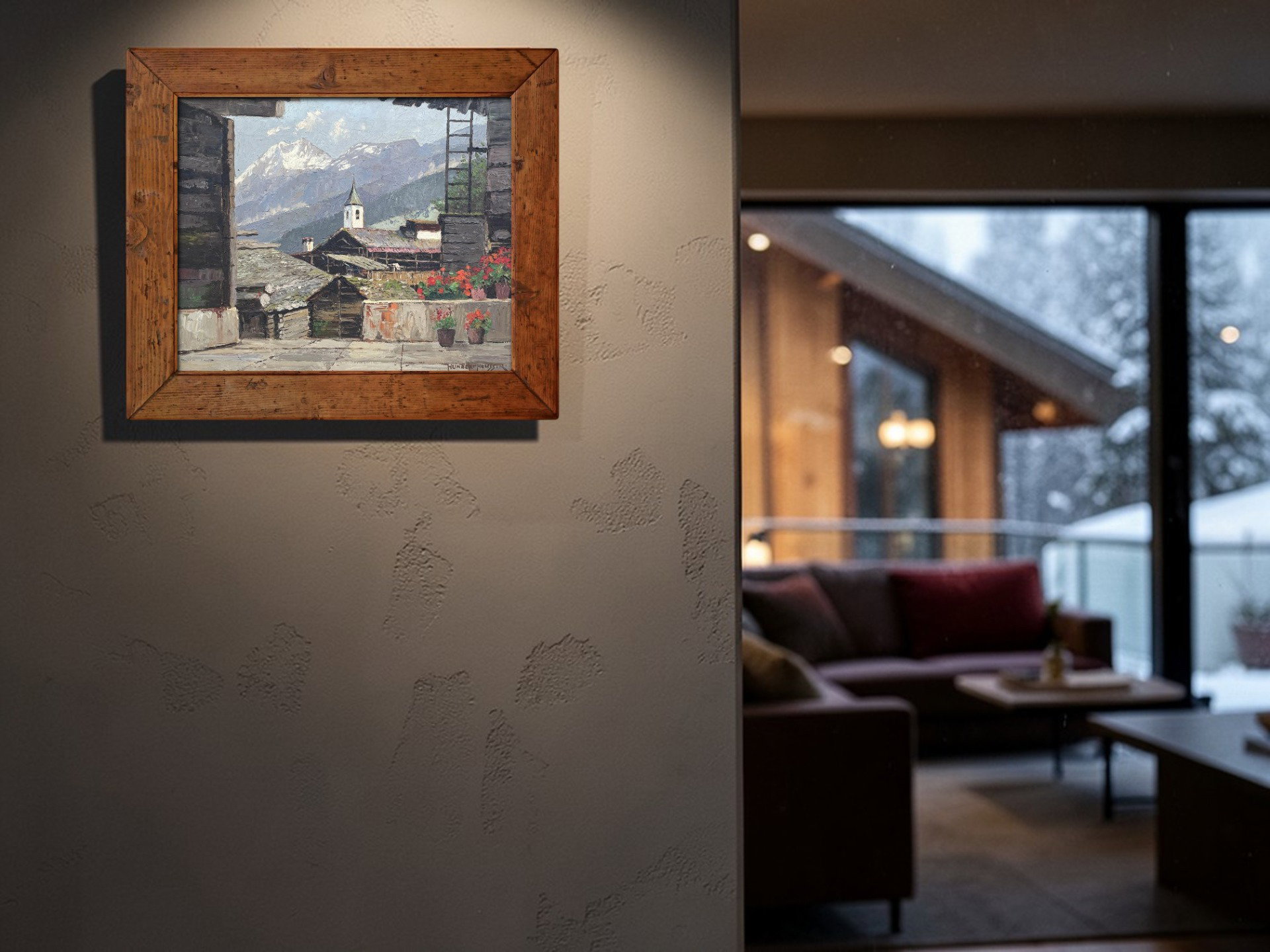
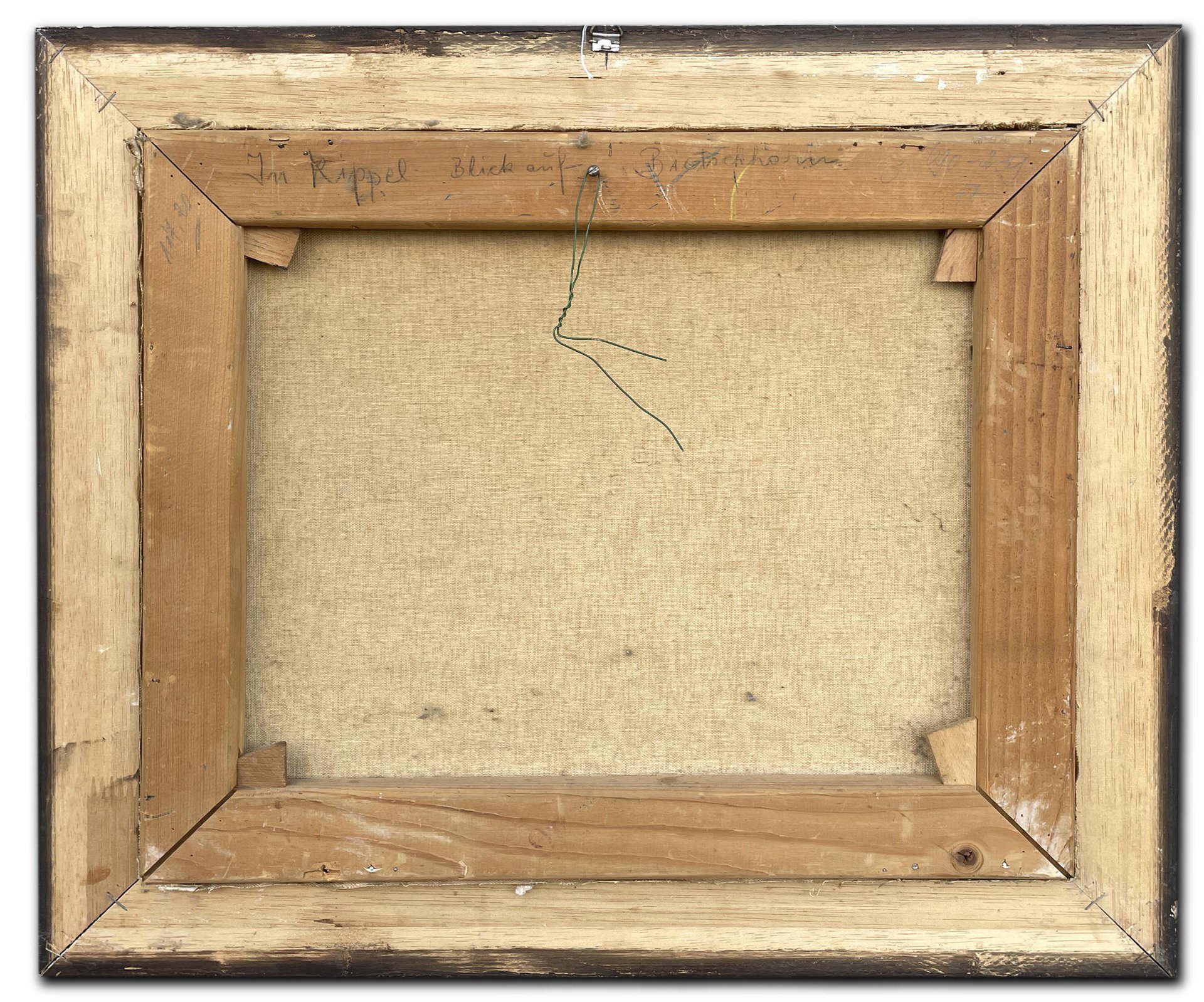
Palette knife oil painting depicting Kippel and the Bietschhorn, by Humbert Heusser, with alpine architecture and a landscape of the Lötschental.
Technical Information:
Period: circa 1920
Origin: Switzerland
Author: Humbert Heusser
Technique: oil on canvas, palette knife
Artwork dimensions: 38 cm x 46 cm
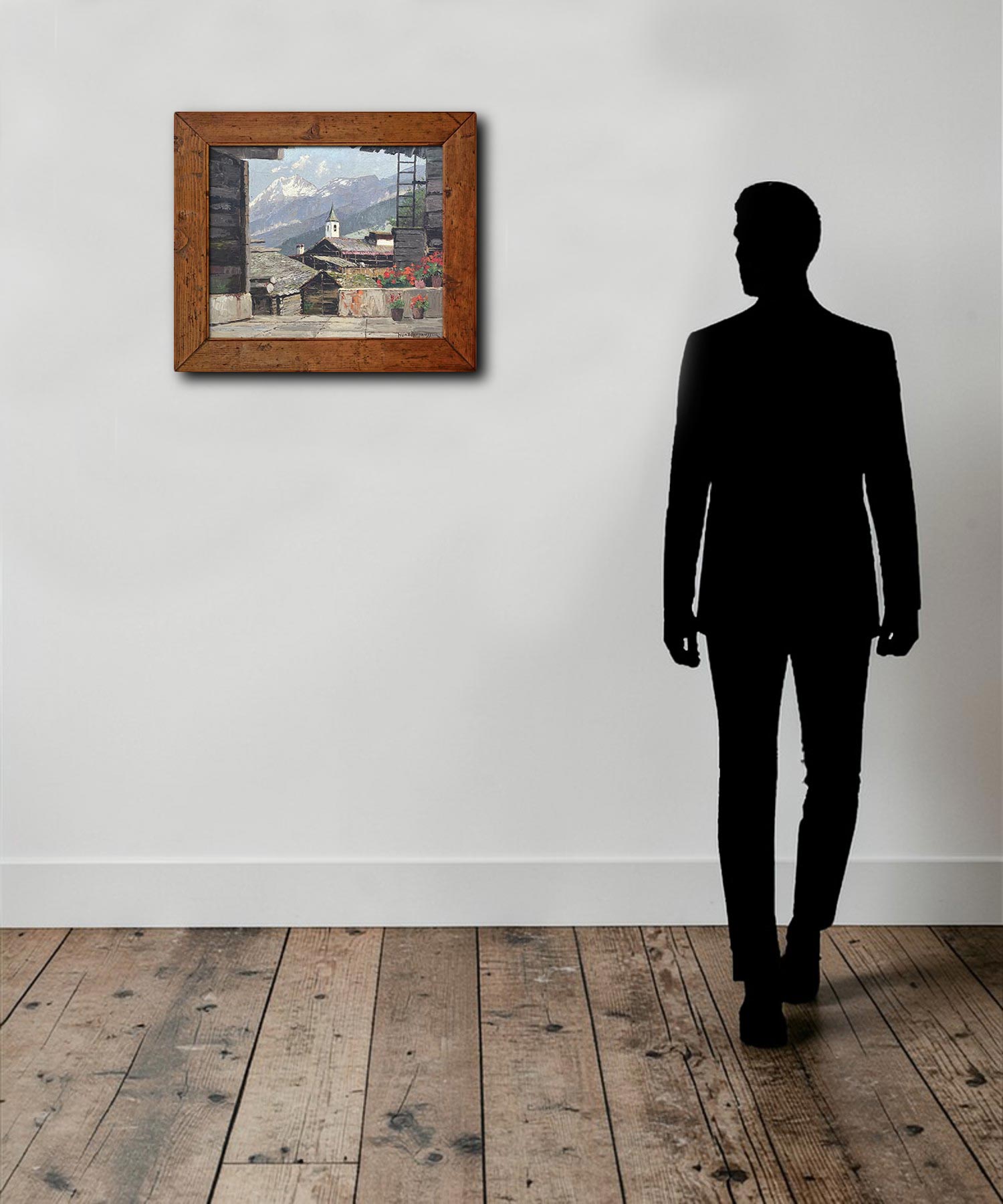
Dimensions with frame: 52 x 60 cm
Description:
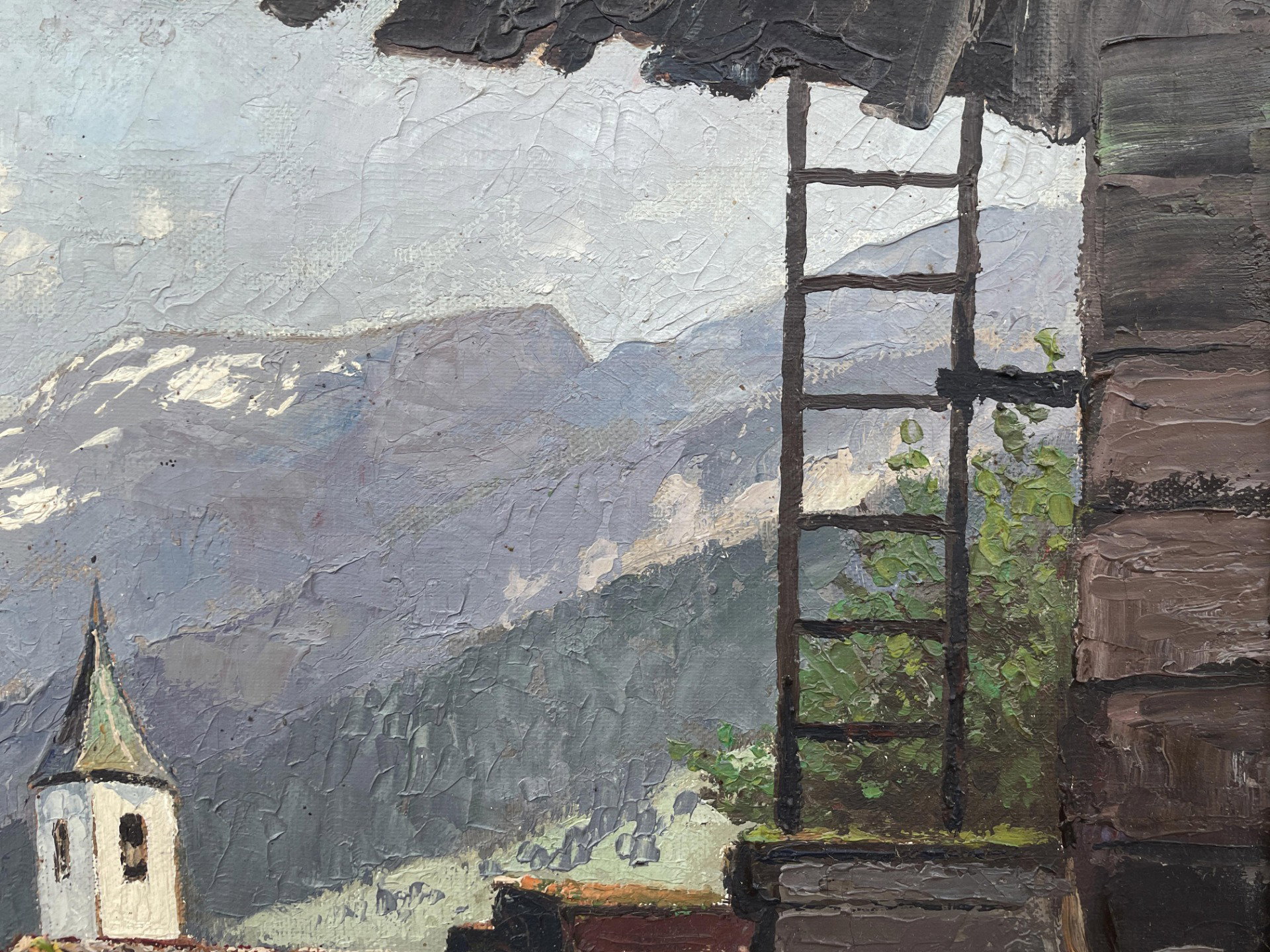
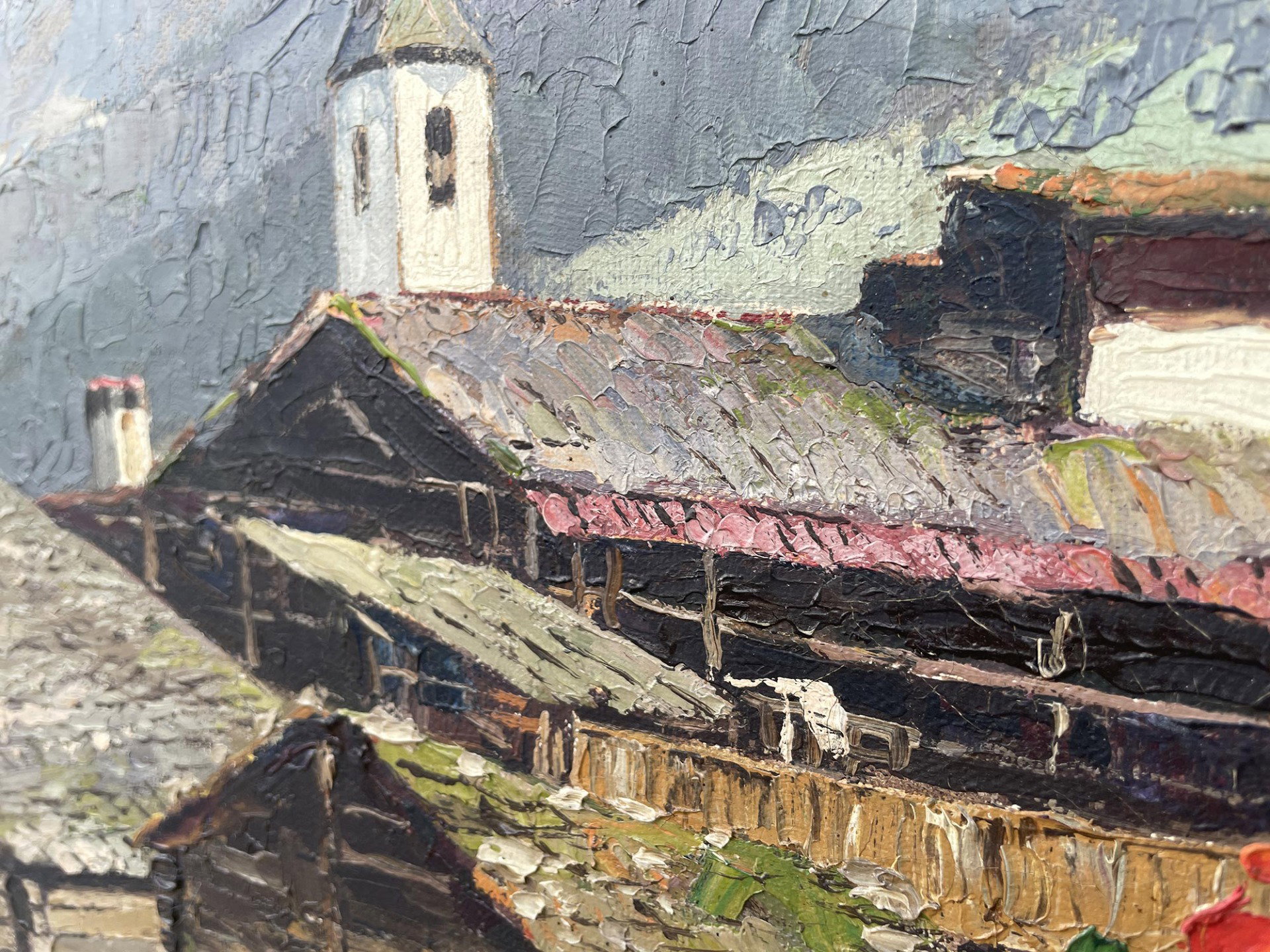
Oil on canvas, executed with a palette knife by Humbert Heusser, featuring a view of the village of Kippel in the Lötschental. The composition is framed by architectural elements in the foreground, consisting of wooden structures and paved surfaces that define the visual entrance to the inhabited center.
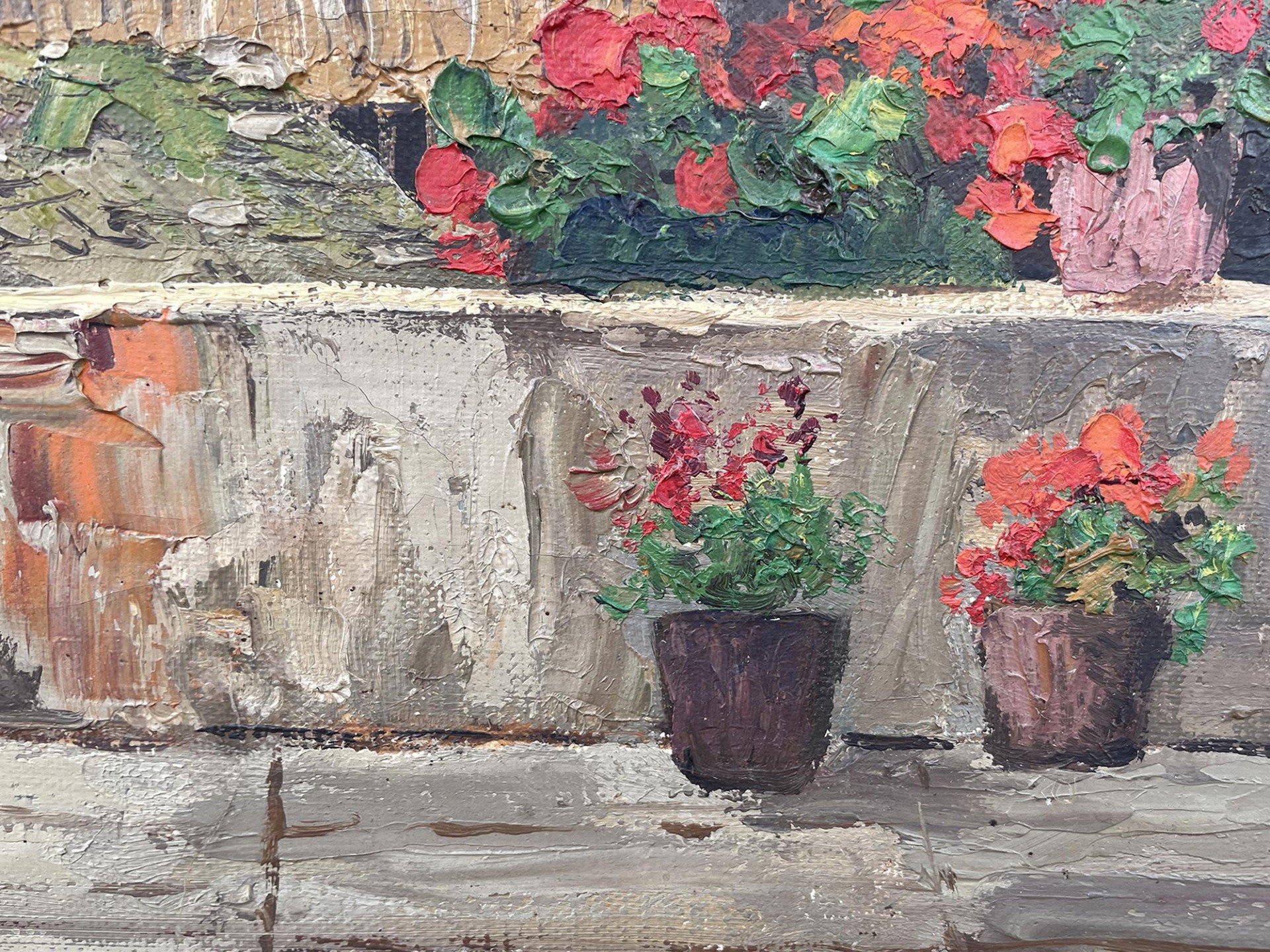
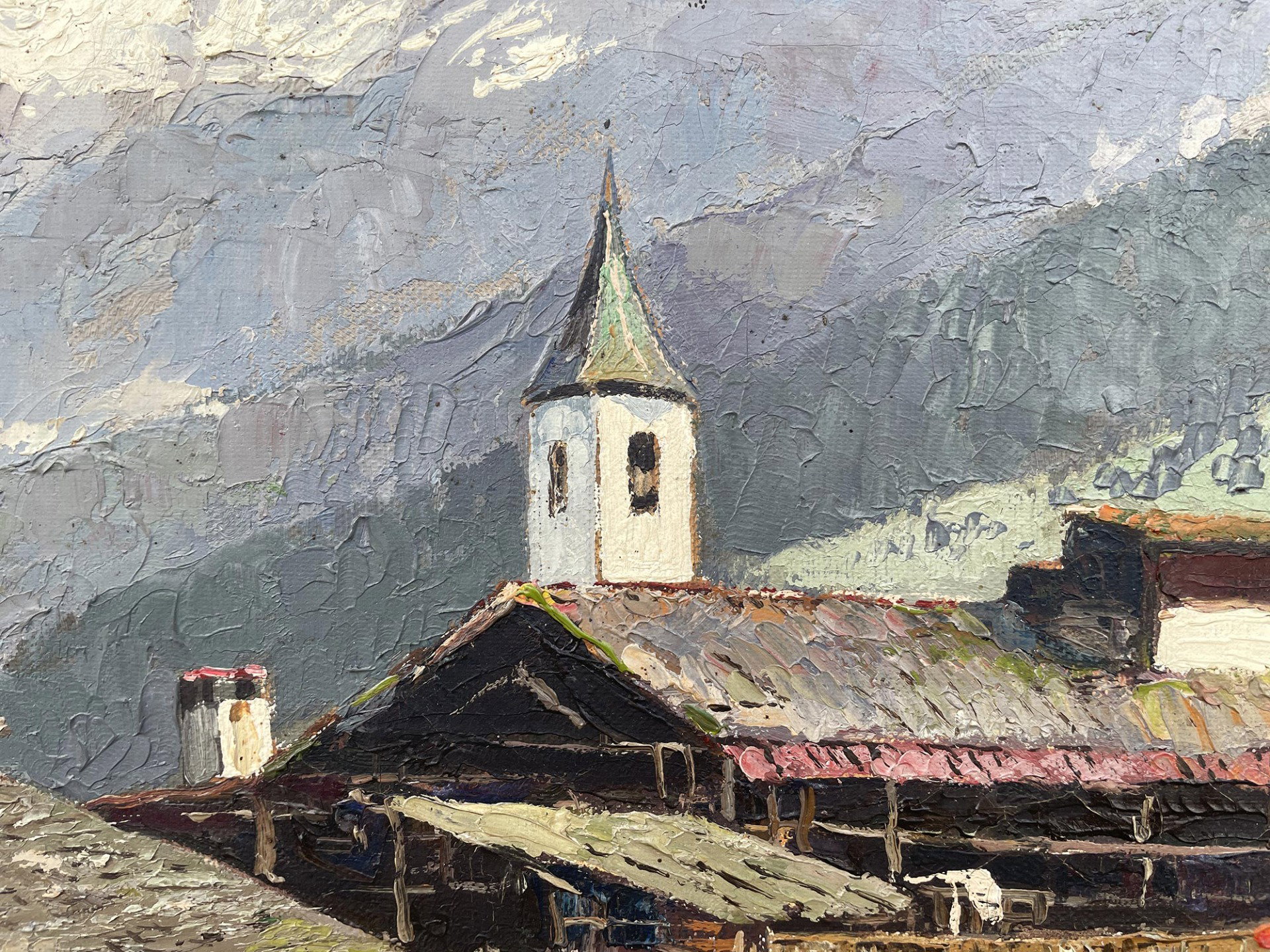
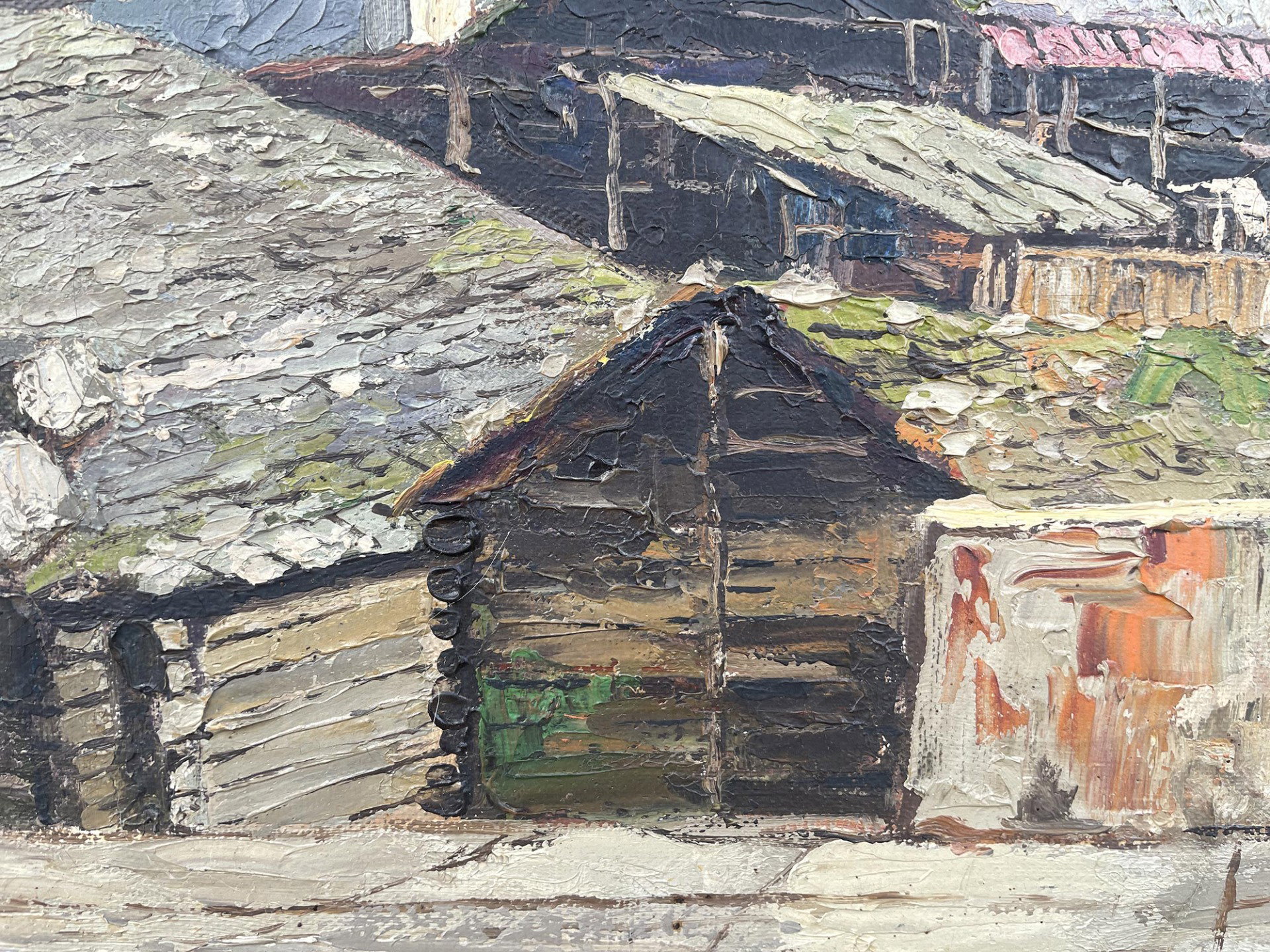
The thick, layered brushstrokes define the surfaces of the wooden houses, the shingle roofs, and the masonry elements. In the center, the roofs of the dwellings and the pointed spire of the church emerge, arranged on progressive planes that lead towards the valley. On the right, vases with red flowers are present, rendered with quick, compact touches, introducing a chromatic variation compared to the palette of grays, browns, and greens used for the village.
The background is dominated by the Bietschhorn massif, depicted with lighter, diagonal brushstrokes that suggest snow-covered areas and the stratification of the mountain. The signature is located in the lower right.
Humbert Heusser
Humbert Heusser (active in the first half of the 20th century) is a Swiss painter known for producing alpine landscapes and views of Valais villages. His work focuses primarily on the Lötschental, with particular attention to locations such as Kippel, Wiler, and the surrounding mountains, including the Bietschhorn and the peaks of the Bernese Alps.
His activity is documented mainly through works present in private collections, regional auction catalogs, and galleries specializing in 20th-century alpine painting. Heusser frequently employs the palette knife technique, with thick, layered impasto, used to render wooden surfaces, shingle roofs, and mountain reliefs. The palette uses browns, grays, and greens, with more vivid chromatic accents for vegetation or architectural elements.
His visual language falls within the current of Swiss alpine realism, characterized by direct observation and a spatial construction based on successive planes that lead towards the mountain background. Heusser's works show a preference for everyday village scenes, traditional wooden architecture, and the representation of alpine morphology.