Description
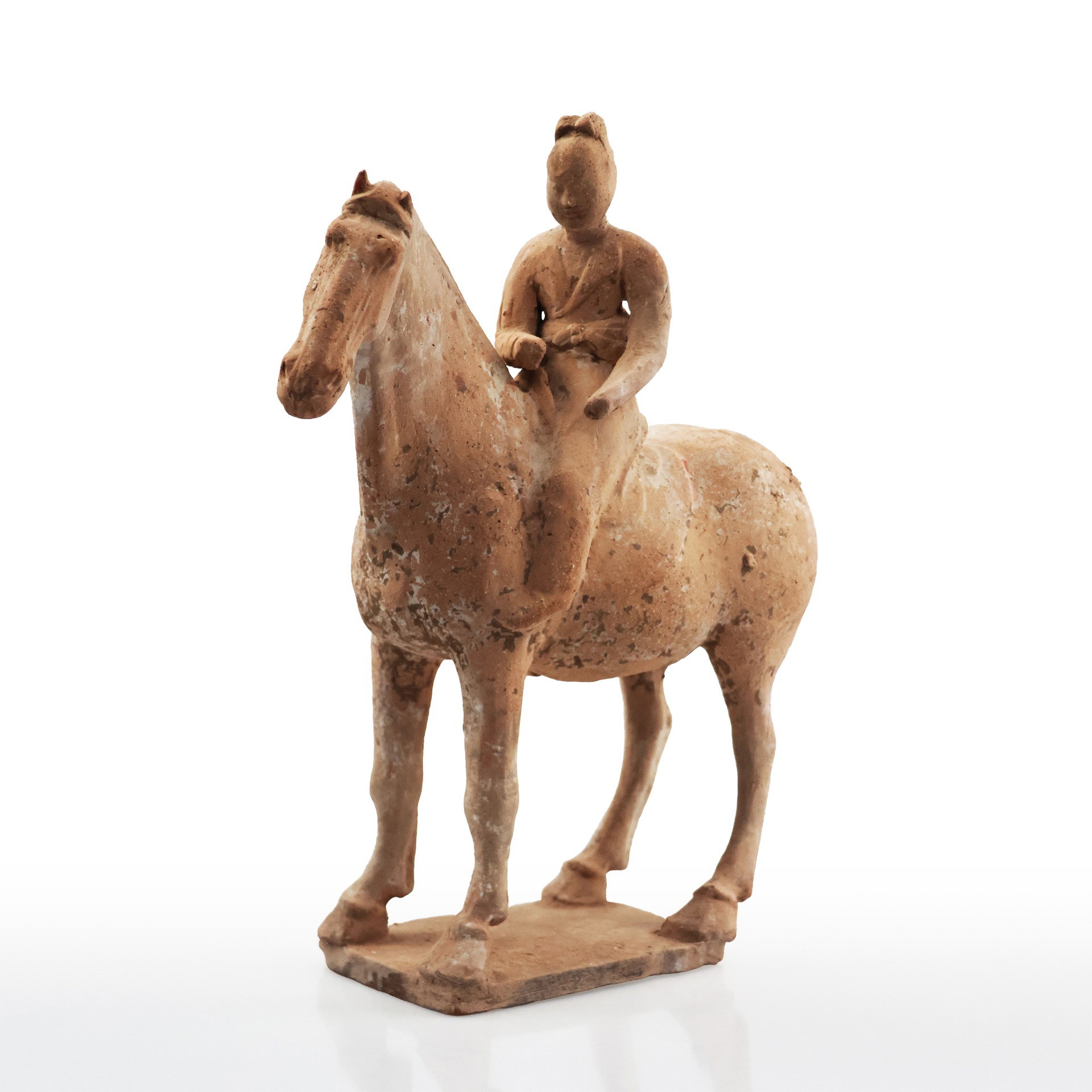
A terracotta horse rider, dating to the Tang Dynasty (618–907 AD), is a representative example of Chinese funerary sculpture, both technically and symbolically.
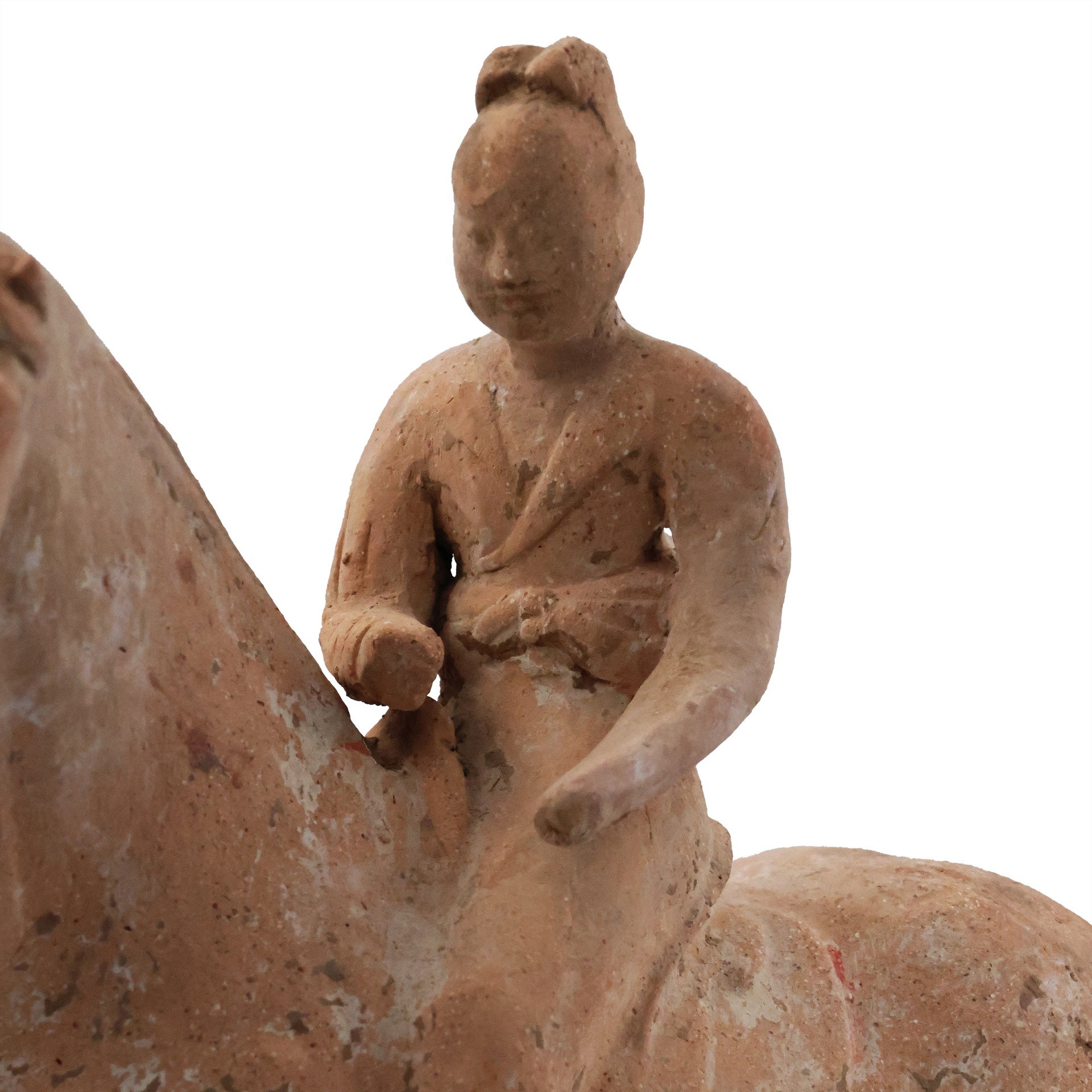
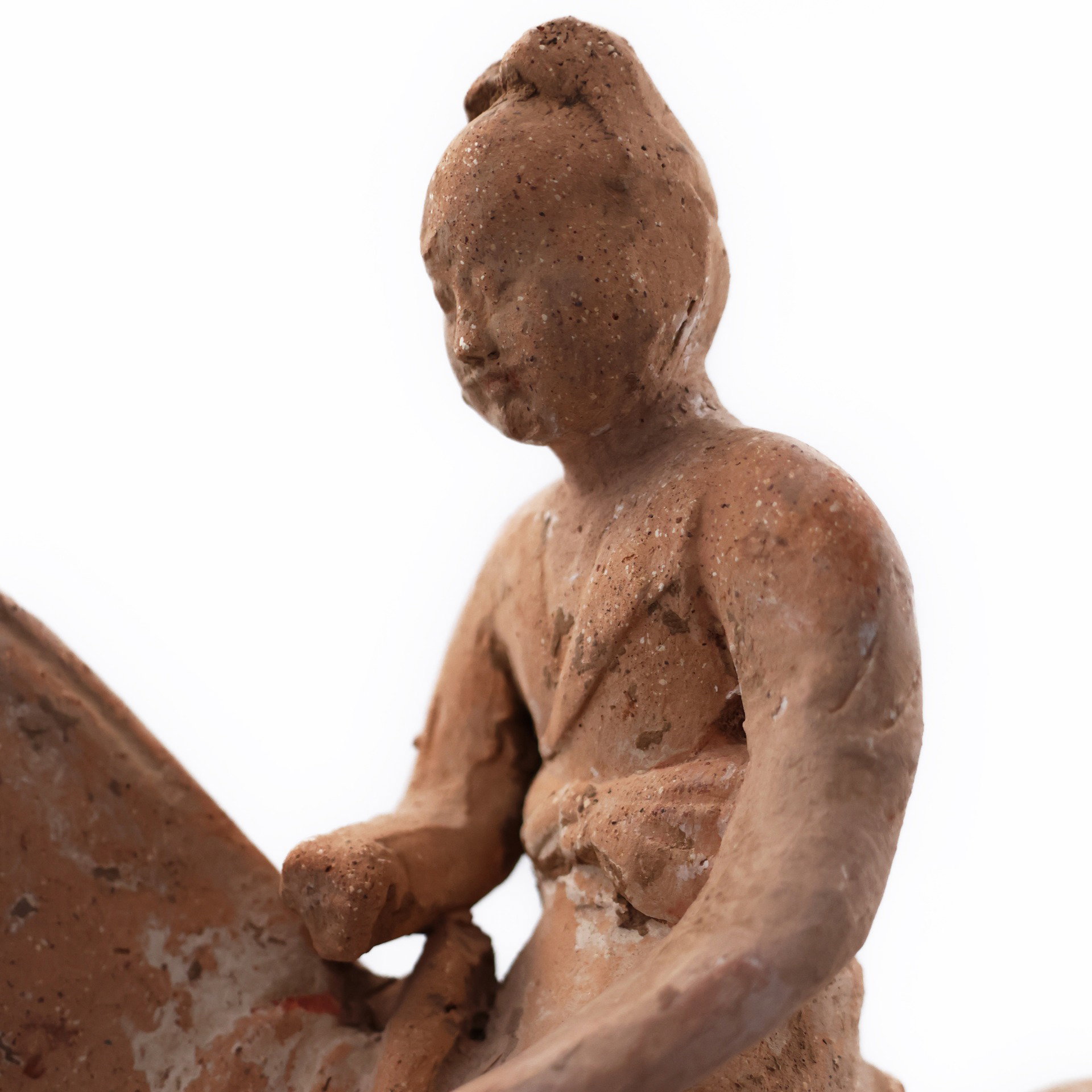
The figure depicts a rider seated upright on a sturdy and well-proportioned horse, with a composed and confident bearing. The rider wears a simple but structured tunic, cinched at the waist, with wide sleeves; the details are sober but effective. The hair is gathered in a high hairstyle, typical of the Tang era, suggesting status and discipline, perhaps military or courtly. The face is serene, with rounded and idealized features, more symbolic than portrait-like.
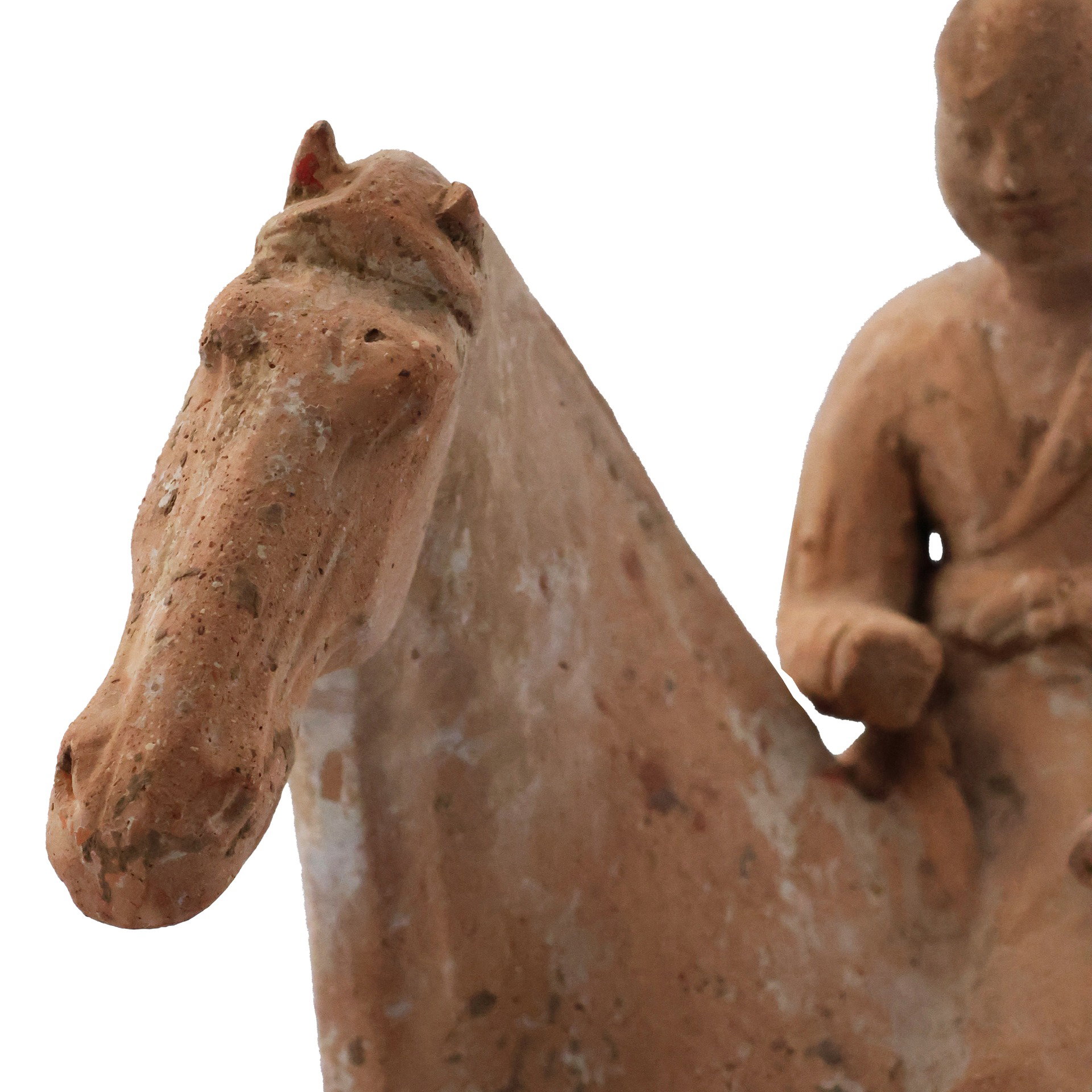
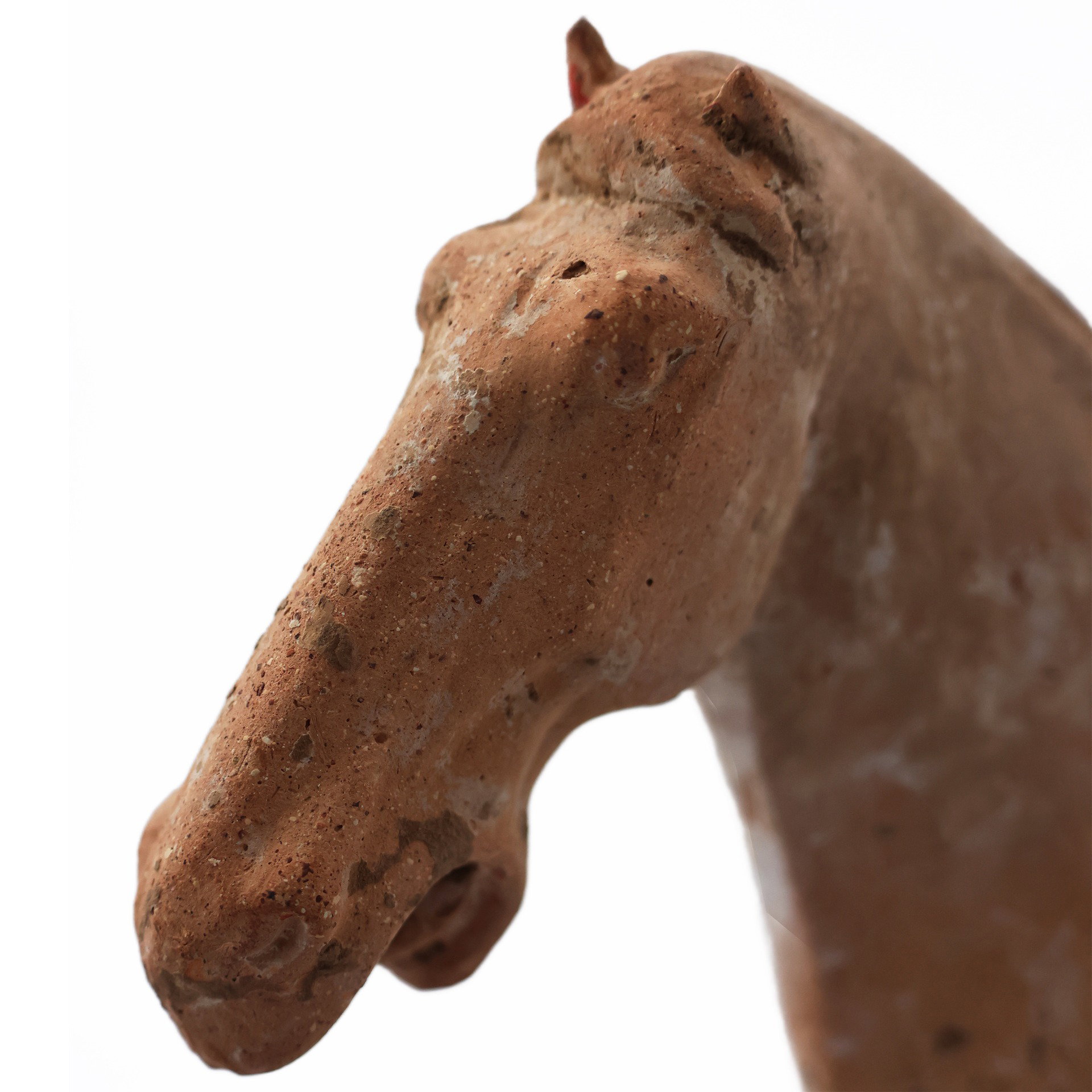
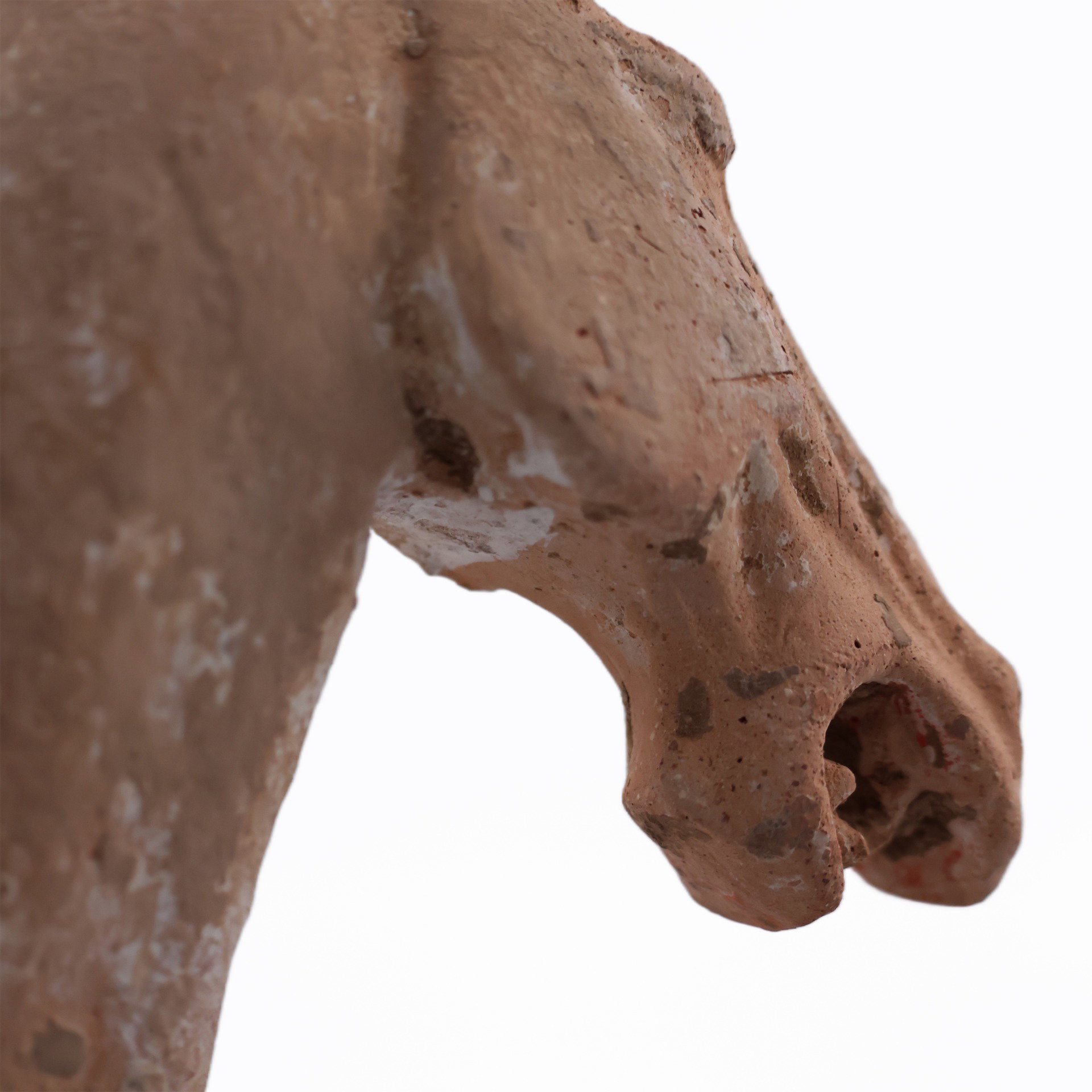
The horse, a central element of the work, is rendered with great volumetric attention: a robust body, broad chest, solid legs, and a stable posture. This rendering emphasizes the strength and importance of the horse in Tang China, a period when horse breeding and cavalry were fundamental to both military power and social prestige. The horse's head is slightly tilted, lending naturalness and vitality to the composition.
The surface retains an earthy patina with traces of wear and irregularities, typical of ancient terracottas, testifying to the funerary function of the object. Works like this were indeed placed in the tombs of high-ranking individuals as symbolic accompaniment in the afterlife, serving a protective function and representing the deceased's status.
The lot is accompanied by a thermoluminescence analysis certificate issued by CSG Palladio, identified by reference number 25-007413-B.
Dimensions
HxWxD 30.5cm x 34cm x 7.5cm
Provenance
Private Collection
Condition
Signs of age. Defects. Missing parts.