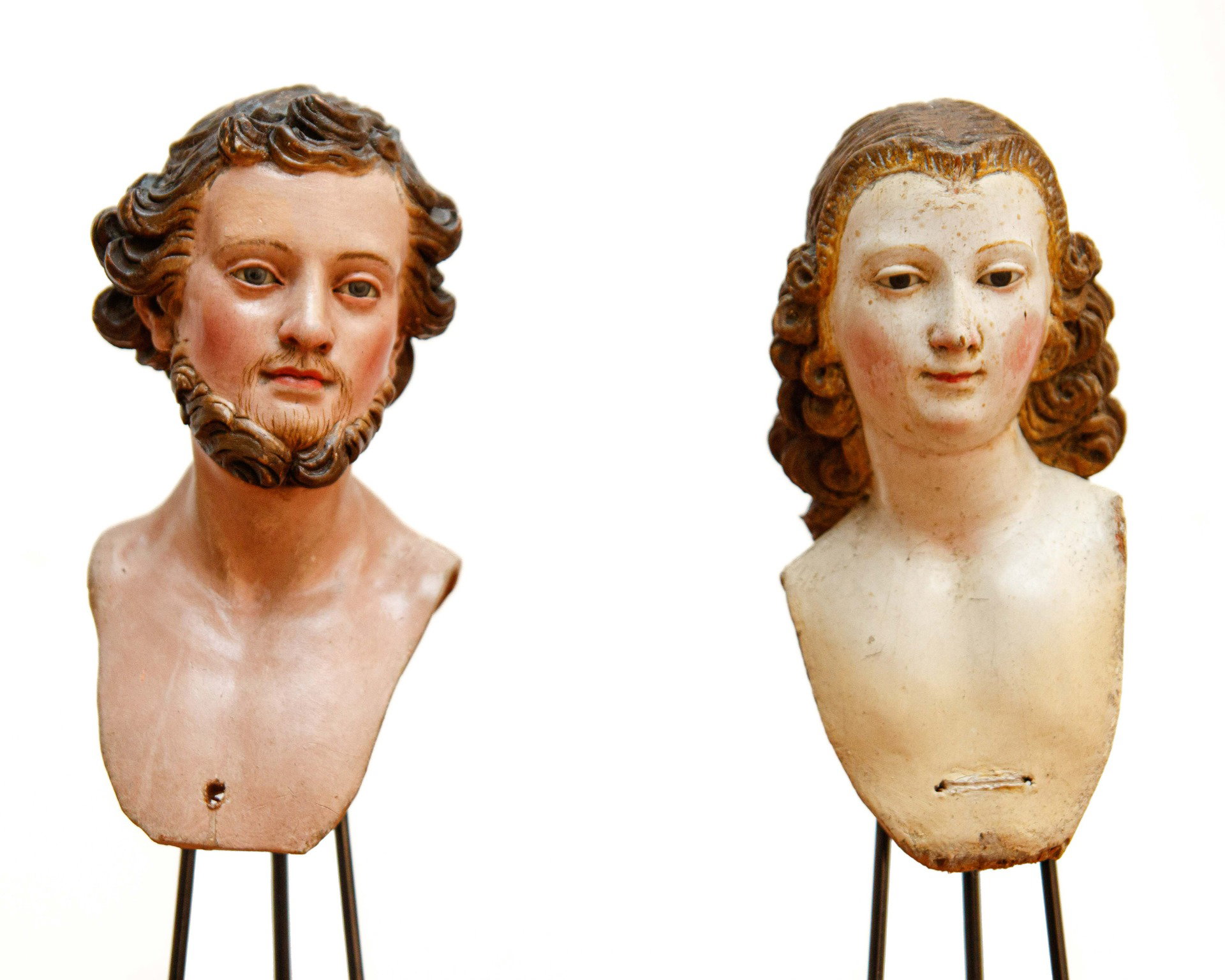
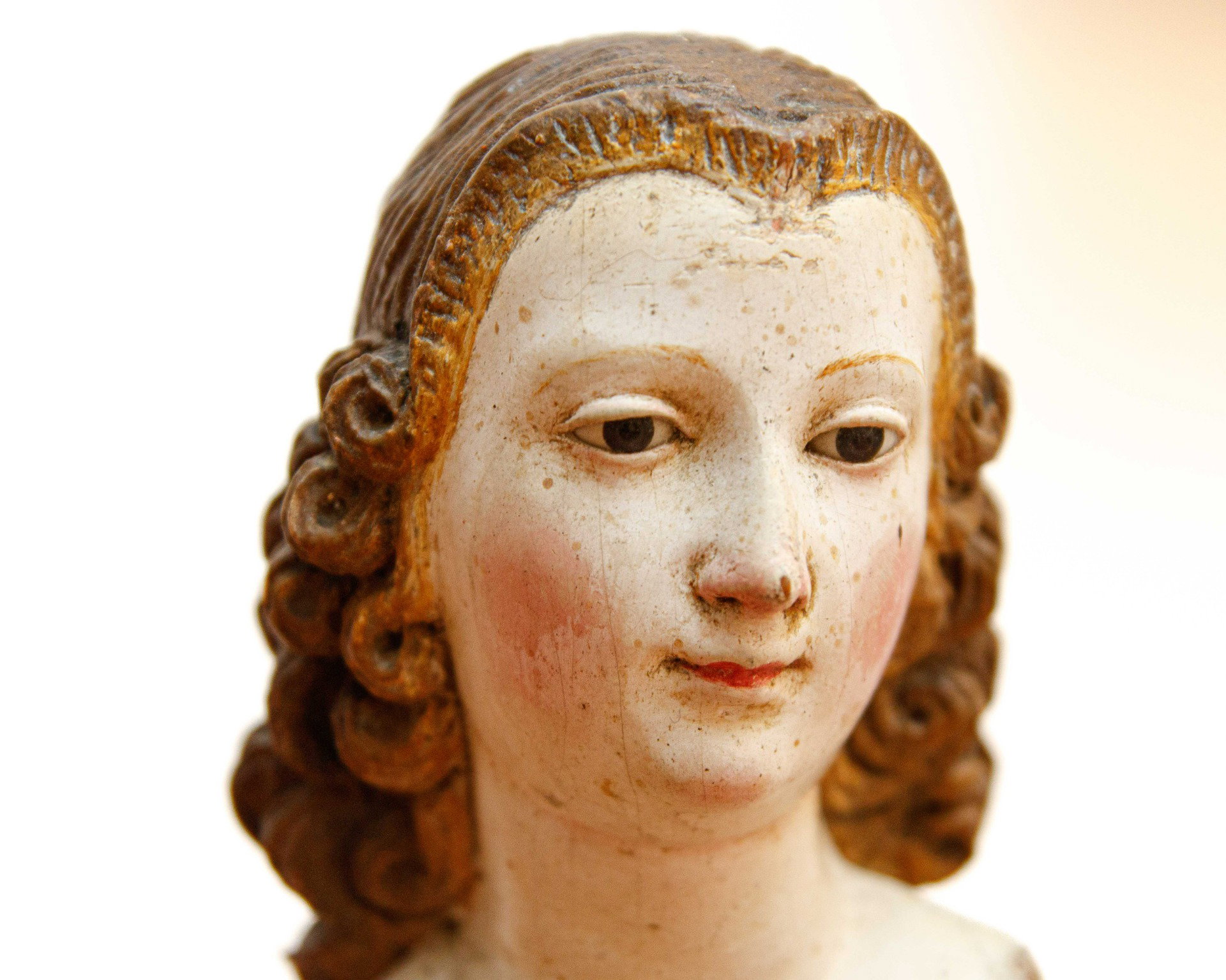
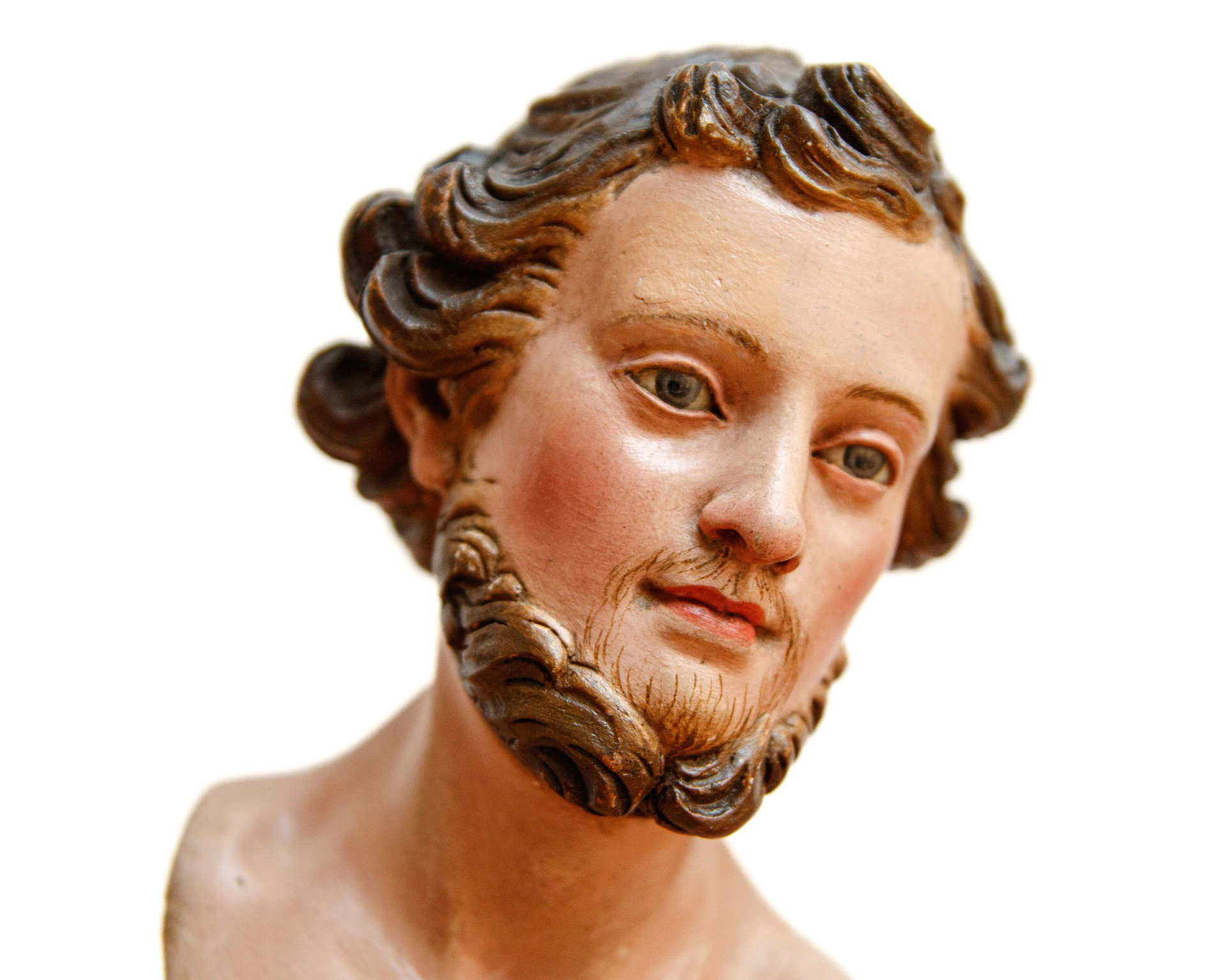
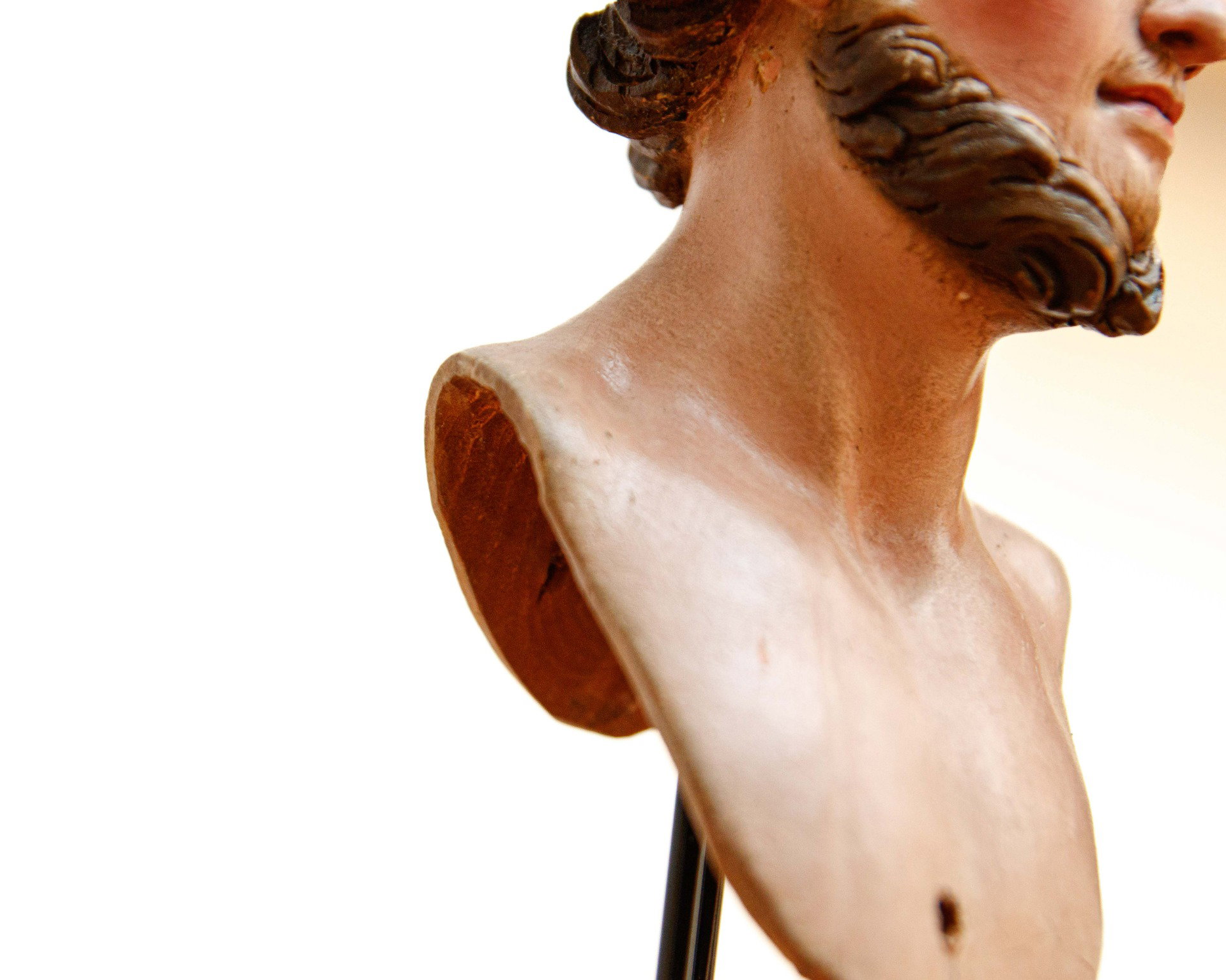
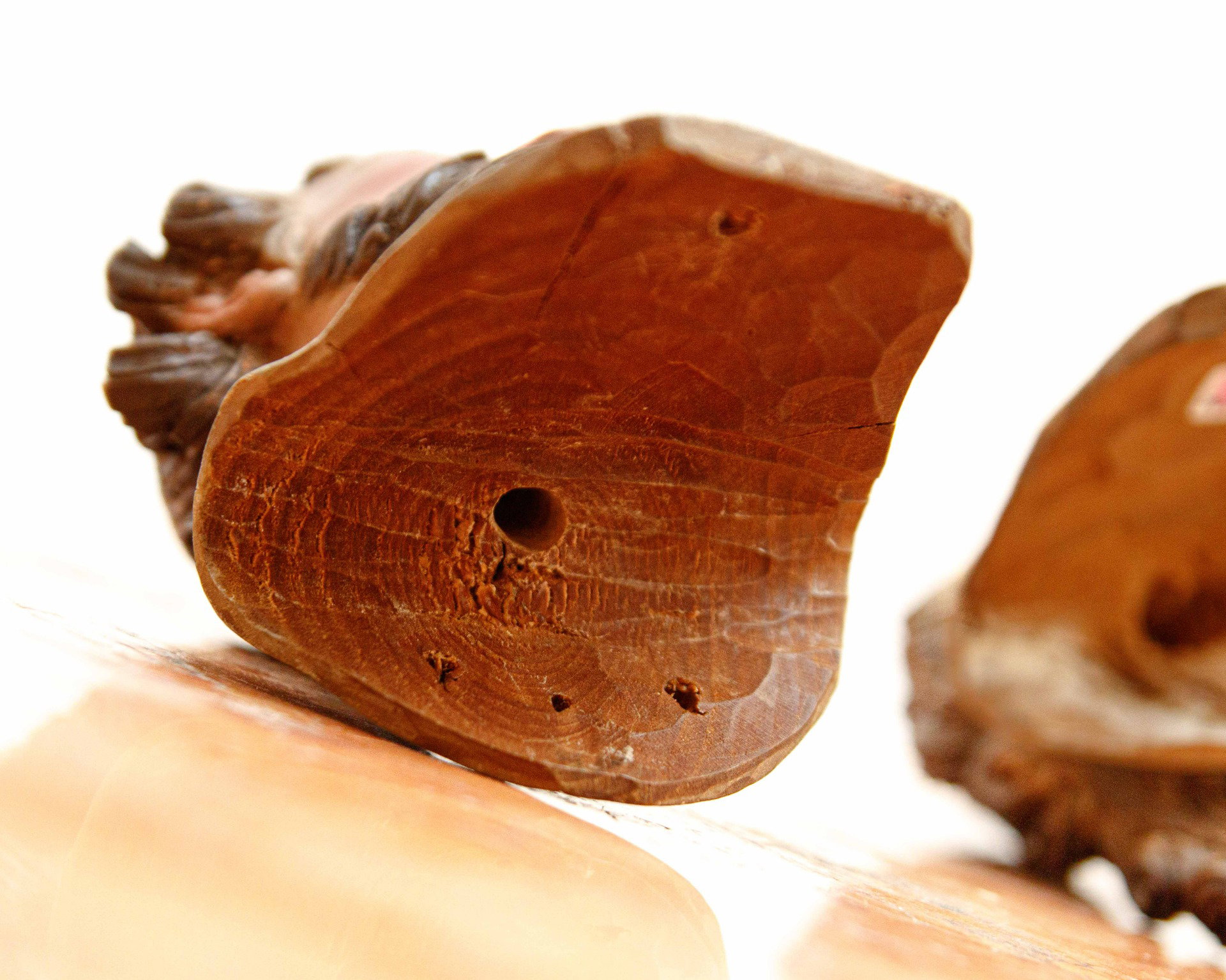
Neapolitan craftsmanship, 18th century, Two heads of nativity figures
Description:
Neapolitan craftsmanship, 18th century
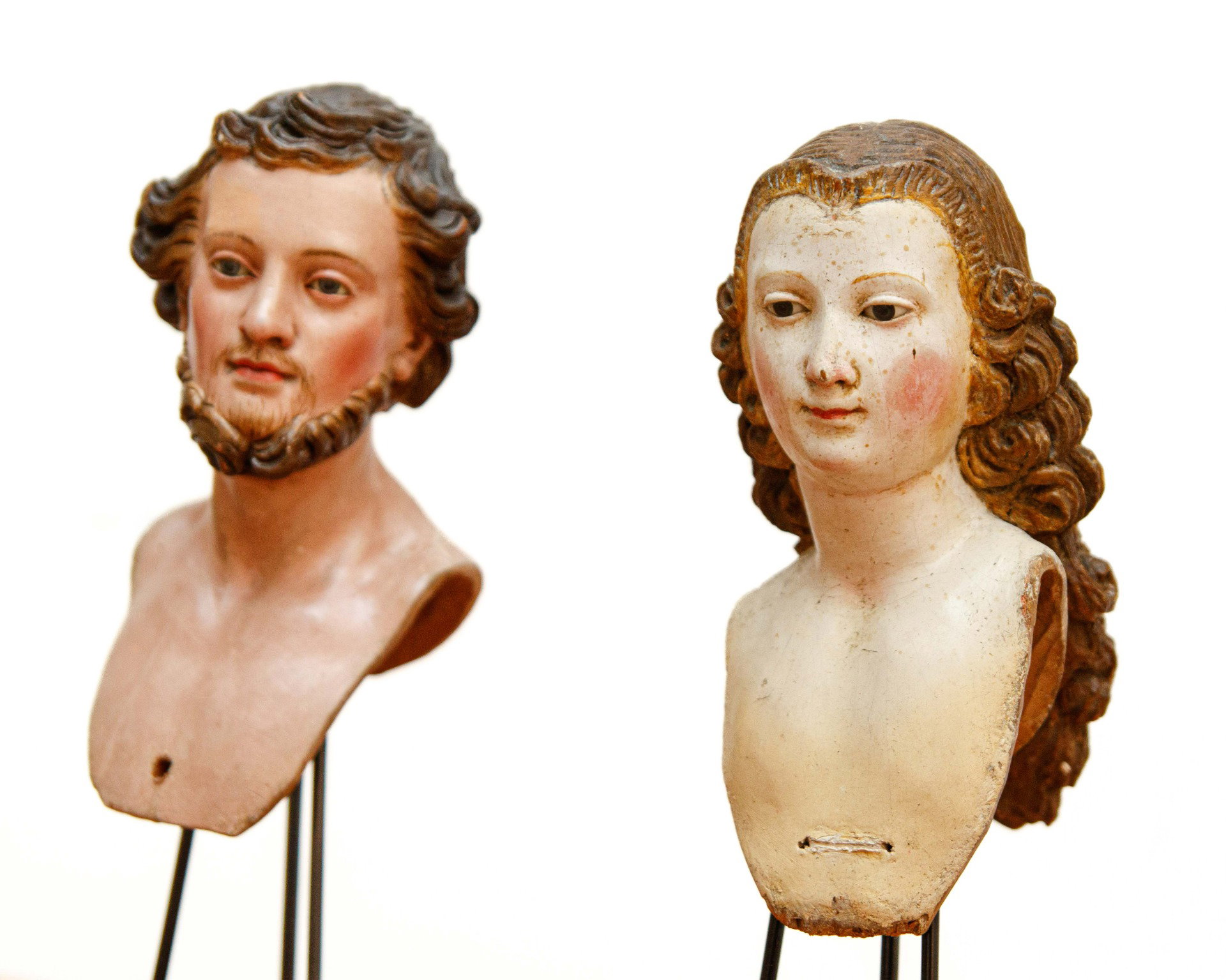
Two heads of nativity figures
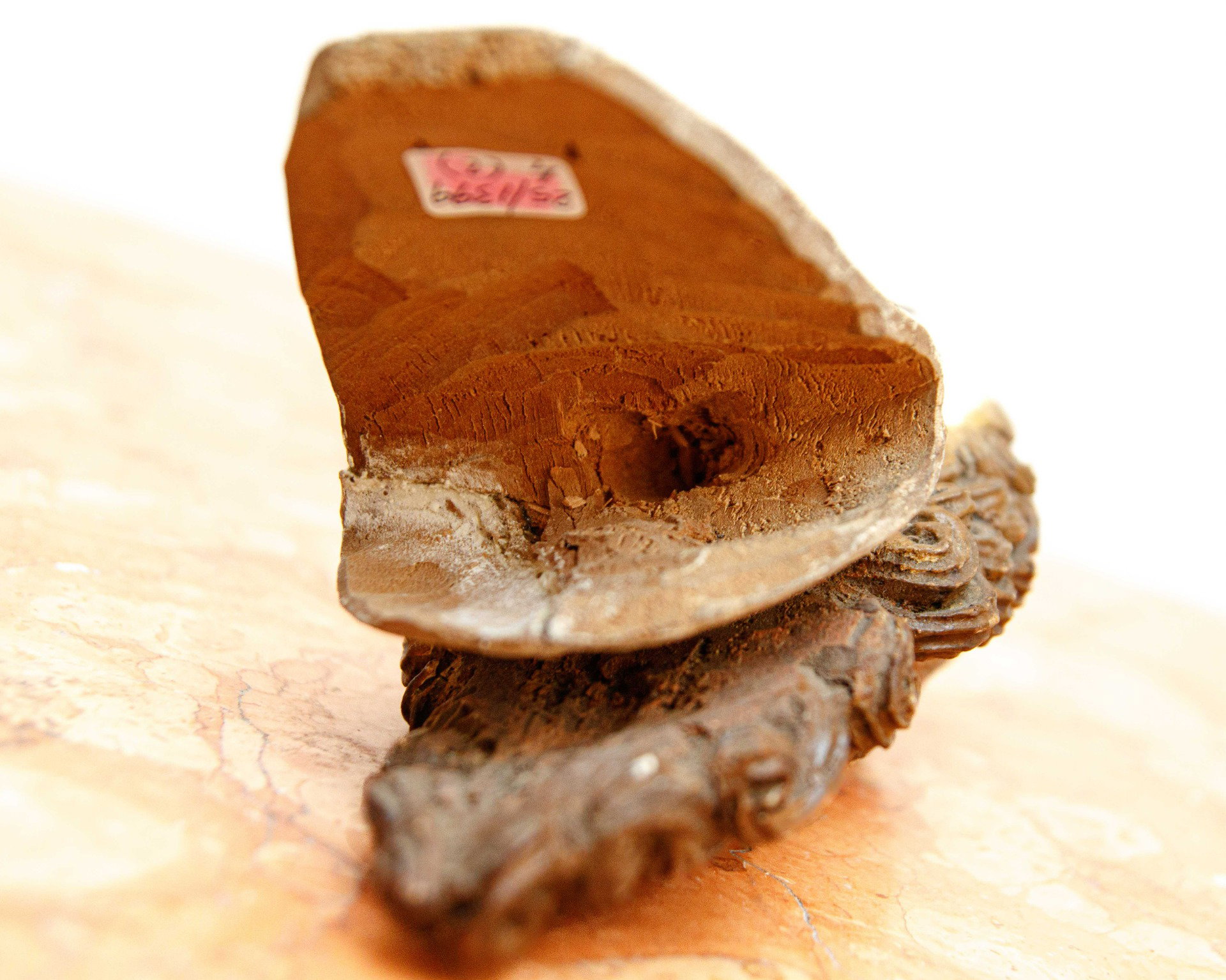
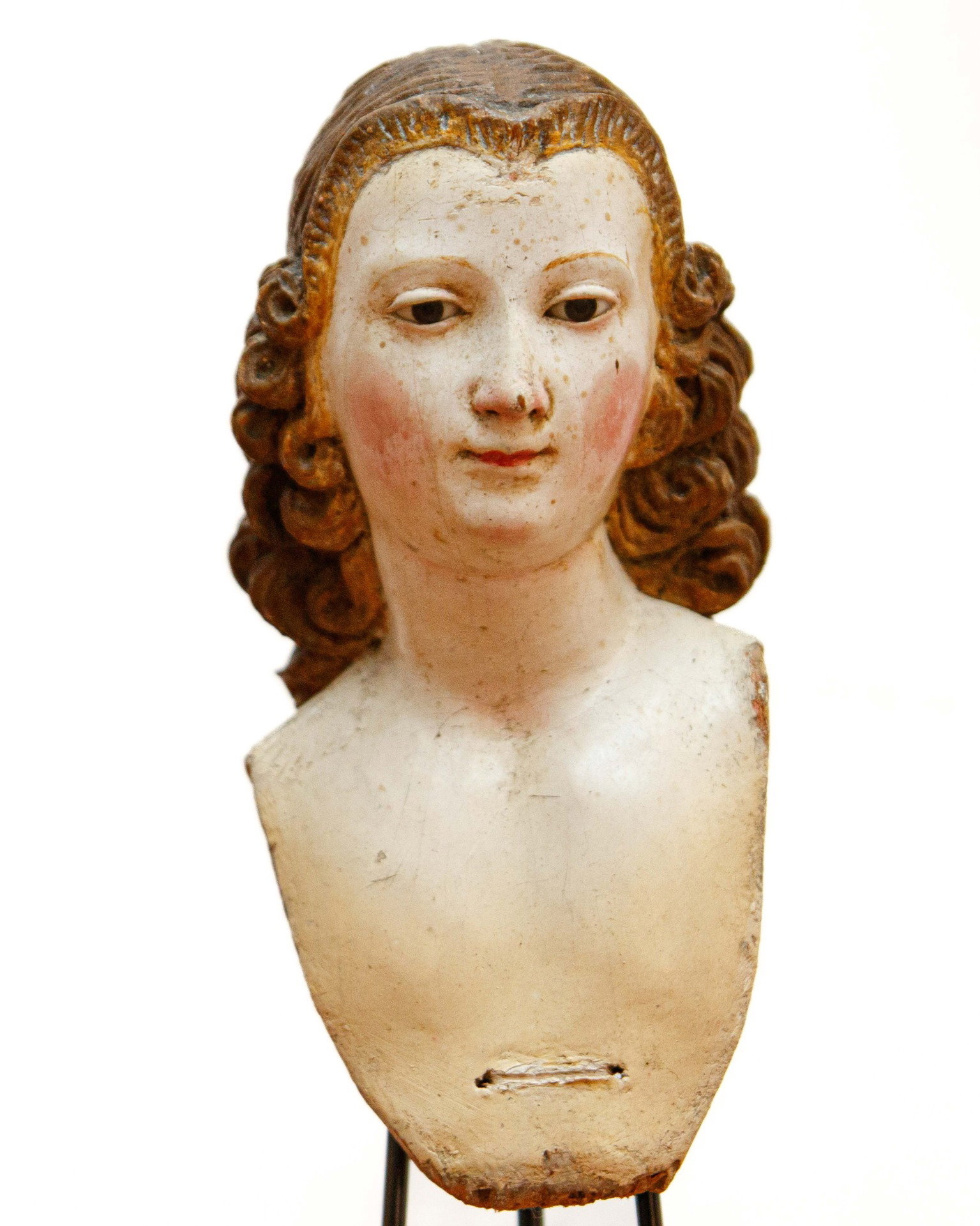
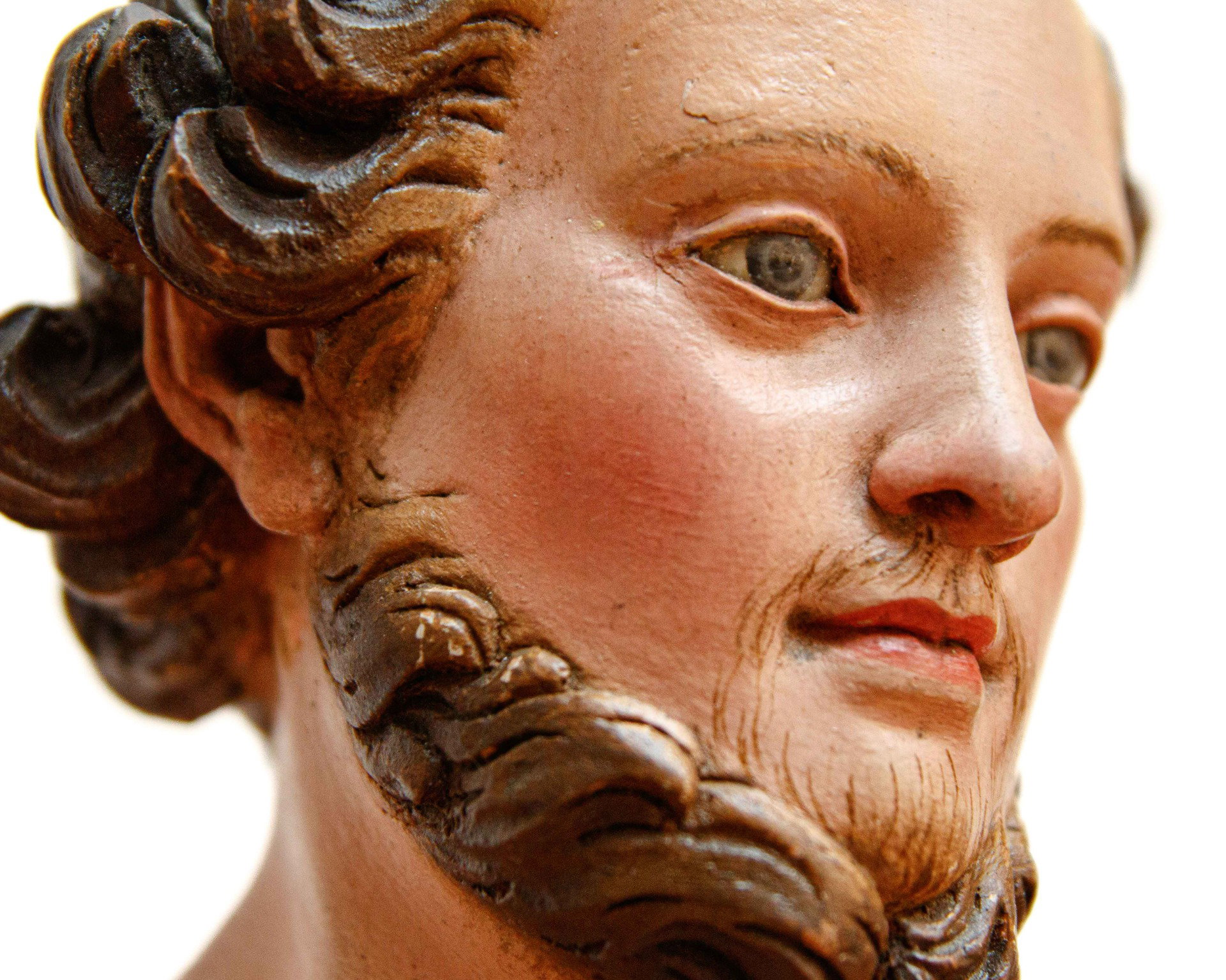
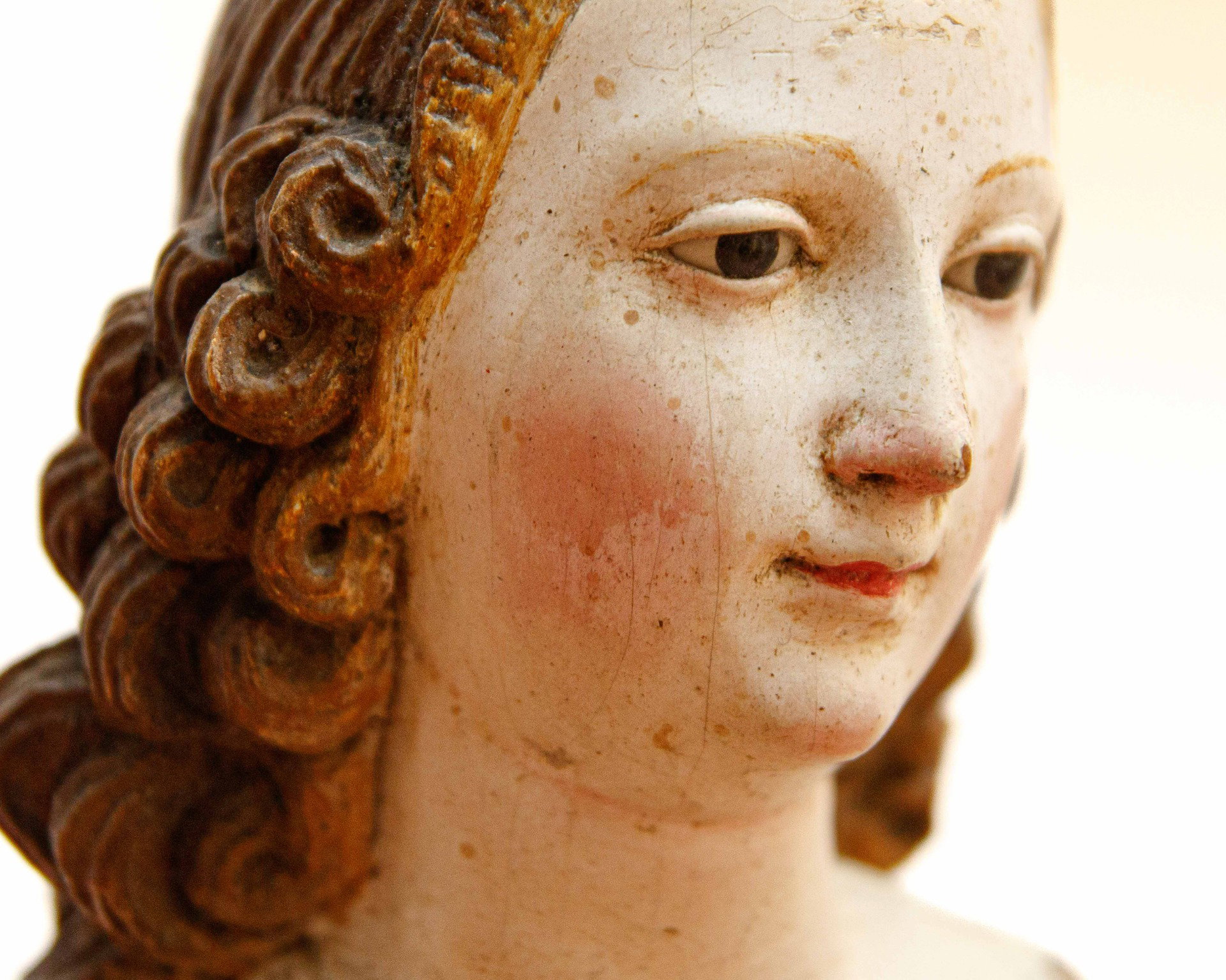
Carved and painted wood with glass paste eyes, max height 14.5 cm
In the refined artistic production of 18th-century Naples, the two small heads under examination represent an excellent testament to that "miniature sculpture" which elevated the nativity scene from a devotional rite to a phenomenon of the highest international collecting. Created from finely carved and polychrome wood, these works stand out from the more common terracotta production due to the preciousness of the material and the precision of the burin, suggesting a destination for figures of particular hierarchical importance within the spectacular nativity scenes of the era.
These sculptures fuse Baroque naturalism with idealization, coming to life thanks to masterful glazes on the skin and the use of glass paste eyes, inserted from the inside to impart a vital and theatrical gaze. While the male face, with its flowing beard and proud expression, ennobles popular features according to the Arcadian taste, the female figure embodies composed elegance: her diaphanous skin and symmetrical hairstyles recall the learned models of the nobility or 18th-century angelic figures. These small heads were created in the cultural climate promoted by Charles of Bourbon, a sovereign who transformed Naples into a cosmopolitan capital. In the 18th century, the nativity scene became the stage for reality: alongside the Nativity, artists—often the same ones who worked on the great Bourbon construction sites, such as the famous Giuseppe Sanmartino—sculpted a varied and teeming humanity. The figures that have survived to our day are mostly isolated and therefore devoid of the compositional variations and ephemeral scenography in which they were placed, which nonetheless must have recalled the pictorial landscape style of the 17th and 18th centuries. Despite this, they show us part of what must have been a representation curated by multiple master craftsmen, responsible for naturalistic or architectural scenography, the sculptures, the "finery" (details like fruit and vegetables), the animals, or the "clothing," and coordinated by a specialist to regulate the overall ensemble.
Originally, these heads were mounted on wire and tow mannequins, a flexible structure that allowed dynamic and realistic movements to be imparted to the figures, before being covered with silks from San Leucio, fine embroidery, and tiny silver or coral jewels.