Gaspar van den Hoecke (Antwerp, 1585 – 1648)
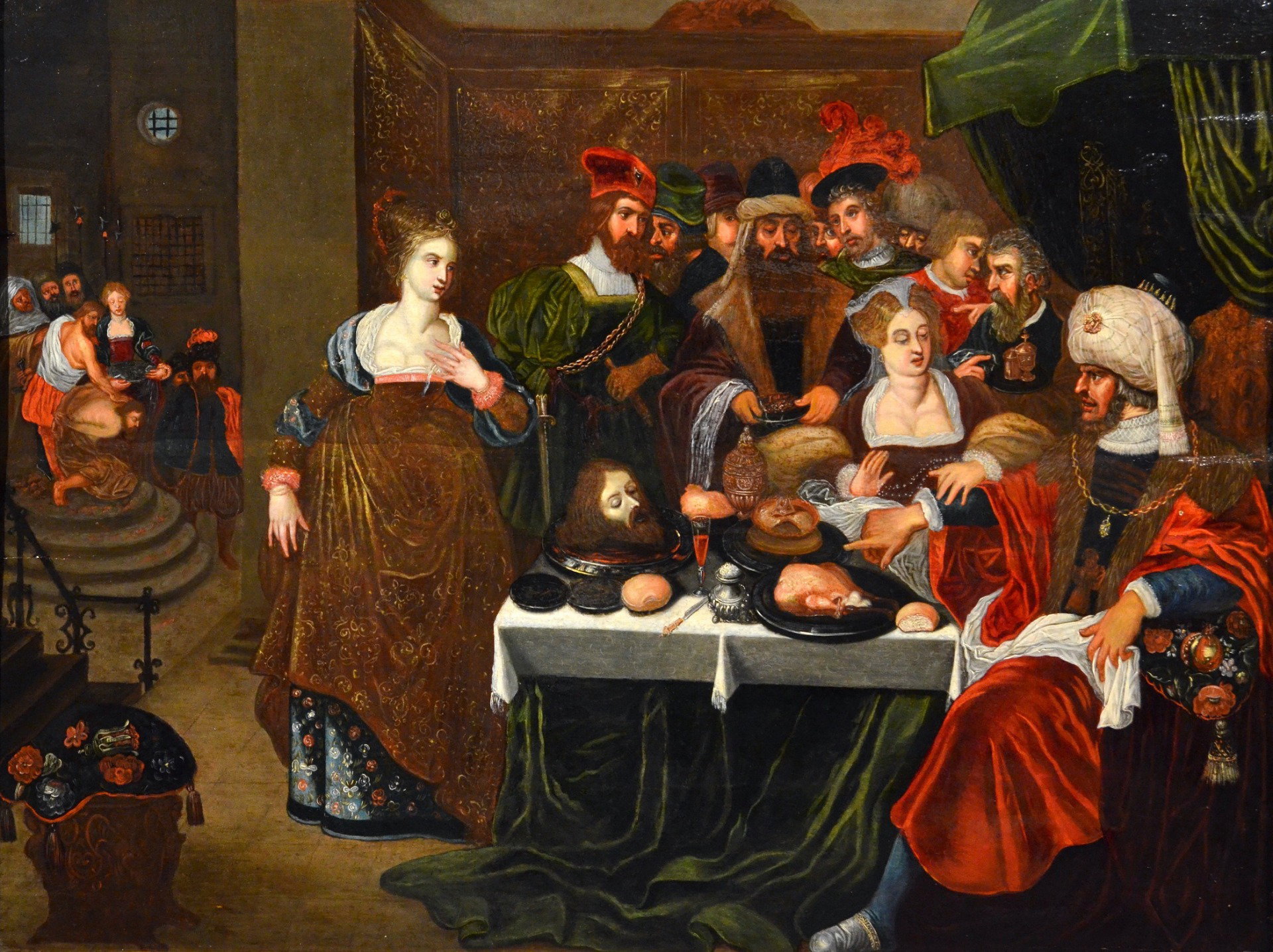
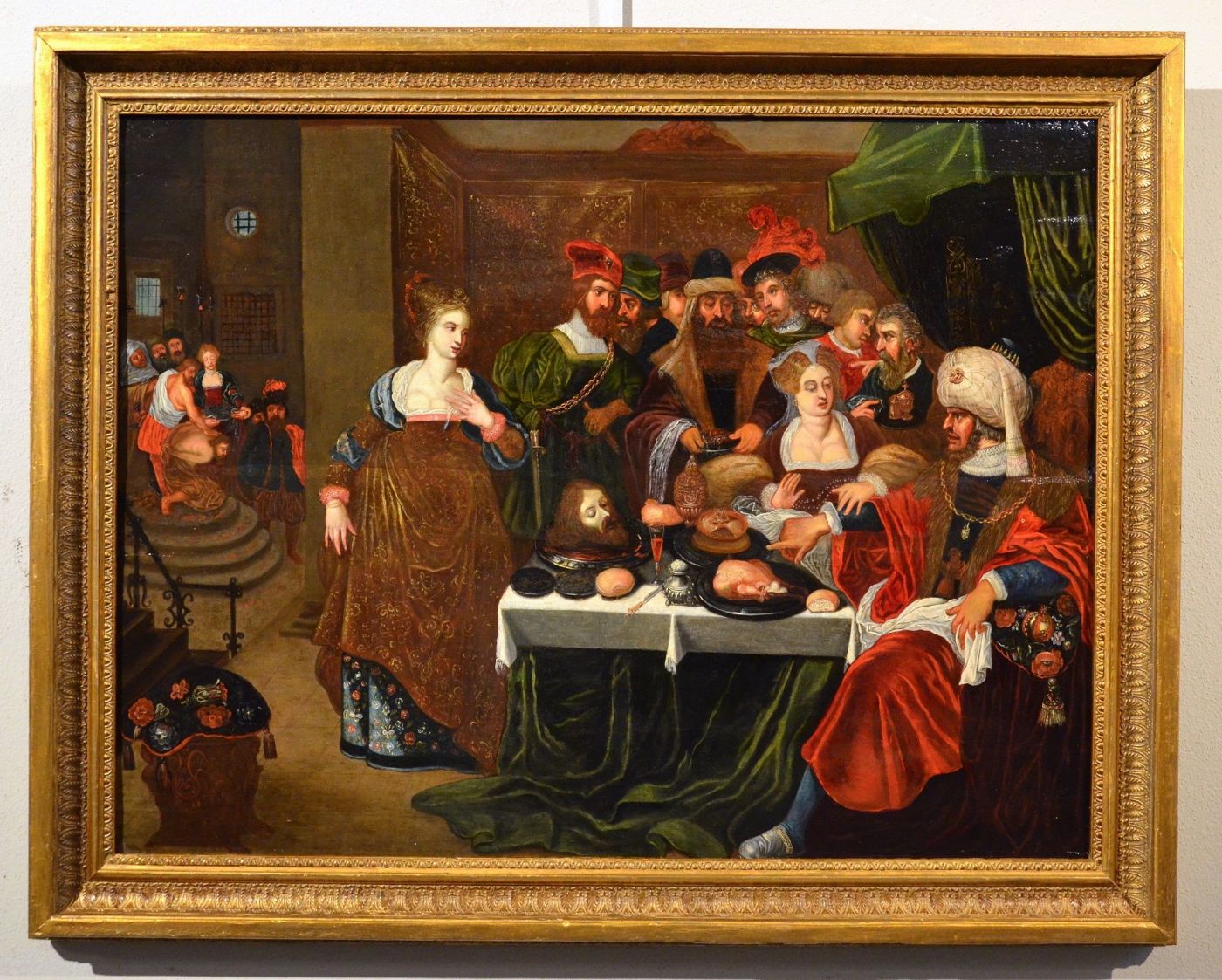
The Banquet of Herod
Early 17th century
oil on panel, with gold highlights (on Salome's attire and the palace draperies in the background)
56 x 80 cm, framed 72 x 90 cm.
The work, rich in details not reported here, can be viewed in its entirety directly at the following - link -
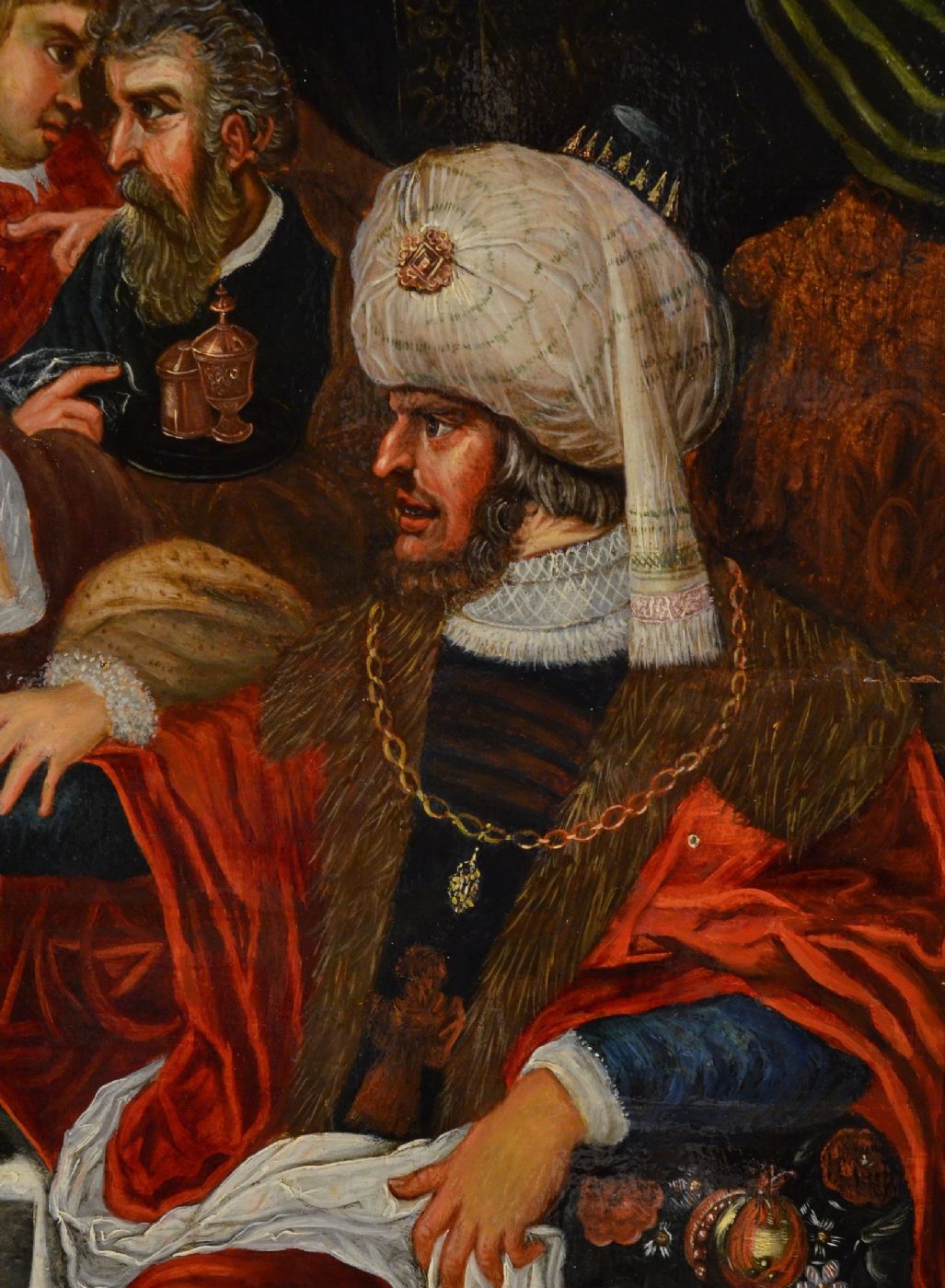
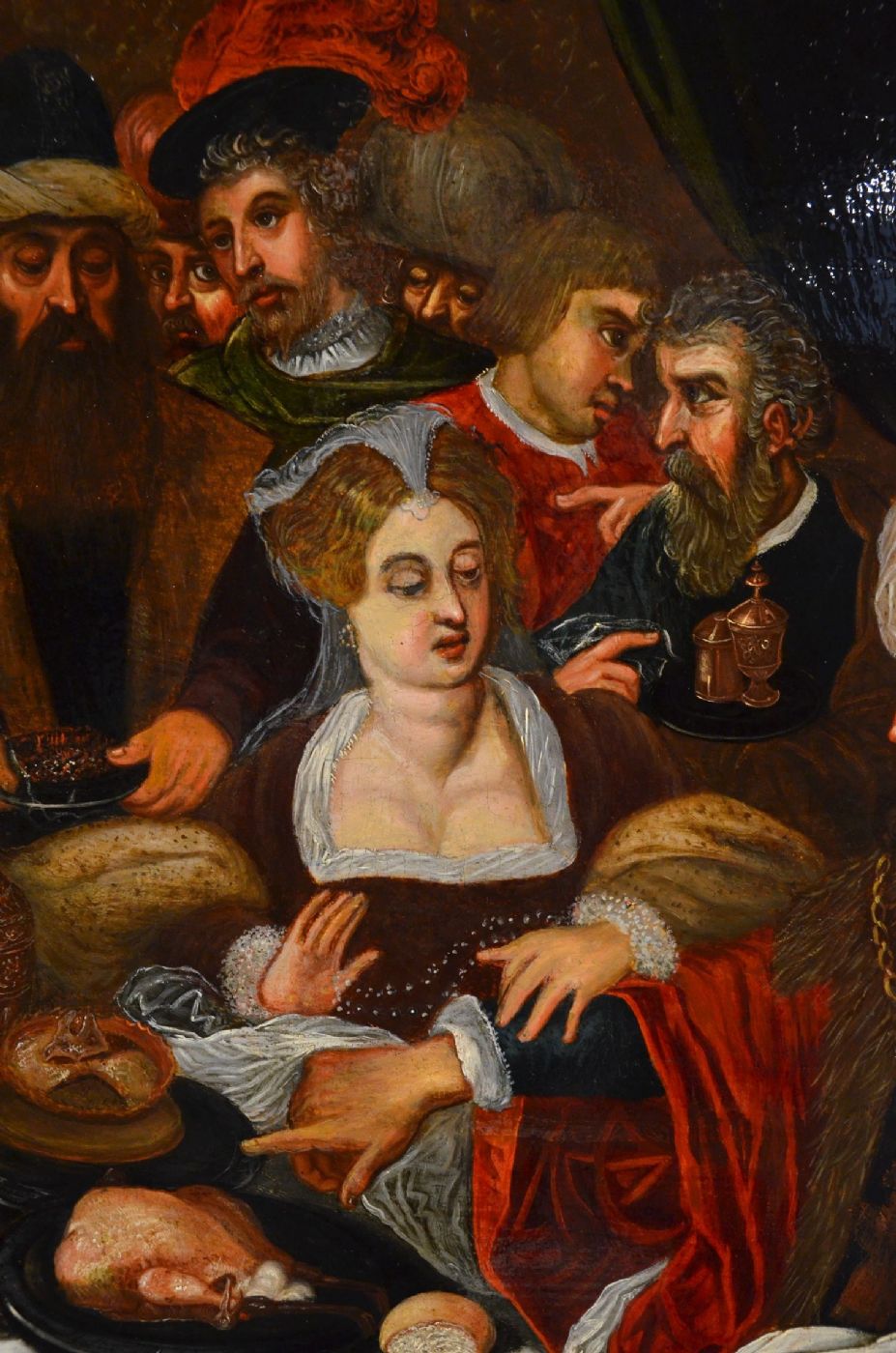
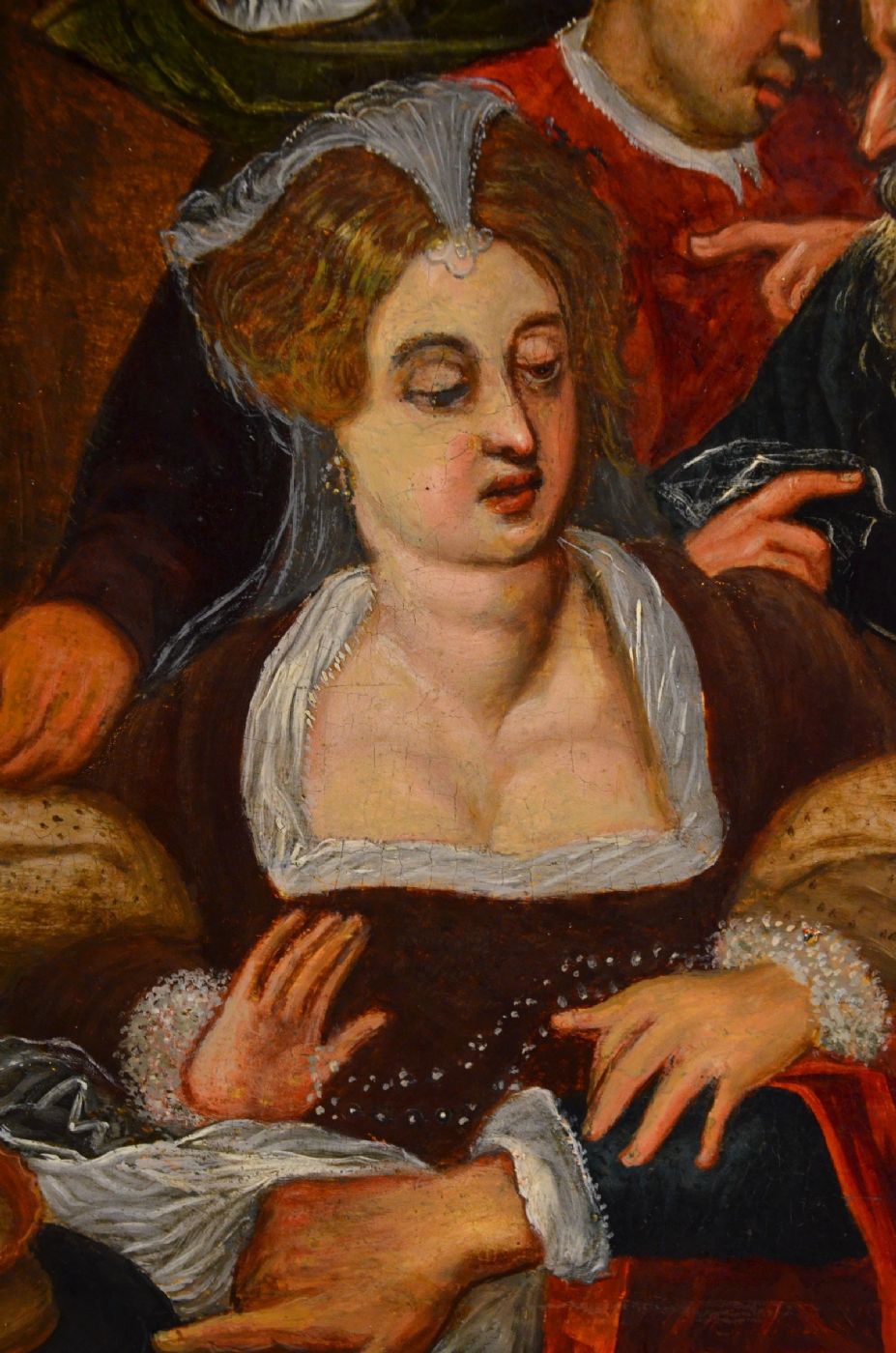
A valuable oil painting on panel depicting King Herod and the beautiful Jewish princess Salome, according to the episode from the Gospel of Matthew (14:3-11), which features her as the protagonist in the story of John the Baptist's martyrdom. The event shown is an intersection of history and legend, a myth favored for centuries by artists in every field: Caravaggio in painting, Oscar Wilde in theatre, Richard Strauss in music. In the artistic tradition, Salome, a young, unaware instrument of her mother's revenge, becomes a symbol of lust.
On the occasion of King Herod's birthday, Salome, the comely daughter of his mistress Herodias, performed a seductive dance for the pleasure of the diners. Her dance was so well-received that Herod promised to give her anything she desired as a reward, even part of his kingdom if she wished.
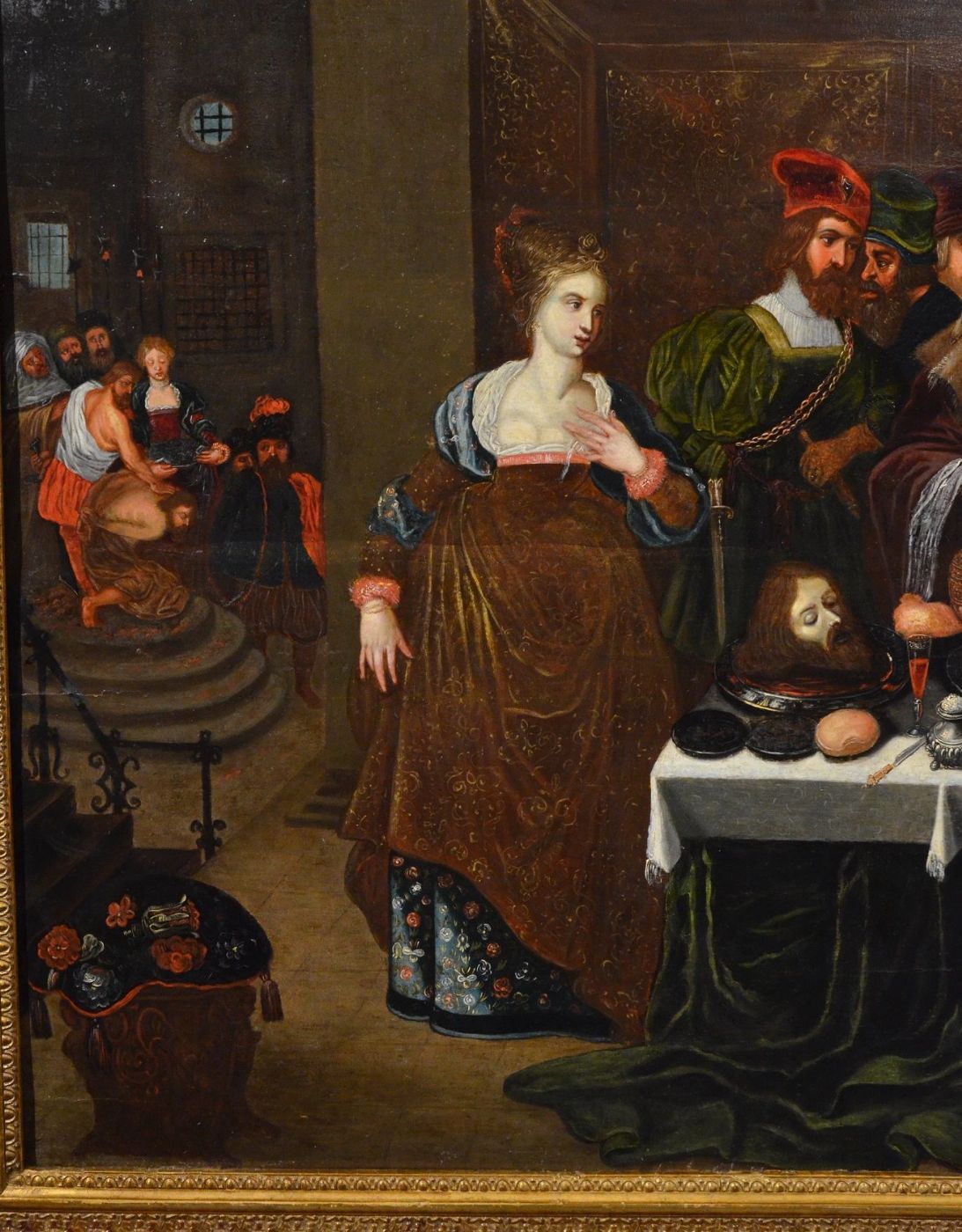
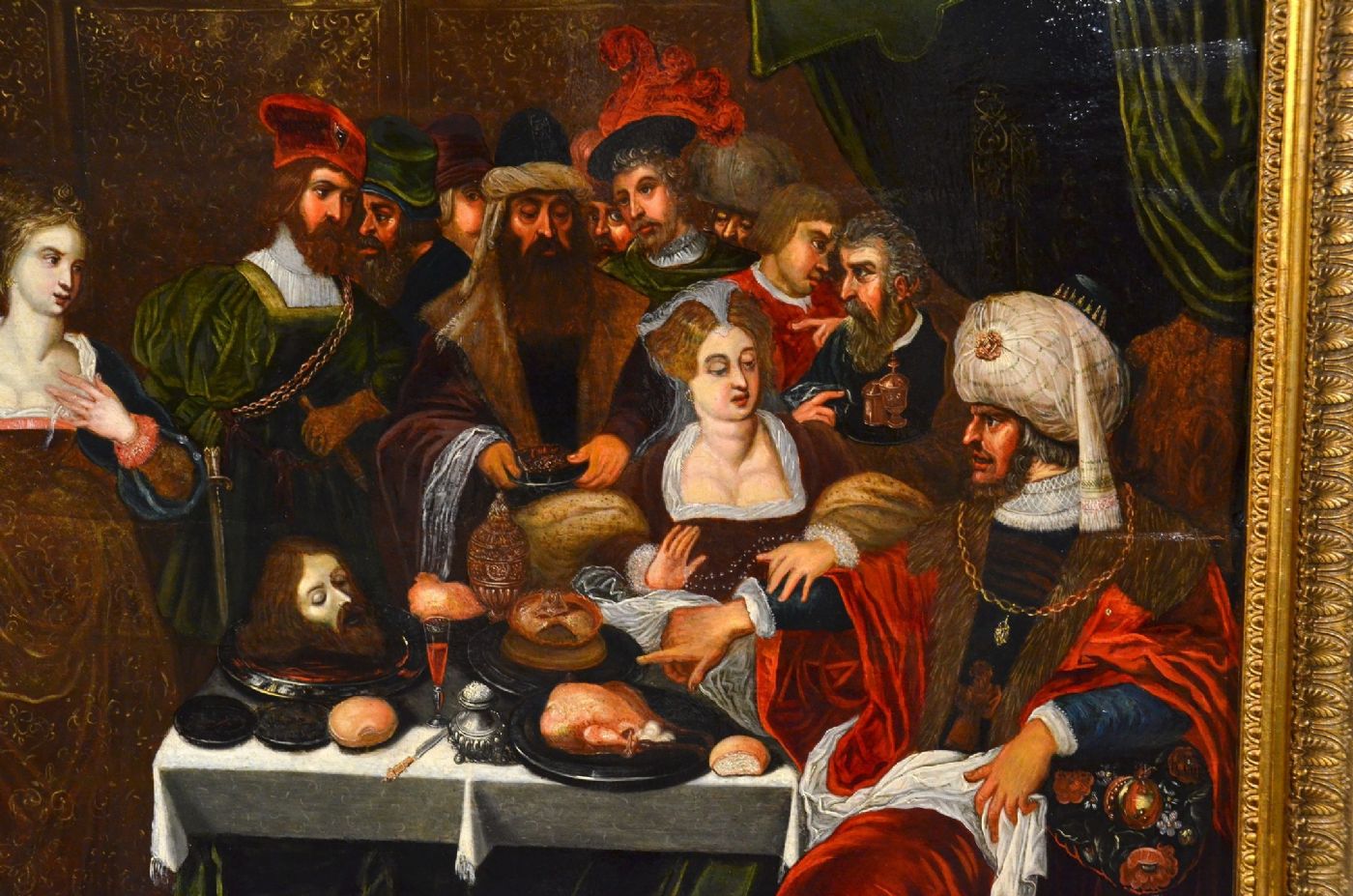
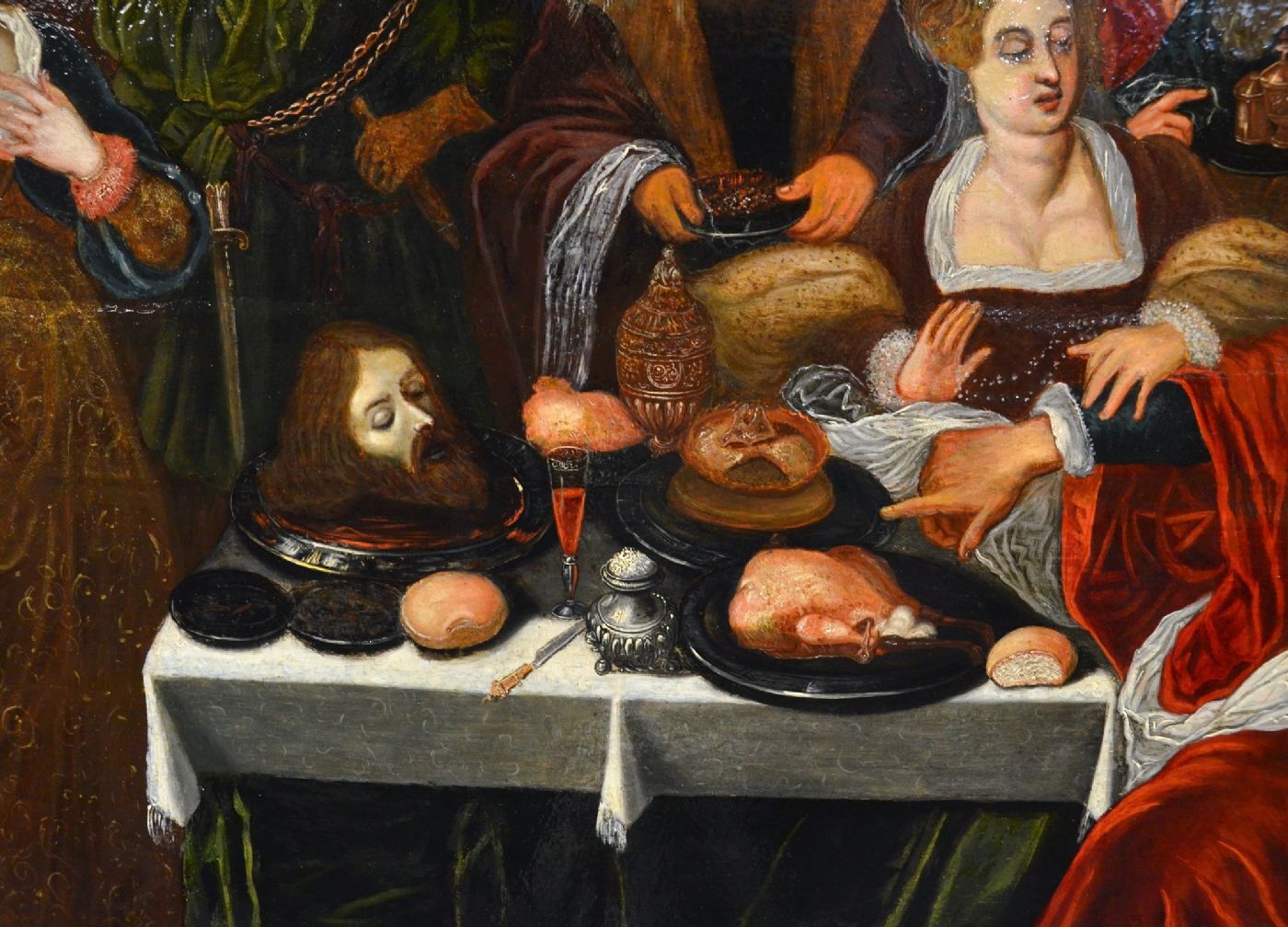
The young woman went to her mother for advice, and Herodias, driven by her resentment towards John the Baptist, ordered her to request the Saint's head on a platter. Salome, an unwitting victim of her mother's wishes, becomes the interpreter of the Saint's murder, achieved with skill and cunning, and during the banquet, she presents his head on a silver platter as if it were a trophy. We see the King react with indignation to this situation, while the two women appear indifferent to the consequences of their actions, standing at the other end of the table in a gold-colored dress with a wide neckline.
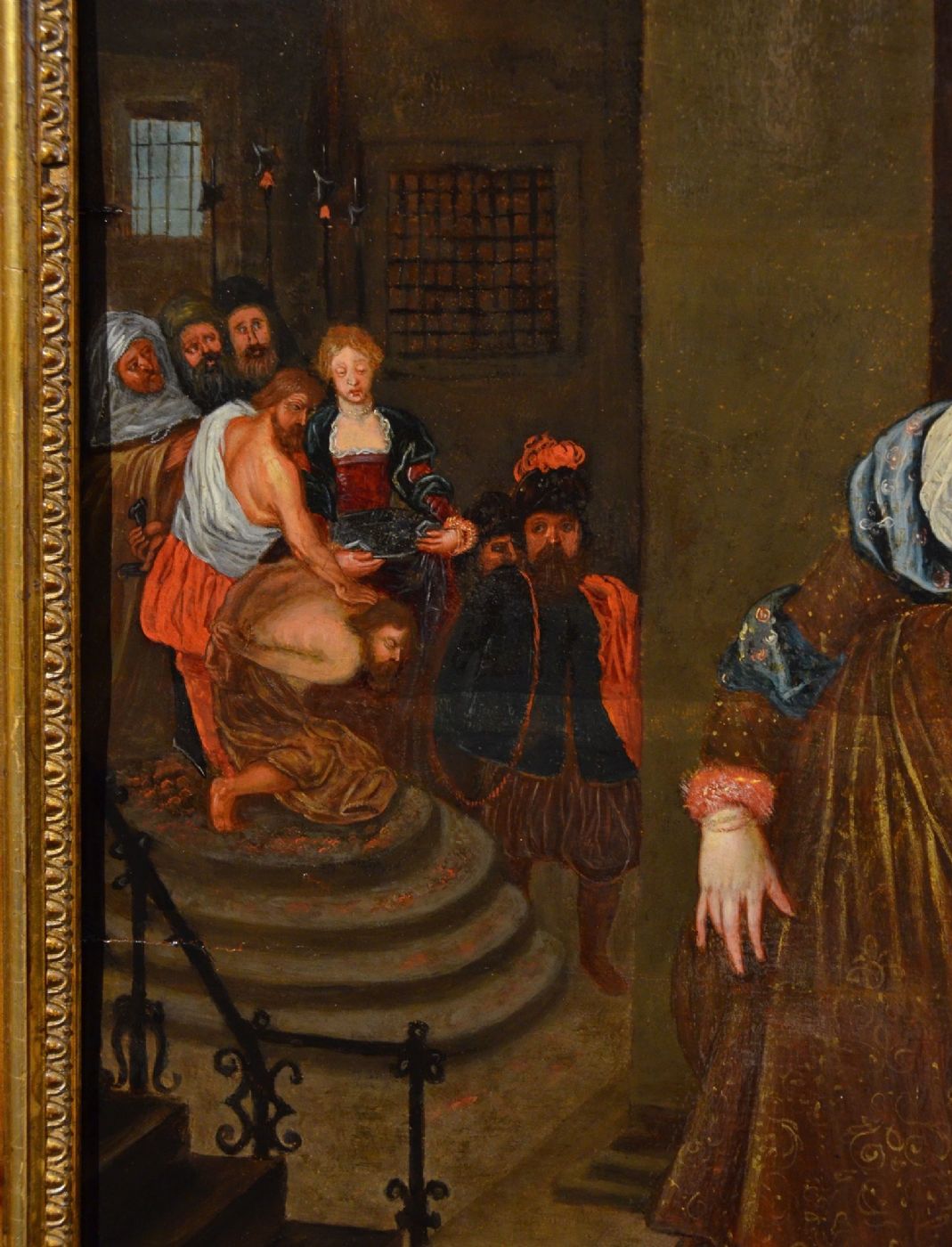
In the background, on the left, the preceding event is depicted synchronically, namely the martyrdom and beheading of the Baptist, which takes place inside a barren prison with barred windows, in stark contrast to the opulent situation in the foreground.
Given its pictorial quality, the splendid painting is attributable to the workshop of the painter Gaspar van den Hoecke (1585 – 1648), one of the greatest masters of the early Flemish Baroque in Antwerp, whose works are strongly influenced by the painterly ascendance of Frans Francken, a reference artist for the Southern Dutch school, and with whom they have often been confused due to their clear stylistic similarity.
See for comparative purposes the two works by Van den Hoeche:
- Parable of Lazarus and the Rich Epulone (link)
- The Banquet of Belshazzar, New York, Sotheby's, 24.01.08, lot 210 (link)
As we can see, his paintings, dominated by figures treated with extreme care and clad in large and pompous volumes, are rendered with intense chromatic splendor and characterized by a refinement in the choice of pigments typical of high-level Flemish school. The studied gestures of the actors and their intense miming are responsible for the strong narrative tension that emanates from the panel, rendered with extreme realism and definition.
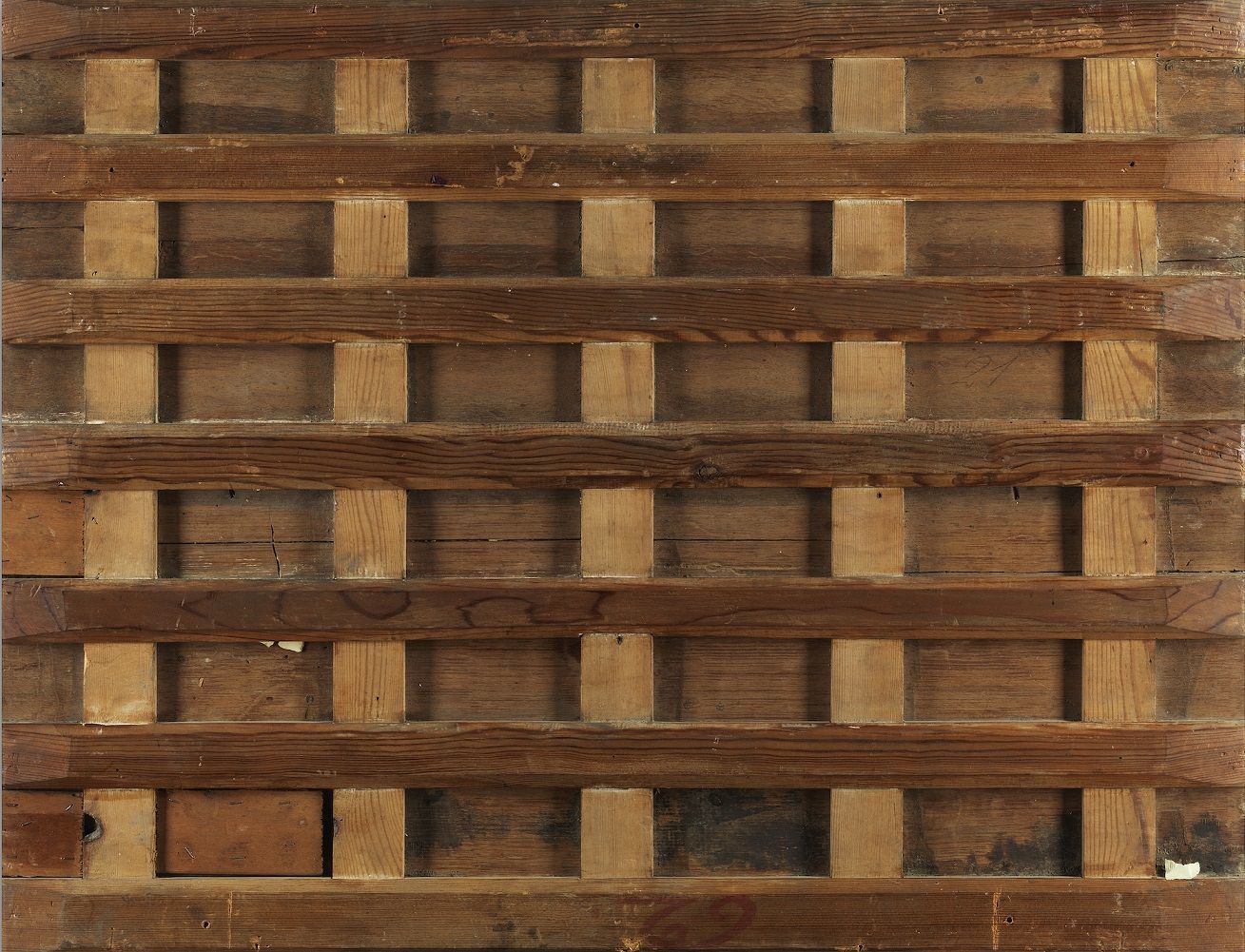
The panel is in excellent condition and shows no particular restorations upon examination with a Wood's lamp. Gilded wooden frame, not contemporary.
ADDITIONAL INFORMATION:
The painting is sold with a certificate of authenticity and a descriptive iconographic sheet.
We handle and organize the transport of purchased works, both within Italy and abroad, through professional and insured carriers.
Contact us for any information, we will be happy to answer you.
Follow us also on:
https://www.instagram.com/galleriacastelbarco/?hl=it
https://www.facebook.com/galleriacastelbarco/