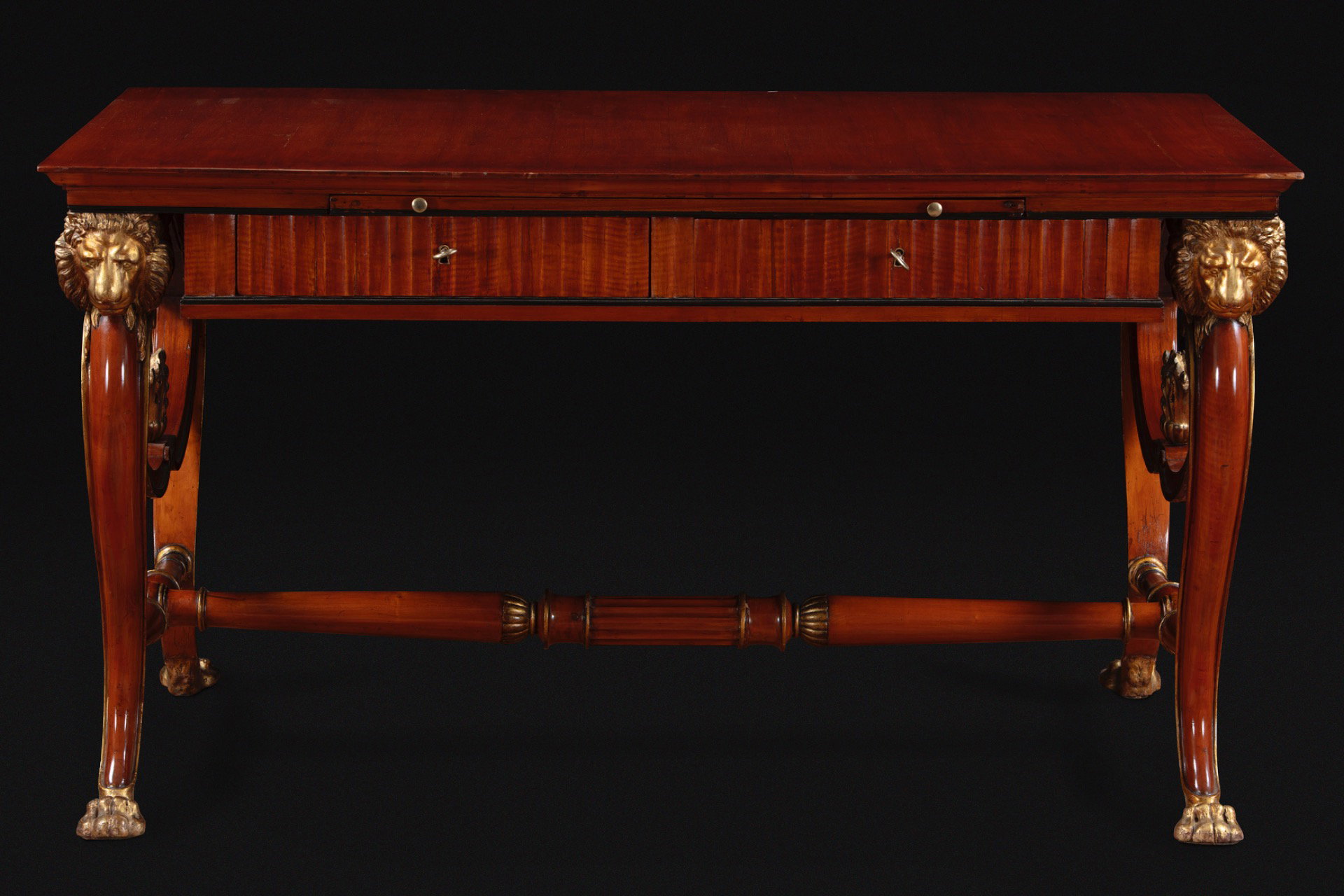
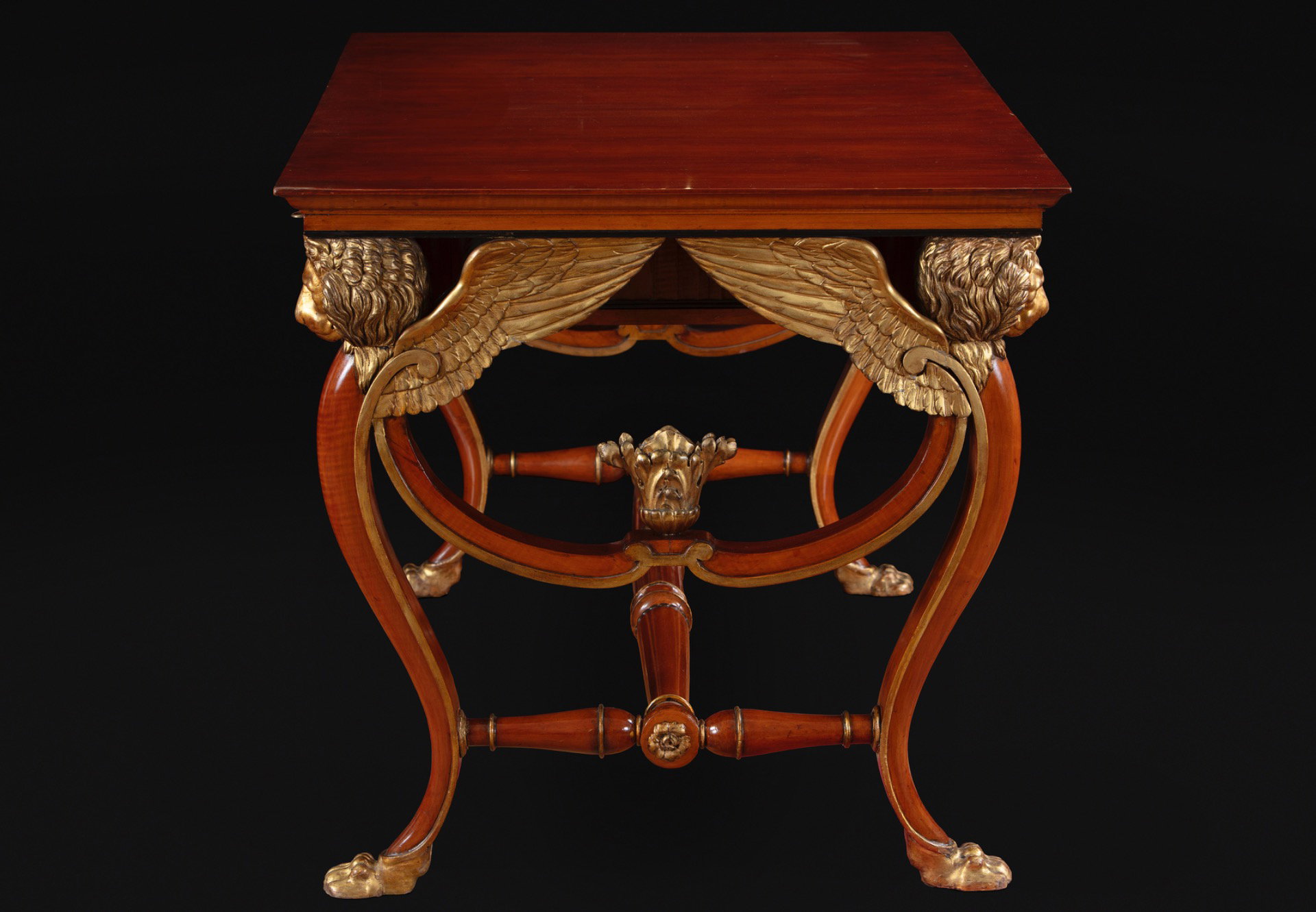
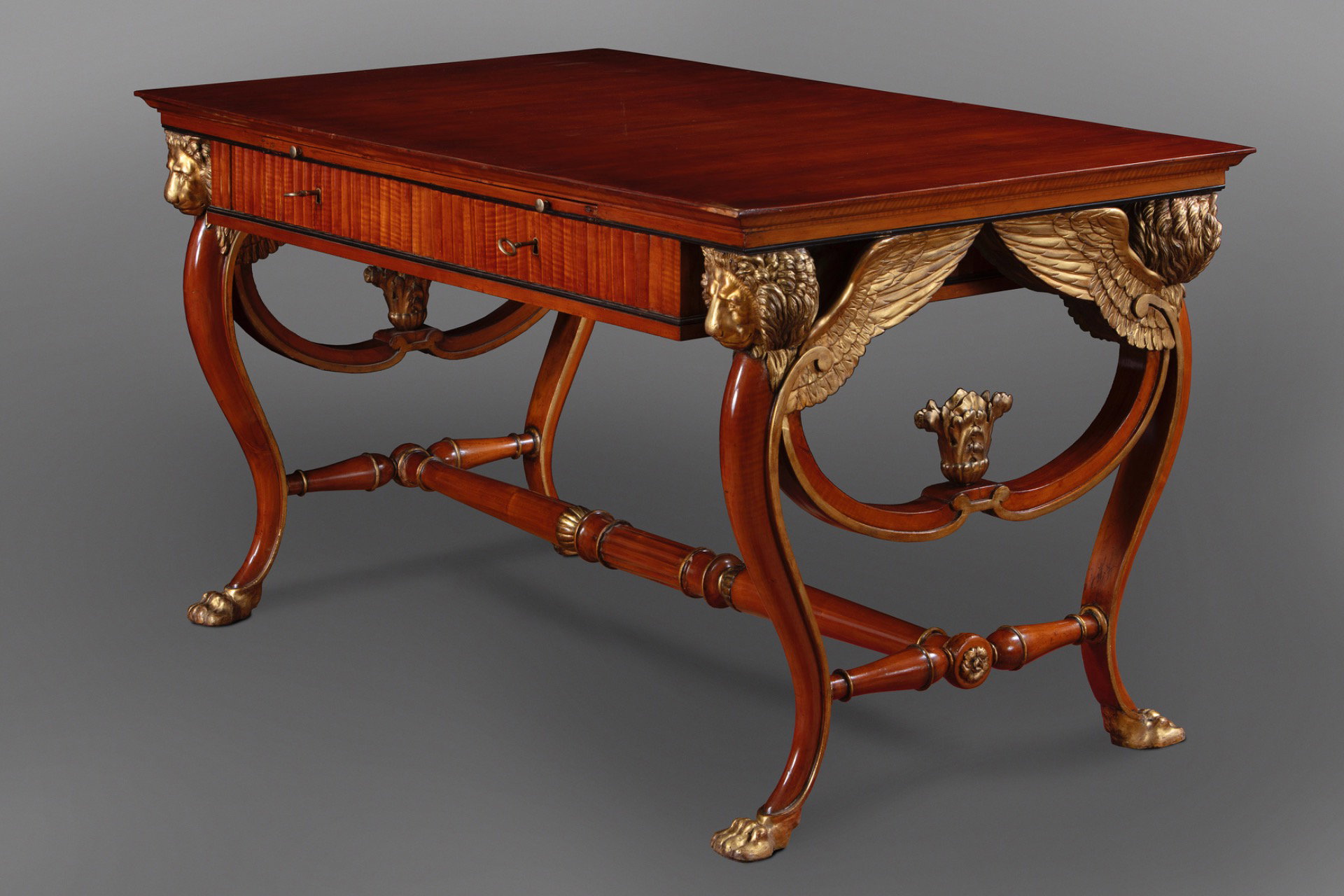
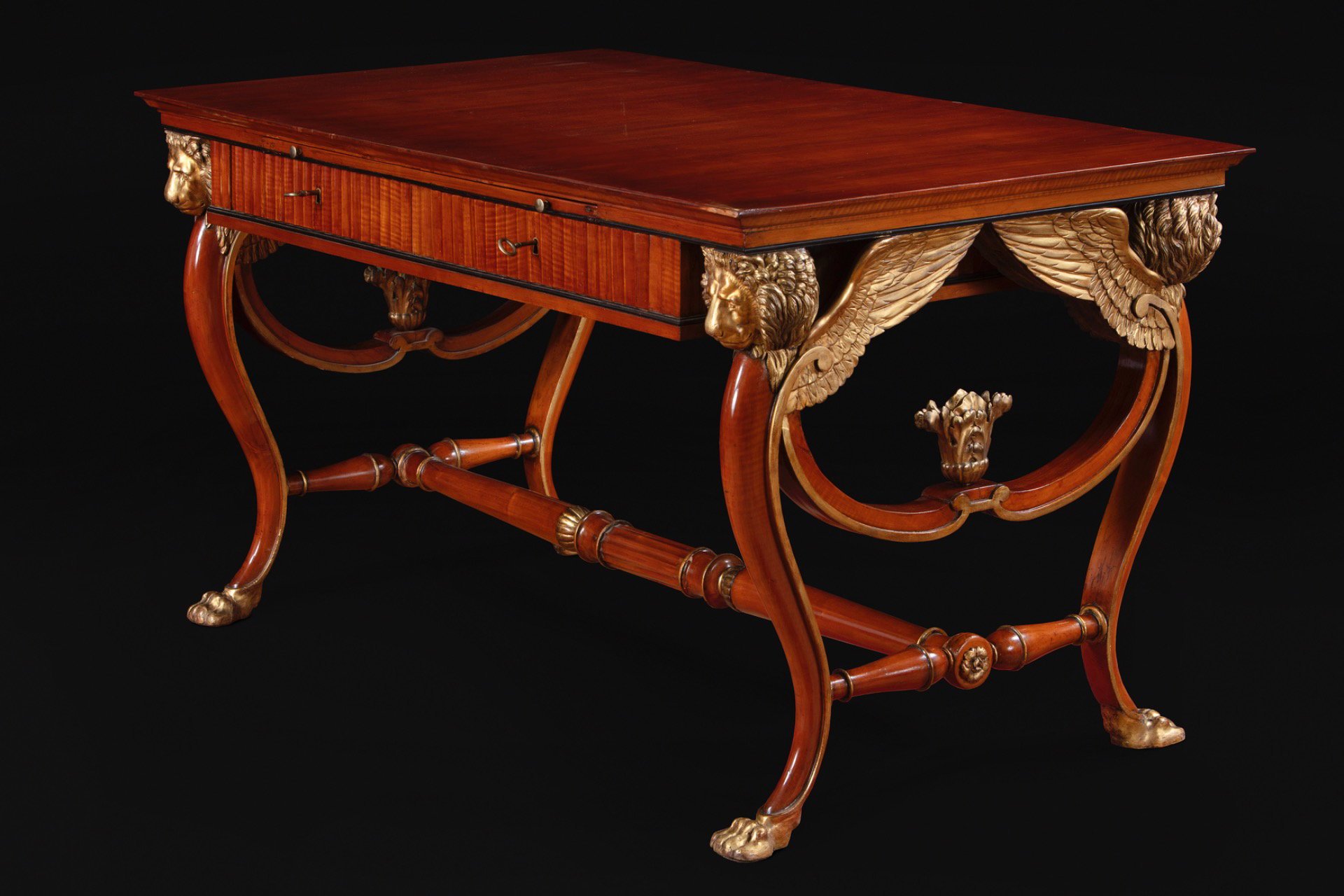
Giuseppe Borsato (1770 - 1849), cherry table with gilded and carved wood decorations
Description:
Giuseppe Borsato (Toppo, 1770 - Venice, 1849), cherry table with gilded and carved wood decorations.
79x140x82.5 cm.
First half of the 19th century.
This table, embellished with elaborate decorations, is made of cherry wood, a noble wood widely used in Venetian high cabinetmaking. The choice of this wood gives the work a warm patina, which creates a less severe and more refined chromatic contrast with the gilded parts compared to mahogany.
The top rests on an imposing fluted under-top band. The piece of furniture is supported by four arched "en jarret" legs finished with gilded profiling, which end at the top with winged lion heads and at the bottom with powerful feline paws, which give visual and physical stability. The carving is typical of large Venetian public commissions. The large spread wings, which follow the curve of the leg, give the table an upward momentum that balances the gravity of its volume. The furniture is completed with two drawers made with an elegant grooved finish.
The use of cherry places this piece in a mature phase of the Italian Empire style, when dependence on French mahogany models gives way to a more local and soft sensibility.
BIOGRAPHY
Giuseppe Borsato, a prolific artist active mainly in Veneto, was a set designer for the Fenice theater and a decorator for Napoleon and the Habsburgs. He was responsible for the decorations of the Royal Palace of Venice and the Royal Villa of Stra; he also dedicated much time to furnishings, and was a designer of high-value furniture and objects such as tables, chairs, vases, chandeliers and frames.
His greatness lay in conceiving furniture not as an object isolated from the context, but as a coherent part of a scenography. In this way he decorated the environments that were commissioned to him, making them live through the furnishings he designed.