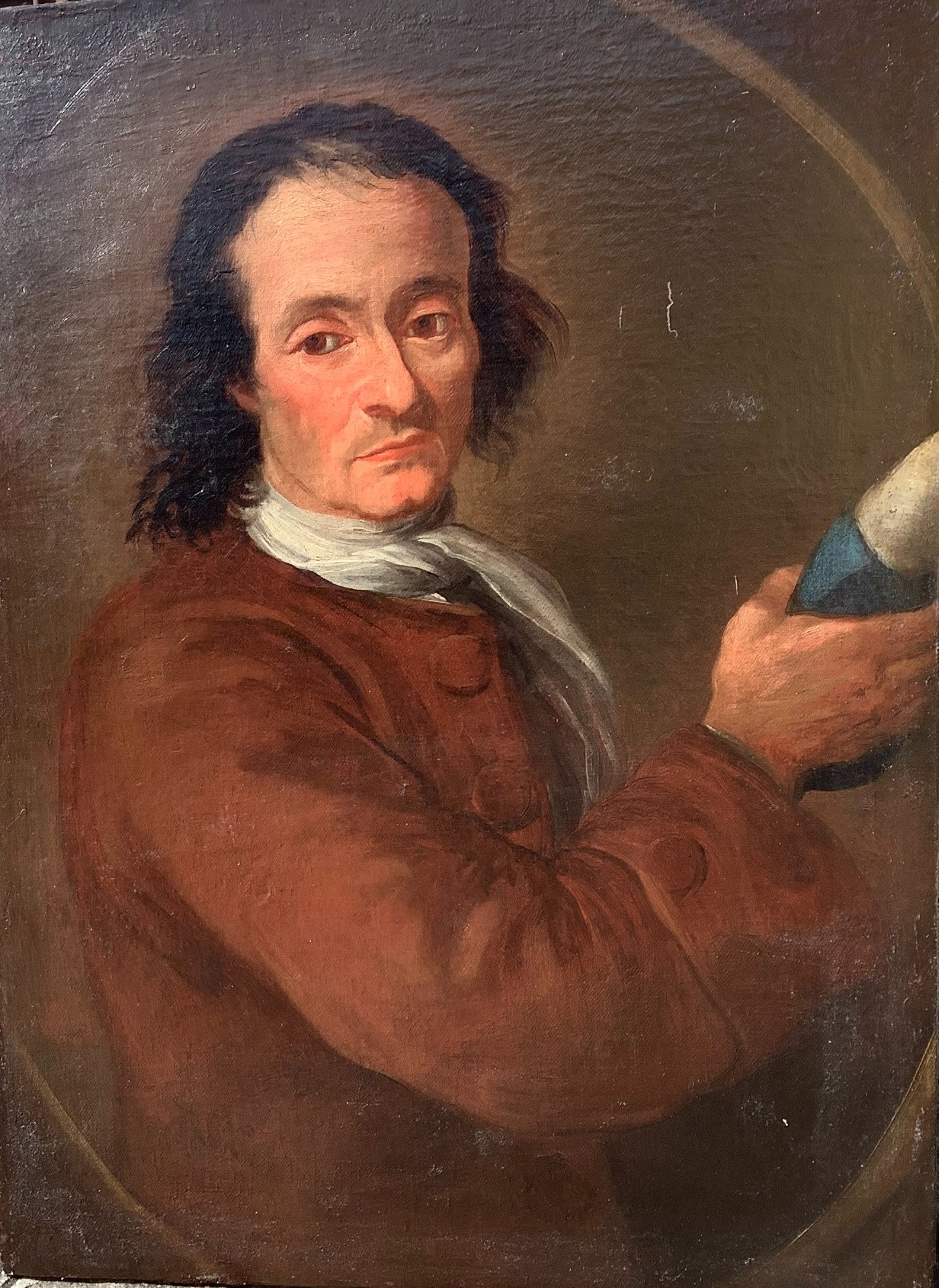
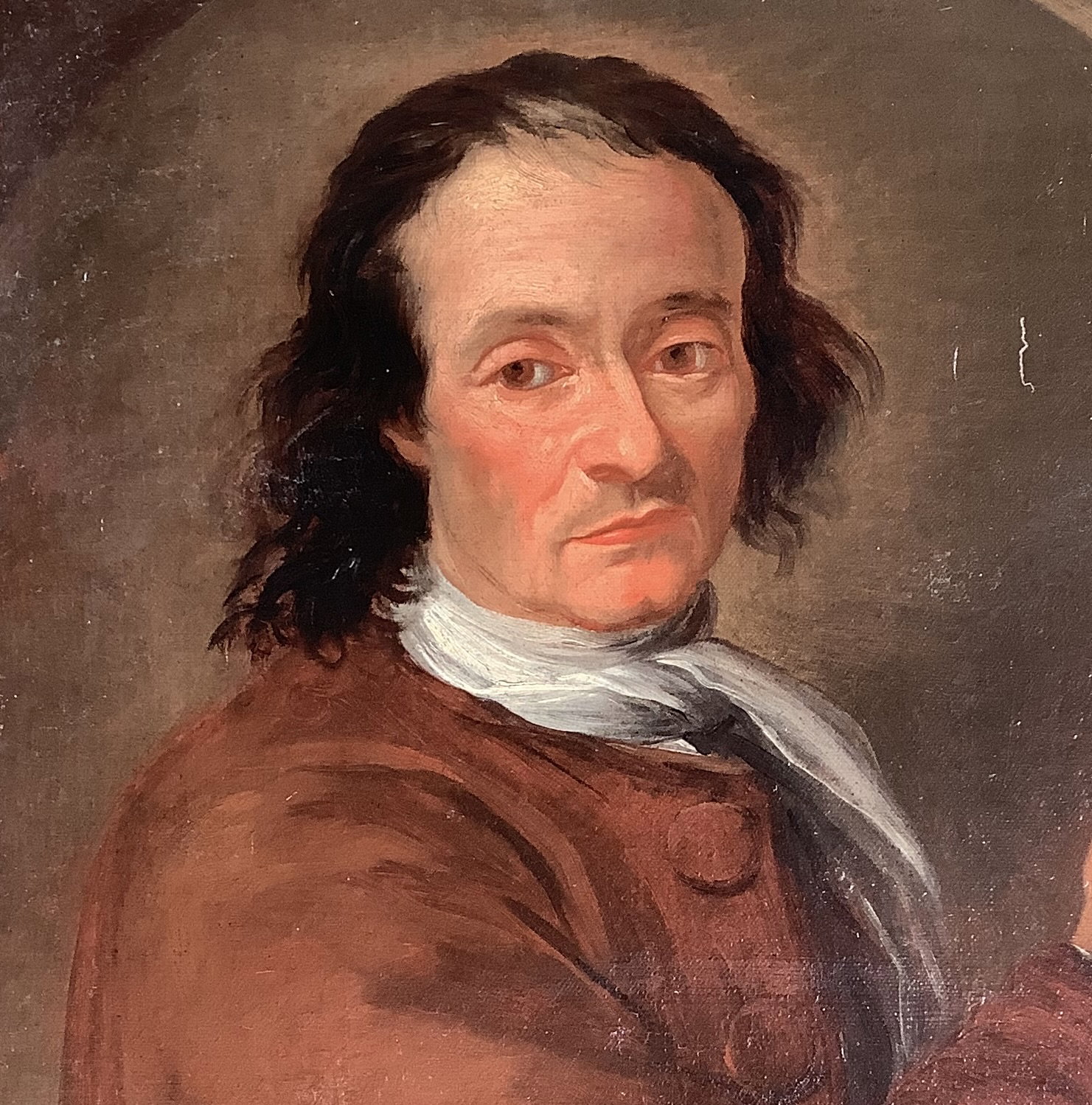
Portrait of a man of popular or petit bourgeois extraction, as indicated by the simple knotted tie, the jacket with large buttons, and the hairstyle with a furtive "comb-over".
Only in a second stage, with a more careful observation, do we notice a hunchback that deforms his back - perhaps a scoliosis-related "hump" - which the painter represents with graceful adherence to reality.
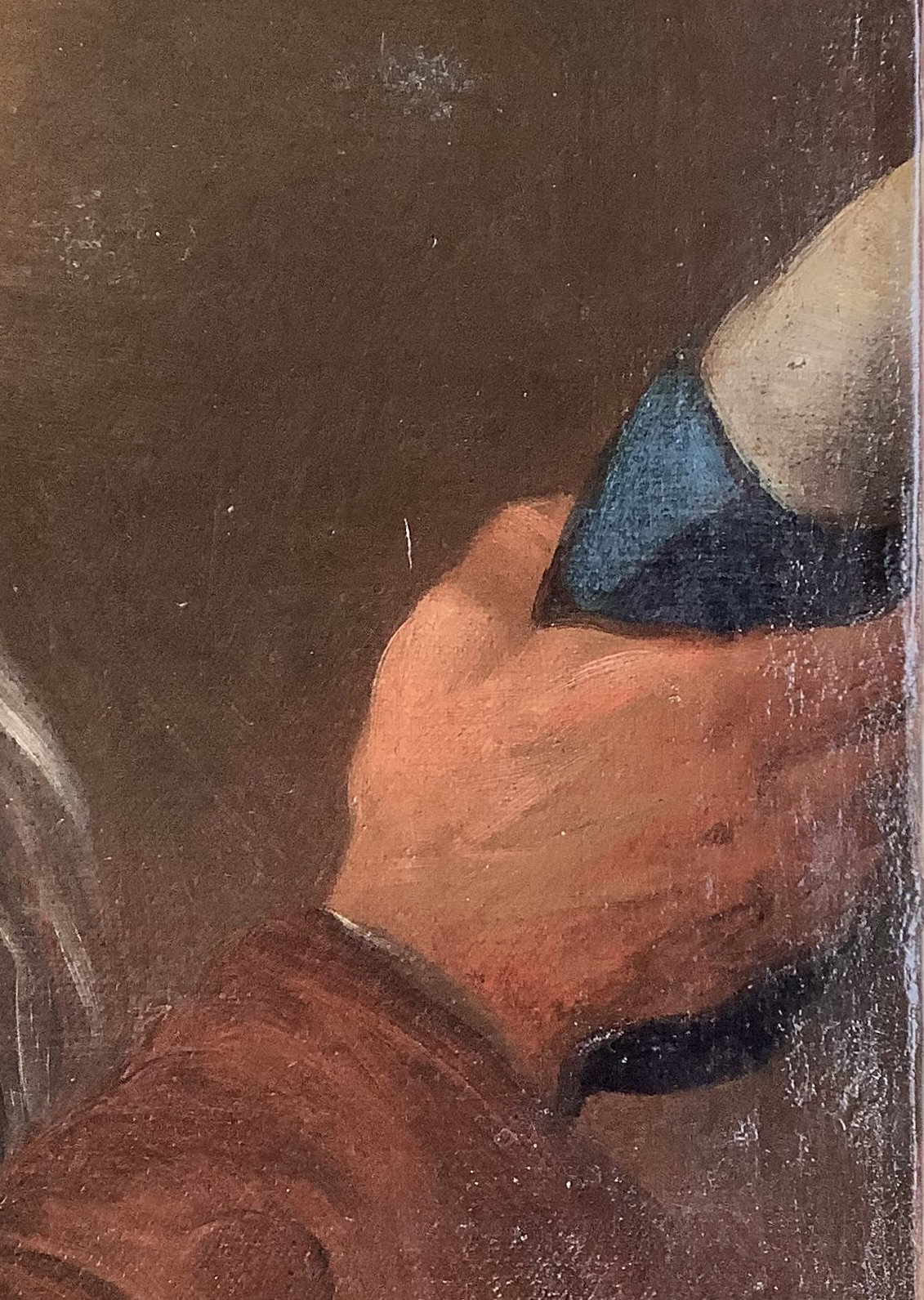
With a courteous gesture, the character turns towards us, holding in his right hand an object allusive to his identity, with a curved shape and proportions such as to resemble a horn, which in popular belief has a propitiatory meaning equal to that of the hunchback; in doing so, a hint of melancholy veils his gaze, confirming the capacity for psychological penetration of Pietro Ligari's portraiture.
The painting reveals the placid naturalism and sober realism of the Lombard tradition, devoid of any emphasis and fused in the pictorial writing with a soft nonchalance of touch.
Everything suggests a dating in the artist's Milanese years (1710-27), before the final return to his Valtellina.
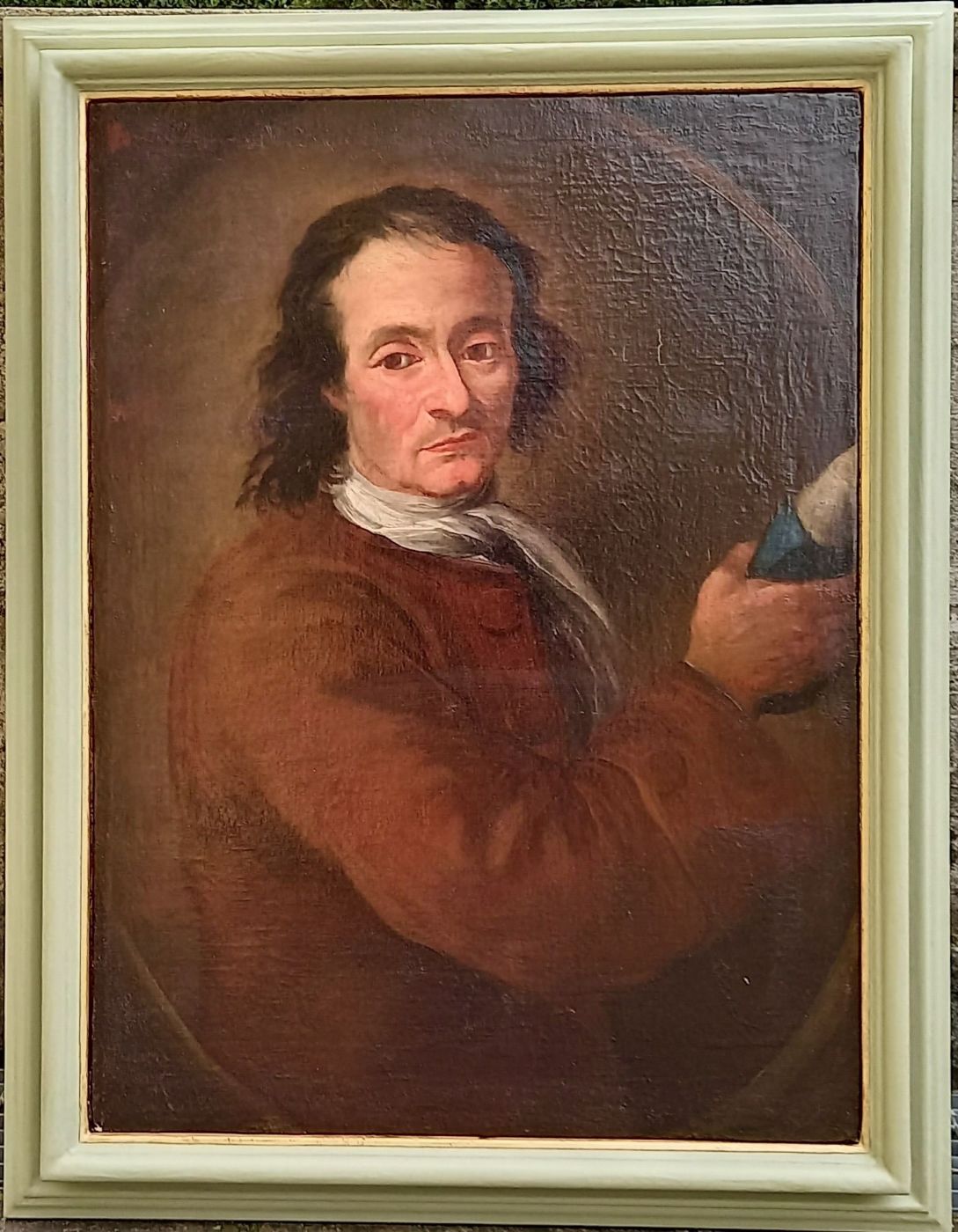
Oil on original canvas of cm.73x54 in optimal conditions of conservation, with relining and new frame of the second half of the twentieth century, as well as small restorations in marginal areas for no more than 2 percent of the painted surface.
Frame in style and tone of the period, of current manufacture.