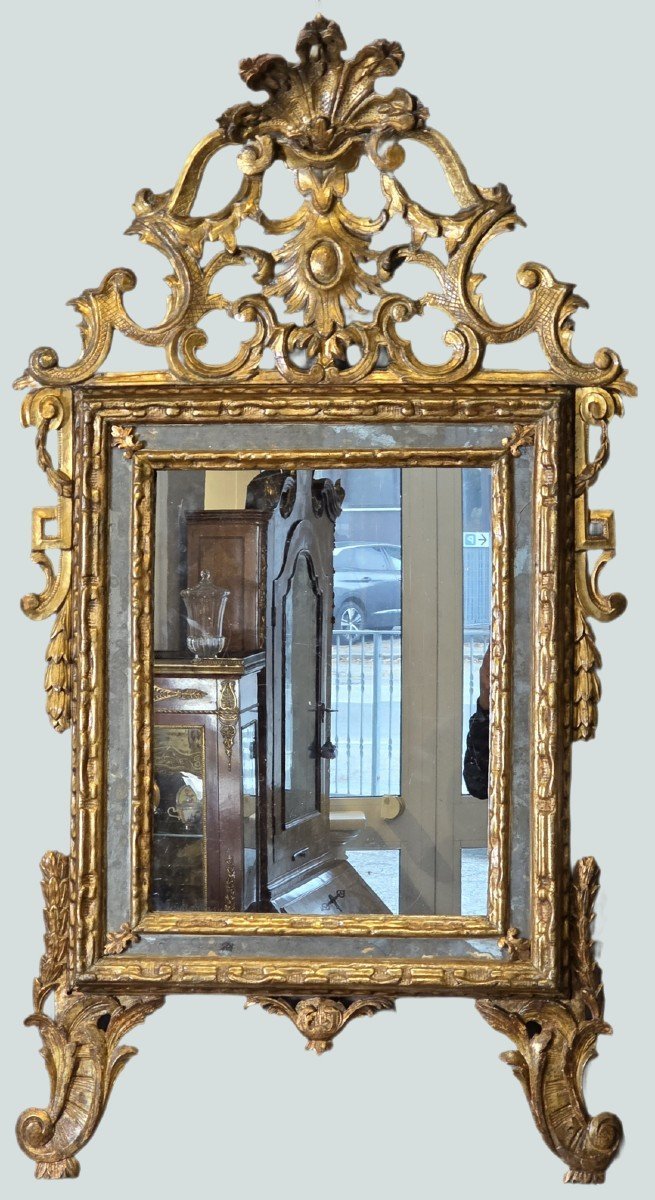
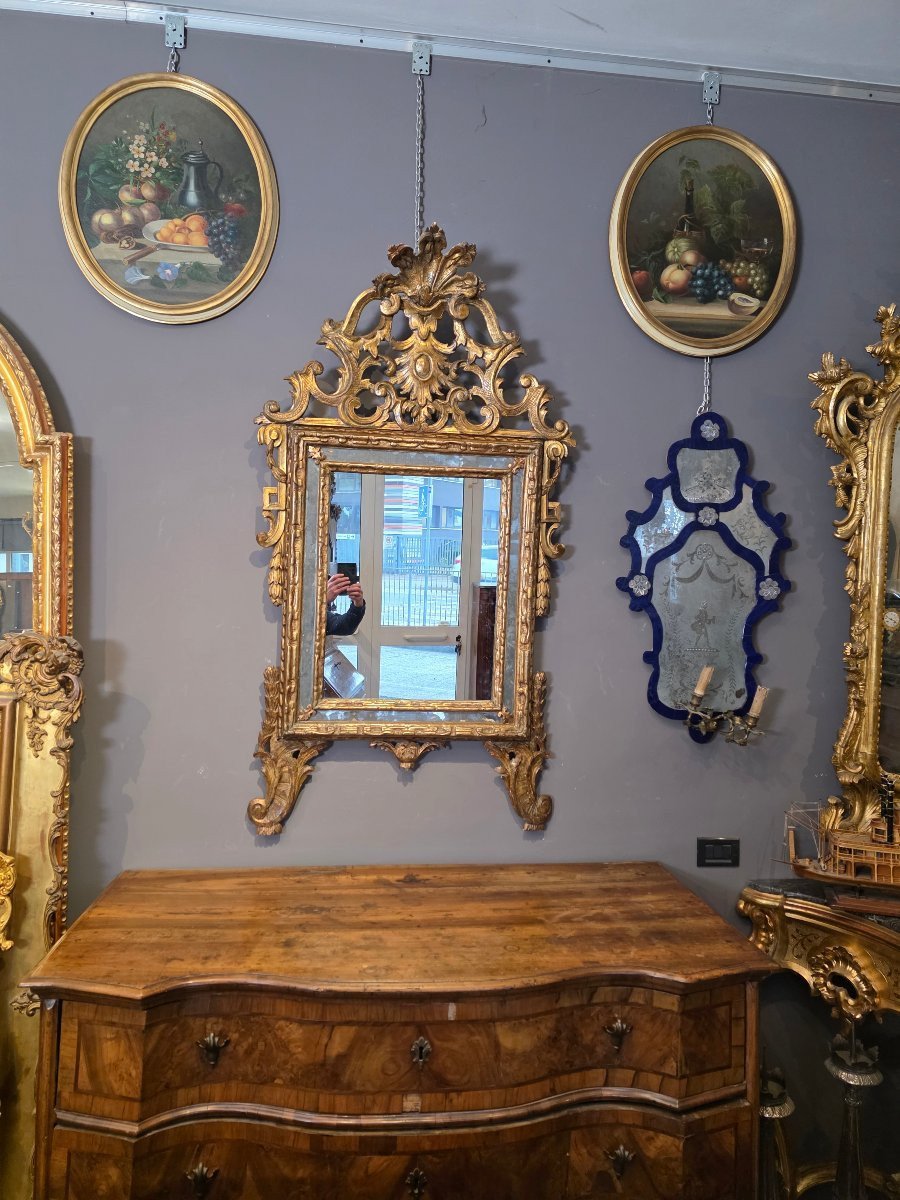
Piedmontese mirror in carved and mecca-gilded wood, second half of the 18th century
Description:
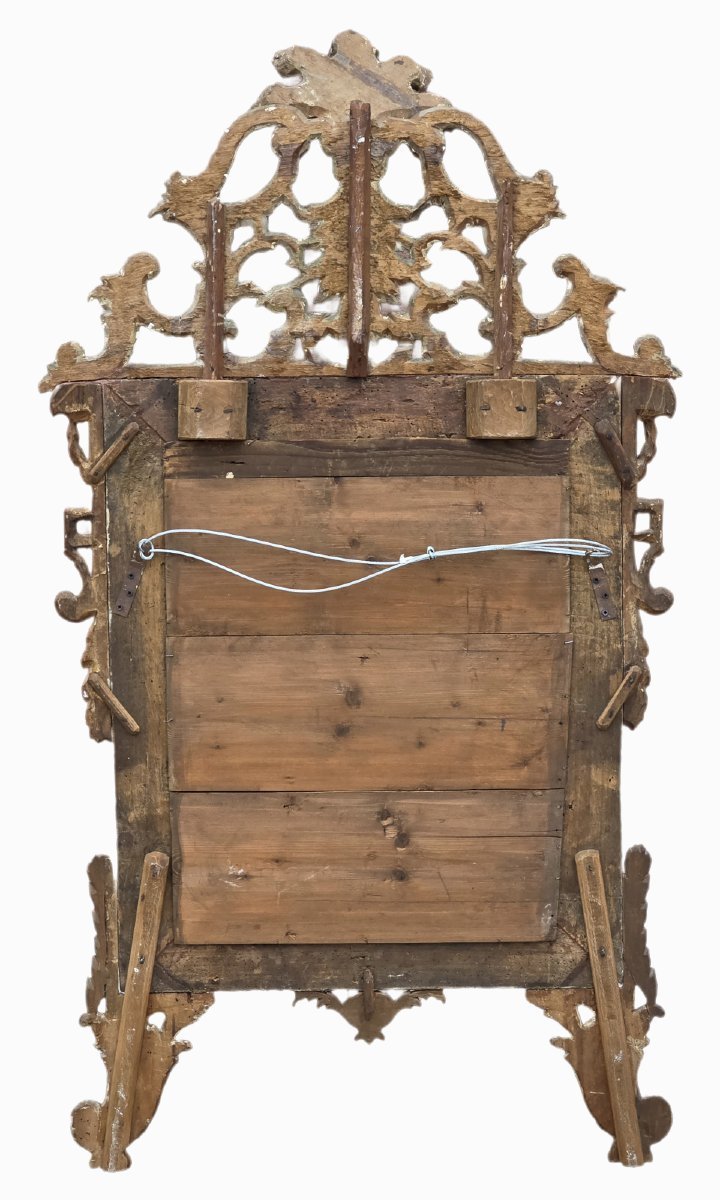
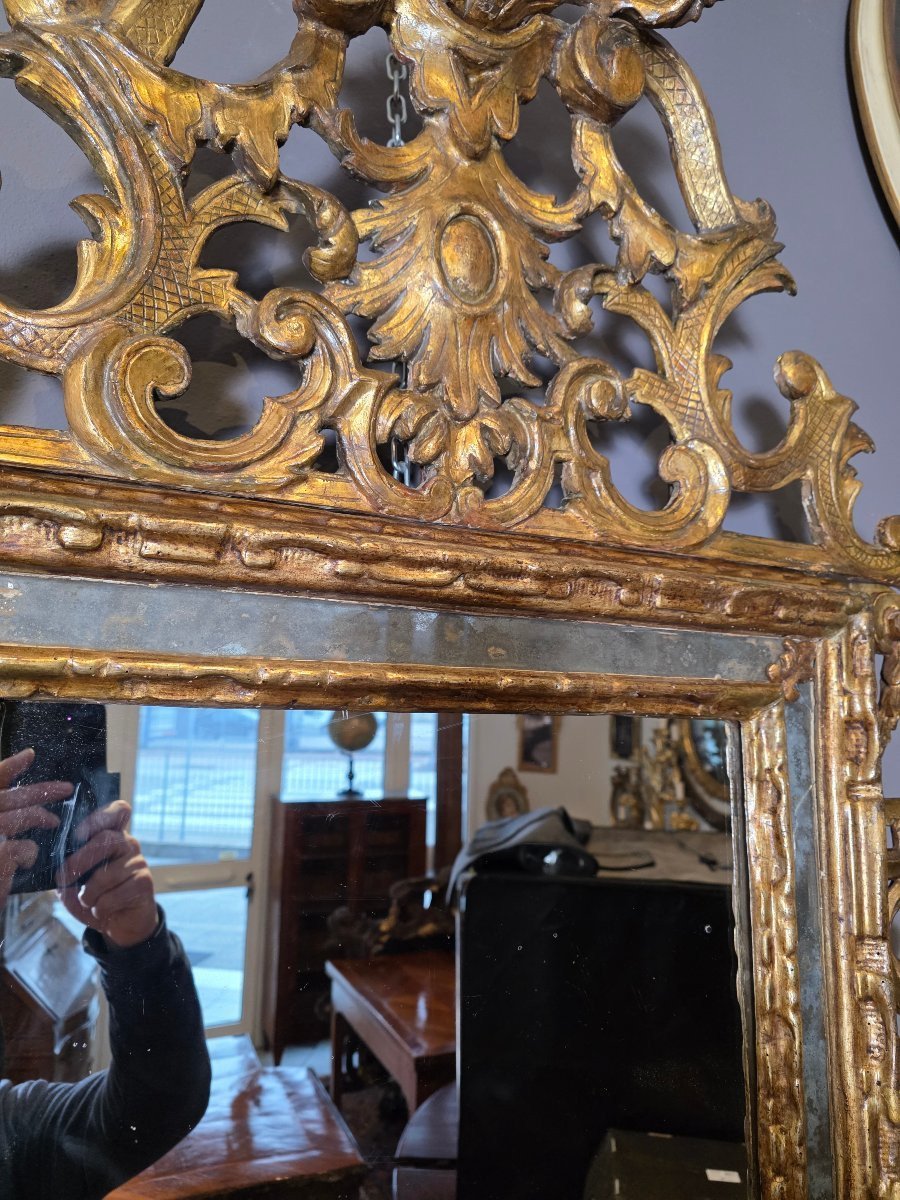
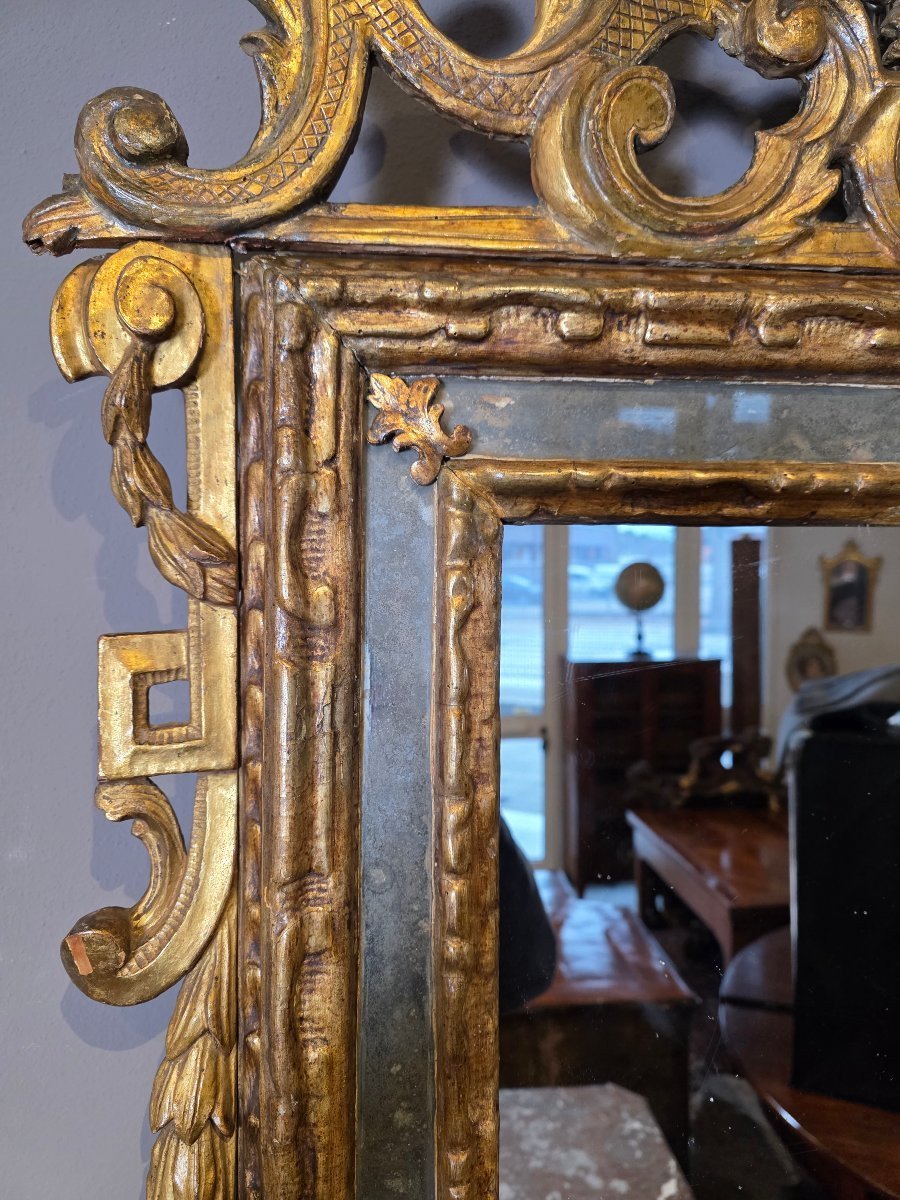
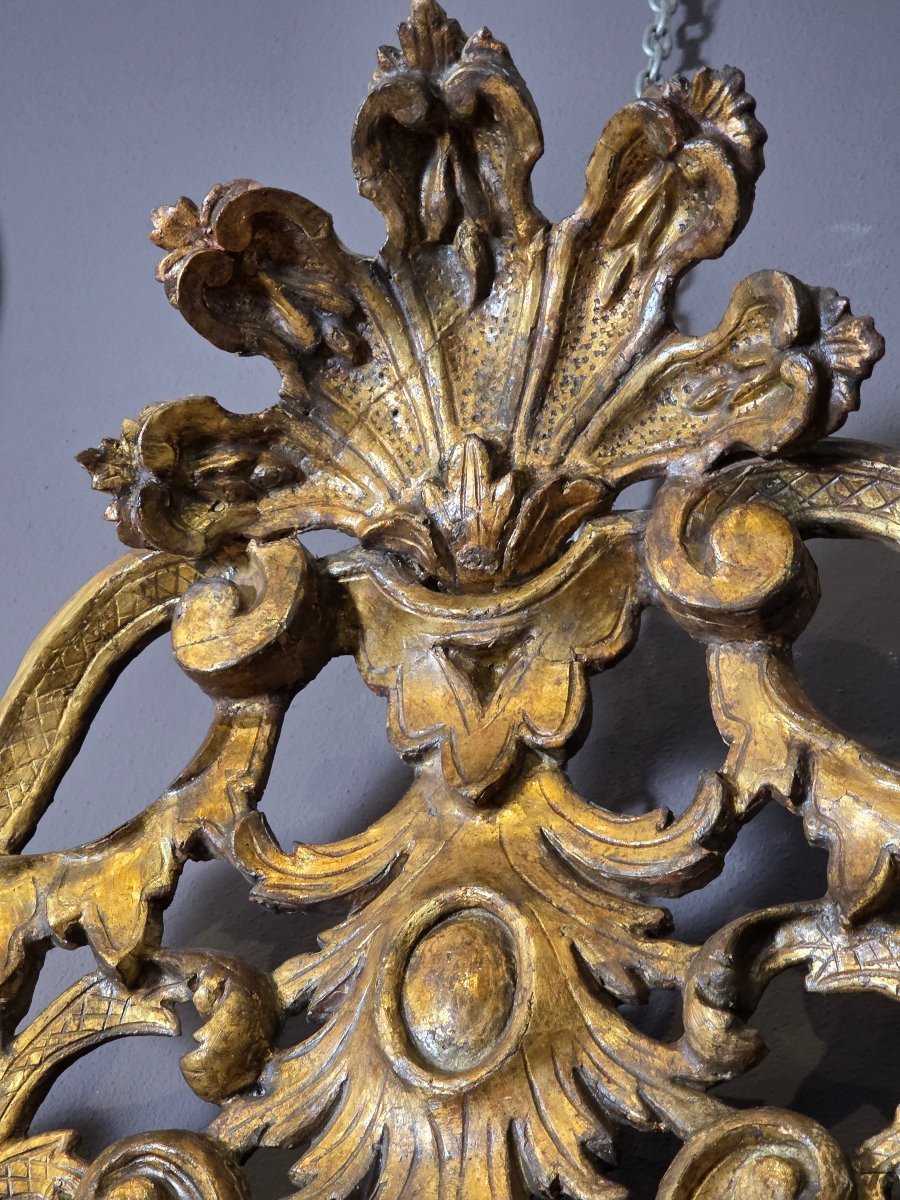
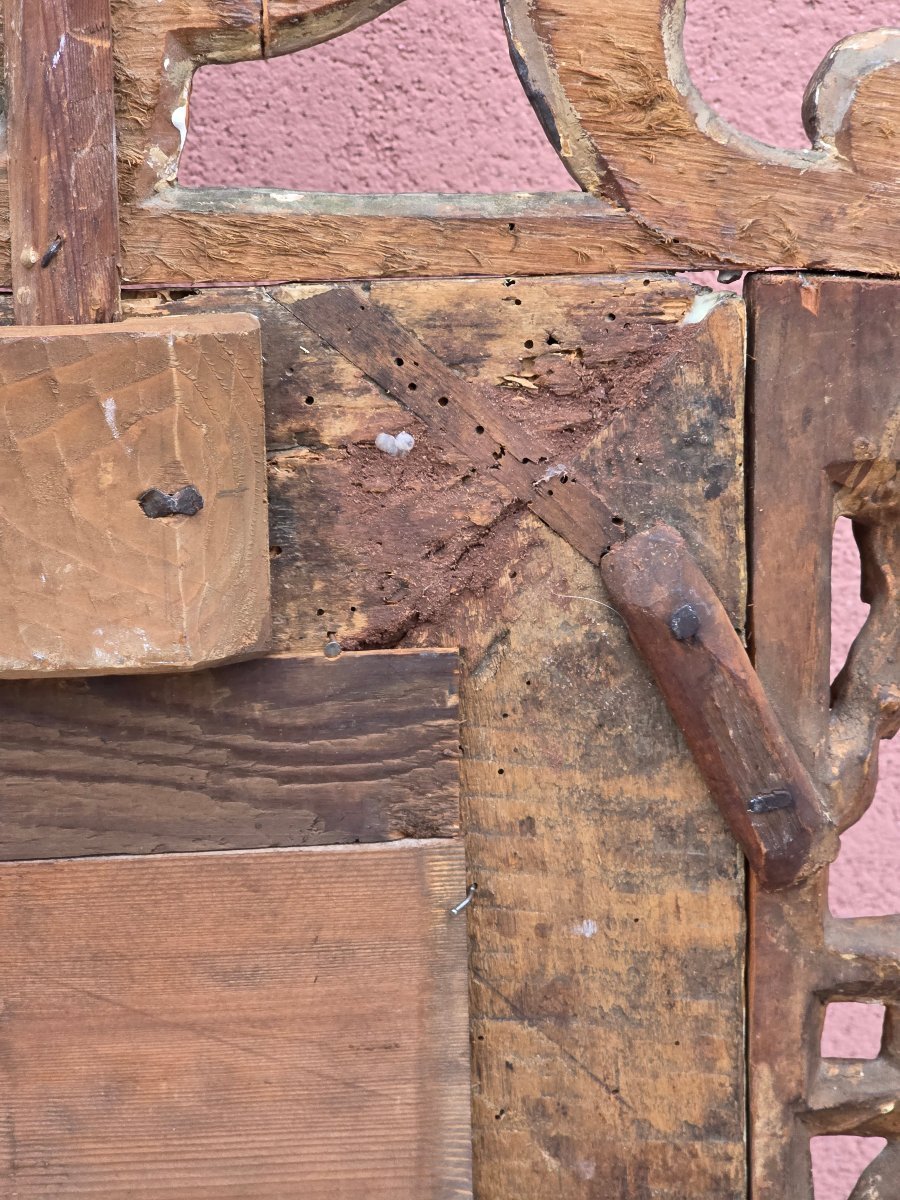
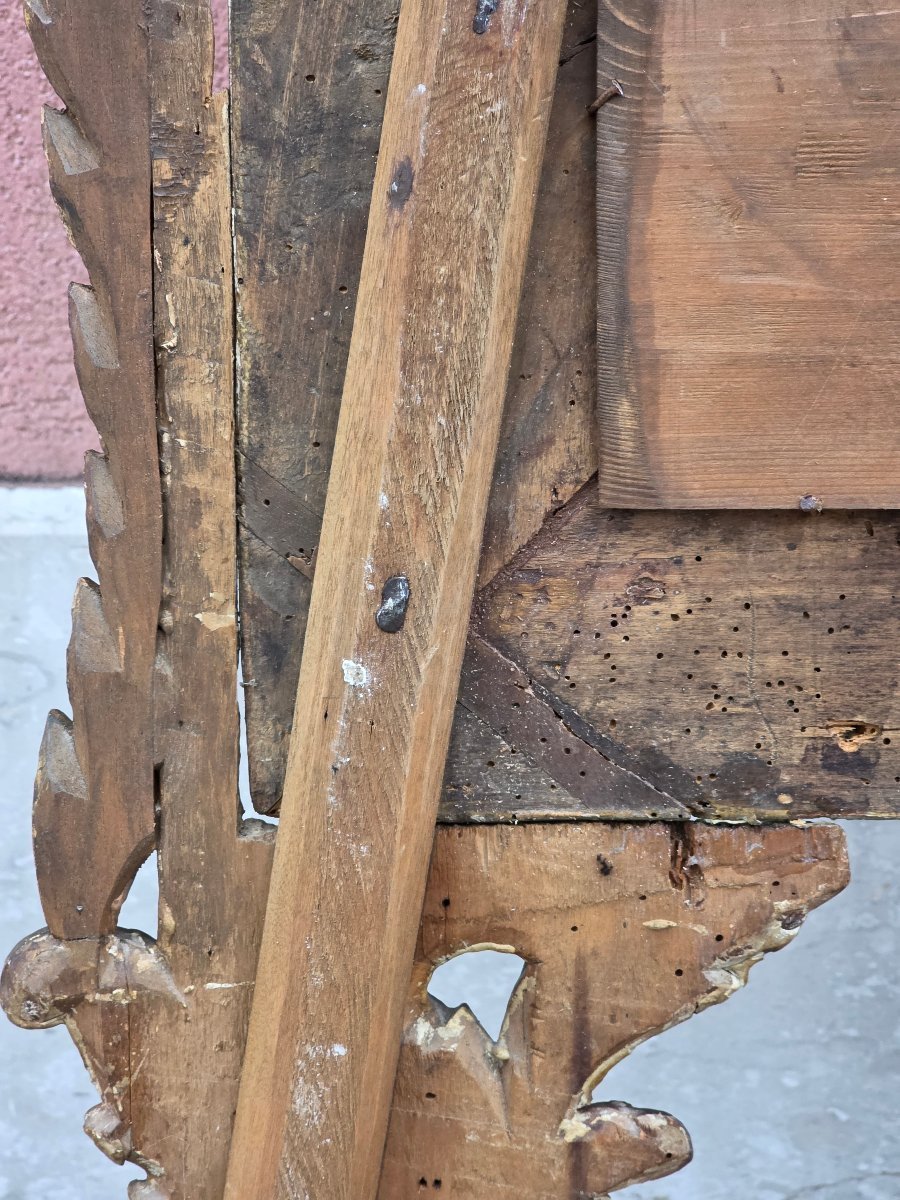
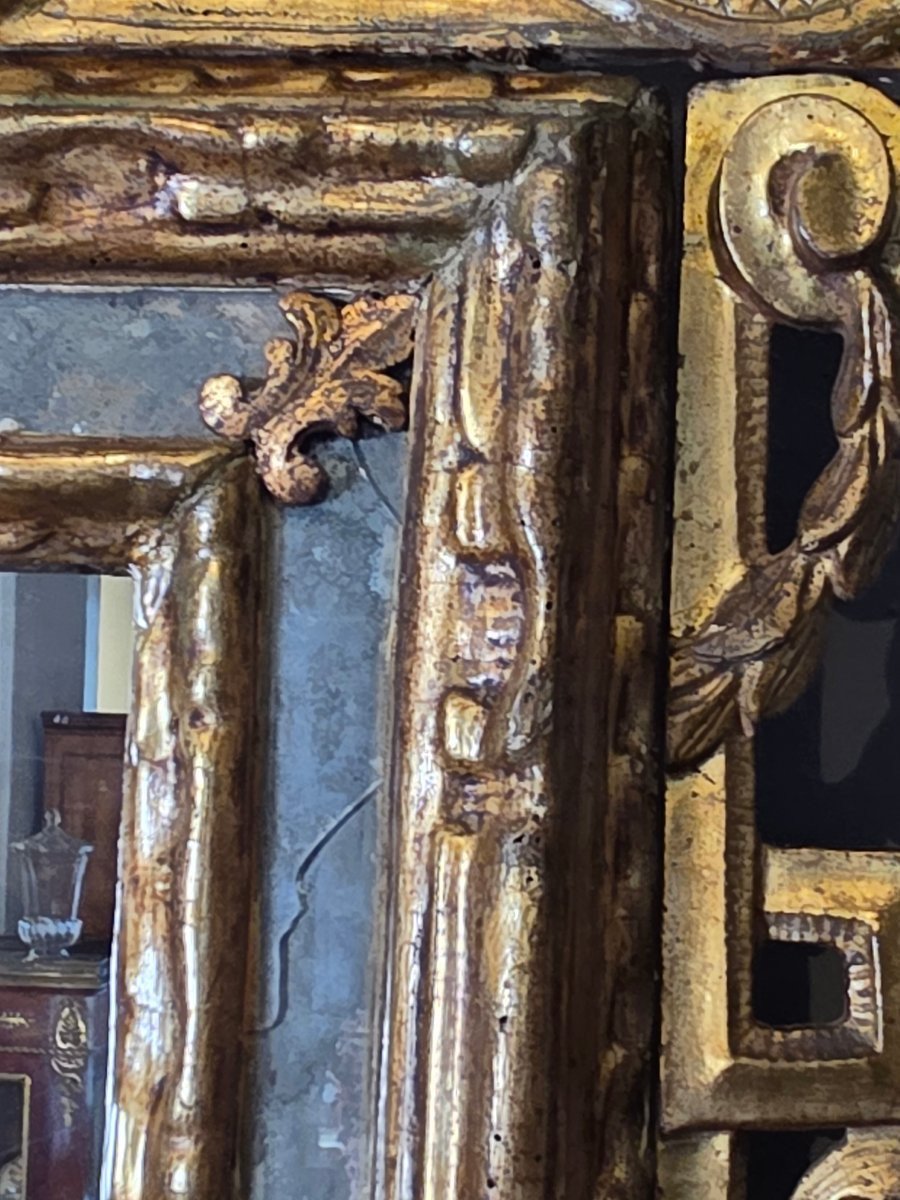
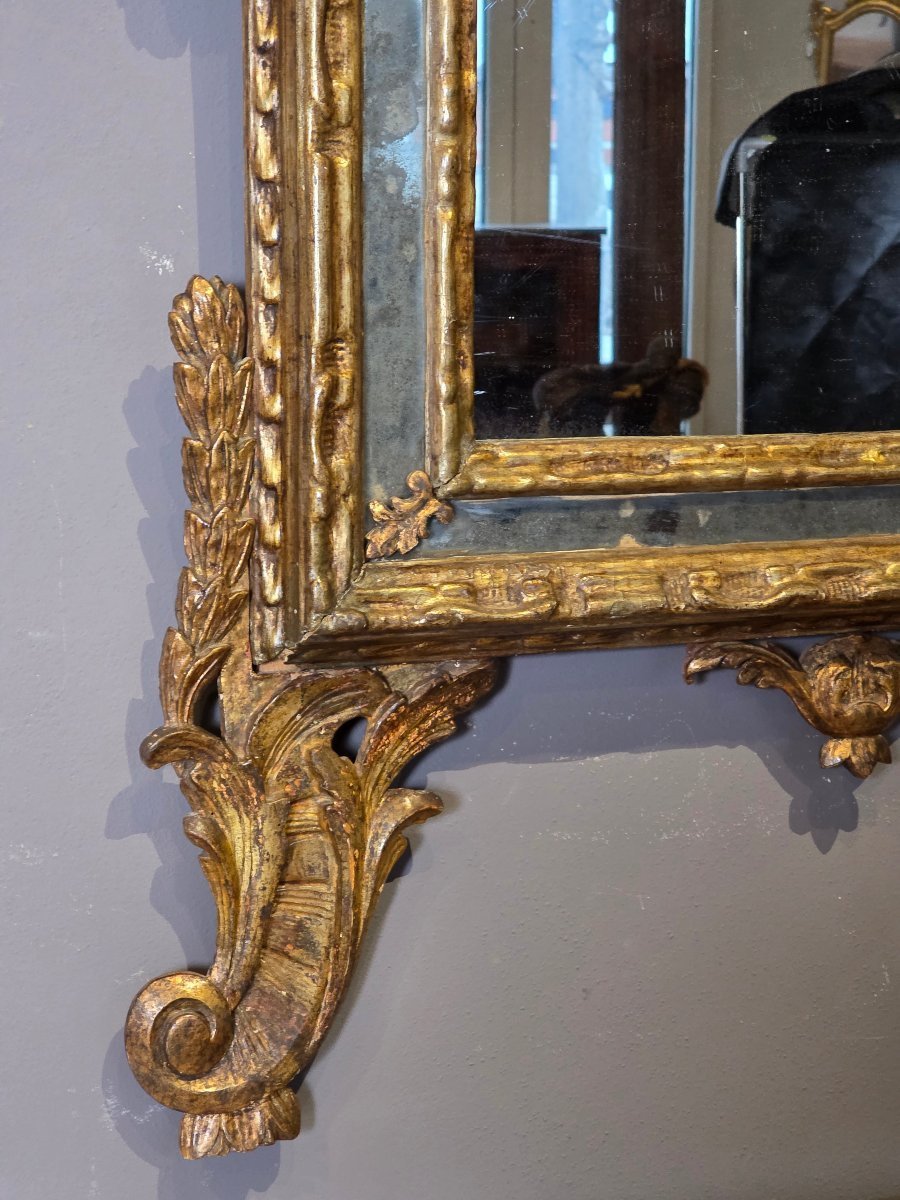
Important Piedmontese mirror dating back to the second half of the 18th century, attributable to the transition period between the Louis XV and Louis XVI styles, made of carved wood and gilded a mecca (mecca silvering). The frame features a rich ornamental apparatus with volutes, foliage, and rocaille motifs, with a strong decorative impact and good carving quality. A particularly interesting element is the presence, inside the main frame, of an internal band composed of original mercury mirrors, which further frames the central mirror, creating a refined play of reflections and helping to visually lighten the structure, accentuating its depth and brightness. One of the mirrors in the internal band is broken, as can be seen from the images. The central mirror is mercury, contemporary but not original to the frame, and shows normal signs of aging, with oxidation and small falls compatible with age and use. The wooden structure and the mecca gilding show evident traces of the passage of time, with abrasions, irregularities, and areas of consumption, the result of a long conservative history. The mirror has been the subject of interventions and adaptations, in particular in the lower part, where some friezes are probably replaced or reassembled; these elements, although not entirely original, maintain stylistic coherence with the rest of the frame. Overall, a mirror of great charm and strong scenic presence, to be appreciated above all for its decorative imprint, the eighteenth-century atmosphere and the environmental value, rather than for a rigorous philological integrity.