Description:
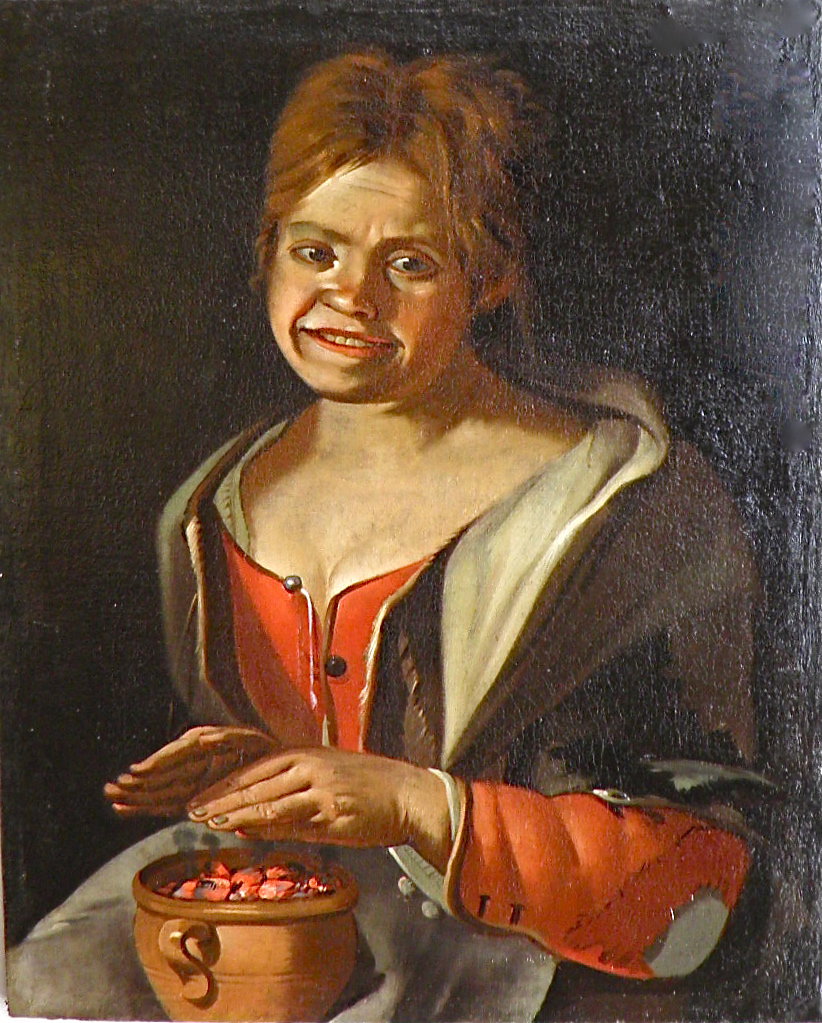
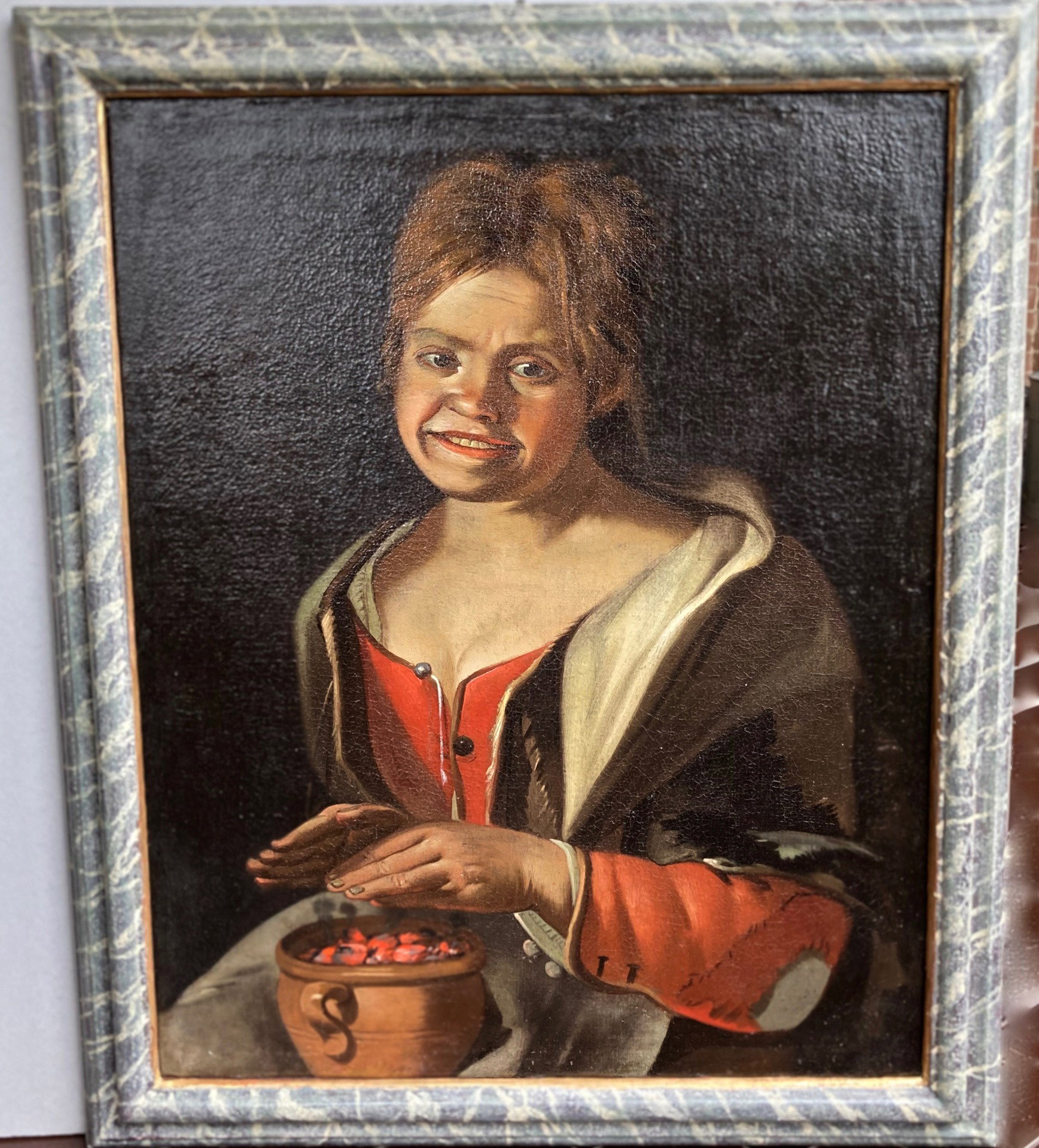
Girl with a hand warmer, painted in the first quarter of the eighteenth century, workshop of Giacomo Francesco Cipper known as "il Todeschini".
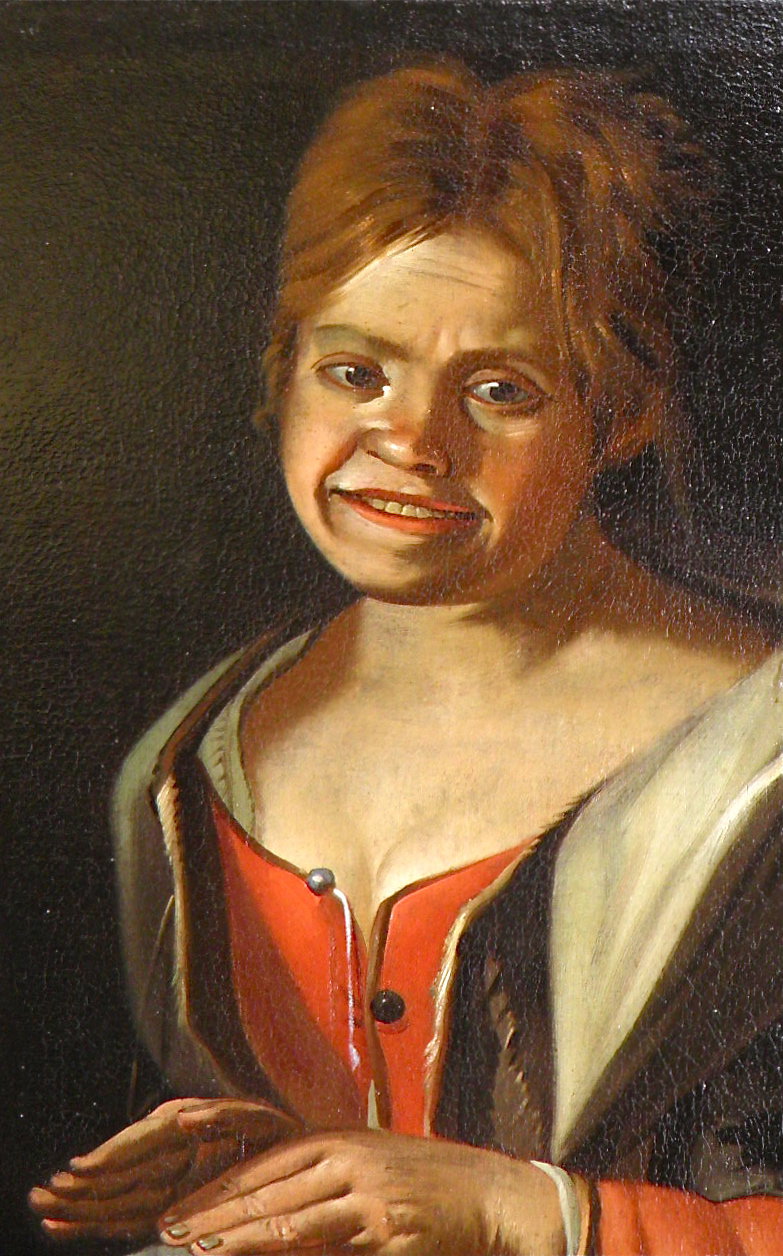
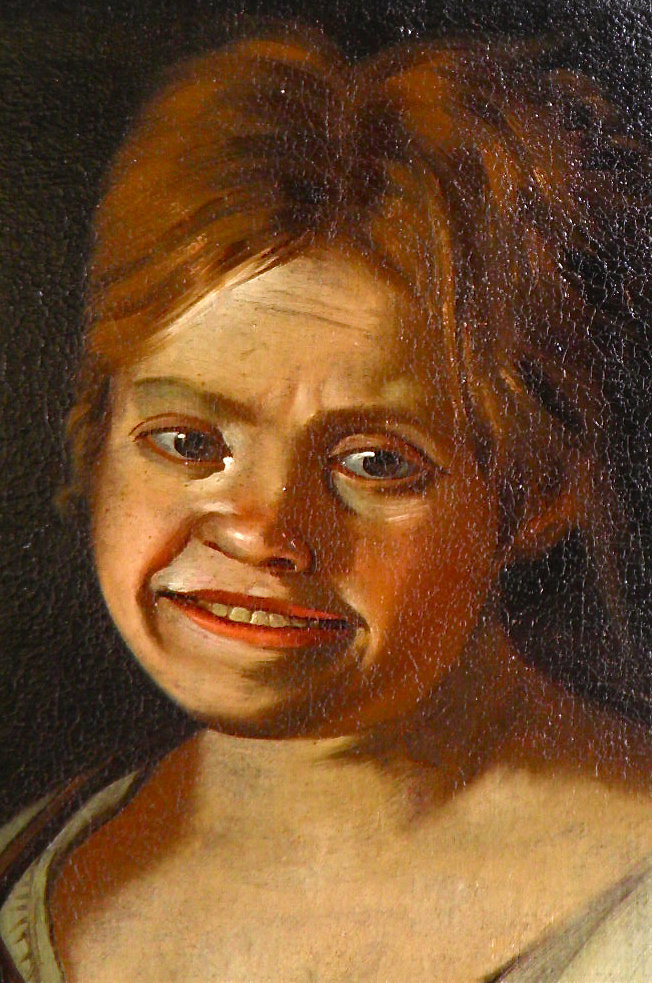
An evident prognathism of the chin characterizes the girl's face, but the painter tempers it in a broad smile without caricaturing it; the flattened nose, thick eyebrows and a reddish hair, as high as the wigs of aristocratic ladies, also contribute to characterizing the physiognomy.
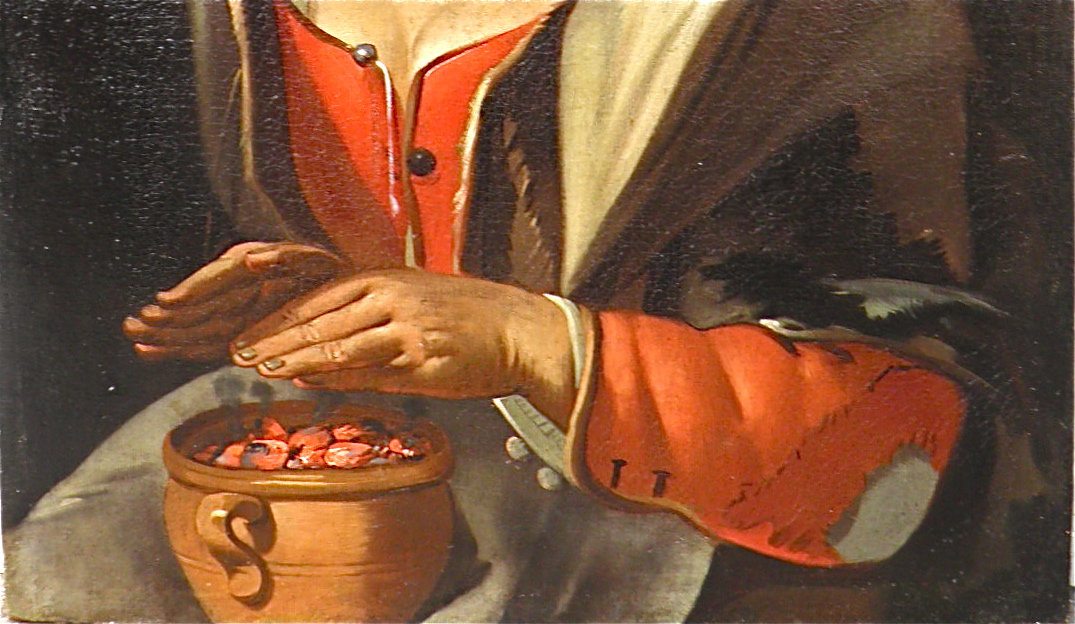
The woman is portrayed from life, she is not a "type" used by 'pitocchi' ('beggars') painters, while the gesture and the pleasure that the gesture communicates of warming her hands, give the girl's smile the warmth of a relationship between equals.
The Todeschini's 'pitocchi' relate on an equal footing with the viewer because the painter sees them as the normality to which he himself belongs, and with the verve of popular comedy he stages their humanity with a wealth of types, characters and popular episodes.
The success of this formula attracted an army of imitators, who ended up overshadowing the profile of the real Todeschini until almost the end of the twentieth century, flooding the market with an infinite number of vernacular interpretations, not comparable to the painting in question.
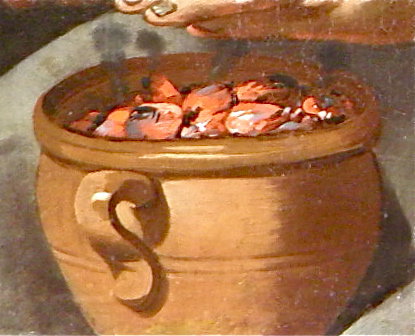
In the Girl with the hand warmer, the expressive power of the character, the tone of popular joy and intimacy between "equals", the chromaticism, the complexions with small transverse strokes, the linear outline of the form, but also certain details such as the terracotta hand warmer that recurs identically in several Todeschini paintings, all indicate that the author makes use of the master's language through direct knowledge, perhaps collaborating in his own workshop.
Technical data:
- oil on canvas of cm. 72.5 x 59;
- original canvas with additional lining, on a new frame;
- restorations for no more than 2% of the painted surface;
- newly made frame, consistent with the period and style.
–––––––––––––––––––––––––––––––––––––––––––––––––––––––––––
(*) Giacomo Francesco Cipper (or Ciper, or Ziper) known as il Todeschini worked mainly in Milan, Bergamo and Brescia, where he documented with an active workshop from 1705 to 1736, but his origins are in Feldkirch, Austria, where he was born in 1664; the nickname Todeschini alludes precisely to these origins, and also corresponds to the name “todesco” (in the Bergamo idiom: todésk) with which he signed some of his works.