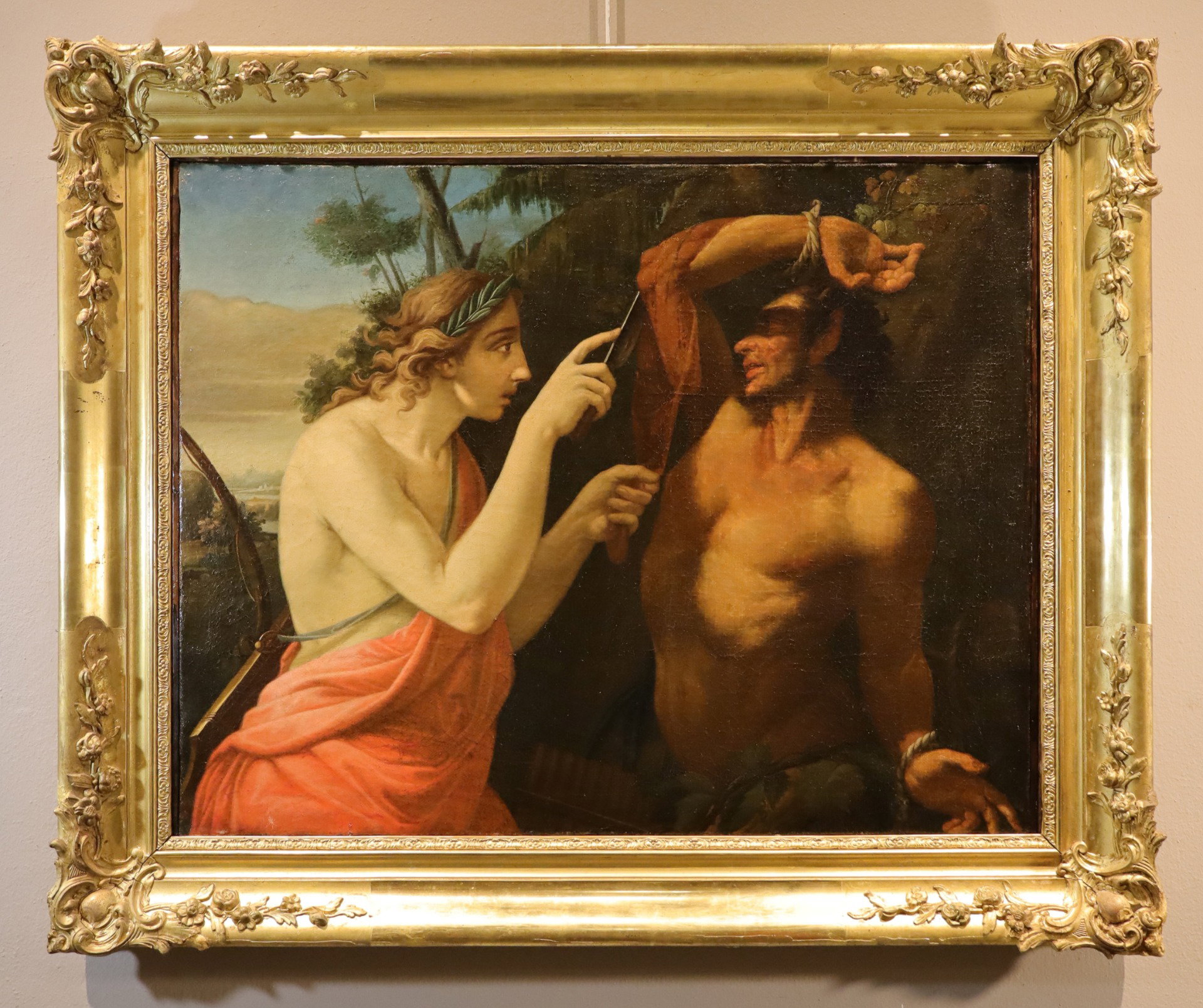
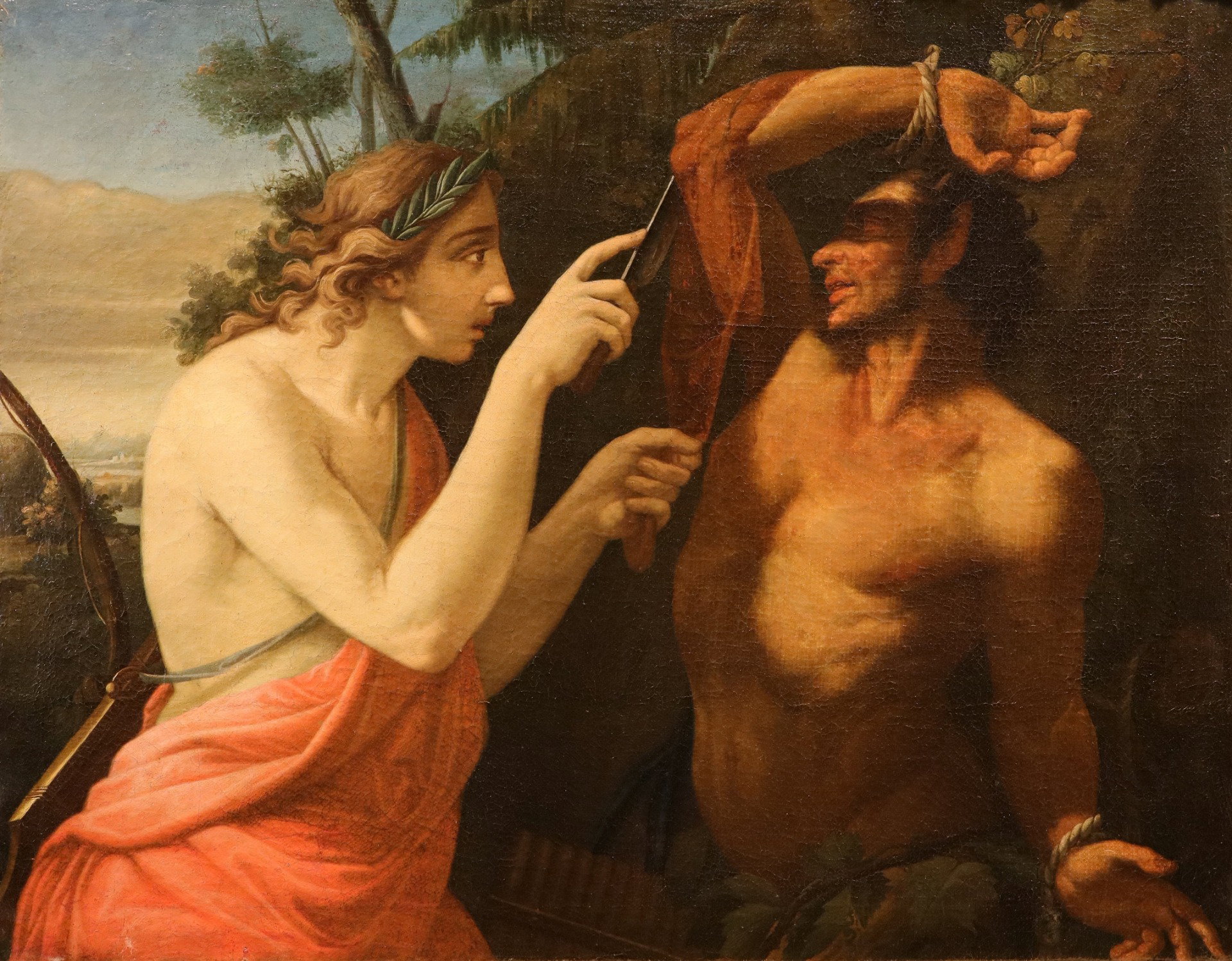
Apollo and Marsyas, Circle of Pompeo Girolamo Batoni (Lucca 1708 – Rome 1787)
Oil on canvas (65 x 83 cm - framed 84 x 102 cm)
Provenance: Private collection, Rome
Full painting details (click HERE)
The subject of the painting is taken from the mythological fable of the musical competition between the god Apollo and the satyr Marsyas, narrated by the poet Ovid in the Metamorphoses (book VI passages 282-400, and book XI passages 150-194),
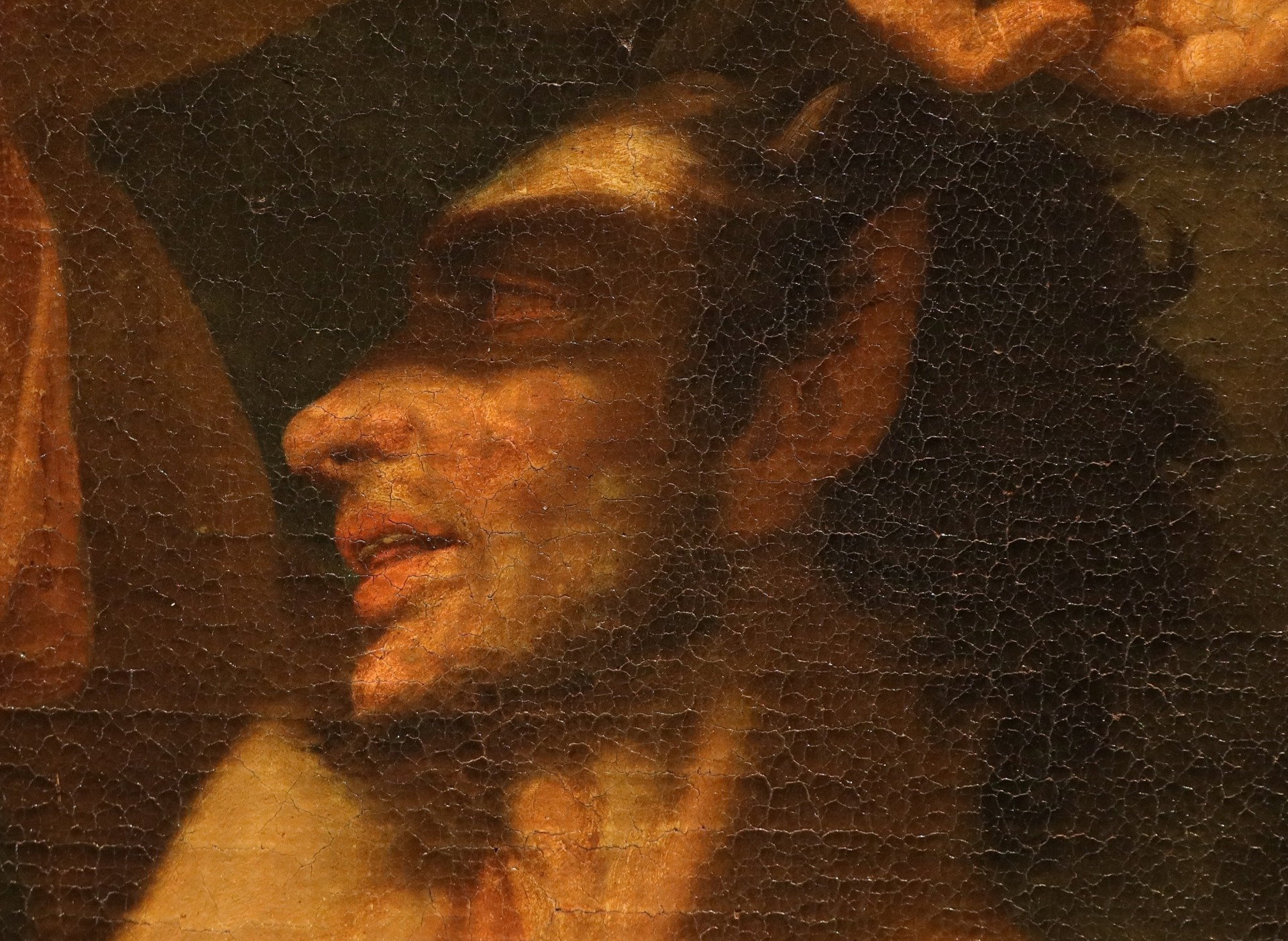
The satyr Marsyas, after discovering the double-reed flute (aulòs) invented by the goddess Athena, became so skilled at playing it that he dared to challenge the god Apollo with his lyre in a musical contest, which he lost, thanks to a clever trick by Apollo, and was punished for his hubris.
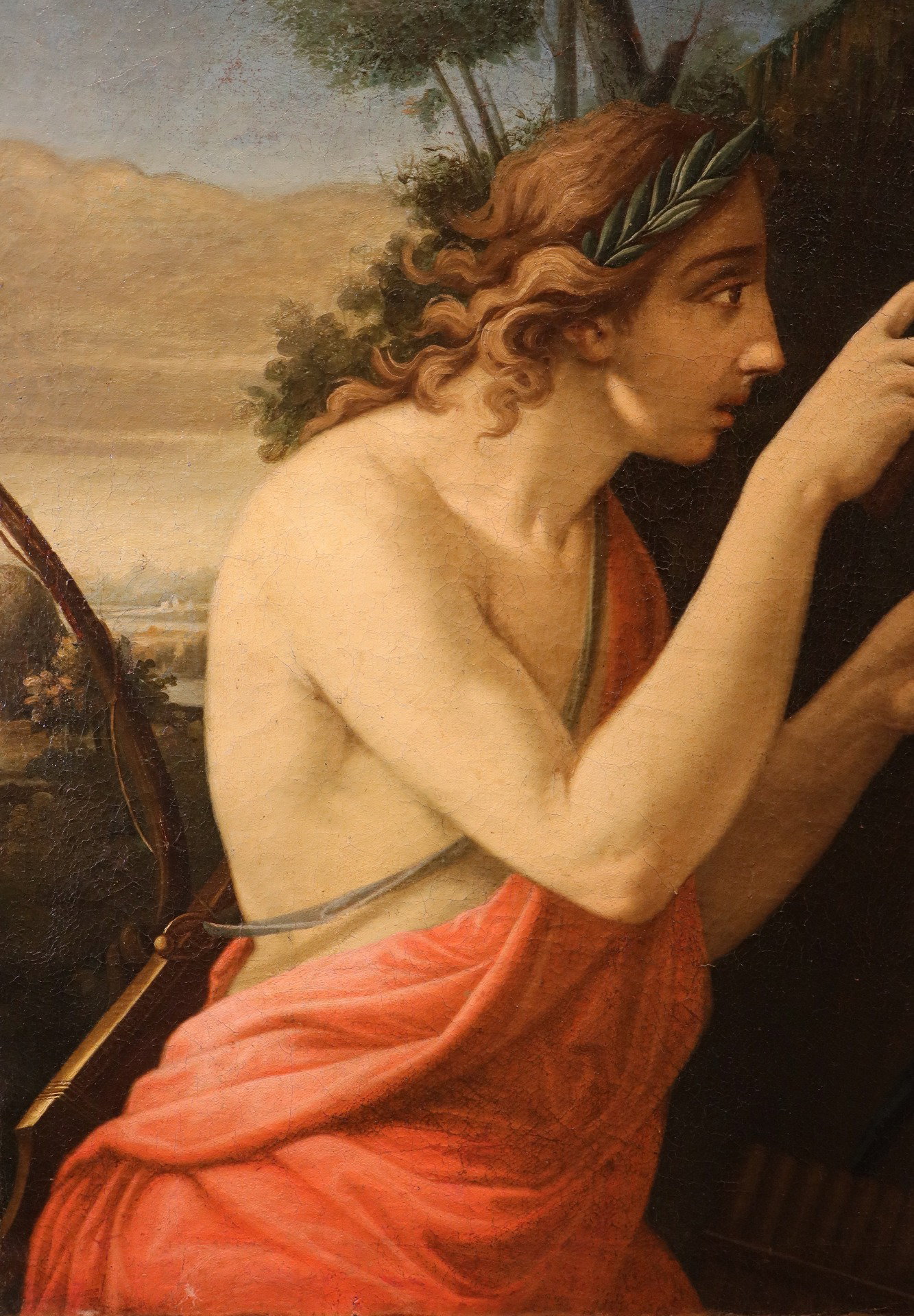
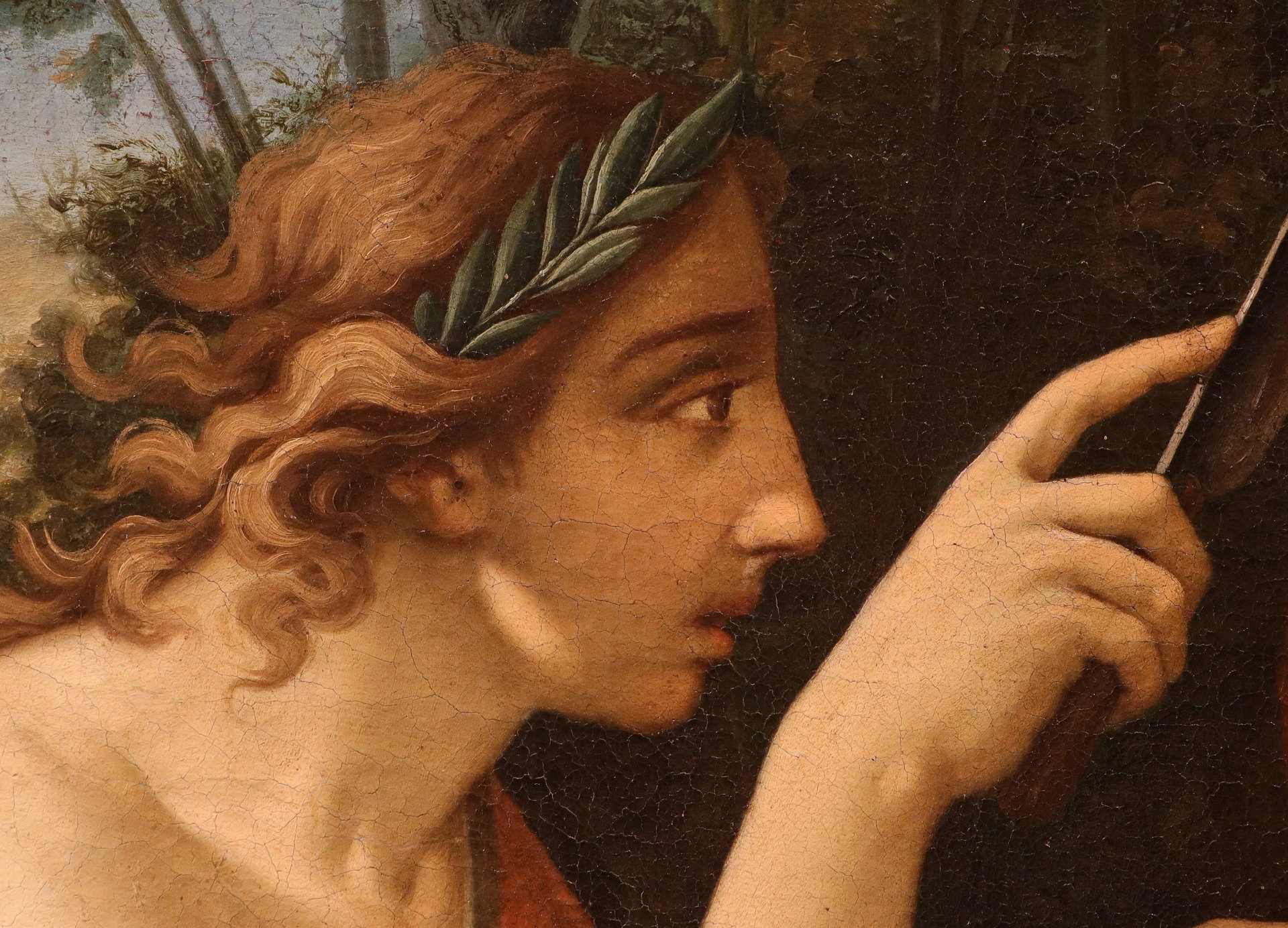
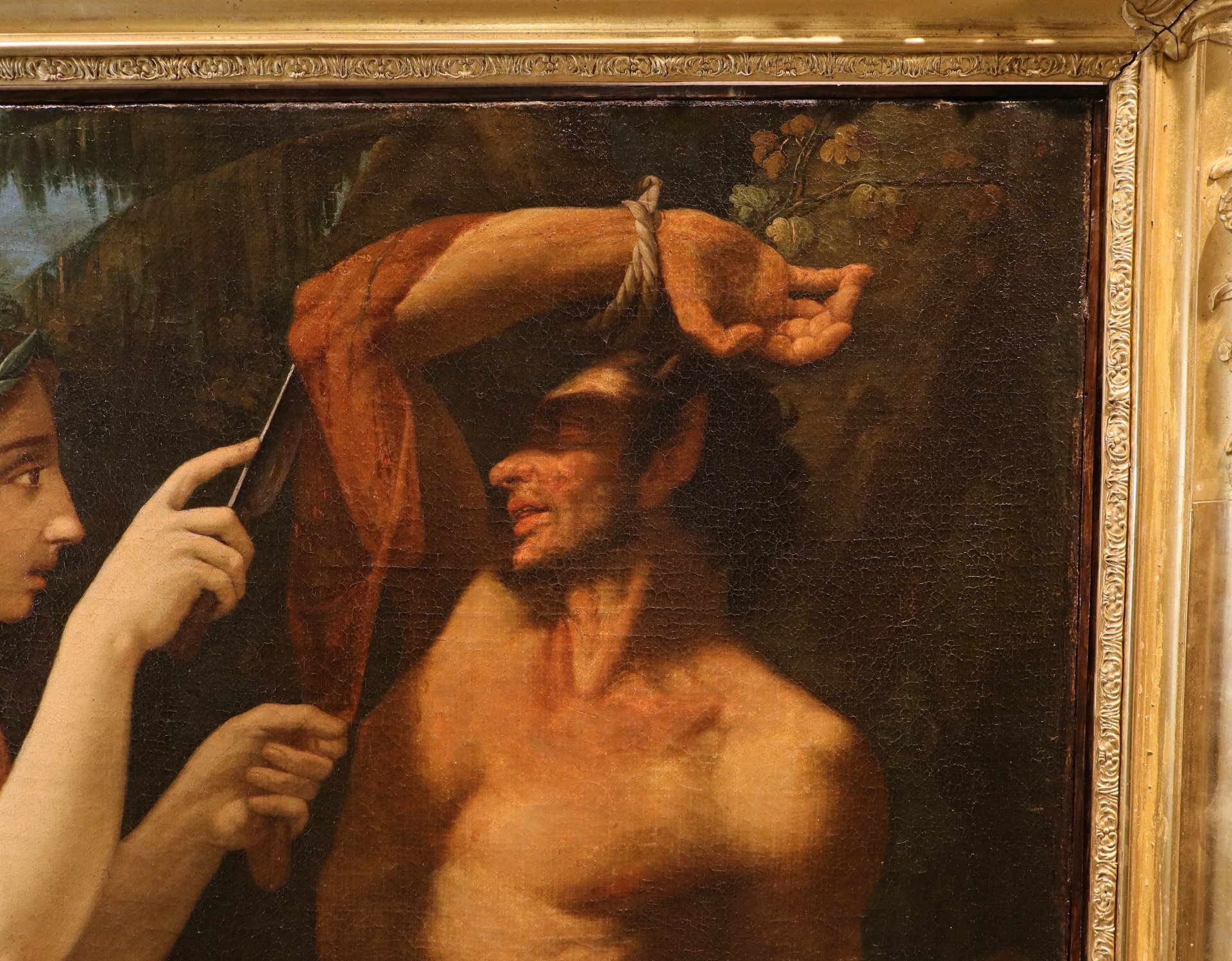
The scene, set in a wooded landscape, captures the most dramatic moment of the story, namely the execution of the punishment chosen by the vengeful Apollo, the winner of the contest: the god, recognizable by the laurel wreath and the bow on his back, holds a sharp instrument and grabs a piece of Marsyas' skin, tied to a tree trunk with his hands raised, to flay him alive.
The theme of Apollo and Marsyas was favored by artists between the 17th and 18th centuries due to its symbolic value, alluding to the struggle between celestial harmony, reason (personified by Apollo), and human pride (Marsyas), between rationality and pure passion; the punishment, although bloody, is a kind of purification rite: the skin represents the external appearance, which is removed to unmask vanity and reveal the true essence, in a painful but purifying process.
The work can be attributed to a neoclassical painter from the Roman school active in the 18th century, from the entourage of Pompeo Girolamo Batoni (Lucca 1708 – Rome 1787).
The defined drawing, the chromatic range, the compositional balance, and the plasticity of the anatomies reflect the 18th-century taste of the new vision of neoclassical art that also embraced mythological themes, and of which Batoni was a great exponent, with the abandonment of the baroque aesthetic, excessive and redundant, for a return to the principles of balance, composure, and serenity.
Originally from Lucca, Pompeo Batoni moved to Rome at the age of twenty, where within a few years he began to obtain commissions of great prestige, with an ever-increasing career that lasted over fifty years, and which saw him engaged, with the decisive collaboration of his children, in an impressive quantity of commissioned paintings.
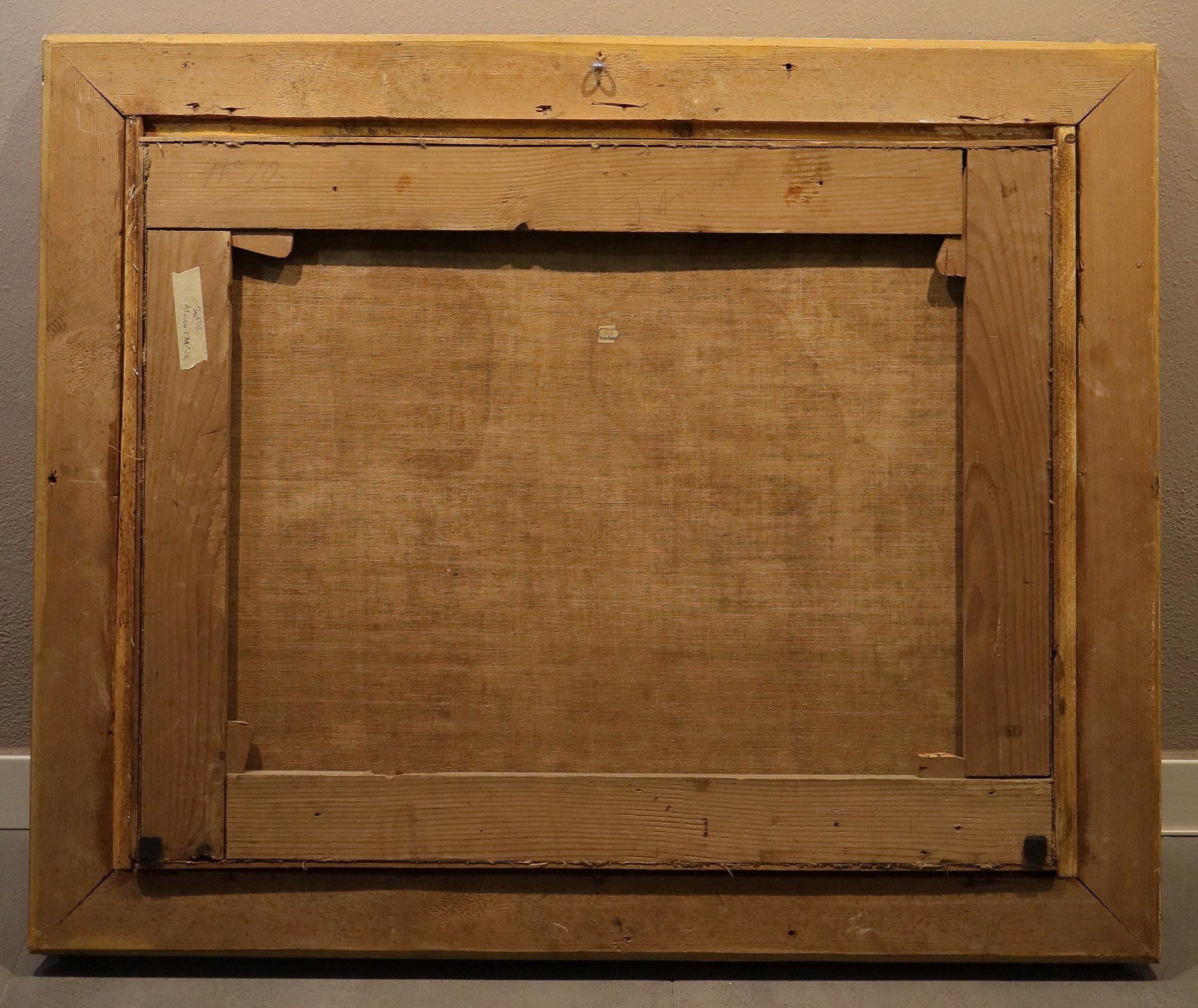
Excellent state of conservation, complete with a gilded frame.
ADDITIONAL INFORMATION:
The work is sold complete with a pleasant gilded frame and is equipped with a certificate of authenticity and a descriptive iconographic sheet.
We take care of and organize the transport of purchased works, both for Italy and abroad, through professional and insured carriers. It is also possible to see the painting in the gallery in Riva del Garda, we will be happy to welcome you to show you our collection of works.
Contact us, without obligation, for any additional information.
Follow us also on:
INSTAGRAM https://www.instagram.com/galleriacastelbarco/?hl=it
FACEBOOK https://www.facebook.com/galleriacastelbarco/