Description:
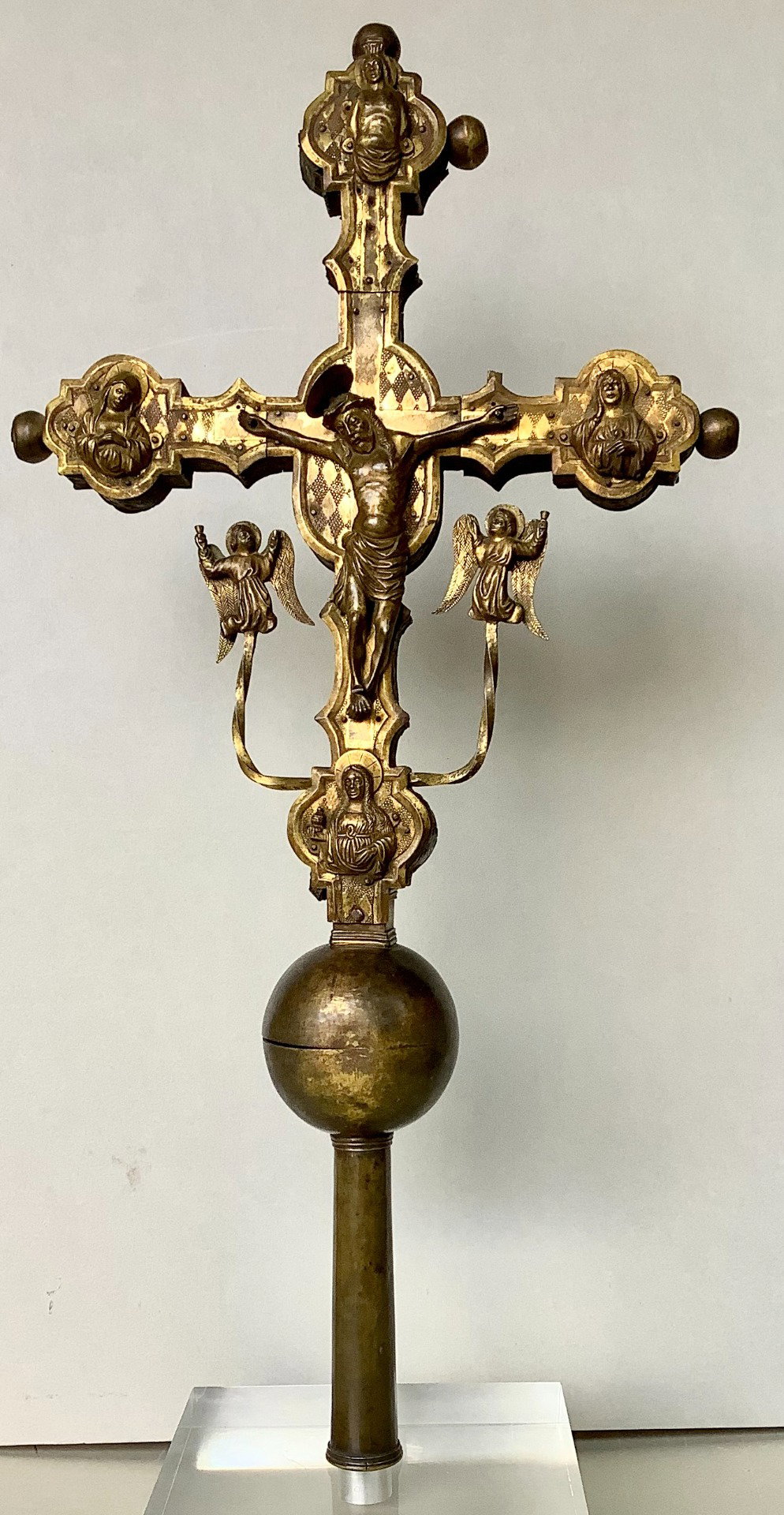
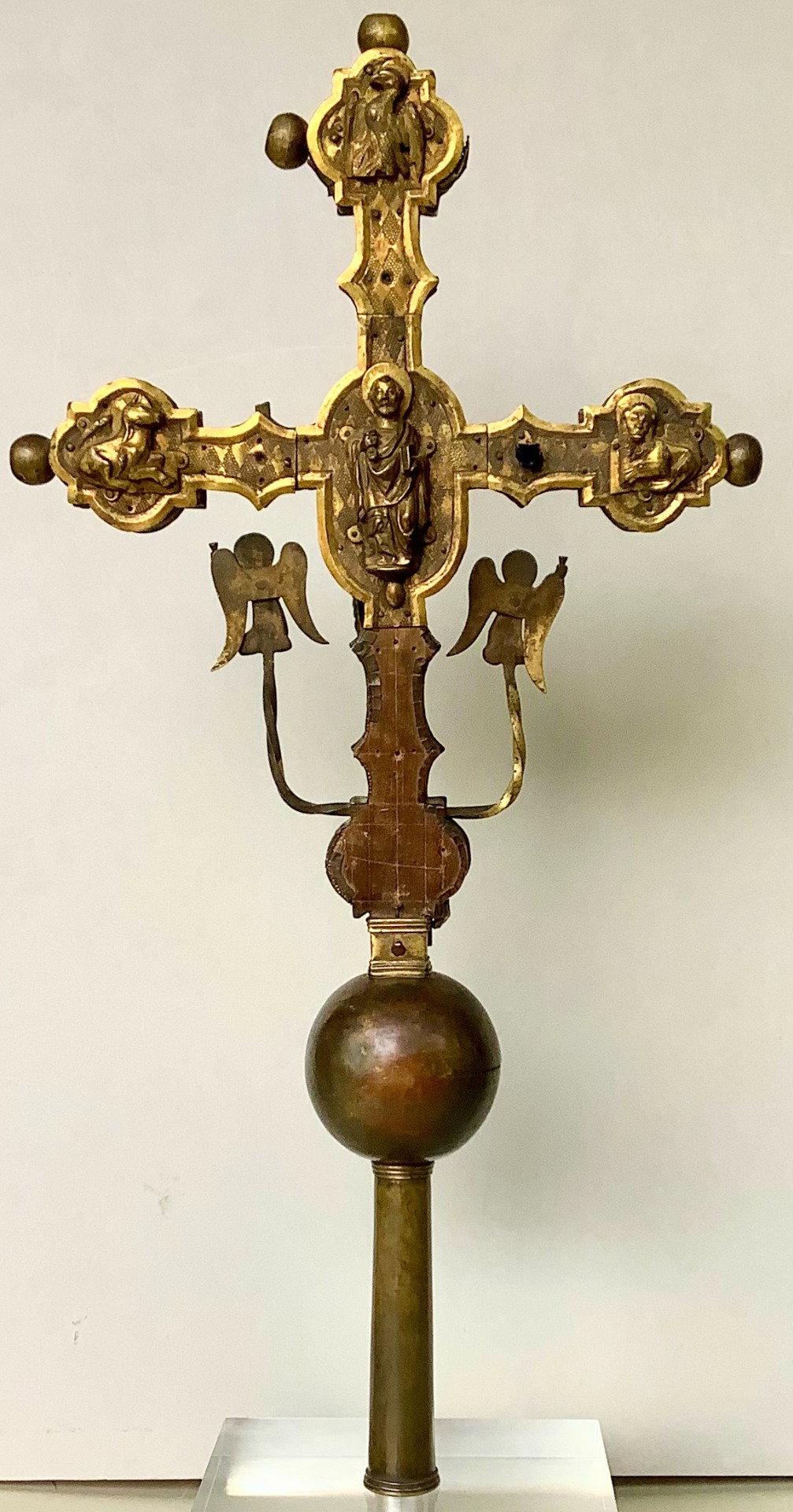
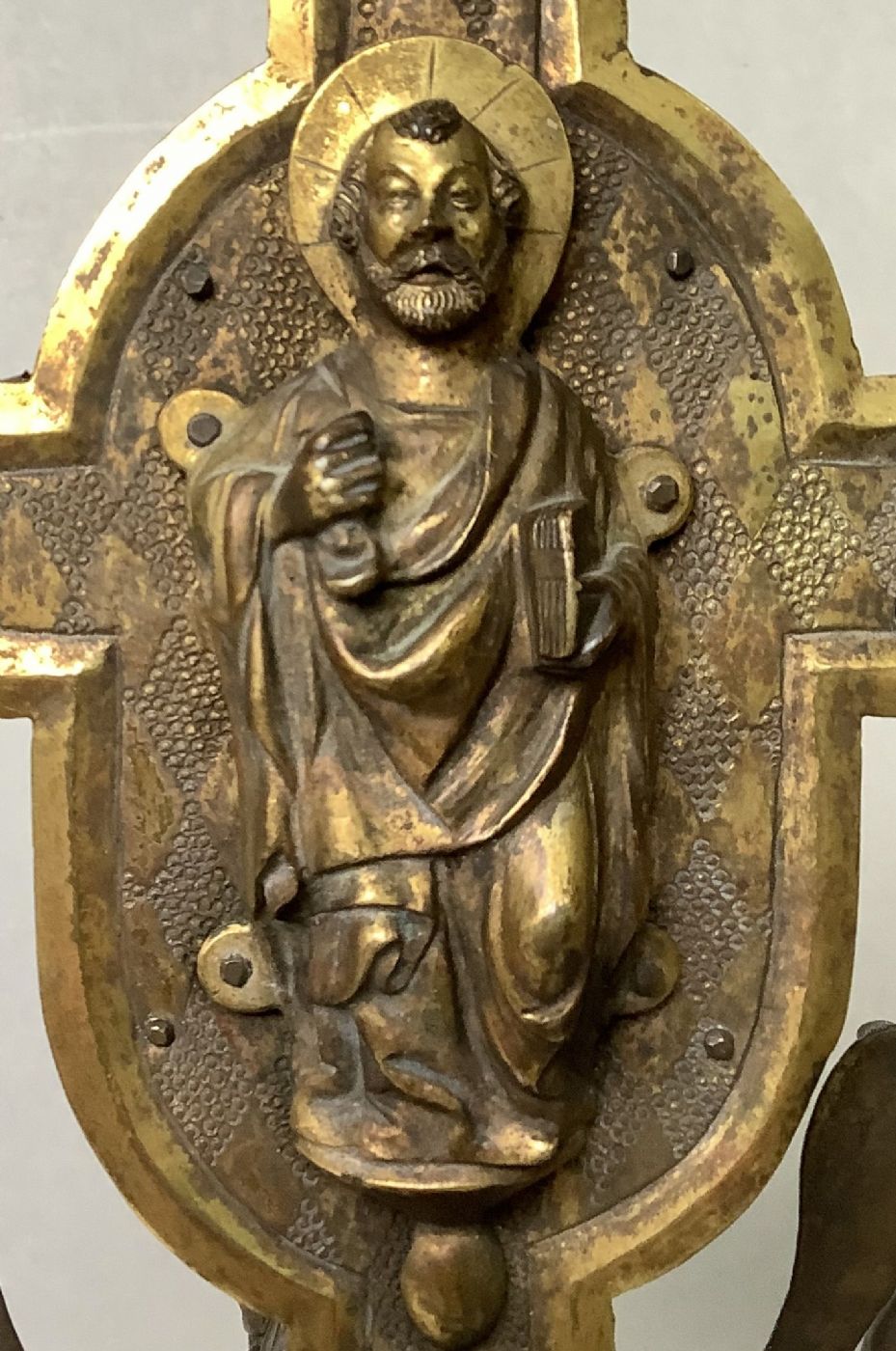
On a cross-shaped wooden structure, 5 plates are fixed with nails on the front and 4 on the back, all in embossed, chiseled and gilded copper foil; even the thick edge of the cross is entirely covered with a strip of embossed metal (except for 2 small gaps on the upper vertex). The total height is 87.5 cm x width 33.5 cm (horizontal arm).
The structure is populated by 7 sacred bronze images applied on the front and 4 on the back, specifically:
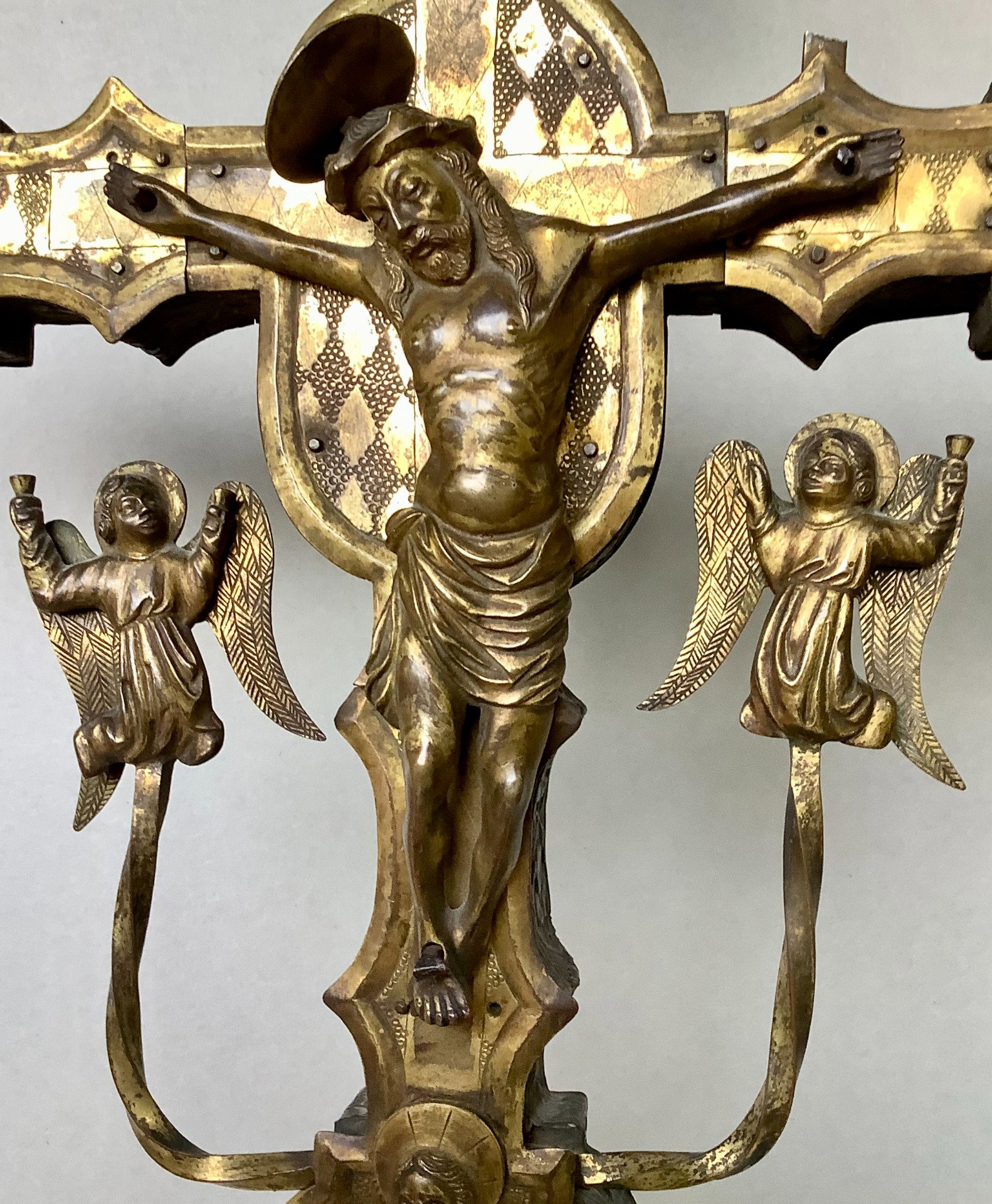
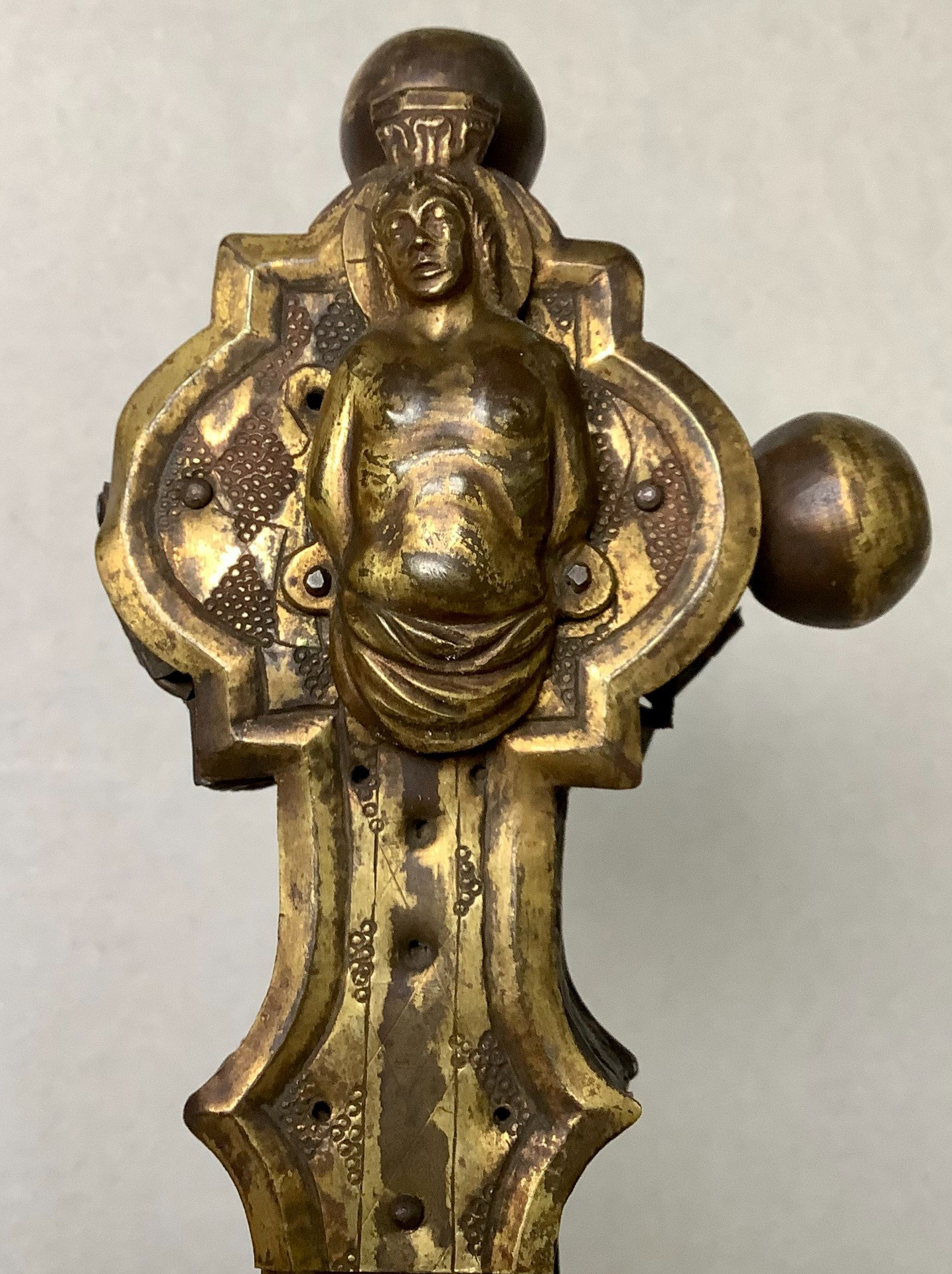
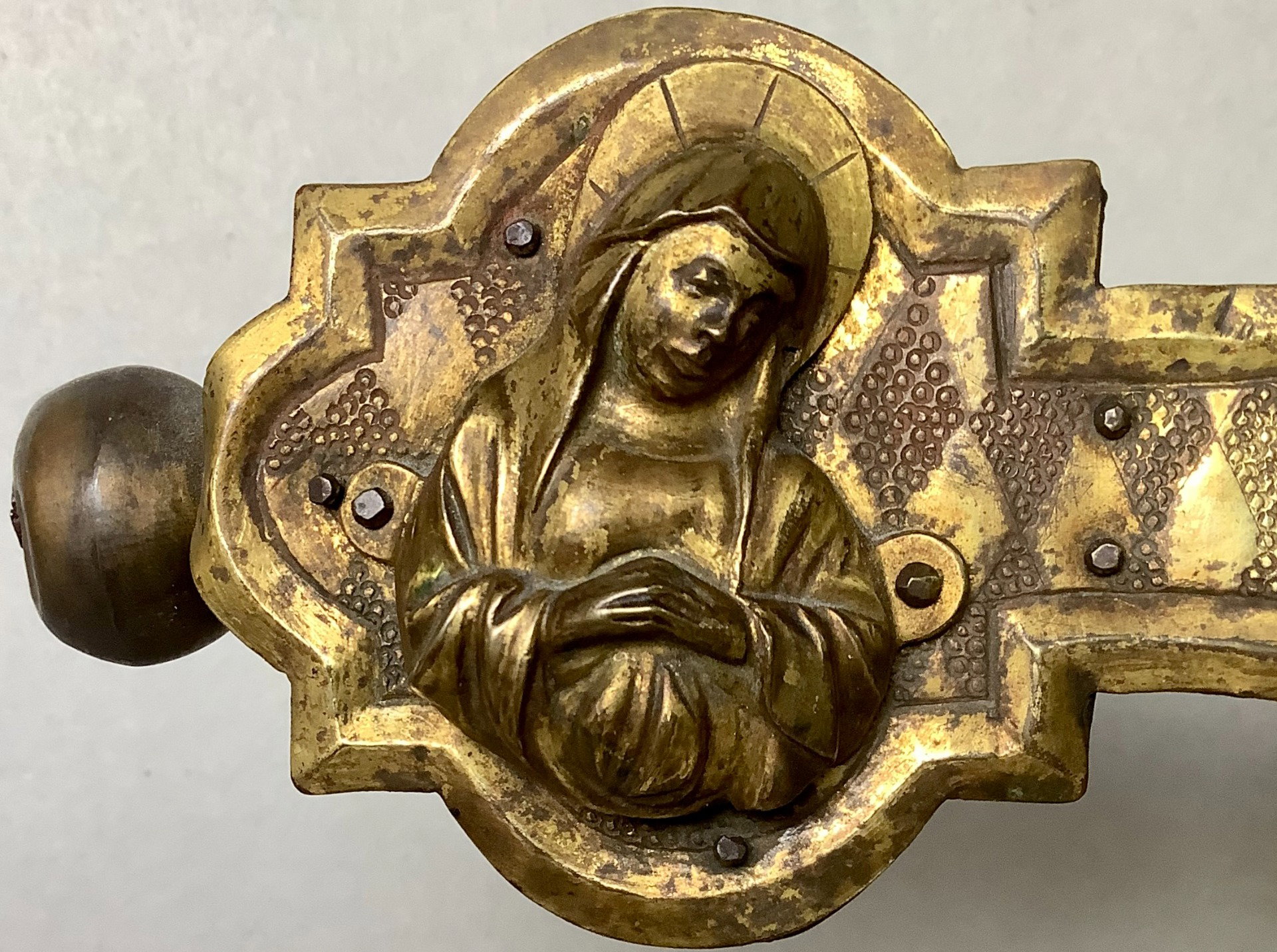
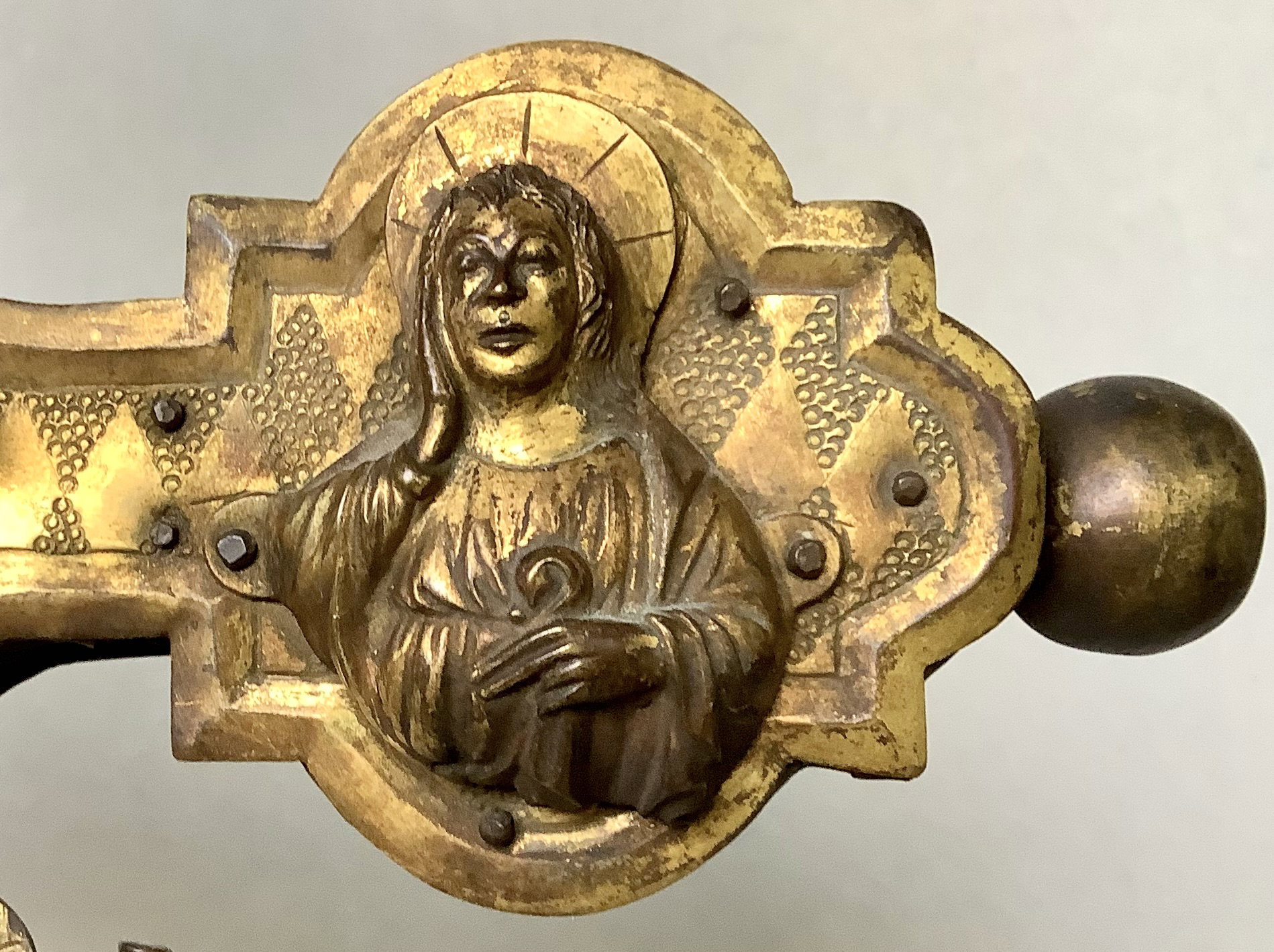
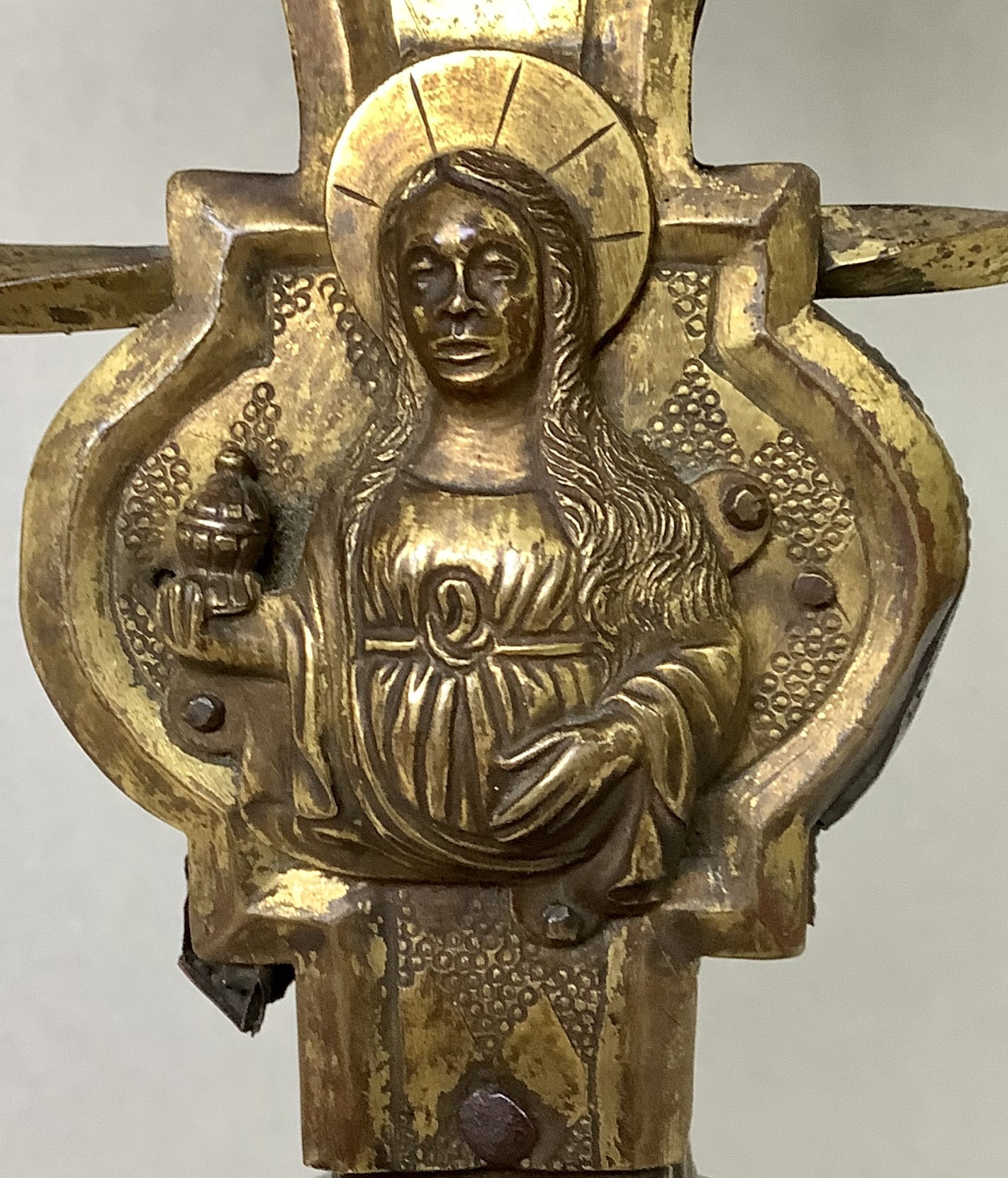
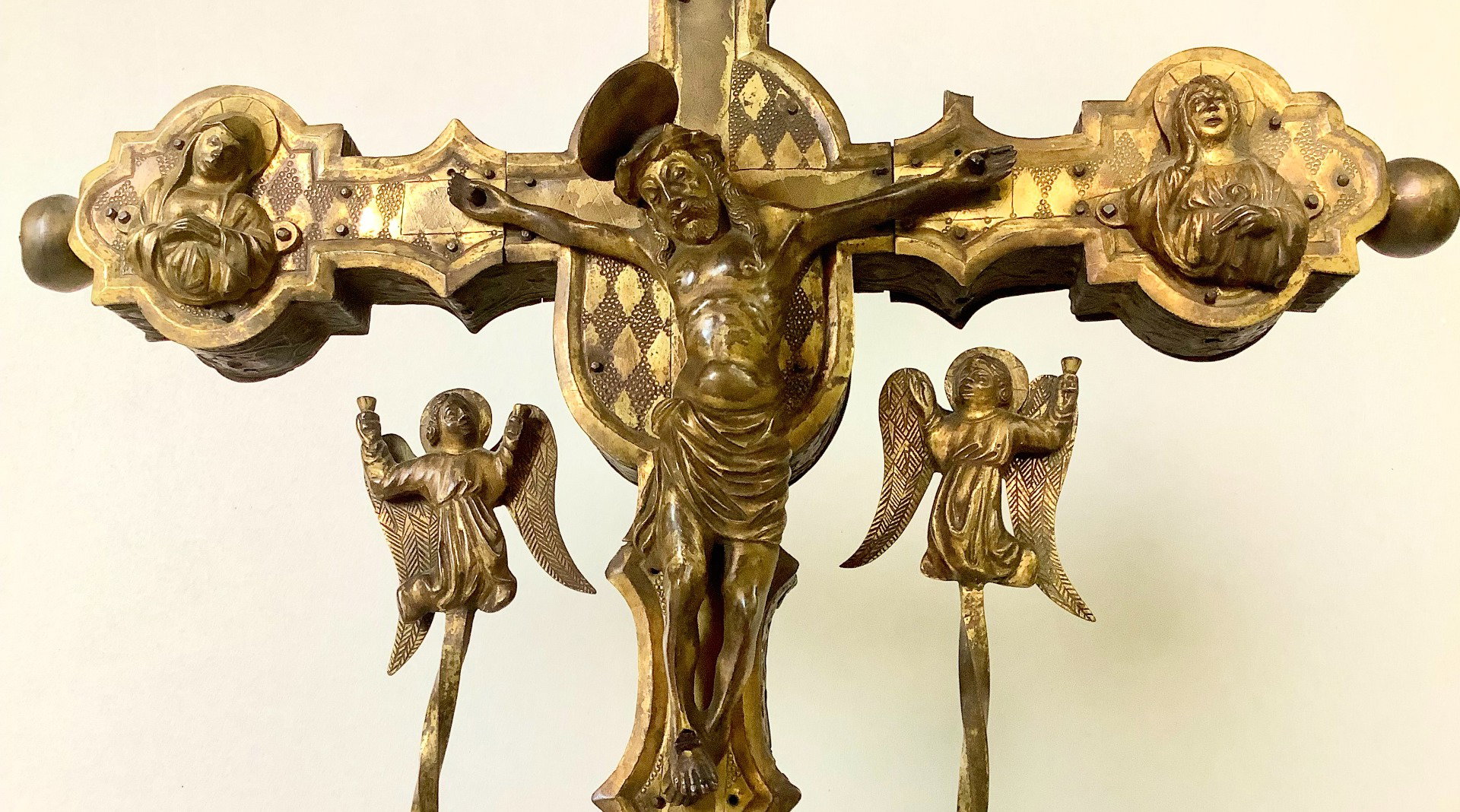
Front: Christ Crucified in the center, and on the vertices: Saint Sebastian at the top, the Virgin Mary on the left, Saint John on the right, Mary Magdalene at the bottom; on the sides of Christ, two winged angels, supported by twisted and curved arms, hold chalices to collect the blood of the Crucified.
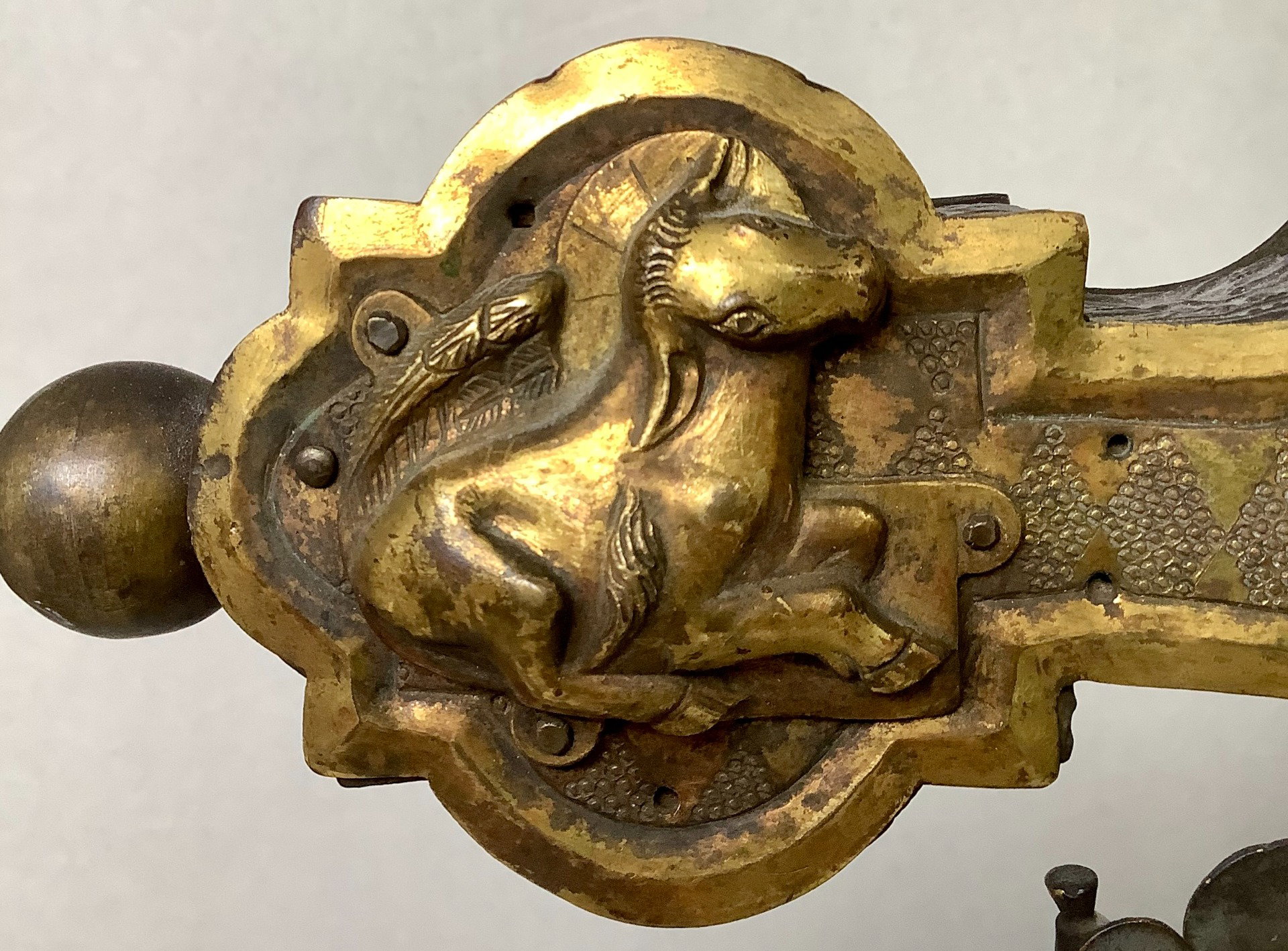
Back: Saint Peter in the center, and on the vertices the symbols of the Evangelists: the Eagle of Saint John at the top, the bull of Saint Luke on the left, the lion of Saint Mark on the right, while the Angel of Saint Matthew is missing at the bottom.
In addition to this last figure, the structure is missing some of the small spheres that marked the arms of the cross, and probably also the titulus above Christ's head.
It should be noted that all 11 figures on both sides of the cross have not undergone modifications or replacements compared to the original placement and are in a good state of conservation.
With a small square connection, the lower arm is grafted onto the traditional spherical node, under which there is the tubular element that housed the rod for the processional use of the cross.
For precise cultural and chronological identification, it is useful to consider some characteristic stylistic features, such as the arms of the cross that expand into acute points and are connected by a central elliptical element, ending with mixtilinear lobes; there is also a particular and typical decorative element consisting of the engraved background with alternately smooth and granulated lozenges.
These elements allow us to date the cross to around the middle of the fifteenth century, and to attribute it to a capable Lombard goldsmith refined in the creation of liturgical goldsmithing; more specifically, it can be assumed that the production area can be circumscribed in the northern part of Lombardy, most likely in the diocese of Como.