Description:
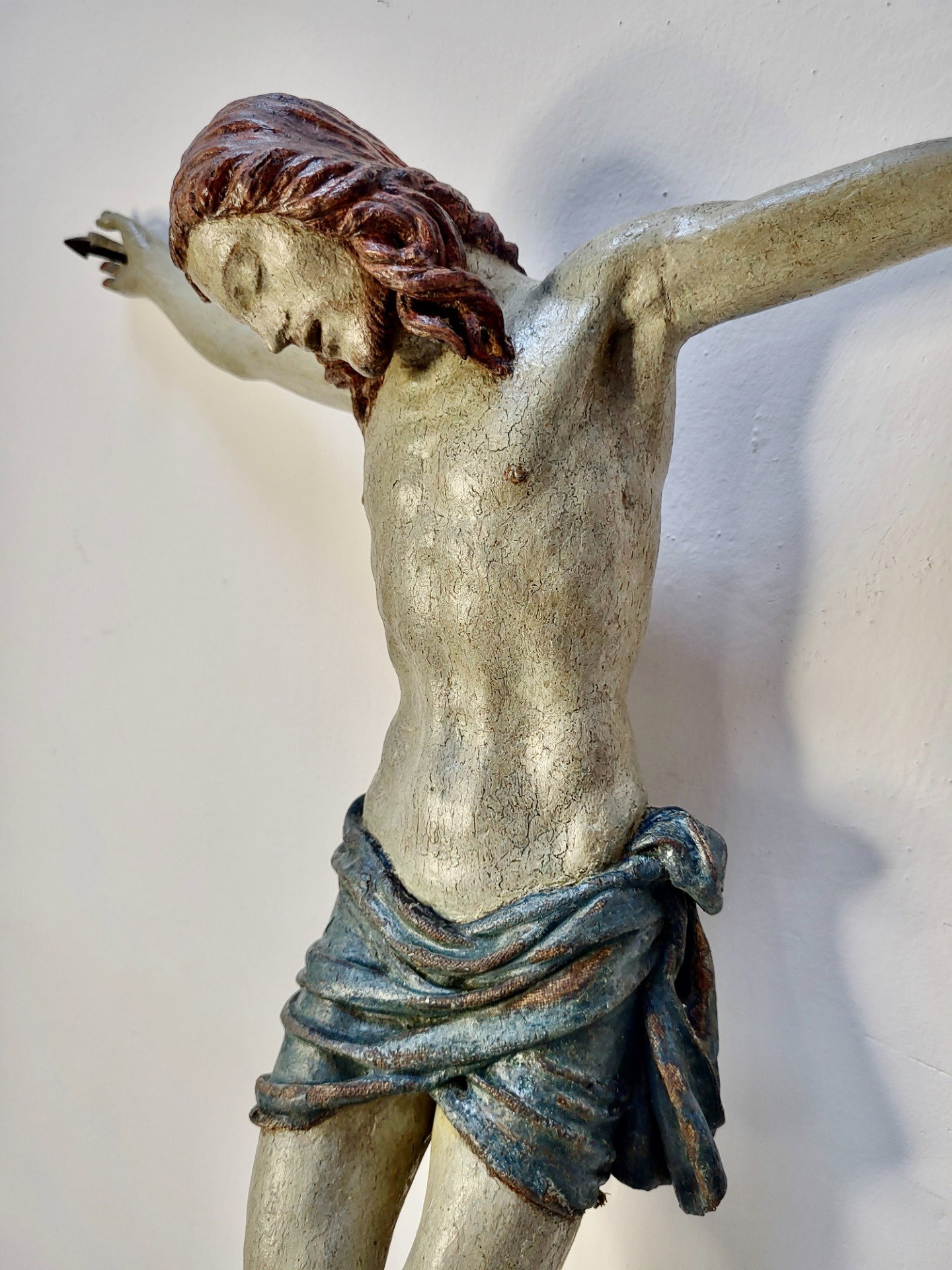
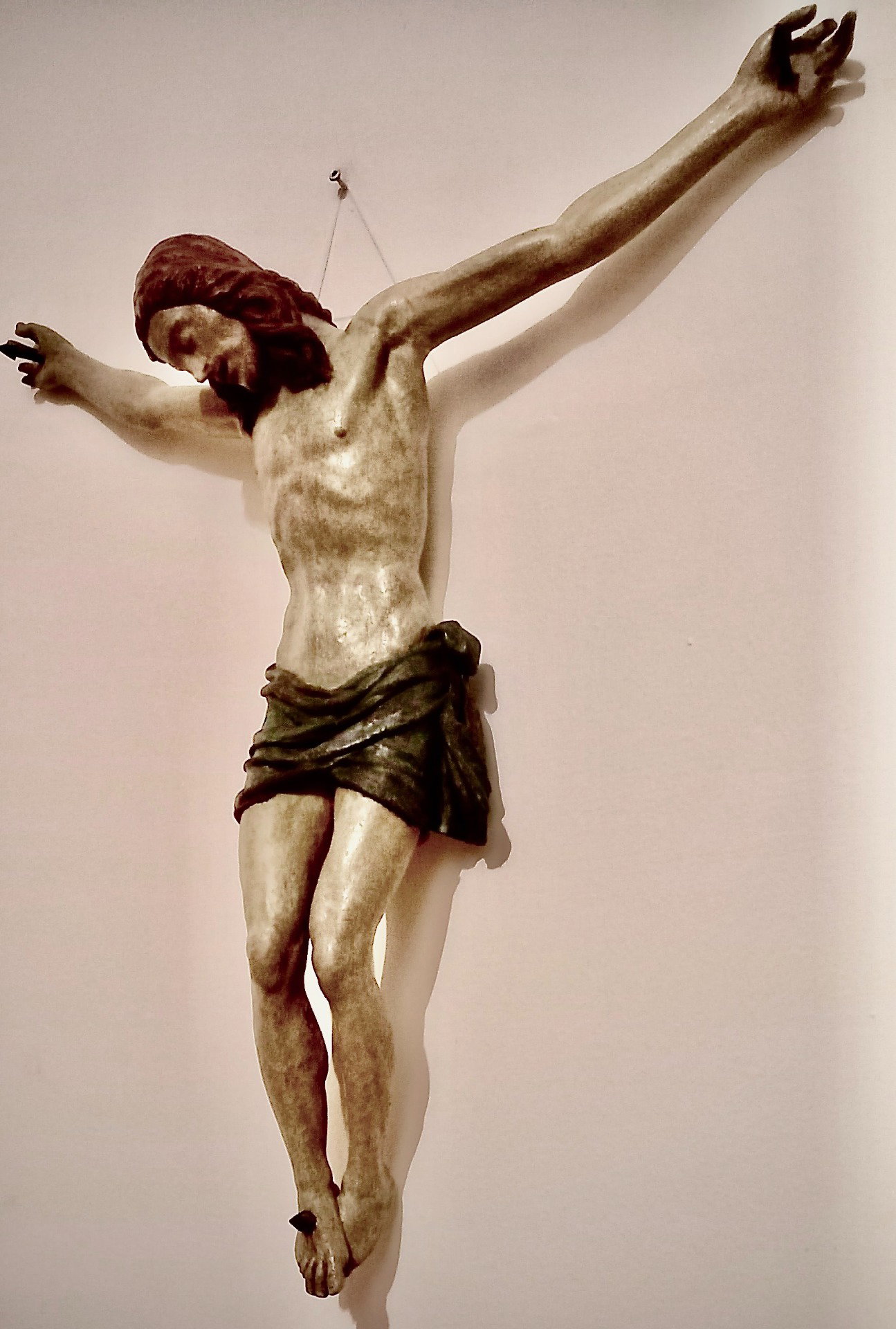
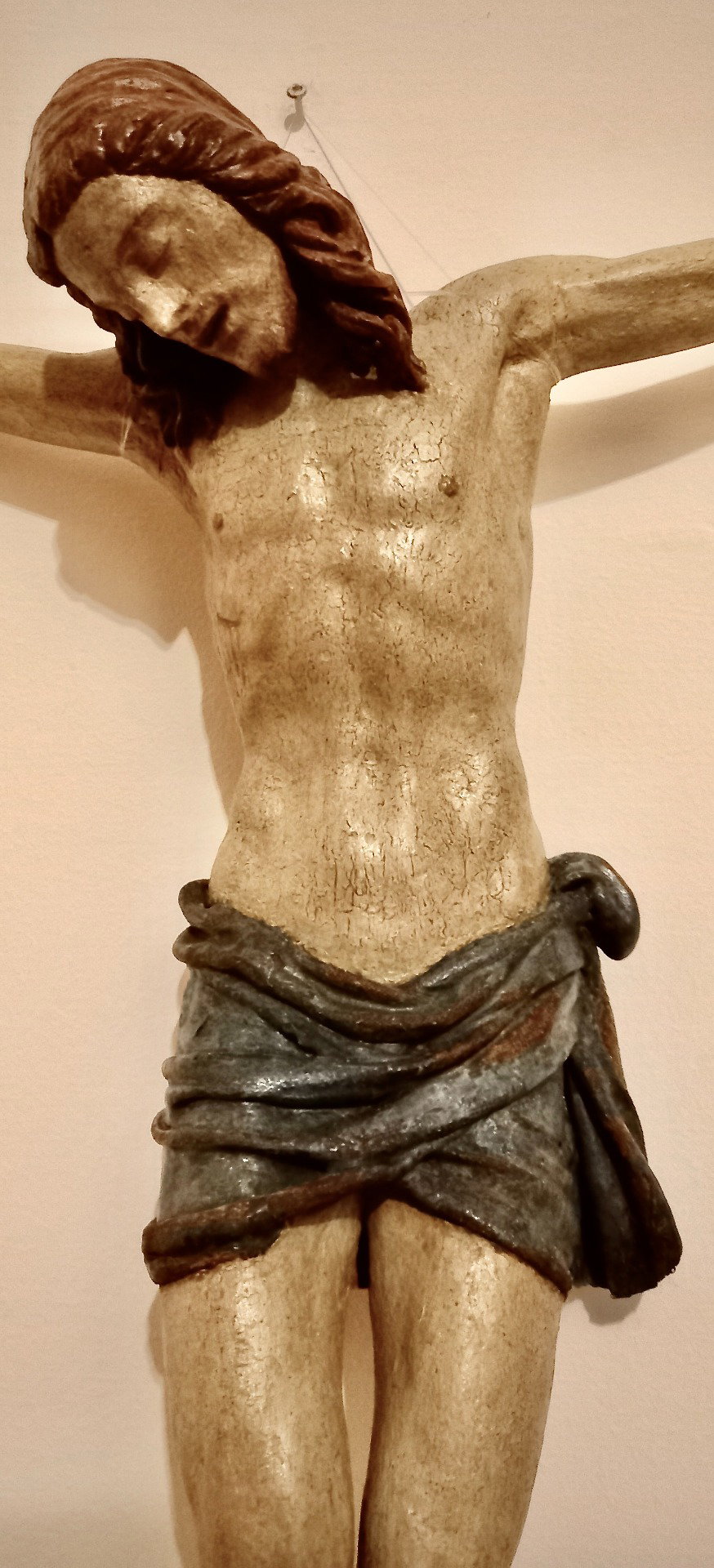
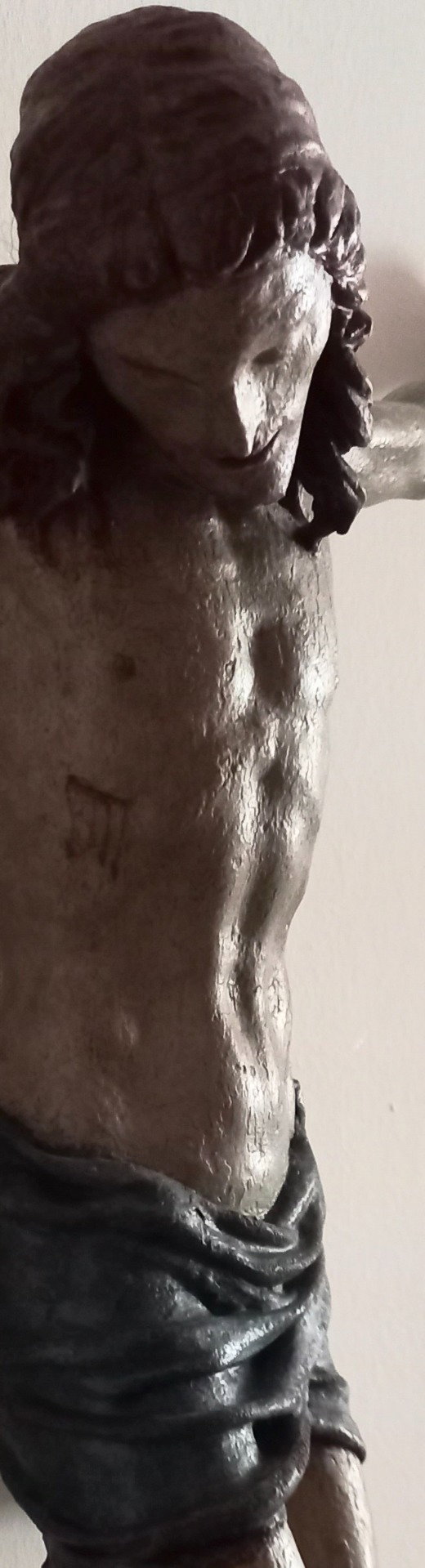
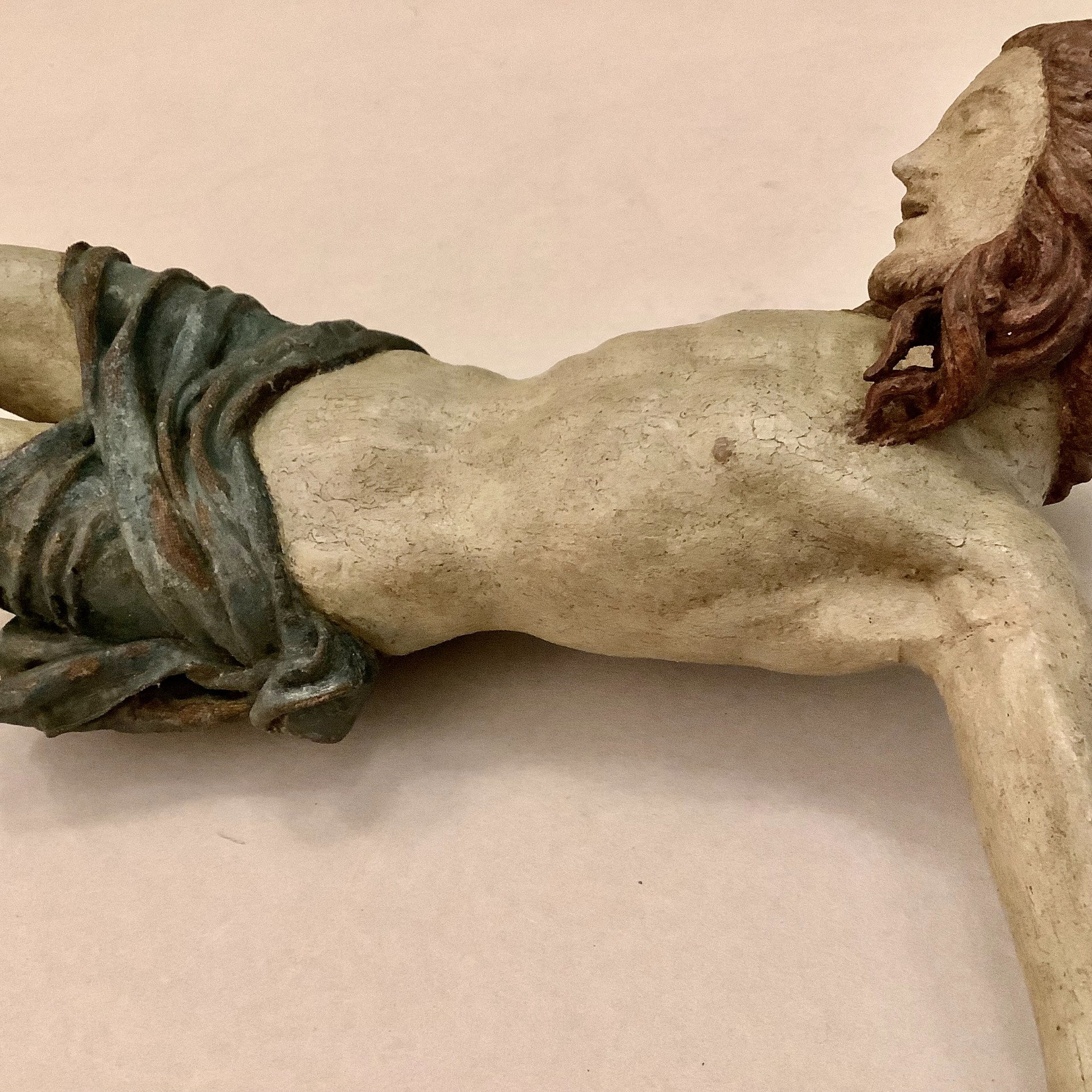
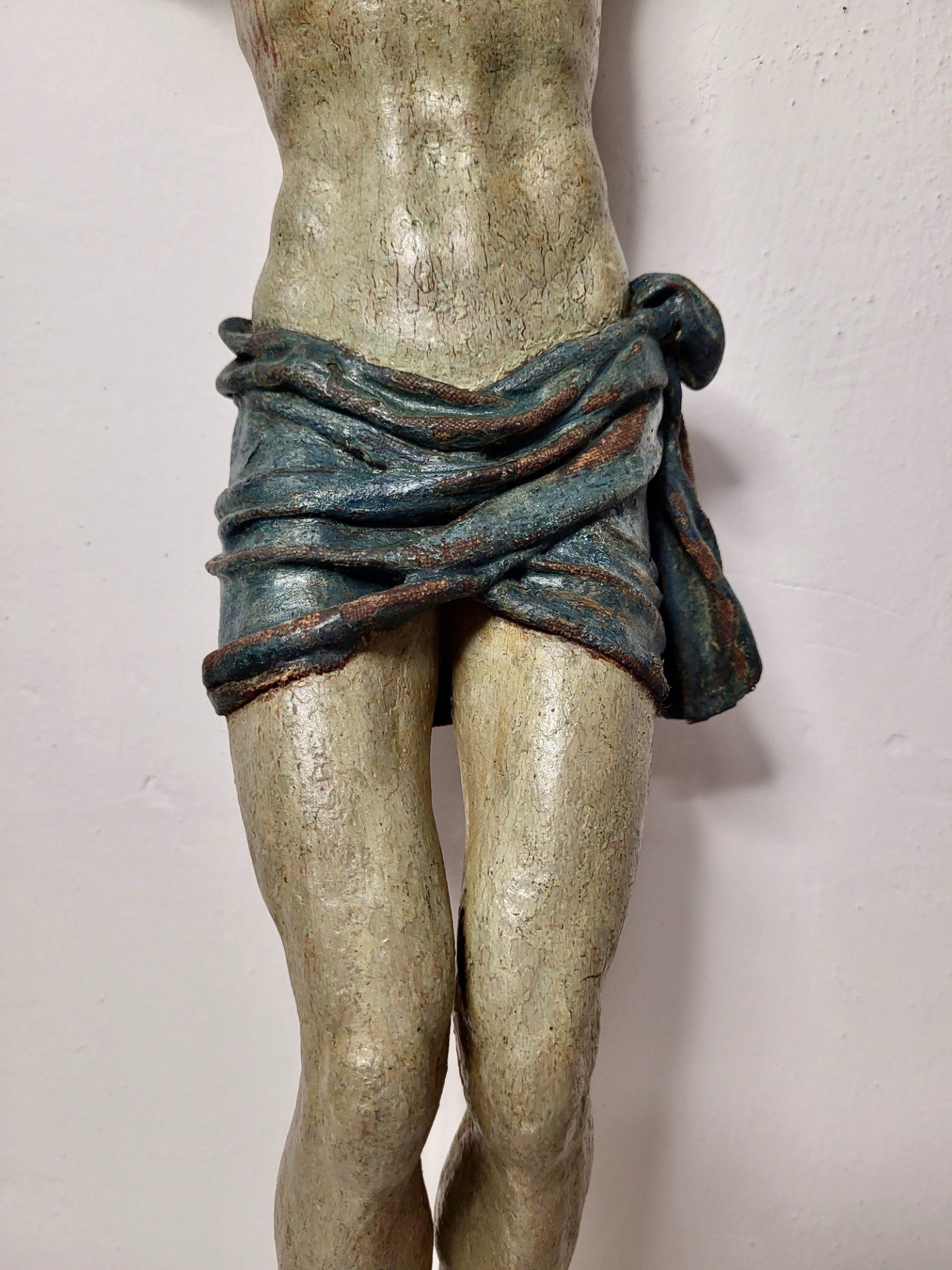
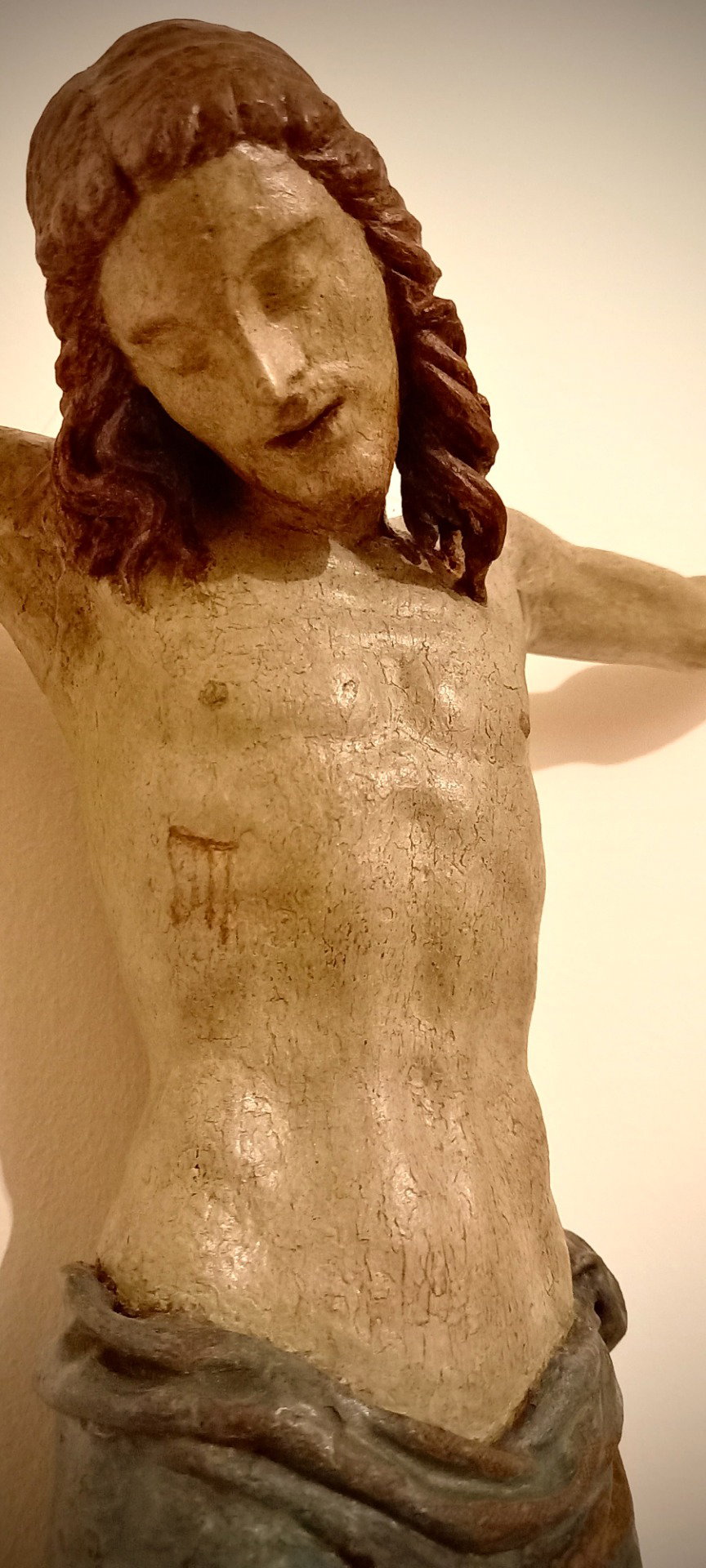
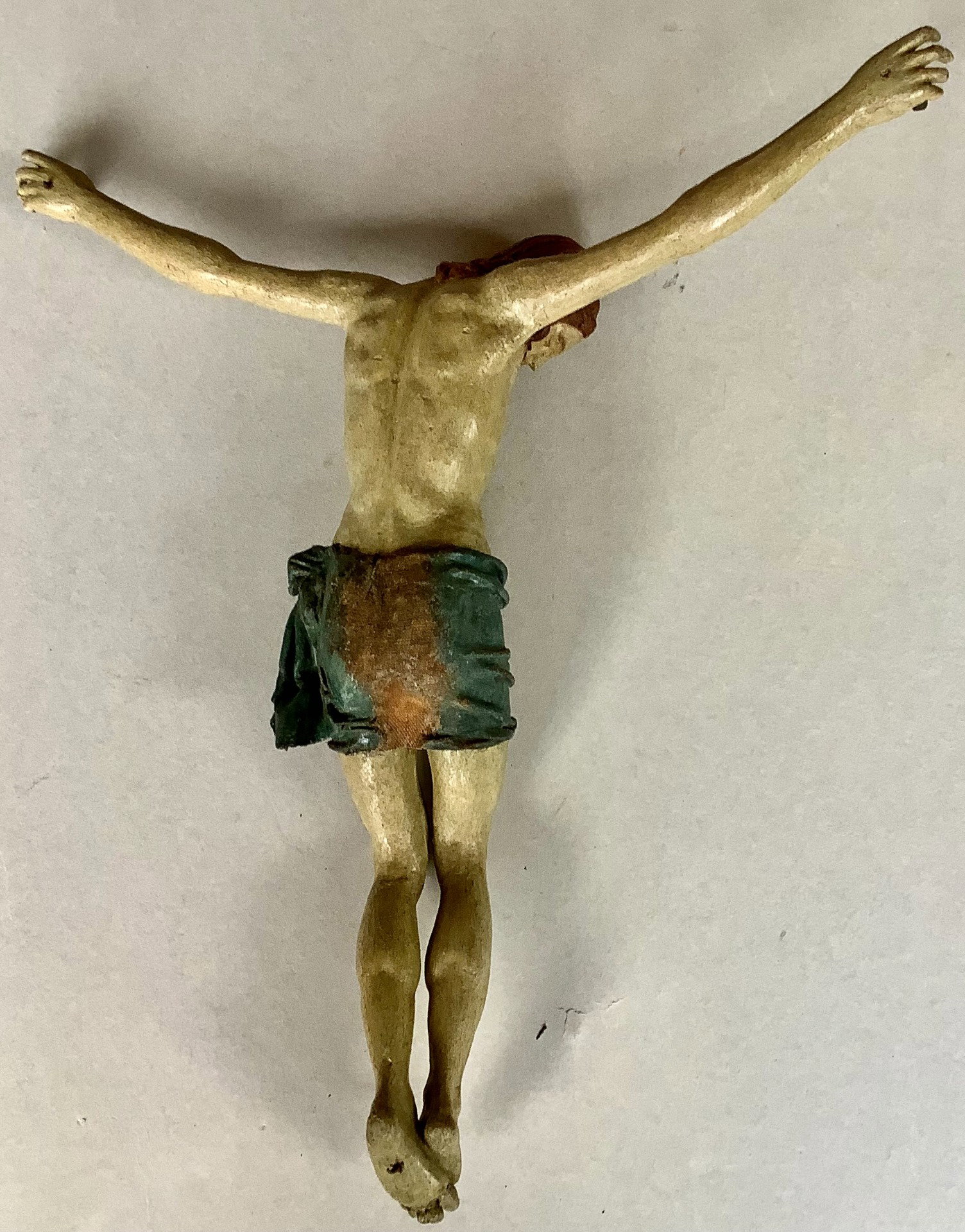
Crucified Christ, late fifteenth century, linden wood sculpture, 46x46 cm (Vitruvian canon), characterized by a composed and solemn frontal pose, slender musculature and a gessoed cloth loincloth, delicate limbs, a face with subtle features and a parted mouth, not burdened by an expression of suffering.
The sculpture presented here constitutes a new and important addition to the catalog of Leonardo del Tasso, an authoritative exponent of the famous family of Florentine artists, a close and qualified collaborator of Benedetto da Maiano, from whom he had inherited the workshop "nella via de’ Servi" in 1497.
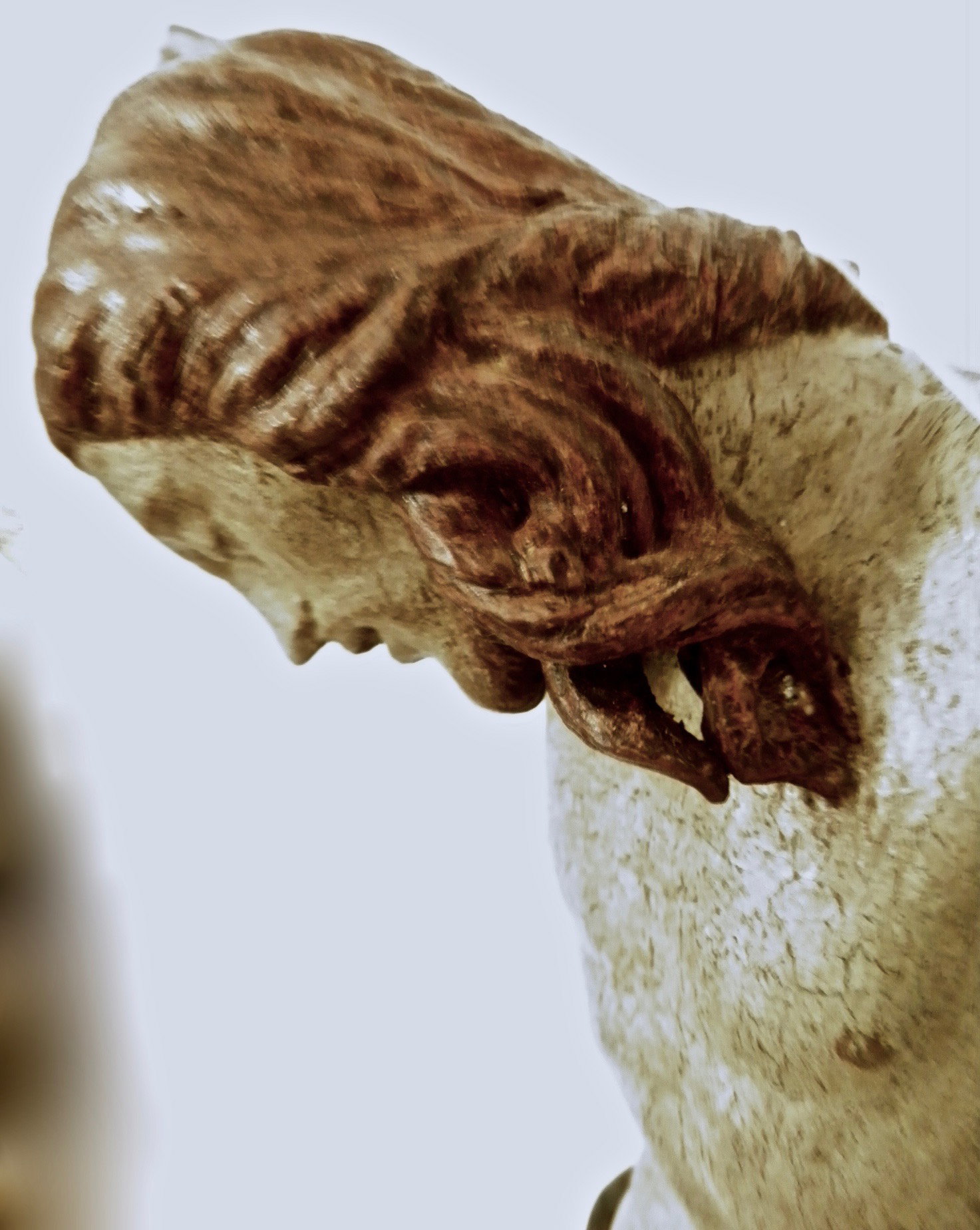
The Maianesque matrix is attested in the quiet dying Christ and in the soft rendering of the musculature without tensions; it differs instead in the position of the head, almost resting on the right shoulder, and in the hair parted in locks and carved with vigor as if they were tangled snakes, sophisticated in the spiral-twisted falls, which frame a face with sharp features, the pointed forked beard, the fleshy lips parted, the elongated eyes with the lowered eyelids.
Through a wood processing sensitive to the soft chiaroscuro transitions, Leonardo del Tasso becomes an interpreter of an iconography that differs from the fifteenth-century tradition, favoring an image of the Crucified One not disfigured by pain, a witness to a sense of serene death in entrusting oneself to God.
The gessoed cloth loincloth knotted on the adherent abdomen enhances its plasticity, while the accurate carving explains the thin imprimatura (gesso and glue), on which a thin layer of polychromy is spread; a skillful restoration carried out by Dr. Anna Fulimeni in her studio in Florence has restored in particular the ash-colored polychromy of the flesh tones.
The specimen under examination falls within a 'corpus' of crucifixes datable between 1495 and 1500 that replicate the leading model, today at the National Museum of the Bargello in Florence (the so-called "Cristo Gallino") identified by Gentilini in the Crucifix attributed to Michelangelo around 1495, but attributed by others to Leonardo del Tasso himself.
The work is accompanied by a historical-critical sheet prepared by the Art Historian, author of the most recent and complete studies on Leonardo del Tasso.