Description:
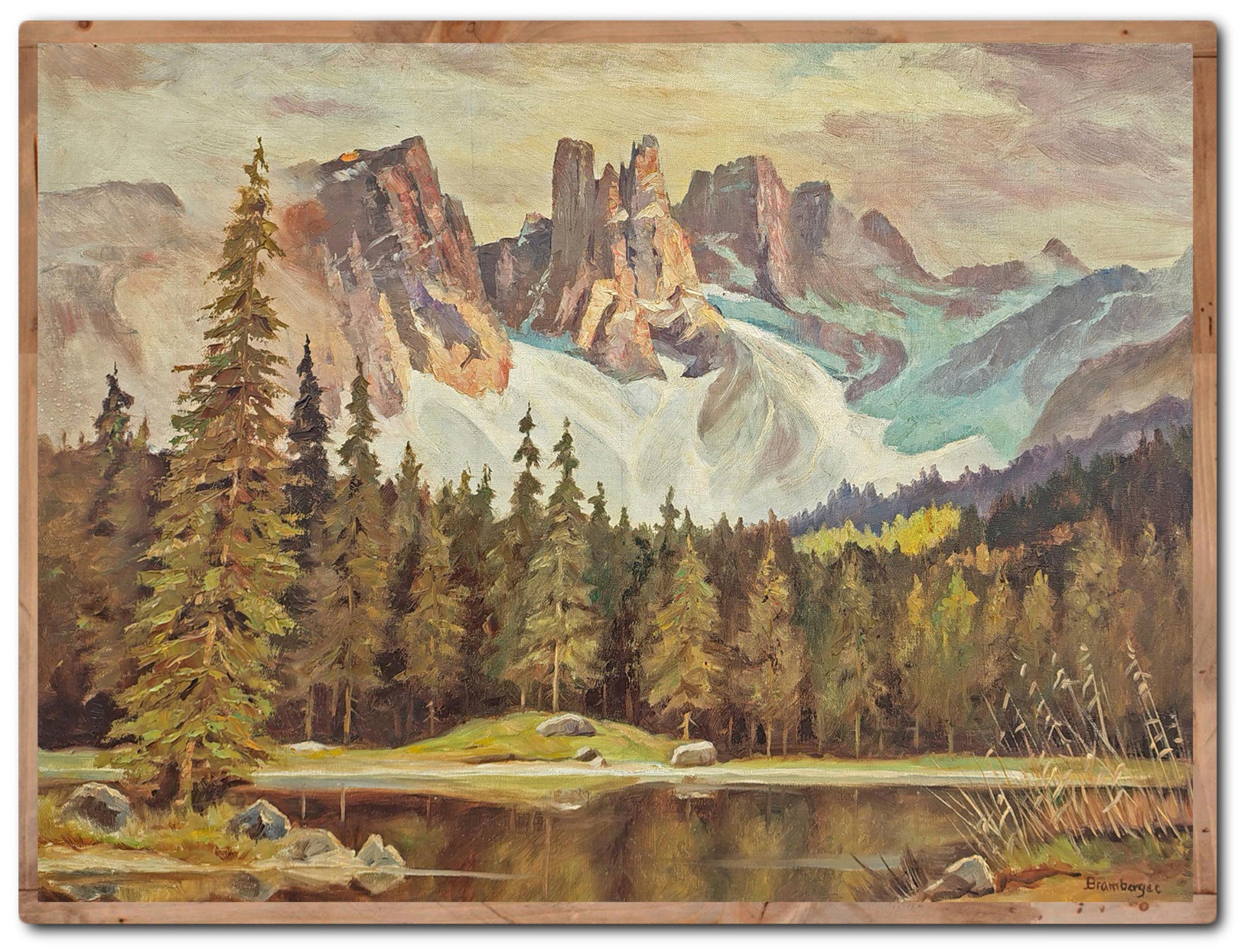
Lake Carezza and Latemar
Technical information:
Era: 1940s – 50s of the twentieth century
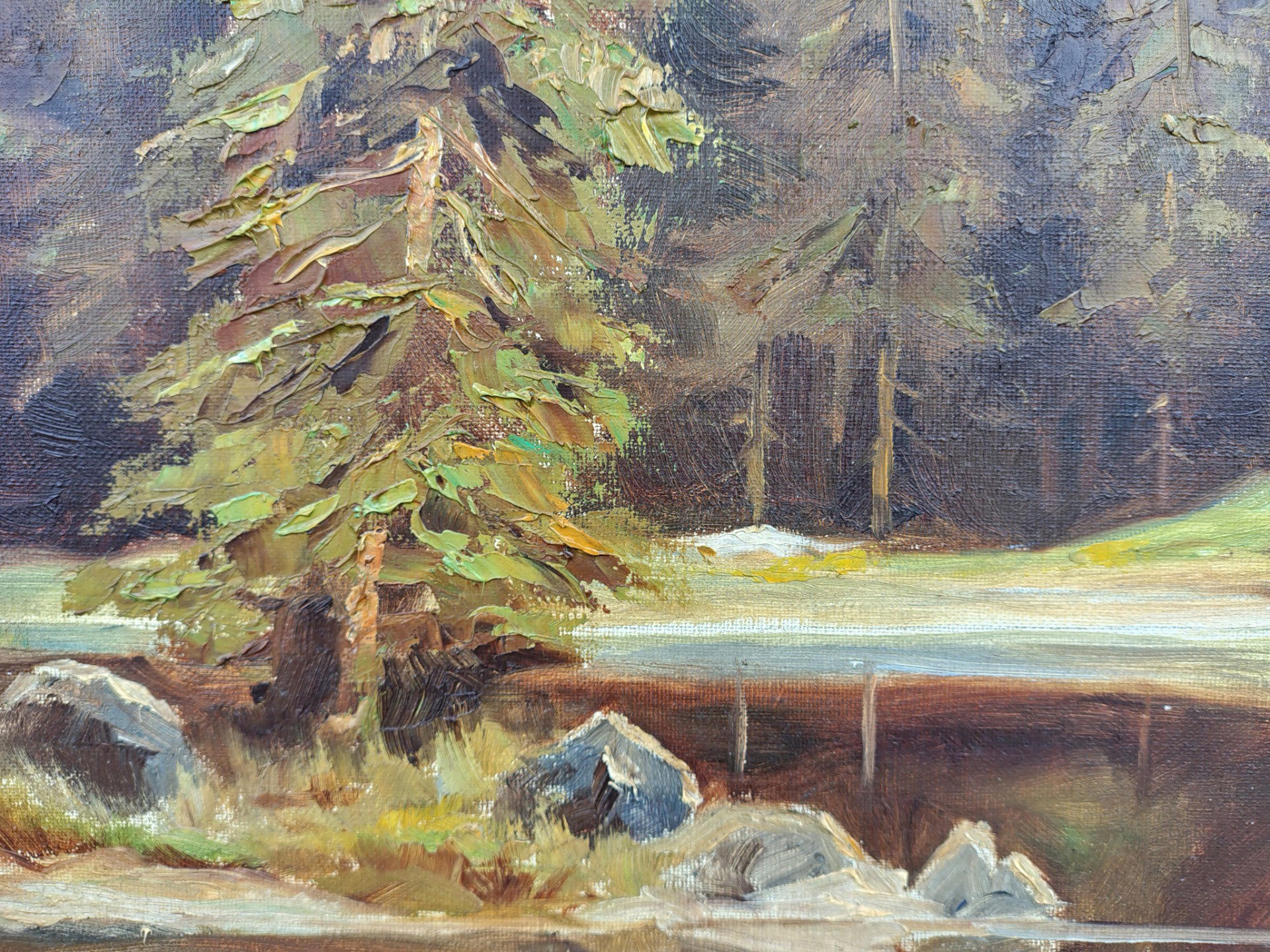
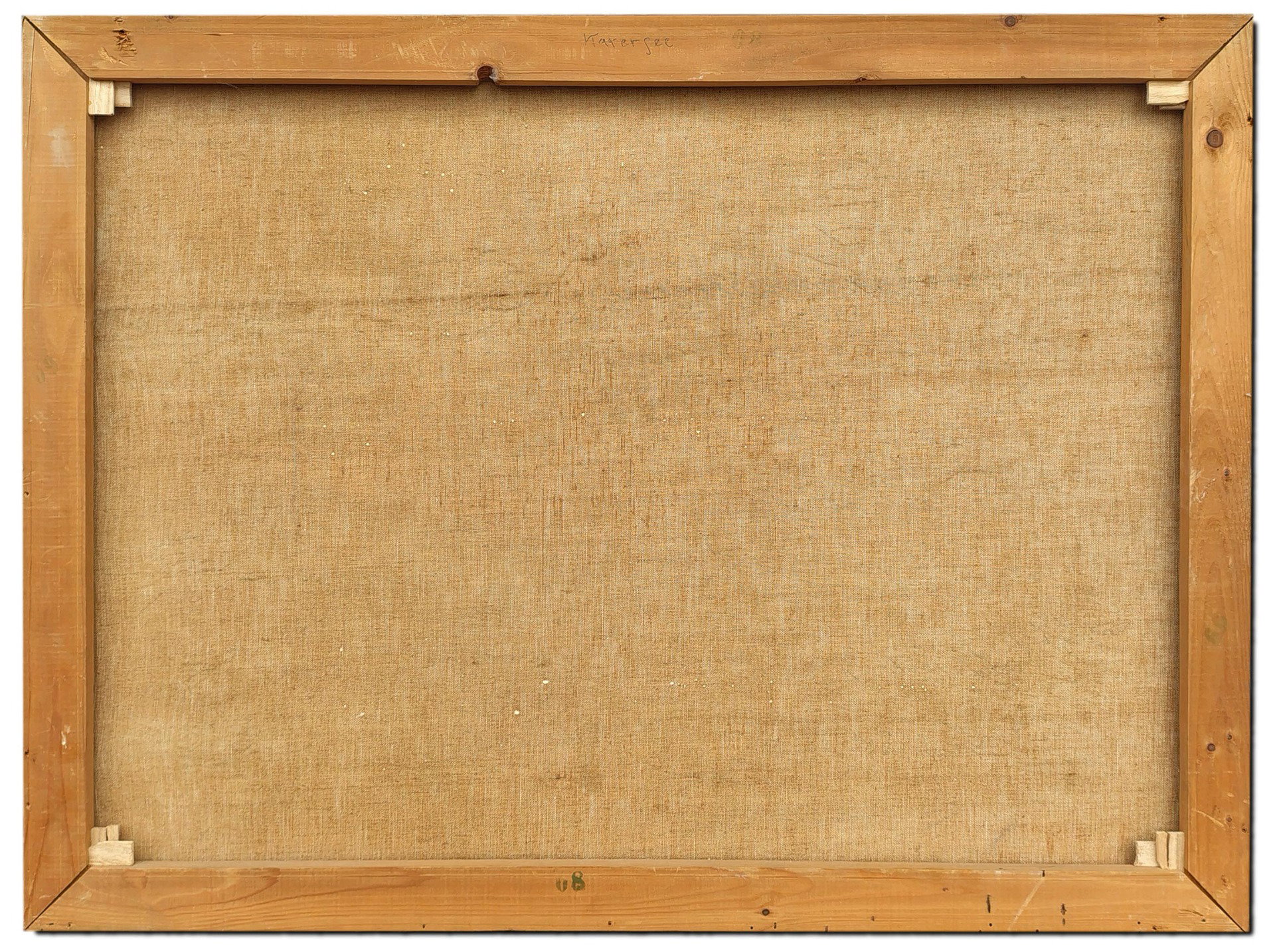
Technique: oil on canvas, spatula and brush
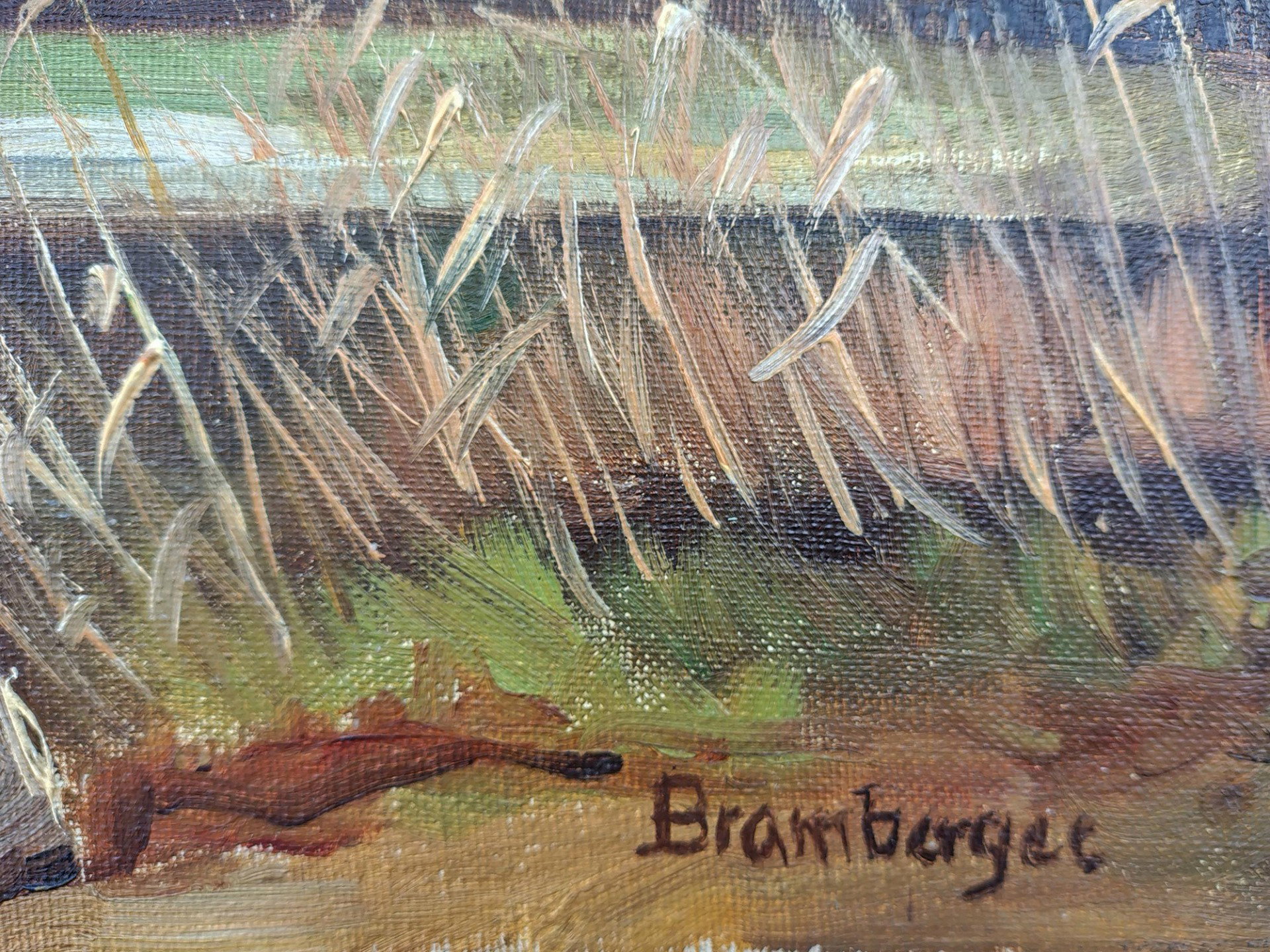
Author: Bramberger
Height: 60 cm
Width: 80 cm
Description:
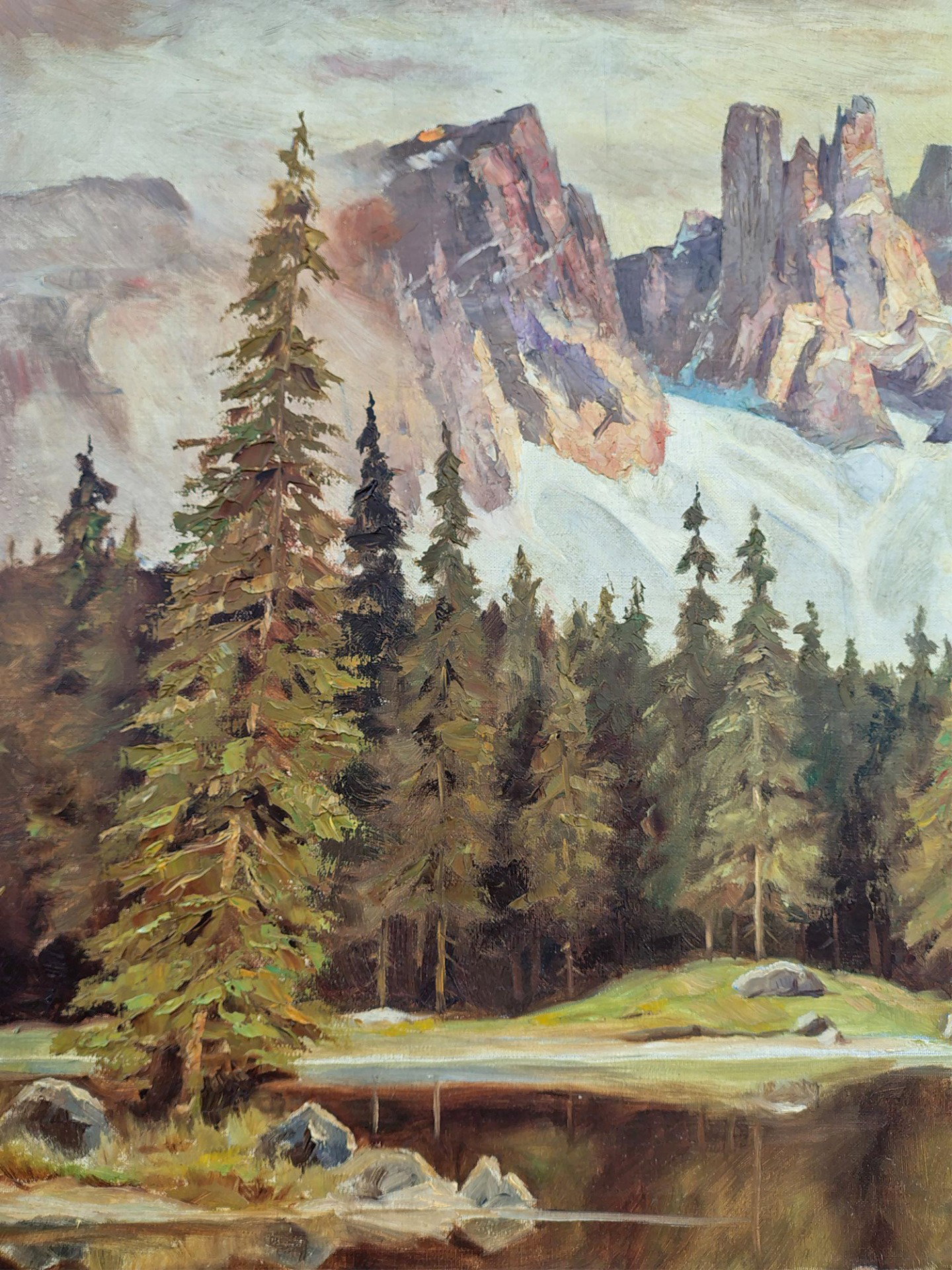
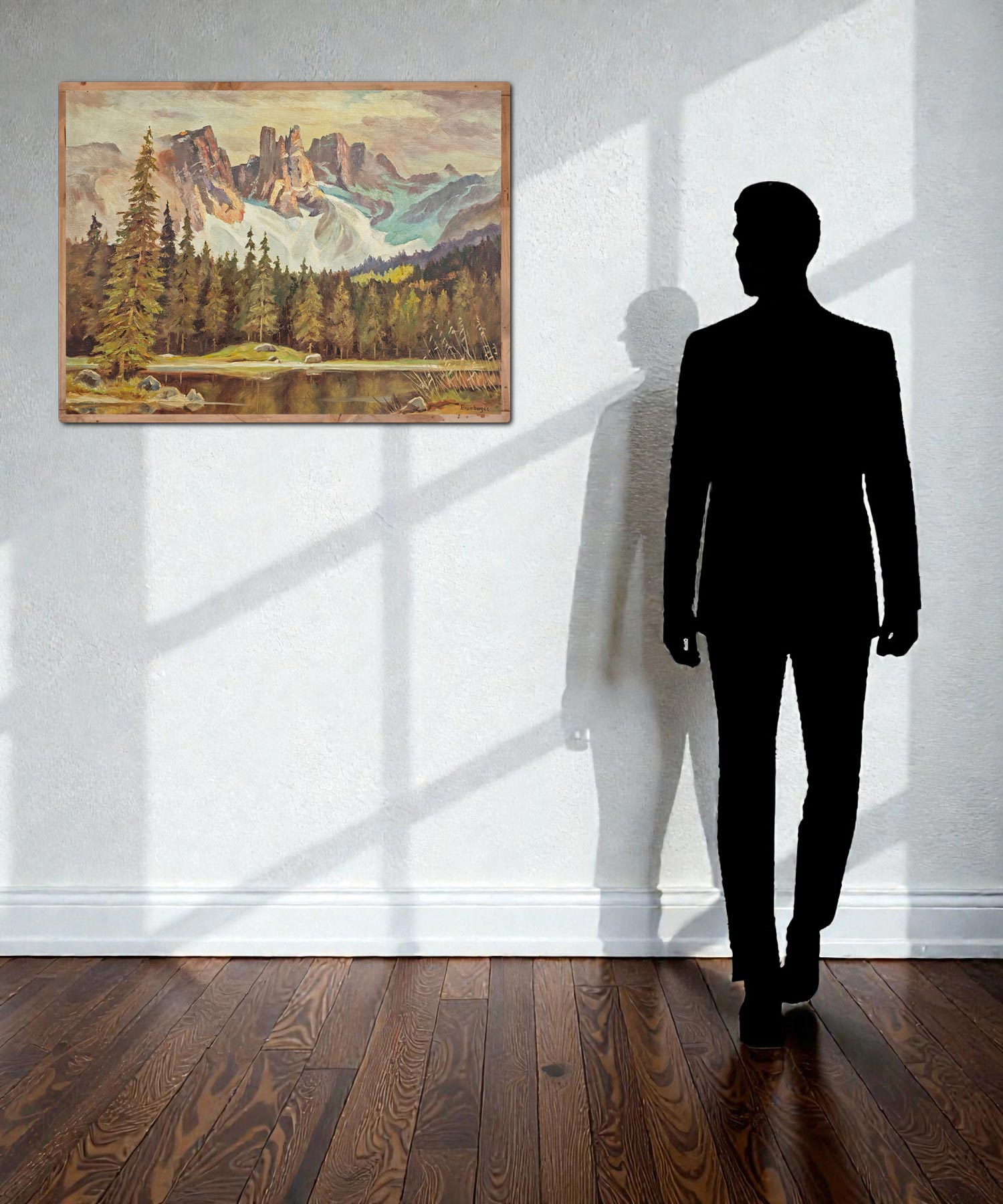
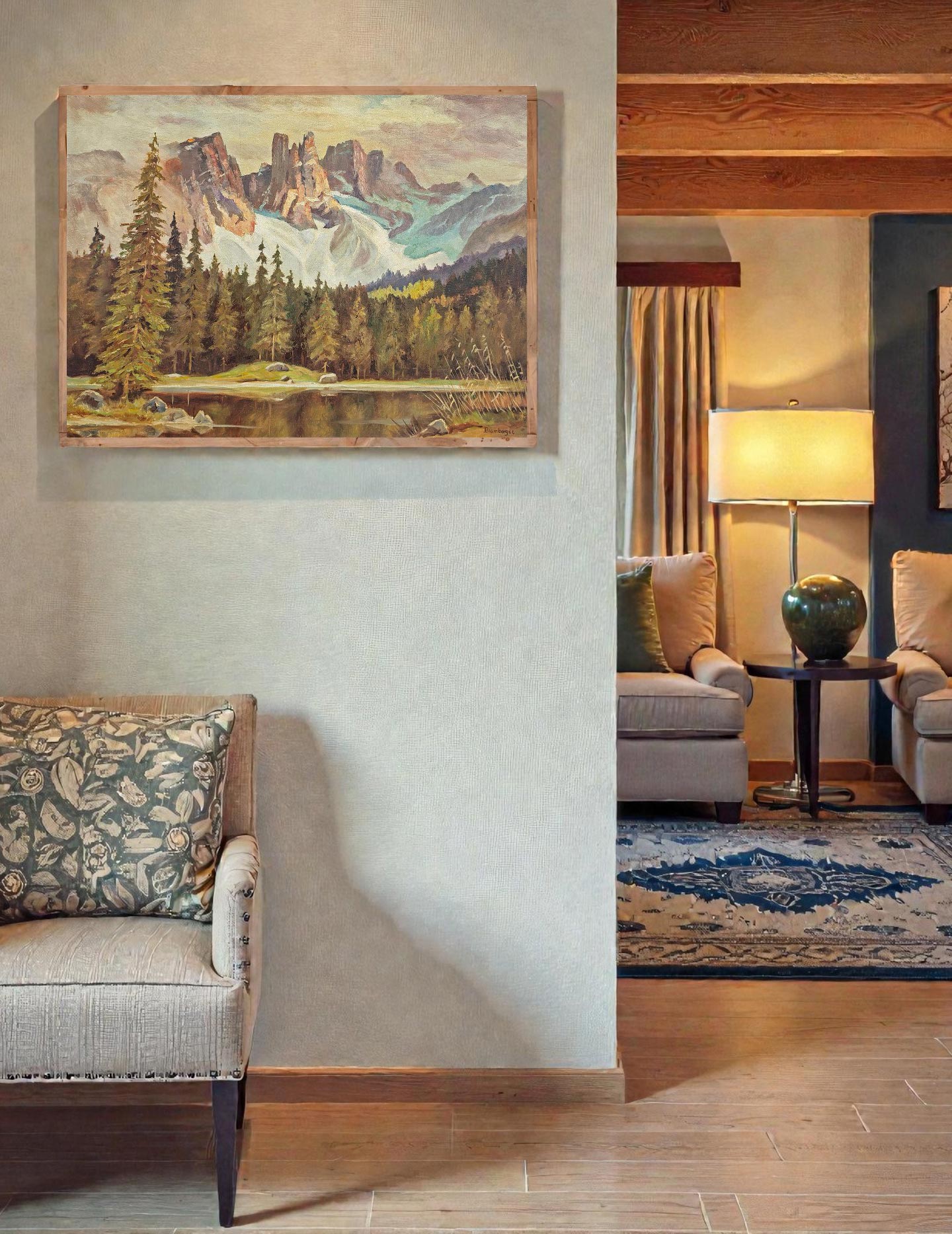
Painting from the first half of the twentieth century, depicting the Latemar massif with Lake Carezza in the foreground.
The composition develops horizontally, with a clear organization of the planes: the body of water at the bottom, the intermediate wooded strip and the Dolomite rocky walls in the background.
From a technical-executive point of view, the work presents an interesting alternation of instruments and pictorial methods.
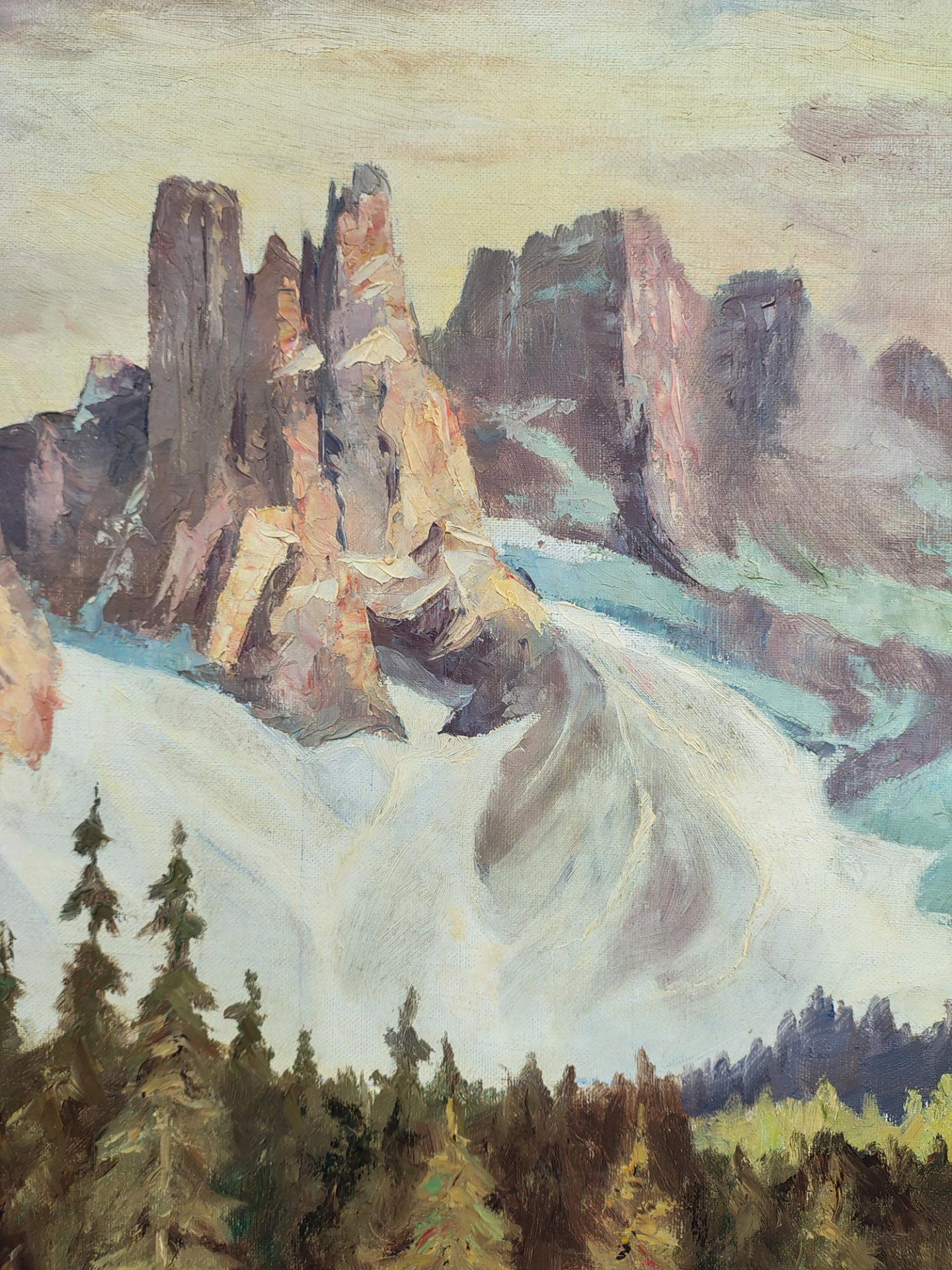
The area of the Latemar rocks is made mainly with a spatula, with dense and layered applications of color that build the surfaces for planes and fractures. The use of the spatula generates material reliefs and clear edges, particularly effective in returning the harsh and monumental geological structure of the Dolomite walls, accentuating the perception of light that breaks on the irregular surfaces.
The rest of the painting – sky, lake, woods and foreground – is instead executed with a brush, with a more controlled and modulated layout. Here the brushstroke becomes sometimes flat, sometimes vibrant, but always softer than the material of the rocks, allowing gradual tonal passages and a convincing atmospheric rendering. In the lake, the painting is fluid and synthetic, aimed at suggesting reflections and depths without excessive descriptive details; in the woods, the brushstrokes follow a vertical and broken rhythm that alludes to the vegetation without defining it analytically.
The chromatic palette remains consistent with the landscape sensitivity of the period: warm greens and browns for the vegetation, softened blues and turquoises for the waters, luminous but never dazzling skies, and a range of pinkish grays, violets and light earths for the rocks, enhanced by the spatula material.
The spatial depth is built through the overlapping of the planes and the progressive chromatic rarefaction, while the lake plays a function of compositional balance and visual pause.