Arno Lemke – Waxenstein and Alpspitze
Description:
Arno Lemke - Waxenstein and Alpspitze
Technical Information:
Time period: mid-20th century
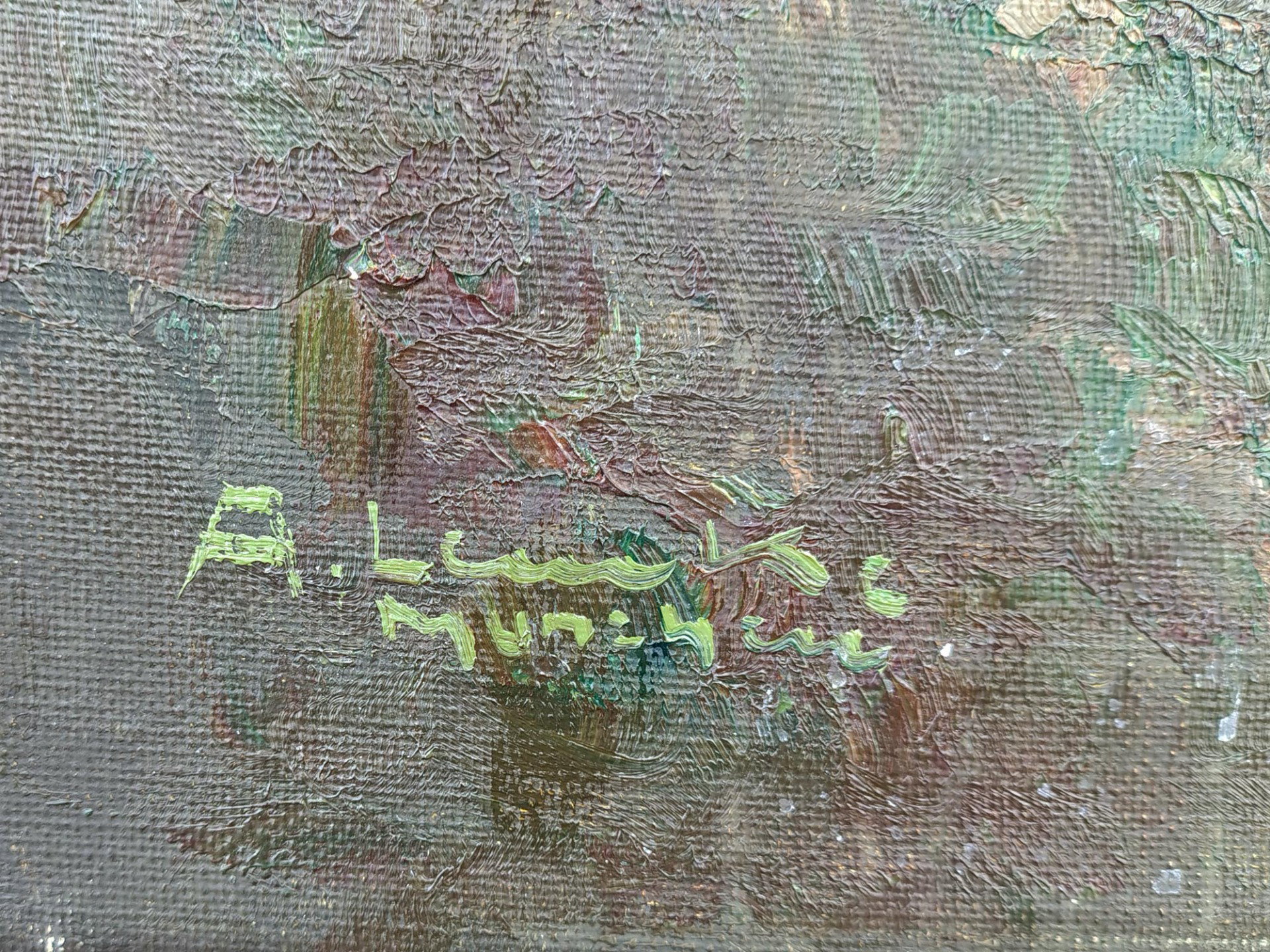
Author: Arno Lemke
Origin: Bavarian Alps
Technique: oil on canvas
Height: 60 cm
Width: 90 cm
Description:
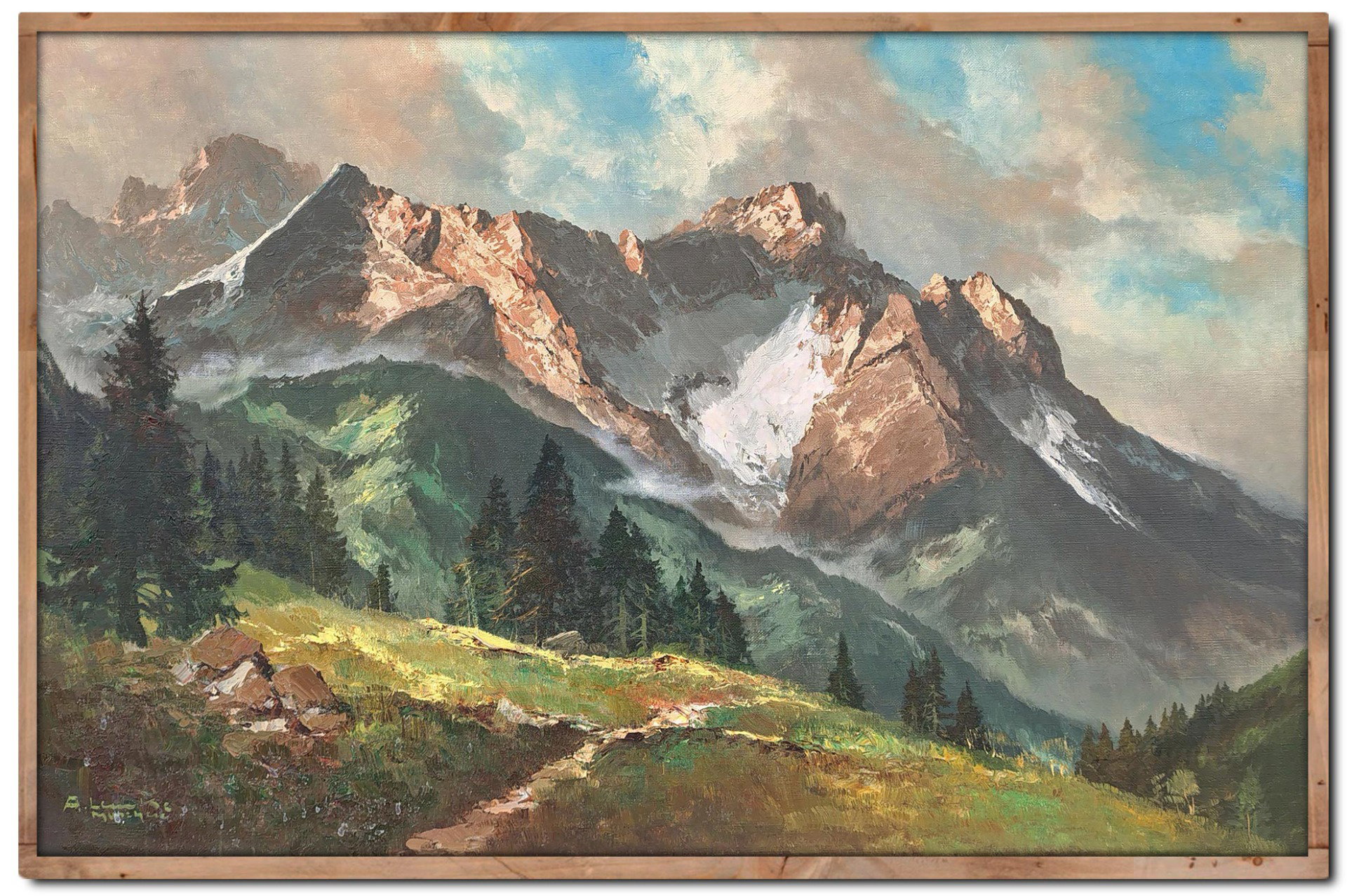
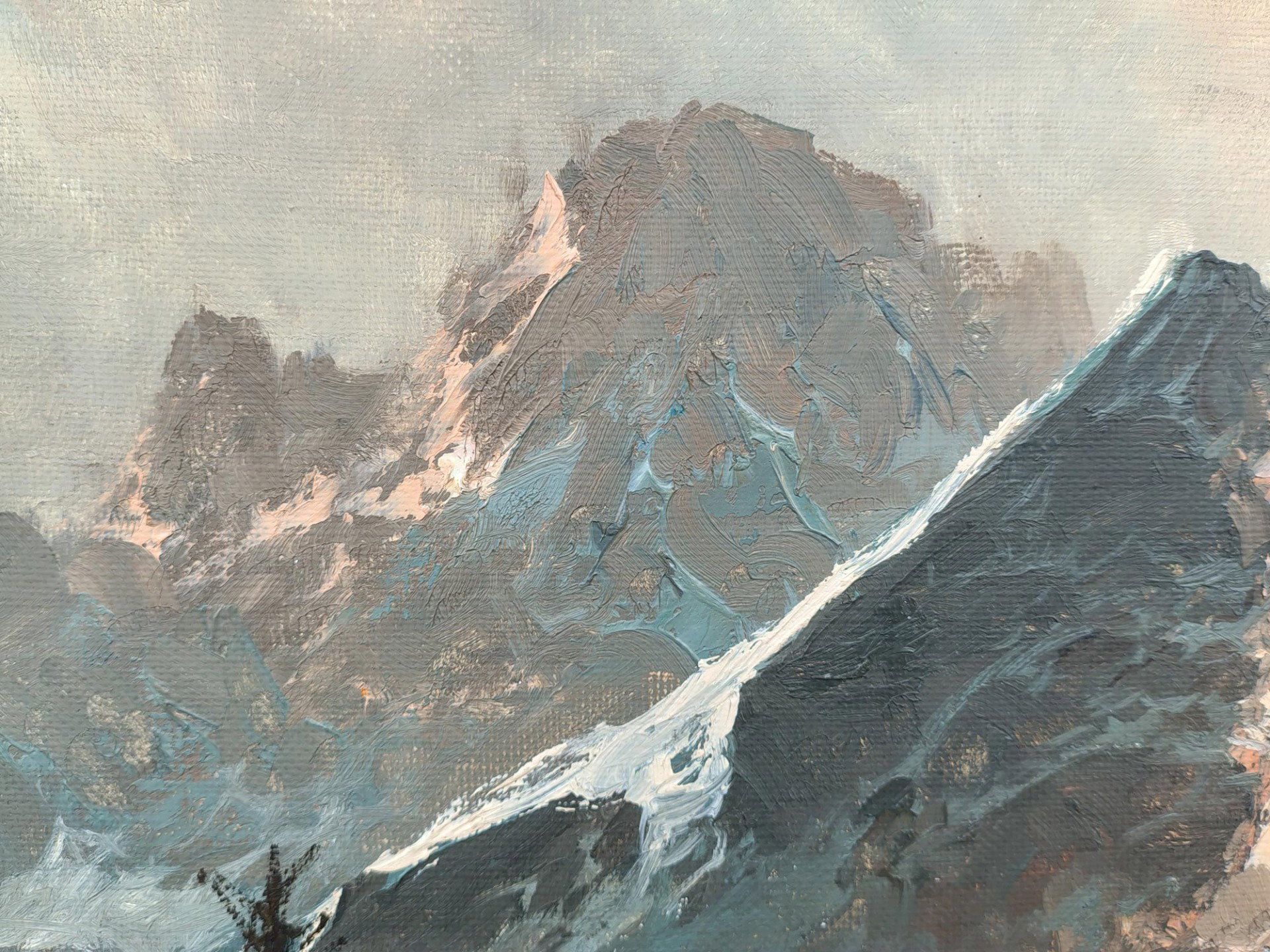
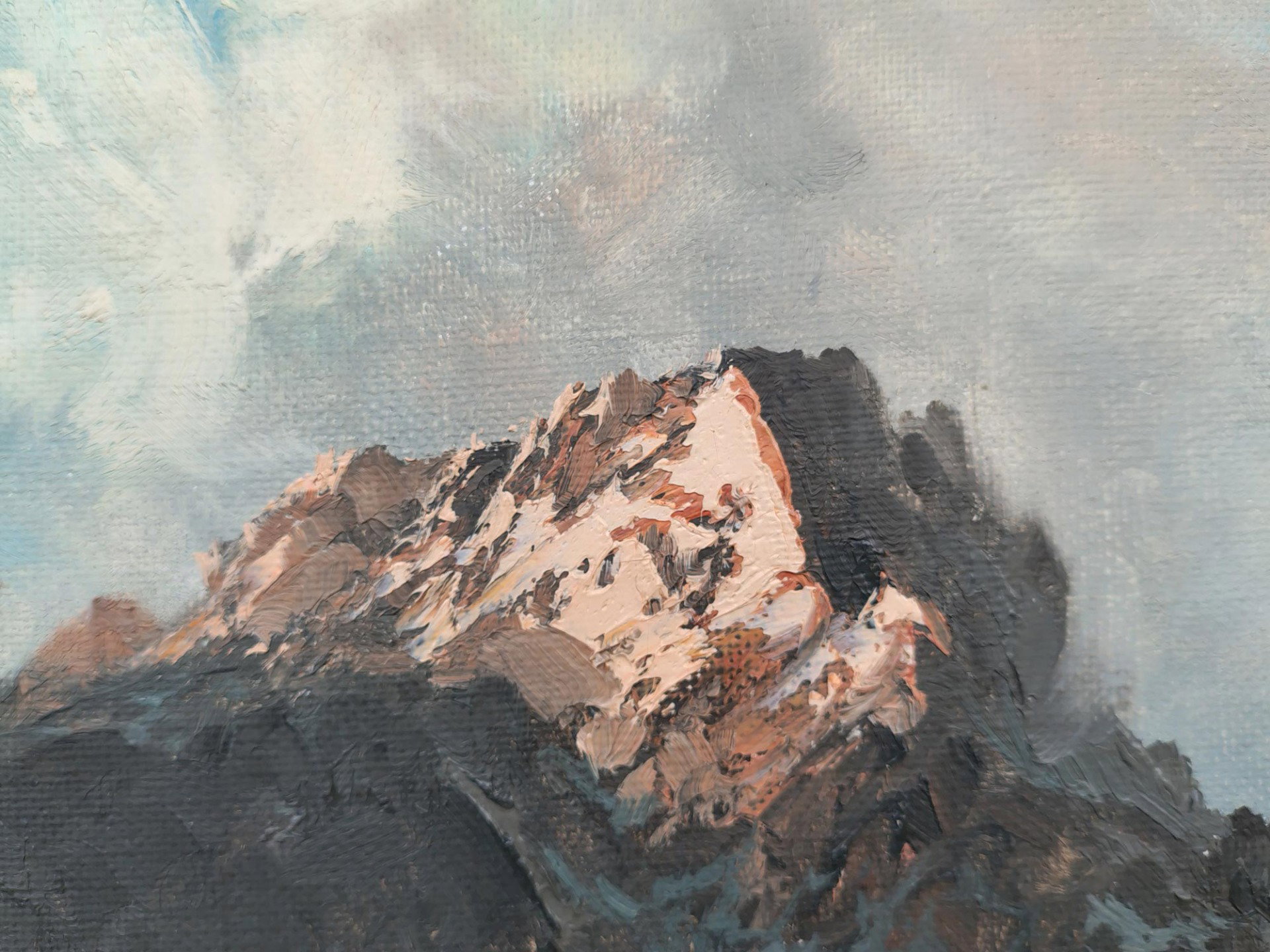
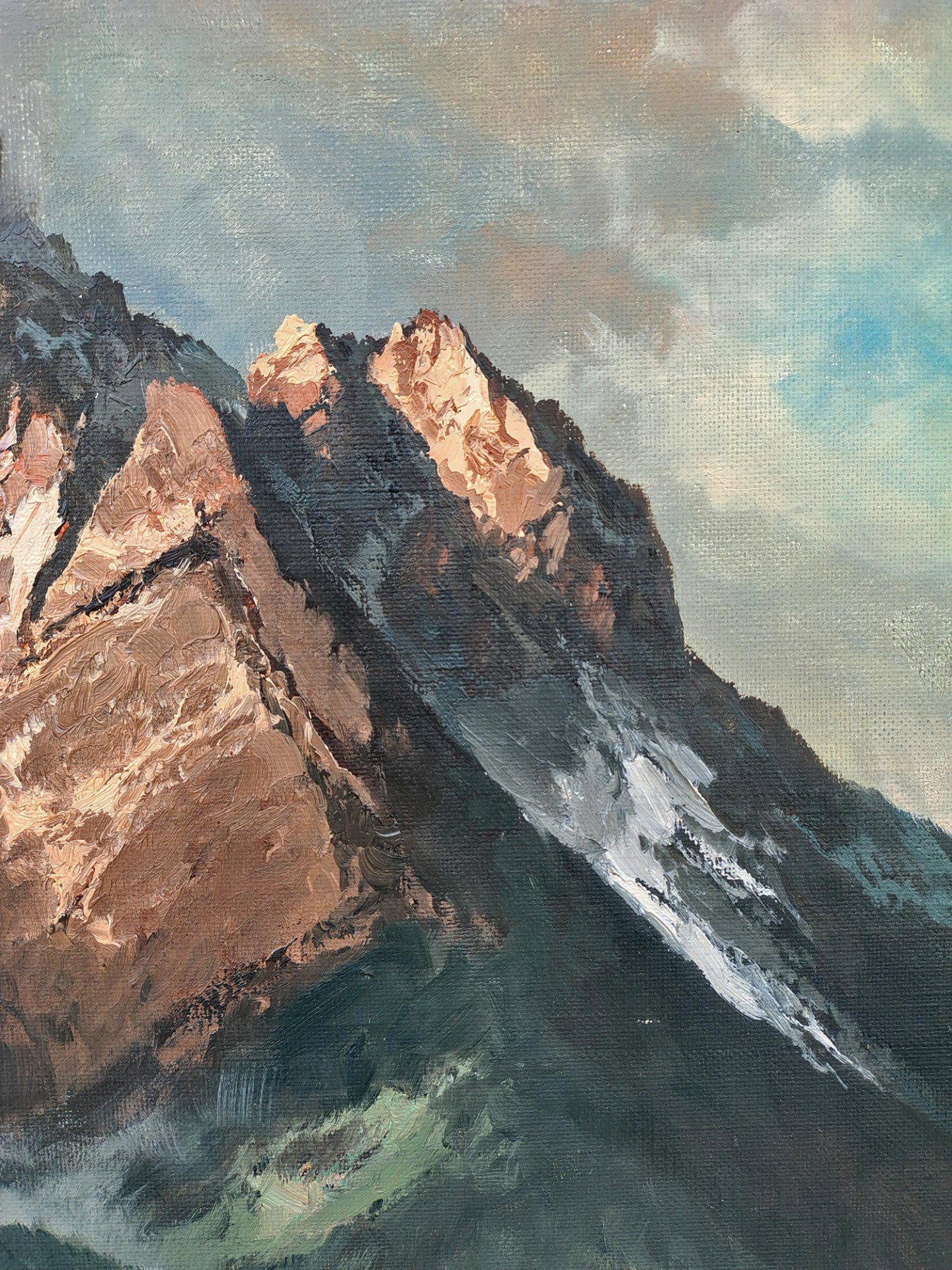
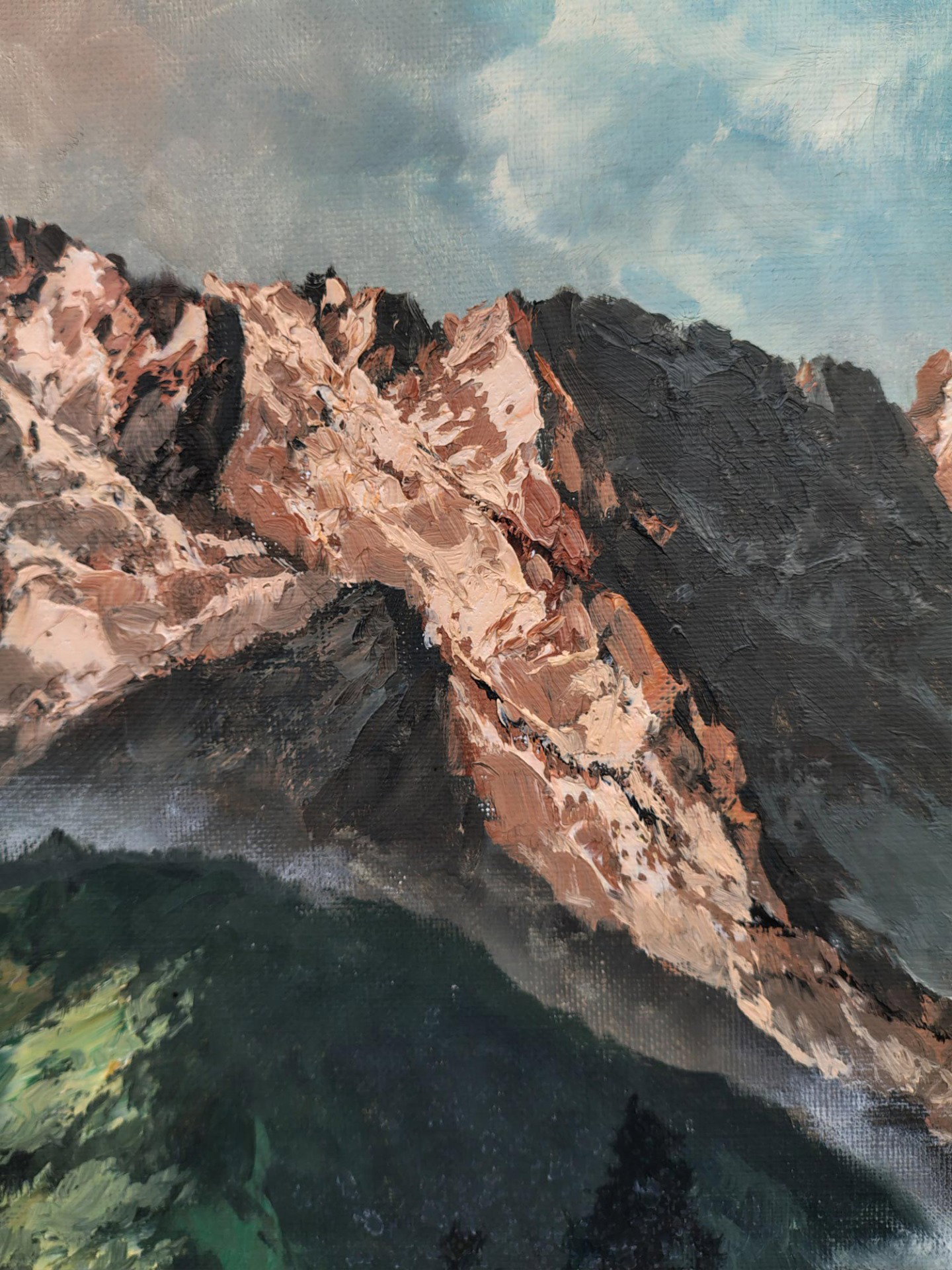
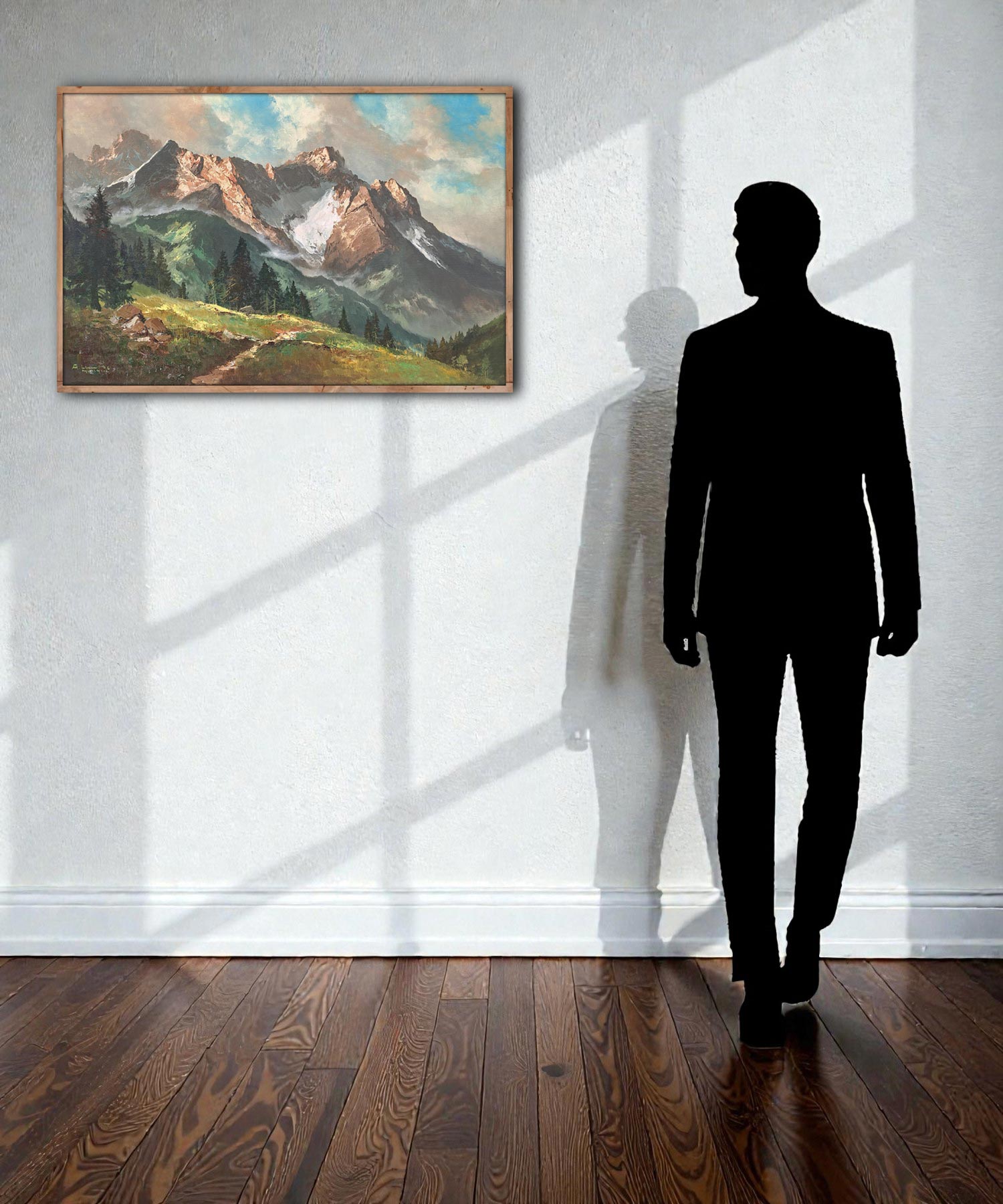
The painting by Arno Lemke depicts an alpine view of the Waxenstein massif with the Alpspitze, captured in a broad and atmospheric light that effectively conveys the severe majesty of the Bavarian Alps.
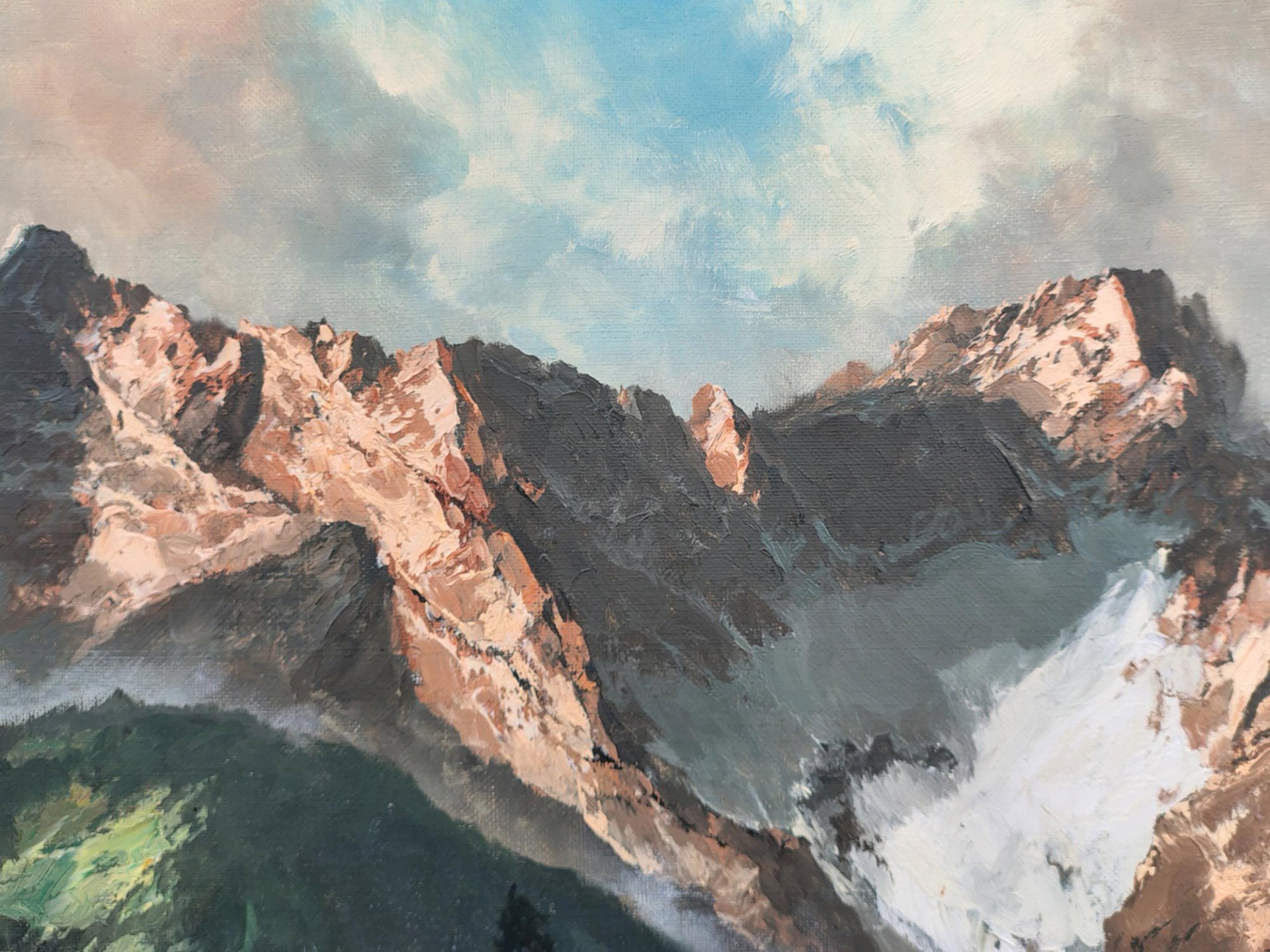
The work is made with oil on canvas, with a textured and vibrant pictorial rendering, evident especially in the rocky reliefs and snowy areas. Lemke uses a full-bodied brushstroke, sometimes with a spatula, which constructs the mountain walls through superimpositions of warm ochres, pinkish browns and cold grays, creating an incisive contrast with the masses of snow still present in the gullies and on the ridges.
The Waxenstein dominates the composition with its steep profile, while the Alpspitze, more articulated and jagged, emerges in the background with a rhythm of peaks and spurs that lead the eye upwards. The sky, wide and bright, is treated with azure and pearly-grey glazes, enlivened by soft clouds that contribute to giving depth and breath to the whole.
In the foreground, a green clearing crossed by a path introduces a narrative and human element, balancing the vertical power of the mountains. The green tones, dense and layered, are illuminated by lighter touches that suggest the grazing light of the morning or late afternoon. The groups of conifers, synthetic but well characterized, act as a visual link between the alpine landscape and the observer.
Arno Lemke was a German painter active during the 20th century, known above all for his production of alpine and mountain landscapes, inspired by the regions of Bavaria and Tyrol. His training falls within the Central European pictorial tradition, where direct observation of nature and study from life constitute the foundation of artistic language.
During his career Lemke dedicated himself almost exclusively to landscape painting, favoring high mountain subjects: rocky massifs, snow-capped peaks, alpine valleys and wooded views. In his work, the mountain is never a simple background, but an absolute protagonist, interpreted as a living, changing organism, subject to light and atmospheric conditions.
His stylistic hallmark is distinguished by an energetic and material brushstroke, often performed with a spatula, which gives solidity and physical presence to the rocky surfaces. At the same time, Lemke demonstrates a particular chromatic sensitivity in the treatment of skies and distances, resolved with light glazes and atmospheric tones capable of amplifying the spatial depth.
Arno Lemke's works had a wide diffusion in the European art market, especially in Germany and the alpine countries, where they were favored by collecting linked to the landscape tradition. Even today his paintings are appreciated for the balance between naturalistic fidelity and pictorial interpretation, qualities that make his alpine views recognizable and of strong decorative impact.