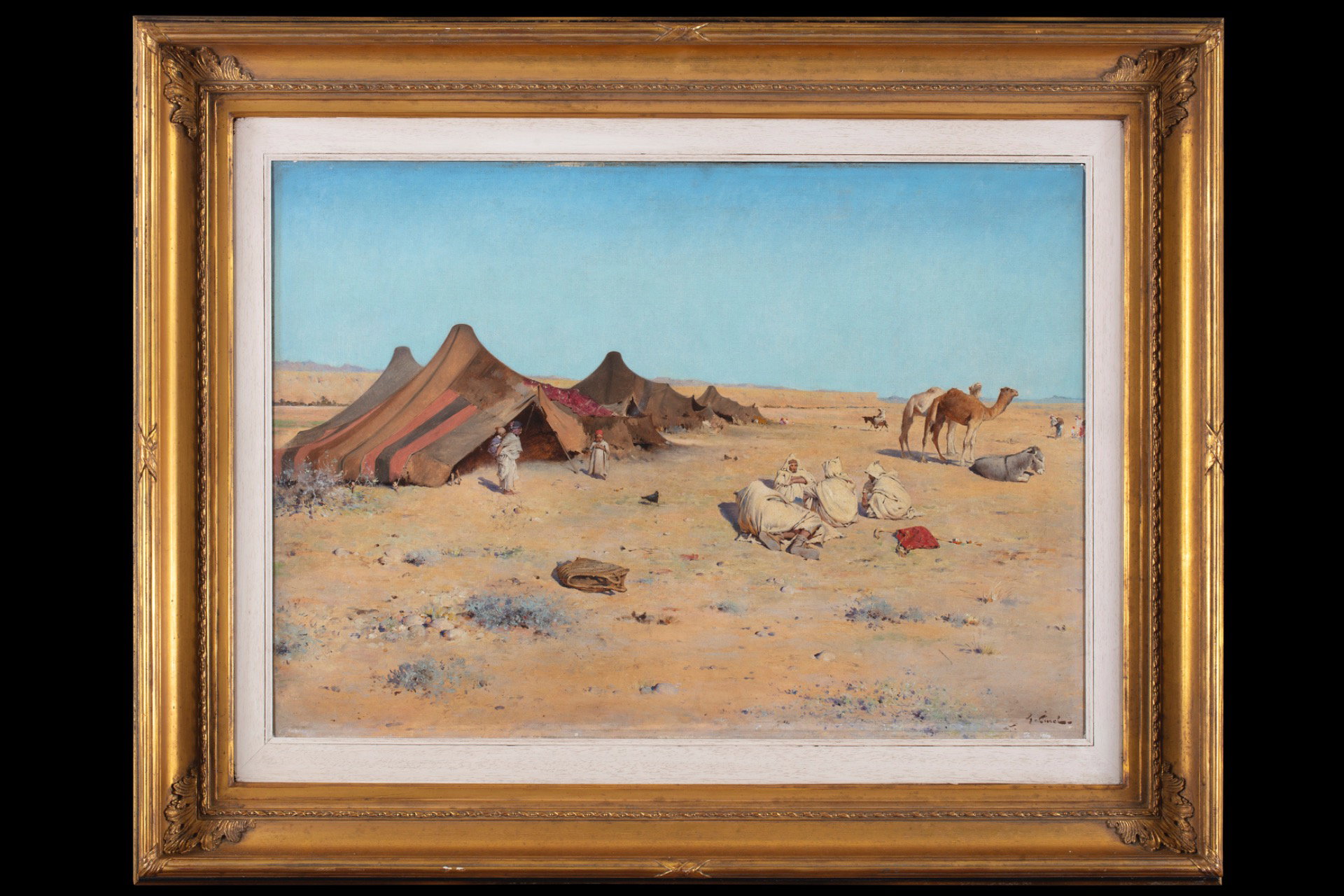
Gustave Nicolas Pinel (1842-1896), "Rest in the Desert"
Description:
Gustave Nicolas Pinel (1842-1896), Rest in the Desert, second half of the 19th century.
Oil on canvas
65x92 cm.
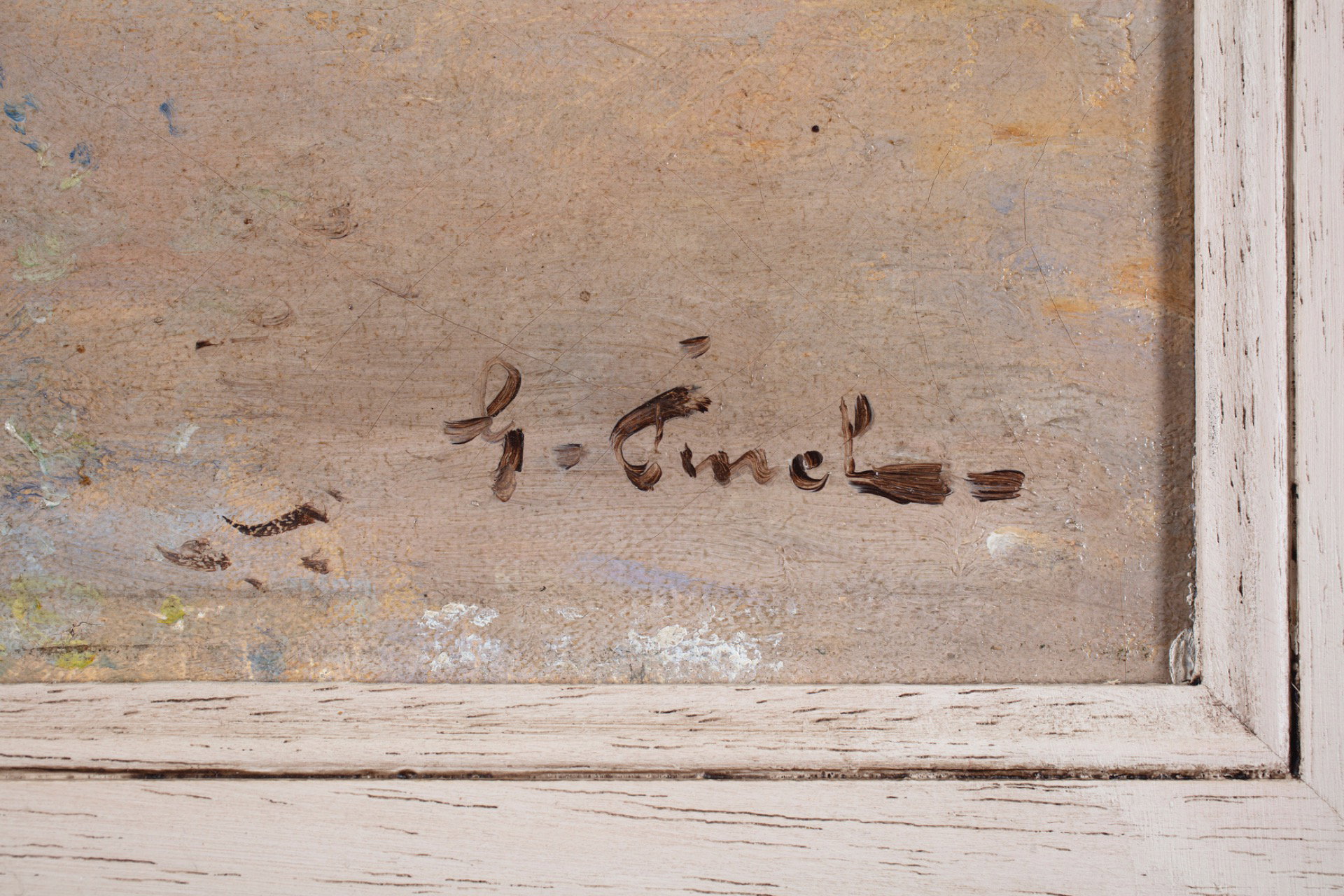
Signed “G. Pinel” lower right.
The canvas immerses the observer in the silent and vibrant heart of a nomadic desert camp. The work, a masterly example of Orientalism, depicts some sun-baked and weary Bedouins resting on the ground, outside their tents, among camels and donkeys. The wide perspective makes one aware of the boundless and arid land in which they are traveling. The material texture of the tents, hand-woven and heavy to combat desert temperatures, allows you to grasp the fineness of the sand in contrast. This scene is typical of Orientalist painting set in the Middle East; in fact, during the second half of the nineteenth century, artists undertaking journeys to the countries of the Mediterranean Basin often painted Bedouins or Arab travelers moving through these boundless lands. This genre of paintings was very popular during this period of rediscovery of the Orient, perceived by Westerners as distant and exotic.
Pinel, for his part, was very skilled in reproducing the light of the desert, the true protagonist of the painting, thanks to his study from life of these environments. The composition of the scene almost gives a sense of documentary precision: the children next to the tents, the men conversing in subdued tones, the bags abandoned on the ground and the animals resting in turn after having toiled celebrate wandering life in the desert. Finally, the great quality of the painting is also given by the pictorial style of Pinel, extremely refined and precise.
BIOGRAPHY
Born in 1842 in Les Riceys, Gustave Pinel began his artistic training in Troyes at a drawing school. In 1863, thanks to a three-year scholarship, he continued his studies in Paris at the atelier of Félix-Joseph Barrias. He continued to live in the capital, supporting himself with interior decoration work and attending Léon Bonnat's studio whenever possible. His artistic debut took place in 1881 at the Salon des Artistes Français, with the exhibition of two portraits. He maintained his participation in the Salon in subsequent years until 1896, becoming a member. In addition to portraiture, he specialized in the production of landscapes, often inspired by his numerous trips to Normandy, but especially to North Africa. A substantial part of his works concerns in fact African landscapes and scenes, with an orientalist flavour.
His residence remained in Paris until his death on June 27, 1896.