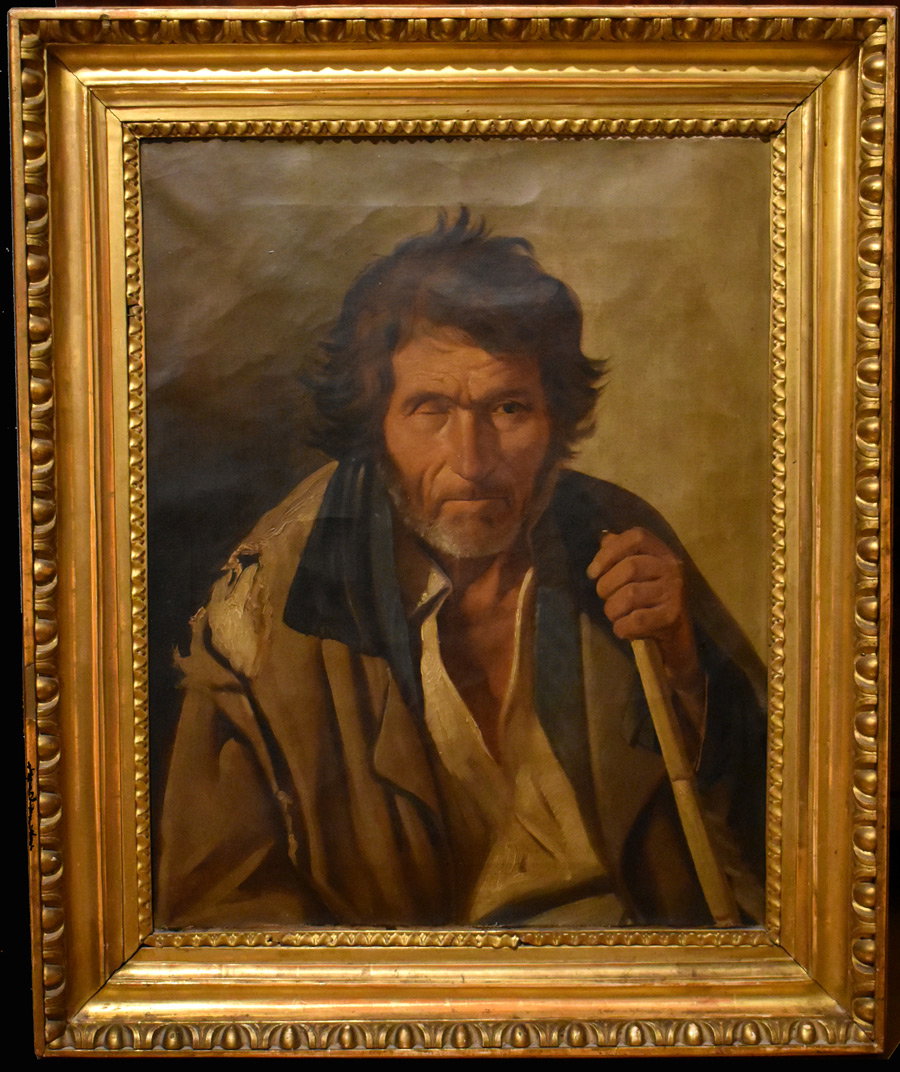
Neapolitan Verista school. Second half of the 19th century. Portrait of a blind beggar.
Description:
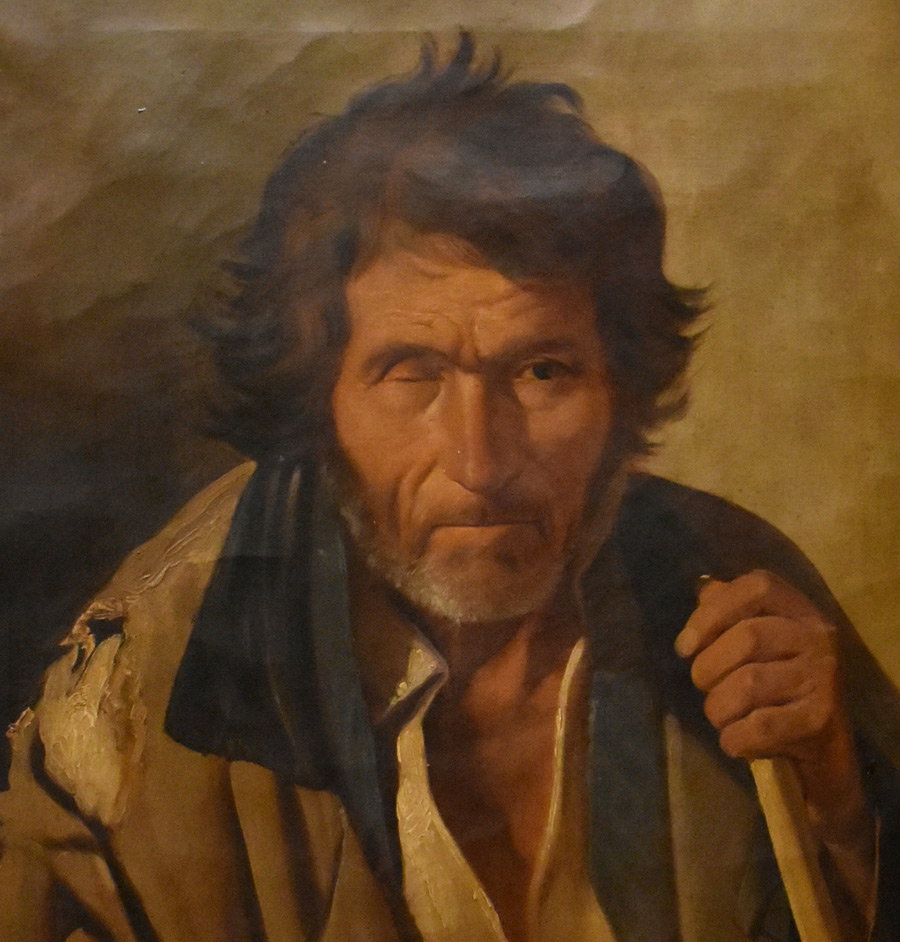
Painter of the Neapolitan Verista school of the 19th century, likely around the 1870s-80s, close to the Resina school. Masterful and expressive portrait of a blind beggar.
Description of the Artwork:
We observe a well-managed oil technique, with broad and impasto brushstrokes, especially in the clothing and facial details. The palette is warm and earthy, typical of 19th-century genre painting. The face is marked and dramatic, carefully modeled. The composition is simple but intense, with the subject closely approached frontally, in the manner of psychological portraits. The modeling of the face's volumes is rendered with great effectiveness and depth, through decisive chiaroscuro. The complexione is marked, realistic, without idealizations: typical of 19th-century realism. The subject recalls the "old farmer," "beggar," or character of the people, a recurring type of subject in the second half of the 19th century. The intense and almost tragic expression evokes the Neapolitan school, with stylistic similarities to Filippo Palizzi (especially his studies of peasants and beggars), Giuseppe Renda (for the vigorous treatment of the face), and Antonio Mancini (in his more Verista phases). The canvas has no signature, although it has undergone a slight reduction on the lower side as a result of being applied to a wooden panel for conservation purposes, and the adaptation to a non-original frame. Therefore, the signature may have been lost. The pictorial quality is certainly valuable.
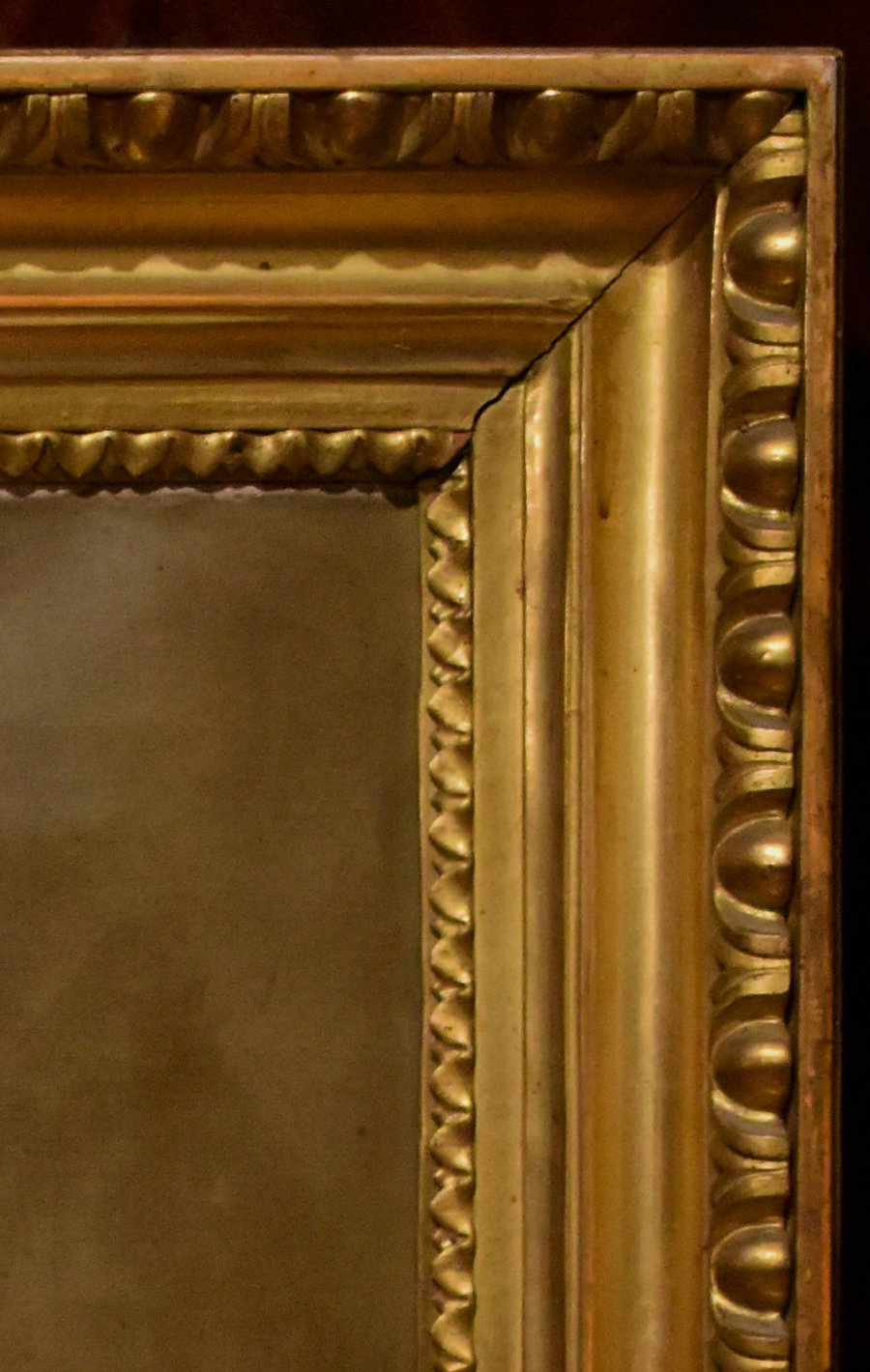
It does not show any pictorial restorations or color loss. The beautiful Empire/Biedermeier style frame is from the 1830s, intact also in the gold leaf gilding.
Visit our gallery of antique paintings. Click on the following link.
Principessa Sissi ® antiques. High antiques gallery in Udine